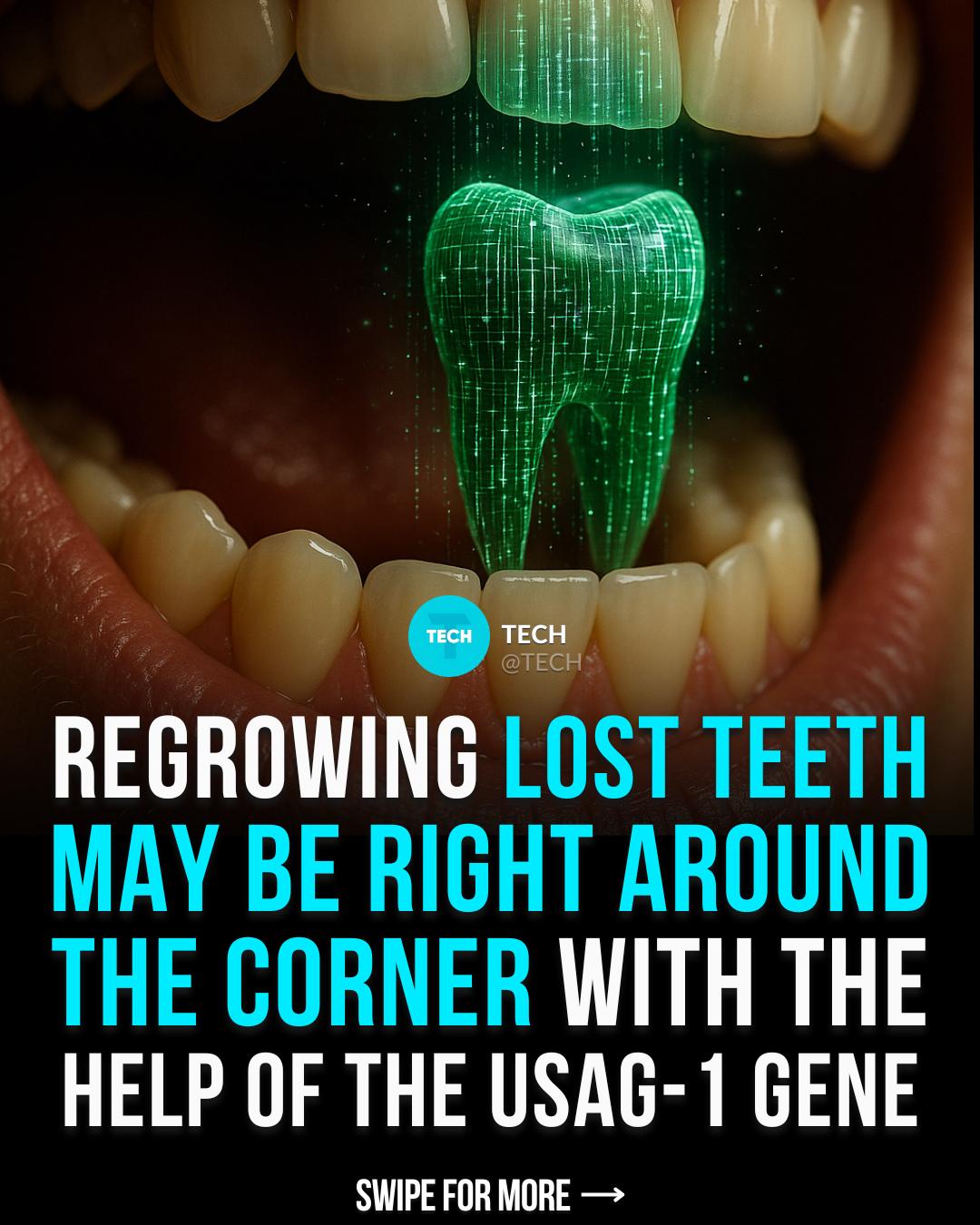
For the first time in human history, medicine may soon turn the impossible into routine, regrowing lost teeth. In Japan, researchers have launched the world’s first clinical trial of a drug designed to awaken our dormant ability to form new teeth, a breakthrough that could transform dentistry within the decade.
Teeth, unlike bones, are marvels of durability but lack the ability to regenerate. Once enamel or dentin is gone, the damage is permanent, leaving millions to rely on dentures, bridges, or implants. The Japanese team has focused on a molecular switch called USAG-1, a protein that actively suppresses tooth growth. By engineering a monoclonal antibody to block USAG-1’s binding to bone morphogenetic protein (BMP), scientists have unlocked tooth formation in animals without triggering the developmental defects caused when related pathways are disturbed.
Preclinical trials have been striking. Mice with missing teeth grew new ones after a single injection, while ferrets, chosen for their close similarity to human dental patterns, developed additional functional teeth. This provided strong evidence that the mechanism is conserved across mammals, raising confidence that the therapy could work in people.
In September 2024, Kyoto University Hospital began the first human study, enrolling 30 adult men aged 30 to 64 who were each missing at least one molar. Over 11 months, researchers will test both safety and regenerative outcomes, with no serious side effects reported in earlier animal work. If successful, the next phase will extend to children born with severe congenital tooth deficiency, a rare but debilitating condition.
The implications extend far beyond dentistry. Nearly a quarter of people over age 60 have lost all their teeth, and toothlessness is linked to poor nutrition, disease, and reduced quality of life. A reliable biological therapy could shift treatment away from prosthetics toward true regeneration, restoring not only smiles but fundamental human health.
#tech #biotech #dentistry #regenerativemedicine #clinicaltrials #japan #biomedicalresearch #science #futureofmedicine
Source: 10.1126/sciadv.abf1798
For the first time in human history, medicine may soon turn the impossible into routine, regrowing lost teeth. In Japan, researchers have launched the world’s first clinical trial of a drug designed to awaken our dormant ability to form new teeth, a breakthrough that could transform dentistry within the decade.
Teeth, unlike bones, are marvels of durability but lack the ability to regenerate. Once enamel or dentin is gone, the damage is permanent, leaving millions to rely on dentures, bridges, or implants. The Japanese team has focused on a molecular switch called USAG-1, a protein that actively suppresses tooth growth. By engineering a monoclonal antibody to block USAG-1’s binding to bone morphogenetic protein (BMP), scientists have unlocked tooth formation in animals without triggering the developmental defects caused when related pathways are disturbed.
Preclinical trials have been striking. Mice with missing teeth grew new ones after a single injection, while ferrets, chosen for their close similarity to human dental patterns, developed additional functional teeth. This provided strong evidence that the mechanism is conserved across mammals, raising confidence that the therapy could work in people.
In September 2024, Kyoto University Hospital began the first human study, enrolling 30 adult men aged 30 to 64 who were each missing at least one molar. Over 11 months, researchers will test both safety and regenerative outcomes, with no serious side effects reported in earlier animal work. If successful, the next phase will extend to children born with severe congenital tooth deficiency, a rare but debilitating condition.
The implications extend far beyond dentistry. Nearly a quarter of people over age 60 have lost all their teeth, and toothlessness is linked to poor nutrition, disease, and reduced quality of life. A reliable biological therapy could shift treatment away from prosthetics toward true regeneration, restoring not only smiles but fundamental human health.
#tech #biotech #dentistry #regenerativemedicine #clinicaltrials #japan #biomedicalresearch #science #futureofmedicine
Source: 10.1126/sciadv.abf1798
·321 Views
·0 previzualizare
 English
 Arabic
 French
 Spanish
 Portuguese
 Deutsch
 Turkish
 Dutch
Dutch
 Italiano
 Russian
 Romaian
 Portuguese (Brazil)
 Greek
Greek