• The "Tutorial Hell" Trap: Why Building Systems Beats Collecting Certificates


    Many students believe landing their first software role requires knowing five different programming languages and stacking online course certificates.
    With modern code generation and assisted tooling readily available, knowing raw syntax is no longer a differentiator. What hiring teams and senior engineers evaluate is first-principles mental models: understanding what happens underneath the abstraction layer.
    If you want your projects to stand out and build real technical confidence, shift your study habits from Surface-Level Frameworks to Core Systems Fundamentals:


    1. Stop Building Clones—Build Instrumentation
    Instead of: Another clone of a social media feed or todo app.
    Build: An HTTP rate-limiter middleware from scratch using a token-bucket algorithm, or a small key-value store that persists records to disk using append-only logs.


    Why it matters: Building low-level utilities forces you to confront concurrency, disk I/O, serialization, and memory management—the exact challenges production software handles daily.


    2. Trace the Complete Request Lifecycle
    Pick one stack you already know (e.g., Python, Node.js, or Go) and write down the journey of a single byte:
    What happens at the DNS resolution level?
    How does TLS handshaking establish encryption?
    How does the OS kernel allocate a socket buffer?
    How does your database engine use a B-Tree index to avoid scanning millions of rows?
    When you can explain the mechanics behind an API call, technical interviews stop feeling like trivia games and start feeling like architecture discussions.


    3. Break Things on Purpose (Chaos Debugging)
    Don't stop once your project passes the "happy path." Intentionally introduce failure modes:
    Drop your database connection mid-transaction: Does your code corrupt data or roll back gracefully?
    Flood your backend with 500 concurrent requests: Does memory spike or crash the process?
    Simulate high network latency: Does your frontend hang forever or time out cleanly?
    Syntax changes every two years; systems fundamentals haven't changed in four decades. Master how computers move, store, and process data, and you will never fear a new framework again.


    Discussion Question
    For students and early career devs: What core concept felt most like a "black box" until you built it yourself—database indexes, networking protocols, async event loops, or memory pointers? Share what finally made it click for you.


    CTA
    Ready to move past tutorial hell and master real-world engineering fundamentals?


    👉 Join the Techawks Students in Tech Community to collaborate on projects, review code with mentors, and level up your software craft.
    The "Tutorial Hell" Trap: Why Building Systems Beats Collecting Certificates Many students believe landing their first software role requires knowing five different programming languages and stacking online course certificates. With modern code generation and assisted tooling readily available, knowing raw syntax is no longer a differentiator. What hiring teams and senior engineers evaluate is first-principles mental models: understanding what happens underneath the abstraction layer. If you want your projects to stand out and build real technical confidence, shift your study habits from Surface-Level Frameworks to Core Systems Fundamentals: 1. Stop Building Clones—Build Instrumentation Instead of: Another clone of a social media feed or todo app. Build: An HTTP rate-limiter middleware from scratch using a token-bucket algorithm, or a small key-value store that persists records to disk using append-only logs. Why it matters: Building low-level utilities forces you to confront concurrency, disk I/O, serialization, and memory management—the exact challenges production software handles daily. 2. Trace the Complete Request Lifecycle Pick one stack you already know (e.g., Python, Node.js, or Go) and write down the journey of a single byte: What happens at the DNS resolution level? How does TLS handshaking establish encryption? How does the OS kernel allocate a socket buffer? How does your database engine use a B-Tree index to avoid scanning millions of rows? When you can explain the mechanics behind an API call, technical interviews stop feeling like trivia games and start feeling like architecture discussions. 3. Break Things on Purpose (Chaos Debugging) Don't stop once your project passes the "happy path." Intentionally introduce failure modes: Drop your database connection mid-transaction: Does your code corrupt data or roll back gracefully? Flood your backend with 500 concurrent requests: Does memory spike or crash the process? Simulate high network latency: Does your frontend hang forever or time out cleanly? Syntax changes every two years; systems fundamentals haven't changed in four decades. Master how computers move, store, and process data, and you will never fear a new framework again. Discussion Question For students and early career devs: What core concept felt most like a "black box" until you built it yourself—database indexes, networking protocols, async event loops, or memory pointers? Share what finally made it click for you. CTA Ready to move past tutorial hell and master real-world engineering fundamentals? 👉 Join the Techawks Students in Tech Community to collaborate on projects, review code with mentors, and level up your software craft.
    0 Kommentare 0 Geteilt 1KB Ansichten 0 Bewertungen
  • The 5-Gigawatt Shift: Why Sovereign Cloud & In-Country AI Architecture Define the UAE's Next Decade


    The UAE is executing one of the most aggressive digital infrastructure scale-ups on the planet. Between Abu Dhabi’s massive multi-gigawatt AI infrastructure campus (with Khazna and G42 delivering 200MW increments) and the Central Bank of the UAE’s sovereign financial cloud standards, the message to builders is unmistakable:


    The UAE is transitioning from a consumer of global cloud services into the primary sovereign AI hub for the Middle East, Africa, and South Asia.


    For CTOs, software architects, and platform leads across Dubai Internet City, ADGM, and DIFC, this means standard engineering playbooks must change. You can no longer configure default routing that blindly sends customer telemetry, embeddings, or inference prompts through Western or overseas availability zones.


    Regulated verticals—especially BFSI under the Central Bank standards, healthcare under the Health ICT Law, and government entities under UAE PDPL—demand strict in-country custody, local key management, and air-gapped fallback options.


    3 Architecture Rules for Building Enterprise-Ready Tech in the UAE
    1. Implement Strict Data-Classification Routing at Ingress
    Don't rely on developers remembering where to store database records. Build automated classification proxies at your API gateway:


    Sovereign Tier (Confidential / PII / Financial): Routed exclusively to domestic cloud regions (Khazna, G42/Core42 sovereign clusters, or in-country hyperscaler local zones). Zero egress to external model endpoints permitted.


    General Tier (Public / Sanitized): Routed to regional edge clusters with token masking before touching third-party APIs.


    2. Deploy Localized LLM Weights & RAG Engines
    Relying on US-hosted LLM endpoints introduces high cross-border network latencies (120ms+) and exposes enterprise clients to data-residency violations under UAE Federal Decree-Law No. 45.


    Containerize open-weight models (e.g., Falcon, Llama, Qwen) on local domestic GPU infrastructure.


    Build Retrieval-Augmented Generation (RAG) vector stores inside local VPCs using localized vector indexes (e.g., Qdrant, Milvus), ensuring sensitive corporate embeddings never cross border boundaries.


    3. Enforce "Bring Your Own Key" (BYOK) with Domestic HSMs
    Enterprise buyers in the UAE increasingly require hardware-level proof of encryption control:


    Store master encryption keys in UAE-based Dedicated Hardware Security Modules (HSMs) managed under local governance.


    Ensure key rotation, identity federation, and session access logs remain fully auditable within the UAE jurisdiction, neutralizing sovereign cloud compliance bottlenecks during procurement.


    The UAE Tech Takeaway: Building in the Gulf today is an architectural privilege. With gigawatt-scale domestic compute coming online, the engineering teams that win five- and six-figure government and enterprise contracts will be those who design for native data sovereignty, localized inference, and bulletproof compliance from day one.


    Discussion Question
    For UAE-based engineering and platform teams: How are you managing data residency requirements—are you running fully localized models on domestic clusters, or using token-scrubbing gateways before calling external APIs?


    CTA
    Join Techawks UAE


    Connect with senior software engineers, platform architects, founders, and tech innovators across Dubai, Abu Dhabi, and the wider Emirates. Access deep architectural frameworks, sovereign tech playbooks, and local meetups. Join Techawks UAE today:
    The 5-Gigawatt Shift: Why Sovereign Cloud & In-Country AI Architecture Define the UAE's Next Decade The UAE is executing one of the most aggressive digital infrastructure scale-ups on the planet. Between Abu Dhabi’s massive multi-gigawatt AI infrastructure campus (with Khazna and G42 delivering 200MW increments) and the Central Bank of the UAE’s sovereign financial cloud standards, the message to builders is unmistakable: The UAE is transitioning from a consumer of global cloud services into the primary sovereign AI hub for the Middle East, Africa, and South Asia. For CTOs, software architects, and platform leads across Dubai Internet City, ADGM, and DIFC, this means standard engineering playbooks must change. You can no longer configure default routing that blindly sends customer telemetry, embeddings, or inference prompts through Western or overseas availability zones. Regulated verticals—especially BFSI under the Central Bank standards, healthcare under the Health ICT Law, and government entities under UAE PDPL—demand strict in-country custody, local key management, and air-gapped fallback options. 3 Architecture Rules for Building Enterprise-Ready Tech in the UAE 1. Implement Strict Data-Classification Routing at Ingress Don't rely on developers remembering where to store database records. Build automated classification proxies at your API gateway: Sovereign Tier (Confidential / PII / Financial): Routed exclusively to domestic cloud regions (Khazna, G42/Core42 sovereign clusters, or in-country hyperscaler local zones). Zero egress to external model endpoints permitted. General Tier (Public / Sanitized): Routed to regional edge clusters with token masking before touching third-party APIs. 2. Deploy Localized LLM Weights & RAG Engines Relying on US-hosted LLM endpoints introduces high cross-border network latencies (120ms+) and exposes enterprise clients to data-residency violations under UAE Federal Decree-Law No. 45. Containerize open-weight models (e.g., Falcon, Llama, Qwen) on local domestic GPU infrastructure. Build Retrieval-Augmented Generation (RAG) vector stores inside local VPCs using localized vector indexes (e.g., Qdrant, Milvus), ensuring sensitive corporate embeddings never cross border boundaries. 3. Enforce "Bring Your Own Key" (BYOK) with Domestic HSMs Enterprise buyers in the UAE increasingly require hardware-level proof of encryption control: Store master encryption keys in UAE-based Dedicated Hardware Security Modules (HSMs) managed under local governance. Ensure key rotation, identity federation, and session access logs remain fully auditable within the UAE jurisdiction, neutralizing sovereign cloud compliance bottlenecks during procurement. The UAE Tech Takeaway: Building in the Gulf today is an architectural privilege. With gigawatt-scale domestic compute coming online, the engineering teams that win five- and six-figure government and enterprise contracts will be those who design for native data sovereignty, localized inference, and bulletproof compliance from day one. Discussion Question For UAE-based engineering and platform teams: How are you managing data residency requirements—are you running fully localized models on domestic clusters, or using token-scrubbing gateways before calling external APIs? CTA Join Techawks UAE Connect with senior software engineers, platform architects, founders, and tech innovators across Dubai, Abu Dhabi, and the wider Emirates. Access deep architectural frameworks, sovereign tech playbooks, and local meetups. Join Techawks UAE today:
    0 Kommentare 0 Geteilt 364 Ansichten 0 Bewertungen
  • Beyond the Global GPU Cartel: How India's Sovereign Compute Stack (₹65/hr GPUs) Changes Engineering Economics


    Silicon Valley built the cloud around corporate concentration. India is building a fundamentally different playbook: Sovereign, Publicly-Subsidized Compute Infrastructure.


    Through the ₹10,300+ crore IndiaAI Mission, the national common compute cluster has crossed over 38,000 enterprise-grade GPUs, expanding by another 20,000 units. More critically, this capacity has been democratized for domestic tech builders, startups, and academic labs at roughly ₹65/hour.


    Why does this matter for every Indian software architect, CTO, and systems engineer?


    Because the bottleneck to shipping proprietary vertical AI in India was never talent—it was compute parity. At ₹65/hour, the cost barrier to training domain-specific models on Indic language corpuses, edge IoT telemetry, and BFSI/fintech compliance datasets has plummeted by nearly 70% compared to traditional cloud instances.


    3 Strategic Plays for Indian Dev Teams to Capitalize Right Now
    1. Move from "API Wrapper" to Self-Hosted Quantized Models
    Relying strictly on closed LLM APIs drains margins as token throughput scales.


    Leverage national compute allocations to fine-tune open-weight reasoning models (e.g., Llama 3/3.3, Mistral, Qwen) on proprietary organizational domain datasets.


    Quantize models down to 4-bit/8-bit (AWQ or GGUF) and host them internally inside local cloud zones to slash runtime inference costs and satisfy Indian DPDP (Digital Personal Data Protection) residency compliance.


    2. Localize Inference Latency via Domestic Edge Nodes
    Training abroad means edge inference roundtrips travel across submarine cables to US-East or EU-West availability zones, adding 150ms–250ms of network latency.


    By deploying and containerizing inference microservices within domestic GPU clusters, teams achieve sub-30ms roundtrip latencies across tier-1 and tier-2 Indian metros.


    3. Pair Sovereign AI with India's Maturing Silicon & OSAT Layer
    India's tech stack is vertically integrating. With operational packaging and testing plants (Micron and CG Semi in Sanand, Tata Electronics in Assam) coming online, domestic hardware integration and embedded IoT development have direct local testbeds.


    Build for embedded, on-device edge AI (smart metering, EV powertrain diagnostics, edge telematics) designed specifically for localized hardware supply chains.


    The Indian Tech Takeaway: India is no longer just the global back-office for application maintenance. With dirt-cheap sovereign compute and domestic silicon packaging coming online, competitive advantage belongs to engineers who build native, low-cost, high-scale systems from first principles.


    Discussion Question
    Is your startup or engineering team taking advantage of the subsidized IndiaAI compute access, or are you still locked into global hyperscalers for GPU workloads? What is your biggest hurdle with domestic clusters?


    CTA
    Join Techawks India


    Connect with India’s top builders, CTOs, open-source contributors, and deep-tech engineers. Get actionable infrastructure breakdowns, funding updates, and technical playbooks. Join Techawks India today:
    Beyond the Global GPU Cartel: How India's Sovereign Compute Stack (₹65/hr GPUs) Changes Engineering Economics Silicon Valley built the cloud around corporate concentration. India is building a fundamentally different playbook: Sovereign, Publicly-Subsidized Compute Infrastructure. Through the ₹10,300+ crore IndiaAI Mission, the national common compute cluster has crossed over 38,000 enterprise-grade GPUs, expanding by another 20,000 units. More critically, this capacity has been democratized for domestic tech builders, startups, and academic labs at roughly ₹65/hour. Why does this matter for every Indian software architect, CTO, and systems engineer? Because the bottleneck to shipping proprietary vertical AI in India was never talent—it was compute parity. At ₹65/hour, the cost barrier to training domain-specific models on Indic language corpuses, edge IoT telemetry, and BFSI/fintech compliance datasets has plummeted by nearly 70% compared to traditional cloud instances. 3 Strategic Plays for Indian Dev Teams to Capitalize Right Now 1. Move from "API Wrapper" to Self-Hosted Quantized Models Relying strictly on closed LLM APIs drains margins as token throughput scales. Leverage national compute allocations to fine-tune open-weight reasoning models (e.g., Llama 3/3.3, Mistral, Qwen) on proprietary organizational domain datasets. Quantize models down to 4-bit/8-bit (AWQ or GGUF) and host them internally inside local cloud zones to slash runtime inference costs and satisfy Indian DPDP (Digital Personal Data Protection) residency compliance. 2. Localize Inference Latency via Domestic Edge Nodes Training abroad means edge inference roundtrips travel across submarine cables to US-East or EU-West availability zones, adding 150ms–250ms of network latency. By deploying and containerizing inference microservices within domestic GPU clusters, teams achieve sub-30ms roundtrip latencies across tier-1 and tier-2 Indian metros. 3. Pair Sovereign AI with India's Maturing Silicon & OSAT Layer India's tech stack is vertically integrating. With operational packaging and testing plants (Micron and CG Semi in Sanand, Tata Electronics in Assam) coming online, domestic hardware integration and embedded IoT development have direct local testbeds. Build for embedded, on-device edge AI (smart metering, EV powertrain diagnostics, edge telematics) designed specifically for localized hardware supply chains. The Indian Tech Takeaway: India is no longer just the global back-office for application maintenance. With dirt-cheap sovereign compute and domestic silicon packaging coming online, competitive advantage belongs to engineers who build native, low-cost, high-scale systems from first principles. Discussion Question Is your startup or engineering team taking advantage of the subsidized IndiaAI compute access, or are you still locked into global hyperscalers for GPU workloads? What is your biggest hurdle with domestic clusters? CTA Join Techawks India Connect with India’s top builders, CTOs, open-source contributors, and deep-tech engineers. Get actionable infrastructure breakdowns, funding updates, and technical playbooks. Join Techawks India today:
    0 Kommentare 0 Geteilt 394 Ansichten 0 Bewertungen
  • Ofcom’s Online Safety Act Enforcement Wave: The UK Platform Architect’s Production Readiness Checklist
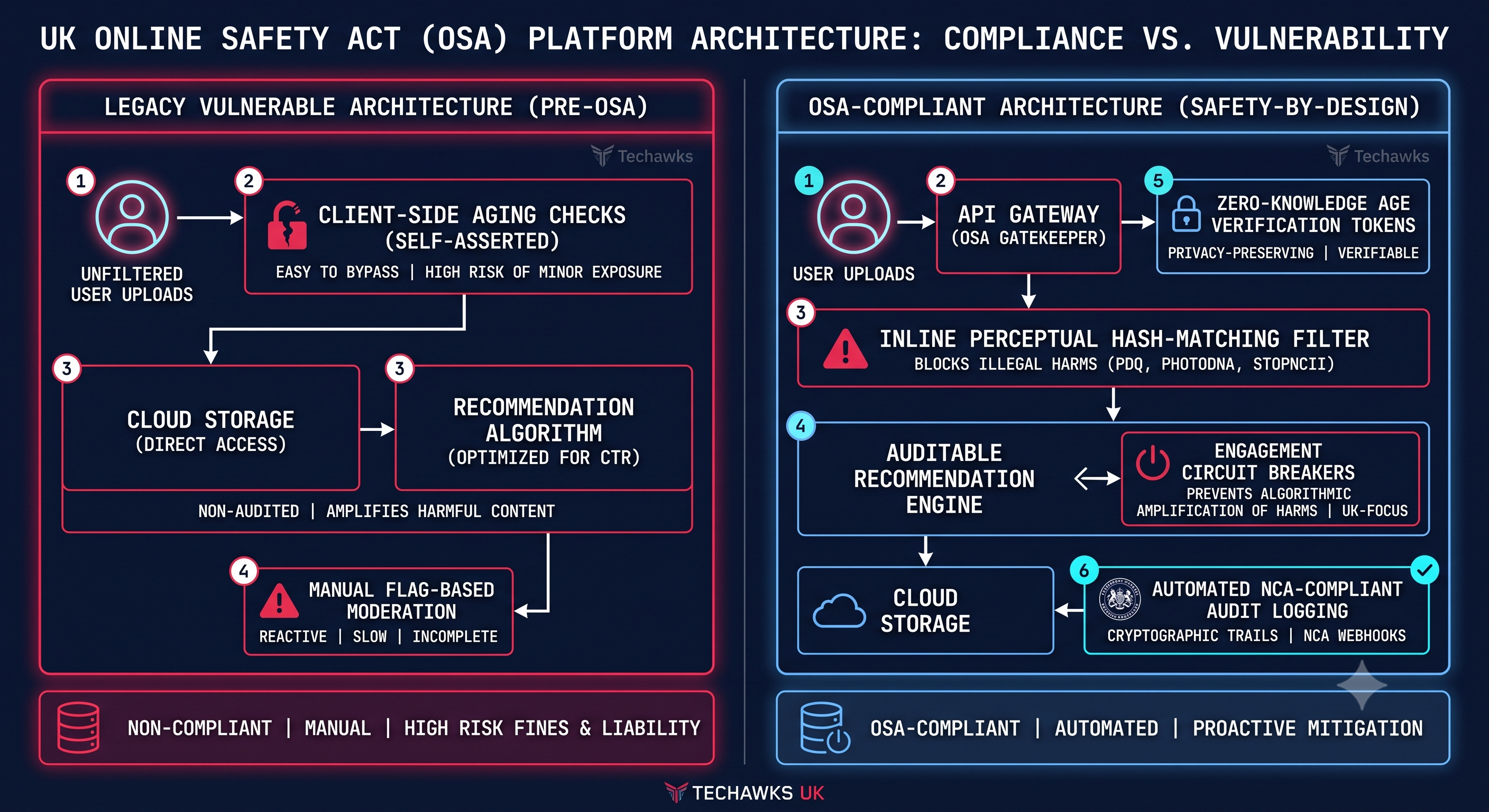
    Ofcom’s regulatory supervision and enforcement roadmap is actively transitioning from consultation to direct technical accountability. For engineering teams building user-to-user (U2U) services, search functionality, or recommendation-driven platforms accessible in the UK, safety-by-design is now an infrastructure mandate rather than a policy guideline.


    Why It Matters to UK Tech Teams
    Ofcom has made it clear: platform moderation cannot remain a passive reporting workflow. Systems must demonstrate proactive risk mitigation, automated hash-matching against illegal harms, verifiable age-assurance gates, and auditable feed recommendation algorithms.


    Non-compliance carries statutory penalties up to £18 million or 10% of qualifying worldwide revenue—along with potential personal liability for designated senior managers in severe obstruction cases.


    The UK Platform Engineering Readiness Checklist
    [ ] 1. Decouple Age Assurance from Permissive Client-Side Flags
    └─ Replace self-declaration dropdowns with privacy-preserving age assurance (e.g., zero-knowledge attribute verification or tokenized estimation).
    └─ Isolate adult-targeted schema pathways at the API gateway layer to prevent child profile exposure.


    [ ] 2. Pipeline-Level Hash Matching for Priority Illegal Harms
    └─ Integrate real-time media ingestion filters using cryptographic perceptual hashing (e.g., PDQ, PhotoDNA, StopNCII endpoints).
    └─ Automate immediate quarantine queues prior to rendering payloads on public CDNs.


    [ ] 3. Audit Recommender Systems for Amplification Vectors
    └─ Instrument real-time circuit breakers that down-rank or unindex anomalous engagement spikes flagged for harmful or coordinated abuse.
    └─ Expose user-facing feed customisation levers allowing adults to opt out of predictive algorithmic profiling.


    [ ] 4. Build Automated Regulatory Escalation & Reporting Endpoints
    └─ Establish direct NCA (National Crime Agency) webhook integration pipelines for validated priority illegal payloads.
    └─ Ensure payload capture preserves non-tamperable cryptographic audit logs for Ofcom supervision requests.


    [ ] 5. Mandate Third-Party SDK & User-Generated Data Audits
    └─ Restrict unvetted third-party telemetry libraries tracking minors or indexing unmoderated comment components.
    └─ Enforce end-to-end data minimisation across chat, messaging, and forum microservices.
    Compliance under the OSA cannot be achieved with retroactive moderation—it requires building preventative boundaries into the ingestion and recommendation pipeline before bytes hit client devices.


    Discussion Question
    How is your infrastructure team balancing privacy-preserving zero-knowledge proofs with Ofcom's mandated age-assurance requirements across UK user sessions?


    CTA (Join Techawks UK)
    Follow Techawks UK for practical engineering architectures, regulatory compliance teardowns, and system design strategies built for the UK and European tech ecosystem.
    Ofcom’s Online Safety Act Enforcement Wave: The UK Platform Architect’s Production Readiness Checklist Ofcom’s regulatory supervision and enforcement roadmap is actively transitioning from consultation to direct technical accountability. For engineering teams building user-to-user (U2U) services, search functionality, or recommendation-driven platforms accessible in the UK, safety-by-design is now an infrastructure mandate rather than a policy guideline. Why It Matters to UK Tech Teams Ofcom has made it clear: platform moderation cannot remain a passive reporting workflow. Systems must demonstrate proactive risk mitigation, automated hash-matching against illegal harms, verifiable age-assurance gates, and auditable feed recommendation algorithms. Non-compliance carries statutory penalties up to £18 million or 10% of qualifying worldwide revenue—along with potential personal liability for designated senior managers in severe obstruction cases. The UK Platform Engineering Readiness Checklist [ ] 1. Decouple Age Assurance from Permissive Client-Side Flags └─ Replace self-declaration dropdowns with privacy-preserving age assurance (e.g., zero-knowledge attribute verification or tokenized estimation). └─ Isolate adult-targeted schema pathways at the API gateway layer to prevent child profile exposure. [ ] 2. Pipeline-Level Hash Matching for Priority Illegal Harms └─ Integrate real-time media ingestion filters using cryptographic perceptual hashing (e.g., PDQ, PhotoDNA, StopNCII endpoints). └─ Automate immediate quarantine queues prior to rendering payloads on public CDNs. [ ] 3. Audit Recommender Systems for Amplification Vectors └─ Instrument real-time circuit breakers that down-rank or unindex anomalous engagement spikes flagged for harmful or coordinated abuse. └─ Expose user-facing feed customisation levers allowing adults to opt out of predictive algorithmic profiling. [ ] 4. Build Automated Regulatory Escalation & Reporting Endpoints └─ Establish direct NCA (National Crime Agency) webhook integration pipelines for validated priority illegal payloads. └─ Ensure payload capture preserves non-tamperable cryptographic audit logs for Ofcom supervision requests. [ ] 5. Mandate Third-Party SDK & User-Generated Data Audits └─ Restrict unvetted third-party telemetry libraries tracking minors or indexing unmoderated comment components. └─ Enforce end-to-end data minimisation across chat, messaging, and forum microservices. Compliance under the OSA cannot be achieved with retroactive moderation—it requires building preventative boundaries into the ingestion and recommendation pipeline before bytes hit client devices. Discussion Question How is your infrastructure team balancing privacy-preserving zero-knowledge proofs with Ofcom's mandated age-assurance requirements across UK user sessions? CTA (Join Techawks UK) Follow Techawks UK for practical engineering architectures, regulatory compliance teardowns, and system design strategies built for the UK and European tech ecosystem.
    0 Kommentare 0 Geteilt 513 Ansichten 0 Bewertungen
  • The 5-Layer Production Agent Evaluation Checklist


    Most builders test AI agents with "vibe checks": run 5 prompts, review the output, and declare it production-ready.
    Then it touches live users. Costs spiral from runaway agent loops, schema validations fail silently downstream, and model drift causes subtle tool-selection regressions.
    To ship autonomous agents that survive real-world workloads, you need deterministic verification wrapped around probabilistic models.


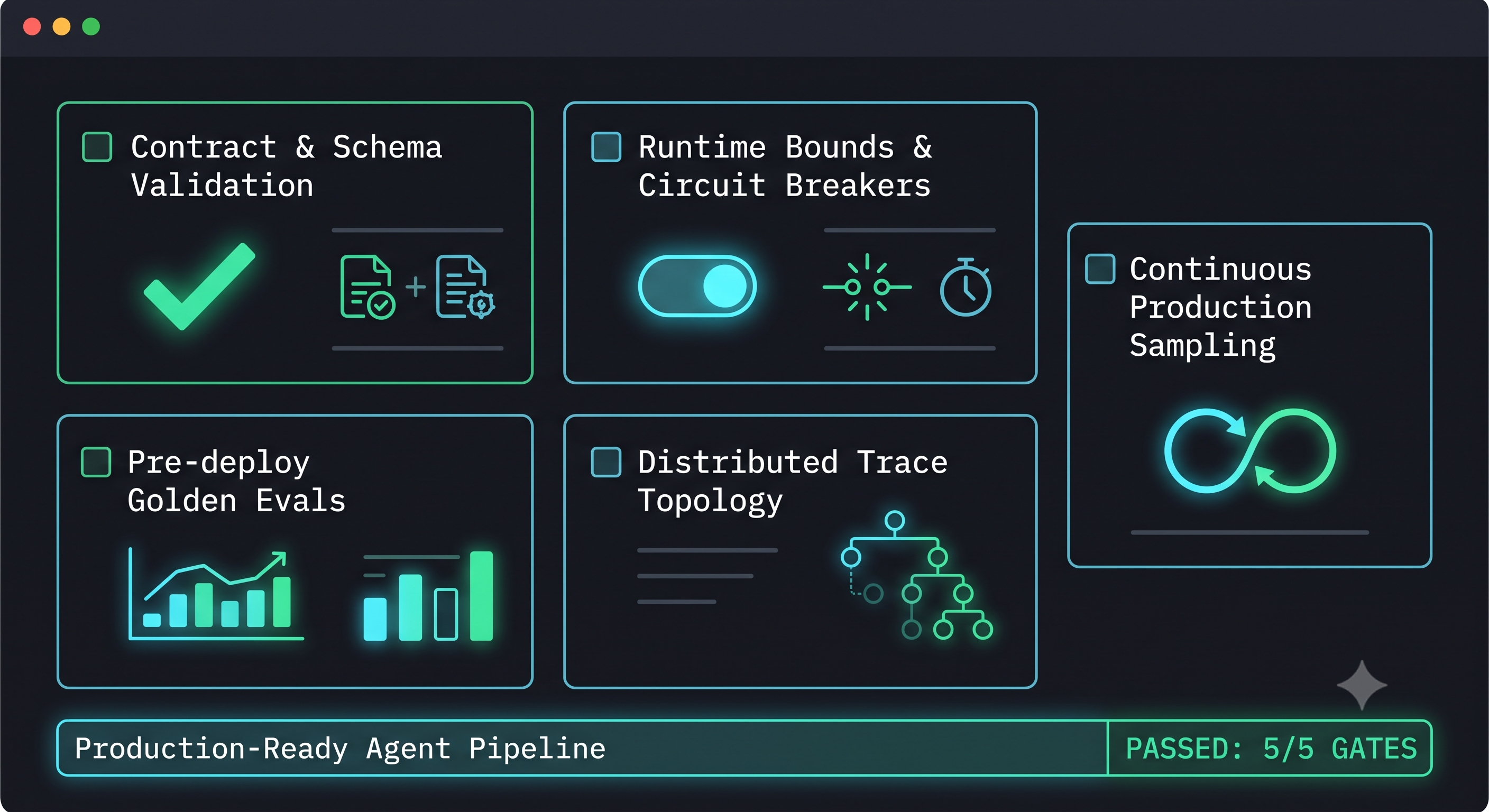
    Save this 5-Layer Production Agent Checklist before pushing your next agent workflow to production:


    Markdown
    [ ] LAYER 1: DETERMINISTIC CONTRACT VALIDATION
    - [ ] Structured Output Enforcement: Enforce strict JSON Schema or Pydantic validation on all terminal model outputs.
    - [ ] Silent Failure Trap: Ensure a JSON parsing error triggers an automatic structured re-prompt rather than bubbling up a 500 error.
    - [ ] Tool Call Schema Matching: Assert exact parameter typing before forwarding tool inputs to your backend APIs.


    [ ] LAYER 2: BOUNDED AGENT RUNTIMES (GUARDRAILS)
    - [ ] Max Hop Circuit-Breaker: Hardcode a deterministic cap on multi-step reasoning steps (e.g., max 6 turns per session) to halt infinite agentic loops.
    - [ ] Token Spend Limit: Set per-session token budgets; gracefully fallback to a human operator when approaching threshold.
    - [ ] Idempotency Check: Verify mutating tool calls (e.g., database writes, payment APIs) have idempotent keys to prevent duplicate execution during retries.


    [ ] LAYER 3: EVALUATION & REGRESSION GATES (PRE-DEPLOY)
    - [ ] Golden Trace Dataset: Run automated CI/CD sweeps against at least 50+ hand-curated multi-turn traces.
    - [ ] Tool Selection Accuracy: Benchmark whether the agent invokes the exact expected API schema across edge-case user prompts.
    - [ ] Scope Refusal Check: Deliberately test adversarial out-of-domain queries to assert boundary enforcement without over-refusal.


    [ ] LAYER 4: OBSERVABILITY & TRACE TOPOLOGY
    - [ ] Causal Span Tracing: Instrument OpenTelemetry semantic conventions for AI across nested model calls, retrievals, and tool executions.
    - [ ] Tool Latency P99: Measure individual tool-call latency separate from LLM Time-to-First-Token (TTFT).
    - [ ] Payload Redaction: Hash and redact sensitive enterprise/PII data before exporting traces to your logging backend.


    [ ] LAYER 5: ONLINE TRAFFIC SAMPLING (POST-DEPLOY)
    - [ ] LLM-as-a-Judge Auditing: Run offline asynchronous evaluators across 5–10% of production traces to evaluate groundedness and safety.
    - [ ] Failure-First Ingestion: Automatically route user "thumbs-down" or aborted interactions directly into your golden regression dataset.
    Rule of Thumb: If your evaluation strategy can't run on every pull request, your agent is unmaintainable.


    Discussion Question
    Which layer is currently the most difficult bottleneck in your agent stack: bounded runtime loops (Layer 2) or automated CI/CD regression suites (Layer 3)?


    CTA (Join AI Builders & Enthusiasts)
    Ready to build, benchmark, and deploy enterprise-grade AI systems? Join AI Builders & Enthusiasts by Techawks to get hands-on architectures, production templates, and technical deep dives with active engineers. [Link in Bio]
    The 5-Layer Production Agent Evaluation Checklist Most builders test AI agents with "vibe checks": run 5 prompts, review the output, and declare it production-ready. Then it touches live users. Costs spiral from runaway agent loops, schema validations fail silently downstream, and model drift causes subtle tool-selection regressions. To ship autonomous agents that survive real-world workloads, you need deterministic verification wrapped around probabilistic models. Save this 5-Layer Production Agent Checklist before pushing your next agent workflow to production: Markdown [ ] LAYER 1: DETERMINISTIC CONTRACT VALIDATION - [ ] Structured Output Enforcement: Enforce strict JSON Schema or Pydantic validation on all terminal model outputs. - [ ] Silent Failure Trap: Ensure a JSON parsing error triggers an automatic structured re-prompt rather than bubbling up a 500 error. - [ ] Tool Call Schema Matching: Assert exact parameter typing before forwarding tool inputs to your backend APIs. [ ] LAYER 2: BOUNDED AGENT RUNTIMES (GUARDRAILS) - [ ] Max Hop Circuit-Breaker: Hardcode a deterministic cap on multi-step reasoning steps (e.g., max 6 turns per session) to halt infinite agentic loops. - [ ] Token Spend Limit: Set per-session token budgets; gracefully fallback to a human operator when approaching threshold. - [ ] Idempotency Check: Verify mutating tool calls (e.g., database writes, payment APIs) have idempotent keys to prevent duplicate execution during retries. [ ] LAYER 3: EVALUATION & REGRESSION GATES (PRE-DEPLOY) - [ ] Golden Trace Dataset: Run automated CI/CD sweeps against at least 50+ hand-curated multi-turn traces. - [ ] Tool Selection Accuracy: Benchmark whether the agent invokes the exact expected API schema across edge-case user prompts. - [ ] Scope Refusal Check: Deliberately test adversarial out-of-domain queries to assert boundary enforcement without over-refusal. [ ] LAYER 4: OBSERVABILITY & TRACE TOPOLOGY - [ ] Causal Span Tracing: Instrument OpenTelemetry semantic conventions for AI across nested model calls, retrievals, and tool executions. - [ ] Tool Latency P99: Measure individual tool-call latency separate from LLM Time-to-First-Token (TTFT). - [ ] Payload Redaction: Hash and redact sensitive enterprise/PII data before exporting traces to your logging backend. [ ] LAYER 5: ONLINE TRAFFIC SAMPLING (POST-DEPLOY) - [ ] LLM-as-a-Judge Auditing: Run offline asynchronous evaluators across 5–10% of production traces to evaluate groundedness and safety. - [ ] Failure-First Ingestion: Automatically route user "thumbs-down" or aborted interactions directly into your golden regression dataset. Rule of Thumb: If your evaluation strategy can't run on every pull request, your agent is unmaintainable. Discussion Question Which layer is currently the most difficult bottleneck in your agent stack: bounded runtime loops (Layer 2) or automated CI/CD regression suites (Layer 3)? CTA (Join AI Builders & Enthusiasts) Ready to build, benchmark, and deploy enterprise-grade AI systems? Join AI Builders & Enthusiasts by Techawks to get hands-on architectures, production templates, and technical deep dives with active engineers. [Link in Bio]
    0 Kommentare 0 Geteilt 170 Ansichten 0 Bewertungen
  • Myth vs. Fact: Is Your Cloud Stack Compliant with the UAE Personal Data Protection Law (PDPL)?


    ❌ Myth 1: "If our cloud database resides in the UAE, we fully satisfy data sovereignty requirements."
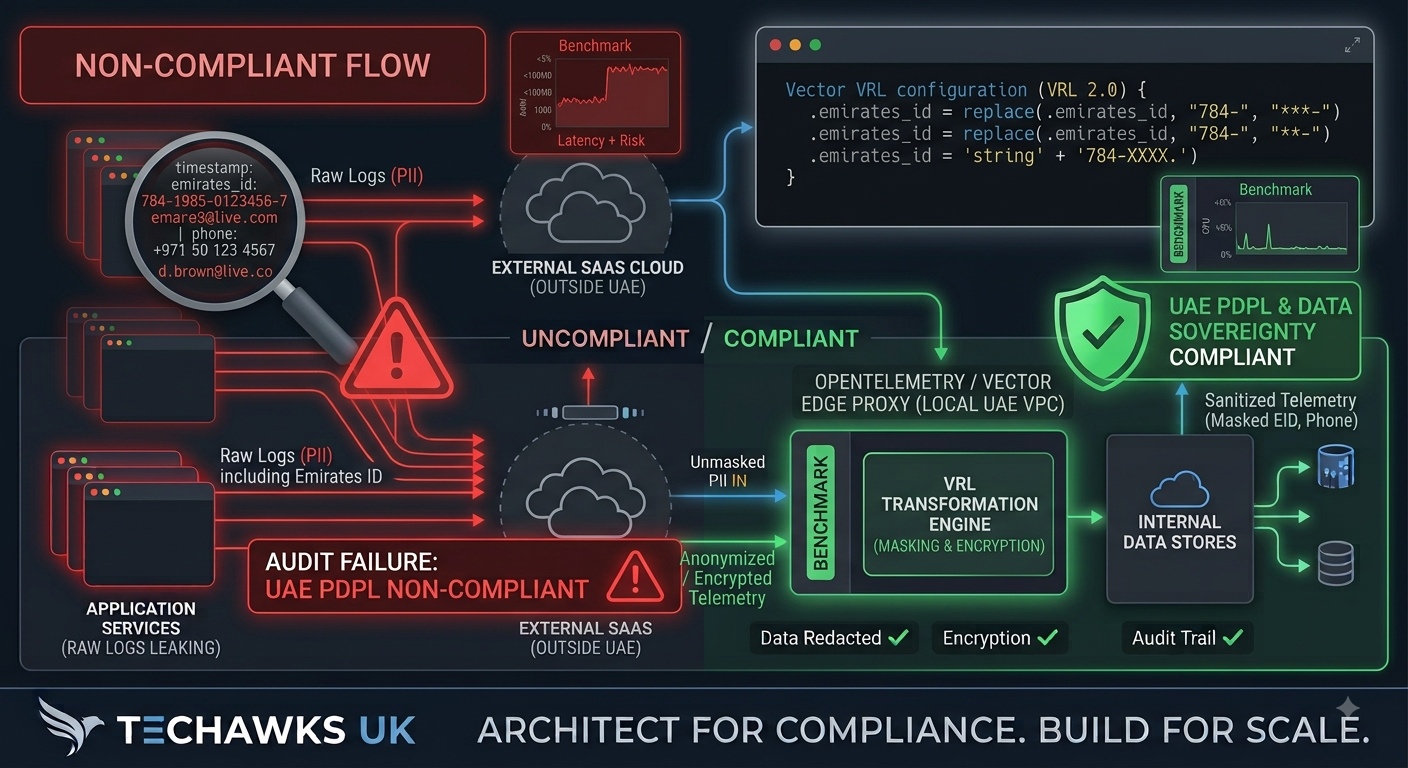
    Fact: Storing data in-region is only half of the equation. Under UAE PDPL, data flow matters just as much as data rest. If application traces, telemetry metrics, or operational debug logs stream unmasked personal data—such as Emirates IDs (784-XXXX...), personal emails, or contact numbers—to third-party SaaS vendors hosted outside the GCC without edge sanitization, you are conducting unauthorized cross-border data transfers.


    ❌ Myth 2: "Log entries and system diagnostics don't count as personal data."
    Fact: The UAE PDPL defines personal data broadly as any information that can directly or indirectly identify an individual. System logs containing IP addresses, device identifiers, or user transaction metadata fall squarely under regulatory scrutiny. Leaving debug logs unredacted in long-term storage or forwarding them unmasked to global monitoring dashboards creates a major compliance gap.


    🛠️ Actionable Advice: How to Architect a PDPL-Compliant Pipeline
    Scrub at the VPC Perimeter: Deploy local ingestion proxies (such as an OpenTelemetry Collector or Vector node) directly inside your UAE cloud VPC.
    Automate Ingestion-Layer Masking: Apply transformation rules at the proxy layer to automatically redact Emirates IDs, scrub mobile numbers, and hash user handles before data leaves the VPC boundary.
    Enforce Dual-Stream Routing: Send fully anonymized, sanitized telemetry to external SaaS monitoring platforms while retaining raw, encrypted, access-controlled audit logs inside secure local storage.


    Key Takeaways
    Data Flow Matters: In-region hosting does not protect you if outbound telemetry streams export raw personal data across borders.
    Logs Are In-Scope: Under UAE PDPL, online identifiers and log entries count as personal data.
    Redact at the Ingestion Layer: Use edge collectors (OpenTelemetry/Vector) within your UAE VPC to scrub PII prior to egress.


    CTA (Join Techawks UAE)
    Looking to align your cloud infrastructure with GCC data governance standards?


    👉 [Join Techawks UAE today] to connect with local system architects, access compliant cloud blueprints, and build scalable systems built for the Middle East tech ecosystem.
    Myth vs. Fact: Is Your Cloud Stack Compliant with the UAE Personal Data Protection Law (PDPL)? ❌ Myth 1: "If our cloud database resides in the UAE, we fully satisfy data sovereignty requirements." Fact: Storing data in-region is only half of the equation. Under UAE PDPL, data flow matters just as much as data rest. If application traces, telemetry metrics, or operational debug logs stream unmasked personal data—such as Emirates IDs (784-XXXX...), personal emails, or contact numbers—to third-party SaaS vendors hosted outside the GCC without edge sanitization, you are conducting unauthorized cross-border data transfers. ❌ Myth 2: "Log entries and system diagnostics don't count as personal data." Fact: The UAE PDPL defines personal data broadly as any information that can directly or indirectly identify an individual. System logs containing IP addresses, device identifiers, or user transaction metadata fall squarely under regulatory scrutiny. Leaving debug logs unredacted in long-term storage or forwarding them unmasked to global monitoring dashboards creates a major compliance gap. 🛠️ Actionable Advice: How to Architect a PDPL-Compliant Pipeline Scrub at the VPC Perimeter: Deploy local ingestion proxies (such as an OpenTelemetry Collector or Vector node) directly inside your UAE cloud VPC. Automate Ingestion-Layer Masking: Apply transformation rules at the proxy layer to automatically redact Emirates IDs, scrub mobile numbers, and hash user handles before data leaves the VPC boundary. Enforce Dual-Stream Routing: Send fully anonymized, sanitized telemetry to external SaaS monitoring platforms while retaining raw, encrypted, access-controlled audit logs inside secure local storage. Key Takeaways Data Flow Matters: In-region hosting does not protect you if outbound telemetry streams export raw personal data across borders. Logs Are In-Scope: Under UAE PDPL, online identifiers and log entries count as personal data. Redact at the Ingestion Layer: Use edge collectors (OpenTelemetry/Vector) within your UAE VPC to scrub PII prior to egress. CTA (Join Techawks UAE) Looking to align your cloud infrastructure with GCC data governance standards? 👉 [Join Techawks UAE today] to connect with local system architects, access compliant cloud blueprints, and build scalable systems built for the Middle East tech ecosystem.
    0 Kommentare 0 Geteilt 470 Ansichten 0 Bewertungen
  • Myth Busted: "Incognito Mode Makes You Completely Anonymous Online"


    Let’s dismantle one of the most common privacy misconceptions among internet users and aspiring security professionals.
    ❌ The Myth
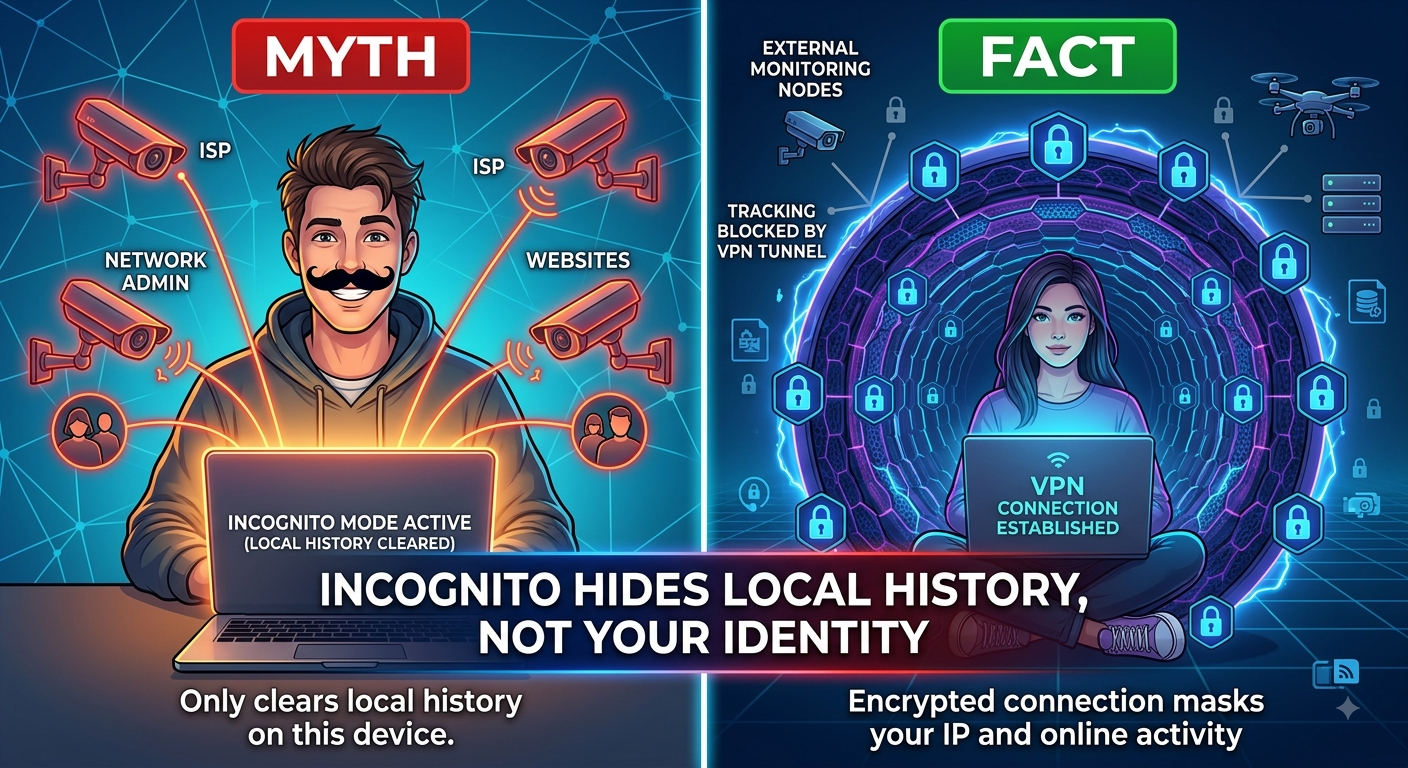
    "Browsing in Incognito or Private mode hides my IP address, conceals my location, and stops my Internet Service Provider (ISP), network admins, or websites from tracking me."
    The Fact
    Incognito mode only wipes your local browsing history, search history, cookies, and form data after you close the session. It does absolutely nothing to encrypt your network traffic or mask your digital identity from external observers.
    Your ISP, university/corporate network administrators, search engines, and the websites you visit can still see every request you make, record your public IP address, and trace your activity directly back to your device.


    What Incognito Mode ACTUALLY Does vs. Doesn't Do
    Feature Incognito / Private Mode Virtual Private Network (VPN) / Tor
    Clears Local History & Cookies ✅ Yes ❌ Not automatically
    Hides Activity from Network Admins/ISP❌ No ✅ Yes (Encrypted Tunnel)
    Masks Your Public IP Address ❌ No ✅ Yes
    Prevents Cross-Site Tracking ⚠️ Partial (Session-based) ✅ High Protection


    Action Plan: How to Actually Protect Your Privacy Online
    Use an Encrypted VPN or Tor for Network Privacy: If you don't want your ISP or public Wi-Fi operator logging the sites you visit, route your connection through a trusted VPN or use Tor to encrypt your traffic end-to-end.
    Switch to a Privacy-Focused Browser: Use browsers like Brave or LibreWolf with built-in fingerprinting protection, auto-blocking of third-party trackers, and strict HTTPS enforcement.
    Encrypted DNS (DoH/DoT): Enable DNS-over-HTTPS in your browser settings to prevent network snoopers from observing the domain names you resolve.


    Key Takeaways
    Local vs. Network Privacy: Incognito mode manages local disk storage; it does not secure your network connection.
    Visibility Remains: ISPs, network admins, and destination websites can still monitor and log your activity in private mode.
    Layered Defense: True online anonymity requires encryption tools like VPNs, Tor, and privacy-hardened browser configurations.


    CTA
    Want to pull back the curtain on how network protocols, tracking technologies, and digital footprints really work?
    Master real cybersecurity techniques, learn packet analysis, and dive deep into offensive and defensive tactics. [Join Cybersecurity & Ethical Hacking] to elevate your security expertise today!
    Myth Busted: "Incognito Mode Makes You Completely Anonymous Online" Let’s dismantle one of the most common privacy misconceptions among internet users and aspiring security professionals. ❌ The Myth "Browsing in Incognito or Private mode hides my IP address, conceals my location, and stops my Internet Service Provider (ISP), network admins, or websites from tracking me." The Fact Incognito mode only wipes your local browsing history, search history, cookies, and form data after you close the session. It does absolutely nothing to encrypt your network traffic or mask your digital identity from external observers. Your ISP, university/corporate network administrators, search engines, and the websites you visit can still see every request you make, record your public IP address, and trace your activity directly back to your device. What Incognito Mode ACTUALLY Does vs. Doesn't Do Feature Incognito / Private Mode Virtual Private Network (VPN) / Tor Clears Local History & Cookies ✅ Yes ❌ Not automatically Hides Activity from Network Admins/ISP❌ No ✅ Yes (Encrypted Tunnel) Masks Your Public IP Address ❌ No ✅ Yes Prevents Cross-Site Tracking ⚠️ Partial (Session-based) ✅ High Protection Action Plan: How to Actually Protect Your Privacy Online Use an Encrypted VPN or Tor for Network Privacy: If you don't want your ISP or public Wi-Fi operator logging the sites you visit, route your connection through a trusted VPN or use Tor to encrypt your traffic end-to-end. Switch to a Privacy-Focused Browser: Use browsers like Brave or LibreWolf with built-in fingerprinting protection, auto-blocking of third-party trackers, and strict HTTPS enforcement. Encrypted DNS (DoH/DoT): Enable DNS-over-HTTPS in your browser settings to prevent network snoopers from observing the domain names you resolve. Key Takeaways Local vs. Network Privacy: Incognito mode manages local disk storage; it does not secure your network connection. Visibility Remains: ISPs, network admins, and destination websites can still monitor and log your activity in private mode. Layered Defense: True online anonymity requires encryption tools like VPNs, Tor, and privacy-hardened browser configurations. CTA Want to pull back the curtain on how network protocols, tracking technologies, and digital footprints really work? Master real cybersecurity techniques, learn packet analysis, and dive deep into offensive and defensive tactics. [Join Cybersecurity & Ethical Hacking] to elevate your security expertise today!
    0 Kommentare 0 Geteilt 211 Ansichten 0 Bewertungen
  • How to Build a High-Impact Tech Portfolio Project That Stand Out to Recruiters


    When tech recruiters scan entry-level resumes, they are looking for evidence of real-world problem solving, code quality, and self-directed learning. A single production-grade, well-documented project can do more for your job hunt than a GPA or dozens of certificate badges.
    Follow this four-step blueprint to build a stand-out portfolio project from scratch:


    Step 1: Solve a Real (or Niche) Problem
    Avoid copying tutorials step-by-step. Instead, build a tool that solves a specific pain point for yourself, a student club, or a local business.
    Action: Look for manual tasks you do repeatedly (e.g., tracking assignment deadlines across multiple platforms, scraping local transit schedules, or automating newsletter summaries) and build a dedicated solution for it.


    Step 2: Focus on Engineering Depth over Feature Quantity
    A simple application with clean architecture, error handling, unit tests, and performance optimization is far more impressive than a massive app full of half-finished, buggy features.
    Action: Pick 1–2 core user flows and polish them thoroughly:
    Implement proper input validation and error states.
    Add responsive UI styling and smooth loading states.
    Write basic unit or integration tests for critical business logic.


    Step 3: Deploy to Production (Don't Keep It on localhost)
    A repository that only runs on your local machine creates friction for reviewers. If a hiring manager can click a link and test your app in 5 seconds, your chances of getting an interview skyrocket.
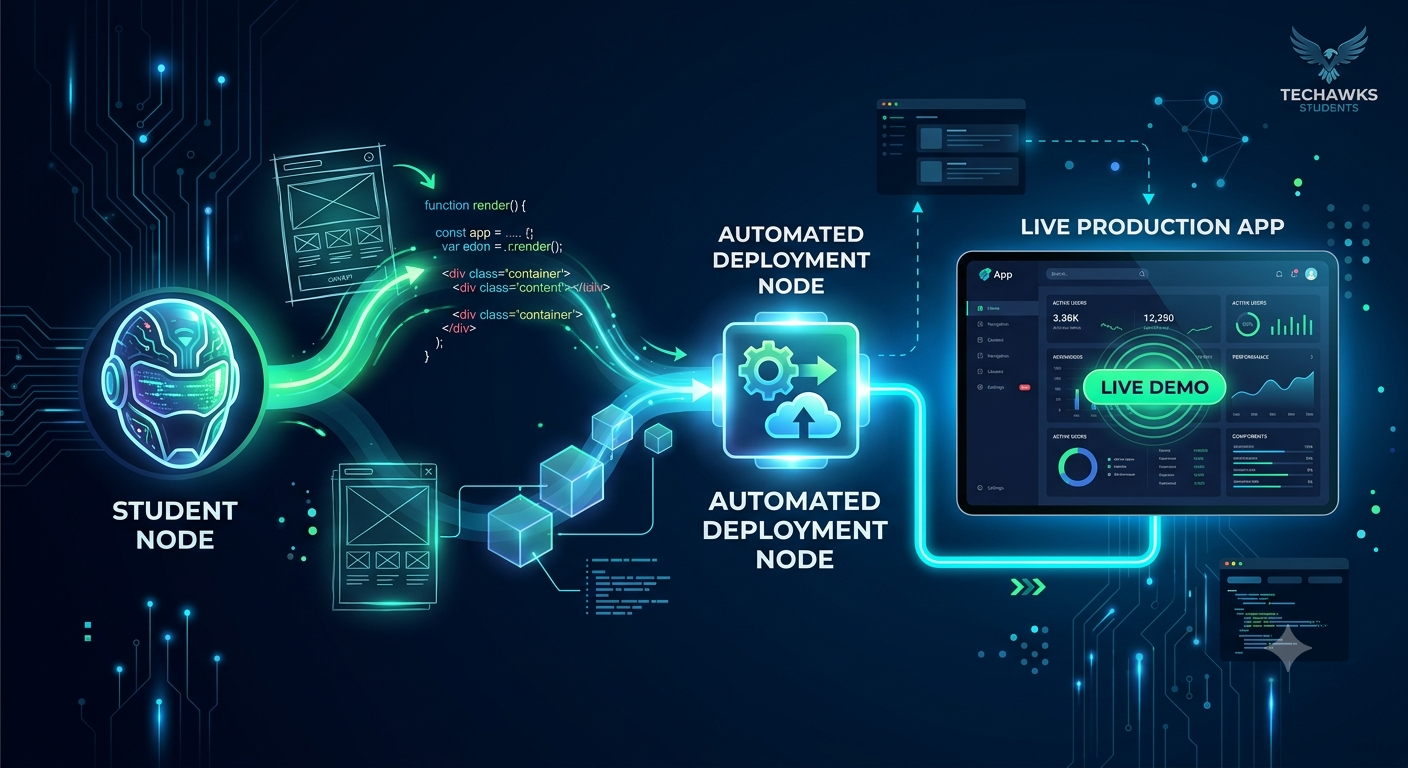
    Action: Deploy your project using free or low-cost cloud platforms (e.g., Vercel, Render, Netlify, or AWS Free Tier). Set up a continuous deployment (CD) pipeline so every push to your main Git branch automatically updates the live site.


    Step 4: Write a Senior-Level GitHub README
    Your README file is the homepage of your project. Recruiters and engineers will often read it before ever opening your source code.
    Action: Structure your README with these essential sections:
    Project Overview: A clear 2-sentence summary of what the tool does and why you built it.
    Live Demo Link & Screenshots/GIFs: Visual proof that the app works.
    Tech Stack: A concise bulleted list of languages, frameworks, databases, and hosting tools used.
    Key Engineering Challenges: A short paragraph explaining a tough technical bug or architectural decision you solved during development.


    Key Takeaways
    Originality Beats Tutorials: Build tools that solve real, personal, or practical problems rather than repeating generic online tutorials.
    Ship to the Web: Always deploy your application so non-technical recruiters can test it instantly without running terminal commands.
    Document Your Progress: A detailed, professional README shows strong technical communication skills—a key trait senior engineers look for in interns and juniors.


    CTA
    Starting your tech journey or working on your next big project? Connect with fellow students, mentors, and early-career engineers to get feedback on your code, find project collaborators, and swap interview prep resources. Join the Students in Tech Community today!
    How to Build a High-Impact Tech Portfolio Project That Stand Out to Recruiters When tech recruiters scan entry-level resumes, they are looking for evidence of real-world problem solving, code quality, and self-directed learning. A single production-grade, well-documented project can do more for your job hunt than a GPA or dozens of certificate badges. Follow this four-step blueprint to build a stand-out portfolio project from scratch: Step 1: Solve a Real (or Niche) Problem Avoid copying tutorials step-by-step. Instead, build a tool that solves a specific pain point for yourself, a student club, or a local business. Action: Look for manual tasks you do repeatedly (e.g., tracking assignment deadlines across multiple platforms, scraping local transit schedules, or automating newsletter summaries) and build a dedicated solution for it. Step 2: Focus on Engineering Depth over Feature Quantity A simple application with clean architecture, error handling, unit tests, and performance optimization is far more impressive than a massive app full of half-finished, buggy features. Action: Pick 1–2 core user flows and polish them thoroughly: Implement proper input validation and error states. Add responsive UI styling and smooth loading states. Write basic unit or integration tests for critical business logic. Step 3: Deploy to Production (Don't Keep It on localhost) A repository that only runs on your local machine creates friction for reviewers. If a hiring manager can click a link and test your app in 5 seconds, your chances of getting an interview skyrocket. Action: Deploy your project using free or low-cost cloud platforms (e.g., Vercel, Render, Netlify, or AWS Free Tier). Set up a continuous deployment (CD) pipeline so every push to your main Git branch automatically updates the live site. Step 4: Write a Senior-Level GitHub README Your README file is the homepage of your project. Recruiters and engineers will often read it before ever opening your source code. Action: Structure your README with these essential sections: Project Overview: A clear 2-sentence summary of what the tool does and why you built it. Live Demo Link & Screenshots/GIFs: Visual proof that the app works. Tech Stack: A concise bulleted list of languages, frameworks, databases, and hosting tools used. Key Engineering Challenges: A short paragraph explaining a tough technical bug or architectural decision you solved during development. Key Takeaways Originality Beats Tutorials: Build tools that solve real, personal, or practical problems rather than repeating generic online tutorials. Ship to the Web: Always deploy your application so non-technical recruiters can test it instantly without running terminal commands. Document Your Progress: A detailed, professional README shows strong technical communication skills—a key trait senior engineers look for in interns and juniors. CTA Starting your tech journey or working on your next big project? Connect with fellow students, mentors, and early-career engineers to get feedback on your code, find project collaborators, and swap interview prep resources. Join the Students in Tech Community today!
    0 Kommentare 0 Geteilt 122 Ansichten 0 Bewertungen
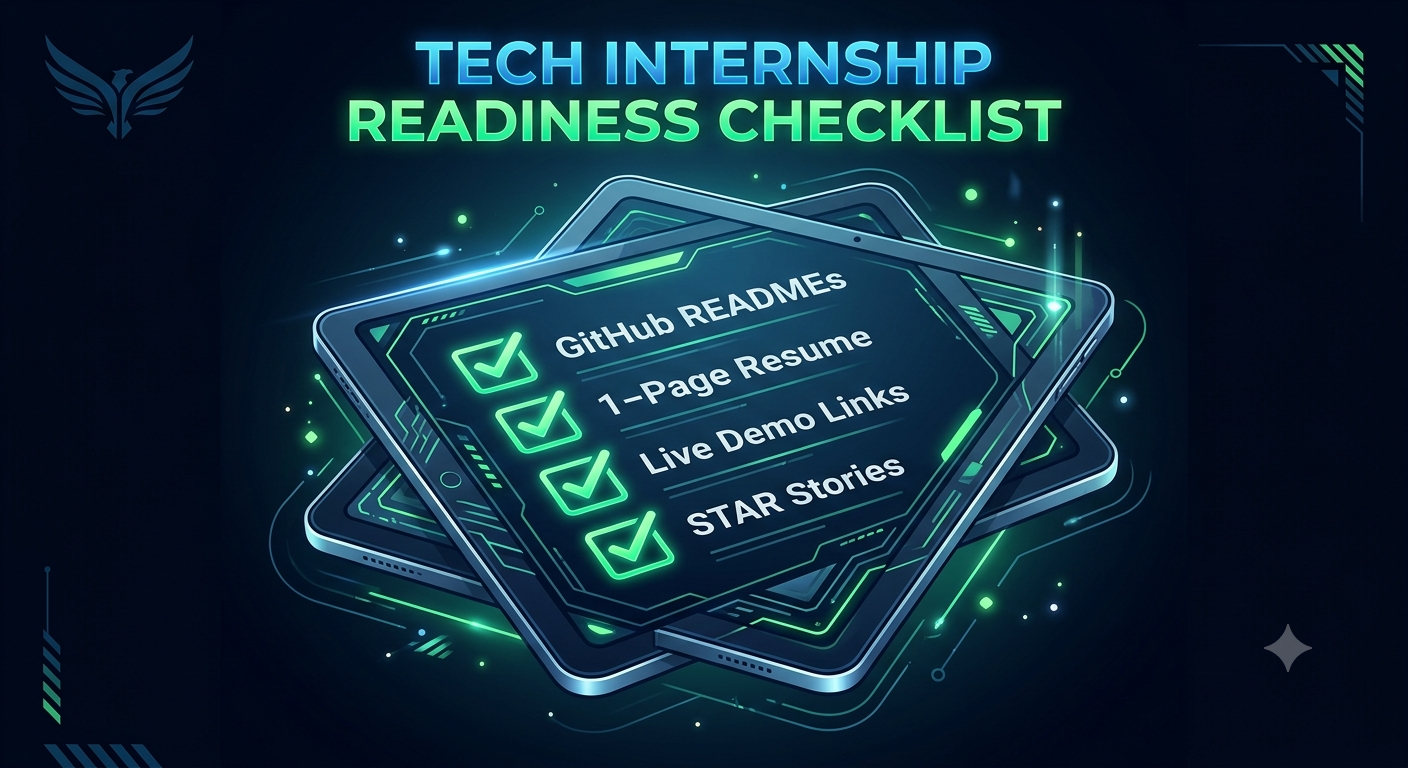
  • The Tech Internship Readiness Checklist: Are You Actually Resume-Ready?


    Landing your first tech internship isn't about having a 10-page resume—it's about presenting a clean, proof-of-ability portfolio. Use this actionable checklist to audit your readiness before applying:


    📋 The Ultimate Tech Student Readiness Checklist
    1. Clean Up Your GitHub Profile
    Pin your top 2–3 best projects.
    Ensure every repository has a clear README.md explaining setup instructions, tech stack, and features.
    Make sure your contribution graph reflects active coding.


    2. Optimize Your Resume for ATS (Applicant Tracking Systems)
    Keep it strictly to 1 page.
    Use action verbs and quantifiable results (e.g., "Optimized API responses, reducing load time by 30%" instead of "Built an API").
    Format in a clean, single-column layout without complex tables or graphics that trip up scanners.


    3. Verify Live Demos
    Test every live deployment link on your resume and portfolio.
    Ensure there are zero broken links, 404 errors, or broken environment variables.


    4. Lock Down Core CS Fundamentals
    Be ready to talk through basic Data Structures and Algorithms (arrays, linked lists, trees, hash maps).
    Practice explaining your code out loud—communication is just as critical as technical implementation.


    5. Polish Your Professional Online Presence
    Update your LinkedIn headline to specify your focus (e.g., Frontend Dev | CS Student @ University).
    Include working links to your GitHub, portfolio website, and professional email address.


    6. Prepare 2–3 Impact Stories
    Have concise stories ready using the STAR method (Situation, Task, Action, Result) detailing a tough bug you solved or a team project challenge you navigated.


    Key Takeaways
    Audit Before Applying: A 5-minute check prevents your resume from being discarded due to broken links or poor formatting.
    Quantify Results: Metrics turn basic project bullet points into compelling evidence of your skills.
    First Impressions Count: Clean GitHub READMEs and working live demos set top candidates apart instantly.


    CTA (Join Students in Tech)
    Want feedback on your resume, portfolio, or GitHub profile before sending out applications?


    🚀 Join the Students in Tech community today to get peer reviews, practice mock interviews, and level up alongside fellow student builders!
    The Tech Internship Readiness Checklist: Are You Actually Resume-Ready? Landing your first tech internship isn't about having a 10-page resume—it's about presenting a clean, proof-of-ability portfolio. Use this actionable checklist to audit your readiness before applying: 📋 The Ultimate Tech Student Readiness Checklist 1. Clean Up Your GitHub Profile Pin your top 2–3 best projects. Ensure every repository has a clear README.md explaining setup instructions, tech stack, and features. Make sure your contribution graph reflects active coding. 2. Optimize Your Resume for ATS (Applicant Tracking Systems) Keep it strictly to 1 page. Use action verbs and quantifiable results (e.g., "Optimized API responses, reducing load time by 30%" instead of "Built an API"). Format in a clean, single-column layout without complex tables or graphics that trip up scanners. 3. Verify Live Demos Test every live deployment link on your resume and portfolio. Ensure there are zero broken links, 404 errors, or broken environment variables. 4. Lock Down Core CS Fundamentals Be ready to talk through basic Data Structures and Algorithms (arrays, linked lists, trees, hash maps). Practice explaining your code out loud—communication is just as critical as technical implementation. 5. Polish Your Professional Online Presence Update your LinkedIn headline to specify your focus (e.g., Frontend Dev | CS Student @ University). Include working links to your GitHub, portfolio website, and professional email address. 6. Prepare 2–3 Impact Stories Have concise stories ready using the STAR method (Situation, Task, Action, Result) detailing a tough bug you solved or a team project challenge you navigated. Key Takeaways Audit Before Applying: A 5-minute check prevents your resume from being discarded due to broken links or poor formatting. Quantify Results: Metrics turn basic project bullet points into compelling evidence of your skills. First Impressions Count: Clean GitHub READMEs and working live demos set top candidates apart instantly. CTA (Join Students in Tech) Want feedback on your resume, portfolio, or GitHub profile before sending out applications? 🚀 Join the Students in Tech community today to get peer reviews, practice mock interviews, and level up alongside fellow student builders!
    0 Kommentare 0 Geteilt 174 Ansichten 0 Bewertungen
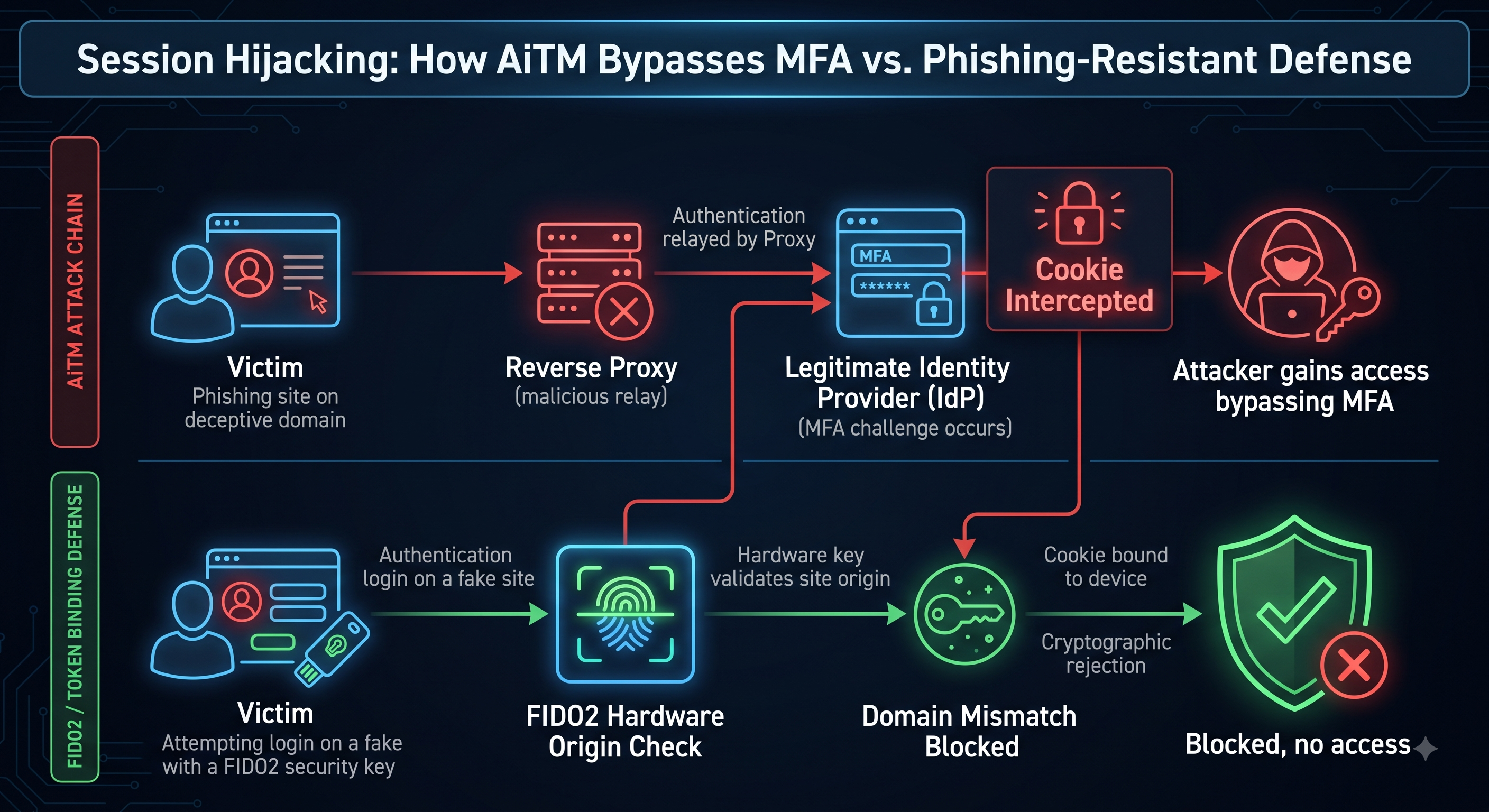
  • Why Multi-Factor Authentication is not enough: The mechanics of Adversary-in-the-Middle (AiTM) and Session Token Theft.


    Traditional credential harvesting targeted usernames and passwords. Today, adversaries bypass standard MFA entirely by targeting the authenticated session cookie generated after a successful login.


    The 3-Stage Attack Chain (AiTM & Pass-the-Cookie):
    The Reverse Proxy Interception:
    Instead of hosting a static clone of a login page, the attacker deploys a reverse-proxy engine (e.g., Evilginx). When the victim clicks a phishing link, the proxy transparently relays HTTP requests between the victim and the legitimate Identity Provider (IdP).


    The Post-MFA Handshake:
    The victim enters their password and successfully approves the push notification or TOTP code. The legitimate IdP validates the login and emits an authentication session cookie / OAuth refresh token.


    Session Replay (Pass-the-Cookie):
    The proxy intercepts and saves that session cookie before passing it to the victim. The adversary injects this stolen token into their own browser. Because the session is already authenticated, the cloud service accepts the connection immediately—no MFA challenge triggered, no password needed.


    Plaintext
    Victim Browser ──► [ Adversary Proxy (AiTM) ] ──► [ Legitimate Identity Provider ]
    │ ▲
    │ (Relays Credentials & MFA Prompt) │
    ▼ │
    Steals Session Cookie ◄───────────────────────┘


    How Security Engineers Defend Against Token Theft:
    Deploy Phishing-Resistant MFA (FIDO2 / WebAuthn / Passkeys):
    Unlike SMS, TOTP apps, or push notifications, FIDO2 authentication cryptographically binds the authentication credential to the browser’s origin URL. If the user is on attacker-login.com, the hardware key refuses to sign the challenge for login.microsoftonline.com, terminating the attack at step 1.


    Continuous Access Evaluation (CAE) & Device Binding:
    Implement token protection policies that cryptographically bind session tokens to the physical device's Trusted Platform Module (TPM). If an attacker replays the cookie from an untrusted hardware fingerprint or non-compliant IP, the IdP revokes the token instantly.


    Identity Threat Detection and Response (ITDR):
    Monitor sign-in telemetry for impossible travel, unusual user-agent shifts on active sessions, and immediate anomalous persistence actions (e.g., automated mailbox forwarding rules created seconds after authentication).


    Discussion Question
    For SOC analysts, security engineers, and learners: How is your team handling post-authentication risk—are you migrating to FIDO2 passkeys, or relying on identity behavioral telemetry and CAE to revoke hijacked sessions? Let’s share notes below.


    CTA
    Build real-world defensive and offensive security skills with Techawks Cybersecurity.
    Join our Cybersecurity & Ethical Hacking community to break down attack chains, analyze detection engineering rules, and practice hands-on lab scenarios with security professionals worldwide: [Join Techawks Cybersecurity Community]
    Why Multi-Factor Authentication is not enough: The mechanics of Adversary-in-the-Middle (AiTM) and Session Token Theft. Traditional credential harvesting targeted usernames and passwords. Today, adversaries bypass standard MFA entirely by targeting the authenticated session cookie generated after a successful login. The 3-Stage Attack Chain (AiTM & Pass-the-Cookie): The Reverse Proxy Interception: Instead of hosting a static clone of a login page, the attacker deploys a reverse-proxy engine (e.g., Evilginx). When the victim clicks a phishing link, the proxy transparently relays HTTP requests between the victim and the legitimate Identity Provider (IdP). The Post-MFA Handshake: The victim enters their password and successfully approves the push notification or TOTP code. The legitimate IdP validates the login and emits an authentication session cookie / OAuth refresh token. Session Replay (Pass-the-Cookie): The proxy intercepts and saves that session cookie before passing it to the victim. The adversary injects this stolen token into their own browser. Because the session is already authenticated, the cloud service accepts the connection immediately—no MFA challenge triggered, no password needed. Plaintext Victim Browser ──► [ Adversary Proxy (AiTM) ] ──► [ Legitimate Identity Provider ] │ ▲ │ (Relays Credentials & MFA Prompt) │ ▼ │ Steals Session Cookie ◄───────────────────────┘ How Security Engineers Defend Against Token Theft: Deploy Phishing-Resistant MFA (FIDO2 / WebAuthn / Passkeys): Unlike SMS, TOTP apps, or push notifications, FIDO2 authentication cryptographically binds the authentication credential to the browser’s origin URL. If the user is on attacker-login.com, the hardware key refuses to sign the challenge for login.microsoftonline.com, terminating the attack at step 1. Continuous Access Evaluation (CAE) & Device Binding: Implement token protection policies that cryptographically bind session tokens to the physical device's Trusted Platform Module (TPM). If an attacker replays the cookie from an untrusted hardware fingerprint or non-compliant IP, the IdP revokes the token instantly. Identity Threat Detection and Response (ITDR): Monitor sign-in telemetry for impossible travel, unusual user-agent shifts on active sessions, and immediate anomalous persistence actions (e.g., automated mailbox forwarding rules created seconds after authentication). Discussion Question For SOC analysts, security engineers, and learners: How is your team handling post-authentication risk—are you migrating to FIDO2 passkeys, or relying on identity behavioral telemetry and CAE to revoke hijacked sessions? Let’s share notes below. CTA Build real-world defensive and offensive security skills with Techawks Cybersecurity. Join our Cybersecurity & Ethical Hacking community to break down attack chains, analyze detection engineering rules, and practice hands-on lab scenarios with security professionals worldwide: [Join Techawks Cybersecurity Community]
    0 Kommentare 0 Geteilt 253 Ansichten 0 Bewertungen
  • Myth vs. Fact: Do You Need to Match 100% of Job Requirements to Apply?
    Job descriptions are rarely strict boundary lines set in stone. In reality, most postings represent a hiring manager’s idealized "wish list" rather than an absolute minimum threshold.
    Failing to apply due to self-selection is one of the biggest bottlenecks candidates face during a job search. Let’s separate tech hiring myths from real-world recruitment realities:


    Myth #1: If you don’t meet 100% of the listed requirements, your resume will be automatically rejected.
    Fact: Meeting 60%–70% of core requirements is often enough to secure an initial screening call.
    Why? Employers routinely list every tool or technology used across their entire team. What they actually need is a developer with solid foundational skills who can learn domain-specific tooling on the job.
    The Action: Focus on core competencies (e.g., strong backend logic, system design, or frontend state management) rather than secondary tooling (e.g., a specific logging framework or niche testing library). If you hold the core skills, send the application.


    Myth #2: "Years of experience" requirements are rigid, non-negotiable cutoffs.
    Fact: Demonstrated impact and project complexity routinely outweigh arbitrary year counts.
    Why? Three years of high-velocity, production-level development at a scaling startup often yields more relevant experience than five years of routine maintenance on legacy systems.
    The Action: Reframe your experience around outcomes and metrics rather than time served. Show how you reduced API latency, scaled database throughput, or spearheaded feature launches.


    Myth #3: Applying directly through job boards is the only way to get noticed.
    Fact: Cold applying without networking drastically lowers your response rate.
    Why? Applicant Tracking Systems (ATS) handle hundreds of cold submissions per posting. An internal referral or a direct conversation with a engineering manager instantly bypasses the initial resume stack.
    The Action: Don't just click "Submit." Find a developer or engineering lead at the target company on LinkedIn, share a brief note highlighting alignment with their team's stack, and request a quick 10-minute informational chat.


    Key Takeaways
    The 60% Rule: Treat job postings as wishlist guidelines—if you match ~60% of the core skills, apply confidence.
    Impact over time: Highlight complex technical problems solved and measurable results rather than focusing strictly on years of experience.
    Bypass cold stacks: Pair every online application with targeted outreach to recruiters or engineering peers.


    CTA (Join Tech Jobs & Opportunities)
    Looking to navigate your tech career with confidence, optimize your interview pipeline, and unlock unlisted job opportunities? [Join Tech Jobs & Opportunities] to connect with hiring managers, recruiters, and fellow tech professionals!
    Myth vs. Fact: Do You Need to Match 100% of Job Requirements to Apply? Job descriptions are rarely strict boundary lines set in stone. In reality, most postings represent a hiring manager’s idealized "wish list" rather than an absolute minimum threshold. Failing to apply due to self-selection is one of the biggest bottlenecks candidates face during a job search. Let’s separate tech hiring myths from real-world recruitment realities: Myth #1: If you don’t meet 100% of the listed requirements, your resume will be automatically rejected. Fact: Meeting 60%–70% of core requirements is often enough to secure an initial screening call. Why? Employers routinely list every tool or technology used across their entire team. What they actually need is a developer with solid foundational skills who can learn domain-specific tooling on the job. The Action: Focus on core competencies (e.g., strong backend logic, system design, or frontend state management) rather than secondary tooling (e.g., a specific logging framework or niche testing library). If you hold the core skills, send the application. Myth #2: "Years of experience" requirements are rigid, non-negotiable cutoffs. Fact: Demonstrated impact and project complexity routinely outweigh arbitrary year counts. Why? Three years of high-velocity, production-level development at a scaling startup often yields more relevant experience than five years of routine maintenance on legacy systems. The Action: Reframe your experience around outcomes and metrics rather than time served. Show how you reduced API latency, scaled database throughput, or spearheaded feature launches. Myth #3: Applying directly through job boards is the only way to get noticed. Fact: Cold applying without networking drastically lowers your response rate. Why? Applicant Tracking Systems (ATS) handle hundreds of cold submissions per posting. An internal referral or a direct conversation with a engineering manager instantly bypasses the initial resume stack. The Action: Don't just click "Submit." Find a developer or engineering lead at the target company on LinkedIn, share a brief note highlighting alignment with their team's stack, and request a quick 10-minute informational chat. Key Takeaways The 60% Rule: Treat job postings as wishlist guidelines—if you match ~60% of the core skills, apply confidence. Impact over time: Highlight complex technical problems solved and measurable results rather than focusing strictly on years of experience. Bypass cold stacks: Pair every online application with targeted outreach to recruiters or engineering peers. CTA (Join Tech Jobs & Opportunities) Looking to navigate your tech career with confidence, optimize your interview pipeline, and unlock unlisted job opportunities? [Join Tech Jobs & Opportunities] to connect with hiring managers, recruiters, and fellow tech professionals!
    0 Kommentare 0 Geteilt 1KB Ansichten 0 Bewertungen
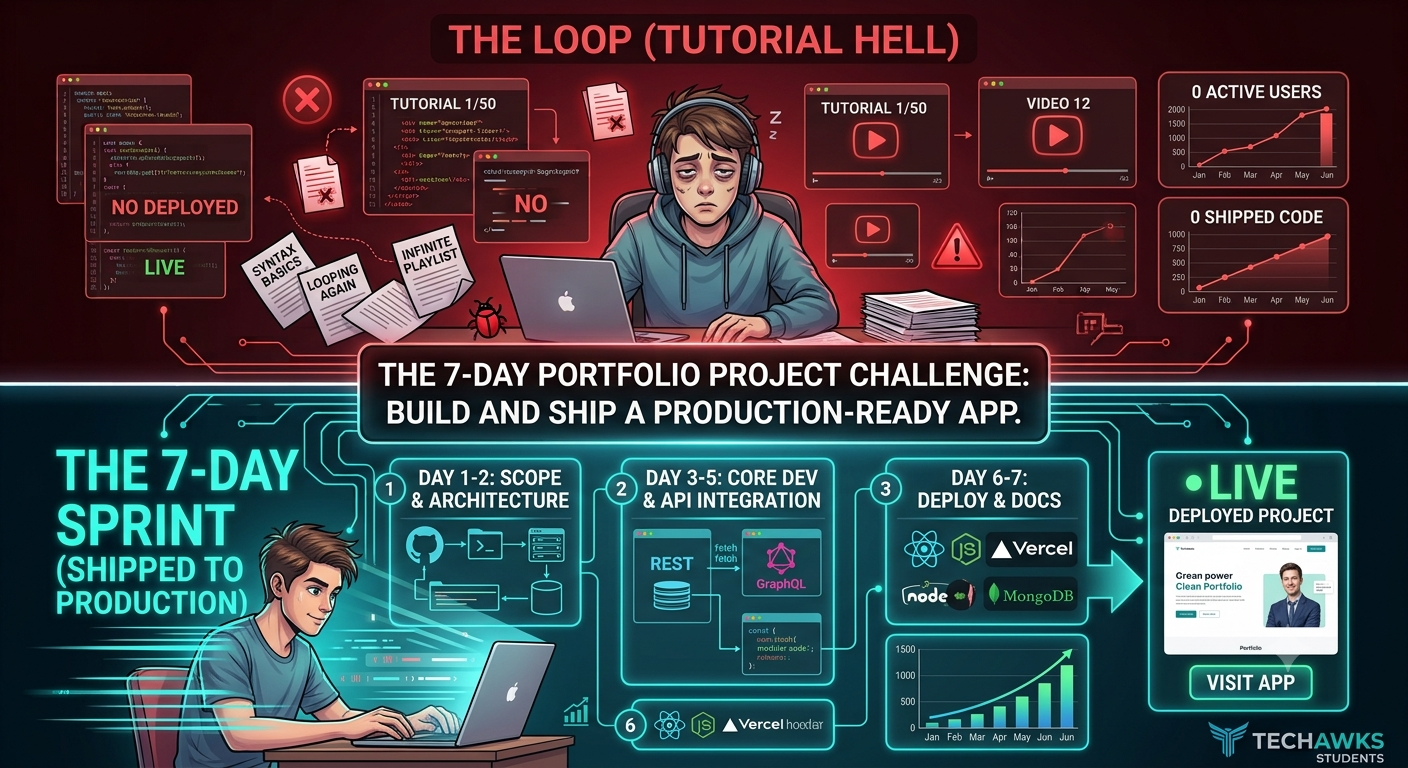
  • The 7-Day Portfolio Project Challenge: Build and Ship a Production-Ready App
    Most student portfolios are filled with identical assignments: basic todo lists, weather apps, or generic clones. Hiring managers skip right past these because they don't demonstrate real-world engineering decisions.


    To stand out in entry-level tech applications, you need to showcase project ownership, API integration, and deployment. Here is your 7-day blueprint to ship a functional, production-ready app:


    Days 1–2: Scope & Architecture
    The Goal: Define a small problem and map your stack.
    The Action: Pick a niche utility app (e.g., a lightweight developer cheat-sheet generator, a localized study-timer with stats, or a simple markdown parser).
    The Rule: Keep the feature set minimal. Define maximum 2 core endpoints/pages. Draw your database schema and UI layout on paper before opening your IDE.


    Days 3–5: Core Development & Integration
    The Goal: Build the functional core using real data or external APIs.
    The Action: Write clean, modular code. Implement essential features first:
    Fetch dynamic data using a public REST or GraphQL API.
    Handle loading, error, and empty states gracefully in your UI.
    The Rule: Don't get stuck styling early. Make it work first, then make it look clean.


    Days 6–7: Deploy, Document & Ship
    The Goal: Put your code live on the internet with a professional repository.
    The Action: Deploy: Host your app live using free hosting platforms (e.g., Vercel, Render, Netlify, or GitHub Pages).
    Write the README: Include a clear project description, system architecture diagram, tech stack badges, local setup instructions, and key technical challenges solved.
    Share: Post a 30-second screen recording of your working app on LinkedIn or X with a live link.


    Key Takeaways
    Ship over perfect: A deployed, 80%-featured project online beats a 100%-featured project sitting on your local localhost.
    Document your engineering decisions: A well-structured README.md explaining why you chose specific tools is as important as the code itself.
    Break out of tutorial loops: Learn just enough syntax to start building, then Google and solve edge cases as you hit them in production.


    CTA (Join Students in Tech)
    Ready to build in public, get code reviews from experienced mentors, and collaborate with ambitious peers? [Join Students in Tech] to share your projects, participate in hackathons, and level up your engineering skills!
    The 7-Day Portfolio Project Challenge: Build and Ship a Production-Ready App Most student portfolios are filled with identical assignments: basic todo lists, weather apps, or generic clones. Hiring managers skip right past these because they don't demonstrate real-world engineering decisions. To stand out in entry-level tech applications, you need to showcase project ownership, API integration, and deployment. Here is your 7-day blueprint to ship a functional, production-ready app: Days 1–2: Scope & Architecture The Goal: Define a small problem and map your stack. The Action: Pick a niche utility app (e.g., a lightweight developer cheat-sheet generator, a localized study-timer with stats, or a simple markdown parser). The Rule: Keep the feature set minimal. Define maximum 2 core endpoints/pages. Draw your database schema and UI layout on paper before opening your IDE. Days 3–5: Core Development & Integration The Goal: Build the functional core using real data or external APIs. The Action: Write clean, modular code. Implement essential features first: Fetch dynamic data using a public REST or GraphQL API. Handle loading, error, and empty states gracefully in your UI. The Rule: Don't get stuck styling early. Make it work first, then make it look clean. Days 6–7: Deploy, Document & Ship The Goal: Put your code live on the internet with a professional repository. The Action: Deploy: Host your app live using free hosting platforms (e.g., Vercel, Render, Netlify, or GitHub Pages). Write the README: Include a clear project description, system architecture diagram, tech stack badges, local setup instructions, and key technical challenges solved. Share: Post a 30-second screen recording of your working app on LinkedIn or X with a live link. Key Takeaways Ship over perfect: A deployed, 80%-featured project online beats a 100%-featured project sitting on your local localhost. Document your engineering decisions: A well-structured README.md explaining why you chose specific tools is as important as the code itself. Break out of tutorial loops: Learn just enough syntax to start building, then Google and solve edge cases as you hit them in production. CTA (Join Students in Tech) Ready to build in public, get code reviews from experienced mentors, and collaborate with ambitious peers? [Join Students in Tech] to share your projects, participate in hackathons, and level up your engineering skills!
    0 Kommentare 0 Geteilt 2KB Ansichten 0 Bewertungen
Weitere Ergebnisse