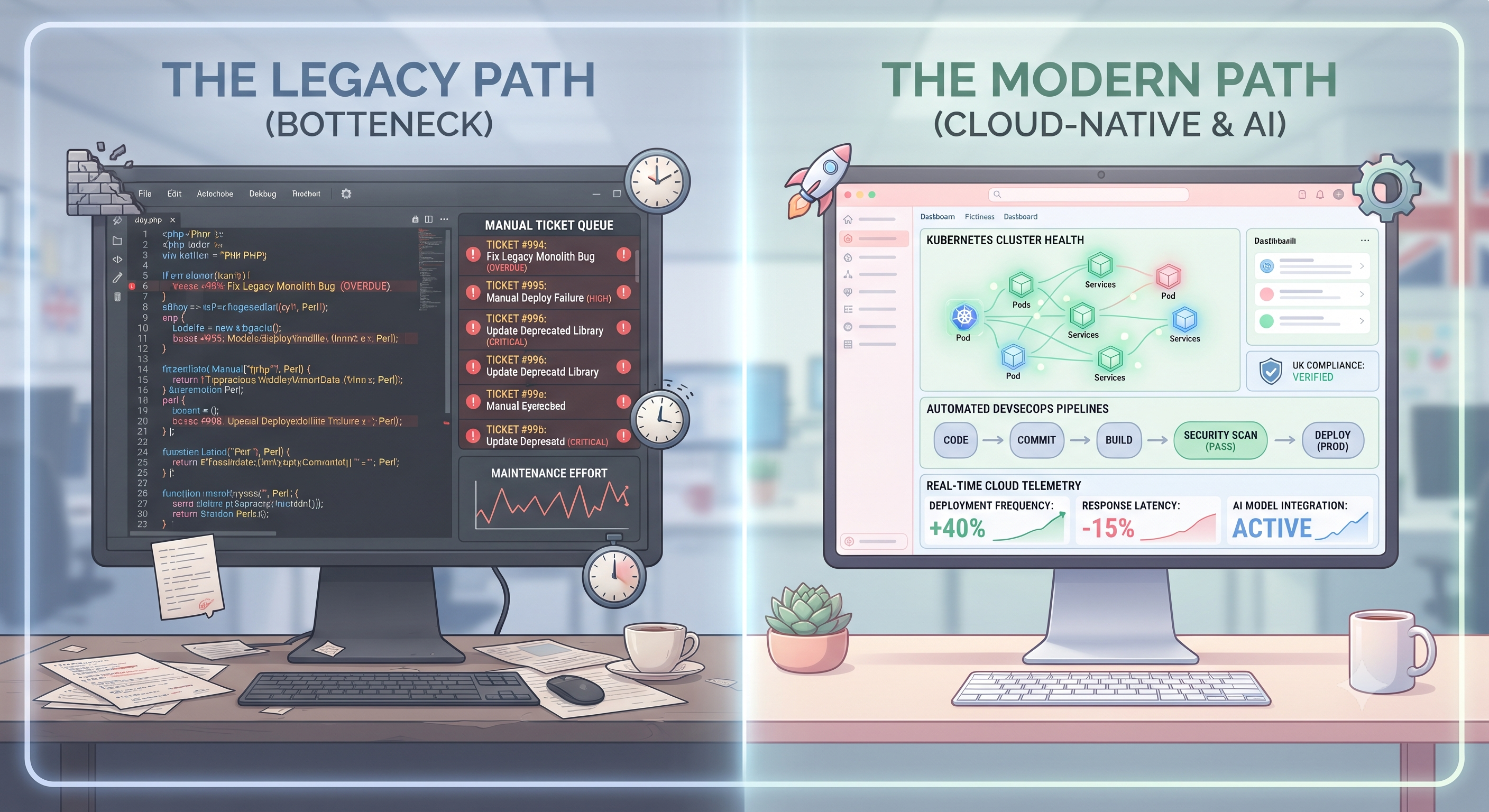
• Stop Maintaining Legacy Code: Why UK Tech Hiring Managers Are Prioritizing Cloud-Native and AI System Fluency


    The UK technology job market has evolved past generic credential filtering and basic framework familiarity. Across financial services, scale-ups, and enterprise digital transformations, companies are aggressively prioritizing specialized execution and system resilience.


    To stand out in competitive UK hiring bands and command top-tier compensation, professionals must master high-impact engineering capabilities:


    Cloud & Platform Engineering: Moving beyond basic server management to implement Infrastructure as Code (Terraform), containerisation (Kubernetes), and internal developer platforms that accelerate delivery.


    AI & LLM Integration: Embedding machine learning and generative workflows directly into production applications rather than relying on isolated proof-of-concept scripts.


    DevSecOps & Compliance: Baking stringent data governance, cloud security architecture, and automated validation gates straight into CI/CD workflows to meet UK and EU regulatory expectations.


    Why this matters: Data across the UK tech ecosystem shows that while general junior hiring remains selective, demand for specialist skills in cloud infrastructure, cybersecurity, and artificial intelligence continues to outpace supply. Shifting your focus from routine maintenance to robust system architecture is the most reliable way to future-proof your career.


    Discussion Question
    Are you seeing your UK-based team shift toward cloud-native platforms and automated AI workflows, or are legacy systems still slowing down your sprints? Let’s talk strategy below!


    CTA
    Ready to navigate the UK technology market and accelerate your career growth? Join Techawks UK to connect with local leaders, share production blueprints, and stay ahead of the curve.
    Stop Maintaining Legacy Code: Why UK Tech Hiring Managers Are Prioritizing Cloud-Native and AI System Fluency The UK technology job market has evolved past generic credential filtering and basic framework familiarity. Across financial services, scale-ups, and enterprise digital transformations, companies are aggressively prioritizing specialized execution and system resilience. To stand out in competitive UK hiring bands and command top-tier compensation, professionals must master high-impact engineering capabilities: Cloud & Platform Engineering: Moving beyond basic server management to implement Infrastructure as Code (Terraform), containerisation (Kubernetes), and internal developer platforms that accelerate delivery. AI & LLM Integration: Embedding machine learning and generative workflows directly into production applications rather than relying on isolated proof-of-concept scripts. DevSecOps & Compliance: Baking stringent data governance, cloud security architecture, and automated validation gates straight into CI/CD workflows to meet UK and EU regulatory expectations. Why this matters: Data across the UK tech ecosystem shows that while general junior hiring remains selective, demand for specialist skills in cloud infrastructure, cybersecurity, and artificial intelligence continues to outpace supply. Shifting your focus from routine maintenance to robust system architecture is the most reliable way to future-proof your career. Discussion Question Are you seeing your UK-based team shift toward cloud-native platforms and automated AI workflows, or are legacy systems still slowing down your sprints? Let’s talk strategy below! CTA Ready to navigate the UK technology market and accelerate your career growth? Join Techawks UK to connect with local leaders, share production blueprints, and stay ahead of the curve.
    0 Comentários 0 Compartilhamentos 262 Visualizações 0 Anterior
  • Navigating the 2026 Tech Job Market: Why Generalists are Out and Specialists are In


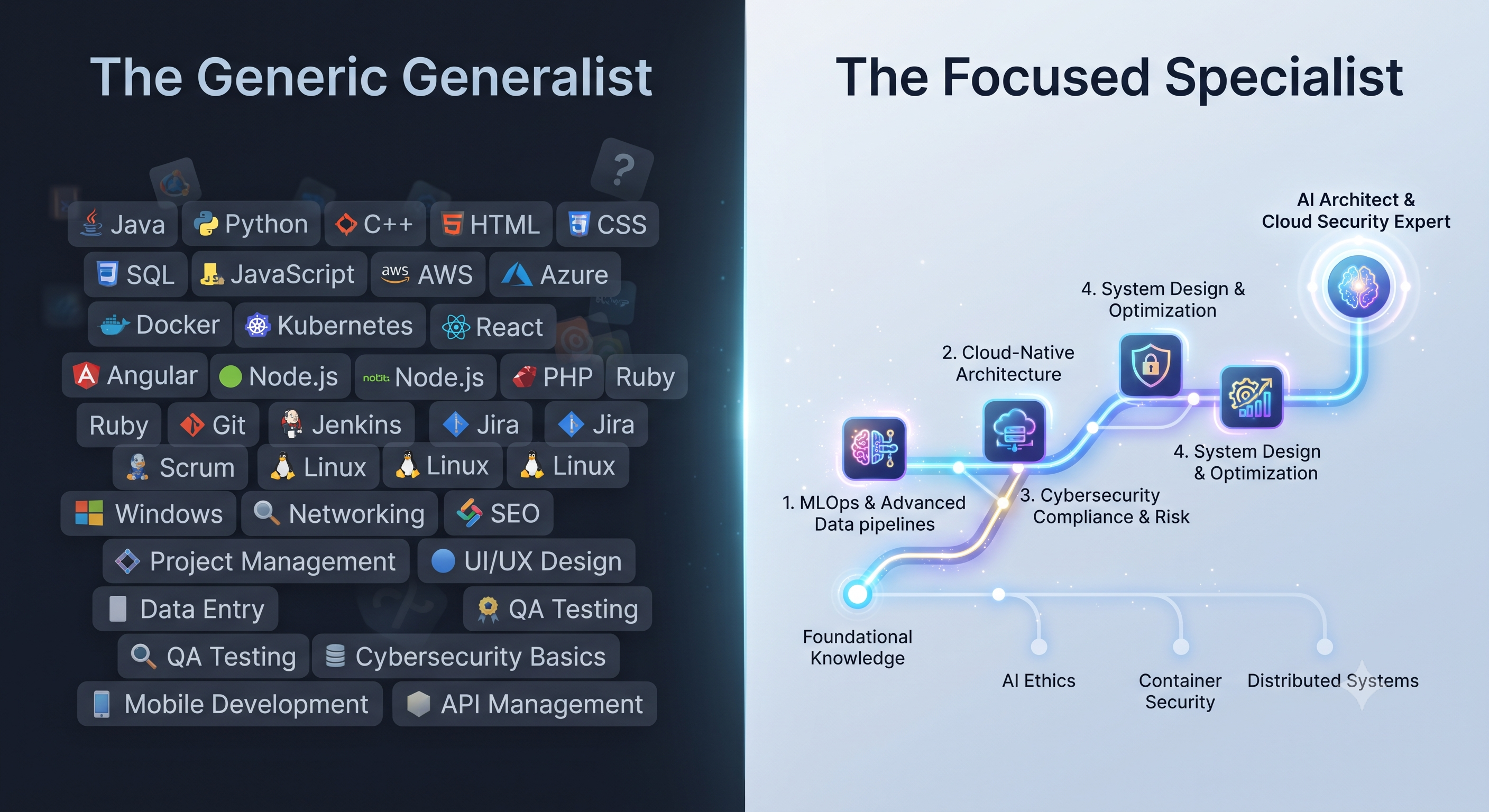
    The tech job market has evolved past the era of the jack-of-all-trades developer. With AI-assisted tools automating routine coding tasks, the hiring landscape has split: entry-level generalized roles are tightening, while demand for deep, specialized expertise is surging.


    Employers today aren't just looking for someone who can write code; they want professionals who can solve complex, systemic problems in high-value domains like AI/ML integration, cloud architecture, cybersecurity, and data engineering.


    Why specialization matters for job seekers:


    The AI Productivity Shift: AI handles basic code boilerplate effortlessly, making advanced architectural design, security evaluation, and model optimization the core differentiators.


    The Premium on Depth: Market reports show substantial salary premiums for focused specializations (such as MLOps, cloud infrastructure, and AI compliance) because true domain experts are scarce.


    Proof Over Pedigree: Hiring managers increasingly rely on practical contributions—like building in public, active open-source involvement, or demonstrating specialized architectural blueprints—over traditional credential lists.


    How to position yourself for high-growth roles (A Quick Playbook):


    Choose Your Pillar: Pick one high-demand domain (e.g., Cloud Security, Agentic AI pipelines, or Data Infrastructure) and focus your learning path there.


    Build Portfolio Proof: Don't just list skills; create a public repository demonstrating a complete end-to-end project that solves a real-world problem.


    Tailor Your Narrative: Align your resume with specific business outcomes rather than tech stacks alone. Show how your work improves system scalability, security, or efficiency.


    Discussion Question
    Are you focusing on deepening your expertise in one specific niche, or are you maintaining a broad technical skill set? How has your job search strategy shifted recently?


    CTA (Join Tech Jobs & Opportunities)
    Looking to land your next big role, get honest resume feedback, and connect with tech recruiters? Join the Tech Jobs & Opportunities community to accelerate your career growth. Click the link in our bio to jump in!
    Navigating the 2026 Tech Job Market: Why Generalists are Out and Specialists are In The tech job market has evolved past the era of the jack-of-all-trades developer. With AI-assisted tools automating routine coding tasks, the hiring landscape has split: entry-level generalized roles are tightening, while demand for deep, specialized expertise is surging. Employers today aren't just looking for someone who can write code; they want professionals who can solve complex, systemic problems in high-value domains like AI/ML integration, cloud architecture, cybersecurity, and data engineering. Why specialization matters for job seekers: The AI Productivity Shift: AI handles basic code boilerplate effortlessly, making advanced architectural design, security evaluation, and model optimization the core differentiators. The Premium on Depth: Market reports show substantial salary premiums for focused specializations (such as MLOps, cloud infrastructure, and AI compliance) because true domain experts are scarce. Proof Over Pedigree: Hiring managers increasingly rely on practical contributions—like building in public, active open-source involvement, or demonstrating specialized architectural blueprints—over traditional credential lists. How to position yourself for high-growth roles (A Quick Playbook): Choose Your Pillar: Pick one high-demand domain (e.g., Cloud Security, Agentic AI pipelines, or Data Infrastructure) and focus your learning path there. Build Portfolio Proof: Don't just list skills; create a public repository demonstrating a complete end-to-end project that solves a real-world problem. Tailor Your Narrative: Align your resume with specific business outcomes rather than tech stacks alone. Show how your work improves system scalability, security, or efficiency. Discussion Question Are you focusing on deepening your expertise in one specific niche, or are you maintaining a broad technical skill set? How has your job search strategy shifted recently? CTA (Join Tech Jobs & Opportunities) Looking to land your next big role, get honest resume feedback, and connect with tech recruiters? Join the Tech Jobs & Opportunities community to accelerate your career growth. Click the link in our bio to jump in!
    0 Comentários 0 Compartilhamentos 163 Visualizações 0 Anterior
  • Data Residency vs. Data Sovereignty: The Architectural Shift UAE Cloud Teams Must Make in 2026


    Across Dubai and Abu Dhabi, enterprises have raced to migrate workloads into local hyperscaler zones and sovereign compute backbones like G42 Cloud and Khazna. However, many systems teams still conflate data residency with data sovereignty.


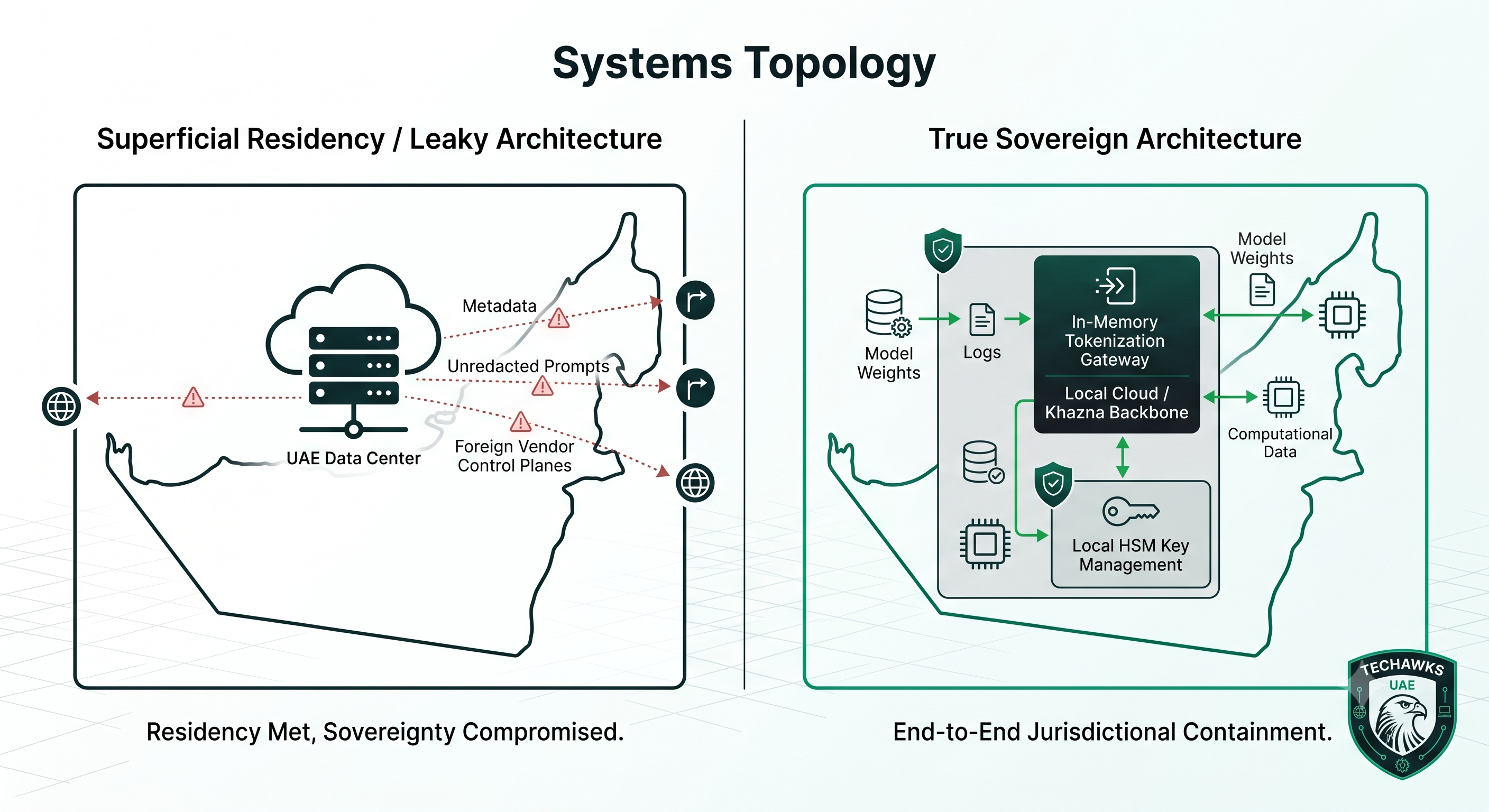
    Data Residency is geographic: It simply means your data at rest resides within UAE borders.


    Data Sovereignty is jurisdictional and operational: It ensures that no external entity—via vendor telemetry, remote cross-border control planes, or third-party proprietary AI APIs—can access, decrypt, or process that data without UAE regulatory purview.


    If an autonomous AI agent running on local infrastructure sends prompts or metadata to an external orchestration endpoint overseas, data residency is technically preserved in storage, but sovereignty is violated during execution.


    To build an architecture that survives modern UAE governance audits (such as UAE PDPL and Central Bank regulatory frameworks), engineering teams must adopt a Sovereign-First Stack:


    Customer-Managed Key (CMK) Enclaves:
    Do not rely on cloud-provider-managed encryption keys. Enforce hardware security modules (HSMs) anchored locally where the master key never touches a non-sovereign control plane.


    Deterministic Prompt Redaction & Tokenization:
    Before transactional data or sensitive PII passes into an LLM context window—even regional bilingual models like Jais or Falcon—route the payload through an in-memory tokenization gateway. Replace actual identifiers with deterministic tokens that remain resolvable only inside local VPC boundaries.


    Control-Plane Air-Locking:
    Audit your infrastructure-as-code pipelines. Ensure logging, telemetry, observability sinks, and model fine-tuning checkpoints are strictly pinned to domestic nodes rather than syncing with global telemetry hubs by default.


    Sovereignty isn't a checkbox provided by your hosting provider—it’s an architectural decision built into your pipeline.


    Discussion Question
    When deploying generative AI models and data pipelines across UAE regions, how does your engineering team ensure that operational metadata and fine-tuning weights remain within domestic jurisdictional boundaries?


    CTA
    Join Techawks UAE — Connect with Middle East-based systems architects, DevOps specialists, and engineering leaders building the next generation of resilient, sovereign cloud infrastructure.
    Data Residency vs. Data Sovereignty: The Architectural Shift UAE Cloud Teams Must Make in 2026 Across Dubai and Abu Dhabi, enterprises have raced to migrate workloads into local hyperscaler zones and sovereign compute backbones like G42 Cloud and Khazna. However, many systems teams still conflate data residency with data sovereignty. Data Residency is geographic: It simply means your data at rest resides within UAE borders. Data Sovereignty is jurisdictional and operational: It ensures that no external entity—via vendor telemetry, remote cross-border control planes, or third-party proprietary AI APIs—can access, decrypt, or process that data without UAE regulatory purview. If an autonomous AI agent running on local infrastructure sends prompts or metadata to an external orchestration endpoint overseas, data residency is technically preserved in storage, but sovereignty is violated during execution. To build an architecture that survives modern UAE governance audits (such as UAE PDPL and Central Bank regulatory frameworks), engineering teams must adopt a Sovereign-First Stack: Customer-Managed Key (CMK) Enclaves: Do not rely on cloud-provider-managed encryption keys. Enforce hardware security modules (HSMs) anchored locally where the master key never touches a non-sovereign control plane. Deterministic Prompt Redaction & Tokenization: Before transactional data or sensitive PII passes into an LLM context window—even regional bilingual models like Jais or Falcon—route the payload through an in-memory tokenization gateway. Replace actual identifiers with deterministic tokens that remain resolvable only inside local VPC boundaries. Control-Plane Air-Locking: Audit your infrastructure-as-code pipelines. Ensure logging, telemetry, observability sinks, and model fine-tuning checkpoints are strictly pinned to domestic nodes rather than syncing with global telemetry hubs by default. Sovereignty isn't a checkbox provided by your hosting provider—it’s an architectural decision built into your pipeline. Discussion Question When deploying generative AI models and data pipelines across UAE regions, how does your engineering team ensure that operational metadata and fine-tuning weights remain within domestic jurisdictional boundaries? CTA Join Techawks UAE — Connect with Middle East-based systems architects, DevOps specialists, and engineering leaders building the next generation of resilient, sovereign cloud infrastructure.
    0 Comentários 0 Compartilhamentos 333 Visualizações 0 Anterior
  • The 900+ Patch Dilemma: Why Vulnerability Volume Is Breaking Traditional SRE & Security Workflows


    Earlier this week, Microsoft issued its September 2026 update addressing roughly 972 direct software vulnerabilities, with more than 110 classified as critical. This is not an isolated event—it is the direct outcome of automated, AI-assisted static analysis and fuzzing scaling up faster than human review cycles can handle


    For US enterprise engineering leaders, the challenge is no longer visibility; it is signal-to-noise ratio.


    When software flaws surface by the hundreds each month, classic manual patching triggers operational fatigue, delayed sprint delivery, and regression risks in production systems. To stay resilient without grinding roadmap velocity to a halt, modern infrastructure teams run a Context-Driven Remediation Framework:


    Decouple CVSS from Business Priority: A CVSS 9.8 vulnerability on an isolated subnet or an offline worker node does not take precedence over an actively targeted CVSS 7.2 bug on an internet-facing ingress gateway. Context must dictate priority.


    Automate EPSS (Exploit Prediction Scoring System) Correlation: Do not just filter by severity scores. Correlate CVE disclosures with EPSS and CISA’s Known Exploited Vulnerabilities (KEV) catalog to gauge actual in-the-wild exploitation probability within the next 30 days.


    Canary Your Dependency Upgrades: Treat OS and runtime patches like application code. Push infrastructure updates through automated staging pipelines with health verification gates before broad fleet-wide rollout.


    Patching everything instantly is an operational anti-pattern; ruthlessly filtering by reachability and exploit probability is sound engineering.


    Discussion Question
    How does your team distinguish between theoretical vulnerability severity and actual production exploitability when planning infrastructure maintenance windows?


    CTA
    Join Techawks USA — Connect with US-based systems architects, DevOps specialists, and security leaders building scalable, secure cloud-native infrastructure.
    The 900+ Patch Dilemma: Why Vulnerability Volume Is Breaking Traditional SRE & Security Workflows Earlier this week, Microsoft issued its September 2026 update addressing roughly 972 direct software vulnerabilities, with more than 110 classified as critical. This is not an isolated event—it is the direct outcome of automated, AI-assisted static analysis and fuzzing scaling up faster than human review cycles can handle For US enterprise engineering leaders, the challenge is no longer visibility; it is signal-to-noise ratio. When software flaws surface by the hundreds each month, classic manual patching triggers operational fatigue, delayed sprint delivery, and regression risks in production systems. To stay resilient without grinding roadmap velocity to a halt, modern infrastructure teams run a Context-Driven Remediation Framework: Decouple CVSS from Business Priority: A CVSS 9.8 vulnerability on an isolated subnet or an offline worker node does not take precedence over an actively targeted CVSS 7.2 bug on an internet-facing ingress gateway. Context must dictate priority. Automate EPSS (Exploit Prediction Scoring System) Correlation: Do not just filter by severity scores. Correlate CVE disclosures with EPSS and CISA’s Known Exploited Vulnerabilities (KEV) catalog to gauge actual in-the-wild exploitation probability within the next 30 days. Canary Your Dependency Upgrades: Treat OS and runtime patches like application code. Push infrastructure updates through automated staging pipelines with health verification gates before broad fleet-wide rollout. Patching everything instantly is an operational anti-pattern; ruthlessly filtering by reachability and exploit probability is sound engineering. Discussion Question How does your team distinguish between theoretical vulnerability severity and actual production exploitability when planning infrastructure maintenance windows? CTA Join Techawks USA — Connect with US-based systems architects, DevOps specialists, and security leaders building scalable, secure cloud-native infrastructure.
    0 Comentários 0 Compartilhamentos 305 Visualizações 0 Anterior
  • Stop Prompting, Start Orchestrating: The 4-Pattern Blueprint for Agentic Software Architecture


    n modern systems engineering, production-grade LLM applications aren’t defined by the size of the underlying model, but by the orchestration framework wrapping it.


    When you transition from Passive Text Completion to Agentic Workflows, an LLM stops acting as an oracle and starts acting as an autonomous reasoning engine.
    If you are designing agentic systems this week, master these 4 Core Architectural Patterns:


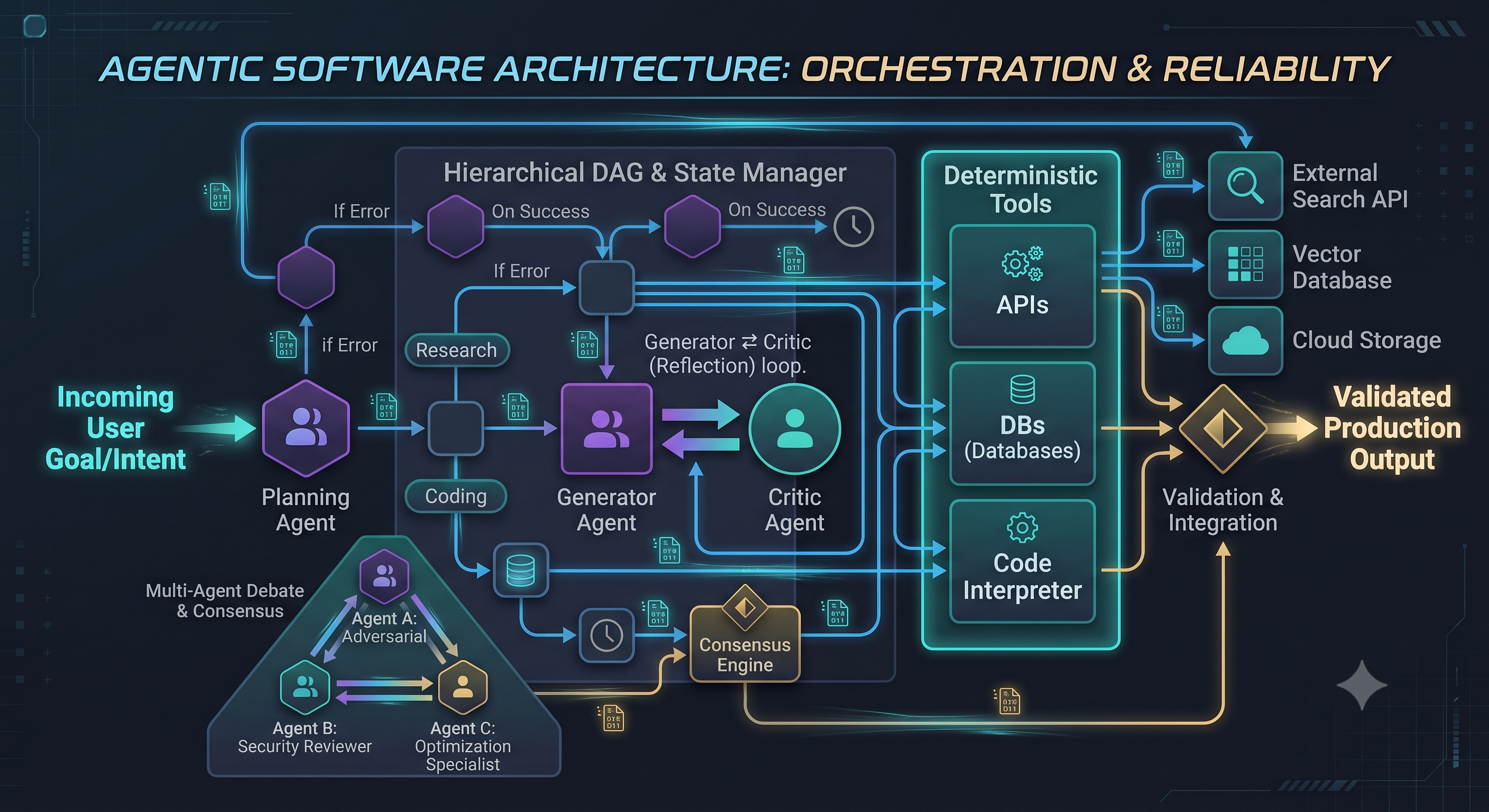
    1. Reflection & Self-Correction Loop
    Instead of accepting the model’s first-pass generation, wrap the output in a secondary validation agent.
    Execution: Generator Agent produces code/data → Evaluator Agent checks syntax, edge cases, and unit tests → If it fails, feedback loops back with explicit diff logs.
    Impact: Eliminates hallucinations and syntax bugs before hitting downstream services.


    2. Deterministic Tool-Use (ReAct Framework)
    Never let an LLM perform raw arithmetic, state mutations, or database lookups natively.
    Execution: Structure the agent around Reasoning + Action. The model articulates a thought, selects an explicit schema-defined tool (e.g., REST API, SQL client, Python REPL), parses structured JSON outputs, and continues based on execution state.
    Impact: Replaces probabilistic guessing with deterministic runtime computation.


    3. Dynamic Planning & Task Decomposition
    Monolithic prompts crumble under high-context or multi-step logic.
    Execution: Break execution into a two-tier hierarchy. A Planner Agent breaks a high-level goal into an acyclic task graph (DAG). Specialized sub-agents execute individual nodes concurrently or sequentially.
    Impact: Isolates errors to specific sub-tasks without crashing the entire workflow.


    4. Multi-Agent Debate & Collaboration
    Single agents suffer from systemic cognitive bias and drift.
    Execution: Deploy distinct agents with opposing system prompts (e.g., Architect vs. Security Reviewer vs. Optimization Specialist). Have them critique and iterate across a shared state buffer until consensus criteria are met.


    Impact: Drastically boosts code quality, security posture, and edge-case discovery.
    The takeaway for engineers: High performance in AI engineering is no longer about writing clever prompts; it is about building robust state machines, clean interfaces, and resilient agent feedback loops.


    Discussion Question
    Which agentic architecture pattern has delivered the highest reliability in your production stack: Reflection loops, multi-agent debate, or deterministic tool orchestration? Let’s compare implementation trade-offs below.


    CTA
    Accelerate your engineering journey and build with the top minds in tech.


    👉 Join the Techawks General Community to access production-ready architectures, technical deep-dives, and peer code discussions: [Insert Link / bio link]
    Stop Prompting, Start Orchestrating: The 4-Pattern Blueprint for Agentic Software Architecture n modern systems engineering, production-grade LLM applications aren’t defined by the size of the underlying model, but by the orchestration framework wrapping it. When you transition from Passive Text Completion to Agentic Workflows, an LLM stops acting as an oracle and starts acting as an autonomous reasoning engine. If you are designing agentic systems this week, master these 4 Core Architectural Patterns: 1. Reflection & Self-Correction Loop Instead of accepting the model’s first-pass generation, wrap the output in a secondary validation agent. Execution: Generator Agent produces code/data → Evaluator Agent checks syntax, edge cases, and unit tests → If it fails, feedback loops back with explicit diff logs. Impact: Eliminates hallucinations and syntax bugs before hitting downstream services. 2. Deterministic Tool-Use (ReAct Framework) Never let an LLM perform raw arithmetic, state mutations, or database lookups natively. Execution: Structure the agent around Reasoning + Action. The model articulates a thought, selects an explicit schema-defined tool (e.g., REST API, SQL client, Python REPL), parses structured JSON outputs, and continues based on execution state. Impact: Replaces probabilistic guessing with deterministic runtime computation. 3. Dynamic Planning & Task Decomposition Monolithic prompts crumble under high-context or multi-step logic. Execution: Break execution into a two-tier hierarchy. A Planner Agent breaks a high-level goal into an acyclic task graph (DAG). Specialized sub-agents execute individual nodes concurrently or sequentially. Impact: Isolates errors to specific sub-tasks without crashing the entire workflow. 4. Multi-Agent Debate & Collaboration Single agents suffer from systemic cognitive bias and drift. Execution: Deploy distinct agents with opposing system prompts (e.g., Architect vs. Security Reviewer vs. Optimization Specialist). Have them critique and iterate across a shared state buffer until consensus criteria are met. Impact: Drastically boosts code quality, security posture, and edge-case discovery. The takeaway for engineers: High performance in AI engineering is no longer about writing clever prompts; it is about building robust state machines, clean interfaces, and resilient agent feedback loops. Discussion Question Which agentic architecture pattern has delivered the highest reliability in your production stack: Reflection loops, multi-agent debate, or deterministic tool orchestration? Let’s compare implementation trade-offs below. CTA Accelerate your engineering journey and build with the top minds in tech. 👉 Join the Techawks General Community to access production-ready architectures, technical deep-dives, and peer code discussions: [Insert Link / bio link]
    0 Comentários 0 Compartilhamentos 175 Visualizações 0 Anterior
  • Specialist vs. Generalist: Which Path Sets CS Students Up for Greater Early-Career Success?


    Choosing your technical learning trajectory shapes your early project portfolio, internship applications, and daily study habits. Both paths offer distinct advantages and trade-offs:
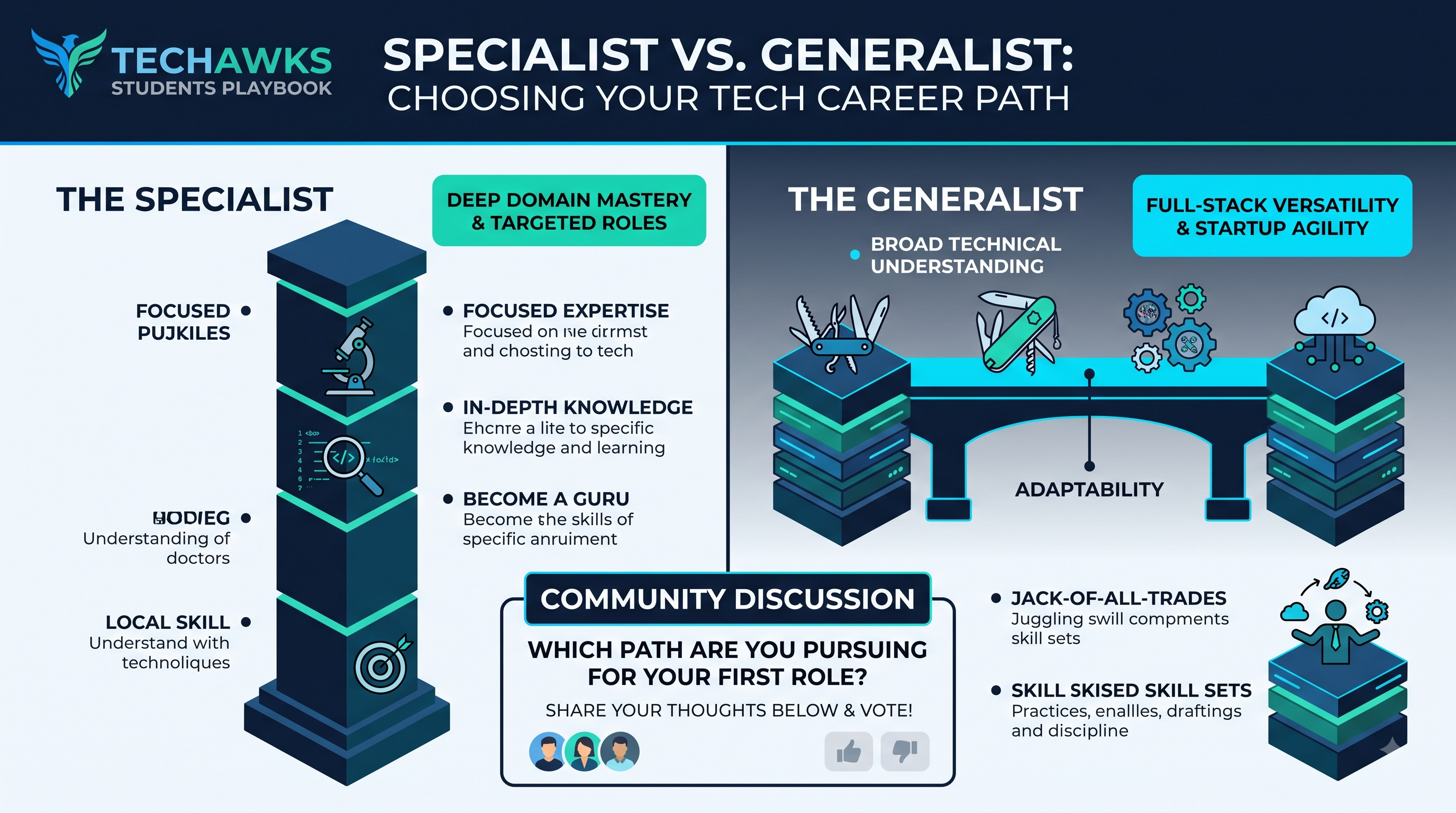
    The Specialist Path (Deep Mastery): Focusing intensively on one domain (e.g., backend systems, machine learning pipelines, or cybersecurity).
    Advantage: Highly competitive for targeted entry-level roles requiring immediate deep domain skills.
    Trade-off: Narrower initial job pool and slower adaptation if market demand shifts.
    The Generalist Path (T-Shaped Versatility): Building working knowledge across frontend, backend, databases, and DevOps.
    Advantage: High adaptability, ideal for early-stage startups and cross-functional engineering teams.
    Trade-off: Harder to stand out in interviews with specialized technical screens that drill into low-level systems.
    Students: Are you focusing your portfolio on mastering a single specialized stack, or are you prioritizing end-to-end full-stack versatility? What influenced your decision?


    Key Takeaways
    Deep specialists stand out faster in large enterprise technical screens with domain-specific requirements.
    Generalists thrive in high-velocity startup environments where engineers own features from database to UI.
    Building a "T-shaped" skill set (broad foundation + one deep core competency) offers a resilient middle ground.


    CTA
    Want to connect with fellow student engineers, get feedback on your learning roadmap, and prepare for tech interviews? Join the Students in Tech community today to collaborate, share projects, and learn together.
    Specialist vs. Generalist: Which Path Sets CS Students Up for Greater Early-Career Success? Choosing your technical learning trajectory shapes your early project portfolio, internship applications, and daily study habits. Both paths offer distinct advantages and trade-offs: The Specialist Path (Deep Mastery): Focusing intensively on one domain (e.g., backend systems, machine learning pipelines, or cybersecurity). Advantage: Highly competitive for targeted entry-level roles requiring immediate deep domain skills. Trade-off: Narrower initial job pool and slower adaptation if market demand shifts. The Generalist Path (T-Shaped Versatility): Building working knowledge across frontend, backend, databases, and DevOps. Advantage: High adaptability, ideal for early-stage startups and cross-functional engineering teams. Trade-off: Harder to stand out in interviews with specialized technical screens that drill into low-level systems. Students: Are you focusing your portfolio on mastering a single specialized stack, or are you prioritizing end-to-end full-stack versatility? What influenced your decision? Key Takeaways Deep specialists stand out faster in large enterprise technical screens with domain-specific requirements. Generalists thrive in high-velocity startup environments where engineers own features from database to UI. Building a "T-shaped" skill set (broad foundation + one deep core competency) offers a resilient middle ground. CTA Want to connect with fellow student engineers, get feedback on your learning roadmap, and prepare for tech interviews? Join the Students in Tech community today to collaborate, share projects, and learn together.
    0 Comentários 0 Compartilhamentos 488 Visualizações 0 Anterior
  • The Specialist vs. Generalist Dilemma: Which Career Path Actually Survives Tech Shifts?


    Every tech professional hits a fork in their career journey: do you specialize deeply in a single niche (like distributed database internals, iOS performance, or ML infrastructure), or do you cultivate broad expertise across the full stack as a high-adaptability generalist?
    Both paths offer distinct advantages and trade-offs in today's hiring landscape:


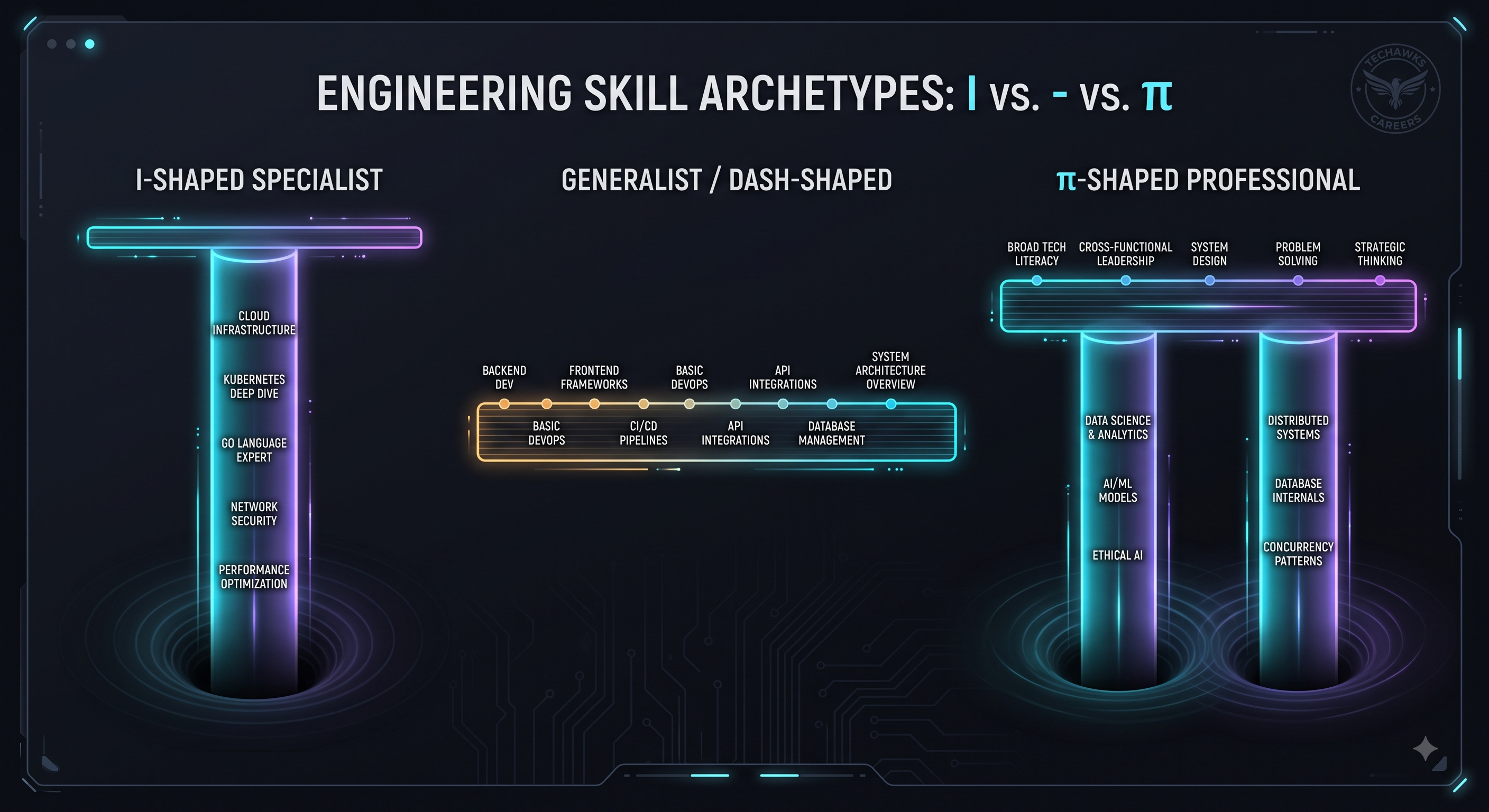
    1. The Deep Specialist (The "I-Shaped" Engineer)
    The Advantage: High leverage, premium compensation for niche domain expertise, and rapid hiring when companies face complex, specialized bottlenecks.
    The Risk: Vulnerability to shifts in tooling, vendor consolidation, or commoditization of specific frameworks.
    Best For: Engineers who love deep problem spaces, low-level optimizations, and targeted R&D roles.


    2. The Versatile Generalist (The "T-Shaped" Engineer)
    The Advantage: Extreme adaptability. You can glue services together, build MVPs end-to-end, communicate across cross-functional teams, and pivot quickly as priorities shift.
    The Risk: Can be misjudged as a "jack of all trades, master of none" by rigid keyword-screening filters.
    Best For: Early-stage startup environments, product engineering, technical leadership, and solutions architecture.


    The Modern Compromise: The "Pi-Shaped" Model
    Rather than picking a single extreme, resilient tech careers often follow the pishaped model: broad foundational context across software systems, anchored by two distinct deep specializations (e.g., Backend Systems + Data Engineering, or Frontend UX + Cloud Architecture).
    Let's Open the Floor:Have you built your career as a deep specialist or a broad generalist?
    If you had to advise someone entering the tech market today, which path would you recommend prioritizing in their first three years?


    Key Takeaways
    Context Drives Value: Early-stage startups prize generalist velocity; scale-ups and enterprise teams hire specialist depth to solve precise bottlenecks.
    Cultivate pi Shaped Skills: Pair broad software engineering literacy with two complementary core strengths to stay versatile yet high-impact
    Decouple Principles from Tools: Master fundamental system concepts (networking, concurrency, data structures) so your expertise survives framework turnover.


    CTA
    Navigating your next career transition, evaluating job offers, or sharpening your interview strategy?
    Join the Techawks Tech Jobs & Opportunities community to connect with mentors, discuss career trajectories, and explore curated tech openings worldwide.
    The Specialist vs. Generalist Dilemma: Which Career Path Actually Survives Tech Shifts? Every tech professional hits a fork in their career journey: do you specialize deeply in a single niche (like distributed database internals, iOS performance, or ML infrastructure), or do you cultivate broad expertise across the full stack as a high-adaptability generalist? Both paths offer distinct advantages and trade-offs in today's hiring landscape: 1. The Deep Specialist (The "I-Shaped" Engineer) The Advantage: High leverage, premium compensation for niche domain expertise, and rapid hiring when companies face complex, specialized bottlenecks. The Risk: Vulnerability to shifts in tooling, vendor consolidation, or commoditization of specific frameworks. Best For: Engineers who love deep problem spaces, low-level optimizations, and targeted R&D roles. 2. The Versatile Generalist (The "T-Shaped" Engineer) The Advantage: Extreme adaptability. You can glue services together, build MVPs end-to-end, communicate across cross-functional teams, and pivot quickly as priorities shift. The Risk: Can be misjudged as a "jack of all trades, master of none" by rigid keyword-screening filters. Best For: Early-stage startup environments, product engineering, technical leadership, and solutions architecture. The Modern Compromise: The "Pi-Shaped" Model Rather than picking a single extreme, resilient tech careers often follow the pishaped model: broad foundational context across software systems, anchored by two distinct deep specializations (e.g., Backend Systems + Data Engineering, or Frontend UX + Cloud Architecture). Let's Open the Floor:Have you built your career as a deep specialist or a broad generalist? If you had to advise someone entering the tech market today, which path would you recommend prioritizing in their first three years? Key Takeaways Context Drives Value: Early-stage startups prize generalist velocity; scale-ups and enterprise teams hire specialist depth to solve precise bottlenecks. Cultivate pi Shaped Skills: Pair broad software engineering literacy with two complementary core strengths to stay versatile yet high-impact Decouple Principles from Tools: Master fundamental system concepts (networking, concurrency, data structures) so your expertise survives framework turnover. CTA Navigating your next career transition, evaluating job offers, or sharpening your interview strategy? Join the Techawks Tech Jobs & Opportunities community to connect with mentors, discuss career trajectories, and explore curated tech openings worldwide.
    0 Comentários 0 Compartilhamentos 286 Visualizações 0 Anterior
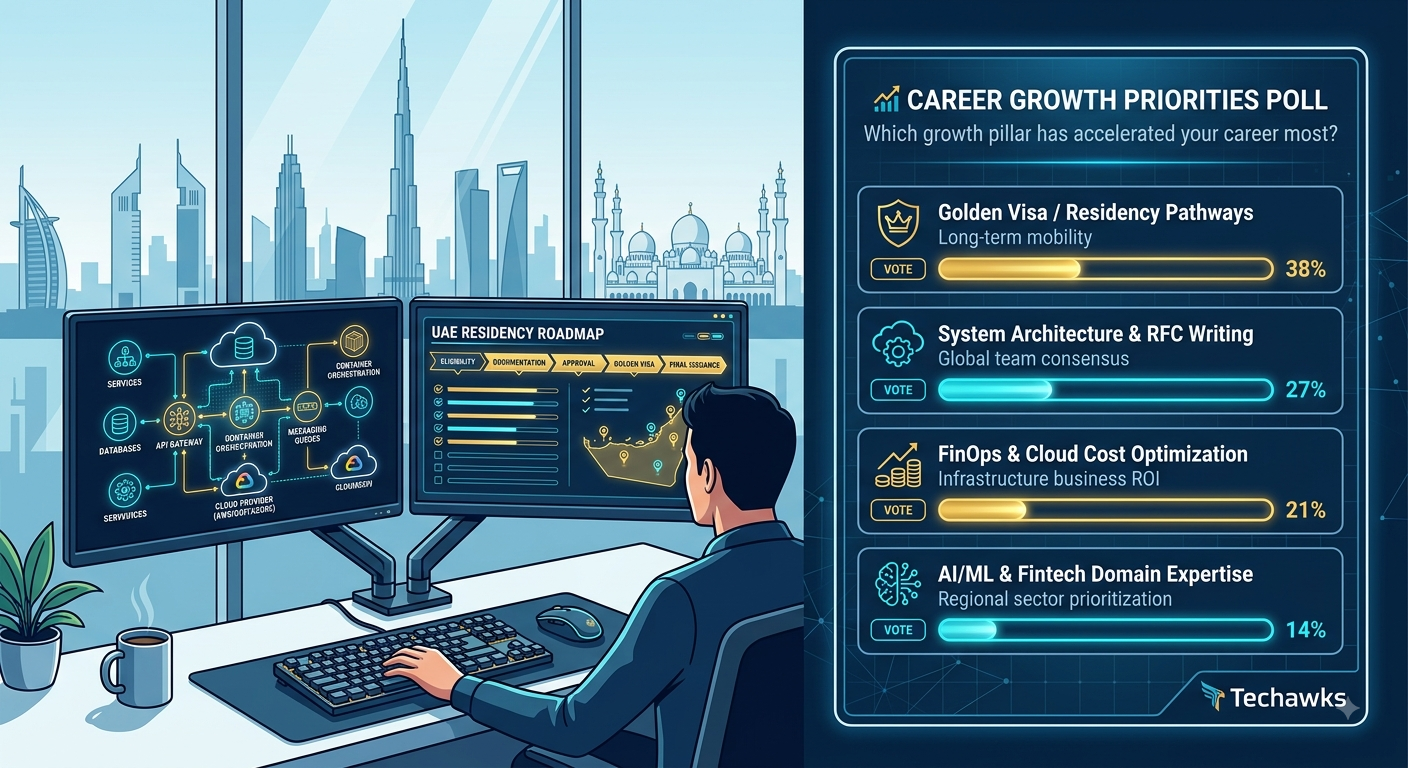
  • Which Growth Pillar Has Accelerated Your Engineering Career Most in the UAE Tech Ecosystem?


    As tech hubs across the Emirates mature, software engineers, DevOps specialists, and cloud architects are moving beyond pure code delivery. To build long-term career resilience in the UAE, tech leaders must balance architectural depth, business ROI, and career stability.
    We want to hear from engineering leads, cloud architects, and builders across Dubai, Abu Dhabi, and the wider GCC community:


    📊 POLL: Which area of strategic growth has provided the highest ROI for your career in the UAE?
    A) Securing Golden Visa / Independent Residency Pathways (Gaining long-term mobility)
    B) Master System Architecture & RFC Writing (Driving cross-border team consensus)
    C) FinOps & Cloud Cost Optimization (Connecting infrastructure directly to business ROI)
    D) Deep Domain Expertise in AI/ML & Fintech (Specializing in regional priority sectors)
    (Cast your vote above and drop your top career advice for regional engineers in the comments below!)


    Actionable Advice for Elevating Your UAE Tech Career
    Regardless of your chosen focus, apply these 3 practical practices to build measurable leverage in the regional market:
    Decouple Residency from a Single Employer
    Investigate self-sponsored pathways such as the 10-year Golden Visa (for qualified engineers under MOHRE Skill Levels 1–2 or specialized AI/Tech tracks) or freelancer/innovation permits. Independent residency gives you maximum negotiation leverage and career flexibility.
    Master Asynchronous Architectural Leadership
    With regional product teams frequently operating across European, Indian, and North American time zones, written specs matter more than live meetings. Write Request for Comments (RFCs) and Architecture Decision Records (ADRs) to establish system design consensus clearly.
    Align Tech Metrics with Executive ROI
    In tax-free markets, operational efficiency and unit economics drive leadership recognition. When proposing refactoring or cloud migrations, quantify the impact in reduced AWS/Azure/GCP expenditure and system reliability.


    Key Takeaways
    Build Career Autonomy: Explore self-sponsored Golden Visa pathways to secure job mobility and long-term stability in the UAE.
    Lead Through Asynchronous Writing: Use RFCs and ADRs to communicate system architecture across global distributed teams.
    Demonstrate Business Impact: Align technical debt reduction and system design with cloud cost efficiency and operational ROI.


    CTA
    Looking to navigate UAE tech compensation benchmarks, secure Golden Visa pathways, and connect with top engineers across Dubai and Abu Dhabi?


    Join Techawks UAE today to participate in community discussions, access career playbooks, and network with leading regional tech professionals!
    Which Growth Pillar Has Accelerated Your Engineering Career Most in the UAE Tech Ecosystem? As tech hubs across the Emirates mature, software engineers, DevOps specialists, and cloud architects are moving beyond pure code delivery. To build long-term career resilience in the UAE, tech leaders must balance architectural depth, business ROI, and career stability. We want to hear from engineering leads, cloud architects, and builders across Dubai, Abu Dhabi, and the wider GCC community: 📊 POLL: Which area of strategic growth has provided the highest ROI for your career in the UAE? A) Securing Golden Visa / Independent Residency Pathways (Gaining long-term mobility) B) Master System Architecture & RFC Writing (Driving cross-border team consensus) C) FinOps & Cloud Cost Optimization (Connecting infrastructure directly to business ROI) D) Deep Domain Expertise in AI/ML & Fintech (Specializing in regional priority sectors) (Cast your vote above and drop your top career advice for regional engineers in the comments below!) Actionable Advice for Elevating Your UAE Tech Career Regardless of your chosen focus, apply these 3 practical practices to build measurable leverage in the regional market: Decouple Residency from a Single Employer Investigate self-sponsored pathways such as the 10-year Golden Visa (for qualified engineers under MOHRE Skill Levels 1–2 or specialized AI/Tech tracks) or freelancer/innovation permits. Independent residency gives you maximum negotiation leverage and career flexibility. Master Asynchronous Architectural Leadership With regional product teams frequently operating across European, Indian, and North American time zones, written specs matter more than live meetings. Write Request for Comments (RFCs) and Architecture Decision Records (ADRs) to establish system design consensus clearly. Align Tech Metrics with Executive ROI In tax-free markets, operational efficiency and unit economics drive leadership recognition. When proposing refactoring or cloud migrations, quantify the impact in reduced AWS/Azure/GCP expenditure and system reliability. Key Takeaways Build Career Autonomy: Explore self-sponsored Golden Visa pathways to secure job mobility and long-term stability in the UAE. Lead Through Asynchronous Writing: Use RFCs and ADRs to communicate system architecture across global distributed teams. Demonstrate Business Impact: Align technical debt reduction and system design with cloud cost efficiency and operational ROI. CTA Looking to navigate UAE tech compensation benchmarks, secure Golden Visa pathways, and connect with top engineers across Dubai and Abu Dhabi? Join Techawks UAE today to participate in community discussions, access career playbooks, and network with leading regional tech professionals!
    0 Comentários 0 Compartilhamentos 604 Visualizações 0 Anterior
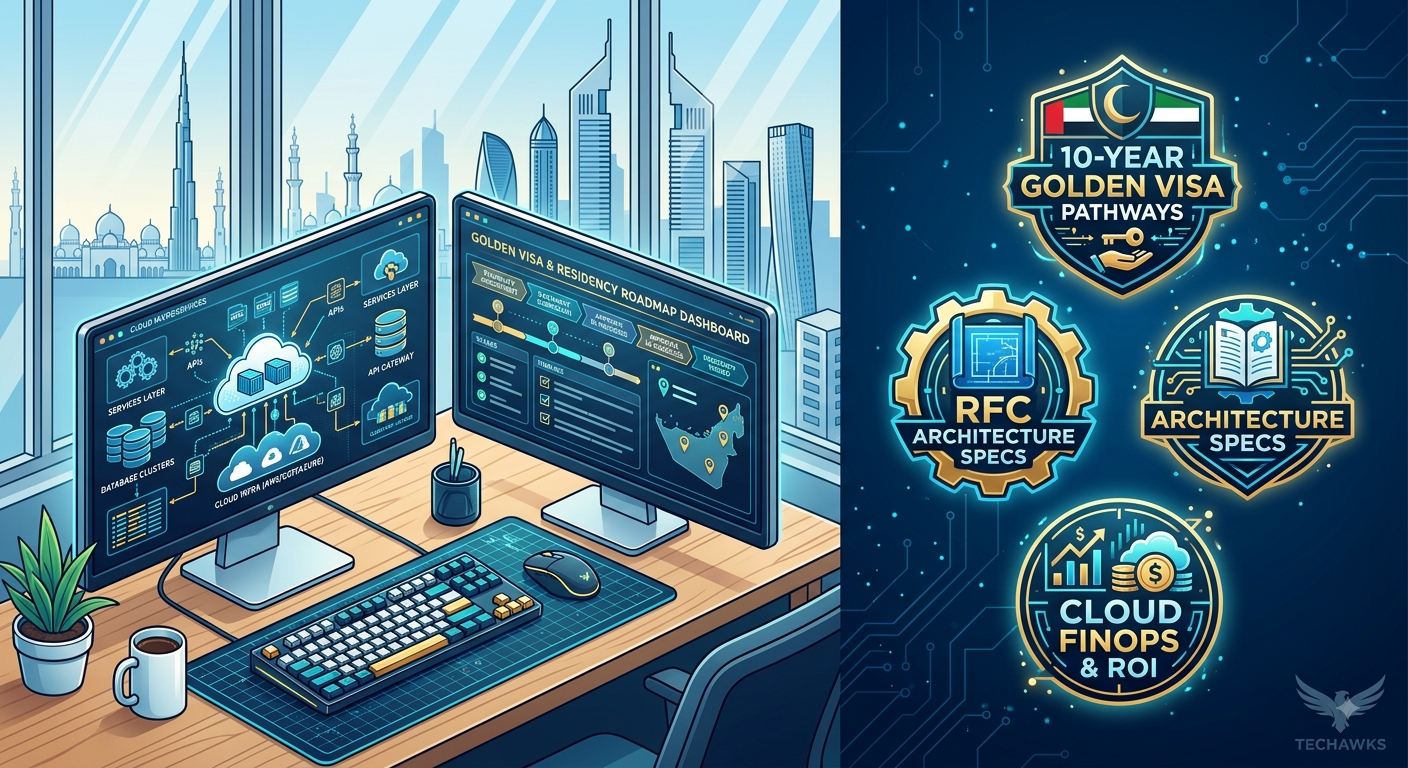
  • Building a Long-Term Tech Career in the UAE: 3 Strategies to Scale Beyond Salary and Unlock True Professional Autonomy


    As multinational tech firms, high-growth scale-ups, and state-backed digital transformation initiatives continue expanding across the Emirates, software engineers and technical leaders face a unique shift. The traditional model of relying entirely on employer visa sponsorship is giving way to independent career equity.
    Whether you are based in Dubai, Abu Dhabi, or working in a hybrid environment across the GCC, follow this 3-step actionable playbook to elevate your engineering career and secure long-term stability:


    1. Transition from Employer-Dependent Visas to Long-Term Residency
    Historically, moving between tech roles in the UAE meant navigating visa transfers and temporary status. Modern talent pathways allow high-impact engineers, AI specialists, and cloud architects to decouple their residency from a single employer:
    Target the Tech Talent Golden Visa: Engineers, developers, and tech managers meeting salary thresholds (typically AED 30,000/month basic salary under MOHRE Skill Level 1 or 2) or holding specialized expertise in AI, cloud, or cybersecurity can apply for 10-year self-sponsored Golden Visas.
    Leverage Freelance or Innovation Pathways: Independent contractors, open-source contributors, and founders can utilize accredited incubator endorsements (such as from Hub71 or in5) or freelance permits to establish independent legal status.


    2. Drive Asynchronous System Architecture (RFCs & ADRs)
    In fast-paced regional hubs where product teams frequently collaborate across international time zones (Europe, India, and North America), real-time meetings can slow down progress.
    Publish RFC Specs: Author detailed Request for Comments (RFCs) for major feature additions. Define problem statements, microservices flow, and trade-offs before writing code.
    Document Architecture Decision Records (ADRs): Maintain an ADR repository for database schemas, cloud infrastructure shifts, and API gateway protocols. Showing structured technical rationale positions you directly for Staff, Principal, or Solutions Architect roles.


    3. Align Your Code with Regional ROI & Cost Economics
    Because personal income tax is zero, engineering metrics in the UAE focus heavily on operational efficiency, cloud unit economics, and rapid scale.
    Master Cloud Cost Optimization (FinOps): Demonstrate how your architectural refactoring reduces AWS, Azure, or GCP overhead or speeds up latency for regional users.
    Translate Tech Metrics to Business Outcomes: When proposing system changes to executives, present your ideas in terms of infrastructure savings, security compliance, and user retention rather than just code cleanliness.


    Key Takeaways
    Secure Independent Residency: Aim for self-sponsored 10-year Golden Visa pathways to gain job mobility and long-term career stability in the UAE.
    Master Asynchronous Technical Writing: Use RFCs and ADRs to establish architectural consensus across global and distributed regional product teams.
    Focus on FinOps and Business ROI: Align system design decisions with cloud cost efficiency and measurable business impact.


    CTA
    Looking to navigate UAE tech compensation benchmarks, secure long-term residency pathways, and connect with lead engineers across Dubai and Abu Dhabi?


    Join Techawks UAE today to access exclusive career playbooks, technical teardowns, and a thriving community of regional tech leaders!
    Building a Long-Term Tech Career in the UAE: 3 Strategies to Scale Beyond Salary and Unlock True Professional Autonomy As multinational tech firms, high-growth scale-ups, and state-backed digital transformation initiatives continue expanding across the Emirates, software engineers and technical leaders face a unique shift. The traditional model of relying entirely on employer visa sponsorship is giving way to independent career equity. Whether you are based in Dubai, Abu Dhabi, or working in a hybrid environment across the GCC, follow this 3-step actionable playbook to elevate your engineering career and secure long-term stability: 1. Transition from Employer-Dependent Visas to Long-Term Residency Historically, moving between tech roles in the UAE meant navigating visa transfers and temporary status. Modern talent pathways allow high-impact engineers, AI specialists, and cloud architects to decouple their residency from a single employer: Target the Tech Talent Golden Visa: Engineers, developers, and tech managers meeting salary thresholds (typically AED 30,000/month basic salary under MOHRE Skill Level 1 or 2) or holding specialized expertise in AI, cloud, or cybersecurity can apply for 10-year self-sponsored Golden Visas. Leverage Freelance or Innovation Pathways: Independent contractors, open-source contributors, and founders can utilize accredited incubator endorsements (such as from Hub71 or in5) or freelance permits to establish independent legal status. 2. Drive Asynchronous System Architecture (RFCs & ADRs) In fast-paced regional hubs where product teams frequently collaborate across international time zones (Europe, India, and North America), real-time meetings can slow down progress. Publish RFC Specs: Author detailed Request for Comments (RFCs) for major feature additions. Define problem statements, microservices flow, and trade-offs before writing code. Document Architecture Decision Records (ADRs): Maintain an ADR repository for database schemas, cloud infrastructure shifts, and API gateway protocols. Showing structured technical rationale positions you directly for Staff, Principal, or Solutions Architect roles. 3. Align Your Code with Regional ROI & Cost Economics Because personal income tax is zero, engineering metrics in the UAE focus heavily on operational efficiency, cloud unit economics, and rapid scale. Master Cloud Cost Optimization (FinOps): Demonstrate how your architectural refactoring reduces AWS, Azure, or GCP overhead or speeds up latency for regional users. Translate Tech Metrics to Business Outcomes: When proposing system changes to executives, present your ideas in terms of infrastructure savings, security compliance, and user retention rather than just code cleanliness. Key Takeaways Secure Independent Residency: Aim for self-sponsored 10-year Golden Visa pathways to gain job mobility and long-term career stability in the UAE. Master Asynchronous Technical Writing: Use RFCs and ADRs to establish architectural consensus across global and distributed regional product teams. Focus on FinOps and Business ROI: Align system design decisions with cloud cost efficiency and measurable business impact. CTA Looking to navigate UAE tech compensation benchmarks, secure long-term residency pathways, and connect with lead engineers across Dubai and Abu Dhabi? Join Techawks UAE today to access exclusive career playbooks, technical teardowns, and a thriving community of regional tech leaders!
    0 Comentários 0 Compartilhamentos 592 Visualizações 0 Anterior
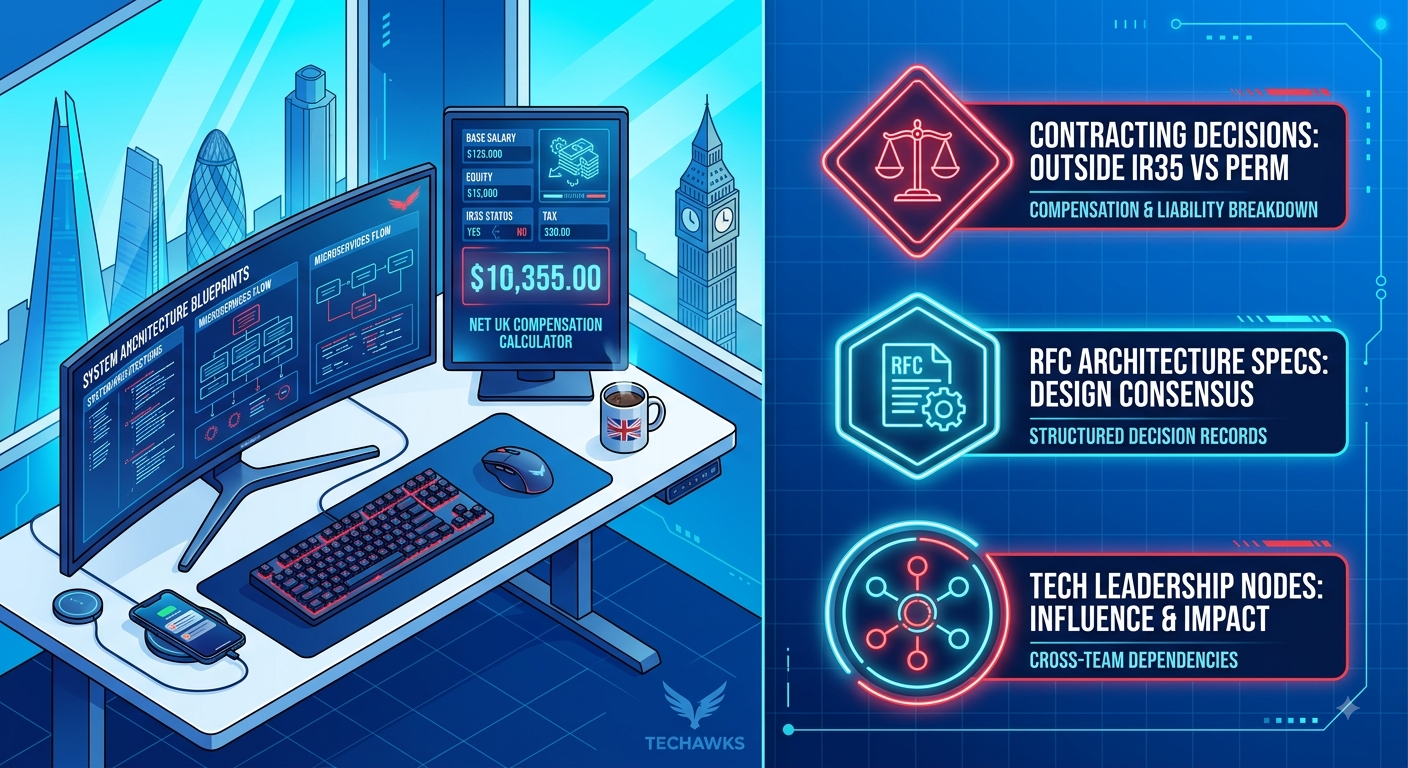
  • Navigating the UK Tech Career Landscape: Permanent vs. Outside IR35 Contracting & Engineering Leadership


    The modern UK tech scene offers two primary paths for experienced software engineers, DevOps specialists, and architects: scaling the corporate ladder into Staff/Principal roles or operating as an independent contractor.
    Making the right strategic career choices requires mastering both employment models alongside high-visibility engineering habits.


    1. Decode IR35: Permanent vs. Contract Mechanics
    If you choose the contracting route in the UK, understanding off-payroll working rules (IR35) is critical.
    Outside IR35: You operate through your own Limited Company (LTD) as a genuine business-to-business supplier. You maintain control over how work is executed and carry tax efficiencies.
    Inside IR35: HMRC treats you as a "disguised employee" for tax purposes. Income tax and National Insurance are deducted at source (often via an Umbrella company), significantly affecting net take-home pay.
    Action: Before accepting a contract role, calculate your post-tax take-home pay using a specialized UK contractor calculator to evaluate if an Inside IR35 day rate outweighs a permanent package that includes pensions, bonuses, and equity.


    2. Transition from Executor to Architectural Author
    In top UK tech hubs, senior engineers are expected to drive technical alignment asynchronously. Writing clear, comprehensive Request for Comments (RFCs) and Architecture Decision Records (ADRs) separates mid-level coders from senior tech leads.
    Action: Document the trade-offs of major technical proposals in markdown files within your team's Git repository. Define the context, options evaluated, cost impacts, and security considerations before writing a single line of code.


    3. Build Public "Proof-of-Work" Beyond Your CV
    Relying solely on a traditional CV limit opportunities in competitive UK hubs. Tech leads, engineering directors, and agency clients prioritize tangible evidence of your engineering capabilities.
    Action: Build a public digital footprint. Contribute to open-source tools, write technical teardowns of distributed system design, or speak at local UK tech meetups (like London DevOps or Manchester Tech Nights).


    Key Takeaways
    Understand IR35 Realities: Know the precise net financial difference between Inside IR35, Outside IR35, and Permanent Total Compensation before switching roles.
    Master Written Technical Specs: Leverage RFCs and ADRs to establish architectural consensus across distributed UK and global engineering teams.
    Cultivate Public Authority: Maintain an active public presence through technical blogging, open-source contributions, and community meetups.


    CTA
    Looking to navigate UK tech salary benchmarks, master system architecture, and connect with top engineers across London, Manchester, Cambridge, and beyond?


    Join Techawks UK today to access exclusive career playbooks, technical teardowns, and a thriving community of UK tech professionals!
    Navigating the UK Tech Career Landscape: Permanent vs. Outside IR35 Contracting & Engineering Leadership The modern UK tech scene offers two primary paths for experienced software engineers, DevOps specialists, and architects: scaling the corporate ladder into Staff/Principal roles or operating as an independent contractor. Making the right strategic career choices requires mastering both employment models alongside high-visibility engineering habits. 1. Decode IR35: Permanent vs. Contract Mechanics If you choose the contracting route in the UK, understanding off-payroll working rules (IR35) is critical. Outside IR35: You operate through your own Limited Company (LTD) as a genuine business-to-business supplier. You maintain control over how work is executed and carry tax efficiencies. Inside IR35: HMRC treats you as a "disguised employee" for tax purposes. Income tax and National Insurance are deducted at source (often via an Umbrella company), significantly affecting net take-home pay. Action: Before accepting a contract role, calculate your post-tax take-home pay using a specialized UK contractor calculator to evaluate if an Inside IR35 day rate outweighs a permanent package that includes pensions, bonuses, and equity. 2. Transition from Executor to Architectural Author In top UK tech hubs, senior engineers are expected to drive technical alignment asynchronously. Writing clear, comprehensive Request for Comments (RFCs) and Architecture Decision Records (ADRs) separates mid-level coders from senior tech leads. Action: Document the trade-offs of major technical proposals in markdown files within your team's Git repository. Define the context, options evaluated, cost impacts, and security considerations before writing a single line of code. 3. Build Public "Proof-of-Work" Beyond Your CV Relying solely on a traditional CV limit opportunities in competitive UK hubs. Tech leads, engineering directors, and agency clients prioritize tangible evidence of your engineering capabilities. Action: Build a public digital footprint. Contribute to open-source tools, write technical teardowns of distributed system design, or speak at local UK tech meetups (like London DevOps or Manchester Tech Nights). Key Takeaways Understand IR35 Realities: Know the precise net financial difference between Inside IR35, Outside IR35, and Permanent Total Compensation before switching roles. Master Written Technical Specs: Leverage RFCs and ADRs to establish architectural consensus across distributed UK and global engineering teams. Cultivate Public Authority: Maintain an active public presence through technical blogging, open-source contributions, and community meetups. CTA Looking to navigate UK tech salary benchmarks, master system architecture, and connect with top engineers across London, Manchester, Cambridge, and beyond? Join Techawks UK today to access exclusive career playbooks, technical teardowns, and a thriving community of UK tech professionals!
    0 Comentários 0 Compartilhamentos 361 Visualizações 0 Anterior
  • Beyond CI/CD Pipelines: How DevOps Engineers Level Up into Cloud Architects


    In many engineering teams, DevOps specialists get trapped in the loop of constant maintenance: fixing broken build steps, managing Kubernetes clusters, and responding to deployment alerts. To elevate your career, you need to transition from an operational script-writer to a strategic cloud systems designer.
    Here is a 3-step actionable roadmap to accelerate your career trajectory toward cloud architecture:


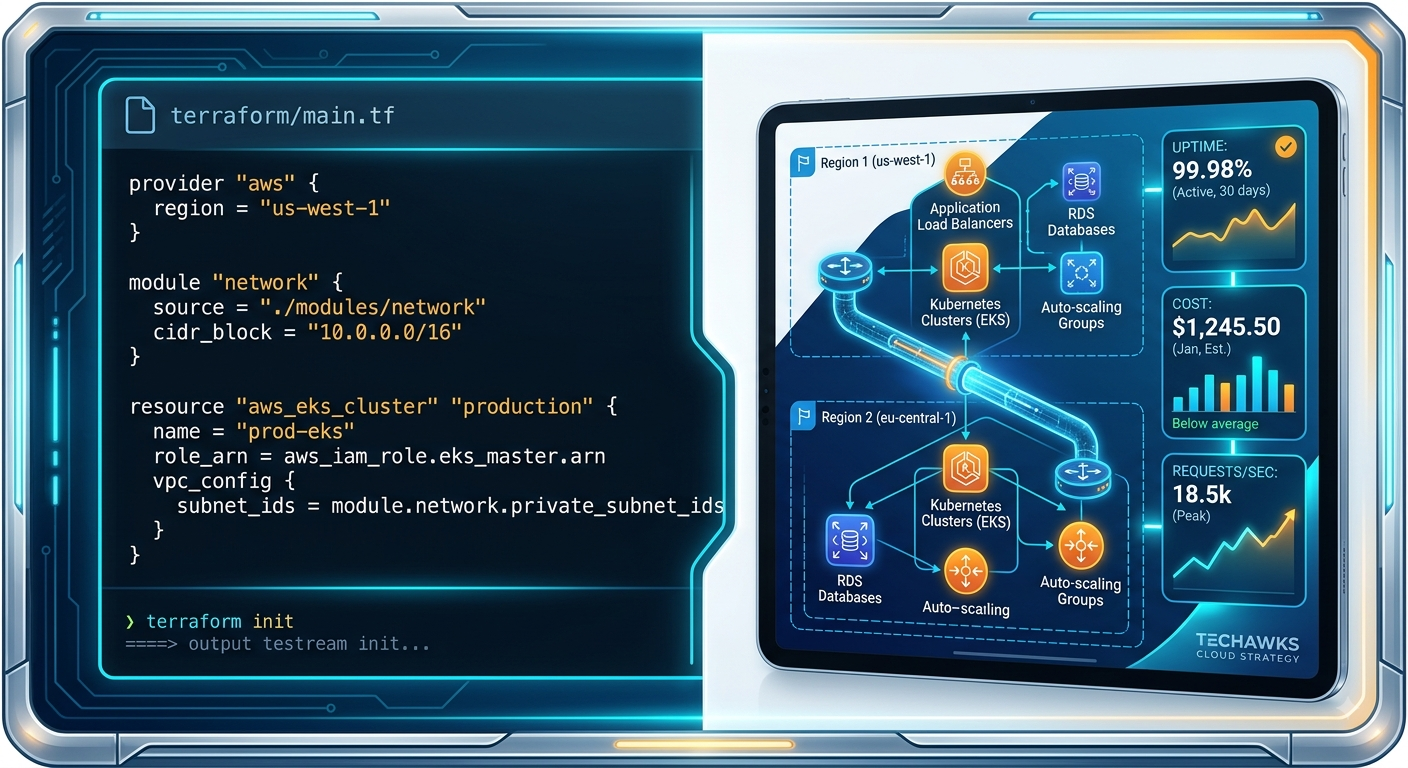
    1. Master Infrastructure as Code (IaC) Governance, Not Just Syntax
    Knowing how to write basic Terraform or CloudFormation templates is no longer enough. Senior engineers focus on cloud governance, modularity, and drift detection.
    Action: Stop writing monolithic IaC files. Practice building reusable, version-controlled infrastructure modules (e.g., standardized VPCs or hardened EKS/GKE clusters) with automated linting (tflint) and security scanning (checkov) integrated directly into your pull request pipelines.


    2. Learn the Economics of Cloud Architecture (FinOps)
    Designing a system that scales to zero is just as impressive as designing one that handles millions of requests.
    Action: Treat cost optimization as a core engineering metric. Before provisioning resources, calculate their total cost of ownership (TCO). Familiarize yourself with spot/preemptible instances, auto-scaling thresholds, and multi-tier storage lifecycle policies. Presenting cost-saving architectural refactors to leadership is one of the fastest ways to demonstrate executive business impact.


    3. Shift Left on Reliability & Chaos Engineering
    Instead of waiting for an outage to test your infrastructure's fault tolerance, proactively simulate system failures.
    Action: Implement basic chaos engineering principles using open-source tools like Chaos Mesh or Gremlin in your staging environment. Test how your application behaves when a database primary node fails, or when cross-region network latency spikes. Architectural expertise is built on understanding failure modes, not just success paths.


    Key Takeaways
    Modularize Your Infrastructure: Move beyond basic IaC syntax by building secure, compliant, and reusable infrastructure modules.
    Embrace FinOps: Design for cost efficiency alongside performance and availability; business leaders value engineers who protect cloud budgets.
    Design for Resilience: Proactively test and document failure scenarios using fault-injection techniques to ensure high availability.


    CTA
    Ready to level up your cloud architecture, automation pipelines, and infrastructure skills?


    Join Cloud, DevOps & Open Source today to access production-ready deployment guides, architectural blueprints, and connect with experienced cloud engineers!
    Beyond CI/CD Pipelines: How DevOps Engineers Level Up into Cloud Architects In many engineering teams, DevOps specialists get trapped in the loop of constant maintenance: fixing broken build steps, managing Kubernetes clusters, and responding to deployment alerts. To elevate your career, you need to transition from an operational script-writer to a strategic cloud systems designer. Here is a 3-step actionable roadmap to accelerate your career trajectory toward cloud architecture: 1. Master Infrastructure as Code (IaC) Governance, Not Just Syntax Knowing how to write basic Terraform or CloudFormation templates is no longer enough. Senior engineers focus on cloud governance, modularity, and drift detection. Action: Stop writing monolithic IaC files. Practice building reusable, version-controlled infrastructure modules (e.g., standardized VPCs or hardened EKS/GKE clusters) with automated linting (tflint) and security scanning (checkov) integrated directly into your pull request pipelines. 2. Learn the Economics of Cloud Architecture (FinOps) Designing a system that scales to zero is just as impressive as designing one that handles millions of requests. Action: Treat cost optimization as a core engineering metric. Before provisioning resources, calculate their total cost of ownership (TCO). Familiarize yourself with spot/preemptible instances, auto-scaling thresholds, and multi-tier storage lifecycle policies. Presenting cost-saving architectural refactors to leadership is one of the fastest ways to demonstrate executive business impact. 3. Shift Left on Reliability & Chaos Engineering Instead of waiting for an outage to test your infrastructure's fault tolerance, proactively simulate system failures. Action: Implement basic chaos engineering principles using open-source tools like Chaos Mesh or Gremlin in your staging environment. Test how your application behaves when a database primary node fails, or when cross-region network latency spikes. Architectural expertise is built on understanding failure modes, not just success paths. Key Takeaways Modularize Your Infrastructure: Move beyond basic IaC syntax by building secure, compliant, and reusable infrastructure modules. Embrace FinOps: Design for cost efficiency alongside performance and availability; business leaders value engineers who protect cloud budgets. Design for Resilience: Proactively test and document failure scenarios using fault-injection techniques to ensure high availability. CTA Ready to level up your cloud architecture, automation pipelines, and infrastructure skills? Join Cloud, DevOps & Open Source today to access production-ready deployment guides, architectural blueprints, and connect with experienced cloud engineers!
    0 Comentários 0 Compartilhamentos 281 Visualizações 0 Anterior
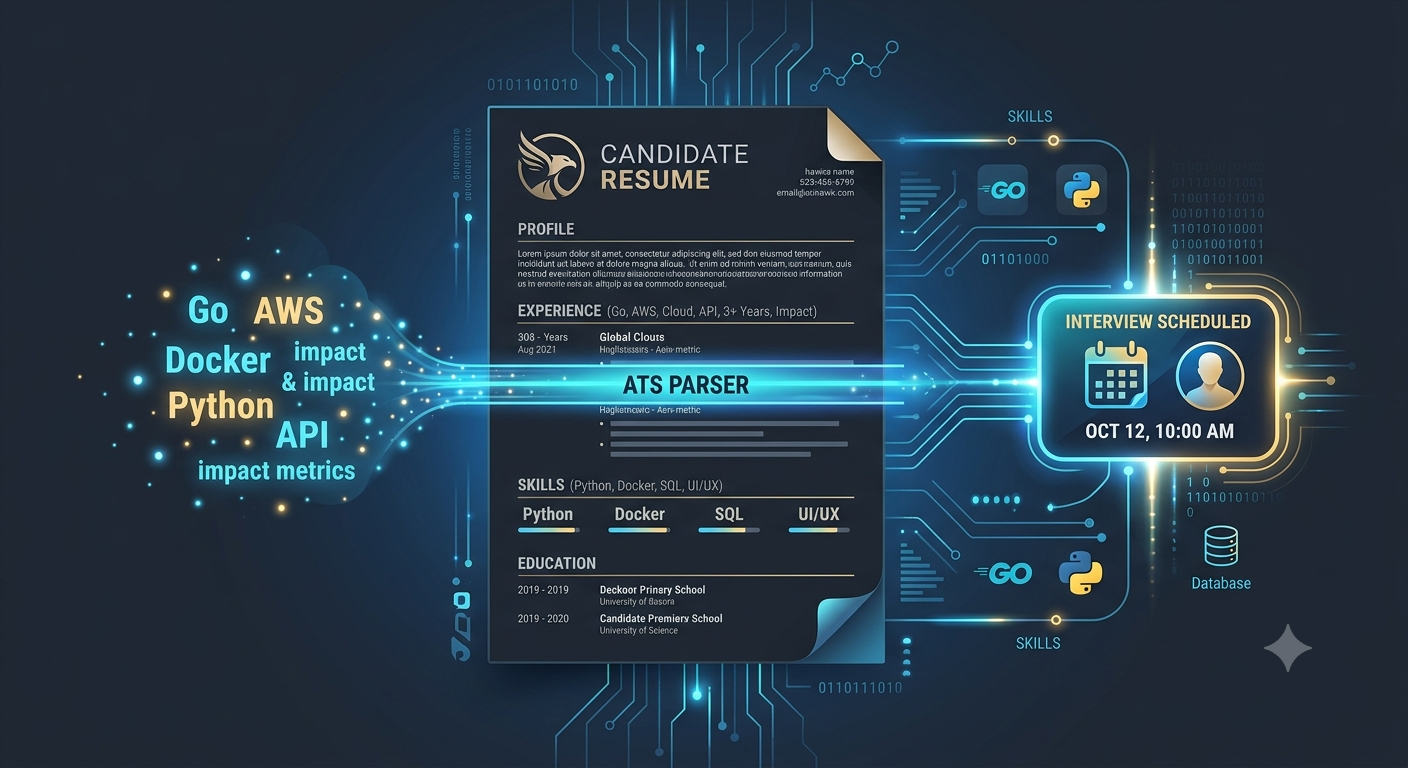
  • How to Structure Your Software Engineering Resume to Pass ATS Scanners and Land Interviews


    Tech recruiters spend an average of six seconds scanning a resume before deciding whether to move forward or reject an applicant. To stand out in a competitive job market, your resume needs to balance machine readability (ATS optimization) with compelling human storytelling.
    Follow this four-step blueprint to transform your resume into an interview-generating machine:


    Step 1: Format for Uncompromising Machine Readability
    Applicant Tracking Systems parse text top-to-bottom, left-to-right. Complex multi-column layouts, graphics, icons, and text boxes often cause parsing errors that lead to automatic rejections.
    Action: Stick to a clean, single-column layout using standard headings (Work Experience, Projects, Skills, Education). Export as a PDF or standard .docx unless specified otherwise, and ensure all text can be highlighted and copied.


    Step 2: Structure Experience Bullets Using the XYZ Formula
    Avoid listing job responsibilities like a task description (e.g., "Responsible for writing API endpoints"). Instead, use Google's proven XYZ Formula:
    "Accomplished [X], as measured by [Y], by doing [Z]."
    Action: Rewrite every experience bullet to lead with a strong action verb, quantify the business or technical outcome, and explain the tools used.
    Before: Built microservices in Go.
    After: Architected 4 backend microservices in Go, reducing API latency by 35% and supporting 100K+ daily active users.


    Step 3: Strategically Integrate Relevant Technical Skills
    Stuffing a block of 50 keywords at the bottom of your resume flags your application as spam. Instead, tailor your skill sections to align directly with the target job description.
    Action: Group your technical stack into clear sub-categories (e.g., Languages, Frameworks, Cloud & DevOps, Database & Tools). Mention core technologies within your experience bullet points to demonstrate practical application, not just theoretical knowledge.


    Step 4: Highlight Impact-Driven Side Projects (For Early/Mid-Career)
    If you lack years of enterprise experience, production-ready side projects prove your capability better than any generic degree or certificate.
    Action: Include a dedicated Projects section featuring 2–3 high-quality builds. Provide a direct GitHub link, live deployment link, a brief summary of the technical challenge solved, and the exact stack utilized.


    Key Takeaways
    Quantify Everything: Numbers prove impact—use metrics like latency reduction, performance boosts, cost savings, or user adoption rates.
    Keep it Scannable: Use a clean single-column structure that passes both ATS parsers and six-second human scans.
    Show, Don't Just Tell: Anchor your technical skills within real project outcomes rather than listing standalone buzzwords.


    CTA
    Ready to land your next high-impact tech role? Connect with talent acquisition specialists, engineering managers, and fellow tech professionals sharing insider referral codes, interview tips, and active openings. Join the Tech Jobs & Opportunities Community today!
    How to Structure Your Software Engineering Resume to Pass ATS Scanners and Land Interviews Tech recruiters spend an average of six seconds scanning a resume before deciding whether to move forward or reject an applicant. To stand out in a competitive job market, your resume needs to balance machine readability (ATS optimization) with compelling human storytelling. Follow this four-step blueprint to transform your resume into an interview-generating machine: Step 1: Format for Uncompromising Machine Readability Applicant Tracking Systems parse text top-to-bottom, left-to-right. Complex multi-column layouts, graphics, icons, and text boxes often cause parsing errors that lead to automatic rejections. Action: Stick to a clean, single-column layout using standard headings (Work Experience, Projects, Skills, Education). Export as a PDF or standard .docx unless specified otherwise, and ensure all text can be highlighted and copied. Step 2: Structure Experience Bullets Using the XYZ Formula Avoid listing job responsibilities like a task description (e.g., "Responsible for writing API endpoints"). Instead, use Google's proven XYZ Formula: "Accomplished [X], as measured by [Y], by doing [Z]." Action: Rewrite every experience bullet to lead with a strong action verb, quantify the business or technical outcome, and explain the tools used. Before: Built microservices in Go. After: Architected 4 backend microservices in Go, reducing API latency by 35% and supporting 100K+ daily active users. Step 3: Strategically Integrate Relevant Technical Skills Stuffing a block of 50 keywords at the bottom of your resume flags your application as spam. Instead, tailor your skill sections to align directly with the target job description. Action: Group your technical stack into clear sub-categories (e.g., Languages, Frameworks, Cloud & DevOps, Database & Tools). Mention core technologies within your experience bullet points to demonstrate practical application, not just theoretical knowledge. Step 4: Highlight Impact-Driven Side Projects (For Early/Mid-Career) If you lack years of enterprise experience, production-ready side projects prove your capability better than any generic degree or certificate. Action: Include a dedicated Projects section featuring 2–3 high-quality builds. Provide a direct GitHub link, live deployment link, a brief summary of the technical challenge solved, and the exact stack utilized. Key Takeaways Quantify Everything: Numbers prove impact—use metrics like latency reduction, performance boosts, cost savings, or user adoption rates. Keep it Scannable: Use a clean single-column structure that passes both ATS parsers and six-second human scans. Show, Don't Just Tell: Anchor your technical skills within real project outcomes rather than listing standalone buzzwords. CTA Ready to land your next high-impact tech role? Connect with talent acquisition specialists, engineering managers, and fellow tech professionals sharing insider referral codes, interview tips, and active openings. Join the Tech Jobs & Opportunities Community today!
    0 Comentários 0 Compartilhamentos 202 Visualizações 0 Anterior
Páginas impulsionada