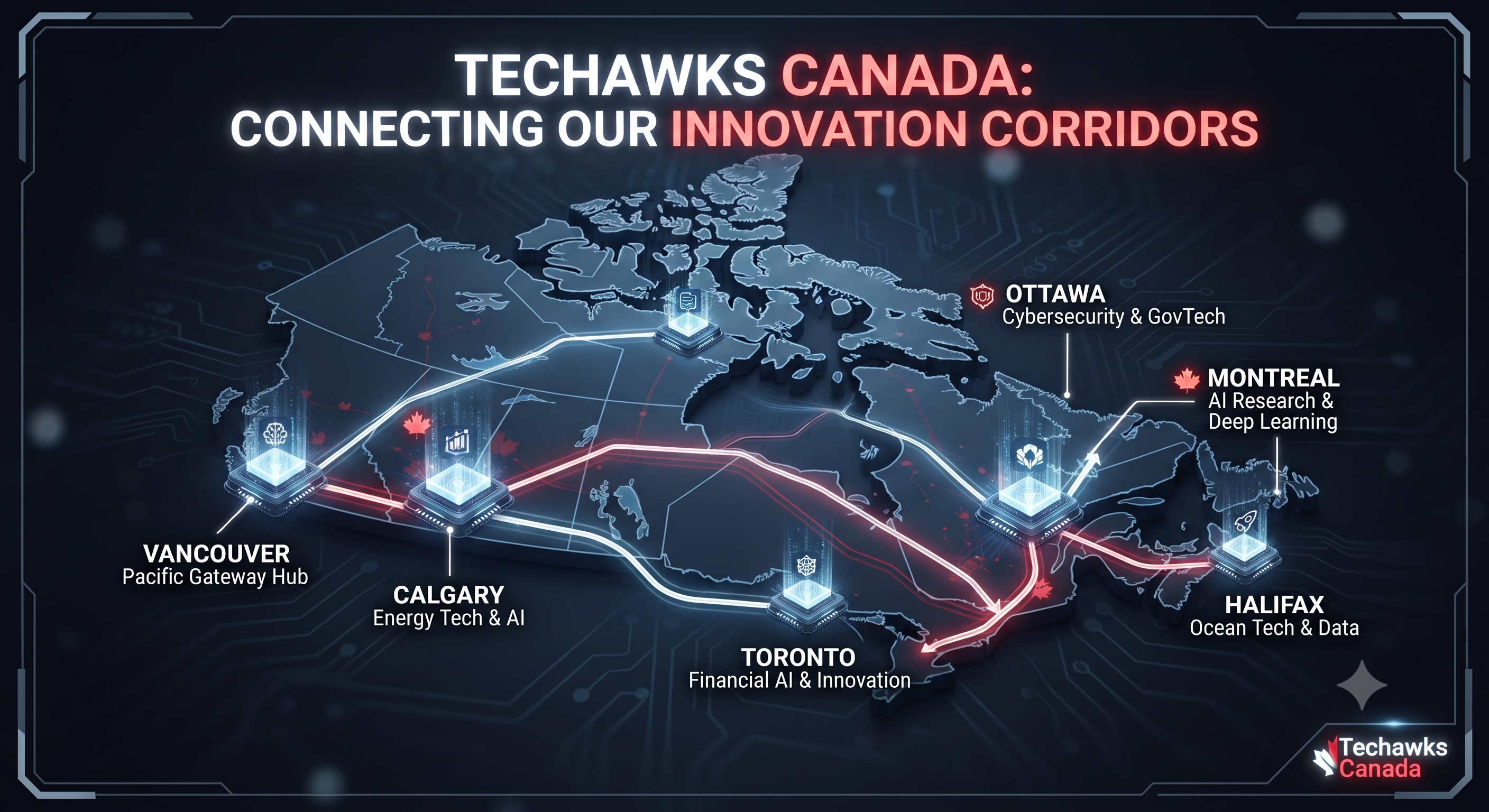
• From Research Pioneers to Commercial Scale: Why Canada's Tech Sector Is Racing to Close the AI Adoption Gap
    With the federal government’s "AI for All" national strategy pushing to accelerate commercialization and expanding support for domestic technology adoption, the Canadian tech landscape is at a critical inflection point.


    From Vancouver and Toronto to Montreal, Ottawa, and Calgary, engineering leaders and founders are moving past standalone chatbot proofs-of-concept. The real challenge today is scaling AI responsibly across priority sectors like health, finance, and advanced manufacturing while navigating strict domestic privacy and data governance frameworks. Bridging the gap between raw research and production-grade deployment requires a deliberate focus on secure pipelines, data sovereignty, and measurable ROI.


    What you need to know to scale tech innovation in Canada:


    Move From Experimentation to Execution: Leverage domestic commercialization programs and funding frameworks to transition AI models out of R&D sandboxes and into enterprise production.


    Prioritize Data Governance and Privacy Compliance: Ensure your data pipelines comply with evolving Canadian privacy requirements and sector-specific regulations, treating data protection as an architectural priority.


    Build Cross-Industry Resilience: Combine Canada's traditional strengths in tech clusters—such as cybersecurity in Ottawa, AI research in Montreal and Toronto, and enterprise software in Western hubs—to solve complex real-world challenges.


    Discussion Question
    How is your organization addressing the AI adoption gap in Canada? Are you finding it challenging to balance rapid deployment with domestic privacy and data governance compliance?


    CTA (Join Techawks Canada)
    Want to connect with Canadian developers, founders, and tech leaders scaling the future of our digital economy? Join the Techawks Canada community today and build what's next.
    From Research Pioneers to Commercial Scale: Why Canada's Tech Sector Is Racing to Close the AI Adoption Gap With the federal government’s "AI for All" national strategy pushing to accelerate commercialization and expanding support for domestic technology adoption, the Canadian tech landscape is at a critical inflection point. From Vancouver and Toronto to Montreal, Ottawa, and Calgary, engineering leaders and founders are moving past standalone chatbot proofs-of-concept. The real challenge today is scaling AI responsibly across priority sectors like health, finance, and advanced manufacturing while navigating strict domestic privacy and data governance frameworks. Bridging the gap between raw research and production-grade deployment requires a deliberate focus on secure pipelines, data sovereignty, and measurable ROI. What you need to know to scale tech innovation in Canada: Move From Experimentation to Execution: Leverage domestic commercialization programs and funding frameworks to transition AI models out of R&D sandboxes and into enterprise production. Prioritize Data Governance and Privacy Compliance: Ensure your data pipelines comply with evolving Canadian privacy requirements and sector-specific regulations, treating data protection as an architectural priority. Build Cross-Industry Resilience: Combine Canada's traditional strengths in tech clusters—such as cybersecurity in Ottawa, AI research in Montreal and Toronto, and enterprise software in Western hubs—to solve complex real-world challenges. Discussion Question How is your organization addressing the AI adoption gap in Canada? Are you finding it challenging to balance rapid deployment with domestic privacy and data governance compliance? CTA (Join Techawks Canada) Want to connect with Canadian developers, founders, and tech leaders scaling the future of our digital economy? Join the Techawks Canada community today and build what's next.
    0 التعليقات 0 المشاركات 231 مشاهدة 0 معاينة
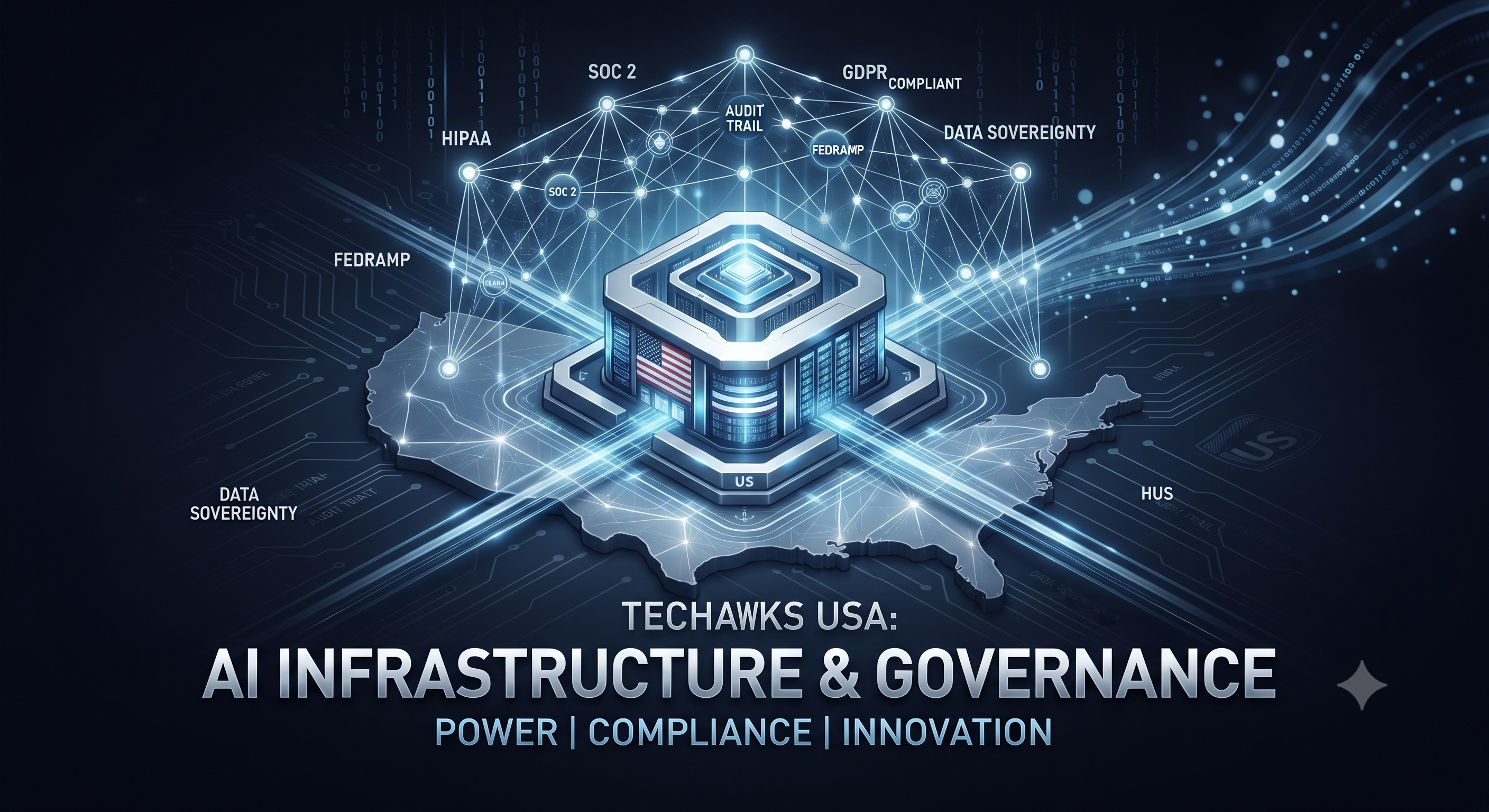
  • From Power Constraints to Policy: Why US Infrastructure and Governance Define the Next Era of AI
    As recent industry data highlights, venture investments in US AI data center infrastructure have skyrocketed past $33.5 billion, with the vast majority of capital laser-focused on power supply, hardware acceleration, and computing efficiency.


    Simultaneously, enterprise leaders and policy makers are confronting a massive governance vacuum. Recent calls for binding safety frameworks, independent audits, and emergency brakes on autonomous models highlight a stark reality: building advanced AI is no longer just a technical engineering challenge—it is an operational, regulatory, and infrastructural puzzle. Organizations can no longer rely on unguided scaling; long-term survival demands resilient data foundations, predictable power economics, and proactive compliance.


    What you need to know to navigate the evolving US tech landscape:


    Energy-Aware Architecture: Treat power consumption and compute efficiency as primary architectural constraints, just like memory leaks or latency.


    Governance as a Growth Accelerator: Effective data governance and transparent lineage protocols are no longer compliance hurdles—they are the core trust layer required to move AI out of the pilot stage and into enterprise production.


    Anticipating Regulatory Standards: With growing pressure for mandatory incident reporting and rigorous pre-release evaluations, engineering teams must build auditable logging and strict guardrails into their systems from day one.


    Discussion Question
    How is your US-based team factoring grid constraints, data governance, and potential regulatory shifts into your infrastructure planning for the year ahead?


    CTA (Join Techawks USA)
    Want to connect with engineering leaders, startup founders, and technologists across the US building the future of scalable tech? Join the Techawks USA community today and stay ahead of the curve.
    From Power Constraints to Policy: Why US Infrastructure and Governance Define the Next Era of AI As recent industry data highlights, venture investments in US AI data center infrastructure have skyrocketed past $33.5 billion, with the vast majority of capital laser-focused on power supply, hardware acceleration, and computing efficiency. Simultaneously, enterprise leaders and policy makers are confronting a massive governance vacuum. Recent calls for binding safety frameworks, independent audits, and emergency brakes on autonomous models highlight a stark reality: building advanced AI is no longer just a technical engineering challenge—it is an operational, regulatory, and infrastructural puzzle. Organizations can no longer rely on unguided scaling; long-term survival demands resilient data foundations, predictable power economics, and proactive compliance. What you need to know to navigate the evolving US tech landscape: Energy-Aware Architecture: Treat power consumption and compute efficiency as primary architectural constraints, just like memory leaks or latency. Governance as a Growth Accelerator: Effective data governance and transparent lineage protocols are no longer compliance hurdles—they are the core trust layer required to move AI out of the pilot stage and into enterprise production. Anticipating Regulatory Standards: With growing pressure for mandatory incident reporting and rigorous pre-release evaluations, engineering teams must build auditable logging and strict guardrails into their systems from day one. Discussion Question How is your US-based team factoring grid constraints, data governance, and potential regulatory shifts into your infrastructure planning for the year ahead? CTA (Join Techawks USA) Want to connect with engineering leaders, startup founders, and technologists across the US building the future of scalable tech? Join the Techawks USA community today and stay ahead of the curve.
    0 التعليقات 0 المشاركات 234 مشاهدة 0 معاينة
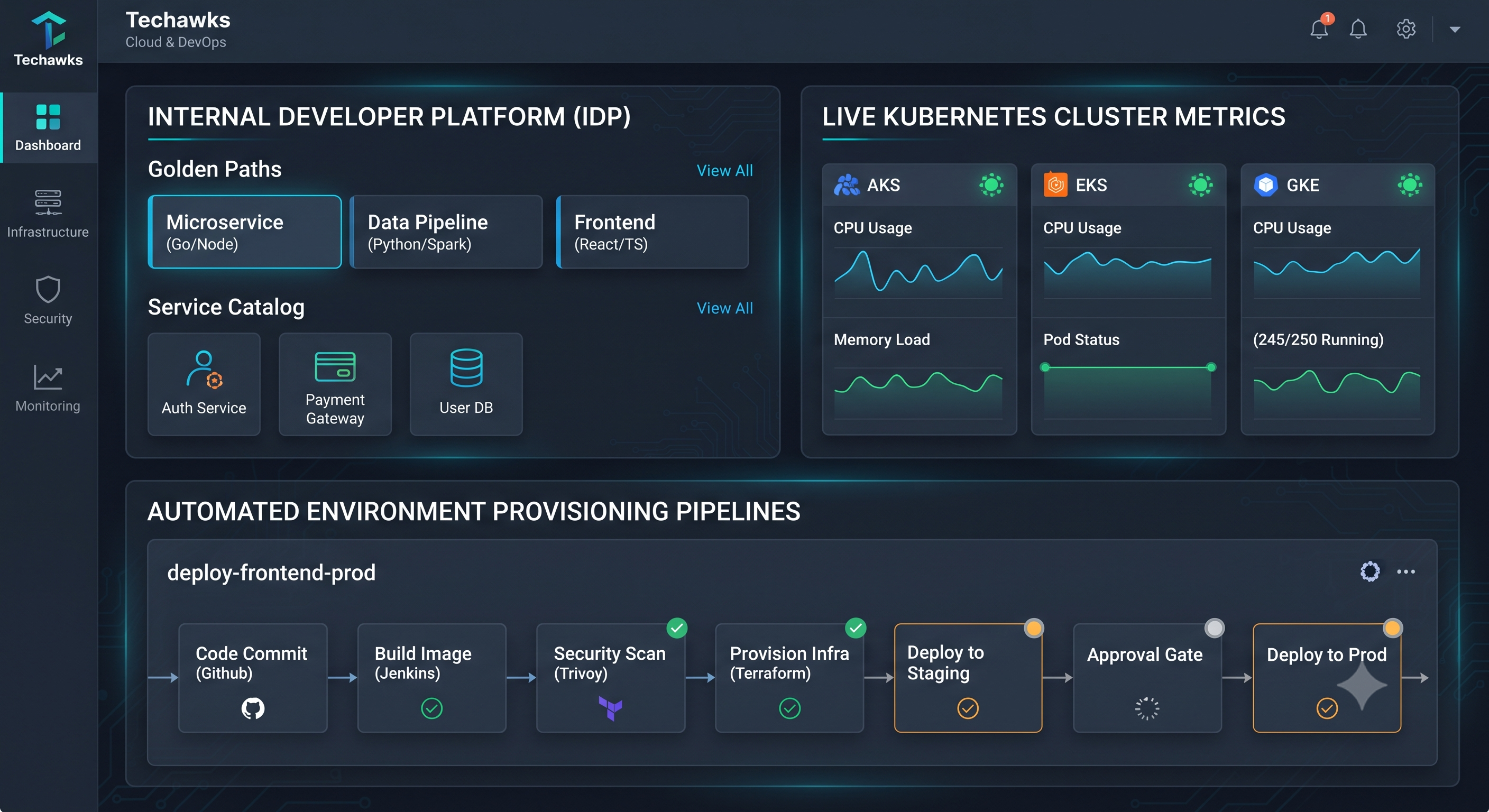
  • From Tickets to Templates: Why Platform Engineering Is Replacing Traditional DevOps Bottlenecks
    As cloud-native environments scale across complex Kubernetes clusters, microservices, and multi-cloud architectures, traditional DevOps models are hitting a ceiling. Relying on a centralized infrastructure team to provision every database or tweak every CI/CD pipeline turns engineers into bottlenecks instead of builders.


    The industry shift toward Platform Engineering treats internal tooling as a product. By building Internal Developer Platforms (IDPs) with curated "golden paths," platform teams empower developers to self-serve infrastructure, spin up ephemeral environments, and deploy code safely without bypassing compliance or security.


    What you need to know to scale your cloud operations:


    Platform-as-a-Product Mindset: Treat your internal developers as customers. Build self-service portals (using tools like Backstage or Port) with clear documentation, robust service catalogs, and intuitive software templates.


    Golden Paths Over Guardrails: Instead of locking down access and saying "no" to developers, provide pre-packaged, compliant templates for common stacks (e.g., microservice deployment with built-in monitoring and security scanning) that cover 80% of use cases.


    Ephemeral Environments on Demand: Eliminate staging environment bottlenecks by leveraging automated preview environments tied to pull requests, allowing teams to test changes in isolation before merging.


    Discussion Question
    Is your organization shifting toward Platform Engineering? How are you balancing developer autonomy with centralized infrastructure governance?


    CTA (Join Cloud, DevOps & Open Source)
    Want to dive deeper into Kubernetes architectures, GitOps workflows, and platform engineering patterns? Join the Cloud, DevOps & Open Source community today and build resilient cloud systems.
    From Tickets to Templates: Why Platform Engineering Is Replacing Traditional DevOps Bottlenecks As cloud-native environments scale across complex Kubernetes clusters, microservices, and multi-cloud architectures, traditional DevOps models are hitting a ceiling. Relying on a centralized infrastructure team to provision every database or tweak every CI/CD pipeline turns engineers into bottlenecks instead of builders. The industry shift toward Platform Engineering treats internal tooling as a product. By building Internal Developer Platforms (IDPs) with curated "golden paths," platform teams empower developers to self-serve infrastructure, spin up ephemeral environments, and deploy code safely without bypassing compliance or security. What you need to know to scale your cloud operations: Platform-as-a-Product Mindset: Treat your internal developers as customers. Build self-service portals (using tools like Backstage or Port) with clear documentation, robust service catalogs, and intuitive software templates. Golden Paths Over Guardrails: Instead of locking down access and saying "no" to developers, provide pre-packaged, compliant templates for common stacks (e.g., microservice deployment with built-in monitoring and security scanning) that cover 80% of use cases. Ephemeral Environments on Demand: Eliminate staging environment bottlenecks by leveraging automated preview environments tied to pull requests, allowing teams to test changes in isolation before merging. Discussion Question Is your organization shifting toward Platform Engineering? How are you balancing developer autonomy with centralized infrastructure governance? CTA (Join Cloud, DevOps & Open Source) Want to dive deeper into Kubernetes architectures, GitOps workflows, and platform engineering patterns? Join the Cloud, DevOps & Open Source community today and build resilient cloud systems.
    0 التعليقات 0 المشاركات 139 مشاهدة 0 معاينة
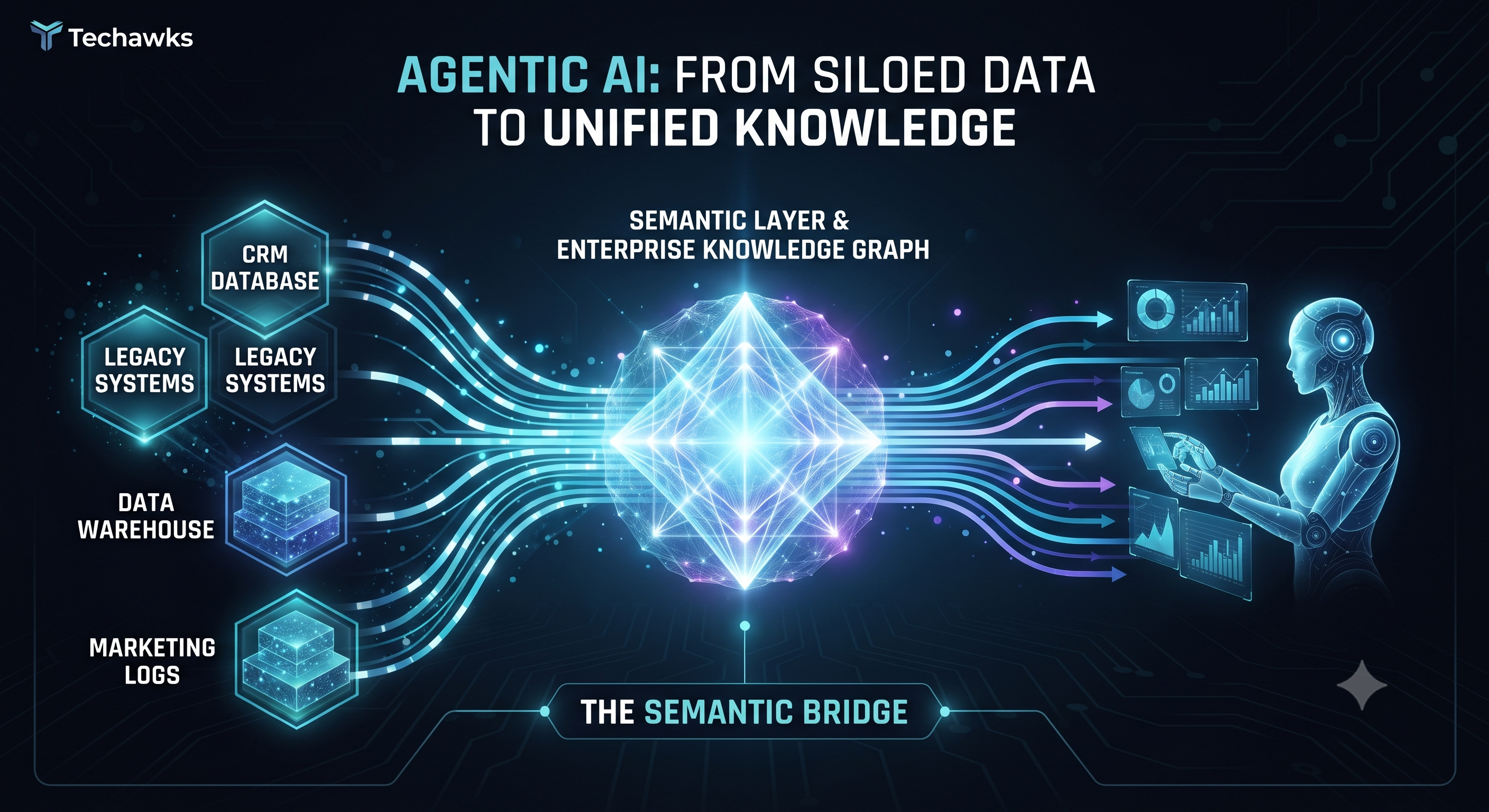
  • From Dashboards to Decisions: Why Agentic AI Needs a Unified Semantic Layer


    As enterprises pivot from standalone AI chat interfaces to fully autonomous Agentic AI workflows, the bottleneck has quietly shifted. It’s no longer about model size or parameter count—it’s about data fragmentation.


    If Database A defines a "client" and Database B defines an "account", an autonomous agent will stumble, hallucinate, or fracture its execution chain trying to connect the dots. Recent enterprise infrastructure shifts—such as the introduction of unified semantic layers and enterprise knowledge graphs—highlight a critical truth: AI agents are only as intelligent as the context architecture beneath them.


    What you need to know to stay ahead:


    The Semantic Gap: Autonomous tools cannot reliably execute multi-system workflows without a standardized vocabulary layer that maps disparate schemas into a single business reality.


    Inference Economics vs. Data Preparation: While hardware acceleration (like specialized server GPUs) speeds up raw compute, poorly structured data pipelines will bottleneck your token ROI.


    The Shift to Knowledge Agents: Future engineering isn't just about prompt tuning; it’s about architecting governance rules, access controls, and relationship maps so agents can safely reason across institutional data.


    Discussion Question
    Is your engineering team focusing more on model selection or data infrastructure right now? How are you solving cross-system data consistency for your AI workflows?


    CTA (Join Techawks General Community)
    Want to stay at the intersection of enterprise architecture and cutting-edge AI development? Join the Techawks General Community today and connect with global technologists building the future.
    From Dashboards to Decisions: Why Agentic AI Needs a Unified Semantic Layer As enterprises pivot from standalone AI chat interfaces to fully autonomous Agentic AI workflows, the bottleneck has quietly shifted. It’s no longer about model size or parameter count—it’s about data fragmentation. If Database A defines a "client" and Database B defines an "account", an autonomous agent will stumble, hallucinate, or fracture its execution chain trying to connect the dots. Recent enterprise infrastructure shifts—such as the introduction of unified semantic layers and enterprise knowledge graphs—highlight a critical truth: AI agents are only as intelligent as the context architecture beneath them. What you need to know to stay ahead: The Semantic Gap: Autonomous tools cannot reliably execute multi-system workflows without a standardized vocabulary layer that maps disparate schemas into a single business reality. Inference Economics vs. Data Preparation: While hardware acceleration (like specialized server GPUs) speeds up raw compute, poorly structured data pipelines will bottleneck your token ROI. The Shift to Knowledge Agents: Future engineering isn't just about prompt tuning; it’s about architecting governance rules, access controls, and relationship maps so agents can safely reason across institutional data. Discussion Question Is your engineering team focusing more on model selection or data infrastructure right now? How are you solving cross-system data consistency for your AI workflows? CTA (Join Techawks General Community) Want to stay at the intersection of enterprise architecture and cutting-edge AI development? Join the Techawks General Community today and connect with global technologists building the future.
    0 التعليقات 0 المشاركات 31 مشاهدة 0 معاينة
  • From Early Adoption to Agentic Autonomy: Navigating the UAE’s Shift Toward Sovereign AI Infrastructure
    With the UAE ranking at the forefront of global AI integration and driving major national upskilling programs (such as equipping thousands of government and education professionals with advanced AI capabilities), the technical baseline for local builders has evolved overnight.


    Moving from static generative tools to multi-step agentic workflows introduces immense complexity. When AI systems transition from answering questions to executing autonomous tasks across public services, corporate workflows, and cloud architectures, the integrity of data governance and compute infrastructure becomes paramount.


    Why Sovereign AI and Infrastructure Matter
    The Autonomy Imperative: Agentic workflows require continuous, secure communication across APIs, microservices, and databases without compromising local data residency or regulatory compliance.


    Optimizing Compute at Scale: Powering next-generation models demands strategic investments in high-performance computing clusters and energy-efficient data centers tailored for regional demands.


    Talent as the Ultimate Moat: Institutional programs like the UAE's AI-native training initiatives mean engineering teams must rapidly transition from prompt engineering to system-level architecture and robust AI oversight.


    What You Can Do Today (A Practical Regional Blueprint)
    Design for Data Sovereignty: Ensure your data pipelines comply strictly with regional data residency guidelines, keeping sensitive local data secure and structured.


    Implement Rigorous Agent Guardrails: If you are building autonomous workflows, establish strict tool-use boundaries, human-in-the-loop validation checkpoints, and maximum iteration limits.


    Upskill Continuously: Leverage local collaborative frameworks and institutional training resources to master systems engineering, cloud orchestration, and model deployment.


    Discussion Question
    How is your organization in the UAE adapting to the rapid shift toward agentic AI and sovereign infrastructure? Are you building local pipelines or scaling on hybrid cloud environments? Share your thoughts below!


    CTA
    Connect with visionary engineers, architects, and innovators driving the future of technology by joining Techawks UAE today.
    From Early Adoption to Agentic Autonomy: Navigating the UAE’s Shift Toward Sovereign AI Infrastructure With the UAE ranking at the forefront of global AI integration and driving major national upskilling programs (such as equipping thousands of government and education professionals with advanced AI capabilities), the technical baseline for local builders has evolved overnight. Moving from static generative tools to multi-step agentic workflows introduces immense complexity. When AI systems transition from answering questions to executing autonomous tasks across public services, corporate workflows, and cloud architectures, the integrity of data governance and compute infrastructure becomes paramount. Why Sovereign AI and Infrastructure Matter The Autonomy Imperative: Agentic workflows require continuous, secure communication across APIs, microservices, and databases without compromising local data residency or regulatory compliance. Optimizing Compute at Scale: Powering next-generation models demands strategic investments in high-performance computing clusters and energy-efficient data centers tailored for regional demands. Talent as the Ultimate Moat: Institutional programs like the UAE's AI-native training initiatives mean engineering teams must rapidly transition from prompt engineering to system-level architecture and robust AI oversight. What You Can Do Today (A Practical Regional Blueprint) Design for Data Sovereignty: Ensure your data pipelines comply strictly with regional data residency guidelines, keeping sensitive local data secure and structured. Implement Rigorous Agent Guardrails: If you are building autonomous workflows, establish strict tool-use boundaries, human-in-the-loop validation checkpoints, and maximum iteration limits. Upskill Continuously: Leverage local collaborative frameworks and institutional training resources to master systems engineering, cloud orchestration, and model deployment. Discussion Question How is your organization in the UAE adapting to the rapid shift toward agentic AI and sovereign infrastructure? Are you building local pipelines or scaling on hybrid cloud environments? Share your thoughts below! CTA Connect with visionary engineers, architects, and innovators driving the future of technology by joining Techawks UAE today.
    0 التعليقات 0 المشاركات 149 مشاهدة 0 معاينة
  • From Passive Compliance to Active Accountability: Navigating the UK’s New Era of AI Regulation and Data Governance
    As UK businesses rapidly transition from basic AI chatbots to autonomous, multi-step agentic systems capable of executing complex workflows, regulatory scrutiny has shifted in tandem. Recent supervisory actions involving major foundation model developers and emerging guidelines on agentic AI highlight a clear message: innovation and accountability must scale together.


    For UK developers, product managers, and tech leaders, navigating this landscape means embedding privacy by design and robust data governance directly into the software development lifecycle rather than treating compliance as an afterthought.


    Why Proactive Governance Matters
    The Autonomy Multiplier: AI agents that interact with websites, use external tools, and make automated decisions introduce complex data privacy and lawful processing risks that static models never faced.


    Trust as a Competitive Advantage: In a market where enterprise clients and consumers demand transparency, proving data control and adherence to UK data protection standards directly builds commercial trust.


    Avoiding Retrofitting Nightmares: Trying to secure an unmanaged, production-grade AI pipeline or unearth training data provenance after deployment is exponentially more costly than designing guardrails from day one.


    What You Can Do Today (A Practical Compliance Blueprint)
    Audit Your Data Lineage: Map out exactly what personal and special category data your models ingest, how it is processed, and whether clear mechanisms exist for data subject rights.


    Implement Continuous Monitoring: Move away from passive yearly audits by setting up real-time telemetry and validation dashboards to track how autonomous agents utilize tools and access datasets.


    Align with Regulatory Expectations: Closely review emerging ICO guidance on foundation models and agentic AI to ensure your development practices meet modern transparency and risk-management thresholds.


    Discussion Question
    How is your team balancing the velocity of AI adoption with the increasing demands of UK data regulation and oversight? Are you building compliance checks directly into your CI/CD pipeline? Let us know below!


    CTA
    Connect with top UK engineers, leaders, and innovators navigating the future of technology by joining Techawks UK today.
    From Passive Compliance to Active Accountability: Navigating the UK’s New Era of AI Regulation and Data Governance As UK businesses rapidly transition from basic AI chatbots to autonomous, multi-step agentic systems capable of executing complex workflows, regulatory scrutiny has shifted in tandem. Recent supervisory actions involving major foundation model developers and emerging guidelines on agentic AI highlight a clear message: innovation and accountability must scale together. For UK developers, product managers, and tech leaders, navigating this landscape means embedding privacy by design and robust data governance directly into the software development lifecycle rather than treating compliance as an afterthought. Why Proactive Governance Matters The Autonomy Multiplier: AI agents that interact with websites, use external tools, and make automated decisions introduce complex data privacy and lawful processing risks that static models never faced. Trust as a Competitive Advantage: In a market where enterprise clients and consumers demand transparency, proving data control and adherence to UK data protection standards directly builds commercial trust. Avoiding Retrofitting Nightmares: Trying to secure an unmanaged, production-grade AI pipeline or unearth training data provenance after deployment is exponentially more costly than designing guardrails from day one. What You Can Do Today (A Practical Compliance Blueprint) Audit Your Data Lineage: Map out exactly what personal and special category data your models ingest, how it is processed, and whether clear mechanisms exist for data subject rights. Implement Continuous Monitoring: Move away from passive yearly audits by setting up real-time telemetry and validation dashboards to track how autonomous agents utilize tools and access datasets. Align with Regulatory Expectations: Closely review emerging ICO guidance on foundation models and agentic AI to ensure your development practices meet modern transparency and risk-management thresholds. Discussion Question How is your team balancing the velocity of AI adoption with the increasing demands of UK data regulation and oversight? Are you building compliance checks directly into your CI/CD pipeline? Let us know below! CTA Connect with top UK engineers, leaders, and innovators navigating the future of technology by joining Techawks UK today.
    0 التعليقات 0 المشاركات 137 مشاهدة 0 معاينة
  • From Proof-of-Concept to Production Reality: Navigating the AI Infrastructure and Inference Reckoning
    In the early rush of AI adoption, many organizations treated large language models like infinite, inexpensive APIs. Today, enterprise tech teams are hitting the inference economics wall. As usage scales from experimental chat interfaces to production-grade, multi-step agentic workflows, token consumption has skyrocketed—turning cloud bills into a massive operational challenge.


    At the same time, the race for specialized AI compute, low-latency edge integrations, and resilient hybrid cloud architectures is forcing US tech organizations to fundamentally redesign how their infrastructure is built. Success no longer belongs to the teams that deploy models the fastest, but to those that optimize performance, governance, and resource allocation at every layer of the stack.


    Why the Infrastructure Shift Matters
    Inference Economics: Training models gets the headlines, but running inference at enterprise scale dictates your day-to-day profitability.


    The Hybrid Balance: Relying entirely on centralized public clouds for heavy AI workloads introduces latency and cost vulnerabilities; modern strategies demand a strategic mix of cloud, on-premises, and edge compute.


    Governance as a Feature: Without rigorous AI governance frameworks, data security guardrails, and usage tracking, scaled deployments expose organizations to silent compliance and security risks.


    What You Can Do Today (A Practical Optimization Blueprint)
    Model Right-Sizing: Audit your current AI workflows to see where smaller, specialized open models or fine-tuned variants can replace expensive general-purpose models for routine tasks.


    Implement Token Budgets: Treat AI inference costs like any other critical cloud resource—monitor usage patterns, set strict rate limits, and attribute costs directly to feature teams.


    Embed AI Governance Early: Establish cross-functional AI centers of excellence to review system architecture, data quality, and security controls before pushing new AI applications into production.


    Discussion Question
    How is your engineering team tackling inference costs and infrastructure scaling? Are you exploring smaller localized models, or finding new ways to optimize cloud resources? Drop your insights below!


    CTA
    Connect with top US engineers, architects, and tech leaders, and stay ahead of the curve by joining Techawks USA today.
    From Proof-of-Concept to Production Reality: Navigating the AI Infrastructure and Inference Reckoning In the early rush of AI adoption, many organizations treated large language models like infinite, inexpensive APIs. Today, enterprise tech teams are hitting the inference economics wall. As usage scales from experimental chat interfaces to production-grade, multi-step agentic workflows, token consumption has skyrocketed—turning cloud bills into a massive operational challenge. At the same time, the race for specialized AI compute, low-latency edge integrations, and resilient hybrid cloud architectures is forcing US tech organizations to fundamentally redesign how their infrastructure is built. Success no longer belongs to the teams that deploy models the fastest, but to those that optimize performance, governance, and resource allocation at every layer of the stack. Why the Infrastructure Shift Matters Inference Economics: Training models gets the headlines, but running inference at enterprise scale dictates your day-to-day profitability. The Hybrid Balance: Relying entirely on centralized public clouds for heavy AI workloads introduces latency and cost vulnerabilities; modern strategies demand a strategic mix of cloud, on-premises, and edge compute. Governance as a Feature: Without rigorous AI governance frameworks, data security guardrails, and usage tracking, scaled deployments expose organizations to silent compliance and security risks. What You Can Do Today (A Practical Optimization Blueprint) Model Right-Sizing: Audit your current AI workflows to see where smaller, specialized open models or fine-tuned variants can replace expensive general-purpose models for routine tasks. Implement Token Budgets: Treat AI inference costs like any other critical cloud resource—monitor usage patterns, set strict rate limits, and attribute costs directly to feature teams. Embed AI Governance Early: Establish cross-functional AI centers of excellence to review system architecture, data quality, and security controls before pushing new AI applications into production. Discussion Question How is your engineering team tackling inference costs and infrastructure scaling? Are you exploring smaller localized models, or finding new ways to optimize cloud resources? Drop your insights below! CTA Connect with top US engineers, architects, and tech leaders, and stay ahead of the curve by joining Techawks USA today.
    0 التعليقات 0 المشاركات 129 مشاهدة 0 معاينة
  • From Speculative Growth to Unit Economics: Why Sustainable Execution is the Ultimate Founder Advantage


    The modern venture landscape has shifted dramatically. Capital is increasingly directed toward lean, agile teams that prioritize sustainable growth and clear time-to-value over speculative expansion.


    When building a tech startup today, your primary moat isn't just your initial feature set—it is how tightly you control your burn rate while embedding automation and data governance into your core infrastructure.


    Why Sustainable Operations Matter
    Capital Efficiency: Startups that master unit economics early remove dependency on volatile funding rounds, extending their runway and retaining equity control.


    Built-In Defensibility: Blending deep domain expertise with proprietary workflows creates a lasting competitive advantage that generic software platforms cannot easily replicate.


    Investor Alignment: Modern seed and Series A rounds prioritize early revenue signals, proven customer retention, and demonstrable operational traction over speculative projections.


    What You Can Do Today (A Founder's Execution Playbook)
    Track the Right Metrics: Shift your focus from vanity sign-ups to concrete operational indicators like time-to-first-value, feature adoption rates, and cost-per-learning-cycle.


    Validate Before You Scale: Confirm real customer demand and willingness to pay through structured pre-launch testing or waitlist signals before committing engineering resources to sprawling feature sets.


    Leverage Lean Infrastructure: Utilize modular cloud-native architectures and embedded automation tools to scale your operational capacity without ballooning headcount costs.


    Discussion Question
    How is your startup balancing growth goals with operational efficiency in today's market? Are you seeing a shift in what investors care about most? Share your insights below!


    CTA
    Connect with fellow visionaries, share scaling strategies, and access high-growth resources by joining the Startup Founders & Entrepreneurs community today.
    From Speculative Growth to Unit Economics: Why Sustainable Execution is the Ultimate Founder Advantage The modern venture landscape has shifted dramatically. Capital is increasingly directed toward lean, agile teams that prioritize sustainable growth and clear time-to-value over speculative expansion. When building a tech startup today, your primary moat isn't just your initial feature set—it is how tightly you control your burn rate while embedding automation and data governance into your core infrastructure. Why Sustainable Operations Matter Capital Efficiency: Startups that master unit economics early remove dependency on volatile funding rounds, extending their runway and retaining equity control. Built-In Defensibility: Blending deep domain expertise with proprietary workflows creates a lasting competitive advantage that generic software platforms cannot easily replicate. Investor Alignment: Modern seed and Series A rounds prioritize early revenue signals, proven customer retention, and demonstrable operational traction over speculative projections. What You Can Do Today (A Founder's Execution Playbook) Track the Right Metrics: Shift your focus from vanity sign-ups to concrete operational indicators like time-to-first-value, feature adoption rates, and cost-per-learning-cycle. Validate Before You Scale: Confirm real customer demand and willingness to pay through structured pre-launch testing or waitlist signals before committing engineering resources to sprawling feature sets. Leverage Lean Infrastructure: Utilize modular cloud-native architectures and embedded automation tools to scale your operational capacity without ballooning headcount costs. Discussion Question How is your startup balancing growth goals with operational efficiency in today's market? Are you seeing a shift in what investors care about most? Share your insights below! CTA Connect with fellow visionaries, share scaling strategies, and access high-growth resources by joining the Startup Founders & Entrepreneurs community today.
    0 التعليقات 0 المشاركات 100 مشاهدة 0 معاينة
  • Moving Beyond the Resume Drop: Why Contextual Portfolio Prototyping Beats Traditional Job Applications


    Hiring managers and technical leads are facing massive project bottlenecks and fatigue from reviewing endless keyword-stuffed resumes. What sets top candidates apart today is proof of work through contextual prototyping—demonstrating immediate value rather than just claiming it on paper.


    When you shift your job search strategy from passive applying to active problem-solving, you de-risk the hire for the employer before they even invite you to interview.


    Why Contextual Portfolios Matter
    Demonstrated Execution: Anyone can list "Python" or "Cloud Architecture" on a resume; a live prototype or a detailed architectural breakdown proves you know how to ship.


    Business Alignment: Employers aren’t just looking for syntax skills—they want to see how you solve real operational and business challenges.


    Standing Out from the Noise: A targeted mini-project or case study targeting a specific company's pain point immediately separates you from the pool of bulk applicants.


    What You Can Do Today (A Career-Boosting Playbook)
    Build Problem-First Case Studies: Instead of displaying a generic code repository, frame your projects around what problem was solved, the constraints faced, and the measurable outcome.


    Publish Architecture Breakdowns: Write short, technical teardowns or documentation pieces on platforms like LinkedIn or GitHub showing how you approach complex tech stacks (e.g., CI/CD pipelines, cloud cost optimization, or AI workflow governance).


    Target, Don't Scatter: Select three dream companies, analyze their public tech stack or engineering challenges, and build a small proof-of-concept component that addresses one of their current friction points.


    Discussion Question
    What is your current strategy for standing out in the tech job market? Are you relying on traditional applications, or focusing on portfolio projects and networking? Drop your thoughts below!


    CTA
    Accelerate your career, share job search wins, and unlock new pathways by joining the Tech Jobs & Opportunities community today.
    Moving Beyond the Resume Drop: Why Contextual Portfolio Prototyping Beats Traditional Job Applications Hiring managers and technical leads are facing massive project bottlenecks and fatigue from reviewing endless keyword-stuffed resumes. What sets top candidates apart today is proof of work through contextual prototyping—demonstrating immediate value rather than just claiming it on paper. When you shift your job search strategy from passive applying to active problem-solving, you de-risk the hire for the employer before they even invite you to interview. Why Contextual Portfolios Matter Demonstrated Execution: Anyone can list "Python" or "Cloud Architecture" on a resume; a live prototype or a detailed architectural breakdown proves you know how to ship. Business Alignment: Employers aren’t just looking for syntax skills—they want to see how you solve real operational and business challenges. Standing Out from the Noise: A targeted mini-project or case study targeting a specific company's pain point immediately separates you from the pool of bulk applicants. What You Can Do Today (A Career-Boosting Playbook) Build Problem-First Case Studies: Instead of displaying a generic code repository, frame your projects around what problem was solved, the constraints faced, and the measurable outcome. Publish Architecture Breakdowns: Write short, technical teardowns or documentation pieces on platforms like LinkedIn or GitHub showing how you approach complex tech stacks (e.g., CI/CD pipelines, cloud cost optimization, or AI workflow governance). Target, Don't Scatter: Select three dream companies, analyze their public tech stack or engineering challenges, and build a small proof-of-concept component that addresses one of their current friction points. Discussion Question What is your current strategy for standing out in the tech job market? Are you relying on traditional applications, or focusing on portfolio projects and networking? Drop your thoughts below! CTA Accelerate your career, share job search wins, and unlock new pathways by joining the Tech Jobs & Opportunities community today.
    0 التعليقات 0 المشاركات 84 مشاهدة 0 معاينة
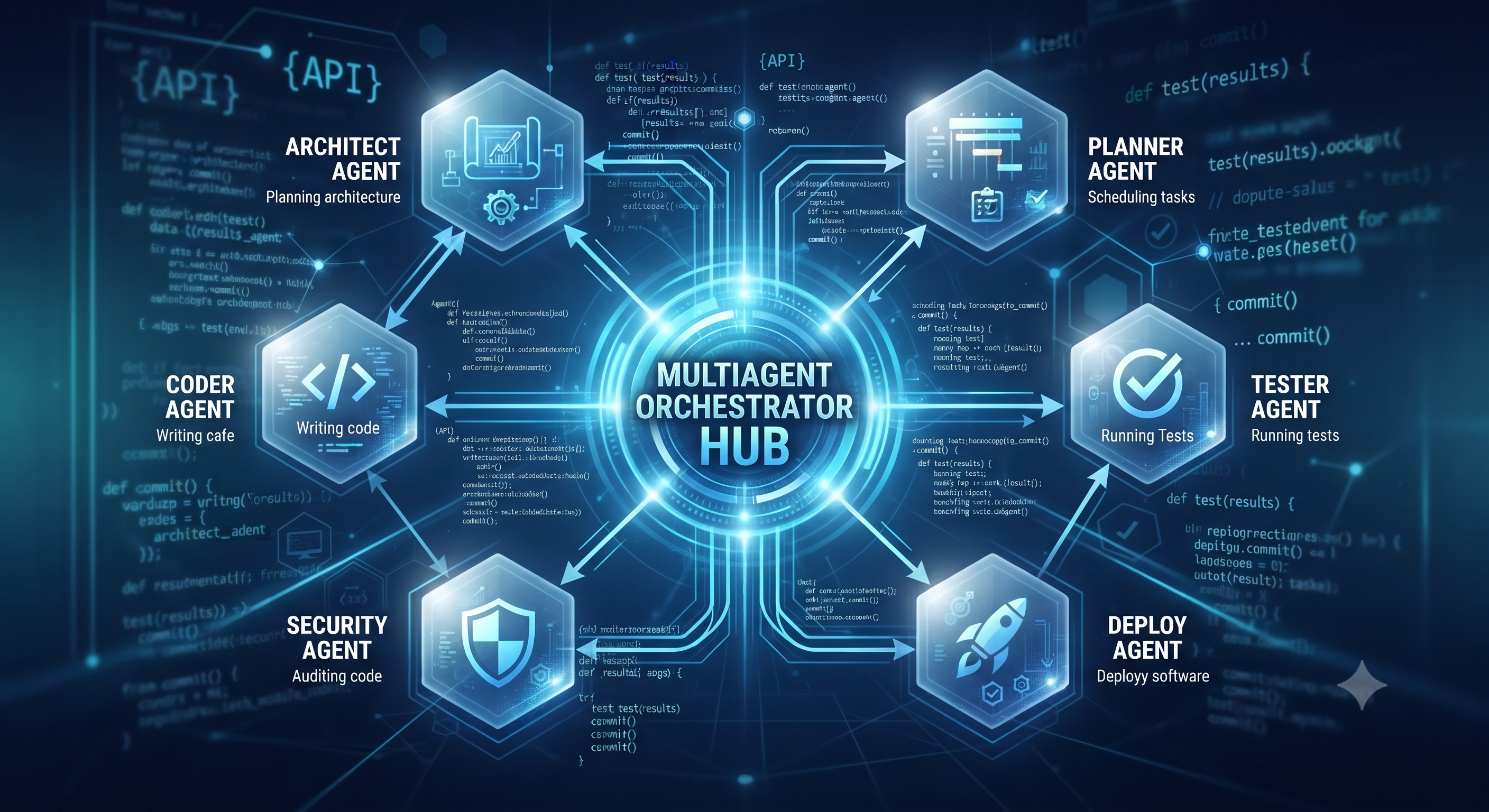
  • From Autocomplete to Agency: Navigating the Shift to Multiagent Systems in Modern Software Architecture


    As engineering teams scale their adoption of AI-native development platforms, the primary bottleneck is no longer generating code—it is managing control, context, and accountability.


    Traditional coding assistants operate in a single-turn loop: you prompt, they output, and you review. In contrast, multiagent architectures break down software engineering lifecycle tasks into specialized roles (e.g., architect, coder, tester, security reviewer) that communicate asynchronously, run unit tests, and resolve integration discrepancies autonomously.


    Why This Shift Matters
    End-to-End Task Ownership: Agents don't just write snippets; they plan migrations, refactor microservices across directories, and handle debugging loops across multiple files.


    The Governance Challenge: With output velocity multiplying exponentially, engineering leaders face an accumulation of unowned or untested code.


    Architectural Guardrails: Moving to agentic workflows requires strict policy definitions—establishing clear gates on what an autonomous agent can merge to production and where human-in-the-loop oversight remains mandatory.


    What You Can Do Today (A Useful Blueprint)
    Define Strict Boundaries: Restrict agentic toolsets to specific sandboxed environments or feature branches with mandatory CI/CD pipeline triggers.


    Implement Ontological Grounding: Ensure your AI tooling references clean, up-to-date internal documentation and architectural decision records (ADRs) to minimize hallucinations.


    Track Accountability: Treat autonomous agents like junior engineering contributors—they require code reviews, clear specifications, and rigorous observability metrics.


    Discussion Question
    How is your team drawing the line between automation and oversight? Are you implementing autonomous multiagent workflows yet, or sticking to single-assistant tools? Let us know in the comments below!


    CTA
    Join the conversation and connect with thousands of cloud architects, developers, and tech leaders in the Techawks General Community today.
    From Autocomplete to Agency: Navigating the Shift to Multiagent Systems in Modern Software Architecture As engineering teams scale their adoption of AI-native development platforms, the primary bottleneck is no longer generating code—it is managing control, context, and accountability. Traditional coding assistants operate in a single-turn loop: you prompt, they output, and you review. In contrast, multiagent architectures break down software engineering lifecycle tasks into specialized roles (e.g., architect, coder, tester, security reviewer) that communicate asynchronously, run unit tests, and resolve integration discrepancies autonomously. Why This Shift Matters End-to-End Task Ownership: Agents don't just write snippets; they plan migrations, refactor microservices across directories, and handle debugging loops across multiple files. The Governance Challenge: With output velocity multiplying exponentially, engineering leaders face an accumulation of unowned or untested code. Architectural Guardrails: Moving to agentic workflows requires strict policy definitions—establishing clear gates on what an autonomous agent can merge to production and where human-in-the-loop oversight remains mandatory. What You Can Do Today (A Useful Blueprint) Define Strict Boundaries: Restrict agentic toolsets to specific sandboxed environments or feature branches with mandatory CI/CD pipeline triggers. Implement Ontological Grounding: Ensure your AI tooling references clean, up-to-date internal documentation and architectural decision records (ADRs) to minimize hallucinations. Track Accountability: Treat autonomous agents like junior engineering contributors—they require code reviews, clear specifications, and rigorous observability metrics. Discussion Question How is your team drawing the line between automation and oversight? Are you implementing autonomous multiagent workflows yet, or sticking to single-assistant tools? Let us know in the comments below! CTA Join the conversation and connect with thousands of cloud architects, developers, and tech leaders in the Techawks General Community today.
    0 التعليقات 0 المشاركات 70 مشاهدة 0 معاينة
  • Moving Beyond Hyperscale Dependence: Architecting Sovereign AI Compute and Resilience in Canada
    The Canadian technology ecosystem—anchored by vibrant innovation hubs in Toronto, Montréal, Waterloo, and Vancouver—is undergoing a defining transformation. As enterprises rapidly deploy artificial intelligence, autonomous systems, and advanced data pipelines, engineering leaders are realizing that compute location and data jurisdiction matter just as much as raw processing power.


    Driven by a surge in domestic AI infrastructure investments and collaborative sovereign technology frameworks, Canadian tech organizations are shifting toward sovereign, localized hybrid architectures that keep critical data onshore while optimizing performance.


    Why It Matters
    Relying exclusively on unmanaged, cross-border cloud endpoints exposes organizations to regulatory friction, latency penalties, and data governance vulnerabilities under Canadian privacy laws. Building on domestic compute fabric ensures full compliance with local regulatory standards while securing reliable access to high-performance infrastructure tailored for high-throughput AI and analytics workloads.


    Teach Something Useful: Implementing a Sovereign Compute and Caching Strategy
    If you want to build resilient, compliant tech systems within the Canadian market, adopt these core architectural practices:


    Enforce Local Data Residency Pipelines: Design your database schemas and object storage layers to ensure sensitive workloads and training artifacts remain strictly within Canadian data center regions.


    Deploy Edge and In-Region Caching: Implement semantic caching and vector database layers (such as Redis) within local clusters to handle frequent user queries instantly, minimizing cross-border egress fees and latency.


    Adopt Model Tiering: Route routine automation and data extraction tasks through cost-efficient open-weight small language models (SLMs) hosted locally, reserving massive frontier cloud models strictly for complex, multi-step reasoning.


    Aligning agile software engineering with national infrastructure independence is what defines elite technical leadership across Canada.


    Discussion Question: How is your engineering team balancing the demand for cutting-edge AI capabilities with local data sovereignty and infrastructure costs? Let's discuss in the comments.


    CTA: Join Techawks Canada
    Moving Beyond Hyperscale Dependence: Architecting Sovereign AI Compute and Resilience in Canada The Canadian technology ecosystem—anchored by vibrant innovation hubs in Toronto, Montréal, Waterloo, and Vancouver—is undergoing a defining transformation. As enterprises rapidly deploy artificial intelligence, autonomous systems, and advanced data pipelines, engineering leaders are realizing that compute location and data jurisdiction matter just as much as raw processing power. Driven by a surge in domestic AI infrastructure investments and collaborative sovereign technology frameworks, Canadian tech organizations are shifting toward sovereign, localized hybrid architectures that keep critical data onshore while optimizing performance. Why It Matters Relying exclusively on unmanaged, cross-border cloud endpoints exposes organizations to regulatory friction, latency penalties, and data governance vulnerabilities under Canadian privacy laws. Building on domestic compute fabric ensures full compliance with local regulatory standards while securing reliable access to high-performance infrastructure tailored for high-throughput AI and analytics workloads. Teach Something Useful: Implementing a Sovereign Compute and Caching Strategy If you want to build resilient, compliant tech systems within the Canadian market, adopt these core architectural practices: Enforce Local Data Residency Pipelines: Design your database schemas and object storage layers to ensure sensitive workloads and training artifacts remain strictly within Canadian data center regions. Deploy Edge and In-Region Caching: Implement semantic caching and vector database layers (such as Redis) within local clusters to handle frequent user queries instantly, minimizing cross-border egress fees and latency. Adopt Model Tiering: Route routine automation and data extraction tasks through cost-efficient open-weight small language models (SLMs) hosted locally, reserving massive frontier cloud models strictly for complex, multi-step reasoning. Aligning agile software engineering with national infrastructure independence is what defines elite technical leadership across Canada. Discussion Question: How is your engineering team balancing the demand for cutting-edge AI capabilities with local data sovereignty and infrastructure costs? Let's discuss in the comments. CTA: Join Techawks Canada
    0 التعليقات 0 المشاركات 154 مشاهدة 0 معاينة
  • Moving Beyond General-Purpose Cloud: Architecting AI Sovereignty and Localized Compute in the UAE
    The UAE technology ecosystem—anchored by thriving innovation hubs in Dubai, Abu Dhabi, and across the Emirates—is experiencing a structural transformation. Leading the regional digital economy, organizations are shifting from generic digital adoption toward sovereign, high-performance infrastructure designed for the AI era.


    As enterprises deploy large language models and multi-step agentic workflows into production, boards and engineering leaders are recognizing that compute localization and data control are non-negotiable.


    Why It Matters
    Relying entirely on external, unmanaged AI endpoints exposes organizations to regulatory friction, latency penalties, and data governance risks. Industry data highlights that the vast majority of regional tech executives view AI sovereignty and local safety nets as foundational to business strategy. Establishing localized compute clusters ensures compliance with national data protection laws while guaranteeing ultra-low latency for mission-critical applications.


    Teach Something Useful: Implementing an AI Sovereignty and Local Caching Architecture
    If you want to design enterprise-grade, compliant AI systems within the UAE market, adopt these core architectural practices:


    Deploy Sovereign Data Pipelines: Ensure all sensitive user inputs and training artifacts remain within localized data centers, implementing strict encryption-at-rest and regional data residency constraints.


    Incorporate Local Inference Caching: Set up localized vector database caching layers (such as Redis) to handle frequent queries locally, drastically reducing external API egress costs and response latency.


    Establish Model Tiering and Governance: Route administrative and customer-facing workflows through localized open-weight small language models (SLMs) while reserving frontier cloud endpoints only for complex, audited reasoning tasks.


    Aligning agile engineering practices with national digital sovereignty standards is what defines elite technical leadership across the region.


    Discussion Question: How is your team balancing the demand for cutting-edge AI capabilities with local data residency and sovereignty requirements? Let's discuss in the comments.


    CTA: Join Techawks UAE
    Moving Beyond General-Purpose Cloud: Architecting AI Sovereignty and Localized Compute in the UAE The UAE technology ecosystem—anchored by thriving innovation hubs in Dubai, Abu Dhabi, and across the Emirates—is experiencing a structural transformation. Leading the regional digital economy, organizations are shifting from generic digital adoption toward sovereign, high-performance infrastructure designed for the AI era. As enterprises deploy large language models and multi-step agentic workflows into production, boards and engineering leaders are recognizing that compute localization and data control are non-negotiable. Why It Matters Relying entirely on external, unmanaged AI endpoints exposes organizations to regulatory friction, latency penalties, and data governance risks. Industry data highlights that the vast majority of regional tech executives view AI sovereignty and local safety nets as foundational to business strategy. Establishing localized compute clusters ensures compliance with national data protection laws while guaranteeing ultra-low latency for mission-critical applications. Teach Something Useful: Implementing an AI Sovereignty and Local Caching Architecture If you want to design enterprise-grade, compliant AI systems within the UAE market, adopt these core architectural practices: Deploy Sovereign Data Pipelines: Ensure all sensitive user inputs and training artifacts remain within localized data centers, implementing strict encryption-at-rest and regional data residency constraints. Incorporate Local Inference Caching: Set up localized vector database caching layers (such as Redis) to handle frequent queries locally, drastically reducing external API egress costs and response latency. Establish Model Tiering and Governance: Route administrative and customer-facing workflows through localized open-weight small language models (SLMs) while reserving frontier cloud endpoints only for complex, audited reasoning tasks. Aligning agile engineering practices with national digital sovereignty standards is what defines elite technical leadership across the region. Discussion Question: How is your team balancing the demand for cutting-edge AI capabilities with local data residency and sovereignty requirements? Let's discuss in the comments. CTA: Join Techawks UAE
    0 التعليقات 0 المشاركات 147 مشاهدة 0 معاينة
الصفحات المعززة