• Americans invest almost exclusively in America.

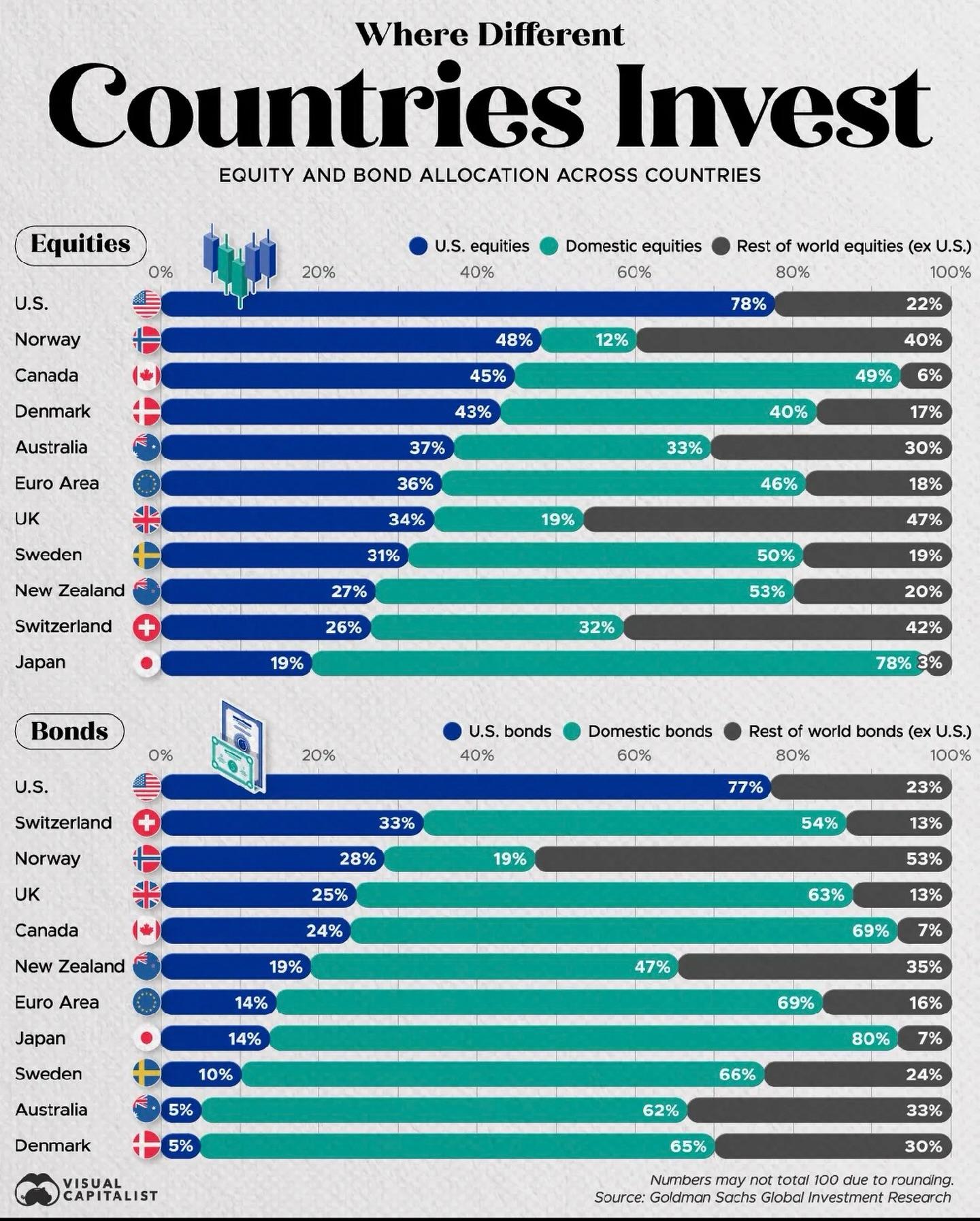
    In equities, U.S. investors keep 78% of their exposure at home. Norway, Canada, Denmark, Switzerland, Japan all far more diversified across the world.

    But the real story is in bonds.

    Look at the bottom half of the chart:

    The U.S. owns 77% U.S. bonds and barely any foreign debt.
    Meanwhile:
    Switzerland holds 54% domestic bonds and spreads the rest internationally.
    Norway holds 53% foreign bonds.
    Japan allocates 80% abroad.

    America is the most concentrated bond investor on earth.

    Why?

    Because the U.S. doesn’t need foreign bonds.
    It is the bond market.

    The dollar is the world’s reserve currency.
    U.S. Treasuries are the safest collateral in the global system.
    Every crisis eventually forces capital to flee back to the American bond market.

    European pension funds, Asian institutions, oil sovereign funds, Latin America they all hedge their risk using U.S. debt.
    That creates a feedback loop: foreign demand keeps Treasuries liquid, deep, and stable.

    But here’s the paradox:

    This is the privilege that makes American investors lazy.

    Most countries are forced to diversify internationally.
    They don’t trust their own central banks, governments, or currencies to protect capital in a downturn.
    The U.S. investor never had to learn that lesson.

    So they build portfolios that only work if the last 40 years repeat.

    If interest rates change structurally…
    If debt burdens force fiscal tightening…
    If the dollar loses some share of global trade settlement…
    If other bond markets become viable alternatives…

    That concentration risk finally matters.

    Diversification isn’t about chasing foreign alpha.
    It’s about not betting your entire future on one country’s political system, monetary policy, and demographic trajectory.

    You never hedge when you’re comfortable.
    You hedge when you realize you might not always be.

    #Investing #GlobalMarkets #FixedIncome #Bonds #Equities #Diversification #Portfolio #Wealth #Finance #Macro #USMarkets
    Americans invest almost exclusively in America. In equities, U.S. investors keep 78% of their exposure at home. Norway, Canada, Denmark, Switzerland, Japan all far more diversified across the world. But the real story is in bonds. Look at the bottom half of the chart: The U.S. owns 77% U.S. bonds and barely any foreign debt. Meanwhile: 🇨🇭 Switzerland holds 54% domestic bonds and spreads the rest internationally. 🇳🇴 Norway holds 53% foreign bonds. 🇯🇵 Japan allocates 80% abroad. America is the most concentrated bond investor on earth. Why? Because the U.S. doesn’t need foreign bonds. It is the bond market. The dollar is the world’s reserve currency. U.S. Treasuries are the safest collateral in the global system. Every crisis eventually forces capital to flee back to the American bond market. European pension funds, Asian institutions, oil sovereign funds, Latin America they all hedge their risk using U.S. debt. That creates a feedback loop: foreign demand keeps Treasuries liquid, deep, and stable. But here’s the paradox: This is the privilege that makes American investors lazy. Most countries are forced to diversify internationally. They don’t trust their own central banks, governments, or currencies to protect capital in a downturn. The U.S. investor never had to learn that lesson. So they build portfolios that only work if the last 40 years repeat. If interest rates change structurally… If debt burdens force fiscal tightening… If the dollar loses some share of global trade settlement… If other bond markets become viable alternatives… That concentration risk finally matters. Diversification isn’t about chasing foreign alpha. It’s about not betting your entire future on one country’s political system, monetary policy, and demographic trajectory. You never hedge when you’re comfortable. You hedge when you realize you might not always be. #Investing #GlobalMarkets #FixedIncome #Bonds #Equities #Diversification #Portfolio #Wealth #Finance #Macro #USMarkets
    ·43 Views ·0 previzualizare
  • President Donald Trump and his family have boasted of going “all in” on cryptocurrencies, but a recent downturn in bitcoin has pummeled digital asset investors, including the Trumps, who by one estimate have had roughly a billion dollars of their net worth erased in just a matter of weeks
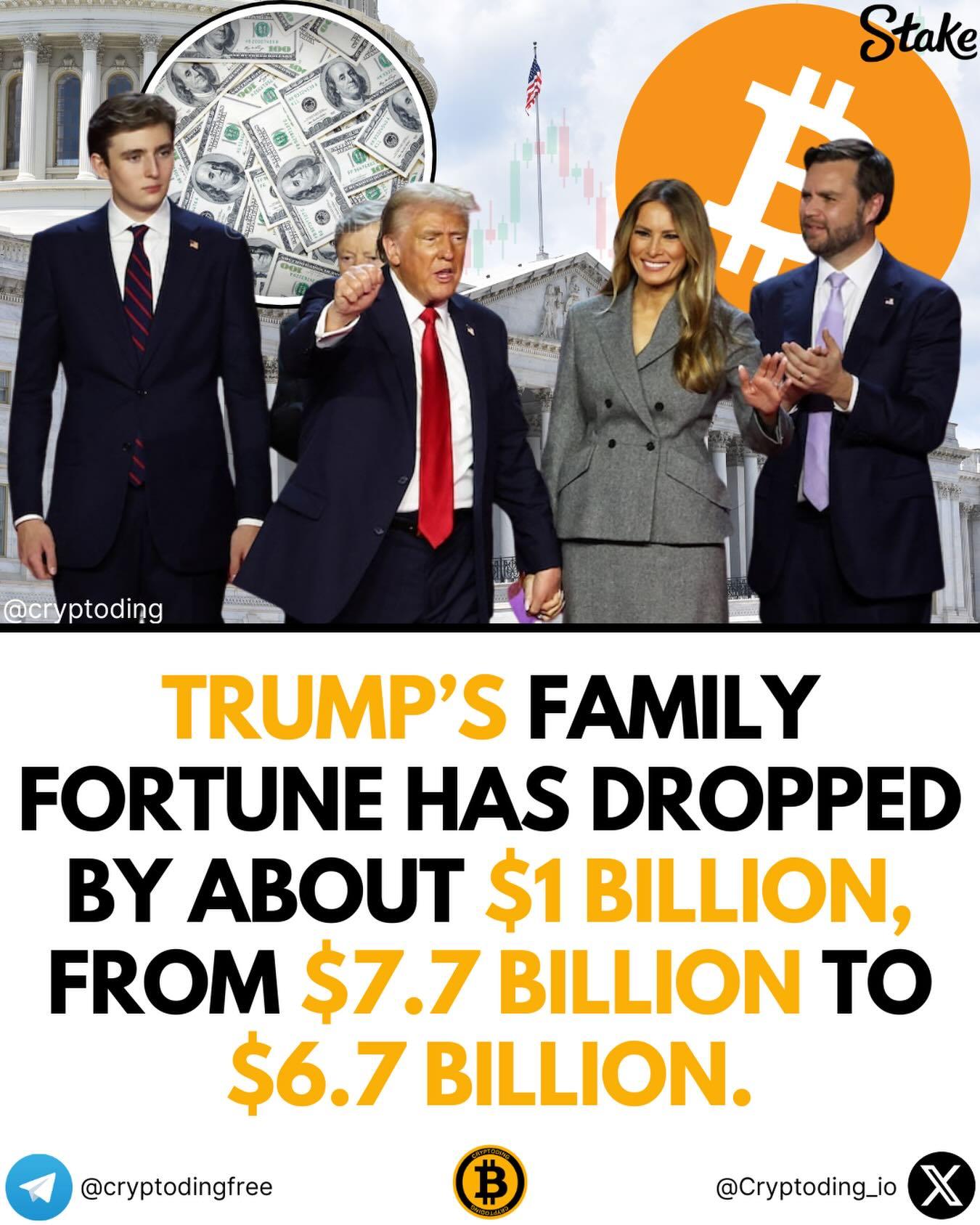
    President Donald Trump and his family have boasted of going “all in” on cryptocurrencies, but a recent downturn in bitcoin has pummeled digital asset investors, including the Trumps, who by one estimate have had roughly a billion dollars of their net worth erased in just a matter of weeks
    ·72 Views ·0 previzualizare
  • The adoption of cryptocurrency-linked consumer products continues to gain momentum as traditional payment networks and fintech providers expand their reach into digital assets.

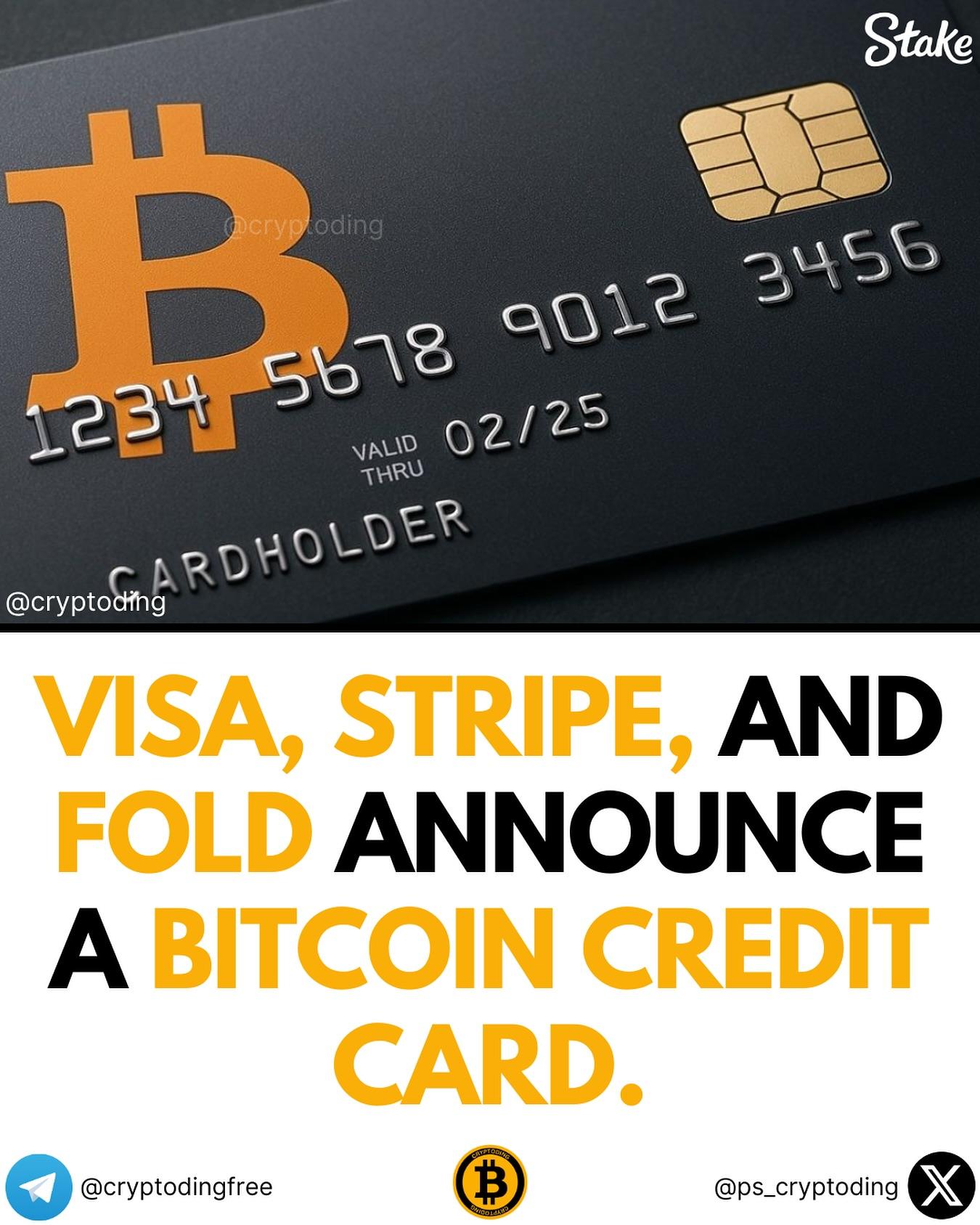
    Fold Holdings Inc. (Nasdaq: FLD), a bitcoin-focused financial services company, announced on Sept. 23 that it has partnered with Stripe and Visa to introduce the Fold Bitcoin Rewards Credit Card.

    The new offering aims to make bitcoin accumulation a natural extension of everyday spending, highlighting broader demand for simplified access to digital currencies in mainstream finance.
    The adoption of cryptocurrency-linked consumer products continues to gain momentum as traditional payment networks and fintech providers expand their reach into digital assets. Fold Holdings Inc. (Nasdaq: FLD), a bitcoin-focused financial services company, announced on Sept. 23 that it has partnered with Stripe and Visa to introduce the Fold Bitcoin Rewards Credit Card. The new offering aims to make bitcoin accumulation a natural extension of everyday spending, highlighting broader demand for simplified access to digital currencies in mainstream finance.
    ·279 Views ·0 previzualizare
  • Probably nothing… The US Dollar’s purchasing power.

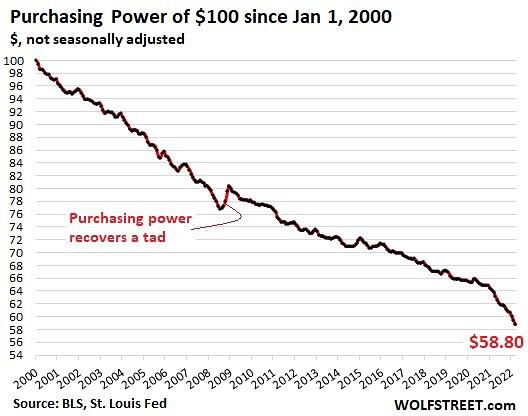
    Over the last 100 years, the US Dollar has lost -95% of its purchasing power.

    #USD #currencies #markets
    Probably nothing… The US Dollar’s purchasing power. Over the last 100 years, the US Dollar has lost -95% of its purchasing power. #USD #currencies #markets
    ·89 Views ·0 previzualizare
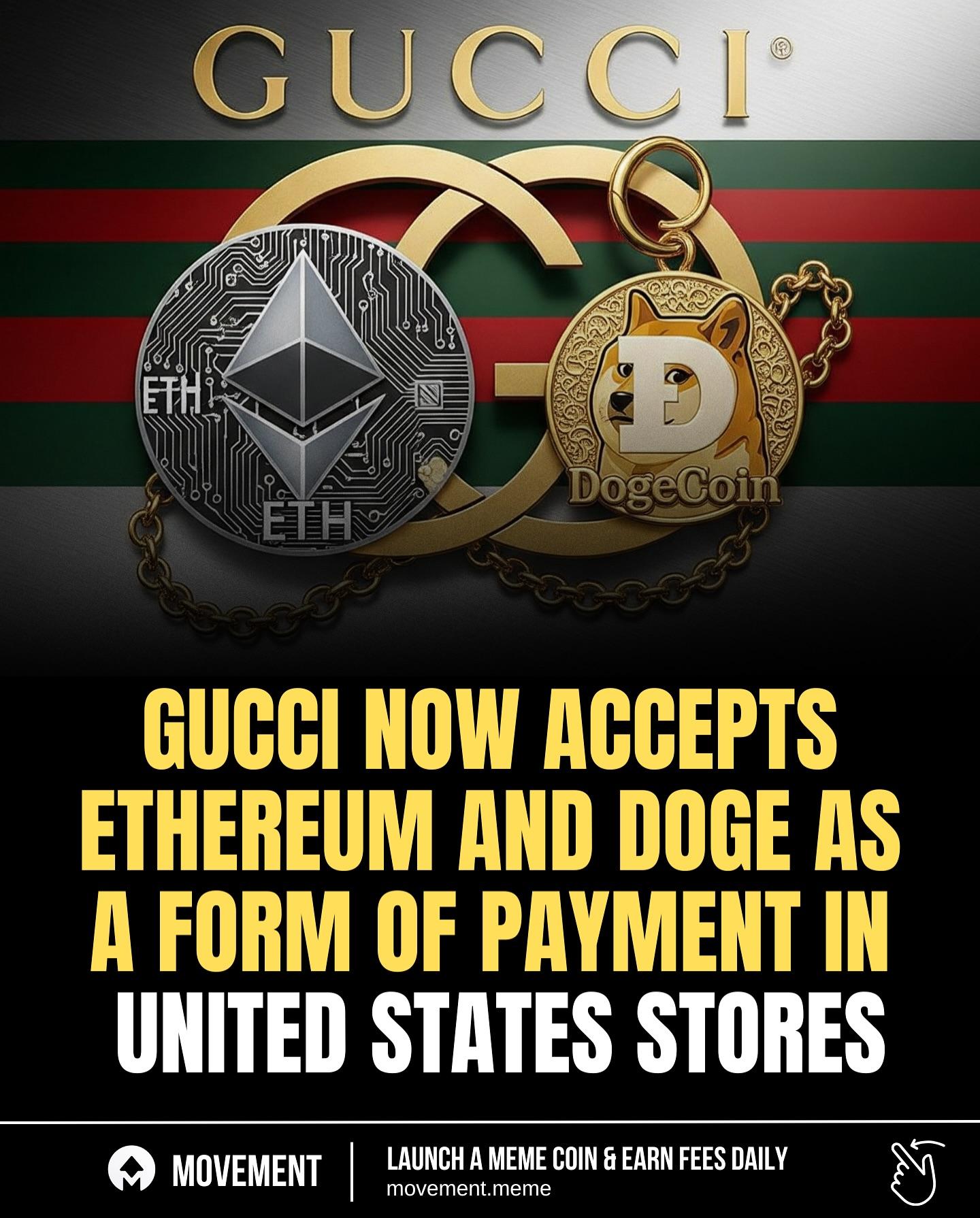
  • Gucci now accepts Ethereum and Dogecoin as payment in United States stores.

    The luxury brand is expanding its Web3 strategy by integrating popular cryptocurrencies.

    Mainstream retail adoption continues to give legitimacy to crypto as a payment method.

    Download the Movement Market app in my bio and start launching your own memecoins
    Gucci now accepts Ethereum and Dogecoin as payment in United States stores. The luxury brand is expanding its Web3 strategy by integrating popular cryptocurrencies. Mainstream retail adoption continues to give legitimacy to crypto as a payment method. Download the Movement Market app in my bio and start launching your own memecoins 🚀
    ·451 Views ·0 previzualizare
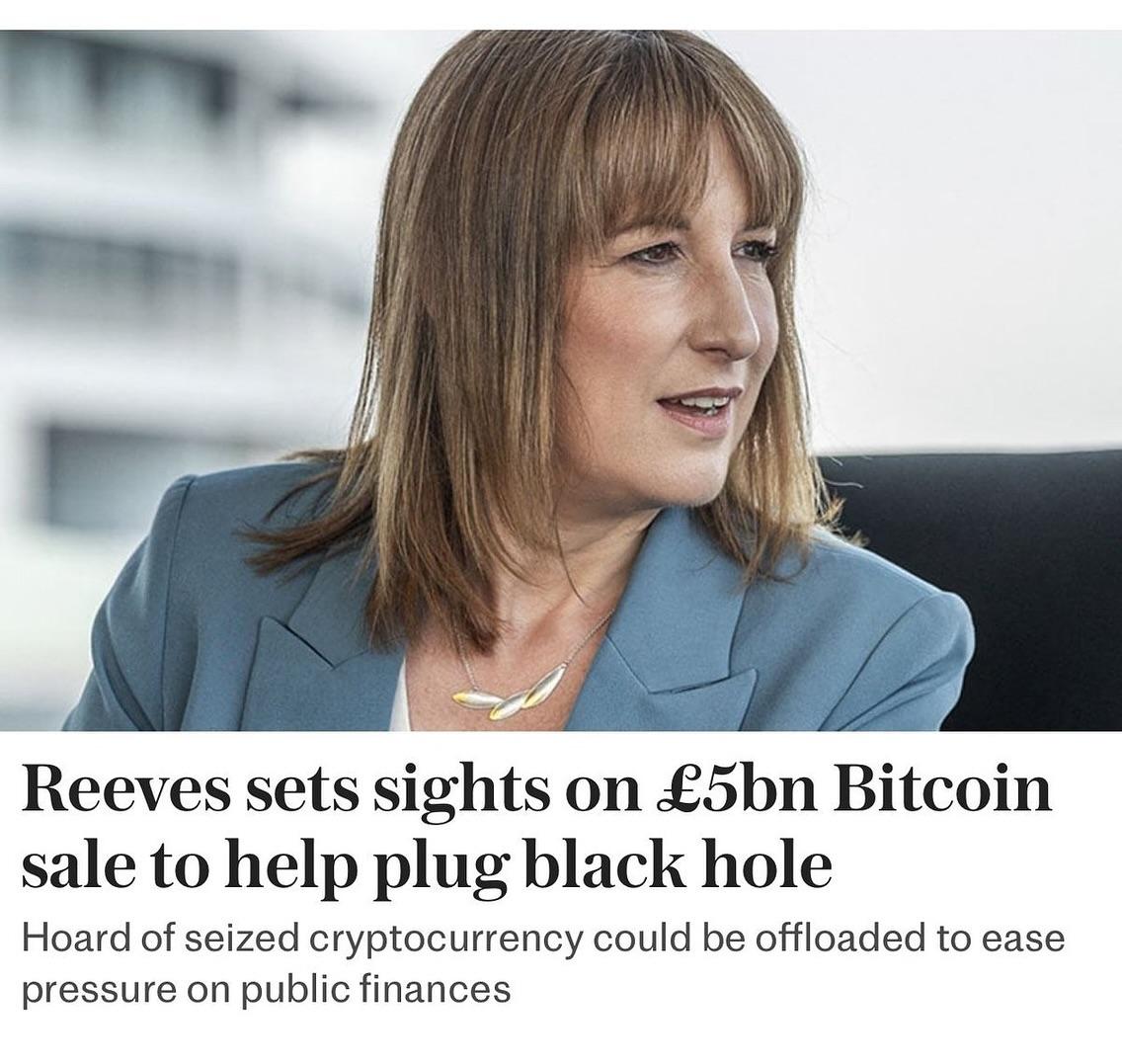
  • Should the UK sell its Bitcoin holding? Selling £5bn of seized Bitcoin to “plug a black hole” isn’t a policy solution it’s a symptom of a broken foundation. When money itself is distorted, accountability disappears. Misallocation becomes systemic, deficits balloon, and short-term asset sales replace long term value creation.

    Taxing the rich might sound fair, and politically it sells well. But if the monetary system is broken, taxing more just feeds a machine that rewards unproductive spending and shields failure from consequences. Without correcting the foundation, no amount of taxation or asset selling will fix anything.

    This is why the bond market matters. It’s the last true disciplining force on government. It doesn’t respond to spin it responds to risk, credibility, and excess. And while central banks have tried to mute that signal with intervention, it still sets a limit. When you ignore it, the cost shows up elsewhere inflation, weaker currencies, slower growth.

    What we’re seeing isn’t creative policy. It’s the same cycle: avoid hard reforms, plug fiscal gaps with asset sales, and shift the blame.

    Often the loudest voices calling for solutions are the same ones who broke the system to begin with. Wolves in sheep’s clothing pushing for more control without fixing the structure. Ask why are these voices so heavily promoted? They don’t address the foundation… MONEY they don’t even talk about it for good reason.

    Until we restore real cost to capital and let market signals especially from the bond market do their job, nothing changes. The black hole only gets bigger.

    Send UK bonds to 6%+

    Pain + reflection = progress

    #bonds #markets #uk #stockmarket #bitcoin #bitcoinprice
    Should the UK sell its Bitcoin holding? 🇬🇧Selling £5bn of seized Bitcoin to “plug a black hole” isn’t a policy solution it’s a symptom of a broken foundation. When money itself is distorted, accountability disappears. Misallocation becomes systemic, deficits balloon, and short-term asset sales replace long term value creation. Taxing the rich might sound fair, and politically it sells well. But if the monetary system is broken, taxing more just feeds a machine that rewards unproductive spending and shields failure from consequences. Without correcting the foundation, no amount of taxation or asset selling will fix anything. This is why the bond market matters. It’s the last true disciplining force on government. It doesn’t respond to spin it responds to risk, credibility, and excess. And while central banks have tried to mute that signal with intervention, it still sets a limit. When you ignore it, the cost shows up elsewhere inflation, weaker currencies, slower growth. What we’re seeing isn’t creative policy. It’s the same cycle: avoid hard reforms, plug fiscal gaps with asset sales, and shift the blame. Often the loudest voices calling for solutions are the same ones who broke the system to begin with. Wolves in sheep’s clothing pushing for more control without fixing the structure. Ask why are these voices so heavily promoted? They don’t address the foundation… MONEY they don’t even talk about it for good reason. Until we restore real cost to capital and let market signals especially from the bond market do their job, nothing changes. The black hole only gets bigger. Send UK bonds to 6%+ Pain + reflection = progress #bonds #markets #uk #stockmarket #bitcoin #bitcoinprice
    ·304 Views ·0 previzualizare
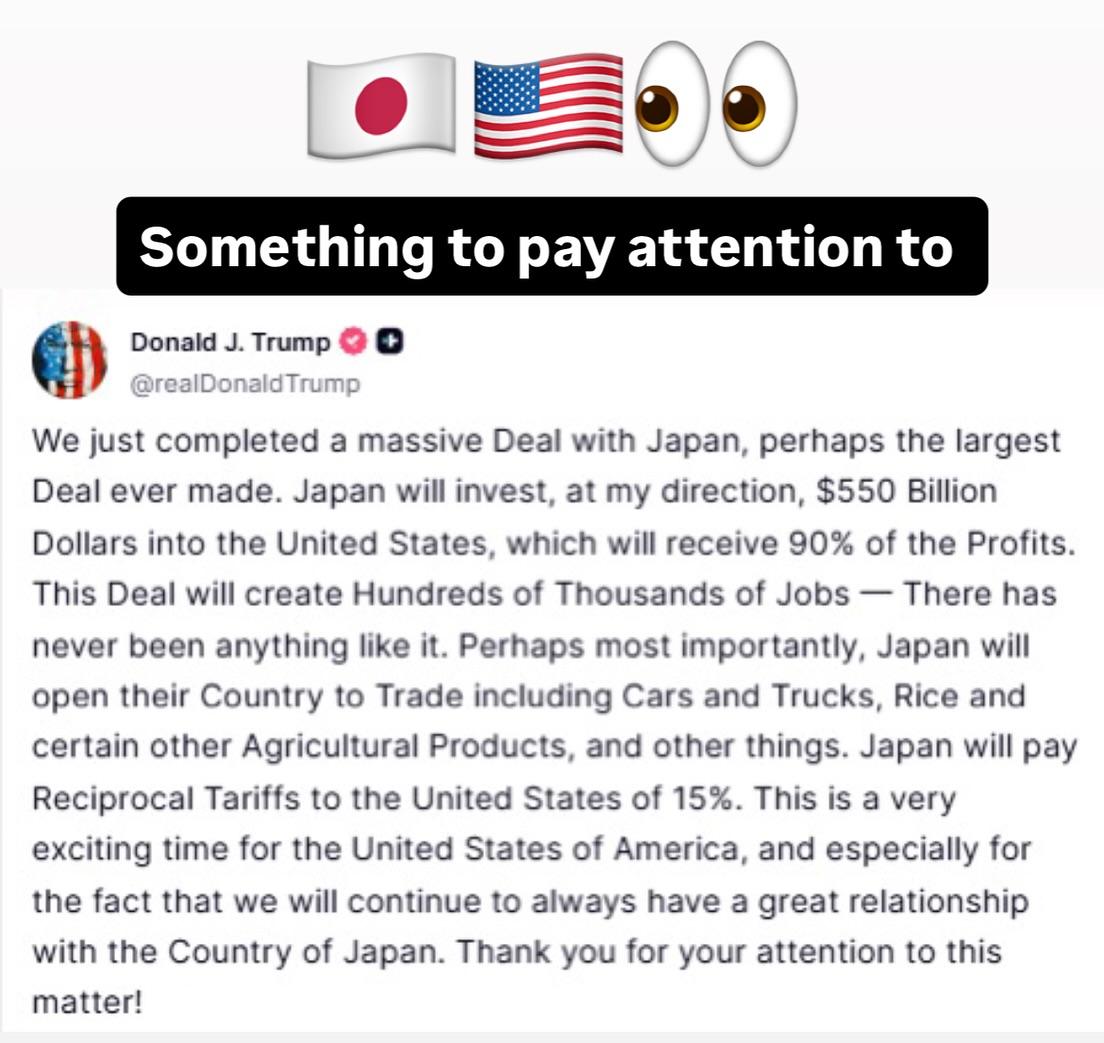
  • A $550B Japanese investment into the US as claimed in this announcement, would be more than just a bilateral trade deal it would represent a massive macro capital flow with global consequences.

    Japan, already one of the largest holders of U.S. Treasuries, would likely recycle this capital back into dollar assets, reinforcing demand for U.S. fixed income and potentially suppressing long-end yields. This dynamic strengthens the dollar structurally, reinforces its reserve status, and adds pressure to the yen.

    In FX markets, USD/JPY could push higher as Japanese capital is converted to dollars, further widening the interest rate differential between the Fed and the BoJ. Meanwhile, Japan’s own bond market would feel the liquidity drain unless the BoJ steps in with more accommodation, pushing JGB yields even lower and exacerbating yen weakness.

    Japan’s own fiscal dynamics are deeply sensitive to rates due to its massive debt burden (>260% debt-to-GDP). BOJ could step up bond purchases to suppress yields, preventing policy spillover from affecting domestic financing conditions.This would suppress the yen even more, creating the feedback loop.

    This kind of flow driven divergence between U.S. and Japan isn’t just a headline it’s a signal of how global imbalances and reserve dynamics drive currencies, yields, and policy reactions. Whether this deal is real or political theater, it’s the structural mechanics that matter.

    If only Trump knew a guy about currencies and macroeconomics… if only he knew someone who fully understood these dynamics with Japan and yields… anyway… it’s probably nothing…

    #macroeconomics #markets #stocks #stockmarket #ndx #sp500 #japan #usa
    A $550B Japanese investment into the US as claimed in this announcement, would be more than just a bilateral trade deal it would represent a massive macro capital flow with global consequences. Japan, already one of the largest holders of U.S. Treasuries, would likely recycle this capital back into dollar assets, reinforcing demand for U.S. fixed income and potentially suppressing long-end yields. This dynamic strengthens the dollar structurally, reinforces its reserve status, and adds pressure to the yen. In FX markets, USD/JPY could push higher as Japanese capital is converted to dollars, further widening the interest rate differential between the Fed and the BoJ. Meanwhile, Japan’s own bond market would feel the liquidity drain unless the BoJ steps in with more accommodation, pushing JGB yields even lower and exacerbating yen weakness. Japan’s own fiscal dynamics are deeply sensitive to rates due to its massive debt burden (>260% debt-to-GDP). BOJ could step up bond purchases to suppress yields, preventing policy spillover from affecting domestic financing conditions.This would suppress the yen even more, creating the feedback loop. This kind of flow driven divergence between U.S. and Japan isn’t just a headline it’s a signal of how global imbalances and reserve dynamics drive currencies, yields, and policy reactions. Whether this deal is real or political theater, it’s the structural mechanics that matter. If only Trump knew a guy about currencies and macroeconomics… if only he knew someone who fully understood these dynamics with Japan and yields… anyway… it’s probably nothing… #macroeconomics #markets #stocks #stockmarket #ndx #sp500 #japan #usa
    ·672 Views ·0 previzualizare
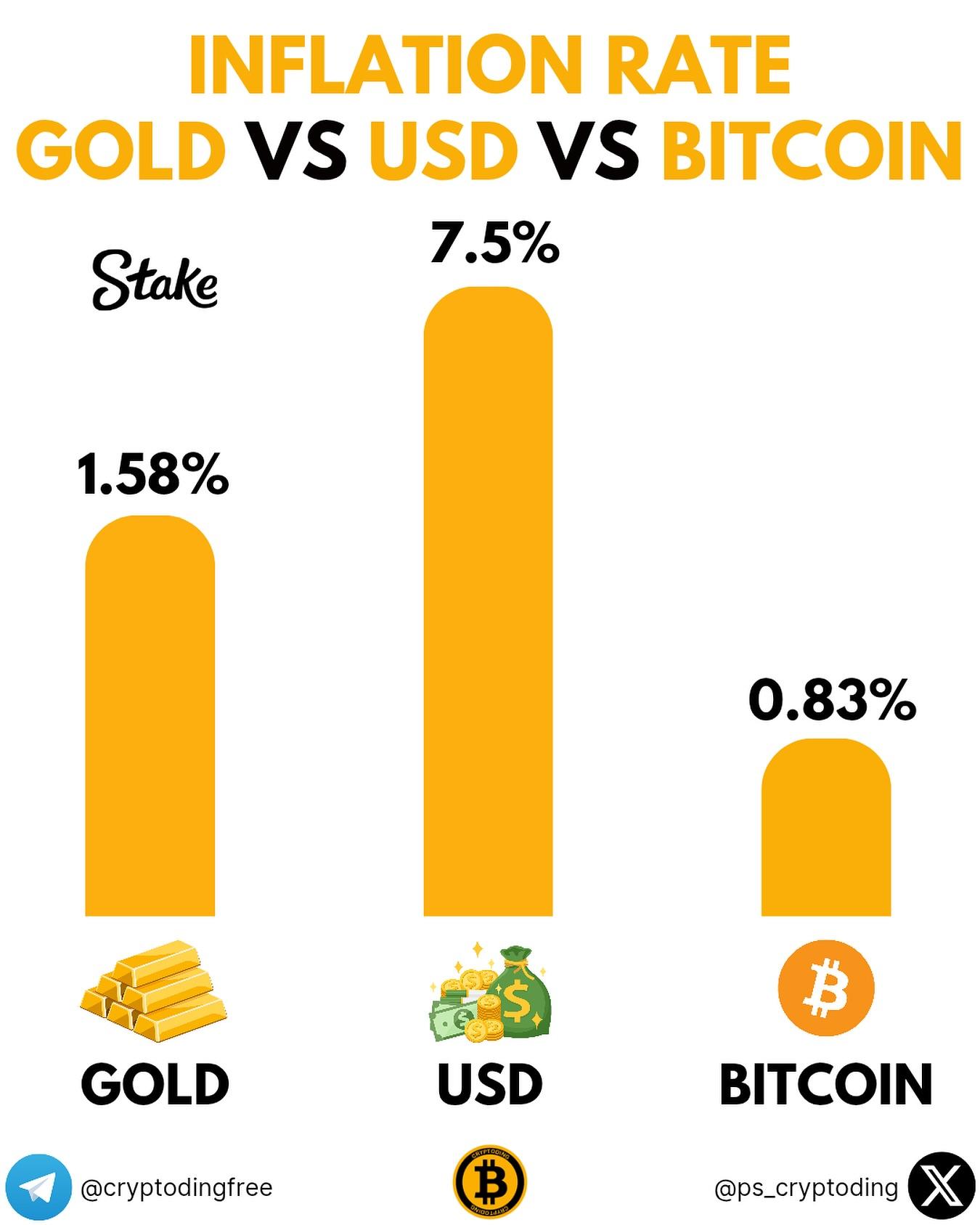
  • Gold’s inflation rate sits at 1.58%, while the USD is losing value much faster at 7.5%. Bitcoin, on the other hand, has the lowest inflation rate at just 0.83%, highlighting why it’s often called “digital gold.” With its fixed supply and halving cycles, Bitcoin continues to stand out as a deflationary asset compared to traditional currencies and even gold.
    Gold’s inflation rate sits at 1.58%, while the USD is losing value much faster at 7.5%. Bitcoin, on the other hand, has the lowest inflation rate at just 0.83%, highlighting why it’s often called “digital gold.” With its fixed supply and halving cycles, Bitcoin continues to stand out as a deflationary asset compared to traditional currencies and even gold.
    ·163 Views ·0 previzualizare
  • The National Bank of Ras Al Khaimah (Rakbank), a government-owned bank in the United Arab Emirates (UAE), is the first conventional bank in the country to offer retail crypto trading.

    In a Tuesday news release, the bank announced the launch of a crypto brokerage service through its mobile banking app, allowing customers to buy, sell and swap cryptocurrencies directly from their UAE dirham accounts.
    The National Bank of Ras Al Khaimah (Rakbank), a government-owned bank in the United Arab Emirates (UAE), is the first conventional bank in the country to offer retail crypto trading. In a Tuesday news release, the bank announced the launch of a crypto brokerage service through its mobile banking app, allowing customers to buy, sell and swap cryptocurrencies directly from their UAE dirham accounts.
    ·323 Views ·0 previzualizare
  • Christie’s Auction House has announced it will now accept crypto payments for select high-value art pieces. The move follows growing demand from digital-native collectors.

    Bitcoin and Ethereum will be the primary accepted currencies, processed through a third-party custodian. Christie’s previously made headlines for selling Beeple’s NFT for $69 million in 2021.

    This marks another sign that legacy institutions are warming to blockchain-based wealth and payment rails.

    Join the free memecoin discord in my bio for alpha
    Christie’s Auction House has announced it will now accept crypto payments for select high-value art pieces. The move follows growing demand from digital-native collectors. Bitcoin and Ethereum will be the primary accepted currencies, processed through a third-party custodian. Christie’s previously made headlines for selling Beeple’s NFT for $69 million in 2021. This marks another sign that legacy institutions are warming to blockchain-based wealth and payment rails. Join the free memecoin discord in my bio for alpha 📲
    ·234 Views ·0 previzualizare
Sponsorizeaza Paginile
Techawks - Powered By Pantrade Blockchain https://techawks.com