• Japan is more important than your Spotify data. MAKE. BONDS. GREAT. AGAIN. #japan #bonds #spotify
    Japan is more important than your Spotify data. MAKE. BONDS. GREAT. AGAIN. 🦍🇺🇸 #japan #bonds #spotify
    ·43 Views ·0 Προεπισκόπηση
  • That feeling when you finally understand bonds #investing #bonds #stocks #markets #hedgefunds
    That feeling when you finally understand bonds #investing #bonds #stocks #markets #hedgefunds
    ·95 Views ·2 Plays ·0 Προεπισκόπηση
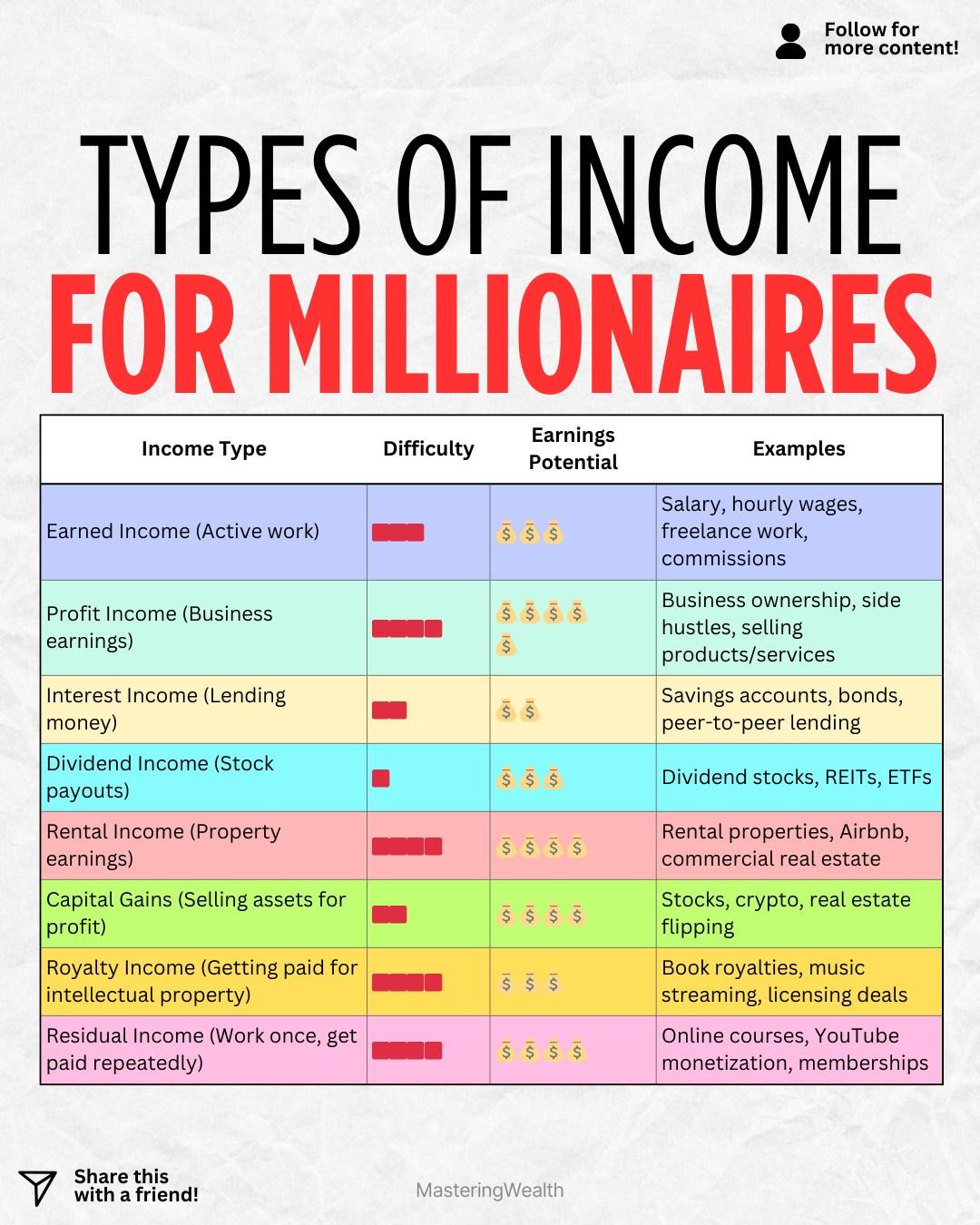
  • Most people grow up learning only one type of income which is earned income from a job, yet millionaires build wealth by understanding multiple income streams . The chart in this post breaks down nine types of income that wealthy people use to grow their net worth and create long term financial security. When you understand how income works beyond a paycheck, you start seeing opportunities that were invisible before.

    Earned income is the most familiar form and includes wages, salary and freelance work. Profit income comes from running a business or selling products or services. These income types require active time and effort, but they also help you gain skills that can lead to higher earnings over time.

    Interest income is money earned from lending your money through savings accounts, bonds or peer to peer lending. Dividend income comes from owning shares of companies that pay out cash to shareholders which is one of the most popular passive income streams for long term investors . Rental income is generated from real estate and is powerful because it can scale over time as properties increase in value.

    Capital gains income happens when you sell an asset for more than you bought it. R�oyalty income is created by intellectual property such as books, music or licensing agreements. Residual income is built when you create something once and continue getting paid from it like online courses or membership programs.

    If you want to see the dividend portfolio I use to generate growing passive income, comment the word Stocks and I will send you the link .

    Which income stream do you want to grow the most in the next year and why

    If you want more financial education, income growth strategies and wealth building tips, make sure to follow me at MasteringWealth for daily content that helps you move toward financial independence .

    This content is for education only and is not financial advice.
    Most people grow up learning only one type of income which is earned income from a job, yet millionaires build wealth by understanding multiple income streams 💰🔥. The chart in this post breaks down nine types of income that wealthy people use to grow their net worth and create long term financial security. When you understand how income works beyond a paycheck, you start seeing opportunities that were invisible before. Earned income is the most familiar form and includes wages, salary and freelance work. Profit income comes from running a business or selling products or services. These income types require active time and effort, but they also help you gain skills that can lead to higher earnings over time. Interest income is money earned from lending your money through savings accounts, bonds or peer to peer lending. Dividend income comes from owning shares of companies that pay out cash to shareholders which is one of the most popular passive income streams for long term investors 📈. Rental income is generated from real estate and is powerful because it can scale over time as properties increase in value. Capital gains income happens when you sell an asset for more than you bought it. R�oyalty income is created by intellectual property such as books, music or licensing agreements. Residual income is built when you create something once and continue getting paid from it like online courses or membership programs. If you want to see the dividend portfolio I use to generate growing passive income, comment the word Stocks and I will send you the link 📬. Which income stream do you want to grow the most in the next year and why 🤔 If you want more financial education, income growth strategies and wealth building tips, make sure to follow me at MasteringWealth for daily content that helps you move toward financial independence 🌟. This content is for education only and is not financial advice.
    ·609 Views ·0 Προεπισκόπηση
  • Japan is quietly becoming the most important macro story in the world. How long can this go on for?

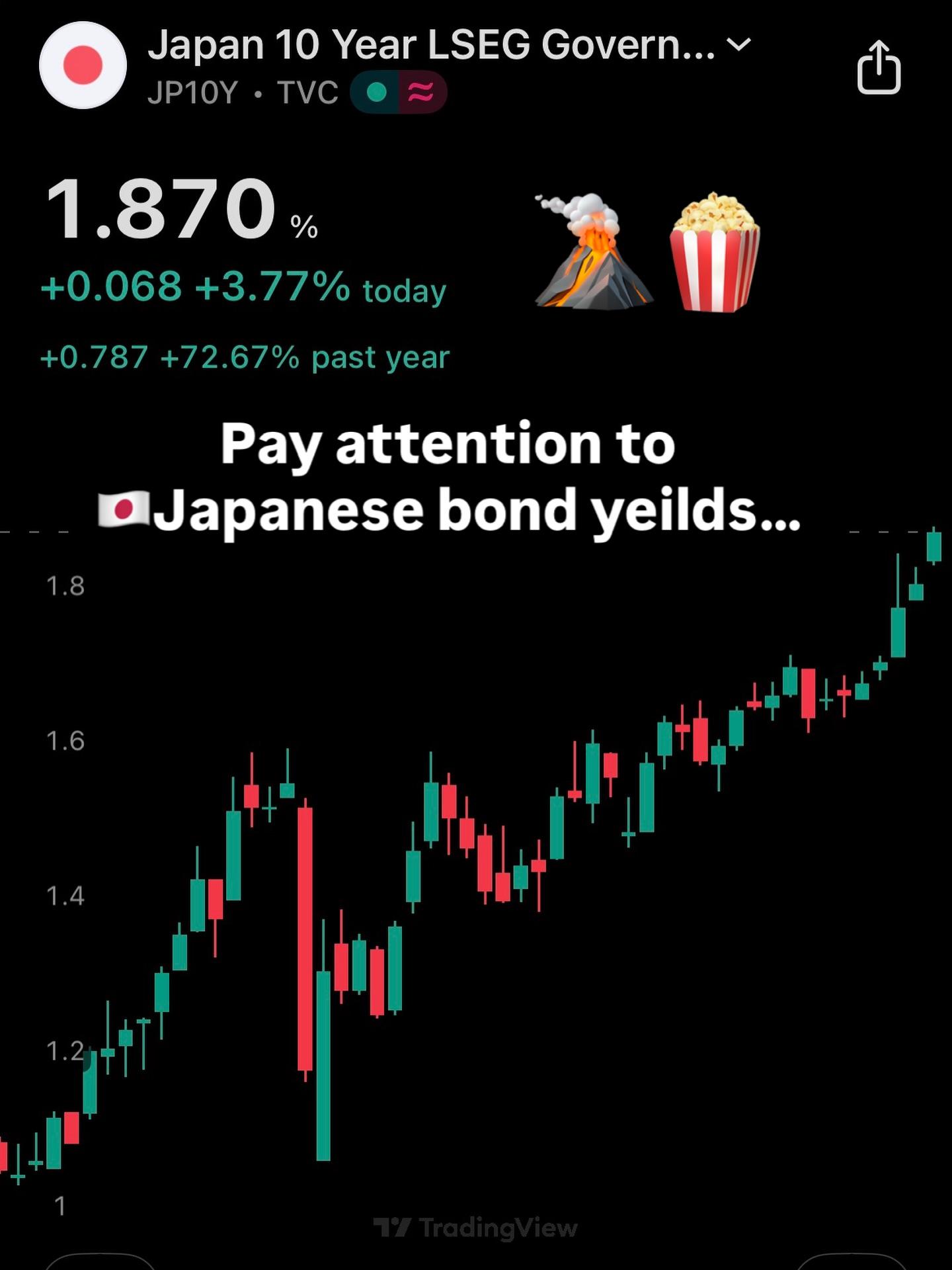
    The country with the highest debt to GDP ratio on earth is now facing rising yields. The 10 year Japanese government bond is pushing toward 2 percent up more than 70 percent in a year.

    Japan has lived in a world of near zero rates for decades. A world where its central bank could buy its own bonds indefinitely, keep yields pinned down, and create the illusion of stability. That era is ending.

    The Bank of Japan has tried every tool: negative rates, quantitative easing, and now yield curve control. But there’s a simple truth: markets eventually overpower intervention.

    If the BoJ keeps buying bonds to suppress yields, the currency weakens.

    If it stops buying, yields spike and debt service costs explode.

    Japan is stuck between two bad choices.

    The debt burden is over 250 percent of GDP. Higher rates mean higher interest expenses, and that means more borrowing just to pay the interest. The problem becomes exponential.

    If yield curve control breaks, you will see one of two outcomes:

    A currency crisis the yen collapses to absorb the pressure.

    A bond crisis yields blow out and force deleveraging at a scale Japan hasn’t seen in modern history.

    For years investors believed Japan could never break. Zero rates were permanent. Demographics were destiny. Now the market is testing that assumption.

    Japan matters because it’s the endgame experiment:
    What happens when a government prints for decades, monetizes debt, and finally runs out of tools?

    Everyone focuses on the United States. But if Japan snaps first, it will be a global shockwave.

    How does this end? Incredibly slowly… then all at once.

    Liquidity is what everyone is grasping for 😮‍💨

    #japan #macro #markets #bonds #economics #investing #finance #interestrates #debt #yen #bankofjapan #globalmacro #riskmanagement #wealthbuilding #economy #marketanalysis
    Japan is quietly becoming the most important macro story in the world. How long can this go on for? The country with the highest debt to GDP ratio on earth is now facing rising yields. The 10 year Japanese government bond is pushing toward 2 percent up more than 70 percent in a year. Japan has lived in a world of near zero rates for decades. A world where its central bank could buy its own bonds indefinitely, keep yields pinned down, and create the illusion of stability. That era is ending. The Bank of Japan has tried every tool: negative rates, quantitative easing, and now yield curve control. But there’s a simple truth: markets eventually overpower intervention. If the BoJ keeps buying bonds to suppress yields, the currency weakens. If it stops buying, yields spike and debt service costs explode. Japan is stuck between two bad choices. The debt burden is over 250 percent of GDP. Higher rates mean higher interest expenses, and that means more borrowing just to pay the interest. The problem becomes exponential. If yield curve control breaks, you will see one of two outcomes: A currency crisis the yen collapses to absorb the pressure. A bond crisis yields blow out and force deleveraging at a scale Japan hasn’t seen in modern history. For years investors believed Japan could never break. Zero rates were permanent. Demographics were destiny. Now the market is testing that assumption. Japan matters because it’s the endgame experiment: What happens when a government prints for decades, monetizes debt, and finally runs out of tools? Everyone focuses on the United States. But if Japan snaps first, it will be a global shockwave. How does this end? Incredibly slowly… then all at once. Liquidity is what everyone is grasping for 😮‍💨 #japan #macro #markets #bonds #economics #investing #finance #interestrates #debt #yen #bankofjapan #globalmacro #riskmanagement #wealthbuilding #economy #marketanalysis
    ·301 Views ·0 Προεπισκόπηση
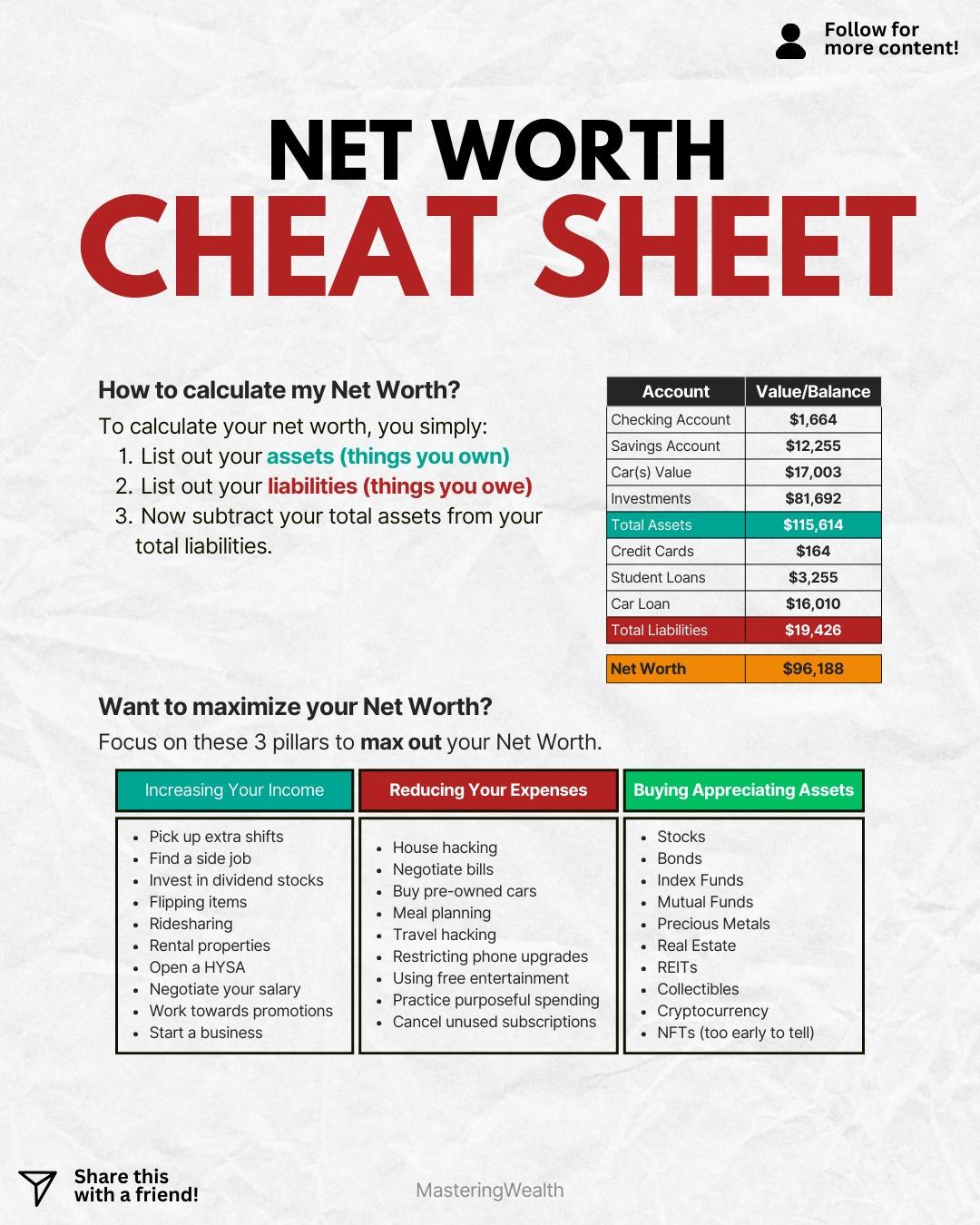
  • Your net worth is one of the clearest indicators of your financial health. It shows the full picture of what you own compared to what you owe. The visual in this post breaks down the steps to calculate it and gives you simple ways to increase it over time.

    To calculate your net worth, start by listing all of your assets which includes cash, savings, investments, and the value of major items like a car. Then list all your liabilities which are debts such as credit cards, student loans, and car loans. Once you subtract your total liabilities from your total assets, the result is your net worth.

    This number does not define your value as a person, but it does help you understand your financial progress. Tracking your net worth each month gives you clarity on whether you are moving forward or backward. It also helps you identify which areas need improvement.

    There are three main ways to grow your net worth over time. The first is to increase your income which can be done through side jobs, promotions, skill building, or investing in dividend stocks or rental properties. The second is reducing expenses by negotiating bills, eliminating unused subscriptions, and making smarter spending decisions.

    The third method is buying appreciating assets which grow in value such as stocks, bonds, index funds, real estate, precious metals, and mutual funds. When you consistently buy assets that rise in value, your net worth increases automatically. Small improvements in each of these areas compound into major long term results.

    Understanding your net worth helps you stay in control of your financial journey. It gives you a clear target to improve and a way to measure your growth. The goal is not perfection but progress over time.

    Comment “Stocks” if you want a link to see my dividend portfolio and learn how I use appreciating assets to increase my net worth.

    Which pillar do you feel you need to focus on the most right now: increasing income, reducing expenses, or buying more assets?

    This content is for educational purposes only and is not financial advice. Always research carefully or consult a licensed professional before making investment decisions.
    Your net worth is one of the clearest indicators of your financial health. It shows the full picture of what you own compared to what you owe. The visual in this post breaks down the steps to calculate it and gives you simple ways to increase it over time. To calculate your net worth, start by listing all of your assets which includes cash, savings, investments, and the value of major items like a car. Then list all your liabilities which are debts such as credit cards, student loans, and car loans. Once you subtract your total liabilities from your total assets, the result is your net worth. This number does not define your value as a person, but it does help you understand your financial progress. Tracking your net worth each month gives you clarity on whether you are moving forward or backward. It also helps you identify which areas need improvement. There are three main ways to grow your net worth over time. The first is to increase your income which can be done through side jobs, promotions, skill building, or investing in dividend stocks or rental properties. The second is reducing expenses by negotiating bills, eliminating unused subscriptions, and making smarter spending decisions. The third method is buying appreciating assets which grow in value such as stocks, bonds, index funds, real estate, precious metals, and mutual funds. When you consistently buy assets that rise in value, your net worth increases automatically. Small improvements in each of these areas compound into major long term results. Understanding your net worth helps you stay in control of your financial journey. It gives you a clear target to improve and a way to measure your growth. The goal is not perfection but progress over time. 💬 Comment “Stocks” if you want a link to see my dividend portfolio and learn how I use appreciating assets to increase my net worth. Which pillar do you feel you need to focus on the most right now: increasing income, reducing expenses, or buying more assets? ⚠️ This content is for educational purposes only and is not financial advice. Always research carefully or consult a licensed professional before making investment decisions.
    ·226 Views ·0 Προεπισκόπηση
  • A recent study uncovered a striking reality: 91% of people are no longer friends with someone they once considered their best friend.

    As life evolves and priorities shift, even the strongest bonds can fade quietly. What was once shared laughter becomes a distant memory—not from conflict, but from growth.

    It’s a bittersweet reminder that friendships, much like the seasons, change — and every connection, no matter how long it lasts, leaves an imprint on who we become.

    -
    #study #sad #friends #history #photooftheday #trending #explore
    A recent study uncovered a striking reality: 91% of people are no longer friends with someone they once considered their best friend. As life evolves and priorities shift, even the strongest bonds can fade quietly. What was once shared laughter becomes a distant memory—not from conflict, but from growth. It’s a bittersweet reminder that friendships, much like the seasons, change — and every connection, no matter how long it lasts, leaves an imprint on who we become. - #study #sad #friends #history #photooftheday #trending #explore
    ·130 Views ·0 Προεπισκόπηση
  • Understand the bond market… how bonds and stocks are interconnected... Basically, bonds and stocks are like a seesaw when one goes up, the other usually goes down… what happens when they don’t?

    When bonds and stocks move in the same direction, it usually means something big is happening in the economy.

    If both go up, investors think interest rates will stay low and the economy is steady enough for companies to make money, but not so hot that inflation becomes a problem. Central banks might be cutting rates or promising to keep them low, so both markets feel good. It depends on duration and currency risk. Cutting rates is a sign of weakness not a sign of strength. They might be able to control the short end but when they loose the long end that’s when things start to seriously break.

    If both go down, it usually signals fear. Investors are worried about inflation, debt, or a possible recession. Rising interest rates can crush both markets bonds lose value because their old yields look weak, and stocks fall because borrowing costs rise and profits shrink.

    Lots of dynamics… you need to give the bond market more attention…

    #bonds
    Understand the bond market… how bonds and stocks are interconnected... Basically, bonds and stocks are like a seesaw when one goes up, the other usually goes down… what happens when they don’t? When bonds and stocks move in the same direction, it usually means something big is happening in the economy. If both go up, investors think interest rates will stay low and the economy is steady enough for companies to make money, but not so hot that inflation becomes a problem. Central banks might be cutting rates or promising to keep them low, so both markets feel good. It depends on duration and currency risk. Cutting rates is a sign of weakness not a sign of strength. They might be able to control the short end but when they loose the long end that’s when things start to seriously break. If both go down, it usually signals fear. Investors are worried about inflation, debt, or a possible recession. Rising interest rates can crush both markets bonds lose value because their old yields look weak, and stocks fall because borrowing costs rise and profits shrink. Lots of dynamics… you need to give the bond market more attention… #bonds
    ·128 Views ·0 Προεπισκόπηση
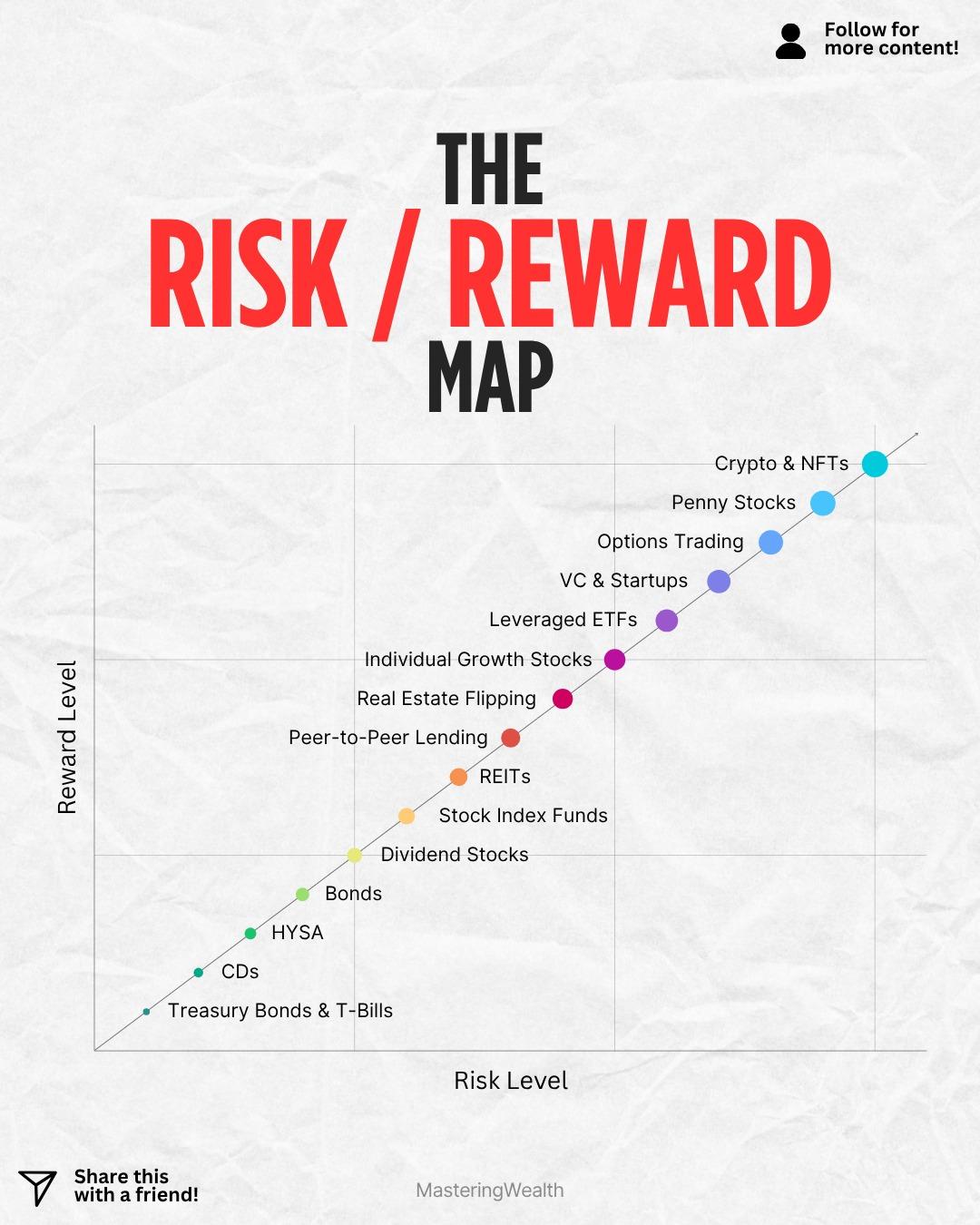
  • Every investment carries a balance between risk and reward. The chart in this post helps visualize that tradeoff. As potential returns increase, so does the chance of volatility and loss. Understanding this relationship is one of the first steps to building a solid investment strategy.

    On the lower end of the spectrum, you have safer assets like Treasury Bonds, CDs, and High Yield Savings Accounts (HYSA). These options offer stability but smaller returns. They’re great for preserving cash or storing emergency funds but won’t grow your wealth quickly.

    In the middle, you’ll find Dividend Stocks, Index Funds, and REITs. These are popular choices for long term investors because they provide moderate risk with the potential for steady income and growth. They represent the foundation of many balanced portfolios.

    As you move higher on the risk scale, you reach areas like Individual Growth Stocks, Leveraged ETFs, Startups, and Crypto. These can generate large profits but also carry the possibility of big losses. The key is knowing how much risk fits your personal goals and comfort level.

    Comment “Stocks” if you want a link to see my dividend portfolio and how I balance risk and reward for long term growth and passive income.

    What’s your personal investing style? Do you prefer the slow and steady path or do you enjoy taking higher risks for potentially higher rewards?

    If you enjoy learning about investing, portfolio building, and smart money strategies, follow @MasteringWealth for daily visuals that make complex financial topics simple to understand.

    This content is for educational purposes only and should not be taken as financial advice. Always do your own research or consult a licensed financial advisor before making investment decisions.
    📊 Every investment carries a balance between risk and reward. The chart in this post helps visualize that tradeoff. As potential returns increase, so does the chance of volatility and loss. Understanding this relationship is one of the first steps to building a solid investment strategy. On the lower end of the spectrum, you have safer assets like Treasury Bonds, CDs, and High Yield Savings Accounts (HYSA). These options offer stability but smaller returns. They’re great for preserving cash or storing emergency funds but won’t grow your wealth quickly. In the middle, you’ll find Dividend Stocks, Index Funds, and REITs. These are popular choices for long term investors because they provide moderate risk with the potential for steady income and growth. They represent the foundation of many balanced portfolios. As you move higher on the risk scale, you reach areas like Individual Growth Stocks, Leveraged ETFs, Startups, and Crypto. These can generate large profits but also carry the possibility of big losses. The key is knowing how much risk fits your personal goals and comfort level. 💬 Comment “Stocks” if you want a link to see my dividend portfolio and how I balance risk and reward for long term growth and passive income. What’s your personal investing style? Do you prefer the slow and steady path or do you enjoy taking higher risks for potentially higher rewards? If you enjoy learning about investing, portfolio building, and smart money strategies, follow @MasteringWealth for daily visuals that make complex financial topics simple to understand. ⚠️ This content is for educational purposes only and should not be taken as financial advice. Always do your own research or consult a licensed financial advisor before making investment decisions.
    ·200 Views ·0 Προεπισκόπηση
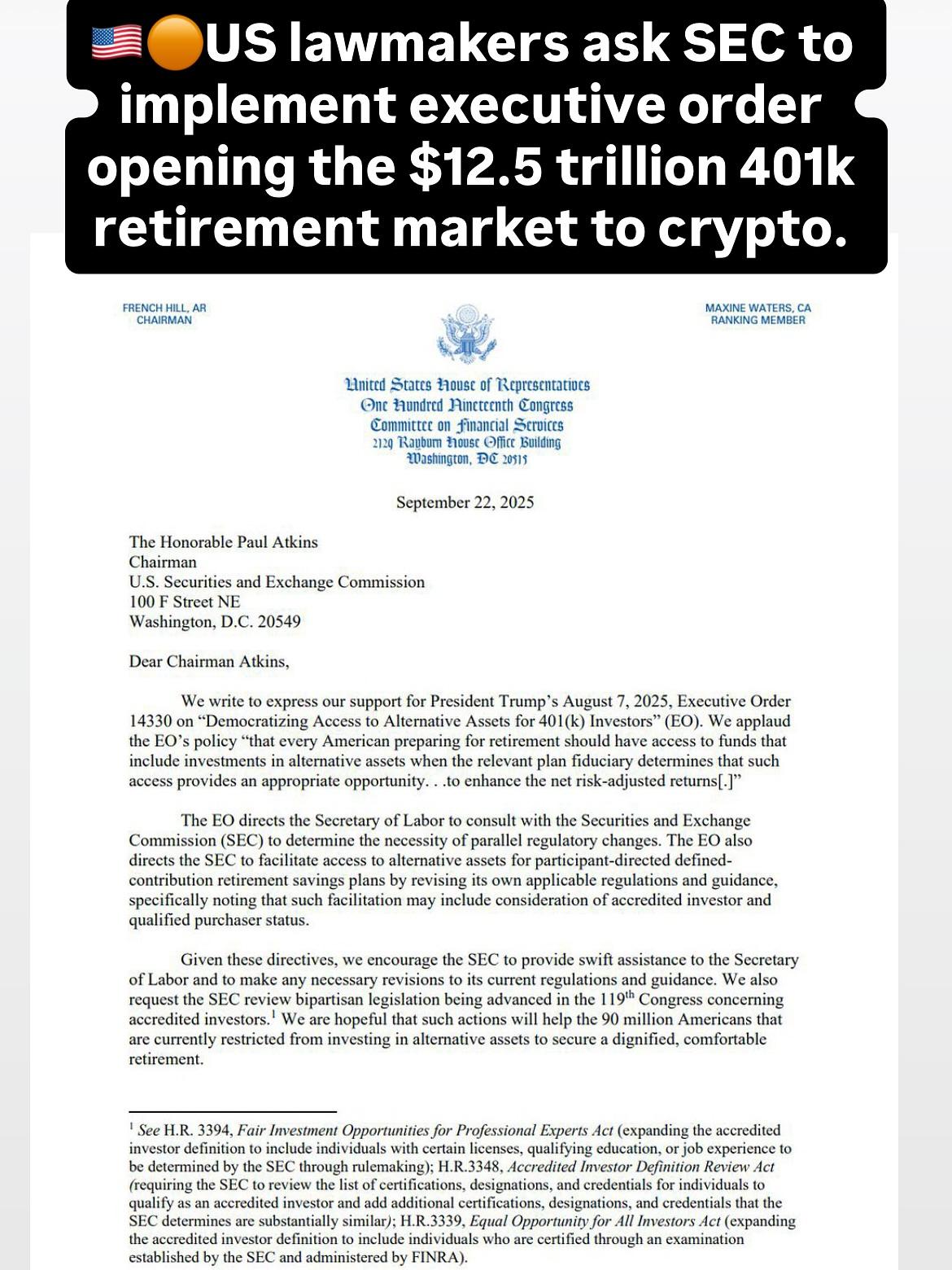
  • US lawmakers have officially urged the SEC to implement President Trump’s August 2025 executive order that would open up the $12.5 trillion 401(k) retirement market to alternative assets like crypto.

    This could mark a massive shift in how Americans save for retirement expanding beyond stocks and bonds into digital assets.

    If adopted, millions of retirement savers could gain exposure to Bitcoin, Ethereum, and other alternative investments inside their 401(k) plans.

    A new era of retirement planning? Probably nothing anyway

    #Crypto #401k #Retirement #Bitcoin #Ethereum #Finance #USPolitics #Blockchain #Investing #WealthManagement #Policy
    🇺🇸 US lawmakers have officially urged the SEC to implement President Trump’s August 2025 executive order that would open up the $12.5 trillion 401(k) retirement market to alternative assets like crypto. This could mark a massive shift in how Americans save for retirement expanding beyond stocks and bonds into digital assets. If adopted, millions of retirement savers could gain exposure to Bitcoin, Ethereum, and other alternative investments inside their 401(k) plans. 📊 A new era of retirement planning? Probably nothing anyway 🟠 #Crypto #401k #Retirement #Bitcoin #Ethereum #Finance #USPolitics #Blockchain #Investing #WealthManagement #Policy
    ·366 Views ·0 Προεπισκόπηση
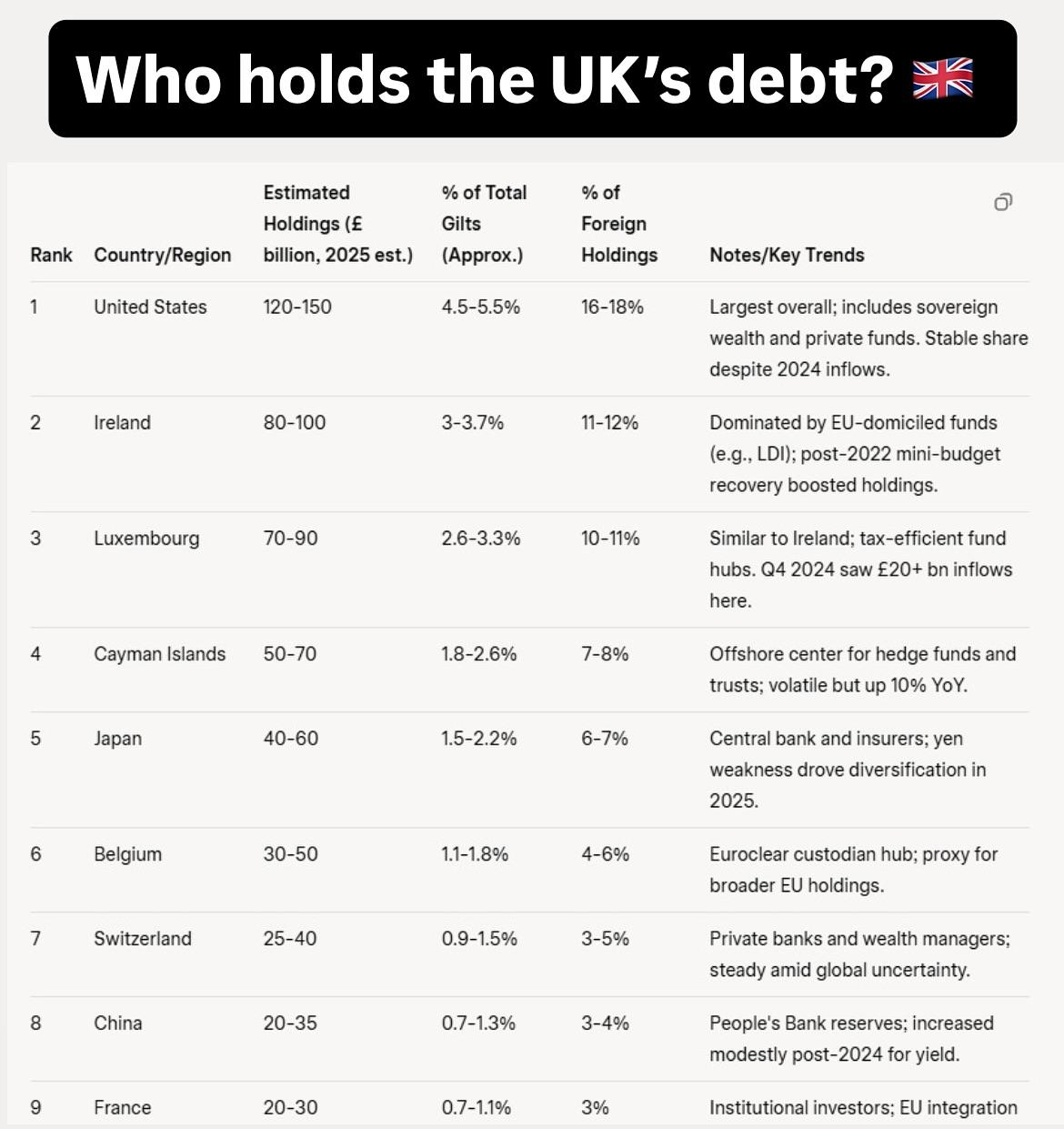
  • This chart shows which countries own the biggest slices of UK government bonds. If these major holders like the US, Ireland, or Luxembourg were to sell off even a fraction, gilt yields would jump. That means higher borrowing costs for the government and a lot less room to fund public spending. In short: financing depends on foreign confidence. How do you incentive buyers?

    I’ve been talking about this for months… it makes it harder to finance deficits and fund public spending. In essence, the UK’s fiscal flexibility depends heavily on external confidence in its debt markets.

    You know what to do lads 🫡

    Scott is the most undervalued person in Washington… he knows the score his macro background is

    #Bonds #UKGilts #UKBondMarket #DebtMarkets #FiscalPolicy #GlobalFinance #debt
    This chart shows which countries own the biggest slices of UK government bonds. If these major holders like the US, Ireland, or Luxembourg were to sell off even a fraction, gilt yields would jump. That means higher borrowing costs for the government and a lot less room to fund public spending. In short: financing depends on foreign confidence. How do you incentive buyers? 🍿 I’ve been talking about this for months… it makes it harder to finance deficits and fund public spending. In essence, the UK’s fiscal flexibility depends heavily on external confidence in its debt markets. You know what to do lads 🦍🇺🇸🤝🫡 Scott is the most undervalued person in Washington… he knows the score 🎯 his macro background is 🔥👌 #Bonds #UKGilts #UKBondMarket #DebtMarkets #FiscalPolicy #GlobalFinance #debt
    ·391 Views ·0 Προεπισκόπηση
Αναζήτηση αποτελεσμάτων
Techawks - Powered By Pantrade Blockchain https://techawks.com