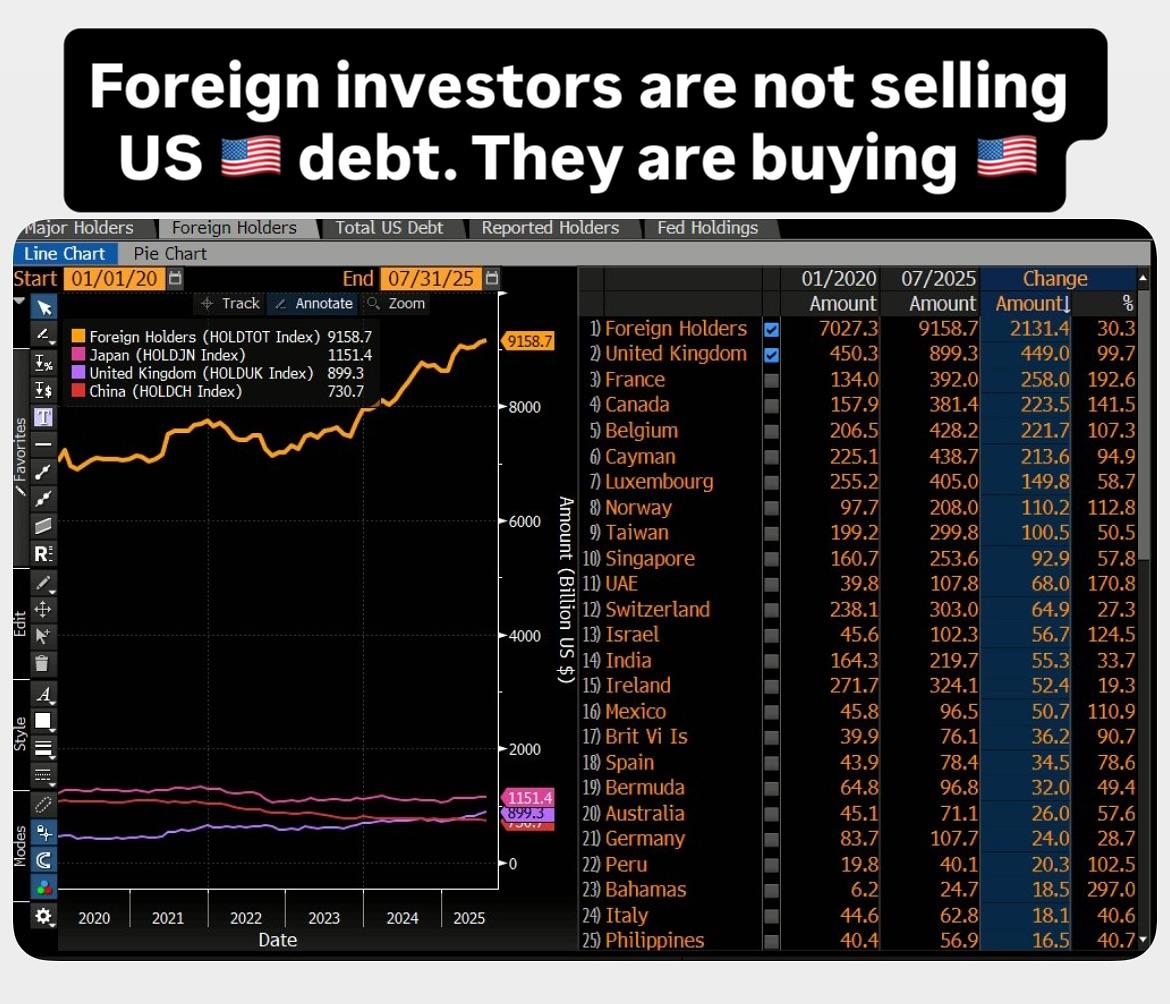
• Foreign investors are not selling US debt. They are buying.

    Total foreign holdings: $9.16T (July 2025), up from $7.0T in Jan 2020.

    The U.K. doubled its exposure → $899B today vs. $450B in 2020.

    France, Canada, Belgium, and Luxembourg also posted significant increases.

    Japan remains the largest single holder at $1.15T, while China has reduced but still holds $730B.

    This suggests that U.S. Treasuries are still viewed globally as the ultimate safe haven even in a high rate, high debt world.

    #bloomberg #USTreasuries #GlobalMarkets #Macro #Investing #Geopolitics #DebtMarket #SafeHaven #Bonds #USDebt #macroeconomics
    Foreign investors are not selling US 🇺🇸debt. They are buying. Total foreign holdings: $9.16T (July 2025), up from $7.0T in Jan 2020. The U.K. doubled its exposure → $899B today vs. $450B in 2020. France, Canada, Belgium, and Luxembourg also posted significant increases. Japan remains the largest single holder at $1.15T, while China has reduced but still holds $730B. 👉 This suggests that U.S. Treasuries are still viewed globally as the ultimate safe haven even in a high rate, high debt world. #bloomberg #USTreasuries #GlobalMarkets #Macro #Investing #Geopolitics #DebtMarket #SafeHaven #Bonds #USDebt #macroeconomics
    ·529 Views ·0 Reviews
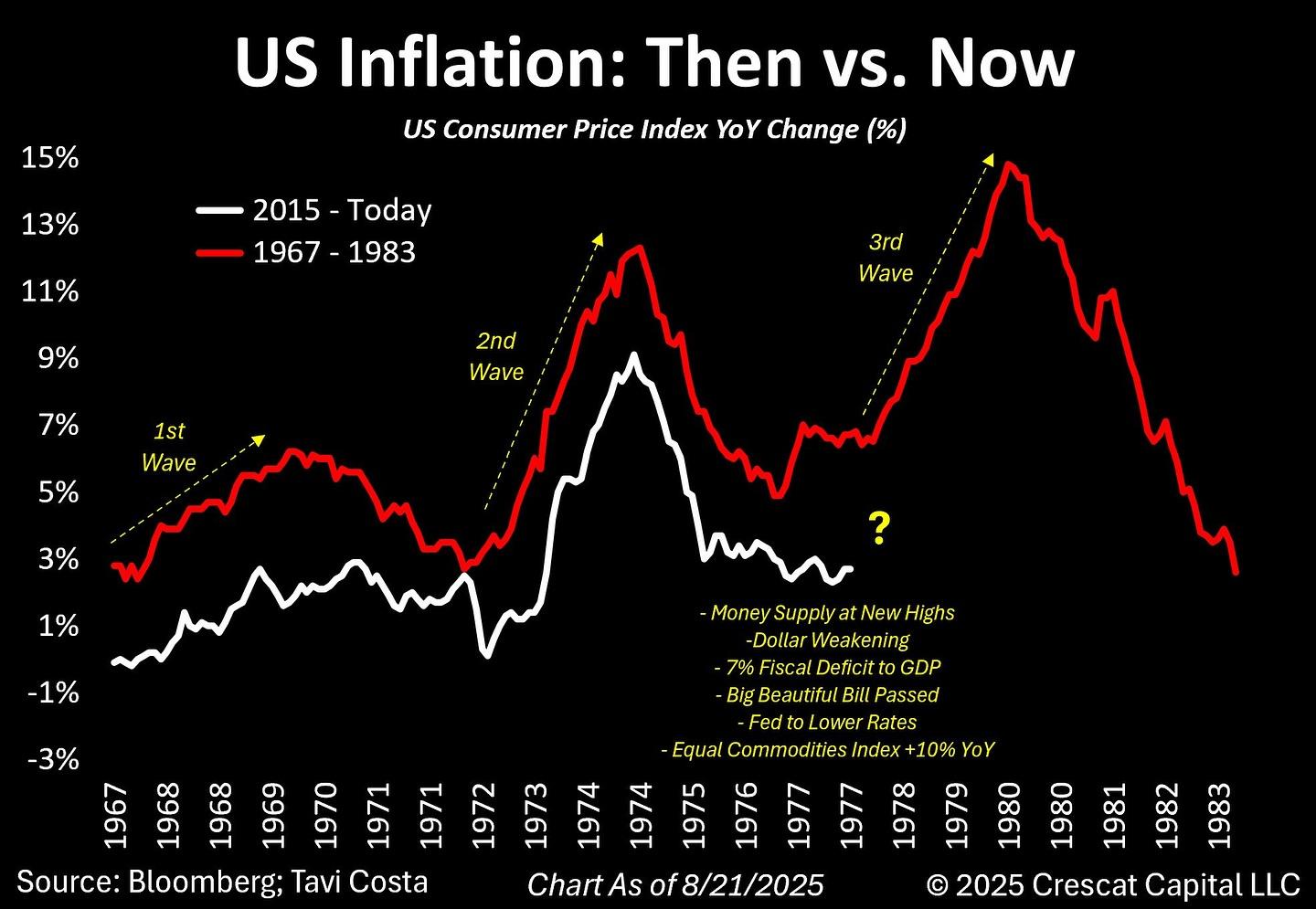
  • History doesn’t repeat, but it often rhymes. This chart compares U.S. inflation today with the 1967 - 1983 period, when inflation came in waves the first surge in the late 1960s, a sharper second wave in the mid-1970s, and finally the massive third wave that forced Paul Volcker’s Fed to slam rates higher and crush inflation at the cost of a deep recession.

    Today, inflation has cooled from its recent highs, but with money supply at new records, a weakening dollar, persistent fiscal deficits, accommodative policy signals, and rising commodity prices, the risk of another wave is far from gone. The big question: are we repeating the 1970s playbook?

    #Inflation #Economy #Macro #Commodities #CPI #FederalReserve #Markets #Investing #MacroEconomics #Stagflation #EconomicHistory
    History doesn’t repeat, but it often rhymes. This chart compares U.S. inflation today with the 1967 - 1983 period, when inflation came in waves the first surge in the late 1960s, a sharper second wave in the mid-1970s, and finally the massive third wave that forced Paul Volcker’s Fed to slam rates higher and crush inflation at the cost of a deep recession. Today, inflation has cooled from its recent highs, but with money supply at new records, a weakening dollar, persistent fiscal deficits, accommodative policy signals, and rising commodity prices, the risk of another wave is far from gone. The big question: are we repeating the 1970s playbook? #Inflation #Economy #Macro #Commodities #CPI #FederalReserve #Markets #Investing #MacroEconomics #Stagflation #EconomicHistory
    ·319 Views ·0 Reviews
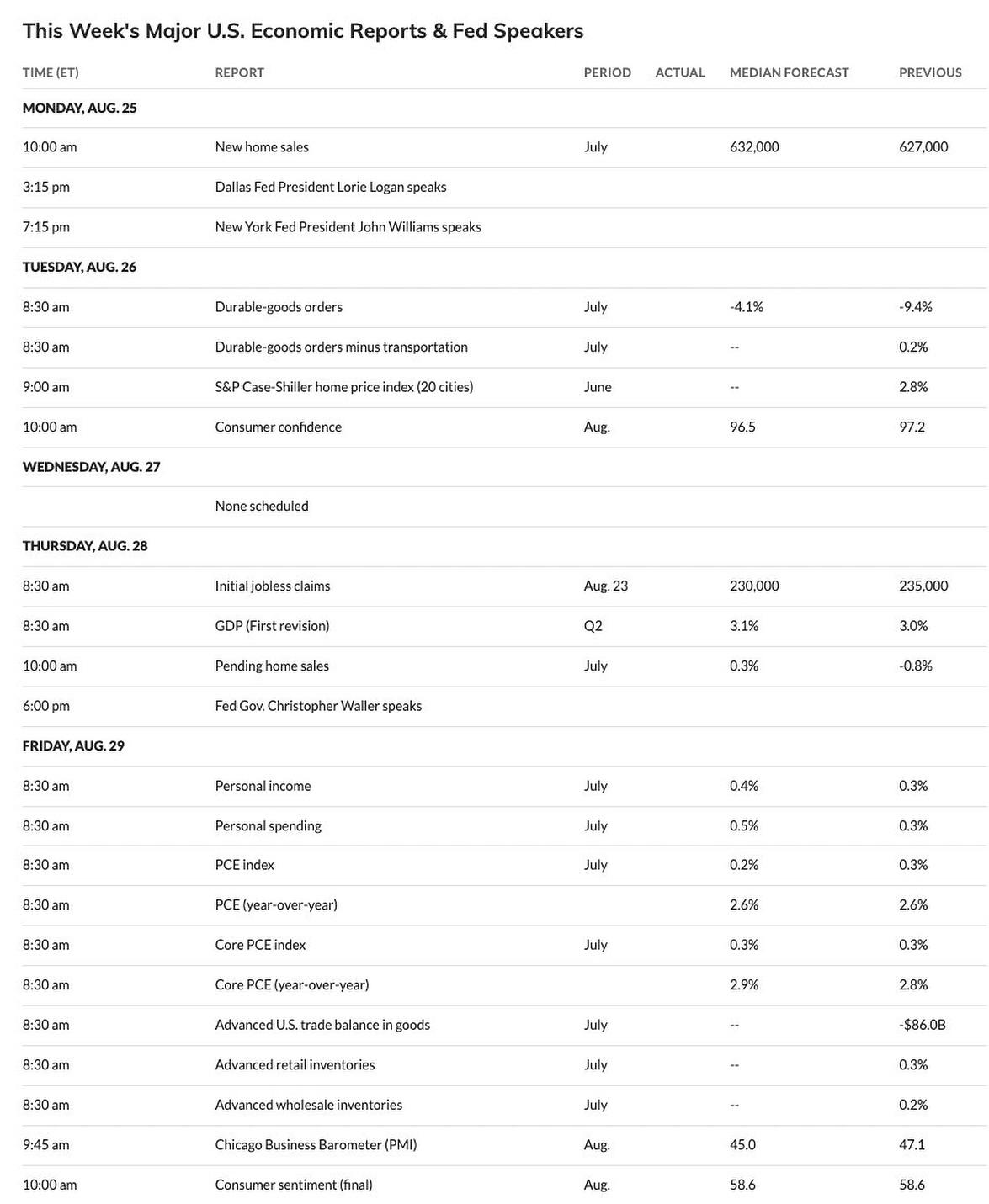
  • Here is the economic calendar for this upcoming week #macroeconomics #stocks #markets
    Here is the 🇺🇸 economic calendar for this upcoming week #macroeconomics #stocks #markets
    ·159 Views ·0 Reviews
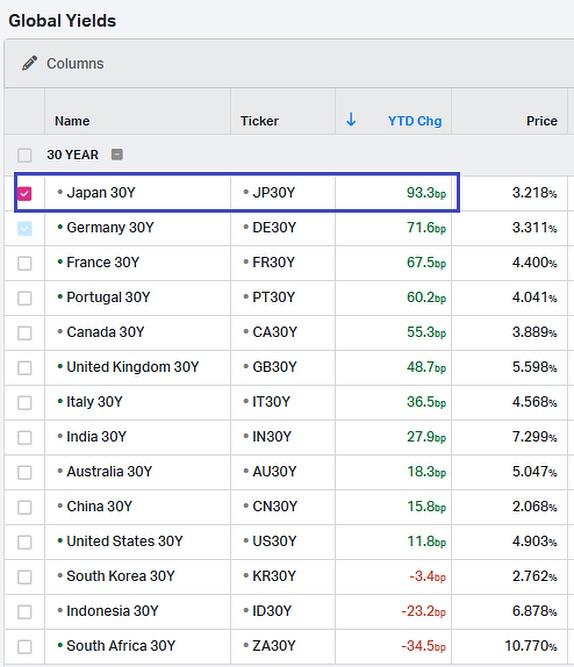
  • Japan’s 30-Year Yield has surged nearly 1ppt this year, now above 3.2%

    Why it matters: Japan carries the highest debt-to-GDP ratio in the developed world (250%+). Rising yields dramatically increase the cost of servicing that debt, straining government finances and raising the risk of fiscal stress. It also matters globally Japanese investors are among the biggest buyers of US Treasuries and European bonds. If they pull capital back home for higher returns, global borrowing costs could rise too.

    This isn’t just a Japan story it’s a warning signal for debt sustainability worldwide.

    #Bonds #GlobalMarkets #Japan #InterestRates #DebtCrisis #Finance #Investing #Economy #Markets #Treasuries #Macroeconomics
    Japan’s 30-Year Yield has surged nearly 1ppt this year, now above 3.2% 📈 Why it matters: Japan carries the highest debt-to-GDP ratio in the developed world (250%+). Rising yields dramatically increase the cost of servicing that debt, straining government finances and raising the risk of fiscal stress. It also matters globally Japanese investors are among the biggest buyers of US Treasuries and European bonds. If they pull capital back home for higher returns, global borrowing costs could rise too. This isn’t just a Japan story it’s a warning signal for debt sustainability worldwide. #Bonds #GlobalMarkets #Japan #InterestRates #DebtCrisis #Finance #Investing #Economy #Markets #Treasuries #Macroeconomics
    ·515 Views ·0 Reviews
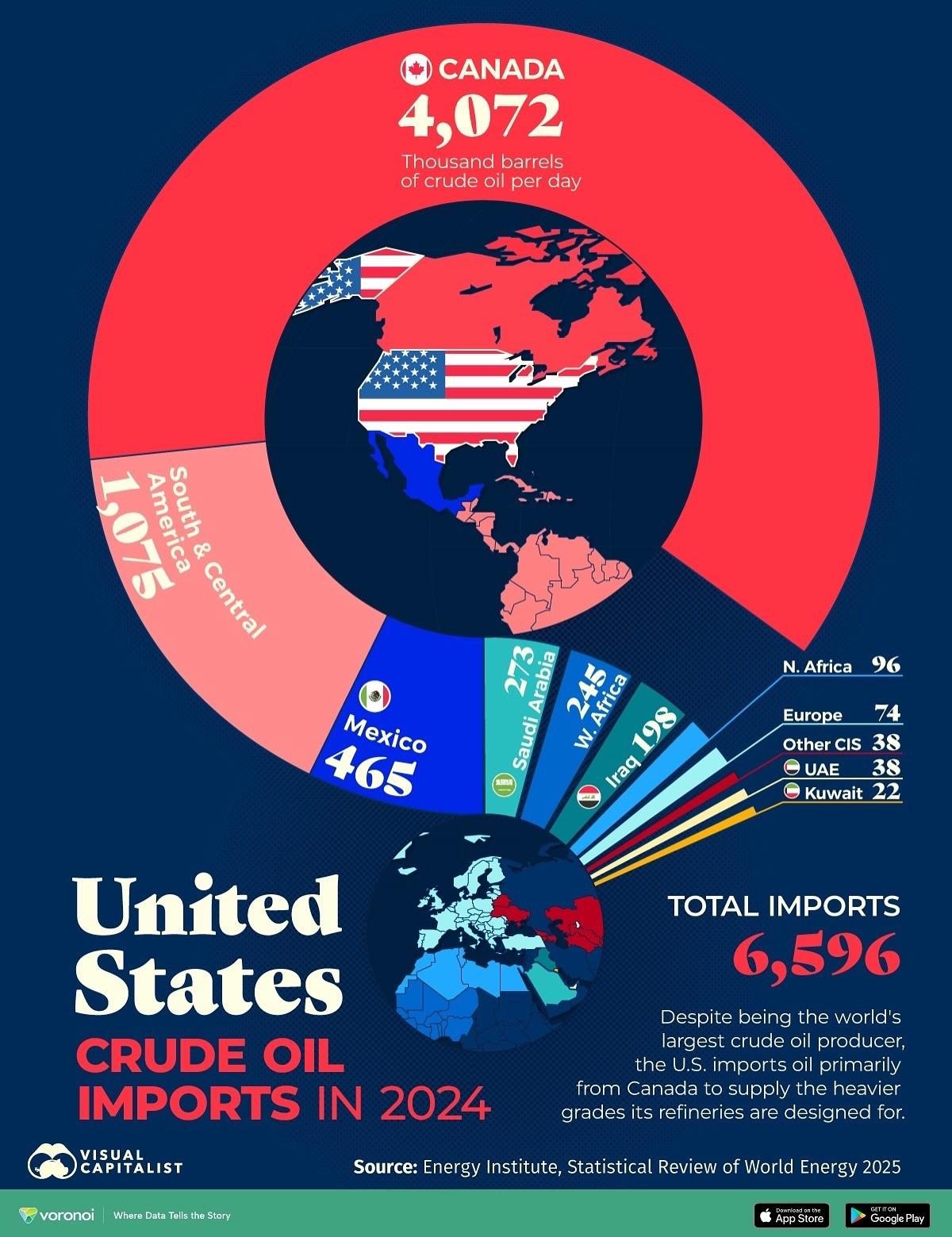
  • Crude oil imports reveal strategy. China casts a wide net across the Middle East, Russia, and Africa to diversify supply and secure scale. India tilts heavily toward Russia, driven by price opportunities and shifting geopolitics. The U.S. relies overwhelmingly on Canada as its secure energy lifeline, tailored to refinery needs. Europe shows a patchwork dependence, balancing flows from the U.S., Africa, the Middle East, and Russia a reminder of its ongoing energy vulnerabilities and the high stakes of diversification.

    #EnergySecurity #CrudeOil #China #India #USA #Europe #Geopolitics #Commodities #OilMarkets #MacroTrends #GlobalEconomy #EnergyStrategy #macroeconomics #oil
    Crude oil imports reveal strategy. China casts a wide net across the Middle East, Russia, and Africa to diversify supply and secure scale. India tilts heavily toward Russia, driven by price opportunities and shifting geopolitics. The U.S. relies overwhelmingly on Canada as its secure energy lifeline, tailored to refinery needs. Europe shows a patchwork dependence, balancing flows from the U.S., Africa, the Middle East, and Russia a reminder of its ongoing energy vulnerabilities and the high stakes of diversification. #EnergySecurity #CrudeOil #China #India #USA #Europe #Geopolitics #Commodities #OilMarkets #MacroTrends #GlobalEconomy #EnergyStrategy #macroeconomics #oil
    ·603 Views ·0 Reviews
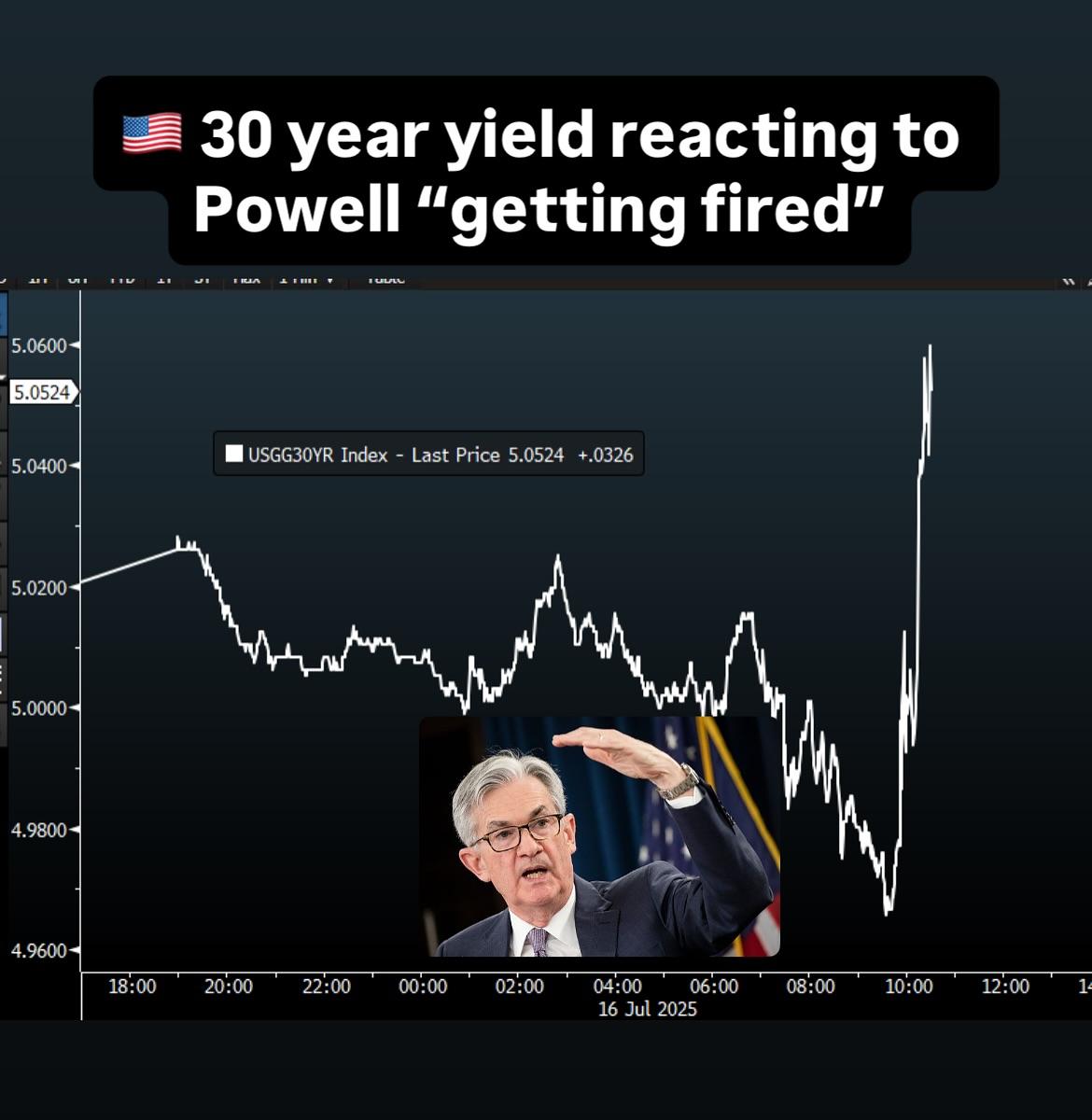
  • More nonsense… what drives emotion then action… everyone worried… The idea of a President firing the Federal Reserve Chair undermines the core principle of central bank independence. The Fed’s credibility hinges on its ability to make monetary decisions free from political interference. Any public pressure or threat from the executive branch not only damages market confidence but also incentivizes the Fed to double down on its restrictive stance tightening policy further to prove it’s not bending to political will. In moments like this, perception is policy. The Fed cannot afford to appear influenced, especially when inflation and financial stability are at stake. We have high inequality, stock markets at all time high and the bond yields spiking higher… cutting would not be fiscally responsible in my view. #FederalReserve #MonetaryPolicy #FedIndependence #Macroeconomics #InterestRates #FiscalPolicy #CentralBanking #Inflation #Markets
    More nonsense… what drives emotion then action… everyone worried… 🇺🇸🎡🎪The idea of a President firing the Federal Reserve Chair undermines the core principle of central bank independence. The Fed’s credibility hinges on its ability to make monetary decisions free from political interference. Any public pressure or threat from the executive branch not only damages market confidence but also incentivizes the Fed to double down on its restrictive stance tightening policy further to prove it’s not bending to political will. In moments like this, perception is policy. The Fed cannot afford to appear influenced, especially when inflation and financial stability are at stake. We have high inequality, stock markets at all time high and the bond yields spiking higher… cutting would not be fiscally responsible in my view. #FederalReserve #MonetaryPolicy #FedIndependence #Macroeconomics #InterestRates #FiscalPolicy #CentralBanking #Inflation #Markets
    ·479 Views ·0 Reviews
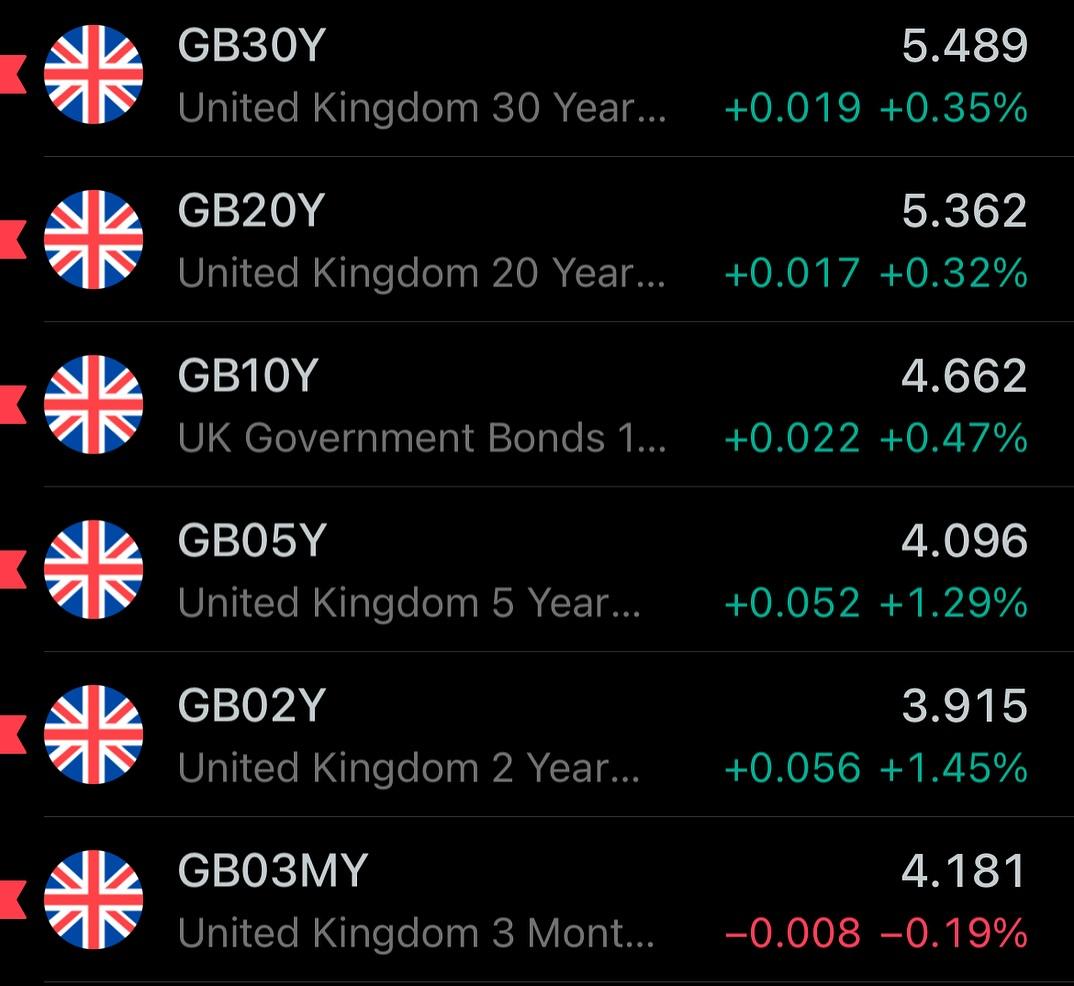
  • It’s incredibly fascinating to watch what’s happening right now in the UK gilt market. I often focus on the US understandably, since it dominates global financial markets but the signals coming from the UK bond market deserve serious attention.

    When people talk about gilts being “undervalued,” what they’re really reacting to is something deeper… the market’s perception of fiscal credibility.

    Here’s what often gets overlooked…

    Bond markets are one of the few real time mechanisms that hold governments accountable. While we usually associate accountability with elections and politics, markets speak a different language… cost.

    When governments borrow too aggressively or look fiscally reckless, lenders (investors) start to lose confidence. That loss of trust shows up fast… in higher yields, weaker demand, and rising refinancing costs. It’s not about partisanship it’s about risk and trust.

    If a government behaves as if it can spend freely or rely on money printing without consequences, the bond market pushes back. And that’s exactly what we’re seeing now.

    It’s not just a technical issue or a pricing anomaly it’s the market demanding responsibility.

    The UK’s current situation is a powerful reminder… the cost of capital matters. Markets aren’t political they’re rational. And when that rationality flags something, it’s worth paying attention.

    I’ll translate… please somebody buy our debt…

    Anyway…

    Probably nothing

    #bonds #uk #gilts #hedgefunds #markets #stocks #stockmarket #bondmarket #macroeconomics
    It’s incredibly fascinating to watch what’s happening right now in the UK gilt market. I often focus on the US understandably, since it dominates global financial markets but the signals coming from the UK bond market deserve serious attention. When people talk about gilts being “undervalued,” what they’re really reacting to is something deeper… the market’s perception of fiscal credibility. Here’s what often gets overlooked… Bond markets are one of the few real time mechanisms that hold governments accountable. While we usually associate accountability with elections and politics, markets speak a different language… cost. When governments borrow too aggressively or look fiscally reckless, lenders (investors) start to lose confidence. That loss of trust shows up fast… in higher yields, weaker demand, and rising refinancing costs. It’s not about partisanship it’s about risk and trust. If a government behaves as if it can spend freely or rely on money printing without consequences, the bond market pushes back. And that’s exactly what we’re seeing now. It’s not just a technical issue or a pricing anomaly it’s the market demanding responsibility. The UK’s current situation is a powerful reminder… the cost of capital matters. Markets aren’t political they’re rational. And when that rationality flags something, it’s worth paying attention. I’ll translate… please somebody buy our debt… Anyway… Probably nothing #bonds #uk #gilts #hedgefunds #markets #stocks #stockmarket #bondmarket #macroeconomics
    ·462 Views ·0 Reviews
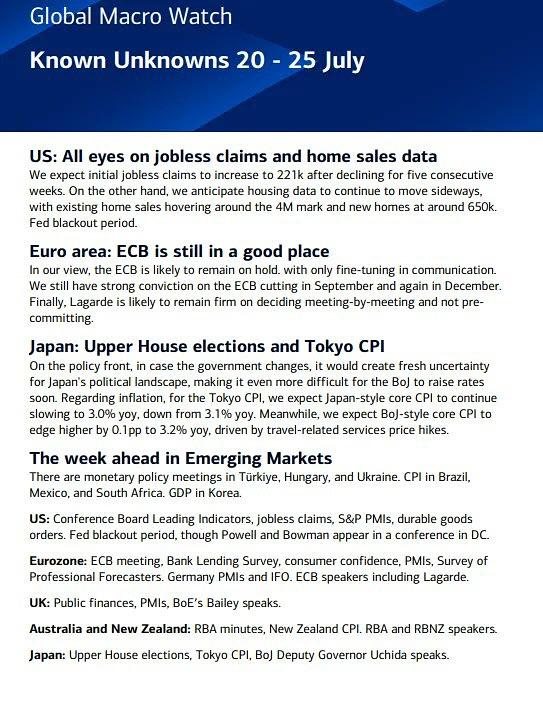
  • A busy week ahead across global markets.

    In the US, jobless claims and housing data will be front and center. Europe eyes the ECB’s July meeting with steady rates expected, while Japan’s Upper House elections and CPI prints could shape BoJ policy signals. Emerging markets will navigate rate decisions, CPI releases, and GDP prints across Brazil, Mexico, Turkey, South Africa, and Korea.

    Earnings season heats up with major names like Tesla, Alphabet, Intel, and Dow reporting midweek. Macro meets micro.

    #GlobalMacro #EarningsSeason #ECB #BoJ #USJobs #EmergingMarkets #CPI #InterestRates #MarketsThisWeek #Macroeconomics #Investing #FinanceNews #MarketWatch #EarningsCalendar #EconomicOutlook
    A busy week ahead across global markets. In the US, jobless claims and housing data will be front and center. Europe eyes the ECB’s July meeting with steady rates expected, while Japan’s Upper House elections and CPI prints could shape BoJ policy signals. Emerging markets will navigate rate decisions, CPI releases, and GDP prints across Brazil, Mexico, Turkey, South Africa, and Korea. Earnings season heats up with major names like Tesla, Alphabet, Intel, and Dow reporting midweek. Macro meets micro. #GlobalMacro #EarningsSeason #ECB #BoJ #USJobs #EmergingMarkets #CPI #InterestRates #MarketsThisWeek #Macroeconomics #Investing #FinanceNews #MarketWatch #EarningsCalendar #EconomicOutlook
    ·1K Views ·0 Reviews
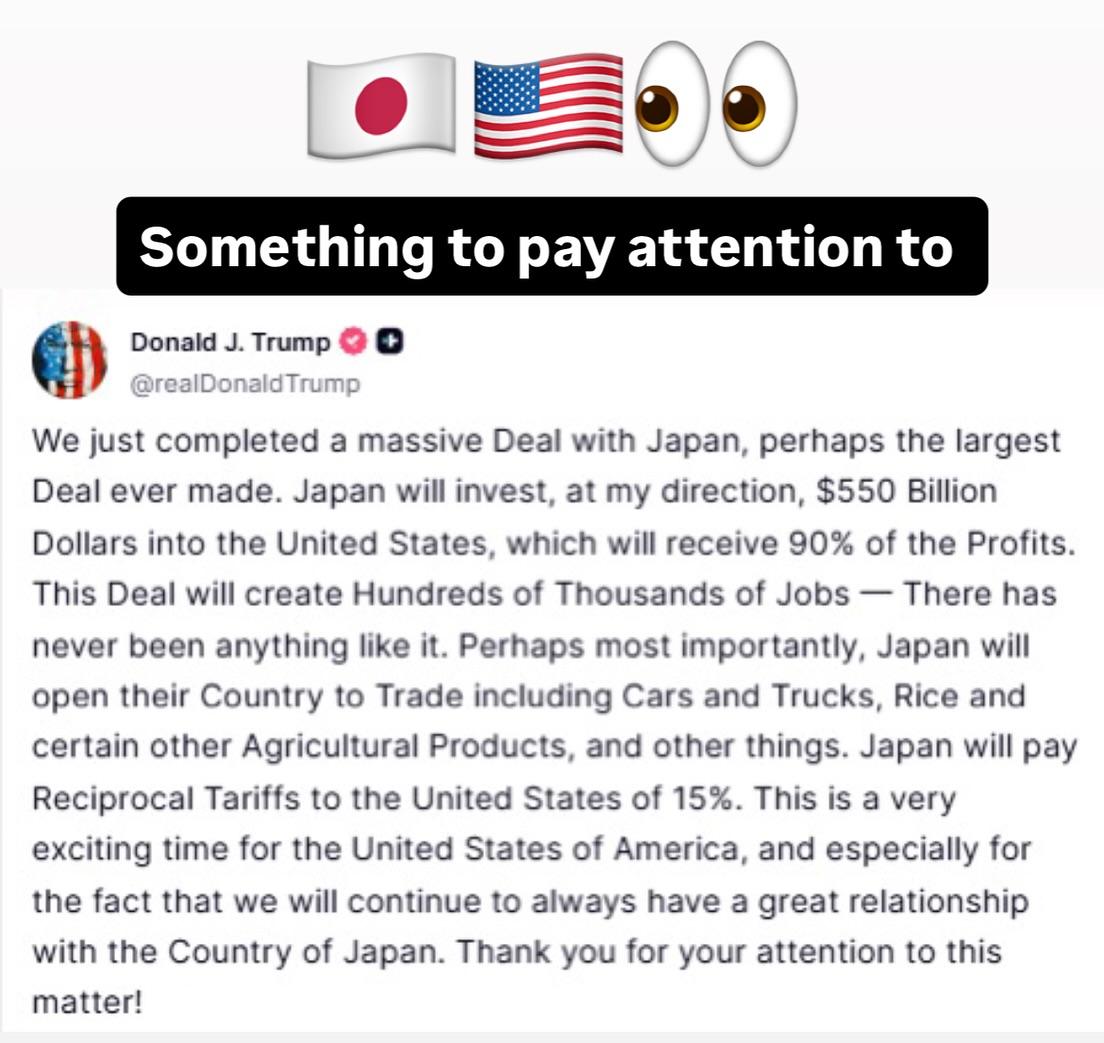
  • A $550B Japanese investment into the US as claimed in this announcement, would be more than just a bilateral trade deal it would represent a massive macro capital flow with global consequences.

    Japan, already one of the largest holders of U.S. Treasuries, would likely recycle this capital back into dollar assets, reinforcing demand for U.S. fixed income and potentially suppressing long-end yields. This dynamic strengthens the dollar structurally, reinforces its reserve status, and adds pressure to the yen.

    In FX markets, USD/JPY could push higher as Japanese capital is converted to dollars, further widening the interest rate differential between the Fed and the BoJ. Meanwhile, Japan’s own bond market would feel the liquidity drain unless the BoJ steps in with more accommodation, pushing JGB yields even lower and exacerbating yen weakness.

    Japan’s own fiscal dynamics are deeply sensitive to rates due to its massive debt burden (>260% debt-to-GDP). BOJ could step up bond purchases to suppress yields, preventing policy spillover from affecting domestic financing conditions.This would suppress the yen even more, creating the feedback loop.

    This kind of flow driven divergence between U.S. and Japan isn’t just a headline it’s a signal of how global imbalances and reserve dynamics drive currencies, yields, and policy reactions. Whether this deal is real or political theater, it’s the structural mechanics that matter.

    If only Trump knew a guy about currencies and macroeconomics… if only he knew someone who fully understood these dynamics with Japan and yields… anyway… it’s probably nothing…

    #macroeconomics #markets #stocks #stockmarket #ndx #sp500 #japan #usa
    A $550B Japanese investment into the US as claimed in this announcement, would be more than just a bilateral trade deal it would represent a massive macro capital flow with global consequences. Japan, already one of the largest holders of U.S. Treasuries, would likely recycle this capital back into dollar assets, reinforcing demand for U.S. fixed income and potentially suppressing long-end yields. This dynamic strengthens the dollar structurally, reinforces its reserve status, and adds pressure to the yen. In FX markets, USD/JPY could push higher as Japanese capital is converted to dollars, further widening the interest rate differential between the Fed and the BoJ. Meanwhile, Japan’s own bond market would feel the liquidity drain unless the BoJ steps in with more accommodation, pushing JGB yields even lower and exacerbating yen weakness. Japan’s own fiscal dynamics are deeply sensitive to rates due to its massive debt burden (>260% debt-to-GDP). BOJ could step up bond purchases to suppress yields, preventing policy spillover from affecting domestic financing conditions.This would suppress the yen even more, creating the feedback loop. This kind of flow driven divergence between U.S. and Japan isn’t just a headline it’s a signal of how global imbalances and reserve dynamics drive currencies, yields, and policy reactions. Whether this deal is real or political theater, it’s the structural mechanics that matter. If only Trump knew a guy about currencies and macroeconomics… if only he knew someone who fully understood these dynamics with Japan and yields… anyway… it’s probably nothing… #macroeconomics #markets #stocks #stockmarket #ndx #sp500 #japan #usa
    ·652 Views ·0 Reviews
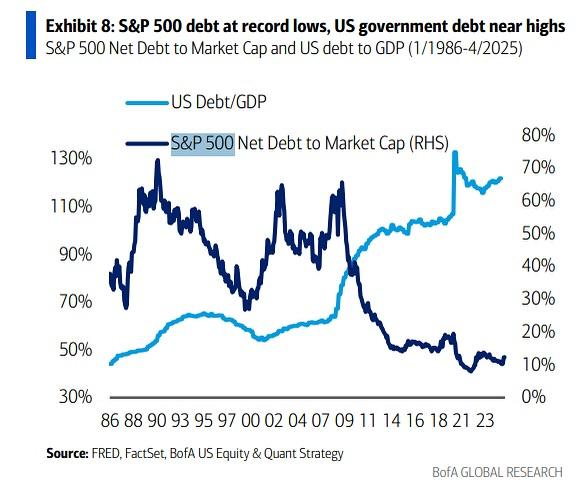
  • This chart illustrates a striking divergence between private and public sector debt. On one hand, S&P 500 companies have significantly deleveraged, with net debt to market cap falling to record lows just above 10% highlighting robust corporate balance sheets, rising equity values, and prudent financial management. On the other, U.S. government debt as a percentage of GDP has surged to around 120%, hovering near all-time highs.

    This contrast underscores a critical macroeconomic shift: while the private sector is staying lean, the public sector is absorbing more fiscal burden. This may reflect the post-COVID fiscal stimulus response, continued deficit spending, and growing entitlement obligations. For investors, this bifurcation could mean increased resilience in corporate earnings, even as sovereign debt concerns persist.

    Watch for potential implications: if interest rates stay elevated or begin to rise again, government refinancing costs could become problematic while corporates, having already deleveraged, might be less exposed. It also strengthens the case for equities over bonds in a debt-laden macro environment.

    #MacroTrends #macroeconomics #hedgefunds #DebtCycle #SP500 #USDebt #CorporateFinance #PublicDebt #EconomicPolicy #InvestmentStrategy #FinancialMarkets #MarketOutlook
    This chart illustrates a striking divergence between private and public sector debt. On one hand, S&P 500 companies have significantly deleveraged, with net debt to market cap falling to record lows just above 10% highlighting robust corporate balance sheets, rising equity values, and prudent financial management. On the other, U.S. government debt as a percentage of GDP has surged to around 120%, hovering near all-time highs. This contrast underscores a critical macroeconomic shift: while the private sector is staying lean, the public sector is absorbing more fiscal burden. This may reflect the post-COVID fiscal stimulus response, continued deficit spending, and growing entitlement obligations. For investors, this bifurcation could mean increased resilience in corporate earnings, even as sovereign debt concerns persist. Watch for potential implications: if interest rates stay elevated or begin to rise again, government refinancing costs could become problematic while corporates, having already deleveraged, might be less exposed. It also strengthens the case for equities over bonds in a debt-laden macro environment. #MacroTrends #macroeconomics #hedgefunds #DebtCycle #SP500 #USDebt #CorporateFinance #PublicDebt #EconomicPolicy #InvestmentStrategy #FinancialMarkets #MarketOutlook
    ·578 Views ·0 Reviews
More Results
Techawks - Powered By Pantrade Blockchain https://techawks.com