• The Atlanta Fed just revised its GDPNow estimate for Q3 down slightly from 3.9% to 3.8%. Still strong, still above trend, and still well above what most forecasters expected just a few months ago.

    But here’s the interesting part:

    While the US economy continues to outperform expectations, other major economies are showing cracks:

    Japan is wrestling with rising bond yields and the limits of yield curve control.

    Europe is stagnating.

    China is fighting deflationary pressure and structural debt issues.

    Meanwhile, US growth remains resilient driven by consumer spending, investment, and ongoing fiscal momentum.

    A number like 3.8% doesn’t sound dramatic, but in a world of slowing growth, this level of momentum makes a statement. The US continues to be the global outlier the economy everyone bets against, yet the one capital keeps flowing back to.

    No wonder global investors overweight US equities and Treasuries. The U.S. isn’t just participating in the global cycle it’s defining it.

    The real question:

    Does this strength give the Fed room to stay tighter for longer, or does it simply delay the slowdown the market keeps trying to price in?

    Because if the economy really is this strong rate cuts aren’t a certainty. They become a negotiation.

    #GDP #Economy #Macro #AtlantaFed #Growth #Finance #Markets #USMarket #Investing #RecessionNarrative #DataDriven
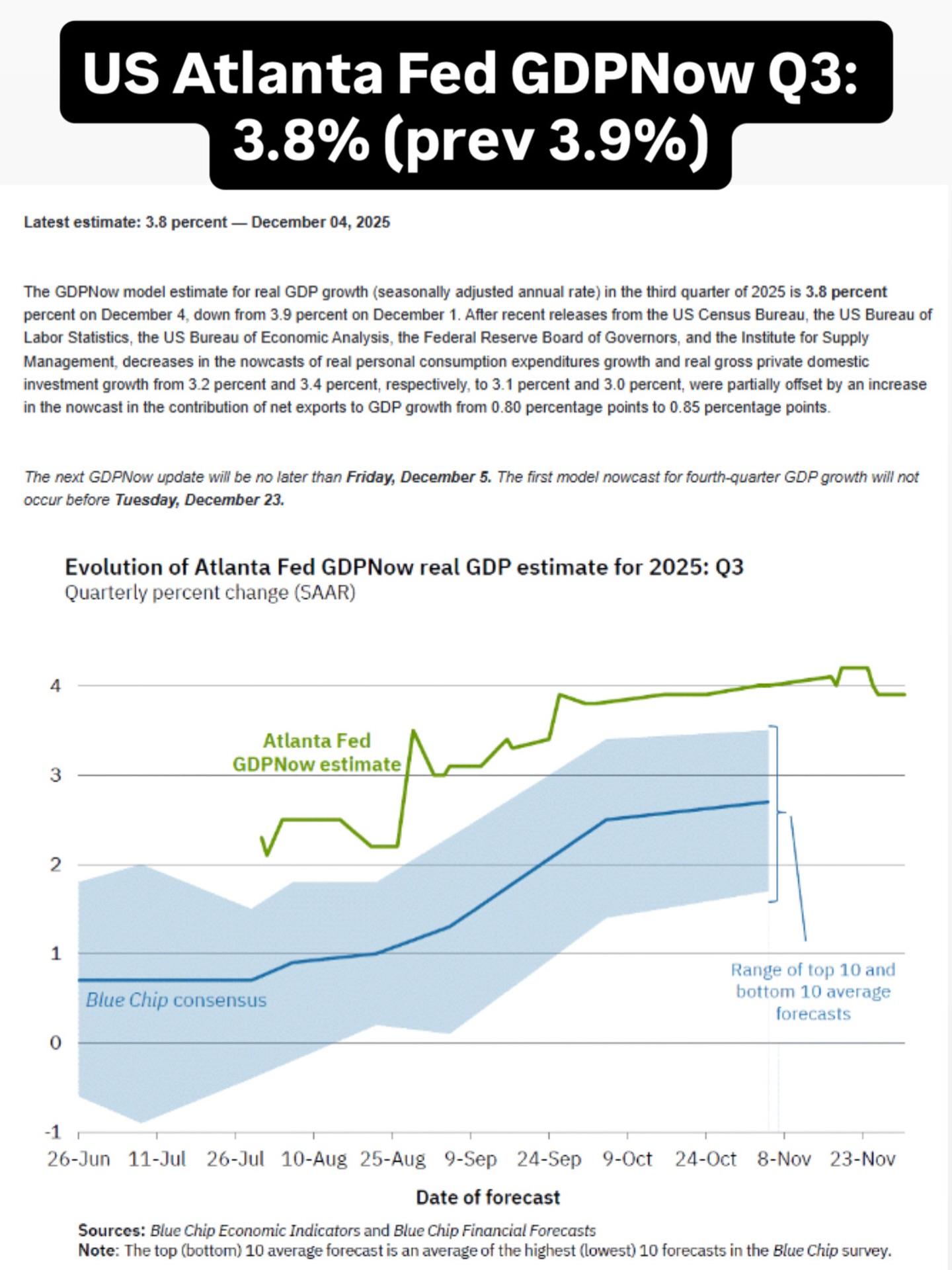
    The Atlanta Fed just revised its GDPNow estimate for Q3 down slightly from 3.9% to 3.8%. Still strong, still above trend, and still well above what most forecasters expected just a few months ago. But here’s the interesting part: While the US economy continues to outperform expectations, other major economies are showing cracks: Japan is wrestling with rising bond yields and the limits of yield curve control. Europe is stagnating. China is fighting deflationary pressure and structural debt issues. Meanwhile, US growth remains resilient driven by consumer spending, investment, and ongoing fiscal momentum. A number like 3.8% doesn’t sound dramatic, but in a world of slowing growth, this level of momentum makes a statement. The US continues to be the global outlier the economy everyone bets against, yet the one capital keeps flowing back to. No wonder global investors overweight US equities and Treasuries. The U.S. isn’t just participating in the global cycle it’s defining it. The real question: Does this strength give the Fed room to stay tighter for longer, or does it simply delay the slowdown the market keeps trying to price in? Because if the economy really is this strong rate cuts aren’t a certainty. They become a negotiation. #GDP #Economy #Macro #AtlantaFed #Growth #Finance #Markets #USMarket #Investing #RecessionNarrative #DataDriven
    ·133 Views ·0 önizleme
  • That feeling when you finally understand bonds #investing #bonds #stocks #markets #hedgefunds
    That feeling when you finally understand bonds #investing #bonds #stocks #markets #hedgefunds
    ·93 Views ·2 Plays ·0 önizleme
  • 44 mental models every serious investor should know.

    What makes these useful isn’t how many you can memorize it’s how many you can actually apply when making decisions under uncertainty.

    A few worth keeping close:

    The McNamara Fallacy
    What gets measured gets managed but sometimes the most important variables can’t be easily quantified. Markets aren’t just numbers. Sentiment, incentives, governance quality, and strategy don’t fit neatly into a spreadsheet… but they drive outcomes. The danger is letting easy to measure metrics blind you to meaningful but hard to measure risks.

    The Semmelweis Reflex
    Markets hate new information especially information that challenges existing beliefs. Every cycle, investors dismiss certain trends as “temporary”… until they aren’t. Think EVs, cloud software, crypto, AI. Reflexive rejection is comfortable until it becomes expensive.

    The Baader Meinhof Phenomenon
    Once an idea enters your awareness, suddenly you see it everywhere. In markets, this can create false confidence and FOMO. Just because a theme dominates headlines doesn’t mean it’s investable or priced attractively.

    These frameworks don’t tell you what to buy they help you avoid being misled by your own psychology while you do it.

    Great investing is less about predicting the future and more about avoiding the mental traps that keep most people from seeing it clearly.

    #investing #finance
    44 mental models every serious investor should know. What makes these useful isn’t how many you can memorize it’s how many you can actually apply when making decisions under uncertainty. A few worth keeping close: The McNamara Fallacy What gets measured gets managed but sometimes the most important variables can’t be easily quantified. Markets aren’t just numbers. Sentiment, incentives, governance quality, and strategy don’t fit neatly into a spreadsheet… but they drive outcomes. The danger is letting easy to measure metrics blind you to meaningful but hard to measure risks. The Semmelweis Reflex Markets hate new information especially information that challenges existing beliefs. Every cycle, investors dismiss certain trends as “temporary”… until they aren’t. Think EVs, cloud software, crypto, AI. Reflexive rejection is comfortable until it becomes expensive. The Baader Meinhof Phenomenon Once an idea enters your awareness, suddenly you see it everywhere. In markets, this can create false confidence and FOMO. Just because a theme dominates headlines doesn’t mean it’s investable or priced attractively. These frameworks don’t tell you what to buy they help you avoid being misled by your own psychology while you do it. Great investing is less about predicting the future and more about avoiding the mental traps that keep most people from seeing it clearly. #investing #finance
    ·205 Views ·0 önizleme
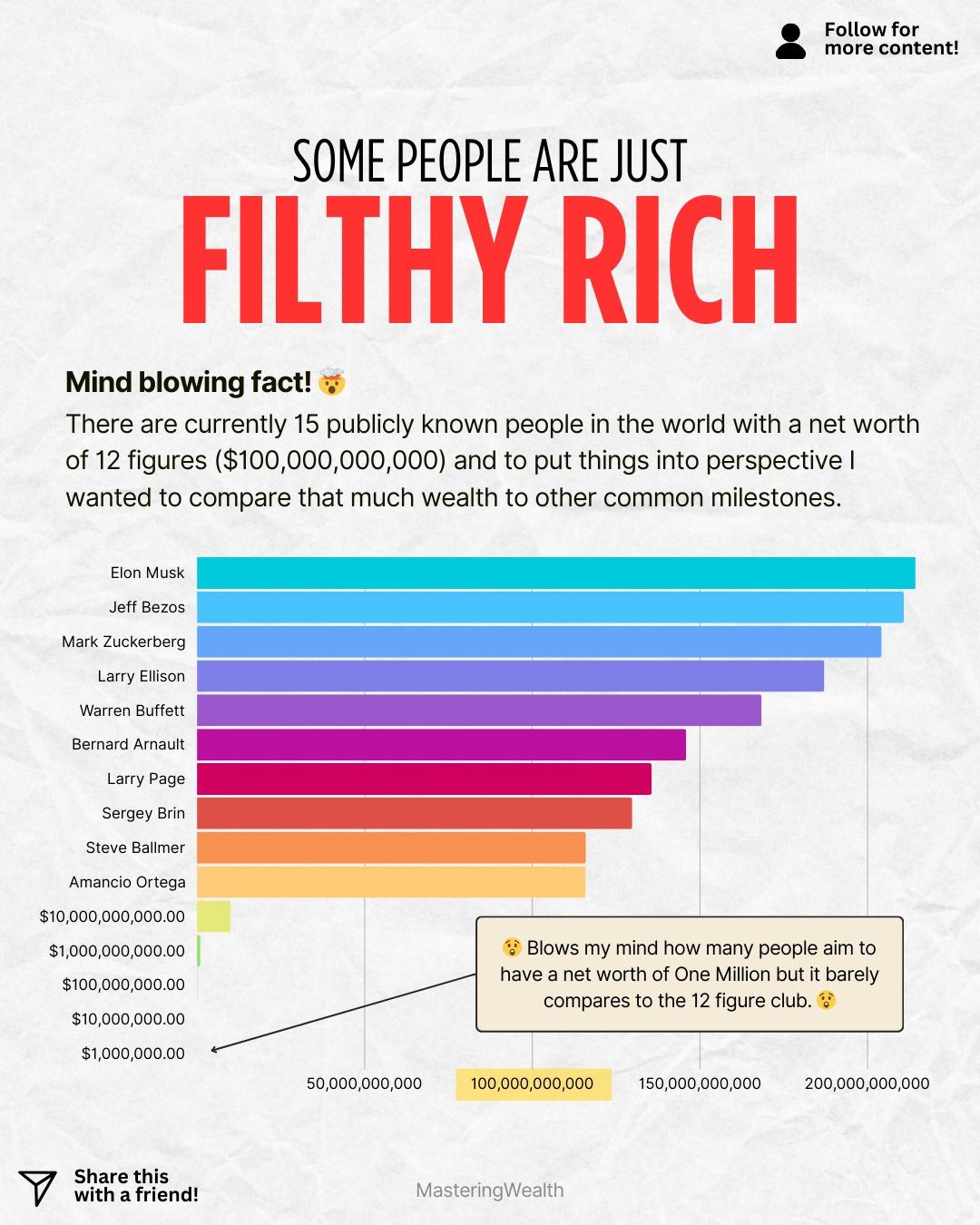
  • The level of wealth shown in this chart is almost impossible to wrap your mind around. The people highlighted here are part of the extremely rare twelve figure club which means their net worth reaches one hundred billion dollars or more. Seeing these numbers next to common financial milestones like one million makes you realize how massive the gap is between everyday wealth and ultra wealth.

    Right now there are about fifteen publicly known individuals who have reached this level. Names like Elon Musk, Jeff Bezos, Mark Zuckerberg, Warren Buffett, Larry Page, Sergey Brin and Bernard Arnault dominate the list because they built companies that changed entire industries. Their wealth is tied to innovation, ownership, and long term growth rather than salary.

    The graphic helps show the scale visually. One million dollars looks tiny when placed next to one hundred billion dollars and that is the entire point. Many people chase their first million while these individuals have created wealth that is one hundred thousand times greater.

    The world of extreme wealth teaches us something important. Wealth grows exponentially when you own assets that scale and reach global markets. Technology, platforms, and long term business ownership continue to be the vehicles that create new billionaires.

    If you want to see the dividend portfolio I use to build steady long term wealth, comment “Stocks” and I will send you the link.

    Which person on this list inspires you the most and why do you think they were able to reach this level of financial success?

    For more content that breaks down wealth building, investing, net worth growth, and financial education in a simple visual way, follow @MasteringWealth and level up your money knowledge daily.

    This content is for educational purposes only and is not financial advice. Always make informed decisions and consult with a licensed professional where needed.
    The level of wealth shown in this chart is almost impossible to wrap your mind around. The people highlighted here are part of the extremely rare twelve figure club which means their net worth reaches one hundred billion dollars or more. Seeing these numbers next to common financial milestones like one million makes you realize how massive the gap is between everyday wealth and ultra wealth. Right now there are about fifteen publicly known individuals who have reached this level. Names like Elon Musk, Jeff Bezos, Mark Zuckerberg, Warren Buffett, Larry Page, Sergey Brin and Bernard Arnault dominate the list because they built companies that changed entire industries. Their wealth is tied to innovation, ownership, and long term growth rather than salary. The graphic helps show the scale visually. One million dollars looks tiny when placed next to one hundred billion dollars and that is the entire point. Many people chase their first million while these individuals have created wealth that is one hundred thousand times greater. The world of extreme wealth teaches us something important. Wealth grows exponentially when you own assets that scale and reach global markets. Technology, platforms, and long term business ownership continue to be the vehicles that create new billionaires. If you want to see the dividend portfolio I use to build steady long term wealth, comment “Stocks” and I will send you the link. Which person on this list inspires you the most and why do you think they were able to reach this level of financial success? For more content that breaks down wealth building, investing, net worth growth, and financial education in a simple visual way, follow @MasteringWealth and level up your money knowledge daily. ⚠️ This content is for educational purposes only and is not financial advice. Always make informed decisions and consult with a licensed professional where needed.
    ·32 Views ·0 önizleme
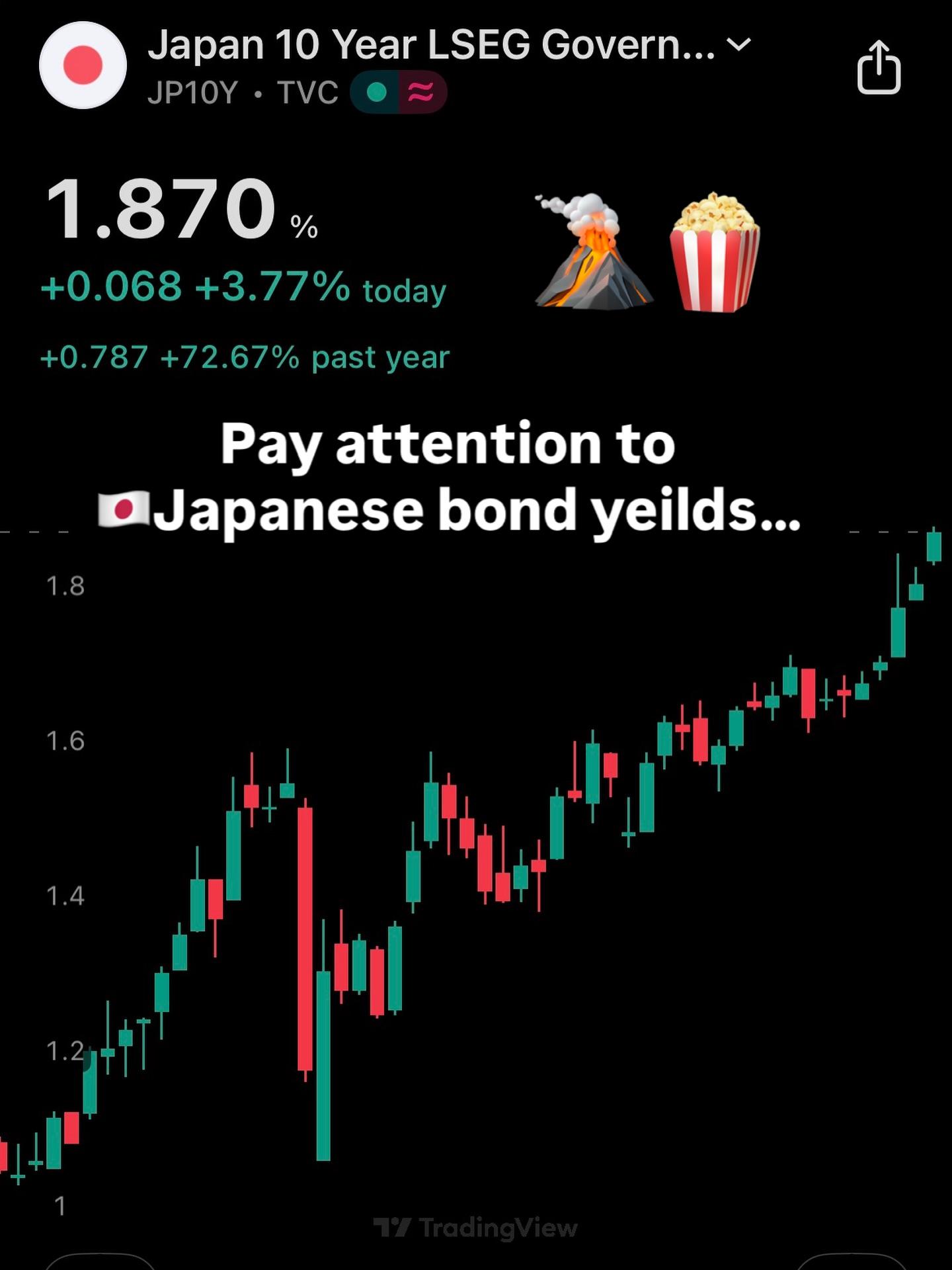
  • Japan is quietly becoming the most important macro story in the world. How long can this go on for?

    The country with the highest debt to GDP ratio on earth is now facing rising yields. The 10 year Japanese government bond is pushing toward 2 percent up more than 70 percent in a year.

    Japan has lived in a world of near zero rates for decades. A world where its central bank could buy its own bonds indefinitely, keep yields pinned down, and create the illusion of stability. That era is ending.

    The Bank of Japan has tried every tool: negative rates, quantitative easing, and now yield curve control. But there’s a simple truth: markets eventually overpower intervention.

    If the BoJ keeps buying bonds to suppress yields, the currency weakens.

    If it stops buying, yields spike and debt service costs explode.

    Japan is stuck between two bad choices.

    The debt burden is over 250 percent of GDP. Higher rates mean higher interest expenses, and that means more borrowing just to pay the interest. The problem becomes exponential.

    If yield curve control breaks, you will see one of two outcomes:

    A currency crisis the yen collapses to absorb the pressure.

    A bond crisis yields blow out and force deleveraging at a scale Japan hasn’t seen in modern history.

    For years investors believed Japan could never break. Zero rates were permanent. Demographics were destiny. Now the market is testing that assumption.

    Japan matters because it’s the endgame experiment:
    What happens when a government prints for decades, monetizes debt, and finally runs out of tools?

    Everyone focuses on the United States. But if Japan snaps first, it will be a global shockwave.

    How does this end? Incredibly slowly… then all at once.

    Liquidity is what everyone is grasping for 😮‍💨

    #japan #macro #markets #bonds #economics #investing #finance #interestrates #debt #yen #bankofjapan #globalmacro #riskmanagement #wealthbuilding #economy #marketanalysis
    Japan is quietly becoming the most important macro story in the world. How long can this go on for? The country with the highest debt to GDP ratio on earth is now facing rising yields. The 10 year Japanese government bond is pushing toward 2 percent up more than 70 percent in a year. Japan has lived in a world of near zero rates for decades. A world where its central bank could buy its own bonds indefinitely, keep yields pinned down, and create the illusion of stability. That era is ending. The Bank of Japan has tried every tool: negative rates, quantitative easing, and now yield curve control. But there’s a simple truth: markets eventually overpower intervention. If the BoJ keeps buying bonds to suppress yields, the currency weakens. If it stops buying, yields spike and debt service costs explode. Japan is stuck between two bad choices. The debt burden is over 250 percent of GDP. Higher rates mean higher interest expenses, and that means more borrowing just to pay the interest. The problem becomes exponential. If yield curve control breaks, you will see one of two outcomes: A currency crisis the yen collapses to absorb the pressure. A bond crisis yields blow out and force deleveraging at a scale Japan hasn’t seen in modern history. For years investors believed Japan could never break. Zero rates were permanent. Demographics were destiny. Now the market is testing that assumption. Japan matters because it’s the endgame experiment: What happens when a government prints for decades, monetizes debt, and finally runs out of tools? Everyone focuses on the United States. But if Japan snaps first, it will be a global shockwave. How does this end? Incredibly slowly… then all at once. Liquidity is what everyone is grasping for 😮‍💨 #japan #macro #markets #bonds #economics #investing #finance #interestrates #debt #yen #bankofjapan #globalmacro #riskmanagement #wealthbuilding #economy #marketanalysis
    ·287 Views ·0 önizleme
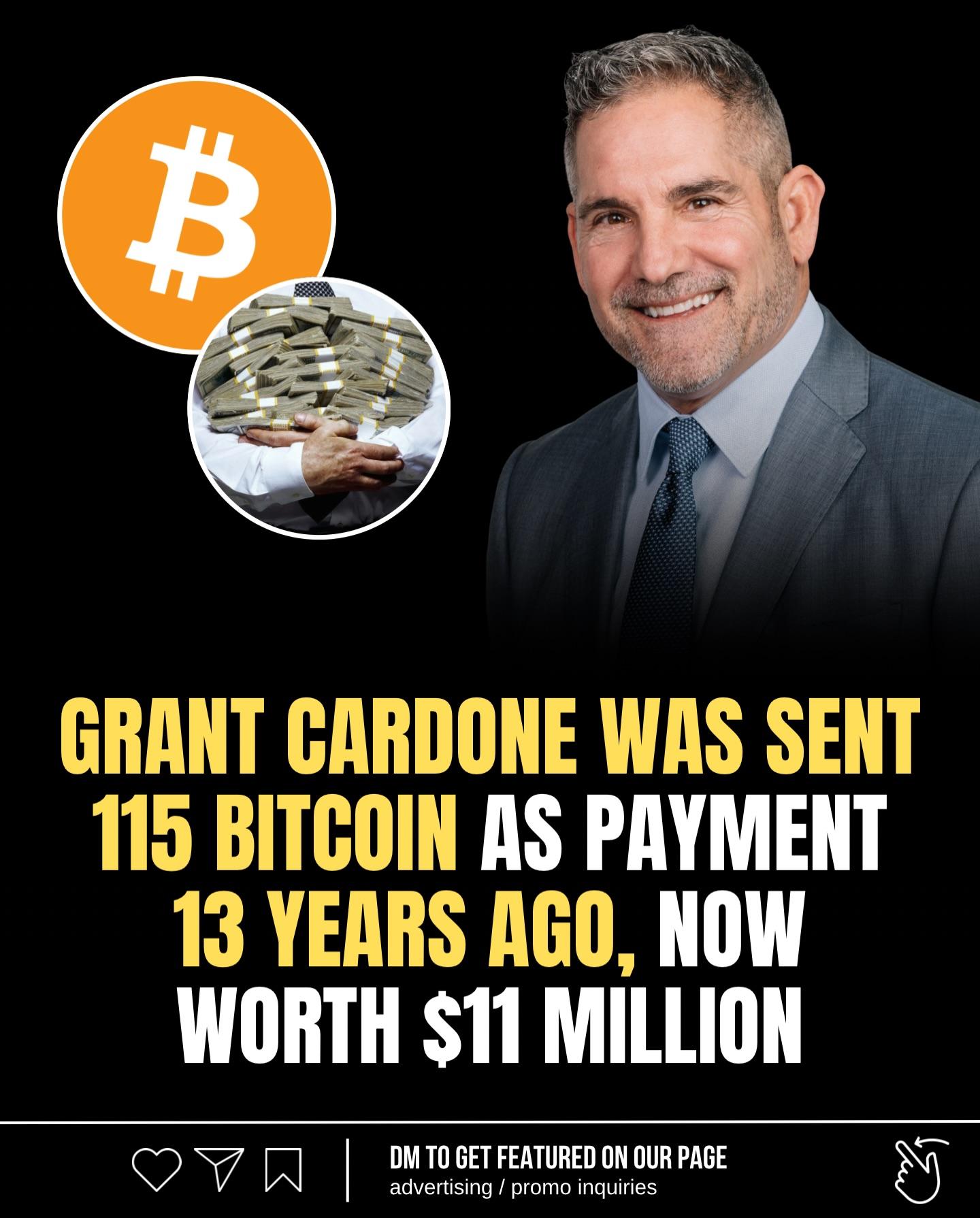
  • Grant Cardone received 115 BTC in 2012 as payment for consulting, a stash now valued at $11 million after holding through cycles.

    The windfall, bought at under $100 each, underscores early adoption rewards as Cardone blends BTC with his $4.9 billion real estate empire.

    Today, he uses crypto gains for property funds, proving steady HODLing’s edge over timing in volatile markets.

    Join the free telegram in our bio for daily crypto news and insights
    Grant Cardone received 115 BTC in 2012 as payment for consulting, a stash now valued at $11 million after holding through cycles. ⠀ The windfall, bought at under $100 each, underscores early adoption rewards as Cardone blends BTC with his $4.9 billion real estate empire. ⠀ Today, he uses crypto gains for property funds, proving steady HODLing’s edge over timing in volatile markets. ⠀ Join the free telegram in our bio for daily crypto news and insights 📲
    ·10 Views ·0 önizleme
  • Grayscale’s XRP Trust ETF, ticker GXRP, officially debuted on the NYSE Arca today, marking the latest step in bringing XRP to institutional investors through a regulated product.

    The launch comes amid heightened market interest in altcoin ETFs, with early trading volumes showing strong demand despite a slight dip in XRP’s spot price to around $2.08.

    This move positions Grayscale as a key player in expanding crypto exposure on traditional markets, potentially paving the way for broader adoption of Ripple’s token in global finance.
    Grayscale’s XRP Trust ETF, ticker GXRP, officially debuted on the NYSE Arca today, marking the latest step in bringing XRP to institutional investors through a regulated product. ⠀ The launch comes amid heightened market interest in altcoin ETFs, with early trading volumes showing strong demand despite a slight dip in XRP’s spot price to around $2.08. ⠀ This move positions Grayscale as a key player in expanding crypto exposure on traditional markets, potentially paving the way for broader adoption of Ripple’s token in global finance.
    ·74 Views ·0 önizleme
  • Tether reported $4.9 billion Q2 2025 profits, averaging $1.63 billion monthly from Treasury yields on $157 billion USDT supply.

    Year-to-date through Q3, earnings topped $10 billion, with $127 billion in Treasuries making it a top U.S. debt holder.

    The model funds AI and renewables, with $6.8 billion excess reserves backing dominance in emerging markets.

    Join the free telegram in our bio for daily crypto news and insights
    Tether reported $4.9 billion Q2 2025 profits, averaging $1.63 billion monthly from Treasury yields on $157 billion USDT supply. ⠀ Year-to-date through Q3, earnings topped $10 billion, with $127 billion in Treasuries making it a top U.S. debt holder. ⠀ The model funds AI and renewables, with $6.8 billion excess reserves backing dominance in emerging markets. ⠀ Join the free telegram in our bio for daily crypto news and insights 📲
    ·91 Views ·0 önizleme
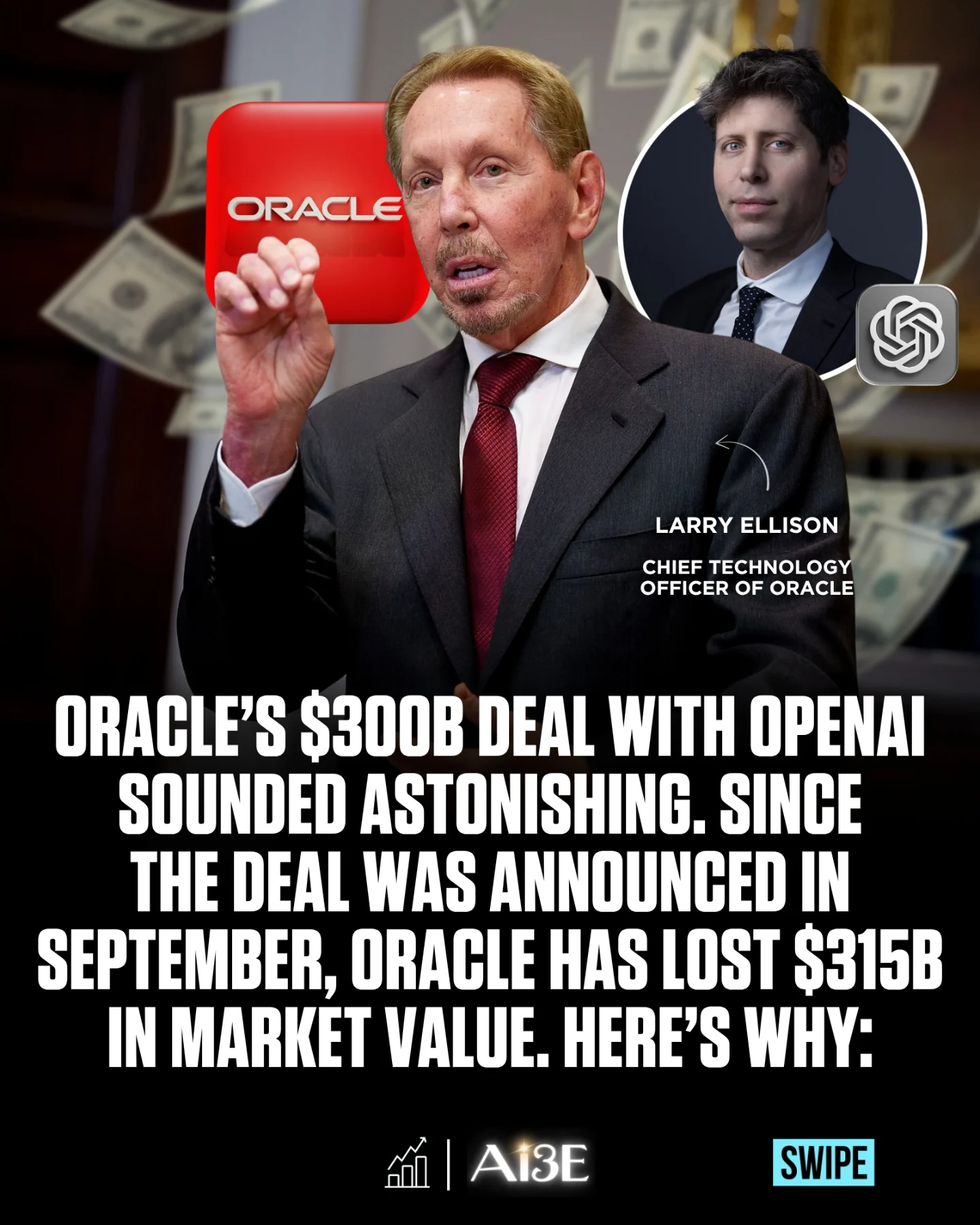
  • Oracle’s massive commitment to become a core infrastructure provider for OpenAI has pushed the company into one of the most aggressive investment cycles in its history, creating a level of financial strain that markets have reacted to sharply.

    The scale of its data center expansion requires years of heavy spending, and the reliance on borrowing adds pressure as interest costs rise and cash generation trails far behind the pace of construction.

    What concerns analysts most is how closely Oracle’s future is now tied to OpenAI’s trajectory, because any slowdown in model demand or commercial momentum would leave Oracle carrying the full weight of its long term financing obligations.

    Investors are questioning whether today’s AI partnerships still deliver the stock market boost they did a year ago, especially as multiple tech giants have seen muted reactions to billion-dollar deals in the current environment.

    Follow us (@artificialintelligenceee) for everything latest from the AI world.

    Source: CNBC
    Oracle’s massive commitment to become a core infrastructure provider for OpenAI has pushed the company into one of the most aggressive investment cycles in its history, creating a level of financial strain that markets have reacted to sharply. The scale of its data center expansion requires years of heavy spending, and the reliance on borrowing adds pressure as interest costs rise and cash generation trails far behind the pace of construction. What concerns analysts most is how closely Oracle’s future is now tied to OpenAI’s trajectory, because any slowdown in model demand or commercial momentum would leave Oracle carrying the full weight of its long term financing obligations. Investors are questioning whether today’s AI partnerships still deliver the stock market boost they did a year ago, especially as multiple tech giants have seen muted reactions to billion-dollar deals in the current environment. Follow us (👉@artificialintelligenceee) for everything latest from the AI world. Source: CNBC
    ·57 Views ·0 önizleme
  • Get ready for the ultimate Rajasthani vibe!
    Pushkar Fair 2025 is back — bigger, brighter, and more vibrant than ever! Experience the magic as the sacred town comes alive with soulful music, colorful markets, cultural shows, and the iconic camel fair.
    Dive into the spirit of Rajasthan, where every corner tells a story and every moment feels like a celebration.

    Join The Trippers this season and make memories that last a lifetime! #KeepExploring #PushkarFair2025
    Get ready for the ultimate Rajasthani vibe! 🌸🐪 Pushkar Fair 2025 is back — bigger, brighter, and more vibrant than ever! Experience the magic as the sacred town comes alive with soulful music, colorful markets, cultural shows, and the iconic camel fair. Dive into the spirit of Rajasthan, where every corner tells a story and every moment feels like a celebration. ✨ Join The Trippers this season and make memories that last a lifetime! 💃 #KeepExploring #PushkarFair2025
    ·154 Views ·0 önizleme
Arama Sonuçları
Techawks - Powered By Pantrade Blockchain https://techawks.com