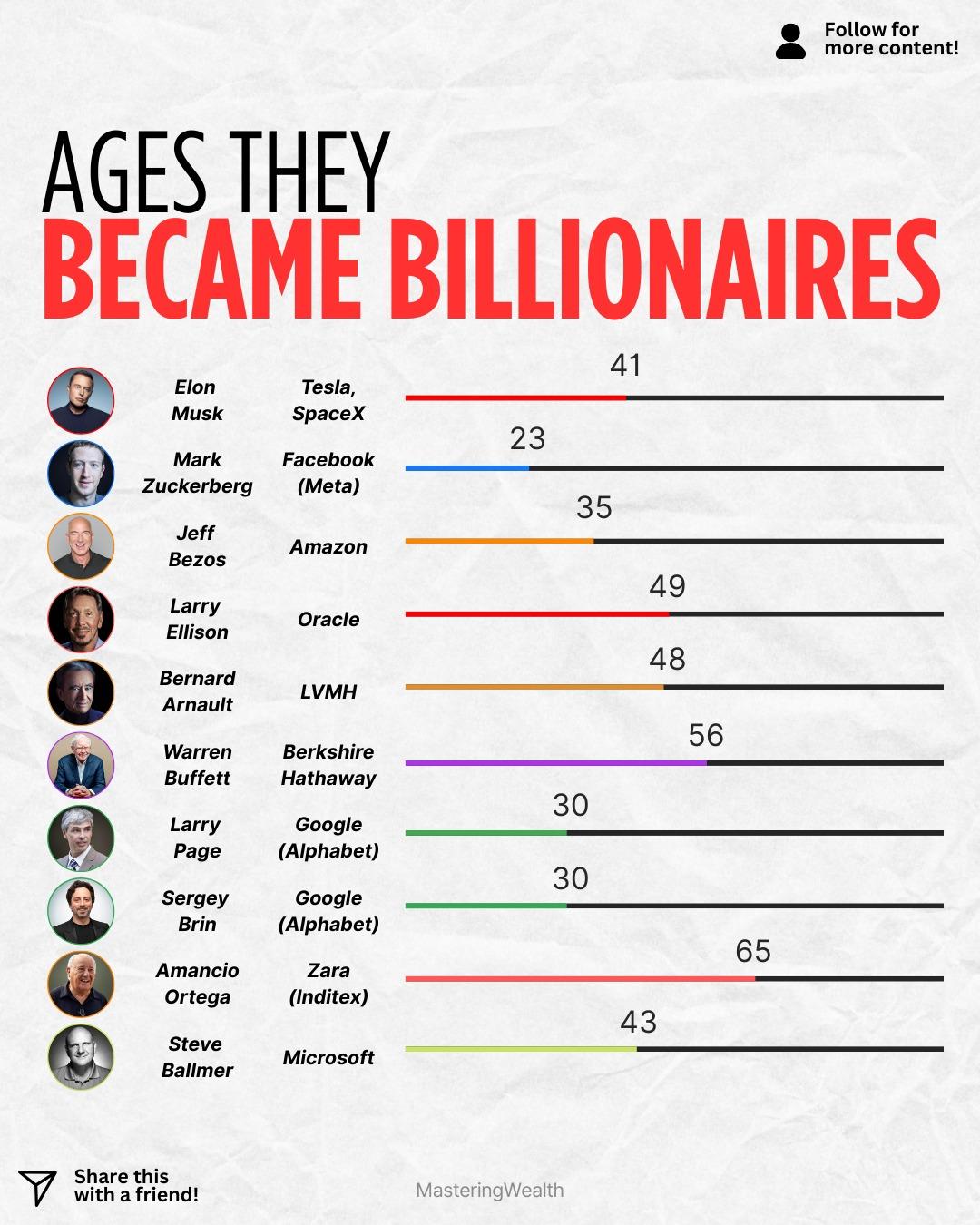
• Success does not have a deadline. The graphic in this post shows the ages at which some of the world’s most famous entrepreneurs became billionaires. What it proves is that wealth can be created early, late, and everywhere in between depending on timing, vision, and perseverance.

    Mark Zuckerberg became a billionaire at age twenty three which makes him one of the youngest on the list. Sergey Brin and Larry Page reached billionaire status at age thirty through Google. Jeff Bezos reached his billionaire milestone at age thirty five after years of building Amazon when online shopping was still a new idea.

    Others reached the milestone later in life. Elon Musk became a billionaire at forty one while scaling Tesla and SpaceX after many failures and setbacks. Bernard Arnault reached billionaire status at forty eight through luxury brands and long term business thinking.

    Some reached the milestone even later. Warren Buffett became a billionaire at age fifty six after decades of consistent investing and value based decisions. Amancio Ortega, the founder of Zara, became a billionaire at age sixty five which shows that massive wealth can still be built late in life.

    This list proves that there is no perfect age for success. What matters is the willingness to start, learn, take risks, and keep going. The timeline looks different for everyone but persistence always pays off somewhere along the journey.

    Comment “Stocks” if you want a link to see my dividend portfolio and learn how long term investing builds wealth step by step.

    If you could choose any path toward financial freedom, would you prefer the fast route with higher risk or the slow and steady route like Warren Buffett?

    For more visuals that break down success stories, wealth building, and investing lessons, follow @MasteringWealth for daily financial content.

    This content is for educational purposes only and is not financial advice. Always research carefully or consult with a licensed professional before making investment decisions.
    Success does not have a deadline. The graphic in this post shows the ages at which some of the world’s most famous entrepreneurs became billionaires. What it proves is that wealth can be created early, late, and everywhere in between depending on timing, vision, and perseverance. Mark Zuckerberg became a billionaire at age twenty three which makes him one of the youngest on the list. Sergey Brin and Larry Page reached billionaire status at age thirty through Google. Jeff Bezos reached his billionaire milestone at age thirty five after years of building Amazon when online shopping was still a new idea. Others reached the milestone later in life. Elon Musk became a billionaire at forty one while scaling Tesla and SpaceX after many failures and setbacks. Bernard Arnault reached billionaire status at forty eight through luxury brands and long term business thinking. Some reached the milestone even later. Warren Buffett became a billionaire at age fifty six after decades of consistent investing and value based decisions. Amancio Ortega, the founder of Zara, became a billionaire at age sixty five which shows that massive wealth can still be built late in life. This list proves that there is no perfect age for success. What matters is the willingness to start, learn, take risks, and keep going. The timeline looks different for everyone but persistence always pays off somewhere along the journey. 💬 Comment “Stocks” if you want a link to see my dividend portfolio and learn how long term investing builds wealth step by step. If you could choose any path toward financial freedom, would you prefer the fast route with higher risk or the slow and steady route like Warren Buffett? For more visuals that break down success stories, wealth building, and investing lessons, follow @MasteringWealth for daily financial content. ⚠️ This content is for educational purposes only and is not financial advice. Always research carefully or consult with a licensed professional before making investment decisions.
    ·297 Просмотры ·0 предпросмотр
  • A major global internet outage temporarily brought the digital world to a halt after a critical Cloudflare failure disrupted major platforms, including X and OpenAI

    The issue began around 11:00 AM UTC when Cloudflare started returning widespread 500 internal server errors, cutting access to millions of websites. Early reports suggest an abnormal surge in traffic triggered a cascading network breakdown that impacted everything from work tools to entertainment services.

    Engineers have since pinpointed the problem, and systems are gradually coming back online as traffic is rerouted. Some users may still notice slowdowns until the fix is fully stabilized worldwide.

    Did you experience any connection issues during the outage today?

    Follow us @FutureTech for more!
    A major global internet outage temporarily brought the digital world to a halt after a critical Cloudflare failure disrupted major platforms, including X and OpenAI ⚠️ The issue began around 11:00 AM UTC when Cloudflare started returning widespread 500 internal server errors, cutting access to millions of websites. Early reports suggest an abnormal surge in traffic triggered a cascading network breakdown that impacted everything from work tools to entertainment services. Engineers have since pinpointed the problem, and systems are gradually coming back online as traffic is rerouted. Some users may still notice slowdowns until the fix is fully stabilized worldwide. Did you experience any connection issues during the outage today? 👉 Follow us @FutureTech for more! 🔌
    ·85 Просмотры ·0 предпросмотр
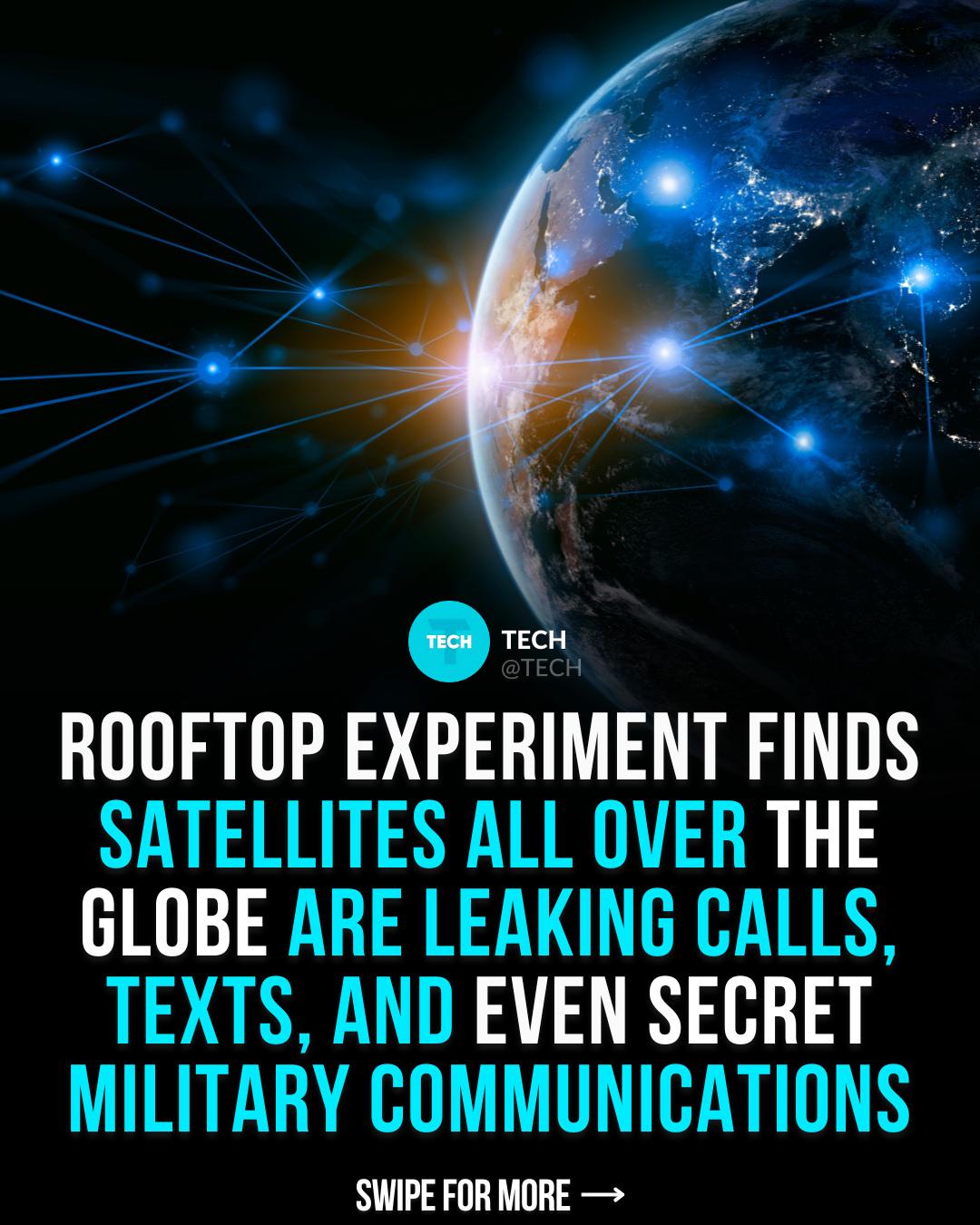
  • In San Diego, a small research team pointed a cheap residential satellite dish at the sky and watched the world's private traffic pour in. Using about $800 of off the shelf hardware and open source tools, they spent three years sweeping geostationary satellites that sit 22,000 miles above Earth and still quietly handle backhaul for airlines, remote cell towers, oil rigs, utilities, and governments. Instead of hardened, encrypted links, they kept finding raw, readable data flowing straight into their receiver.⁠

    From just 39 satellites, only a slice of the global geostationary fleet, the team captured private phone calls, text messages, in flight Wi Fi sessions, and internal corporate and government communications. A nine hour recording of T Mobile satellite backhaul revealed more than 2,700 phone numbers plus one side of users’ calls and SMS. Other links exposed browsing activity from passengers on commercial flights and traffic from rural internet customers whose data had been routed skyward without proper protection.⁠

    The leaks went far beyond consumer chatter. Mexican military and police units were broadcasting mission details, asset locations, and helicopter maintenance logs in the clear. U.S. vessels were transmitting unencrypted internal traffic that revealed ship identities and movements. Operators of critical infrastructure, including a major Latin American electric utility, were sending status reports, customer records, and failure alerts with no end to end encryption at all, creating an easy starting point for espionage or disruption.⁠

    After quiet disclosure, some firms, including T Mobile and AT&T, scrambled to add encryption, while others lagged behind. The researchers are now preparing an open source toolkit, named after their paper “Don’t Look Up,” so regulators, defenders, and operators can see for themselves what is leaking from orbit. The larger lesson is blunt, security by hoping nobody looks up is not security, it is an invitation.⁠

    #satellites #cybersecurity #encryption #infosec #space #communications #datasecurity #privacy #technology
    In San Diego, a small research team pointed a cheap residential satellite dish at the sky and watched the world's private traffic pour in. Using about $800 of off the shelf hardware and open source tools, they spent three years sweeping geostationary satellites that sit 22,000 miles above Earth and still quietly handle backhaul for airlines, remote cell towers, oil rigs, utilities, and governments. Instead of hardened, encrypted links, they kept finding raw, readable data flowing straight into their receiver.⁠ ⁠ From just 39 satellites, only a slice of the global geostationary fleet, the team captured private phone calls, text messages, in flight Wi Fi sessions, and internal corporate and government communications. A nine hour recording of T Mobile satellite backhaul revealed more than 2,700 phone numbers plus one side of users’ calls and SMS. Other links exposed browsing activity from passengers on commercial flights and traffic from rural internet customers whose data had been routed skyward without proper protection.⁠ ⁠ The leaks went far beyond consumer chatter. Mexican military and police units were broadcasting mission details, asset locations, and helicopter maintenance logs in the clear. U.S. vessels were transmitting unencrypted internal traffic that revealed ship identities and movements. Operators of critical infrastructure, including a major Latin American electric utility, were sending status reports, customer records, and failure alerts with no end to end encryption at all, creating an easy starting point for espionage or disruption.⁠ ⁠ After quiet disclosure, some firms, including T Mobile and AT&T, scrambled to add encryption, while others lagged behind. The researchers are now preparing an open source toolkit, named after their paper “Don’t Look Up,” so regulators, defenders, and operators can see for themselves what is leaking from orbit. The larger lesson is blunt, security by hoping nobody looks up is not security, it is an invitation.⁠ ⁠ #satellites #cybersecurity #encryption #infosec #space #communications #datasecurity #privacy #technology
    ·280 Просмотры ·0 предпросмотр
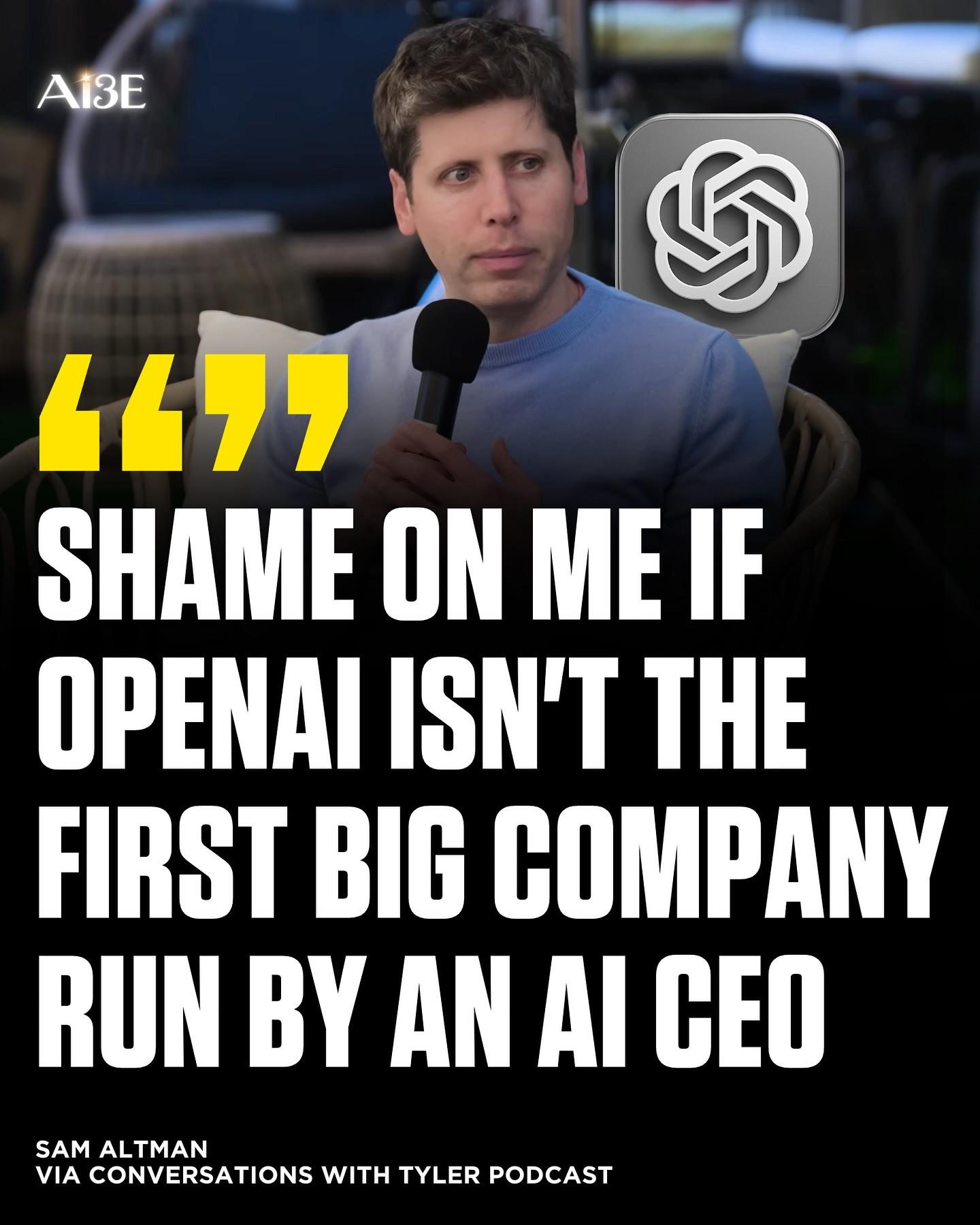
  • Sam Altman says it would be his failure if OpenAI doesn’t become the first major company run entirely by an AI CEO.

    Speaking on the Conversations with Tyler podcast, he explained that OpenAI treats this as a design challenge, testing how an AI could outperform him in running the company.

    Altman said the goal is to identify roadblocks, redesign processes, and let AI lead faster, smarter decisions.

    It’s a glimpse into a future where leadership itself could be automated, where an artificial mind might one day oversee the people who created it.

    Follow us (@artificialintelligenceee) for everything latest from the AI world.

    Source: Conversations with Tyler podcast
    Sam Altman says it would be his failure if OpenAI doesn’t become the first major company run entirely by an AI CEO. 🤖💬 Speaking on the Conversations with Tyler podcast, he explained that OpenAI treats this as a design challenge, testing how an AI could outperform him in running the company. Altman said the goal is to identify roadblocks, redesign processes, and let AI lead faster, smarter decisions. It’s a glimpse into a future where leadership itself could be automated, where an artificial mind might one day oversee the people who created it. Follow us (👉@artificialintelligenceee) for everything latest from the AI world. Source: Conversations with Tyler podcast
    ·60 Просмотры ·0 предпросмотр
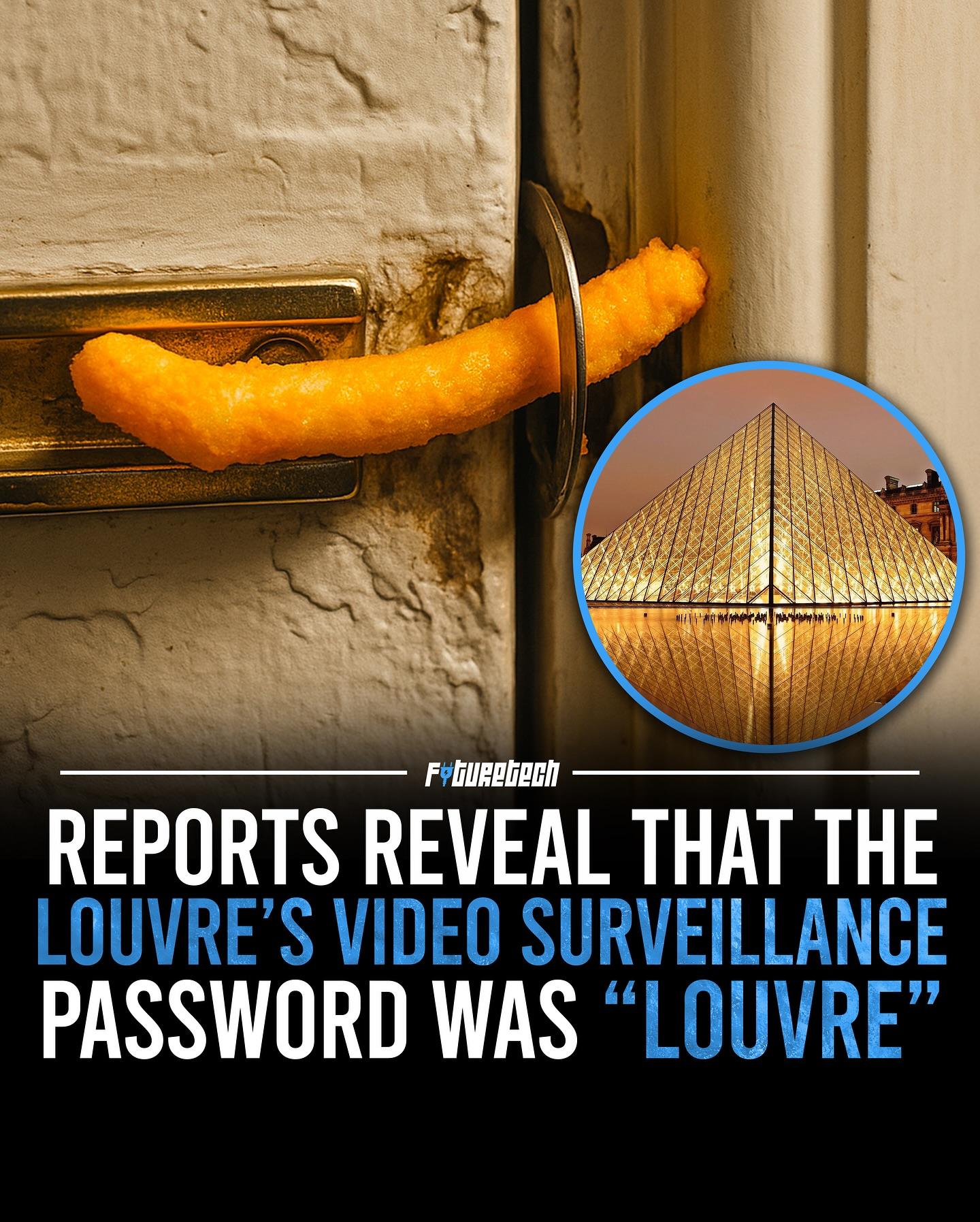
  • Reports have uncovered that the Louvre’s video surveillance system had a shockingly simple password, “Louvre,” at the time of last month’s $102 million jewel heist.

    The robbery, executed in just seven minutes, exposed glaring security lapses, from limited camera coverage to weak perimeter defenses, largely blamed on years of underfunding.

    Louvre director Laurence des Cars called it a “terrible failure” and promised swift upgrades to prevent a repeat. Four people – a taxi driver, a delivery worker, a garbage collector, and his partner – have been charged, but the stolen jewels are still missing. Authorities believe at least one accomplice remains on the run.

    Follow us @FutureTech for more!
    Reports have uncovered that the Louvre’s video surveillance system had a shockingly simple password, “Louvre,” at the time of last month’s $102 million jewel heist. The robbery, executed in just seven minutes, exposed glaring security lapses, from limited camera coverage to weak perimeter defenses, largely blamed on years of underfunding. Louvre director Laurence des Cars called it a “terrible failure” and promised swift upgrades to prevent a repeat. Four people – a taxi driver, a delivery worker, a garbage collector, and his partner – have been charged, but the stolen jewels are still missing. Authorities believe at least one accomplice remains on the run. Follow us @FutureTech for more! 🔌
    ·94 Просмотры ·0 предпросмотр
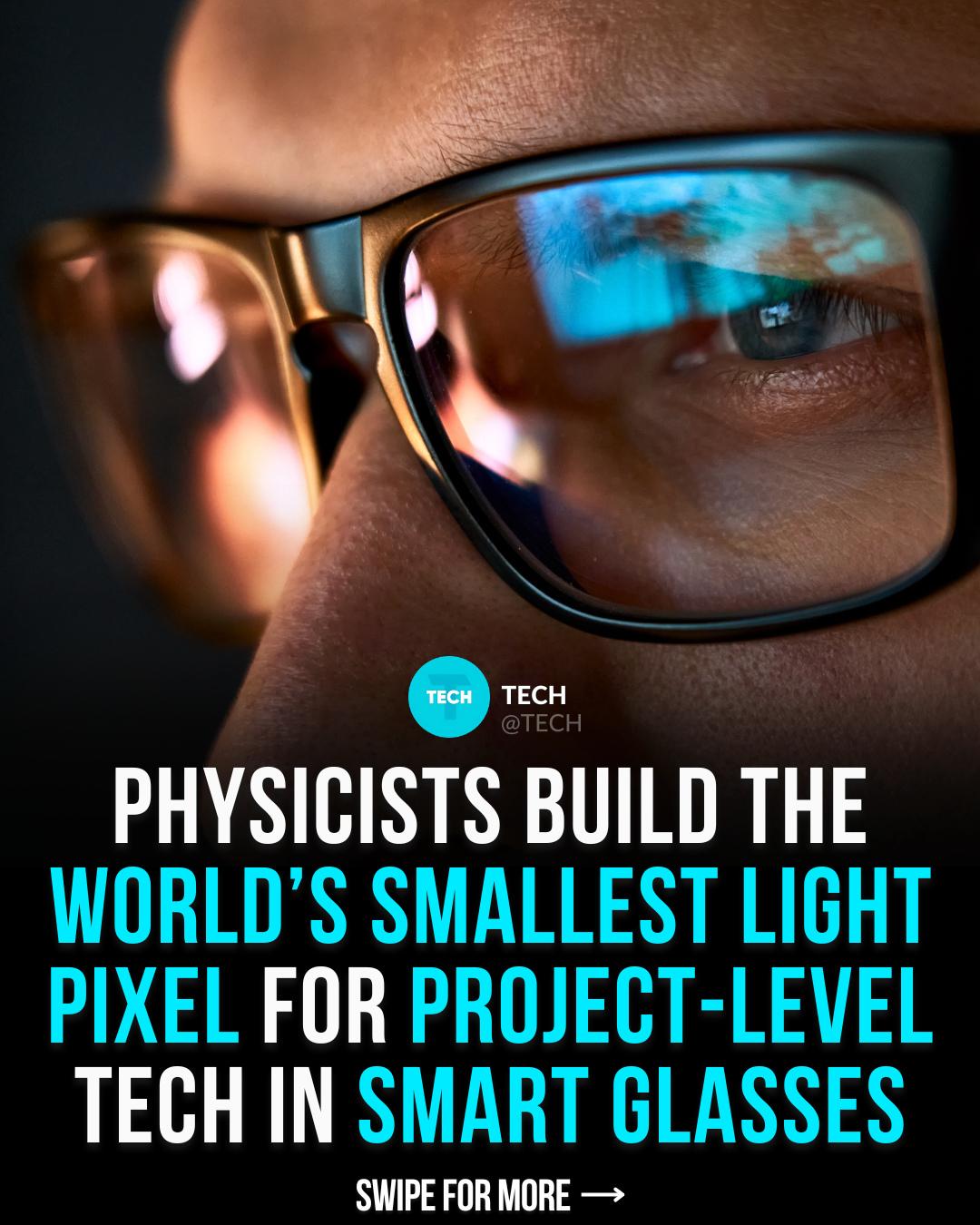
  • Physicists in Würzburg just built a pixel so small it makes today’s “smart glasses” hardware look clunky. The team engineered a working light-emitting pixel only 300 by 300 nanometers across, far below the width of a human hair and smaller than the wavelength of visible light. Despite that scale, the nano-pixel shines as brightly as a standard OLED pixel that’s roughly 5,000 nanometers wide, meaning you don’t lose brightness by shrinking it. That alone has been a brick wall for wearable displays until now.⁠

    Here’s why this matters. A full 1080p display — 1920 by 1080 individual pixels — could theoretically fit on an area about one square millimeter. In plain English, you could hide an entire high-resolution projector in the arm of a pair of glasses, then bounce the image into the lens and into your eye. That’s the difference between bulky AR headsets and normal-looking eyewear that quietly overlays navigation, captions, biometrics, or instructions.⁠

    The device is still an OLED, which means each pixel makes its own light when electrons and holes recombine in an ultrathin organic stack sandwiched between electrodes. OLEDs are power efficient, show deep blacks, and don’t need backlights. The problem is that when you try to scale them down this far, current crowds at sharp corners, gold atoms migrate, and the pixel burns itself out.⁠

    The Würzburg group solved that failure mode with antenna engineering. They built a tiny gold optical antenna, then added a custom insulating layer that exposes only a 200-nanometer circular opening in the center. That geometry forces the current to inject where it’s safe instead of at the corners, prevents filament growth, and keeps the pixel electrically stable. Early test pixels stayed alive for two weeks in ambient air, which is impressive for something this delicate.⁠

    Efficiency is about one percent today and the first demo color is orange. The researchers say they’re now pushing for higher efficiency and full RGB (red, green, blue). If they get that, you’re looking at projector-class microdisplays that disappear into everyday objects: eyeglass frames, medical wearables, maybe one day even contact lenses.
    Physicists in Würzburg just built a pixel so small it makes today’s “smart glasses” hardware look clunky. The team engineered a working light-emitting pixel only 300 by 300 nanometers across, far below the width of a human hair and smaller than the wavelength of visible light. Despite that scale, the nano-pixel shines as brightly as a standard OLED pixel that’s roughly 5,000 nanometers wide, meaning you don’t lose brightness by shrinking it. That alone has been a brick wall for wearable displays until now.⁠ ⁠ Here’s why this matters. A full 1080p display — 1920 by 1080 individual pixels — could theoretically fit on an area about one square millimeter. In plain English, you could hide an entire high-resolution projector in the arm of a pair of glasses, then bounce the image into the lens and into your eye. That’s the difference between bulky AR headsets and normal-looking eyewear that quietly overlays navigation, captions, biometrics, or instructions.⁠ ⁠ The device is still an OLED, which means each pixel makes its own light when electrons and holes recombine in an ultrathin organic stack sandwiched between electrodes. OLEDs are power efficient, show deep blacks, and don’t need backlights. The problem is that when you try to scale them down this far, current crowds at sharp corners, gold atoms migrate, and the pixel burns itself out.⁠ ⁠ The Würzburg group solved that failure mode with antenna engineering. They built a tiny gold optical antenna, then added a custom insulating layer that exposes only a 200-nanometer circular opening in the center. That geometry forces the current to inject where it’s safe instead of at the corners, prevents filament growth, and keeps the pixel electrically stable. Early test pixels stayed alive for two weeks in ambient air, which is impressive for something this delicate.⁠ ⁠ Efficiency is about one percent today and the first demo color is orange. The researchers say they’re now pushing for higher efficiency and full RGB (red, green, blue). If they get that, you’re looking at projector-class microdisplays that disappear into everyday objects: eyeglass frames, medical wearables, maybe one day even contact lenses.
    ·155 Просмотры ·0 предпросмотр
  • Recent UN General Assemblies have heard many speeches lamenting the UN’s failure to fulfill its most vital purpose, to ensure peace and security for all.

    Read the full article by Medea Benjamin, Nicolas J.S. Davies of @codepinkalert on our website.
    Recent UN General Assemblies have heard many speeches lamenting the UN’s failure to fulfill its most vital purpose, to ensure peace and security for all. 📲 Read the full article by Medea Benjamin, Nicolas J.S. Davies of @codepinkalert on our website.
    ·140 Просмотры ·0 предпросмотр
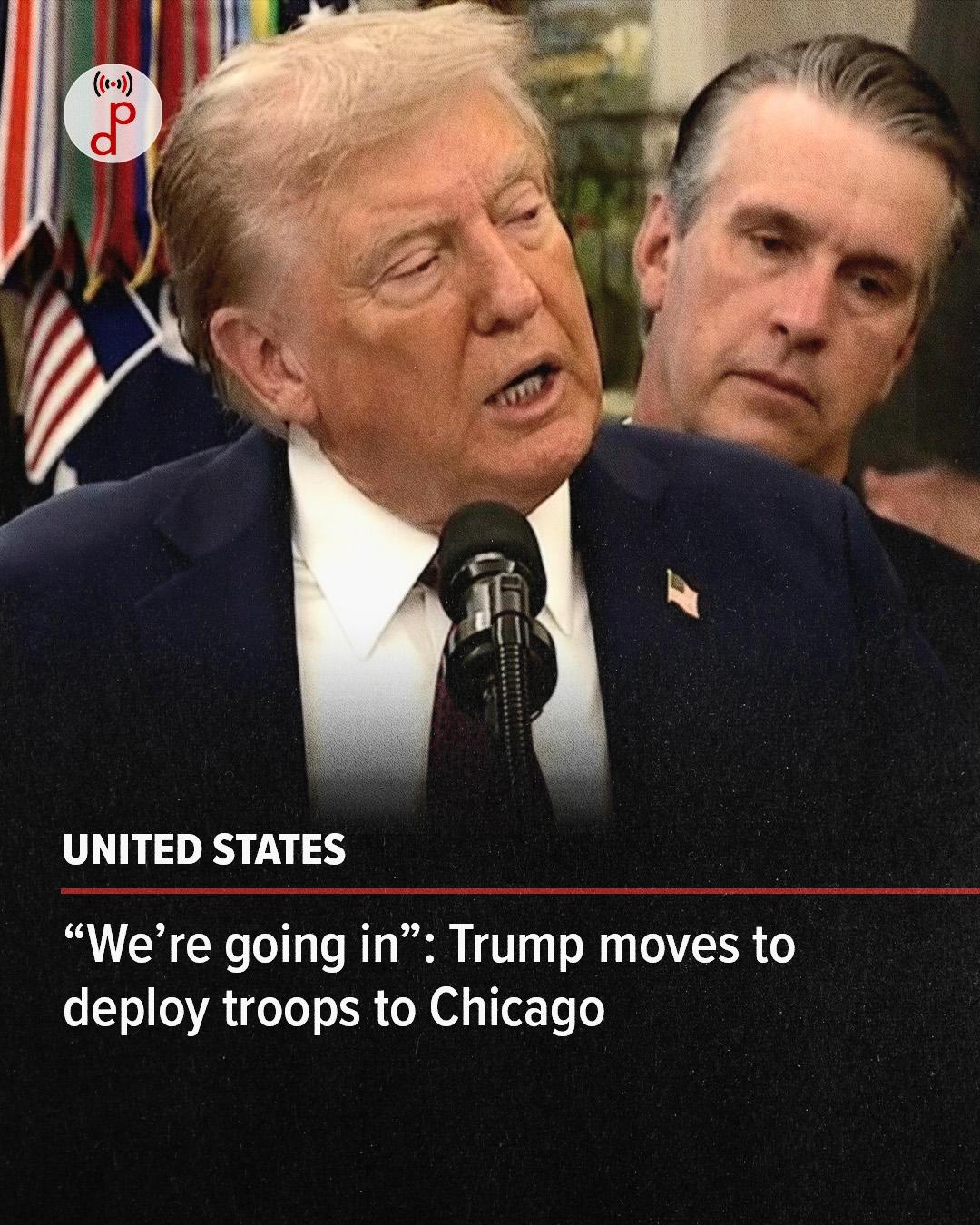
  • After weeks of threats, US President Donald Trump officially announced that he is sending federal forces to the US city of Chicago. On September 2, Trump declared his intent to send federal troops, including National Guard personnel, to Chicago to address rising crime, stating: “We’re going in. I didn’t say when, but we’re going in.”

    After Trump’s announcement about the midwestern city, Chicago’s Mayor Brandon Johnson, a progressive Democrat, swiftly responded: “He just wants his own secret police force that will do publicity stunts whenever his poll numbers are sinking, whenever his jobs report shows a stagnating economy, whenever he needs another distraction from his failures,” Johnson told reporters.

    “Chicago is doing what works without Trump’s invasion of our city,” wrote the Chicago Teachers Union on X. “We reject occupation. We welcome investments in public education, youth employment, and affordable housing.”

    Read the full article on our website.
    After weeks of threats, US President Donald Trump officially announced that he is sending federal forces to the US city of Chicago. On September 2, Trump declared his intent to send federal troops, including National Guard personnel, to Chicago to address rising crime, stating: “We’re going in. I didn’t say when, but we’re going in.” After Trump’s announcement about the midwestern city, Chicago’s Mayor Brandon Johnson, a progressive Democrat, swiftly responded: “He just wants his own secret police force that will do publicity stunts whenever his poll numbers are sinking, whenever his jobs report shows a stagnating economy, whenever he needs another distraction from his failures,” Johnson told reporters. “Chicago is doing what works without Trump’s invasion of our city,” wrote the Chicago Teachers Union on X. “We reject occupation. We welcome investments in public education, youth employment, and affordable housing.” 📲 Read the full article on our website.
    ·383 Просмотры ·0 предпросмотр
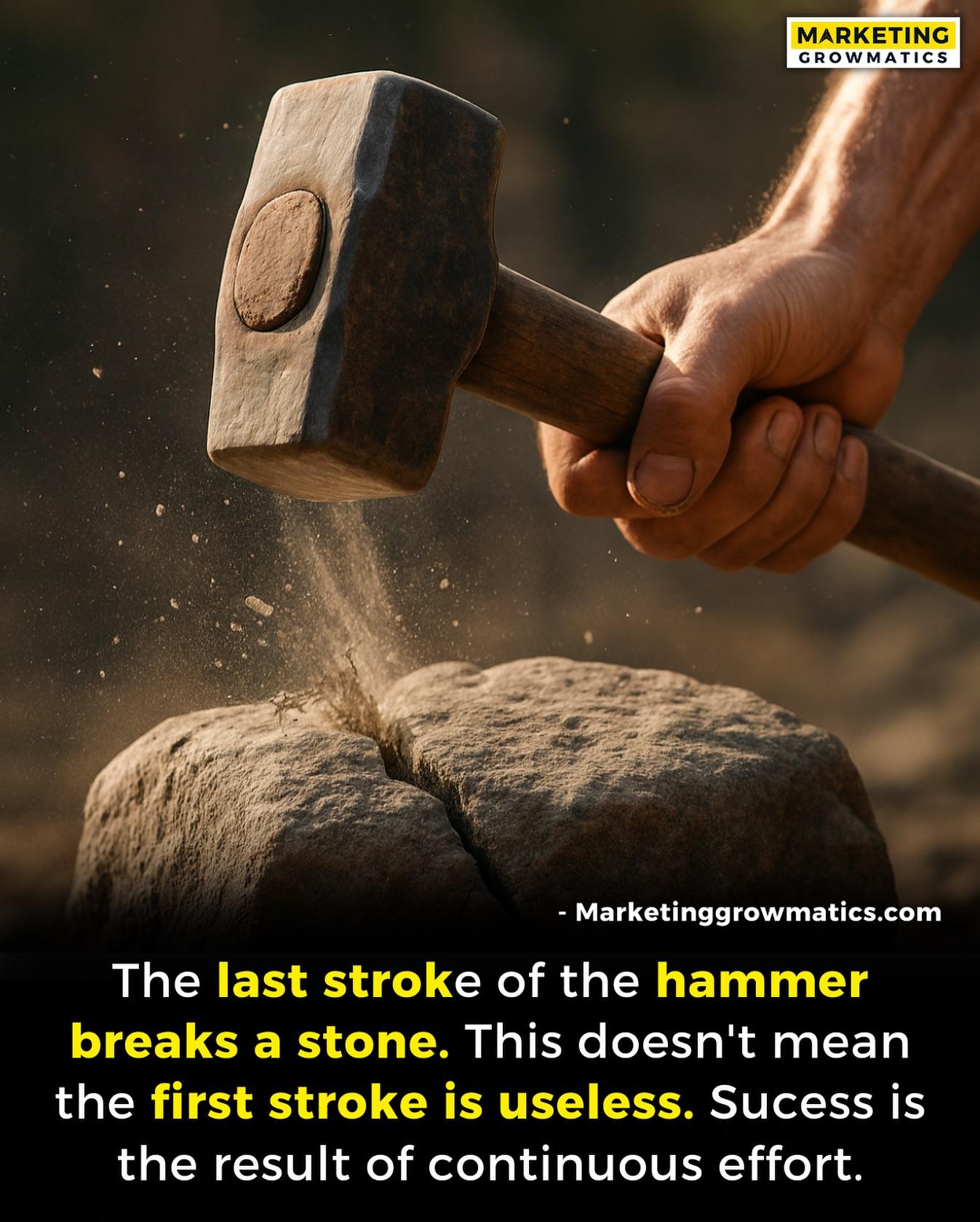
  • The last stroke of the hammer breaks the stone —
    But it’s the hundreds of strokes before that make it possible.

    Building a startup is the same.
    Every late night, rejection, and failure counts.
    Success isn’t sudden — it’s the result of consistent effort.

    Save this post for when you feel like giving up
    Share this with a founder friend who needs motivation
    Follow @marketing.growmatics for more startup wisdom

    #StartupLife #EntrepreneurMindset #Entrepreneurship #SuccessMindset #KeepGoing #MotivationDaily #HardWorkPaysOff
    The last stroke of the hammer breaks the stone — But it’s the hundreds of strokes before that make it possible. Building a startup is the same. Every late night, rejection, and failure counts. Success isn’t sudden — it’s the result of consistent effort. 👉 Save this post for when you feel like giving up 👉 Share this with a founder friend who needs motivation 👉 Follow @marketing.growmatics for more startup wisdom #StartupLife #EntrepreneurMindset #Entrepreneurship #SuccessMindset #KeepGoing #MotivationDaily #HardWorkPaysOff
    ·443 Просмотры ·0 предпросмотр
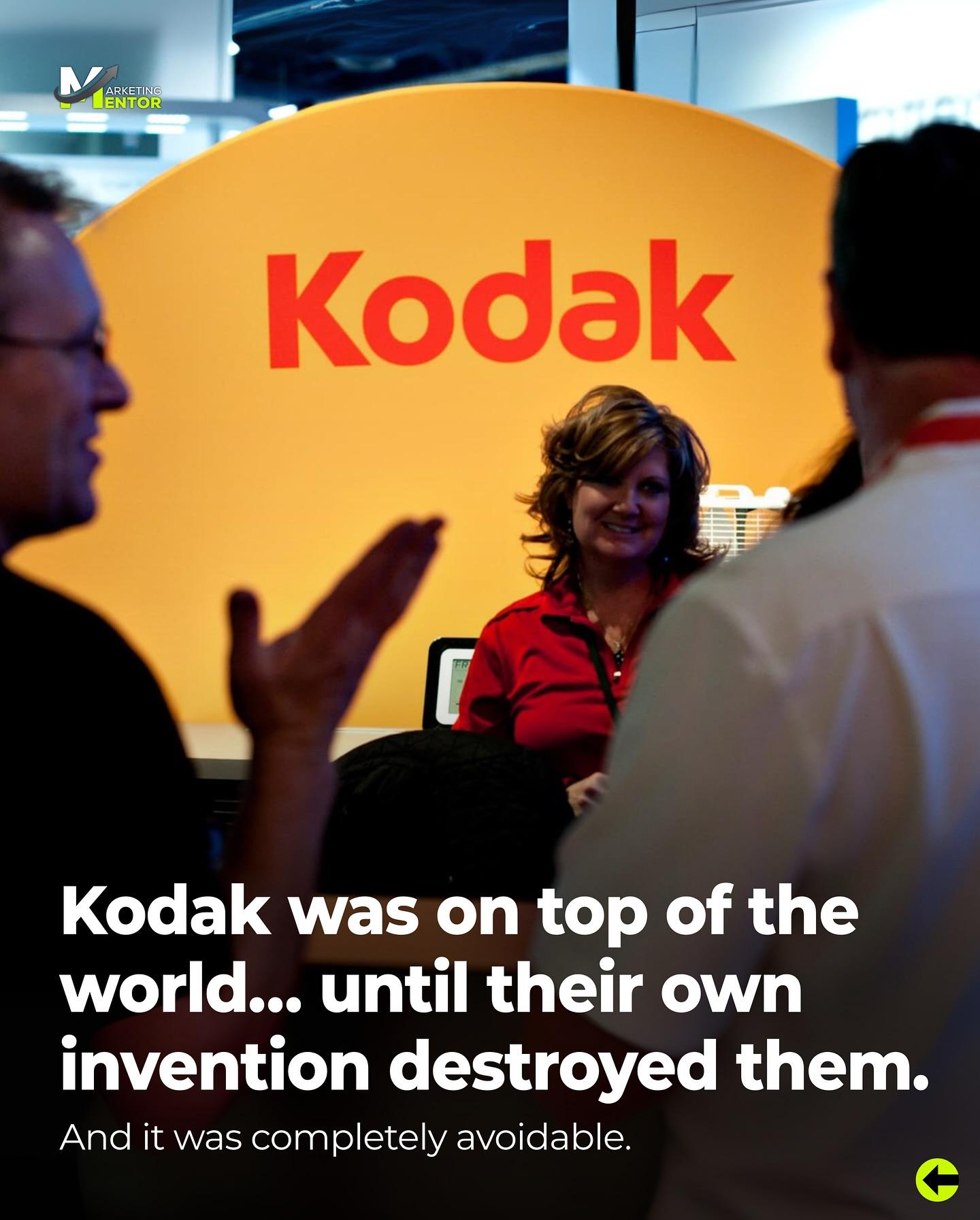
  • Kodak’s failure is one of the most cited examples of how refusing to adapt to change can destroy even the most dominant companies. Despite inventing the first digital camera in 1975, Kodak chose to suppress the innovation, fearing it would disrupt its highly profitable film business. Instead of embracing the future, the company focused on protecting its legacy model—selling physical film and processing equipment—while digital photography quietly gained momentum across the globe.

    As competitors like Canon, Sony, and Nikon capitalized on digital technology, Kodak found itself rapidly losing market share. By the time it pivoted to digital, it was too late—the industry had moved on. Kodak declared bankruptcy in 2012. The lesson from Kodak’s fall is clear: innovation is not just about invention, it’s about the courage to disrupt your own success before someone else does.

    #MarketingMentor #Business #Kodak
    Kodak’s failure is one of the most cited examples of how refusing to adapt to change can destroy even the most dominant companies. Despite inventing the first digital camera in 1975, Kodak chose to suppress the innovation, fearing it would disrupt its highly profitable film business. Instead of embracing the future, the company focused on protecting its legacy model—selling physical film and processing equipment—while digital photography quietly gained momentum across the globe. As competitors like Canon, Sony, and Nikon capitalized on digital technology, Kodak found itself rapidly losing market share. By the time it pivoted to digital, it was too late—the industry had moved on. Kodak declared bankruptcy in 2012. The lesson from Kodak’s fall is clear: innovation is not just about invention, it’s about the courage to disrupt your own success before someone else does. #MarketingMentor #Business #Kodak
    ·182 Просмотры ·0 предпросмотр
Расширенные страницы
Techawks - Powered By Pantrade Blockchain https://techawks.com