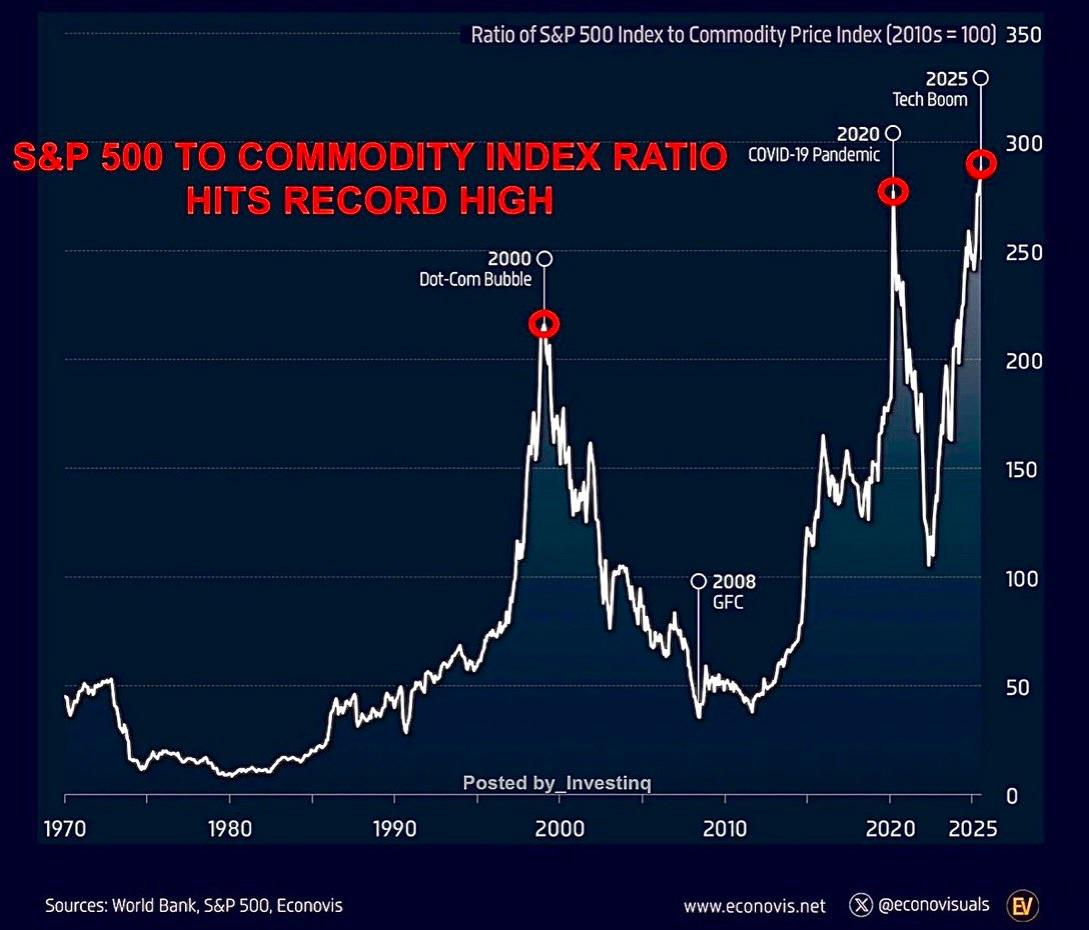
• The S&P 500 to Commodity Index ratio has just hit an all-time high surpassing even the peaks of the Dot-Com Bubble and the 2020 surge.

    Every spike in this chart tells a story:
    2000 was tech euphoria.
    2008 was the global financial crisis aftermath.
    2020 was extremes.
    And now, 2025 another tech-fuelled boom pushing equities far ahead of real assets.

    Whenever this ratio stretches too far, history suggests a rebalancing between financial assets and hard commodities isn’t far behind.

    #SP500 #Commodities #Markets #Investing #Finance #StockMarket #Macro #Economy #Wealth #FinancialMarkets #Inflation #Assets
    The S&P 500 to Commodity Index ratio has just hit an all-time high surpassing even the peaks of the Dot-Com Bubble and the 2020 surge. Every spike in this chart tells a story: 2000 was tech euphoria. 2008 was the global financial crisis aftermath. 2020 was extremes. And now, 2025 another tech-fuelled boom pushing equities far ahead of real assets. Whenever this ratio stretches too far, history suggests a rebalancing between financial assets and hard commodities isn’t far behind. #SP500 #Commodities #Markets #Investing #Finance #StockMarket #Macro #Economy #Wealth #FinancialMarkets #Inflation #Assets
    ·338 Views ·0 Reviews
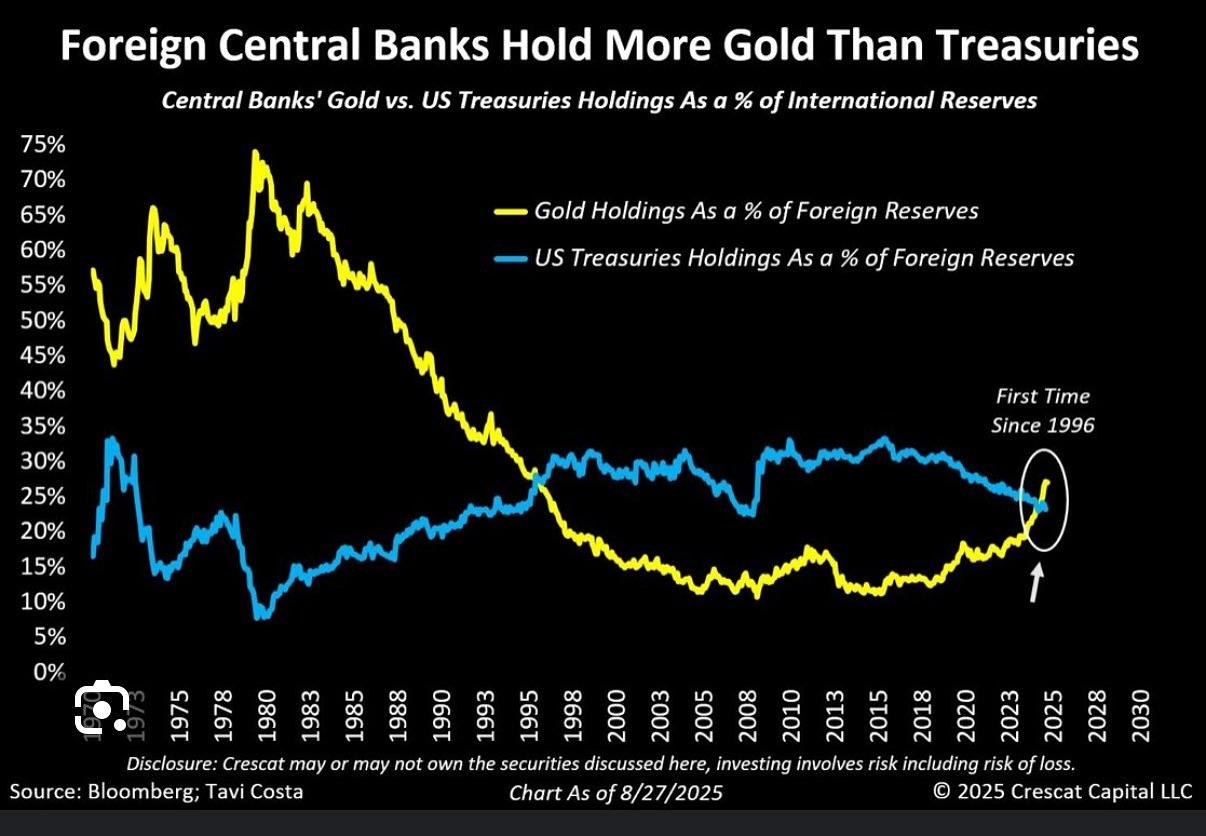
  • For the first time since 1996, foreign central banks now hold more gold than U.S. Treasuries as a share of their international reserves. This shift marks a profound change in global reserve management, reflecting waning confidence in U.S. debt and a renewed preference for hard assets.

    Gold’s appeal as a neutral reserve asset has been rising, while elevated U.S. debt levels, persistent deficits, and geopolitical tensions have put pressure on Treasuries. Central banks are signaling diversification away from dollar-denominated debt and into assets perceived as safer stores of value.

    This is not just a technical move it’s a structural shift in how nations are positioning themselves for the long term.

    What does this mean for bonds? Probably nothing…

    #Gold #USTreasuries #CentralBanks #GlobalEconomy #MacroTrends #MonetaryPolicy #DeDollarization #Commodities #InvestingWisdom #FinancialMarkets
    For the first time since 1996, foreign central banks now hold more gold than U.S. Treasuries as a share of their international reserves. This shift marks a profound change in global reserve management, reflecting waning confidence in U.S. debt and a renewed preference for hard assets. Gold’s appeal as a neutral reserve asset has been rising, while elevated U.S. debt levels, persistent deficits, and geopolitical tensions have put pressure on Treasuries. Central banks are signaling diversification away from dollar-denominated debt and into assets perceived as safer stores of value. This is not just a technical move it’s a structural shift in how nations are positioning themselves for the long term. What does this mean for bonds? Probably nothing… #Gold #USTreasuries #CentralBanks #GlobalEconomy #MacroTrends #MonetaryPolicy #DeDollarization #Commodities #InvestingWisdom #FinancialMarkets
    ·548 Views ·0 Reviews
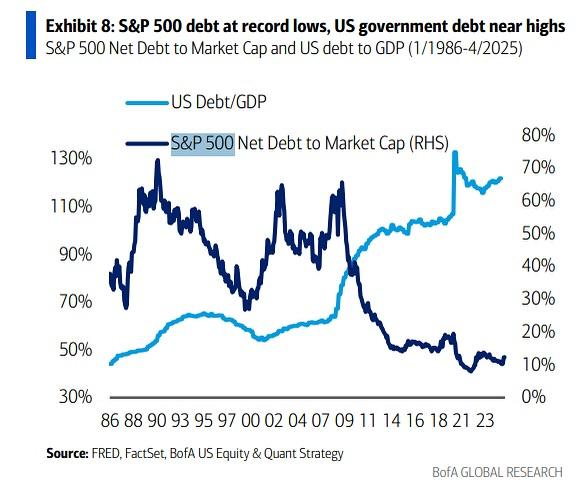
  • This chart illustrates a striking divergence between private and public sector debt. On one hand, S&P 500 companies have significantly deleveraged, with net debt to market cap falling to record lows just above 10% highlighting robust corporate balance sheets, rising equity values, and prudent financial management. On the other, U.S. government debt as a percentage of GDP has surged to around 120%, hovering near all-time highs.

    This contrast underscores a critical macroeconomic shift: while the private sector is staying lean, the public sector is absorbing more fiscal burden. This may reflect the post-COVID fiscal stimulus response, continued deficit spending, and growing entitlement obligations. For investors, this bifurcation could mean increased resilience in corporate earnings, even as sovereign debt concerns persist.

    Watch for potential implications: if interest rates stay elevated or begin to rise again, government refinancing costs could become problematic while corporates, having already deleveraged, might be less exposed. It also strengthens the case for equities over bonds in a debt-laden macro environment.

    #MacroTrends #macroeconomics #hedgefunds #DebtCycle #SP500 #USDebt #CorporateFinance #PublicDebt #EconomicPolicy #InvestmentStrategy #FinancialMarkets #MarketOutlook
    This chart illustrates a striking divergence between private and public sector debt. On one hand, S&P 500 companies have significantly deleveraged, with net debt to market cap falling to record lows just above 10% highlighting robust corporate balance sheets, rising equity values, and prudent financial management. On the other, U.S. government debt as a percentage of GDP has surged to around 120%, hovering near all-time highs. This contrast underscores a critical macroeconomic shift: while the private sector is staying lean, the public sector is absorbing more fiscal burden. This may reflect the post-COVID fiscal stimulus response, continued deficit spending, and growing entitlement obligations. For investors, this bifurcation could mean increased resilience in corporate earnings, even as sovereign debt concerns persist. Watch for potential implications: if interest rates stay elevated or begin to rise again, government refinancing costs could become problematic while corporates, having already deleveraged, might be less exposed. It also strengthens the case for equities over bonds in a debt-laden macro environment. #MacroTrends #macroeconomics #hedgefunds #DebtCycle #SP500 #USDebt #CorporateFinance #PublicDebt #EconomicPolicy #InvestmentStrategy #FinancialMarkets #MarketOutlook
    ·581 Views ·0 Reviews
Techawks - Powered By Pantrade Blockchain https://techawks.com