• Most investors lose money because they don’t understand these truths.

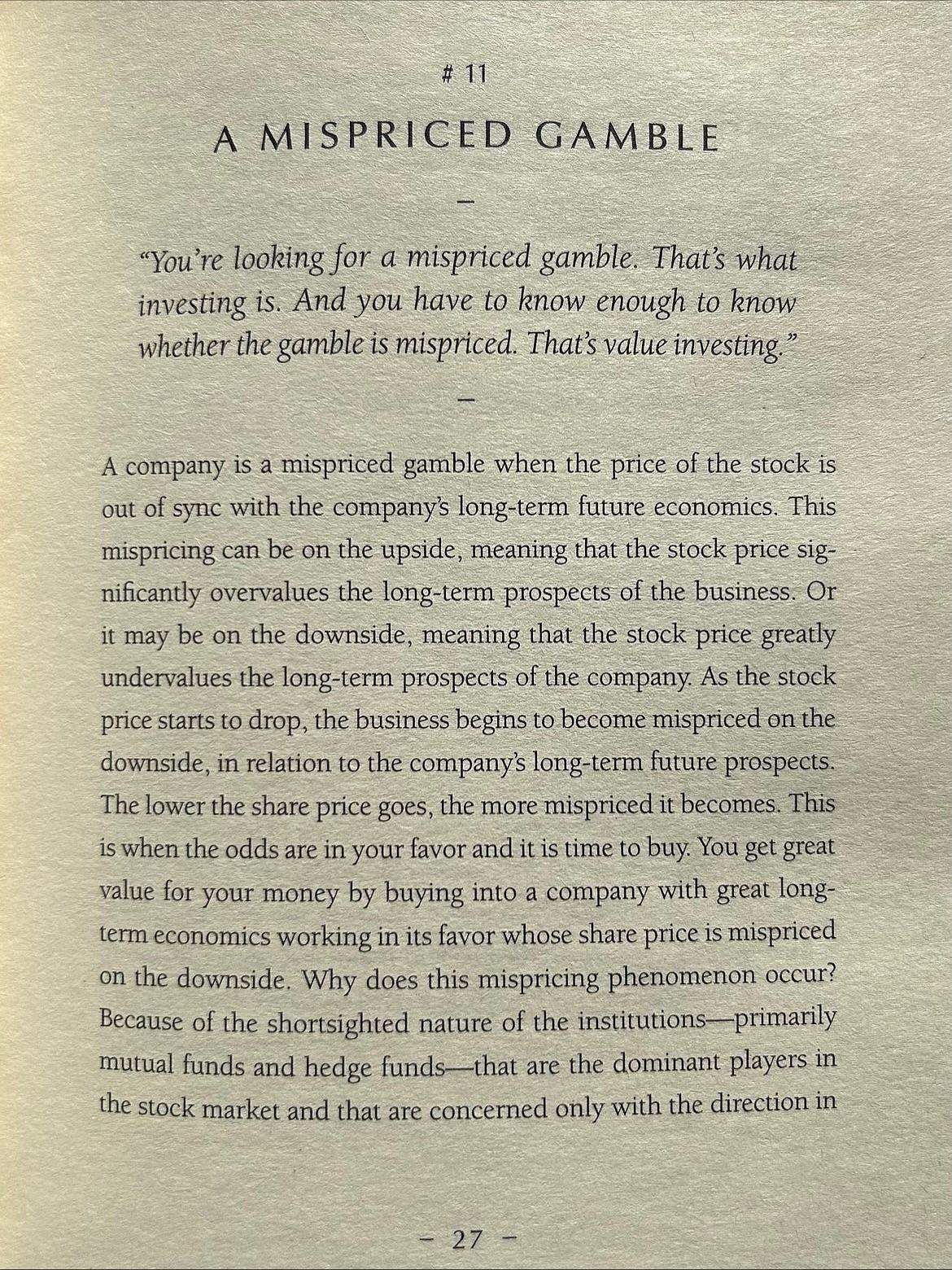
    Investing isn’t about predicting the future it’s about pricing risk correctly.
    A mispriced gamble can make you rich.
    An overpriced one can ruin you.

    Diversification protects mediocrity.
    You can’t outperform the market by copying it.

    EBITDA? As Charlie said, it often means “bullsh*t earnings.”
    Real investors look at cash flow, not accounting tricks.

    Intelligence helps.
    But avoiding stupidity helps more.

    And above all waiting is the hardest, most profitable skill in finance.

    If you can sit still when everyone else is panicking or chasing hype,
    you’ve already won.

    #CharlieMunger #ValueInvesting #WarrenBuffett #InvestingWisdom #FinancialEducation #StockMarket #FinanceMindset #InvestmentStrategy #PatiencePays #MarketPsychology
    Most investors lose money because they don’t understand these truths. 💭 Investing isn’t about predicting the future it’s about pricing risk correctly. A mispriced gamble can make you rich. An overpriced one can ruin you. 📉 Diversification protects mediocrity. You can’t outperform the market by copying it. 📊 EBITDA? As Charlie said, it often means “bullsh*t earnings.” Real investors look at cash flow, not accounting tricks. 💡 Intelligence helps. But avoiding stupidity helps more. ⏳ And above all waiting is the hardest, most profitable skill in finance. If you can sit still when everyone else is panicking or chasing hype, you’ve already won. #CharlieMunger #ValueInvesting #WarrenBuffett #InvestingWisdom #FinancialEducation #StockMarket #FinanceMindset #InvestmentStrategy #PatiencePays #MarketPsychology
    ·190 Views ·0 Vista previa
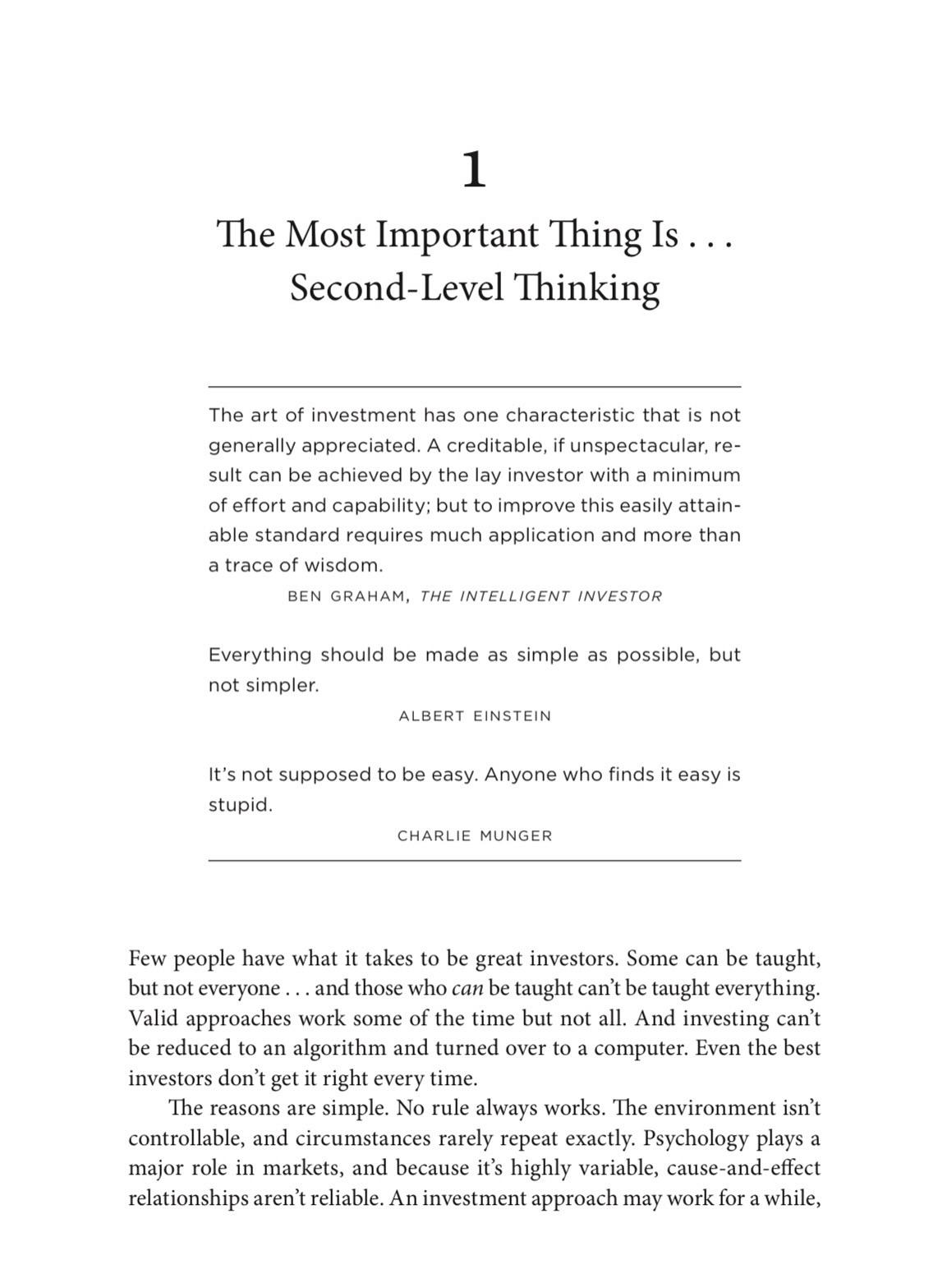
  • Second level thinking separates good investors from great ones. First level thinkers look for obvious signals like “the company is good, let’s buy.” But second level thinkers go deeper, asking what the consensus believes, why it might be wrong, and how reality could play out differently. It is about thinking beyond the surface, weighing probabilities, anticipating market psychology, and positioning yourself where others are not looking.

    Successful investing is not about doing what everyone else is doing, it is about seeing what they do not, and being right when the crowd is wrong. That is why superior results come only from non consensus thinking, and why it is so rare.

    #Investing #StockMarket #Wealth #Finance #FinancialFreedom #Money #Economy #Markets #Trading #ValueInvesting #LongTermInvesting #InvestmentStrategy #InvestorMindset #WallStreet #SmartMoney #HedgeFunds
    Second level thinking separates good investors from great ones. First level thinkers look for obvious signals like “the company is good, let’s buy.” But second level thinkers go deeper, asking what the consensus believes, why it might be wrong, and how reality could play out differently. It is about thinking beyond the surface, weighing probabilities, anticipating market psychology, and positioning yourself where others are not looking. Successful investing is not about doing what everyone else is doing, it is about seeing what they do not, and being right when the crowd is wrong. That is why superior results come only from non consensus thinking, and why it is so rare. #Investing #StockMarket #Wealth #Finance #FinancialFreedom #Money #Economy #Markets #Trading #ValueInvesting #LongTermInvesting #InvestmentStrategy #InvestorMindset #WallStreet #SmartMoney #HedgeFunds
    ·440 Views ·0 Vista previa
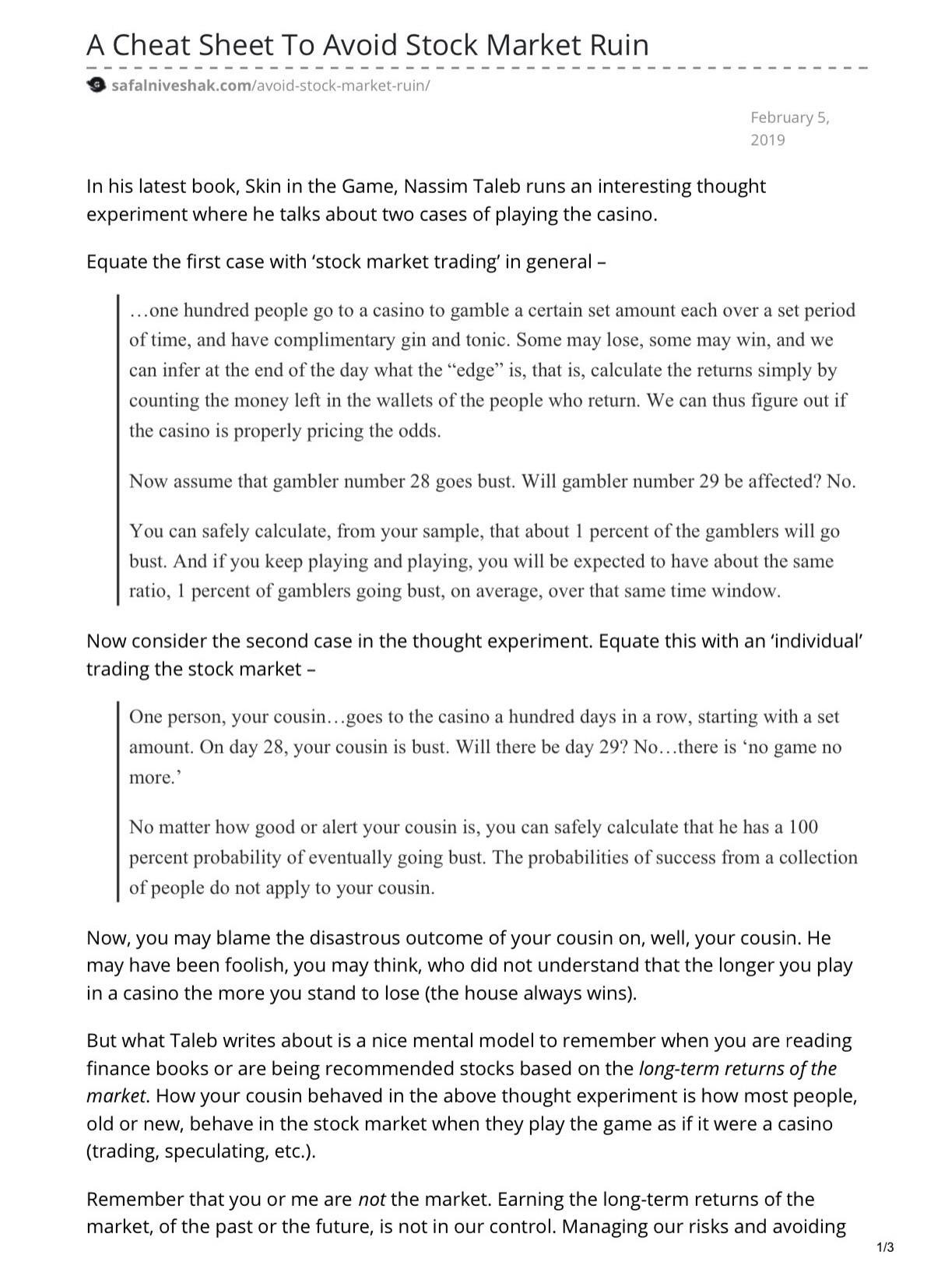
  • A Cheat Sheet to Avoid Stock Market Ruin. Most investors treat the market like a casino, forgetting that unlike the house, we can actually go bust. The key lesson is survival. You are not the market, so stop chasing “market returns” and instead focus on your own risk tolerance and capital preservation. Don’t speculate because stocks represent real businesses, not lottery tickets. Respect them and play the long game. If you feel the urge to speculate, do it only with “sin money,” never with the capital that secures your survival. Speculate only with what you can afford to lose completely. Above all, remember that the only way to truly win in investing is to survive. As Peter Bernstein wrote, “Survival is the only road to riches.” Longevity in the market matters more than brilliance. Avoid systemic ruin, manage risks, stay humble, and let compounding do the work over time.

    #InvestingWisdom #StockMarketTips #NassimTaleb #SkinInTheGame #RiskManagement #LongTermInvesting #Survival #WealthBuilding #SmartInvesting #FinancialFreedom #InvestmentStrategy #ValueInvesting #BehavioralFinance #CompoundingReturns #StockMarketEducation
    A Cheat Sheet to Avoid Stock Market Ruin. Most investors treat the market like a casino, forgetting that unlike the house, we can actually go bust. The key lesson is survival. You are not the market, so stop chasing “market returns” and instead focus on your own risk tolerance and capital preservation. Don’t speculate because stocks represent real businesses, not lottery tickets. Respect them and play the long game. If you feel the urge to speculate, do it only with “sin money,” never with the capital that secures your survival. Speculate only with what you can afford to lose completely. Above all, remember that the only way to truly win in investing is to survive. As Peter Bernstein wrote, “Survival is the only road to riches.” Longevity in the market matters more than brilliance. Avoid systemic ruin, manage risks, stay humble, and let compounding do the work over time. #InvestingWisdom #StockMarketTips #NassimTaleb #SkinInTheGame #RiskManagement #LongTermInvesting #Survival #WealthBuilding #SmartInvesting #FinancialFreedom #InvestmentStrategy #ValueInvesting #BehavioralFinance #CompoundingReturns #StockMarketEducation
    ·871 Views ·0 Vista previa
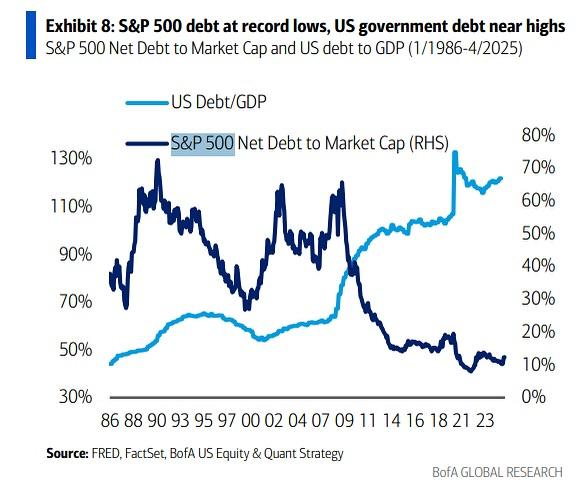
  • This chart illustrates a striking divergence between private and public sector debt. On one hand, S&P 500 companies have significantly deleveraged, with net debt to market cap falling to record lows just above 10% highlighting robust corporate balance sheets, rising equity values, and prudent financial management. On the other, U.S. government debt as a percentage of GDP has surged to around 120%, hovering near all-time highs.

    This contrast underscores a critical macroeconomic shift: while the private sector is staying lean, the public sector is absorbing more fiscal burden. This may reflect the post-COVID fiscal stimulus response, continued deficit spending, and growing entitlement obligations. For investors, this bifurcation could mean increased resilience in corporate earnings, even as sovereign debt concerns persist.

    Watch for potential implications: if interest rates stay elevated or begin to rise again, government refinancing costs could become problematic while corporates, having already deleveraged, might be less exposed. It also strengthens the case for equities over bonds in a debt-laden macro environment.

    #MacroTrends #macroeconomics #hedgefunds #DebtCycle #SP500 #USDebt #CorporateFinance #PublicDebt #EconomicPolicy #InvestmentStrategy #FinancialMarkets #MarketOutlook
    This chart illustrates a striking divergence between private and public sector debt. On one hand, S&P 500 companies have significantly deleveraged, with net debt to market cap falling to record lows just above 10% highlighting robust corporate balance sheets, rising equity values, and prudent financial management. On the other, U.S. government debt as a percentage of GDP has surged to around 120%, hovering near all-time highs. This contrast underscores a critical macroeconomic shift: while the private sector is staying lean, the public sector is absorbing more fiscal burden. This may reflect the post-COVID fiscal stimulus response, continued deficit spending, and growing entitlement obligations. For investors, this bifurcation could mean increased resilience in corporate earnings, even as sovereign debt concerns persist. Watch for potential implications: if interest rates stay elevated or begin to rise again, government refinancing costs could become problematic while corporates, having already deleveraged, might be less exposed. It also strengthens the case for equities over bonds in a debt-laden macro environment. #MacroTrends #macroeconomics #hedgefunds #DebtCycle #SP500 #USDebt #CorporateFinance #PublicDebt #EconomicPolicy #InvestmentStrategy #FinancialMarkets #MarketOutlook
    ·576 Views ·0 Vista previa
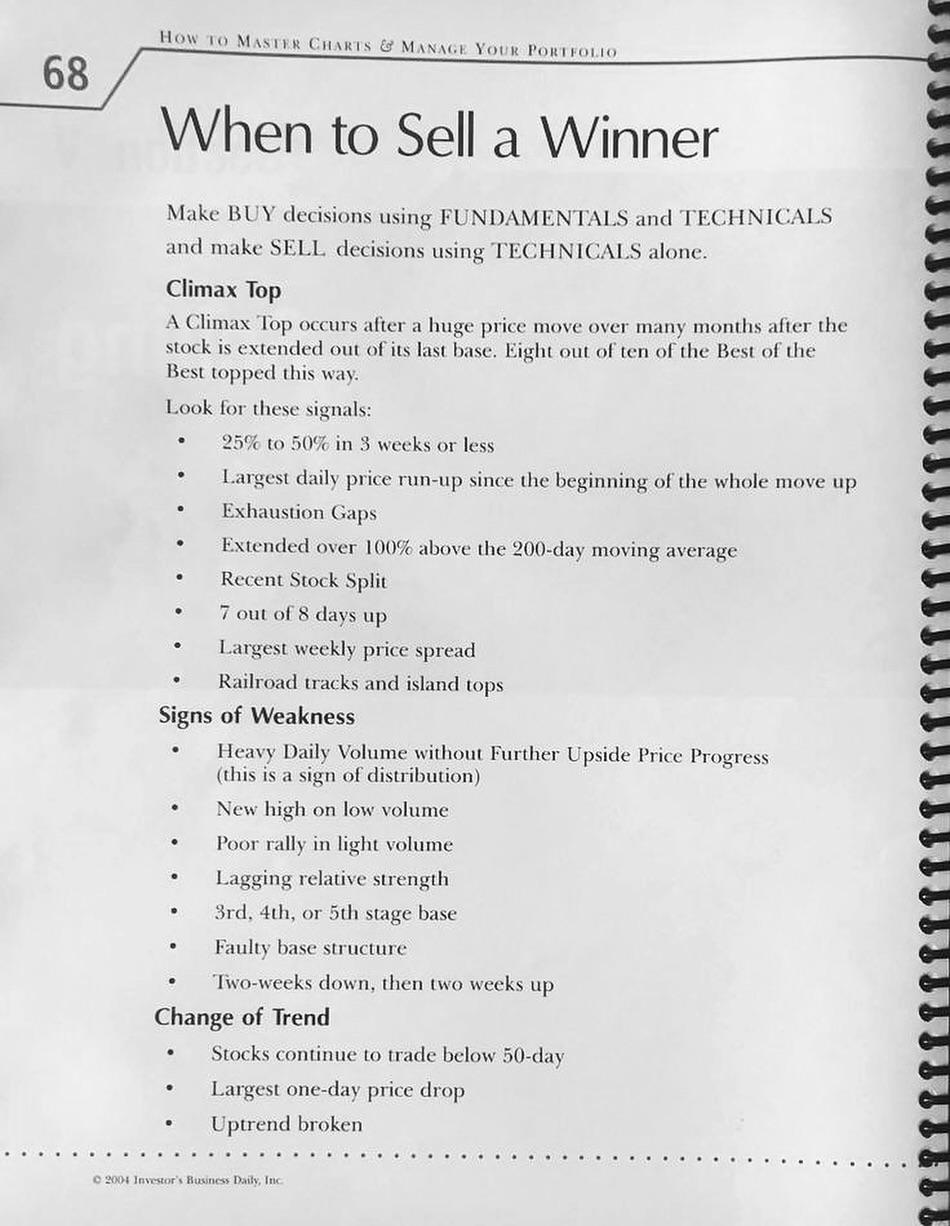
  • Knowing when to sell a stock that’s been a big winner is one of the hardest parts of investing but also one of the most crucial for protecting gains. This page offers a clear, technical approach to spotting potential tops and exit signals.

    One of the most powerful signals is a “climax top.” This often shows up as a parabolic price move 25–50% in just a few weeks, especially after a long-term uptrend. You’ll often see the largest daily or weekly price spikes of the whole move, combined with excessive distance from the 200-day moving average. This kind of price behavior reflects exhaustion and euphoria not sustainable demand. Other red flags include unusual gaps, a recent stock split, or the price rising on 7 out of 8 days.

    There are also more subtle signs of weakness: volume drying up during rallies, failed breakouts, and poor relative strength. These clues can suggest institutional selling, even if the price hasn’t broken down yet. If the chart is in a later-stage base or volume comes in heavy without follow-through, take note.

    The ultimate confirmation comes when trendlines break. A sustained move below the 50-day moving average, a major one-day drop, or a broken uptrend are all signs the run may be over.

    You buy with fundamentals and technicals. But you sell with technicals alone.

    #StockMarket #InvestingTips #TechnicalAnalysis #SellSignals #RiskManagement #MomentumTrading #ChartPatterns #PriceAction #MarketTiming #SwingTrading #InvestmentStrategy #TradingPsychology
    Knowing when to sell a stock that’s been a big winner is one of the hardest parts of investing but also one of the most crucial for protecting gains. This page offers a clear, technical approach to spotting potential tops and exit signals. One of the most powerful signals is a “climax top.” This often shows up as a parabolic price move 25–50% in just a few weeks, especially after a long-term uptrend. You’ll often see the largest daily or weekly price spikes of the whole move, combined with excessive distance from the 200-day moving average. This kind of price behavior reflects exhaustion and euphoria not sustainable demand. Other red flags include unusual gaps, a recent stock split, or the price rising on 7 out of 8 days. There are also more subtle signs of weakness: volume drying up during rallies, failed breakouts, and poor relative strength. These clues can suggest institutional selling, even if the price hasn’t broken down yet. If the chart is in a later-stage base or volume comes in heavy without follow-through, take note. The ultimate confirmation comes when trendlines break. A sustained move below the 50-day moving average, a major one-day drop, or a broken uptrend are all signs the run may be over. You buy with fundamentals and technicals. But you sell with technicals alone. #StockMarket #InvestingTips #TechnicalAnalysis #SellSignals #RiskManagement #MomentumTrading #ChartPatterns #PriceAction #MarketTiming #SwingTrading #InvestmentStrategy #TradingPsychology
    ·775 Views ·0 Vista previa
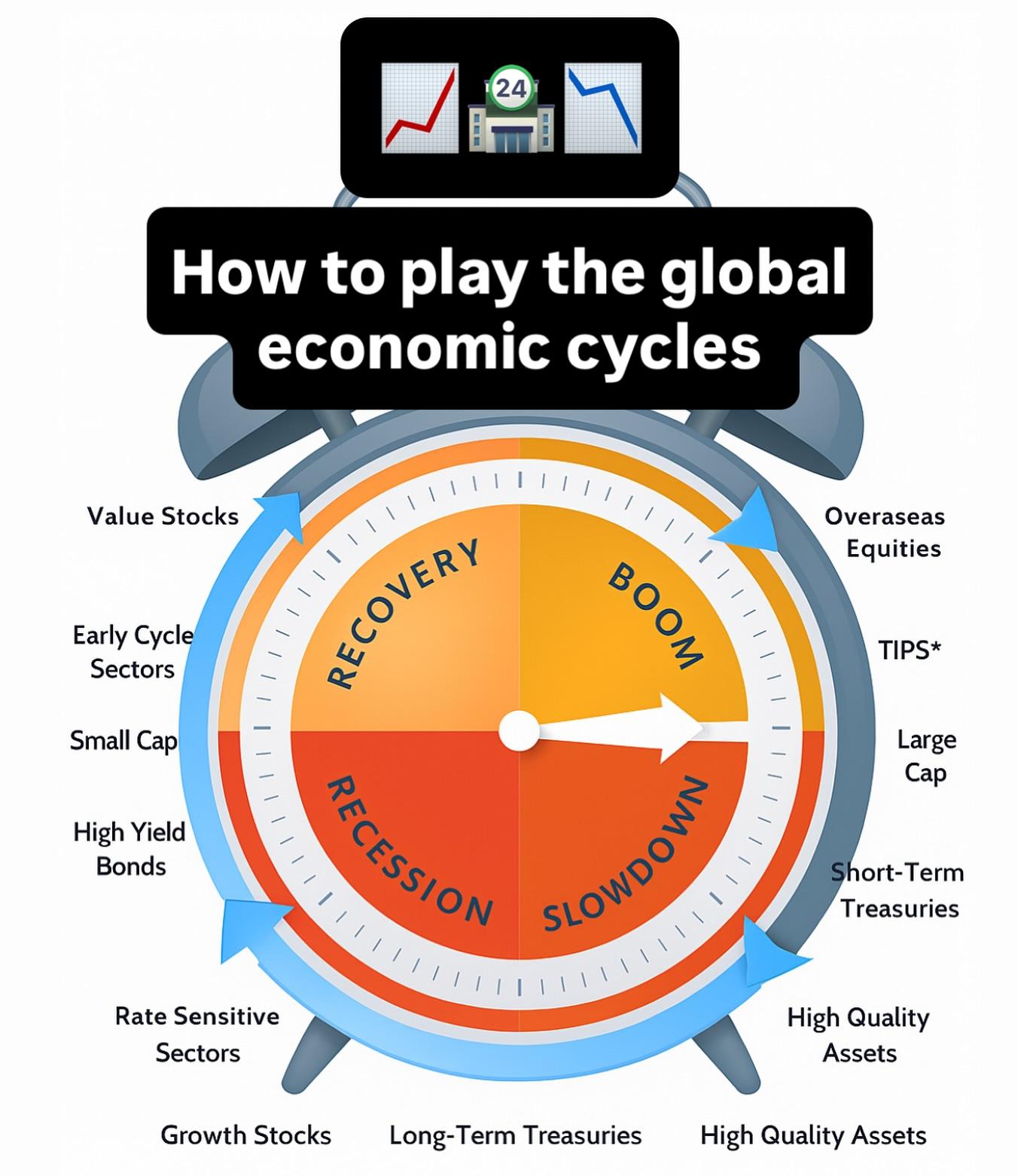
  • a simplified yet strategic view of how investors might align their portfolios with different phases of the global economic cycle. Each stage—recession, recovery, boom, and slowdown—tends to favor certain asset classes based on macro conditions and capital flows.

    During a recession, when growth contracts and uncertainty is high, investors often rotate into long-term treasuries and high-quality assets that offer stability. Growth stocks can also be favored as markets begin to anticipate recovery and future earnings potential.

    As the economy shifts into recovery, risk appetite begins to return. Value stocks, early-cycle sectors, small caps, and high-yield bonds typically outperform as confidence builds and monetary policy remains supportive.

    In the boom phase, economic activity is strong and earnings growth broad-based. Investors tend to favor large caps, TIPS (inflation-protected securities), and overseas equities, which benefit from global demand and reflation.

    As the cycle enters a slowdown, caution returns. Capital tends to rotate back into short-term treasuries and high-quality assets, which are better positioned to weather declining growth or margin pressures.

    The cyclical rotation shown here underscores the value of staying flexible and understanding how macro trends shape relative performance across asset classes.

    #stockmarket #macroeconomics #hedgefunds #nasdaq #qqq #moneymarket #stocktrading #GlobalMarkets #AssetAllocation #InvestmentStrategy #MarketCycles #MacroInsights #EconomicOutlook #PortfolioManagement
    a simplified yet strategic view of how investors might align their portfolios with different phases of the global economic cycle. Each stage—recession, recovery, boom, and slowdown—tends to favor certain asset classes based on macro conditions and capital flows. During a recession, when growth contracts and uncertainty is high, investors often rotate into long-term treasuries and high-quality assets that offer stability. Growth stocks can also be favored as markets begin to anticipate recovery and future earnings potential. As the economy shifts into recovery, risk appetite begins to return. Value stocks, early-cycle sectors, small caps, and high-yield bonds typically outperform as confidence builds and monetary policy remains supportive. In the boom phase, economic activity is strong and earnings growth broad-based. Investors tend to favor large caps, TIPS (inflation-protected securities), and overseas equities, which benefit from global demand and reflation. As the cycle enters a slowdown, caution returns. Capital tends to rotate back into short-term treasuries and high-quality assets, which are better positioned to weather declining growth or margin pressures. The cyclical rotation shown here underscores the value of staying flexible and understanding how macro trends shape relative performance across asset classes. #stockmarket #macroeconomics #hedgefunds #nasdaq #qqq #moneymarket #stocktrading #GlobalMarkets #AssetAllocation #InvestmentStrategy #MarketCycles #MacroInsights #EconomicOutlook #PortfolioManagement
    ·1K Views ·0 Vista previa
  • You’ve got $10M to invest. Your mission? Maximize ROI in 12 months. Which 5 assets, sectors, or companies are you betting on and why?

    Fascinating to here peoples opinions

    #Investing #StockMarket #FinanceTwitter #WealthBuilding #MarketMoves #TradingStrategy #TechStocks #CryptoInvestor #hedgefund #stocks #AssetAllocation #SmartMoney #InvestmentStrategy #WallStreet #GrowthStocks #FinancialFreedom
    You’ve got $10M to invest. Your mission? Maximize ROI in 12 months. Which 5 assets, sectors, or companies are you betting on and why? Fascinating to here peoples opinions #Investing #StockMarket #FinanceTwitter #WealthBuilding #MarketMoves #TradingStrategy #TechStocks #CryptoInvestor #hedgefund #stocks #AssetAllocation #SmartMoney #InvestmentStrategy #WallStreet #GrowthStocks #FinancialFreedom
    ·673 Views ·0 Vista previa
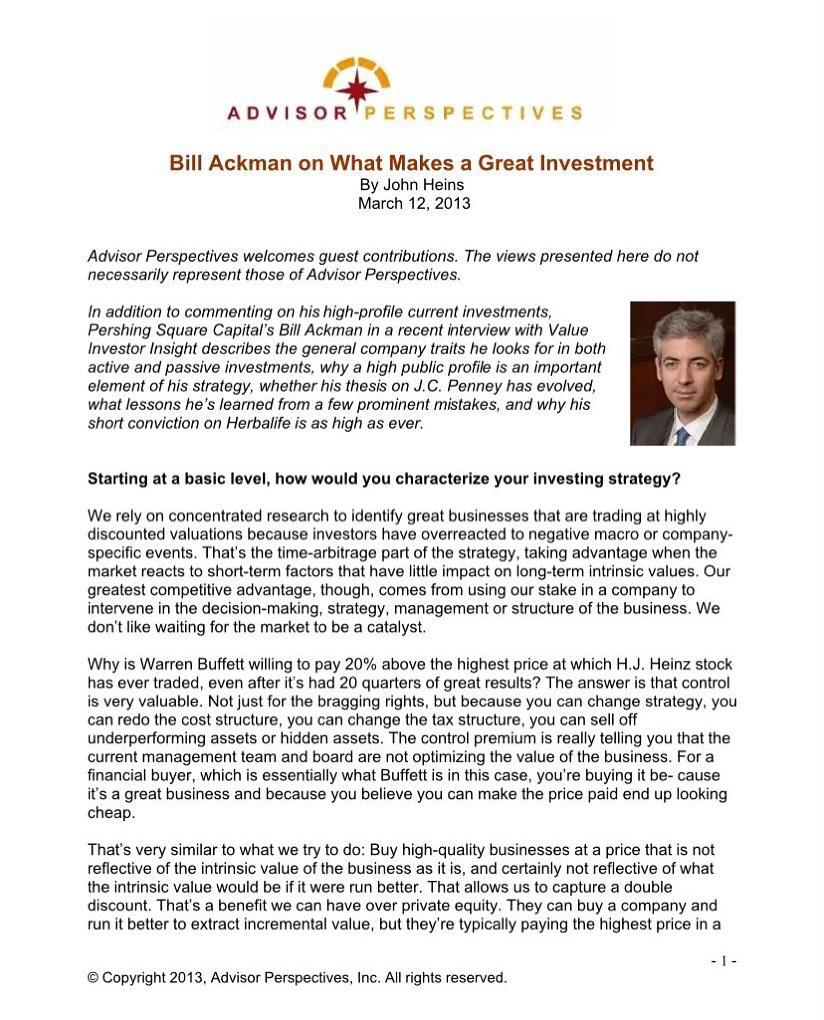
  • Bill Ackman outlines what truly makes a great investment it’s not just about buying a quality business at a fair price, but identifying one that’s underperforming relative to its potential and actively unlocking value through operational improvement, strategic insight, and sometimes activism. His approach blends deep research, patient conviction, and a clear understanding of intrinsic value.

    Ackman’s view: control isn’t about owning 100%, it’s about influencing outcomes. From Canadian Pacific to Burger King, his record shows the power of targeted engagement and the value of staying public with your thesis especially when the market’s wrong.

    This is required reading for investors who want to think independently, act decisively, and stay focused on long-term outcomes.

    #ValueInvesting #BillAckman #PershingSquare #CapitalAllocation #ActivistInvestor #LongTermThinking #IntrinsicValue #InvestmentStrategy #EquityResearch #InvestorMindset
    Bill Ackman outlines what truly makes a great investment it’s not just about buying a quality business at a fair price, but identifying one that’s underperforming relative to its potential and actively unlocking value through operational improvement, strategic insight, and sometimes activism. His approach blends deep research, patient conviction, and a clear understanding of intrinsic value. Ackman’s view: control isn’t about owning 100%, it’s about influencing outcomes. From Canadian Pacific to Burger King, his record shows the power of targeted engagement and the value of staying public with your thesis especially when the market’s wrong. This is required reading for investors who want to think independently, act decisively, and stay focused on long-term outcomes. #ValueInvesting #BillAckman #PershingSquare #CapitalAllocation #ActivistInvestor #LongTermThinking #IntrinsicValue #InvestmentStrategy #EquityResearch #InvestorMindset
    ·669 Views ·0 Vista previa
Techawks - Powered By Pantrade Blockchain https://techawks.com