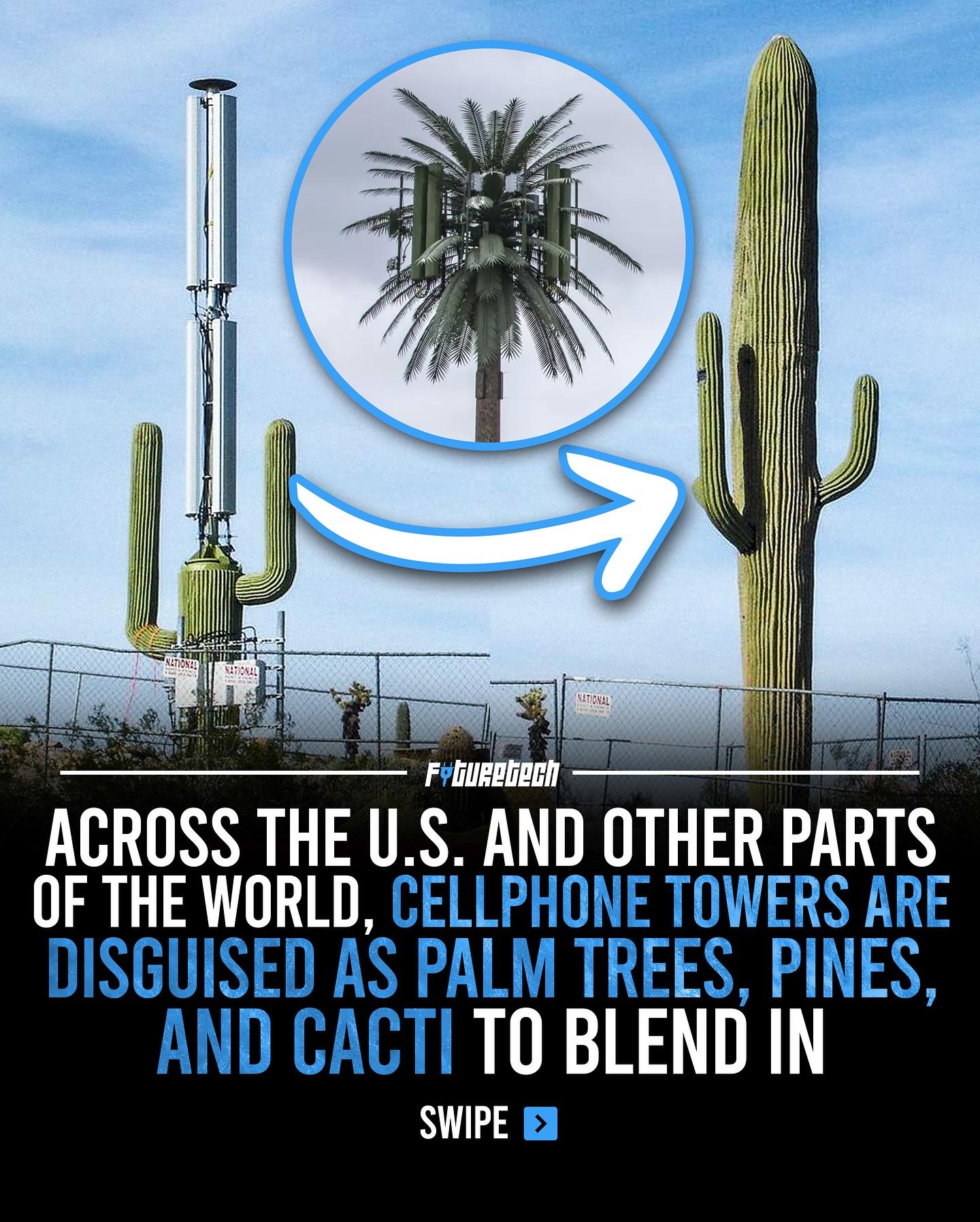
• Across the United States, and increasingly in other countries, cellphone towers are hiding in plain sight.

    Instead of looming as stark steel structures, many are carefully disguised as palm trees in California, pine trees in Colorado, or even giant cacti in Arizona. These “stealth towers” are designed to blend seamlessly into the local landscape, giving the illusion of natural scenery while quietly powering the invisible infrastructure of modern communication.

    The idea isn’t just about aesthetics; communities often push back against traditional towers, which can appear industrial or intrusive against suburban streets or natural backdrops. By camouflaging them as part of the environment, telecom companies ease public resistance while maintaining coverage in dense or scenic areas.

    But this camouflage comes at a steep price. Building and disguising a stealth tower can cost more than $100,000, sometimes several times more than a standard tower, because of the specialized design, custom materials, and ongoing upkeep required to maintain their natural look.

    From afar, they may pass as just another tree on the horizon, but up close, these artificial palms and pines are a reminder of how far we go to make technology blend into everyday life.

    Media: Brian van der Brug | Los Angeles Times

    #FutureTech
    Across the United States, and increasingly in other countries, cellphone towers are hiding in plain sight. Instead of looming as stark steel structures, many are carefully disguised as palm trees in California, pine trees in Colorado, or even giant cacti in Arizona. These “stealth towers” are designed to blend seamlessly into the local landscape, giving the illusion of natural scenery while quietly powering the invisible infrastructure of modern communication. The idea isn’t just about aesthetics; communities often push back against traditional towers, which can appear industrial or intrusive against suburban streets or natural backdrops. By camouflaging them as part of the environment, telecom companies ease public resistance while maintaining coverage in dense or scenic areas. But this camouflage comes at a steep price. Building and disguising a stealth tower can cost more than $100,000, sometimes several times more than a standard tower, because of the specialized design, custom materials, and ongoing upkeep required to maintain their natural look. From afar, they may pass as just another tree on the horizon, but up close, these artificial palms and pines are a reminder of how far we go to make technology blend into everyday life. Media: Brian van der Brug | Los Angeles Times #FutureTech 🔌
    ·156 Views ·0 Reviews
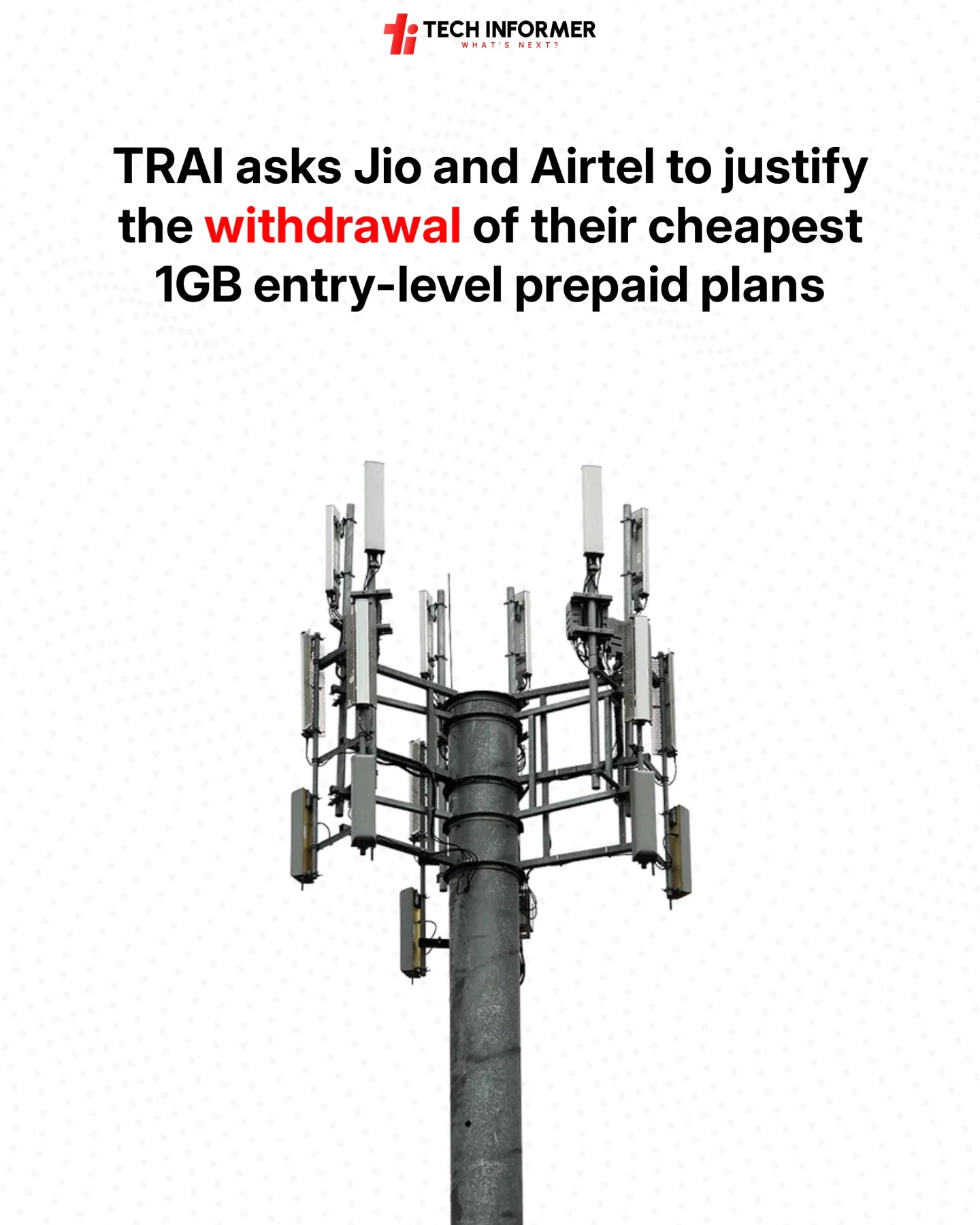
  • The Department of Telecommunications has sought an explanation from telecom majors Jio and Airtel on discontinuing the entry-level 1GB mobile data plans, as per a Mint report, noting that the move comes amid affordability concerns after the two biggest telecom operators withdrew their cheapest data plans and hiked tariffs.

    #Techinformer #Jio #Trai #Airtel
    The Department of Telecommunications has sought an explanation from telecom majors Jio and Airtel on discontinuing the entry-level 1GB mobile data plans, as per a Mint report, noting that the move comes amid affordability concerns after the two biggest telecom operators withdrew their cheapest data plans and hiked tariffs. #Techinformer #Jio #Trai #Airtel
    ·142 Views ·0 Reviews
  • China just unveiled a tiny 6G powerhouse: an “all-frequency” chip that spans 0.5 to 115 gigahertz and topped 100 gigabits per second in lab tests. Built by teams at Peking University and City University of Hong Kong, the 11 mm by 1.7 mm device consolidates what once required nine separate radio systems into a single thumbnail-sized package, stitching together low microwave bands with millimeter-wave and terahertz for both reach and raw speed.⁠

    The secret is photonic-electronic fusion. A broadband electro-optic modulator converts wireless signals into light, photonic components process them, and tunable lasers mix frequencies on the fly. In trials, the chip maintained stable links across its full span and could retune 6 GHz in about 180 microseconds, hundreds of times faster than a blink, while sustaining single-channel rates above 100 Gbps.⁠

    Coverage agility is built in. If one band is blocked or noisy, “frequency navigation” hops instantly to a clearer channel, preserving continuity in crowded arenas, dense cities, or challenging terrains. High bands handle ultra-low-latency tasks like immersive VR or telesurgery, while lower bands push signals across rural regions, underwater corridors, and even space, an explicit aim to narrow the urban-rural digital gap where typical speeds hover near 20 Mbps.⁠

    Researchers say this is also a hardware foundation for AI-native networks, radios that sense their environment and algorithmically adapt in real time. Next up are plug-and-play modules no larger than a USB stick for phones, base stations, drones, and IoT gear. If commercialized, networking stops being a patchwork of bands and boxes and becomes a single, programmable spectrum fabric, transforming global connectivity and opening the door to unprecedented applications in automation, medicine, and exploration.⁠

    #6g #wireless #photonics #ai #telecom #chips #china #terahertz #futureofconnectivity #innovation #iot #vr #automation
    China just unveiled a tiny 6G powerhouse: an “all-frequency” chip that spans 0.5 to 115 gigahertz and topped 100 gigabits per second in lab tests. Built by teams at Peking University and City University of Hong Kong, the 11 mm by 1.7 mm device consolidates what once required nine separate radio systems into a single thumbnail-sized package, stitching together low microwave bands with millimeter-wave and terahertz for both reach and raw speed.⁠ ⁠ The secret is photonic-electronic fusion. A broadband electro-optic modulator converts wireless signals into light, photonic components process them, and tunable lasers mix frequencies on the fly. In trials, the chip maintained stable links across its full span and could retune 6 GHz in about 180 microseconds, hundreds of times faster than a blink, while sustaining single-channel rates above 100 Gbps.⁠ ⁠ Coverage agility is built in. If one band is blocked or noisy, “frequency navigation” hops instantly to a clearer channel, preserving continuity in crowded arenas, dense cities, or challenging terrains. High bands handle ultra-low-latency tasks like immersive VR or telesurgery, while lower bands push signals across rural regions, underwater corridors, and even space, an explicit aim to narrow the urban-rural digital gap where typical speeds hover near 20 Mbps.⁠ ⁠ Researchers say this is also a hardware foundation for AI-native networks, radios that sense their environment and algorithmically adapt in real time. Next up are plug-and-play modules no larger than a USB stick for phones, base stations, drones, and IoT gear. If commercialized, networking stops being a patchwork of bands and boxes and becomes a single, programmable spectrum fabric, transforming global connectivity and opening the door to unprecedented applications in automation, medicine, and exploration.⁠ ⁠ #6g #wireless #photonics #ai #telecom #chips #china #terahertz #futureofconnectivity #innovation #iot #vr #automation
    ·315 Views ·0 Reviews
  • Kalaam Telecom Group, a leading regional provider of digital infrastructure and ICT solutions, has announced a strategic partnership with Silah Gulf, a prominent customer experience and business process outsourcing provider, to jointly advance digital innovation and elevate service delivery standards across the region.

    This strategic collaboration brings together Kalaam’s robust telecom, digital and cloud infrastructure with Silah Gulf’s deep-rooted expertise in customer engagement and operational excellence. The partnership aims to deliver comprehensive digital solutions that support business transformation and drive efficiency across diverse industries in Bahrain, Saudi Arabia, and Kuwait.

    For more details, read today's GDN or visit our website www.gdnonline.com

    #Bahrain #Manama
    Kalaam Telecom Group, a leading regional provider of digital infrastructure and ICT solutions, has announced a strategic partnership with Silah Gulf, a prominent customer experience and business process outsourcing provider, to jointly advance digital innovation and elevate service delivery standards across the region. This strategic collaboration brings together Kalaam’s robust telecom, digital and cloud infrastructure with Silah Gulf’s deep-rooted expertise in customer engagement and operational excellence. The partnership aims to deliver comprehensive digital solutions that support business transformation and drive efficiency across diverse industries in Bahrain, Saudi Arabia, and Kuwait. For more details, read today's GDN or visit our website www.gdnonline.com #Bahrain #Manama
    ·434 Views ·0 Reviews
  • Laurence Van Wassenhove is suing her longtime employer, telecom giant Orange, for discrimination—after spending 20 years on payroll without ever being assigned meaningful work. Originally hired by France Télécom in 1993 and later moved to a secretary role due to medical reasons, Van Wassenhove says her repeated requests for a suitable position were ignored. Despite medical evaluations confirming she could no longer perform her assigned duties, she was put on standby and eventually placed on long-term sick leave!

    According to Van Wassenhove, this resulted in two decades of forced inactivity that left her isolated, demoralized, and suffering from severe depression. Her lawsuit accuses Orange of failing to provide reasonable workplace accommodation and instead effectively sidelining her. The case raises broader questions about how companies treat disabled employees—and whether neglecting them entirely constitutes a different form of workplace harm.

    -
    #history #storytelling #explore #photooftheday #trending #news #viral
    Laurence Van Wassenhove is suing her longtime employer, telecom giant Orange, for discrimination—after spending 20 years on payroll without ever being assigned meaningful work. Originally hired by France Télécom in 1993 and later moved to a secretary role due to medical reasons, Van Wassenhove says her repeated requests for a suitable position were ignored. Despite medical evaluations confirming she could no longer perform her assigned duties, she was put on standby and eventually placed on long-term sick leave! According to Van Wassenhove, this resulted in two decades of forced inactivity that left her isolated, demoralized, and suffering from severe depression. Her lawsuit accuses Orange of failing to provide reasonable workplace accommodation and instead effectively sidelining her. The case raises broader questions about how companies treat disabled employees—and whether neglecting them entirely constitutes a different form of workplace harm. - #history #storytelling #explore #photooftheday #trending #news #viral
    ·342 Views ·0 Reviews
  • Before Jio, India’s telecom industry was a closed club.

    ₹250 for 1GB.
    Calls charged per minute.
    Internet = just emails & WhatsApp.

    Then, in 2016, Mukesh Ambani walked in with 3 bold moves:
    Free calls & data for 6 months
    1GB/day at ₹149/month
    Bundled services that kept users locked in

    The result?
    Competitors merged, shut down, or lost massive market share.
    India jumped from 155th to 1st in the world in mobile data usage.

    Jio didn’t just sell data.
    It built habits, reset the market, and created a monopoly.

    Most saw the free data.
    Smart minds saw the business strategy.

    Tap Like if you remember ₹250/GB.
    Share this with someone who witnessed the Jio disruption.
    Follow @marketing.growmatics for more bold business breakdowns.

    #Telecom #Jio #MukeshAmbani #TelecomDisruption #MarketingGrowmatics #IndianStartups #Airtel #Vi #Monopoly #Data #BusinessBreakdown #MarketingStrategy #Internet

    [Jio, Telecom, Disruption, Strategy, Ambani, Data, Pricing, Monopoly, Marketing, Infrastructure, Vision, Bundling, Ecosystem, Growth, India]
    Before Jio, India’s telecom industry was a closed club. ₹250 for 1GB. Calls charged per minute. Internet = just emails & WhatsApp. Then, in 2016, Mukesh Ambani walked in with 3 bold moves: 🆓 Free calls & data for 6 months 💰 1GB/day at ₹149/month 📲 Bundled services that kept users locked in The result? Competitors merged, shut down, or lost massive market share. India jumped from 155th to 1st in the world in mobile data usage. Jio didn’t just sell data. It built habits, reset the market, and created a monopoly. 💭 Most saw the free data. Smart minds saw the business strategy. ❤️ Tap Like if you remember ₹250/GB. 📤 Share this with someone who witnessed the Jio disruption. 📌 Follow @marketing.growmatics for more bold business breakdowns. #Telecom #Jio #MukeshAmbani #TelecomDisruption #MarketingGrowmatics #IndianStartups #Airtel #Vi #Monopoly #Data #BusinessBreakdown #MarketingStrategy #Internet [Jio, Telecom, Disruption, Strategy, Ambani, Data, Pricing, Monopoly, Marketing, Infrastructure, Vision, Bundling, Ecosystem, Growth, India]
    ·541 Views ·0 Reviews
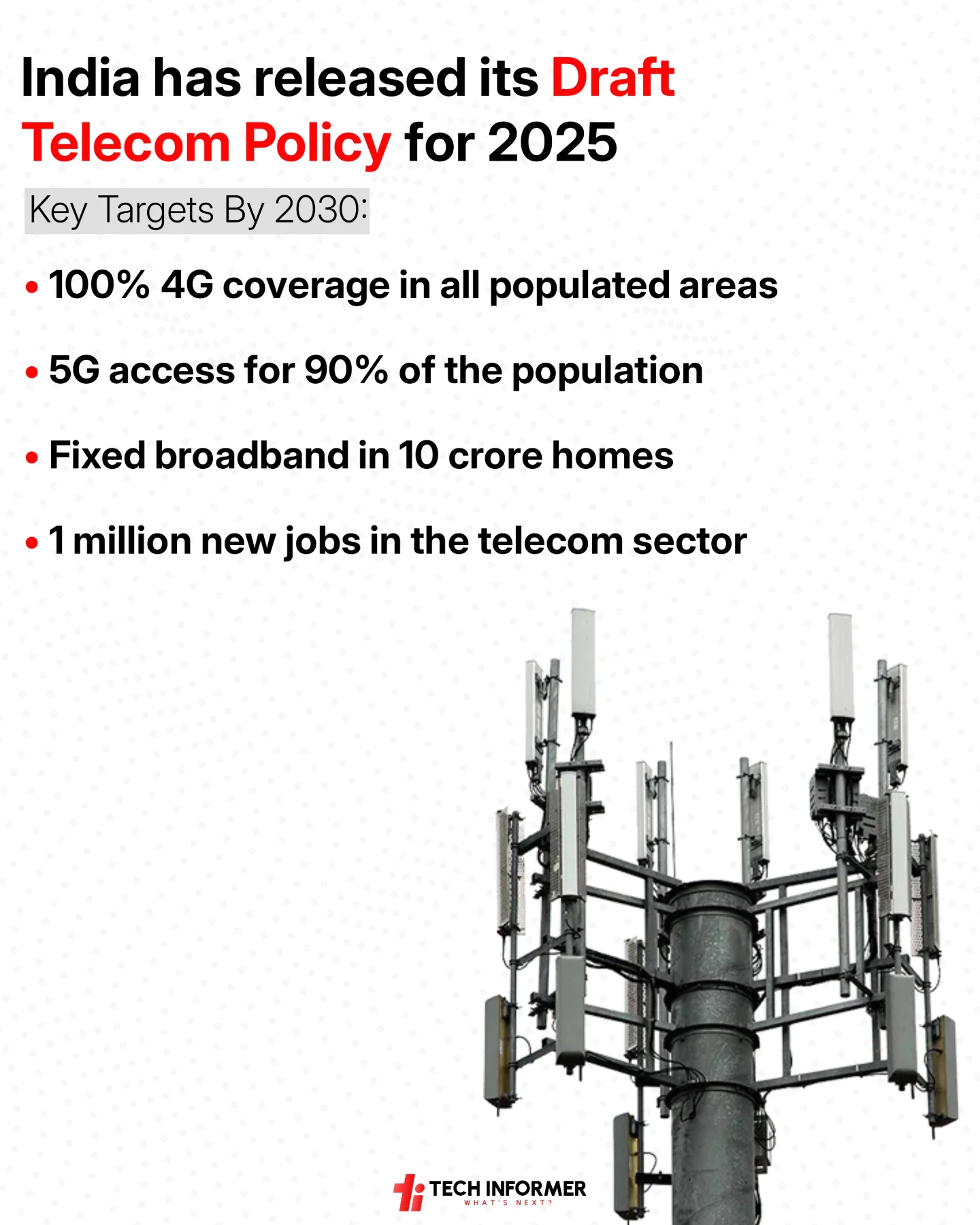
  • Open for public consultation, the draft policy outlines a roadmap focused on aggressive infrastructure expansion, deep localization of telecom manufacturing, a major skilling push, and environmentally sustainable development.

    #Techinformer
    Open for public consultation, the draft policy outlines a roadmap focused on aggressive infrastructure expansion, deep localization of telecom manufacturing, a major skilling push, and environmentally sustainable development. #Techinformer
    ·93 Views ·0 Reviews
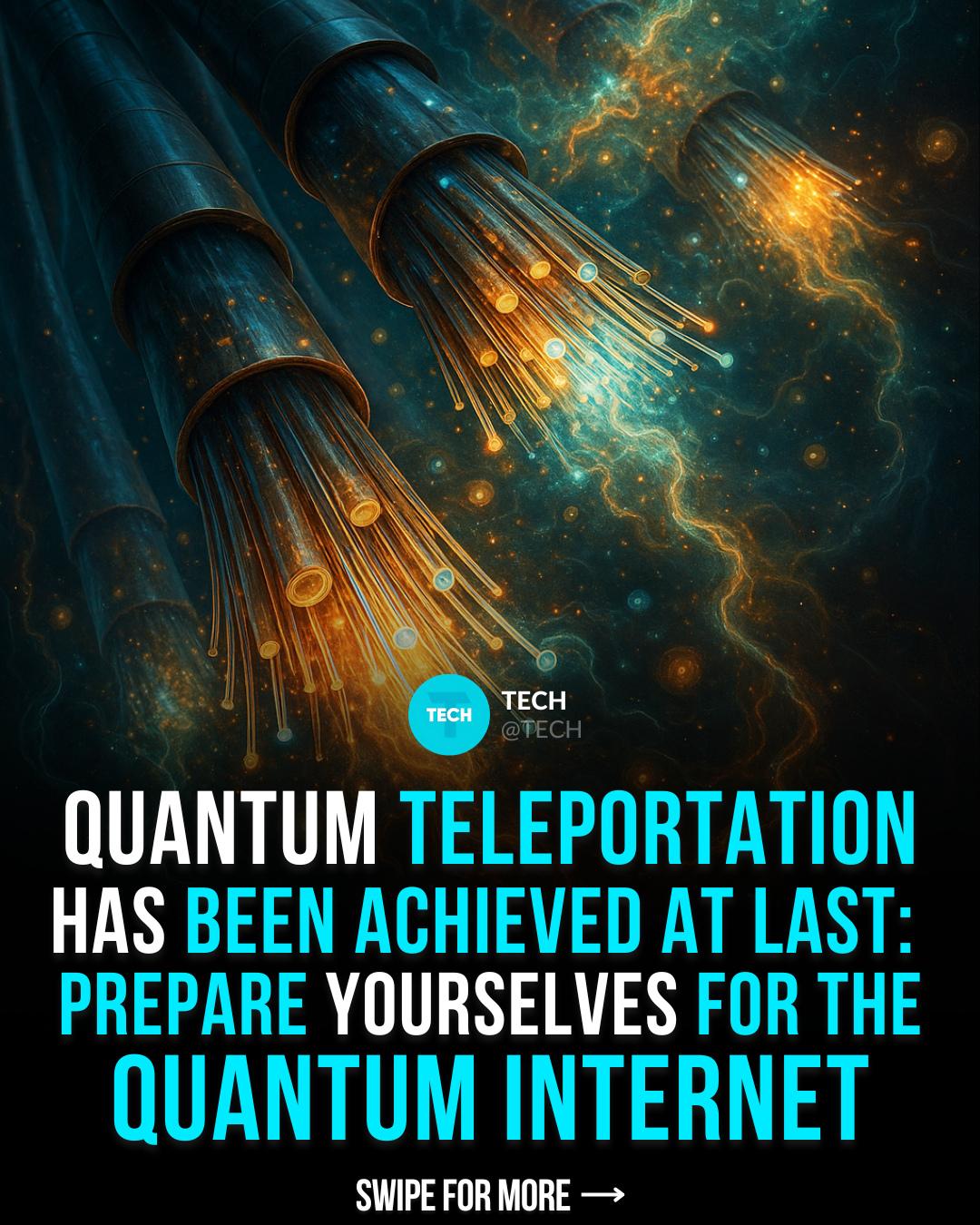
  • Researchers around the world have achieved a series of breakthroughs that could bring the long‑imagined quantum internet far closer to reality. Teams in China and the United States have demonstrated quantum teleportation—transferring a particle’s state without moving the particle itself—using telecom‑wavelength photons over existing fiber‑optic networks. By integrating solid‑state quantum memories based on erbium‑ion ensembles, these experiments show that quantum data can be stored and relayed using the same infrastructure that already carries today’s internet traffic.⁠

    At the University of Science and Technology of China, scientists succeeded in teleporting quantum states between two memory nodes separated by a 22‑kilometer optical loop. The setup relied on rare‑earth‑doped crystals tuned to standard telecom wavelengths, allowing quantum signals to coexist with conventional data streams. Researchers preserved delicate quantum states against interference by carefully managing scattering and frequency placement, achieving near‑perfect fidelity without the need for new cables or specialized equipment.⁠

    Meanwhile, in the United States, a team transmitted quantum states alongside live internet traffic over more than 30 kilometers of fiber. Using entangled photon pairs and precision Bell‑state measurements, they proved that quantum and classical communications can run side by side on the same lines.⁠

    These advances go beyond academic milestones. They pave the way for quantum repeaters—devices that store and retransmit quantum information—to link vast networks, making secure, tamper‑proof communication possible over continental distances. With continued improvements in quantum memory and error correction, these results mark a crucial step toward a future where the internet itself is redefined by the laws of quantum mechanics.⁠

    Source: 3wh8-2gh1
    Researchers around the world have achieved a series of breakthroughs that could bring the long‑imagined quantum internet far closer to reality. Teams in China and the United States have demonstrated quantum teleportation—transferring a particle’s state without moving the particle itself—using telecom‑wavelength photons over existing fiber‑optic networks. By integrating solid‑state quantum memories based on erbium‑ion ensembles, these experiments show that quantum data can be stored and relayed using the same infrastructure that already carries today’s internet traffic.⁠ ⁠ At the University of Science and Technology of China, scientists succeeded in teleporting quantum states between two memory nodes separated by a 22‑kilometer optical loop. The setup relied on rare‑earth‑doped crystals tuned to standard telecom wavelengths, allowing quantum signals to coexist with conventional data streams. Researchers preserved delicate quantum states against interference by carefully managing scattering and frequency placement, achieving near‑perfect fidelity without the need for new cables or specialized equipment.⁠ ⁠ Meanwhile, in the United States, a team transmitted quantum states alongside live internet traffic over more than 30 kilometers of fiber. Using entangled photon pairs and precision Bell‑state measurements, they proved that quantum and classical communications can run side by side on the same lines.⁠ ⁠ These advances go beyond academic milestones. They pave the way for quantum repeaters—devices that store and retransmit quantum information—to link vast networks, making secure, tamper‑proof communication possible over continental distances. With continued improvements in quantum memory and error correction, these results mark a crucial step toward a future where the internet itself is redefined by the laws of quantum mechanics.⁠ ⁠ Source: 3wh8-2gh1
    ·280 Views ·0 Reviews
  • Nvidia has announced a series of major partnerships across Europe as part of its global push to dominate the artificial intelligence space.

    CEO Jensen Huang, speaking at the GTC event in Paris, revealed deals with governments, cloud providers, and tech firms aimed at building what he calls “AI factories” — massive data centers powered by Nvidia’s GPUs.

    One of the key deals includes a collaboration with French AI startup Mistral to launch an “AI cloud” using 18,000 Grace Blackwell chips. Similar projects are also underway in Italy, Armenia, and Germany, where Nvidia plans to build an “industrial cloud” with 10,000 GPUs to support manufacturing industries.

    Telecom giants like Orange and Telefonica are joining in to deploy large language models and AI apps, while Nvidia is also setting up tech centers across the UK, France, Spain, and Germany to boost research and AI talent.

    Huang believes that Europe’s AI computing capacity will grow 10x in the next two years, and he highlighted the importance of “sovereign AI” — keeping data centers within Europe to ensure data control and security.

    In addition to hardware, Nvidia is pushing deeper into AI software. Its NIM platform now supports Hugging Face models, letting developers quickly build apps without needing to create their own models from scratch.

    The European expansion reflects Nvidia’s strategy to embed itself into national AI infrastructure worldwide, especially as U.S. export restrictions affect its business in China.


    Over 30,000 people stay updated on AI news, tools, and breakthroughs with our free newsletter. Wanna join them? Comment “YES” and I’ll personally send you the link.
    Nvidia has announced a series of major partnerships across Europe as part of its global push to dominate the artificial intelligence space. CEO Jensen Huang, speaking at the GTC event in Paris, revealed deals with governments, cloud providers, and tech firms aimed at building what he calls “AI factories” — massive data centers powered by Nvidia’s GPUs. One of the key deals includes a collaboration with French AI startup Mistral to launch an “AI cloud” using 18,000 Grace Blackwell chips. Similar projects are also underway in Italy, Armenia, and Germany, where Nvidia plans to build an “industrial cloud” with 10,000 GPUs to support manufacturing industries. Telecom giants like Orange and Telefonica are joining in to deploy large language models and AI apps, while Nvidia is also setting up tech centers across the UK, France, Spain, and Germany to boost research and AI talent. Huang believes that Europe’s AI computing capacity will grow 10x in the next two years, and he highlighted the importance of “sovereign AI” — keeping data centers within Europe to ensure data control and security. In addition to hardware, Nvidia is pushing deeper into AI software. Its NIM platform now supports Hugging Face models, letting developers quickly build apps without needing to create their own models from scratch. The European expansion reflects Nvidia’s strategy to embed itself into national AI infrastructure worldwide, especially as U.S. export restrictions affect its business in China. — 🧠 Over 30,000 people stay updated on AI news, tools, and breakthroughs with our free newsletter. Wanna join them? Comment “YES” and I’ll personally send you the link.
    ·264 Views ·0 Reviews
  • Reliance Jio, a leading Indian telecommunications company, has launched Jiocoin under its blockchain-based rewards program, which aims to enhance user engagement and offer innovative services to its massive customer base of over 450 million users.

    JioCoins are blockchain-based reward tokens that can be earned by Indian users with the help of Jio apps with their mobile numbers.
    Reliance Jio, a leading Indian telecommunications company, has launched Jiocoin under its blockchain-based rewards program, which aims to enhance user engagement and offer innovative services to its massive customer base of over 450 million users. JioCoins are blockchain-based reward tokens that can be earned by Indian users with the help of Jio apps with their mobile numbers.
    ·222 Views ·0 Reviews
More Results
Techawks - Powered By Pantrade Blockchain https://techawks.com