• If you’ve heard that a VPN provider can help protect your privacy and security online, don’t believe the hype. The truth is that most people don’t actually need a VPN.

    If you’re in the majority who don’t need to use a VPN, there are still easy and effective ways to reduce the trail of data that you leave behind as you browse the web. Some of these ways include the use of simple tools in your browser that can automatically prevent online trackers from collecting information about you to begin with, and encrypting your web browsing traffic that makes it more difficult for anyone to snoop on the sites and services you access.

    There are no one-size-fits-all solutions or a panacea for absolute privacy. Instead, all of these simple steps can provide additional and meaningful privacy as you use the web, and we’ll explain how.

    Read all the steps to protecting your privacy online, without a VPN, at the link in the bio

    Article by Zack Whittaker

    Image Credits: Kaspars Grinvalds

    #TechCrunch #technews #privacy #cybersecurity #VPN
    If you’ve heard that a VPN provider can help protect your privacy and security online, don’t believe the hype. The truth is that most people don’t actually need a VPN. If you’re in the majority who don’t need to use a VPN, there are still easy and effective ways to reduce the trail of data that you leave behind as you browse the web. Some of these ways include the use of simple tools in your browser that can automatically prevent online trackers from collecting information about you to begin with, and encrypting your web browsing traffic that makes it more difficult for anyone to snoop on the sites and services you access. There are no one-size-fits-all solutions or a panacea for absolute privacy. Instead, all of these simple steps can provide additional and meaningful privacy as you use the web, and we’ll explain how. Read all the steps to protecting your privacy online, without a VPN, at the link in the bio 👆 Article by Zack Whittaker Image Credits: Kaspars Grinvalds #TechCrunch #technews #privacy #cybersecurity #VPN
    ·56 Views ·0 Reviews
  • China has officially banned OnlyFans, labeling it a “corrupt Western disease” that promotes individualism, moral decay, and values incompatible with the country’s core socialist principles.

    Although the platform was never legally accessible in China, some users had been circumventing restrictions using VPNs and alternative payment methods.

    The new enforcement aims to close these loopholes and aligns with China’s broader efforts to tighten digital censorship and eliminate foreign platforms that do not conform to state-approved content.

    This move is part of the government’s ongoing campaign to reshape the internet in line with Party ideology and maintain strict control over online behavior and cultural influence.

    #ai #artificialintelligence #aitools #aihacks #chatgpt #tech #technology
    🇨🇳👀 China has officially banned OnlyFans, labeling it a “corrupt Western disease” that promotes individualism, moral decay, and values incompatible with the country’s core socialist principles. Although the platform was never legally accessible in China, some users had been circumventing restrictions using VPNs and alternative payment methods. The new enforcement aims to close these loopholes and aligns with China’s broader efforts to tighten digital censorship and eliminate foreign platforms that do not conform to state-approved content. This move is part of the government’s ongoing campaign to reshape the internet in line with Party ideology and maintain strict control over online behavior and cultural influence. #ai #artificialintelligence #aitools #aihacks #chatgpt #tech #technology
    ·235 Views ·0 Reviews
  • Delta Air Lines just launched a controversial ticket pricing system. The system relies on AI algorithms that analyze your personal data to determine exactly how much you will pay for the same seat others might get cheaper. The system has expanded from 3% to 20% of domestic flights in 2025, with Delta's goal of eliminating fixed pricing entirely.⁠

    Here's how it works: Israeli startup Fetcherr's AI analyzes your booking history, browsing patterns, and price sensitivity to create personalized fares. Delta President Glen Hauenstein calls it a "super analyst working 24/7" that finds your individual "pain point"—essentially the maximum you're willing to pay before walking away.⁠

    Senator Ruben Gallego slammed it as "predatory pricing," arguing Delta is using AI to "squeeze you for every penny." The backlash is bipartisan, with privacy advocates concerned about the data collection required to make such personal pricing decisions.⁠

    The scary part? This isn't just Delta. Virgin Atlantic, WestJet, and others use similar AI pricing systems, suggesting the entire industry is quietly moving toward personalized pricing. Traditional price shopping becomes meaningless when each customer sees prices tailored to their individual profile.⁠

    For now, clearing cookies and using VPNs might help, but Delta's eventual goal of requiring logged-in accounts for status benefits would eliminate these workarounds. The future of air travel pricing isn't about supply and demand—it's about how much the algorithm thinks you can afford.⁠
    Delta Air Lines just launched a controversial ticket pricing system. The system relies on AI algorithms that analyze your personal data to determine exactly how much you will pay for the same seat others might get cheaper. The system has expanded from 3% to 20% of domestic flights in 2025, with Delta's goal of eliminating fixed pricing entirely.⁠ ⁠ Here's how it works: Israeli startup Fetcherr's AI analyzes your booking history, browsing patterns, and price sensitivity to create personalized fares. Delta President Glen Hauenstein calls it a "super analyst working 24/7" that finds your individual "pain point"—essentially the maximum you're willing to pay before walking away.⁠ ⁠ Senator Ruben Gallego slammed it as "predatory pricing," arguing Delta is using AI to "squeeze you for every penny." The backlash is bipartisan, with privacy advocates concerned about the data collection required to make such personal pricing decisions.⁠ ⁠ The scary part? This isn't just Delta. Virgin Atlantic, WestJet, and others use similar AI pricing systems, suggesting the entire industry is quietly moving toward personalized pricing. Traditional price shopping becomes meaningless when each customer sees prices tailored to their individual profile.⁠ ⁠ For now, clearing cookies and using VPNs might help, but Delta's eventual goal of requiring logged-in accounts for status benefits would eliminate these workarounds. The future of air travel pricing isn't about supply and demand—it's about how much the algorithm thinks you can afford.⁠
    ·238 Views ·0 Reviews
  • Nearly 16 billion email and password pairs have surfaced in what experts warn is an unprecedented data leak.

    The breach, uncovered by researchers at Cybernews, involves 30 unique data dumps affecting everything from tech giants like Google and Apple to VPN services and government platforms. Unlike older leaks, most of this data appears newly compromised—putting millions at risk of phishing, identity theft, and account hijacking.

    Cybersecurity experts are urging immediate action: update your passwords, enable two-factor authentication, and delete inactive accounts before they become easy targets for cybercriminals.

    #Businessbulls #Business #Tech #Privacy
    Nearly 16 billion email and password pairs have surfaced in what experts warn is an unprecedented data leak. The breach, uncovered by researchers at Cybernews, involves 30 unique data dumps affecting everything from tech giants like Google and Apple to VPN services and government platforms. Unlike older leaks, most of this data appears newly compromised—putting millions at risk of phishing, identity theft, and account hijacking. Cybersecurity experts are urging immediate action: update your passwords, enable two-factor authentication, and delete inactive accounts before they become easy targets for cybercriminals. #Businessbulls #Business #Tech #Privacy
    ·278 Views ·0 Reviews
  • "Learning Mandarin out of spite? You're not alone."

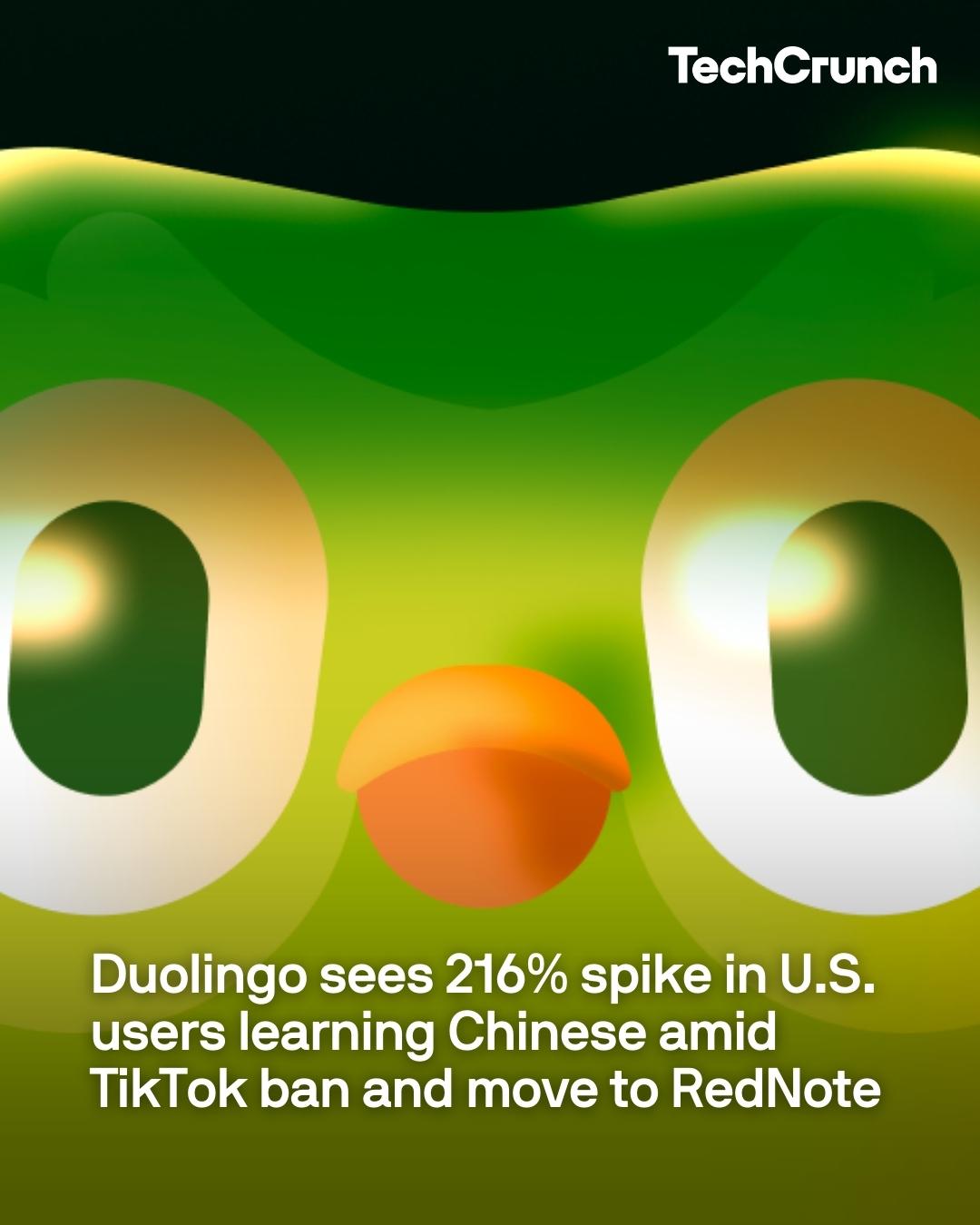
    TikTok U.S. users have been learning Chinese on Duolingo in increasing numbers amid their adoption of a Chinese social app called RedNote ahead of the TikTok ban.

    The U.S. law, scheduled to go into effect on January 19, unless halted by the Supreme Court, will see TikTok removed from U.S. app stores and will stop the app from functioning on users’ devices unless they install a VPN client. Instead of trying to work around the ban, however, over 700 million TikTok users have shifted over to the social video platform RedNote.

    According to Duolingo, the app has seen roughly 216% growth in new Mandarin learning in the U.S. compared to this time last year, with a sharp spike in mid-January as RedNote’s adoption took off.

    In addition, the company reports that in its “How did you hear about us” survey that new users are prompted to answer, it’s seeing a corresponding spike in people selecting “TikTok” as their response.

    Read more on the spike in Chinese Duolingo learners at the link in the bio

    Article by Sarah Perez

    Image Credits: Duolingo

    #TechCrunch #technews #Duolingo #socialmedia #TikTok #RedNote #xiaohongshu
    "Learning Mandarin out of spite? You're not alone." 💀 TikTok U.S. users have been learning Chinese on Duolingo in increasing numbers amid their adoption of a Chinese social app called RedNote ahead of the TikTok ban. The U.S. law, scheduled to go into effect on January 19, unless halted by the Supreme Court, will see TikTok removed from U.S. app stores and will stop the app from functioning on users’ devices unless they install a VPN client. Instead of trying to work around the ban, however, over 700 million TikTok users have shifted over to the social video platform RedNote. According to Duolingo, the app has seen roughly 216% growth in new Mandarin learning in the U.S. compared to this time last year, with a sharp spike in mid-January as RedNote’s adoption took off. In addition, the company reports that in its “How did you hear about us” survey that new users are prompted to answer, it’s seeing a corresponding spike in people selecting “TikTok” as their response. Read more on the spike in Chinese Duolingo learners at the link in the bio 👆 Article by Sarah Perez Image Credits: Duolingo #TechCrunch #technews #Duolingo #socialmedia #TikTok #RedNote #xiaohongshu
    ·485 Views ·0 Reviews
  • Qubetics is pioneering a new frontier in online privacy with its decentralized VPN technology.
    By Crypto Team -November 23, 2024

    Qubetics is developing as a major participant in the ever-changing cryptocurrency and digital privacy landscapes, thanks to its novel decentralized VPN (dVPN) solution. Currently in its presale phase, Qubetics has already raised over $1 million in the first 24 hours, indicating great investor interest and trust in the company’s ability to transform online privacy and security.

    The Need for Enhanced Online Privacy

    As internet users become more aware of the risks associated with centralized services, such as data breaches, surveillance, and censorship, the desire for more secure solutions has increased. Traditional VPNs, while providing some anonymity, frequently rely on centralized servers that can collect user data and are susceptible to hacking and governmental coercion. This centralization creates a single point of failure, undercutting the anonymity that these services claim to provide.

    Recognizing these issues, Qubetics provides an appealing alternative in the form of their dVPN, which runs on a peer-to-peer network. This decentralized architecture routes user data through numerous independent nodes rather than a single server, dramatically lowering the risk of data breaches and illegal access.

    How Qubetics dVPN Works

    Qubetics uses blockchain technology to provide a transparent and safe environment for users. The key features of the dVPN are:

    Qubetics’ decentralized architecture eliminates central points of control, ensuring that no single entity may monitor or log user traffic. This design promotes increased privacy and security.

    Multi-Layer Encryption: Qubetics uses advanced encryption methods such as AES-256 and ChaCha20 to secure user data from eavesdropping, ensuring that even if communication is intercepted, it remains unreadable.

    Tokenized Incentives: Users who donate bandwidth to the network receive TICS tokens, encouraging community participation and network sustainability.
    Zero-Logging Policy: Unlike typical VPNs, which may track user actions, Qubetics has a strong zero-logging policy that protects user privacy.
    The Excitement around the presale

    The Qubetics presale has generated a lot of attention in the cryptocurrency industry. It is currently in its third phase, with TICS tokens available at an attractive price of $0.013 each. The swift fundraising success underscores people’ rising awareness of the need of online privacy, especially in an era of increased data surveillance and breaches.

    Investors are wagering not only on the future value of TICS tokens, but also on the larger ramifications of incorporating decentralized technologies into ordinary internet activities. With many users looking for secure browsing solutions free of centralized control, Qubetics is positioned to acquire a sizable piece of this booming industry.

    Challenges Ahead

    While Qubetics offers a novel answer to internet privacy concerns, it is not without drawbacks. Because of the decentralized nature of the dVPN, customers must trust both the underlying technology and their peers. This lack of central authority might make it difficult to resolve disputes and manage operations.

    In addition, decentralized networks may have performance difficulties. Users may notice slower internet speeds than with regular VPNs due to the requirement on several nodes to route traffic. However, Qubetics states that their architecture allows for dynamic scaling, which involves adding or removing nodes as needed to retain efficiency.


    Conclusion: A Brighter Future for Qubetics

    As digital privacy becomes more important in our linked society, companies such as Qubetics provide intriguing solutions to basic flaws inherent in traditional internet services. By offering a decentralized VPN that prioritizes security and user autonomy, Qubetics is at the vanguard of a movement toward more transparent and trustworthy online interactions.
    With solid initial funding and a clear strategy for improving online privacy using blockchain technology, Qubetics is well-positioned to have a substantial effect in both the cryptocurrency market and the broader digital world. As more people realize the significance of protecting their online activity, solutions like Qubetics’ dVPN may become indispensable tools for obtaining true digital independence.
    Qubetics is pioneering a new frontier in online privacy with its decentralized VPN technology. By Crypto Team -November 23, 2024 Qubetics is developing as a major participant in the ever-changing cryptocurrency and digital privacy landscapes, thanks to its novel decentralized VPN (dVPN) solution. Currently in its presale phase, Qubetics has already raised over $1 million in the first 24 hours, indicating great investor interest and trust in the company’s ability to transform online privacy and security. The Need for Enhanced Online Privacy As internet users become more aware of the risks associated with centralized services, such as data breaches, surveillance, and censorship, the desire for more secure solutions has increased. Traditional VPNs, while providing some anonymity, frequently rely on centralized servers that can collect user data and are susceptible to hacking and governmental coercion. This centralization creates a single point of failure, undercutting the anonymity that these services claim to provide. Recognizing these issues, Qubetics provides an appealing alternative in the form of their dVPN, which runs on a peer-to-peer network. This decentralized architecture routes user data through numerous independent nodes rather than a single server, dramatically lowering the risk of data breaches and illegal access. How Qubetics dVPN Works Qubetics uses blockchain technology to provide a transparent and safe environment for users. The key features of the dVPN are: Qubetics’ decentralized architecture eliminates central points of control, ensuring that no single entity may monitor or log user traffic. This design promotes increased privacy and security. Multi-Layer Encryption: Qubetics uses advanced encryption methods such as AES-256 and ChaCha20 to secure user data from eavesdropping, ensuring that even if communication is intercepted, it remains unreadable. Tokenized Incentives: Users who donate bandwidth to the network receive TICS tokens, encouraging community participation and network sustainability. Zero-Logging Policy: Unlike typical VPNs, which may track user actions, Qubetics has a strong zero-logging policy that protects user privacy. The Excitement around the presale The Qubetics presale has generated a lot of attention in the cryptocurrency industry. It is currently in its third phase, with TICS tokens available at an attractive price of $0.013 each. The swift fundraising success underscores people’ rising awareness of the need of online privacy, especially in an era of increased data surveillance and breaches. Investors are wagering not only on the future value of TICS tokens, but also on the larger ramifications of incorporating decentralized technologies into ordinary internet activities. With many users looking for secure browsing solutions free of centralized control, Qubetics is positioned to acquire a sizable piece of this booming industry. Challenges Ahead While Qubetics offers a novel answer to internet privacy concerns, it is not without drawbacks. Because of the decentralized nature of the dVPN, customers must trust both the underlying technology and their peers. This lack of central authority might make it difficult to resolve disputes and manage operations. In addition, decentralized networks may have performance difficulties. Users may notice slower internet speeds than with regular VPNs due to the requirement on several nodes to route traffic. However, Qubetics states that their architecture allows for dynamic scaling, which involves adding or removing nodes as needed to retain efficiency. Conclusion: A Brighter Future for Qubetics As digital privacy becomes more important in our linked society, companies such as Qubetics provide intriguing solutions to basic flaws inherent in traditional internet services. By offering a decentralized VPN that prioritizes security and user autonomy, Qubetics is at the vanguard of a movement toward more transparent and trustworthy online interactions. With solid initial funding and a clear strategy for improving online privacy using blockchain technology, Qubetics is well-positioned to have a substantial effect in both the cryptocurrency market and the broader digital world. As more people realize the significance of protecting their online activity, solutions like Qubetics’ dVPN may become indispensable tools for obtaining true digital independence.
    ·1K Views ·0 Reviews
Techawks - Powered By Pantrade Blockchain https://techawks.com