• AI startup Perplexity has made an unsolicited $34.5 billion all-cash bid to acquire Google’s Chrome browser, aiming to capitalize on a pending U.S. antitrust ruling that could force Google to divest the product. The offer, more than double Perplexity’s own $18 billion valuation, is backed by unnamed venture capital firms, according to the company.⁠

    Perplexity’s proposal, dubbed “Project Solomon,” pledges to keep Chrome’s underlying open-source Chromium project intact, invest $3 billion over two years in performance, security, and support, and make no changes to default search settings. The company also promises 100 months of continued user support and job offers to key Chrome staff, while maintaining interoperability with existing web standards and partner integrations.⁠

    The Justice Department is seeking Chrome’s sale after a federal court ruled Google maintained an illegal search monopoly through default-search deals with Apple, Samsung, and others. Judge Amit Mehta is expected to decide on remedies this month, though analysts say legal appeals could stretch for years. During the trial, several tech rivals, including OpenAI and DuckDuckGo, expressed interest in acquiring Chrome, signaling strong market appetite for the browser.⁠

    Skepticism runs high on Wall Street. Some analysts call the bid a publicity play, noting Chrome could be worth $50–$100 billion or more. Google has signaled it will fight any forced divestiture, arguing a sale could harm browser security and reliability.⁠

    Perplexity, founded in 2022, recently launched Comet, an AI-powered browser that integrates its “answer engine” directly into web navigation. Acquiring Chrome’s three-billion-plus users could supercharge its challenge to Google and rivals like OpenAI. Whether this bold gambit leads to a sale, or remains a headline grab, may hinge on the court’s next move.⁠

    #tech #google #chrome #ai #perplexity #antitrust #webbrowser #opensource #searchengine #technologynews #bigtech #innovation #startupnews #digitalprivacy

    AI startup Perplexity has made an unsolicited $34.5 billion all-cash bid to acquire Google’s Chrome browser, aiming to capitalize on a pending U.S. antitrust ruling that could force Google to divest the product. The offer, more than double Perplexity’s own $18 billion valuation, is backed by unnamed venture capital firms, according to the company.⁠ ⁠ Perplexity’s proposal, dubbed “Project Solomon,” pledges to keep Chrome’s underlying open-source Chromium project intact, invest $3 billion over two years in performance, security, and support, and make no changes to default search settings. The company also promises 100 months of continued user support and job offers to key Chrome staff, while maintaining interoperability with existing web standards and partner integrations.⁠ ⁠ The Justice Department is seeking Chrome’s sale after a federal court ruled Google maintained an illegal search monopoly through default-search deals with Apple, Samsung, and others. Judge Amit Mehta is expected to decide on remedies this month, though analysts say legal appeals could stretch for years. During the trial, several tech rivals, including OpenAI and DuckDuckGo, expressed interest in acquiring Chrome, signaling strong market appetite for the browser.⁠ ⁠ Skepticism runs high on Wall Street. Some analysts call the bid a publicity play, noting Chrome could be worth $50–$100 billion or more. Google has signaled it will fight any forced divestiture, arguing a sale could harm browser security and reliability.⁠ ⁠ Perplexity, founded in 2022, recently launched Comet, an AI-powered browser that integrates its “answer engine” directly into web navigation. Acquiring Chrome’s three-billion-plus users could supercharge its challenge to Google and rivals like OpenAI. Whether this bold gambit leads to a sale, or remains a headline grab, may hinge on the court’s next move.⁠ ⁠ #tech #google #chrome #ai #perplexity #antitrust #webbrowser #opensource #searchengine #technologynews #bigtech #innovation #startupnews #digitalprivacy
    ·517 Views ·0 Reviews
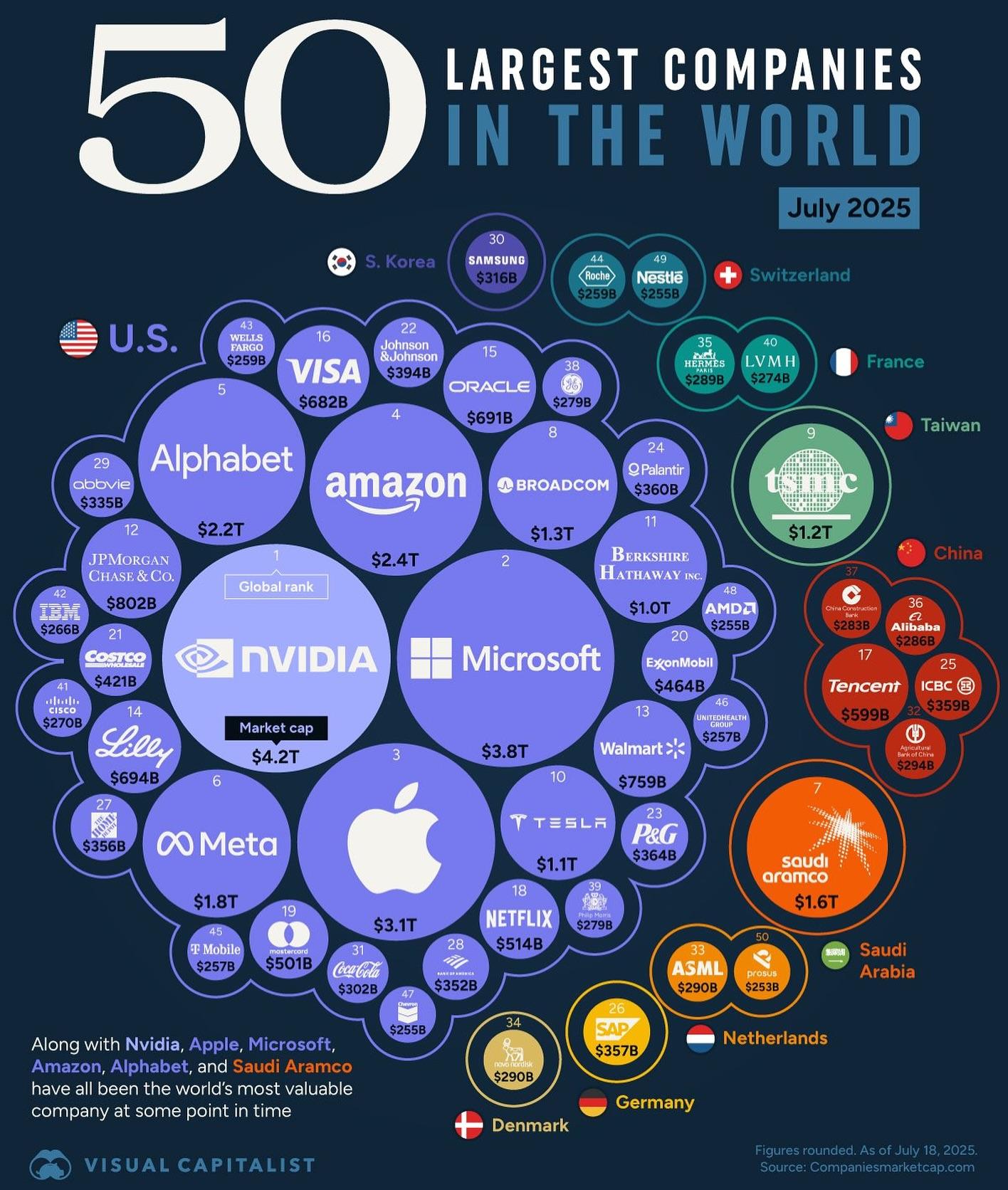
  • The 50 largest companies in the world as of July 2025 and the dominance is clear.

    Big Tech still rules the board. Nvidia leads with a $4.2T market cap, followed by Microsoft, Apple, and Amazon. Together, just a handful of US firms now make up an outsized share of global market value.

    But it’s not just the usual names. Look closely and you’ll see key players from China, Saudi Arabia, France, Switzerland, and more. This isn’t just about valuation it’s a snapshot of global economic influence.

    We’re living in an era where a few companies hold power that used to belong to entire nations.

    Some of these companies are larger than countries.

    #Markets #BigTech #Nvidia #Apple #Microsoft #Amazon #Alphabet #GlobalBusiness #MarketCap #Valuation #CorporatePower #Top50Companies
    The 50 largest companies in the world as of July 2025 and the dominance is clear. Big Tech still rules the board. Nvidia leads with a $4.2T market cap, followed by Microsoft, Apple, and Amazon. Together, just a handful of US firms now make up an outsized share of global market value. But it’s not just the usual names. Look closely and you’ll see key players from China, Saudi Arabia, France, Switzerland, and more. This isn’t just about valuation it’s a snapshot of global economic influence. We’re living in an era where a few companies hold power that used to belong to entire nations. Some of these companies are larger than countries. #Markets #BigTech #Nvidia #Apple #Microsoft #Amazon #Alphabet #GlobalBusiness #MarketCap #Valuation #CorporatePower #Top50Companies
    ·546 Views ·0 Reviews
  • Meta UP after hours 11%+

    Q2 revenue hit $47.5B (up 21.5% YoY), beating estimates by 6%. GAAP EPS of $5.89 smashed forecasts by $1.25. EBIT margins surged, DAUs are growing, and even free cash flow exceeded expectations by 42%.

    Q3 revenue guidance also came in ahead by 6%, with only modest OpEx and CapEx increases.

    Meta is now up 11% after hours. Markets are clearly rewarding execution and Meta’s numbers are delivering.

    #Meta #EarningsBeat #TechStocks #MarketUpdate #StockMarket #BigTech #FAANG #GrowthStocks #MetaQ2 #Investing2025 #EarningsSeason #RevenueGrowth
    Meta UP after hours 11%+ Q2 revenue hit $47.5B (up 21.5% YoY), beating estimates by 6%. GAAP EPS of $5.89 smashed forecasts by $1.25. EBIT margins surged, DAUs are growing, and even free cash flow exceeded expectations by 42%. Q3 revenue guidance also came in ahead by 6%, with only modest OpEx and CapEx increases. Meta is now up 11% after hours. Markets are clearly rewarding execution and Meta’s numbers are delivering. #Meta #EarningsBeat #TechStocks #MarketUpdate #StockMarket #BigTech #FAANG #GrowthStocks #MetaQ2 #Investing2025 #EarningsSeason #RevenueGrowth
    ·497 Views ·0 Reviews
  • Intel has announced that CEO Pat Gelsinger has retired, effective December 1, and stepped down from the company’s board of directors.

    Intel execs David Zinsner and Michelle Johnston Holthaus have been named interim co-CEOs. Zinsner is Intel’s CFO, while Holthaus is GM of Intel’s client computing group.

    According to Bloomberg, Intel’s board gave Gelsinger the option to retire or be removed.

    Gelsinger first joined Intel as an 18-year-old after earning an associate’s degree from Lincoln Tech. He was the lead architect of Intel’s 4th generation 80486 processor, introduced in 1989. And at age 32, he was named the youngest VP in the company’s history.

    Read all about Gelsingers rise and fall as Intel's CEO at the link in the bio

    Article by Kyle Wiggers

    Image Credits: Smith Collection/Gado / Contributor / Getty Images

    #TechCrunch #technews #artificialintelligence #Intel #bigtech
    Intel has announced that CEO Pat Gelsinger has retired, effective December 1, and stepped down from the company’s board of directors. Intel execs David Zinsner and Michelle Johnston Holthaus have been named interim co-CEOs. Zinsner is Intel’s CFO, while Holthaus is GM of Intel’s client computing group. According to Bloomberg, Intel’s board gave Gelsinger the option to retire or be removed. Gelsinger first joined Intel as an 18-year-old after earning an associate’s degree from Lincoln Tech. He was the lead architect of Intel’s 4th generation 80486 processor, introduced in 1989. And at age 32, he was named the youngest VP in the company’s history. Read all about Gelsingers rise and fall as Intel's CEO at the link in the bio 👆 Article by Kyle Wiggers Image Credits: Smith Collection/Gado / Contributor / Getty Images #TechCrunch #technews #artificialintelligence #Intel #bigtech
    ·233 Views ·0 Reviews
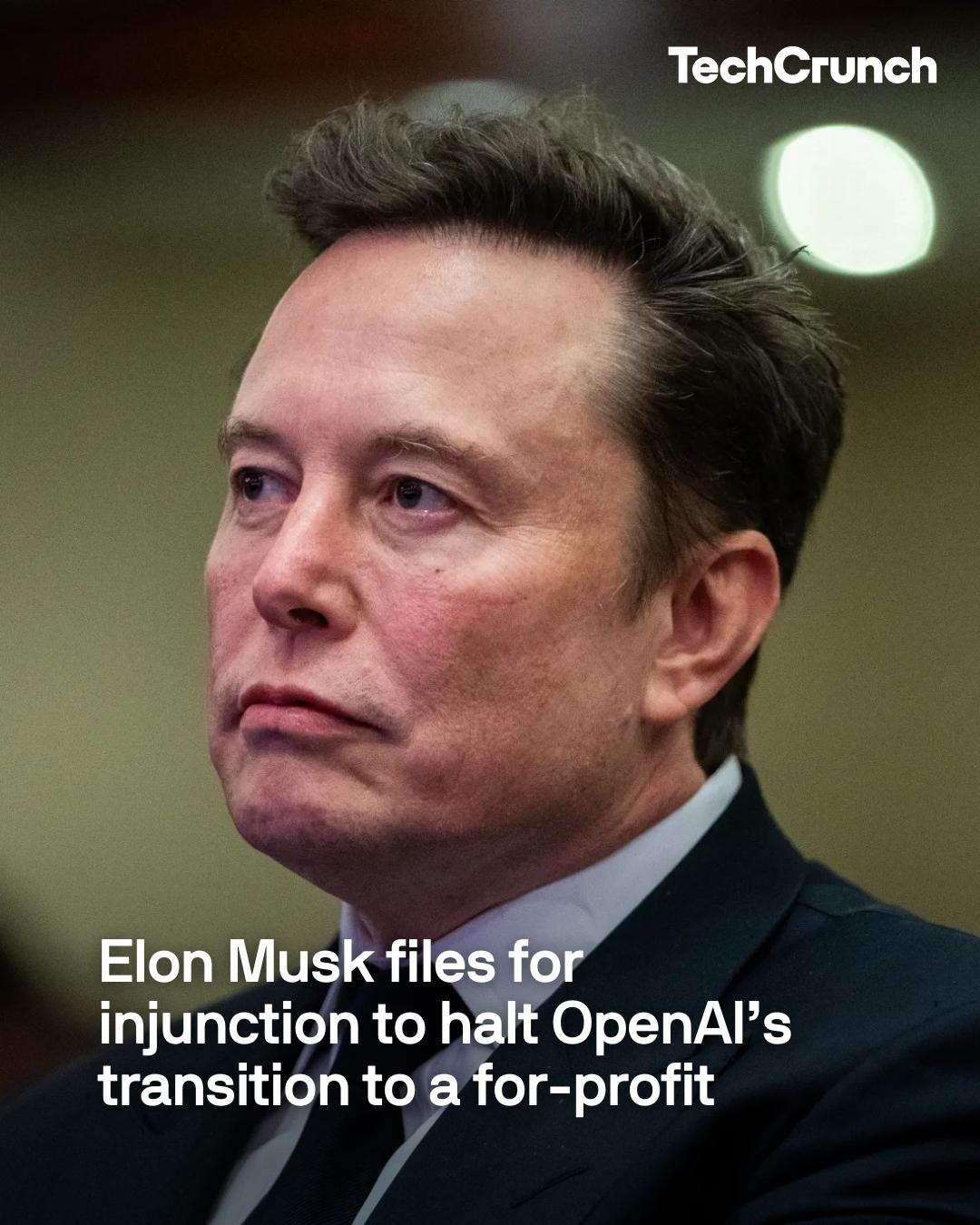
  • Attorneys for tech billionaire Elon Musk have filed for a preliminary injunction against OpenAI, several of its co-founders, and its investor and close collaborator, Microsoft, to prevent OpenAI and other named defendants from engaging in what Musk’s counsel claims is anticompetitive behavior.

    The motion for an injunction, which was filed late on Friday in the U.S. District Court for the Northern District of California, accuses OpenAI, its CEO Sam Altman, President Greg Brockman, Microsoft, LinkedIn co-founder and former OpenAI board member Reid Hoffman, and former OpenAI board member and Microsoft VP Dee Templeton of various illicit activities — and seeks to halt them.

    The motion is the latest salvo in Musk’s legal battle with OpenAI, which at its core accuses the company of abandoning its original nonprofit mission to make the fruits of its AI research available to all.

    Read the full list of allegations at the link in the bio

    Article by Kyle Wiggers

    Image Credits: ALLISON ROBBERT / POOL / AFP / Getty Images

    #TechCrunch #technews #artificialintelligence #OpenAI #ElonMusk #bigtech
    Attorneys for tech billionaire Elon Musk have filed for a preliminary injunction against OpenAI, several of its co-founders, and its investor and close collaborator, Microsoft, to prevent OpenAI and other named defendants from engaging in what Musk’s counsel claims is anticompetitive behavior. The motion for an injunction, which was filed late on Friday in the U.S. District Court for the Northern District of California, accuses OpenAI, its CEO Sam Altman, President Greg Brockman, Microsoft, LinkedIn co-founder and former OpenAI board member Reid Hoffman, and former OpenAI board member and Microsoft VP Dee Templeton of various illicit activities — and seeks to halt them. The motion is the latest salvo in Musk’s legal battle with OpenAI, which at its core accuses the company of abandoning its original nonprofit mission to make the fruits of its AI research available to all. Read the full list of allegations at the link in the bio 👆 Article by Kyle Wiggers Image Credits: ALLISON ROBBERT / POOL / AFP / Getty Images #TechCrunch #technews #artificialintelligence #OpenAI #ElonMusk #bigtech
    ·304 Views ·0 Reviews
  • Apple wants its employees to use Apple devices for work but work-issued devices are so restricted that many employees use personal devices, or tie their work devices to their personal iCloud.

    To do so, the suit says, employees must allow Apple to install software that grants Apple access to search anything stored on the device or iCloud. The suit claims Apple’s policies allow it to monitor workers even when off duty. The employee claims Apple used its policies to harm his employment prospects.

    The suit captures some of the challenges that many corporate workers face: How much visibility should an employer have on personal devices when used for work, or control over personal codes of conduct? Should Apple lose, it could curb the growing trend of bossware in the workplace.

    Image Credits: Jaap Arriens/NurPhoto / Getty Images

    #TechCrunch #technews #Apple #bigtech #privacy #security #TimCook
    Apple wants its employees to use Apple devices for work but work-issued devices are so restricted that many employees use personal devices, or tie their work devices to their personal iCloud. To do so, the suit says, employees must allow Apple to install software that grants Apple access to search anything stored on the device or iCloud. The suit claims Apple’s policies allow it to monitor workers even when off duty. The employee claims Apple used its policies to harm his employment prospects. The suit captures some of the challenges that many corporate workers face: How much visibility should an employer have on personal devices when used for work, or control over personal codes of conduct? Should Apple lose, it could curb the growing trend of bossware in the workplace. Image Credits: Jaap Arriens/NurPhoto / Getty Images #TechCrunch #technews #Apple #bigtech #privacy #security #TimCook
    ·253 Views ·0 Reviews
  • Meta’s CEO Mark Zuckerberg is pulling off a lobbying-public relations combo move by gifting President-elect Donald Trump’s inaugural fund $1 million, according to the Wall Street Journal.

    The money came from Meta, to be clear, but Zuckerberg sweetened the gift further — while doing great marketing — by sending Trump a pair of Meta’s smart glasses, too.

    It’s a paltry amount compared to the nearly $270 million that Big Tech competitor Elon Musk donated to the America PAC fund, which campaigned for Trump, but it’s still a lot of money.

    Meta’s donation comes as other tech executives attempt to play nice with the incoming Republican party. Amazon co-founder Jeff Bezos, who has also borne Trump’s ire, blocked his newspaper, The Washington Post, from endorsing Vice President Kamala Harris’s presidential bid. He even congratulated Trump on X for his “decisive victory” in the U.S. elections.

    Image Credits: Bloomberg / Contributor / Getty Images

    #TechCrunch #technews #MarkZuckerberg #Meta #DonaldTrump #bigtech
    Meta’s CEO Mark Zuckerberg is pulling off a lobbying-public relations combo move by gifting President-elect Donald Trump’s inaugural fund $1 million, according to the Wall Street Journal. The money came from Meta, to be clear, but Zuckerberg sweetened the gift further — while doing great marketing — by sending Trump a pair of Meta’s smart glasses, too. It’s a paltry amount compared to the nearly $270 million that Big Tech competitor Elon Musk donated to the America PAC fund, which campaigned for Trump, but it’s still a lot of money. Meta’s donation comes as other tech executives attempt to play nice with the incoming Republican party. Amazon co-founder Jeff Bezos, who has also borne Trump’s ire, blocked his newspaper, The Washington Post, from endorsing Vice President Kamala Harris’s presidential bid. He even congratulated Trump on X for his “decisive victory” in the U.S. elections. Image Credits: Bloomberg / Contributor / Getty Images #TechCrunch #technews #MarkZuckerberg #Meta #DonaldTrump #bigtech
    ·474 Views ·0 Reviews
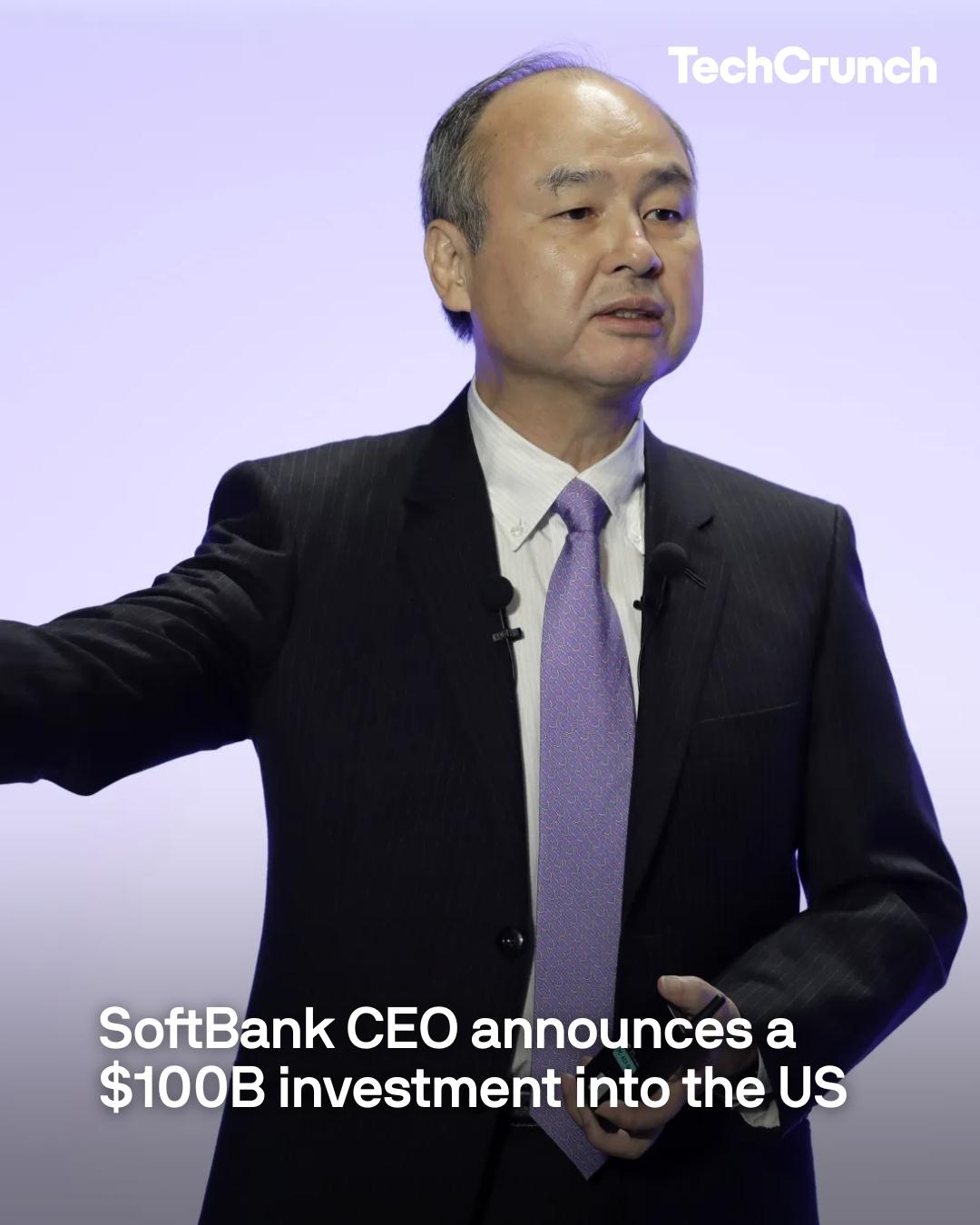
  • On Monday, SoftBank CEO Masayoshi Son joined President-elect Donald Trump to announce that his company would invest $100 billion into the US over the next four years.

    In a press conference at Trump’s Mar-a-Lago residence, Trump also announced that SoftBank’s investment would create, at a minimum, 100,000 American jobs. Trump called it a “historic investment” that will “help ensure that artificial intelligence, emerging technologies and other industries of tomorrow are built, created and grown right here in the USA.”

    Son and Trump have had a close working relationship since 2016 during Trump’s first term, when Son announced that SoftBank would invest $50 billion in U.S. startups and create 50,000 jobs. At the Monday conference, Son said he chose to double his 2016 investment because “President Trump is a double-down president, I’m going to have to double down.”

    Image Credits: Kiyoshi Ota / Bloomberg / Getty Images

    #TechCrunch #technews #artificialintelligence #SoftBank #bigtech
    On Monday, SoftBank CEO Masayoshi Son joined President-elect Donald Trump to announce that his company would invest $100 billion into the US over the next four years. In a press conference at Trump’s Mar-a-Lago residence, Trump also announced that SoftBank’s investment would create, at a minimum, 100,000 American jobs. Trump called it a “historic investment” that will “help ensure that artificial intelligence, emerging technologies and other industries of tomorrow are built, created and grown right here in the USA.” Son and Trump have had a close working relationship since 2016 during Trump’s first term, when Son announced that SoftBank would invest $50 billion in U.S. startups and create 50,000 jobs. At the Monday conference, Son said he chose to double his 2016 investment because “President Trump is a double-down president, I’m going to have to double down.” Image Credits: Kiyoshi Ota / Bloomberg / Getty Images #TechCrunch #technews #artificialintelligence #SoftBank #bigtech
    ·722 Views ·0 Reviews
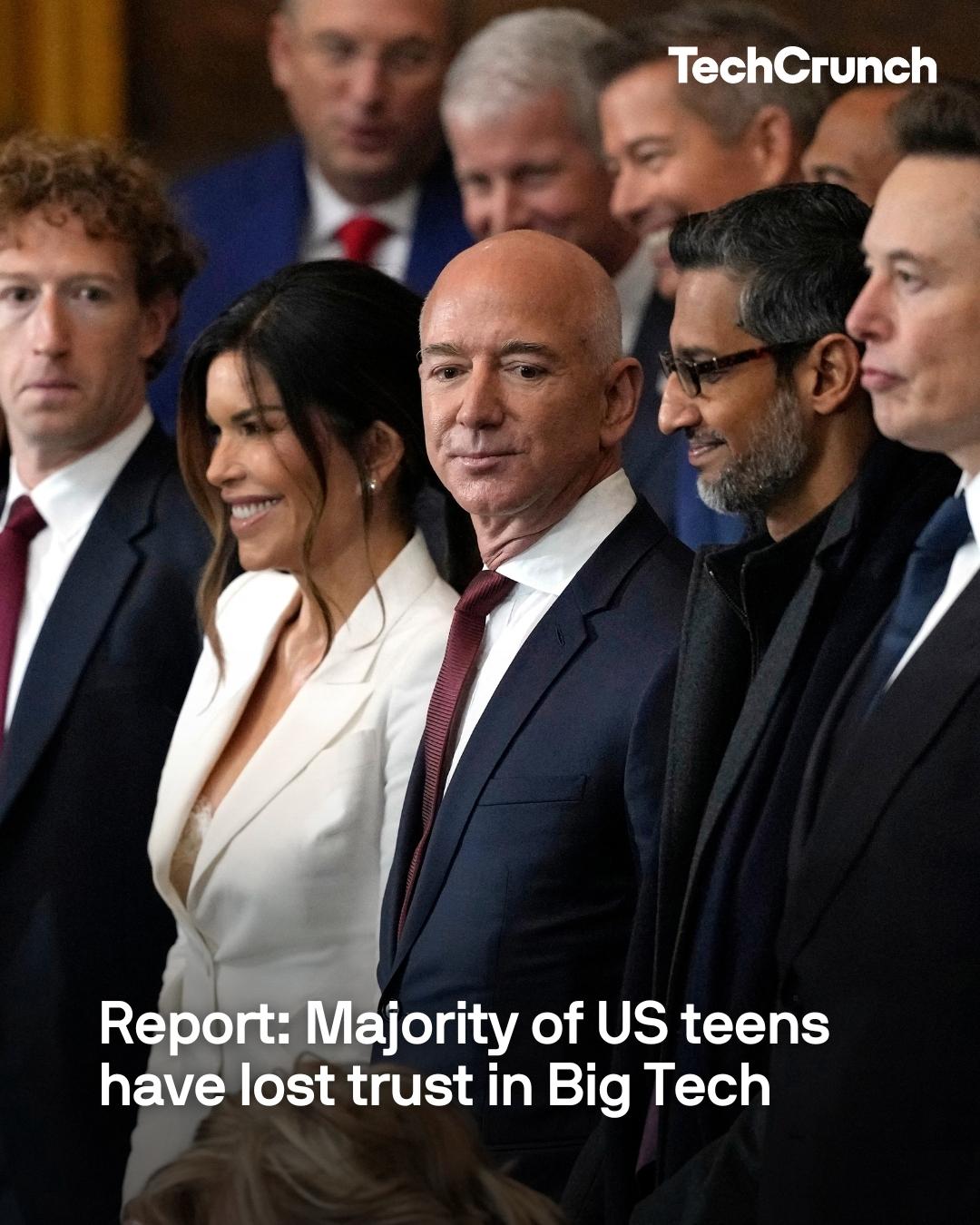
  • American teens have lost their faith in Big Tech, according to a new report from Common Sense Media, a nonprofit offering reviews and ratings for media and technology, which more recently includes AI products.

    In the study released Wednesday, the organization surveyed over 1,000 teens on whether major technology companies like Google, Apple, Meta, TikTok, and Microsoft cared about their well-being and safety, made ethical decisions, protected their private data, and more.

    In all cases, a majority of teens reported low levels of trust in these tech companies. Nearly half of teens said they had little or no trust that the companies would make responsible decisions about how they use AI.

    Read more findings from the report at the link in the bio

    Article by Sarah Perez

    Image Credits: JULIA DEMAREE NIKHINSON / Contributor / Getty Images

    #TechCrunch #technews #tech #bigtech #siliconvalley #Meta #Amazon #Google #X
    American teens have lost their faith in Big Tech, according to a new report from Common Sense Media, a nonprofit offering reviews and ratings for media and technology, which more recently includes AI products. In the study released Wednesday, the organization surveyed over 1,000 teens on whether major technology companies like Google, Apple, Meta, TikTok, and Microsoft cared about their well-being and safety, made ethical decisions, protected their private data, and more. In all cases, a majority of teens reported low levels of trust in these tech companies. Nearly half of teens said they had little or no trust that the companies would make responsible decisions about how they use AI. Read more findings from the report at the link in the bio 👆 Article by Sarah Perez Image Credits: JULIA DEMAREE NIKHINSON / Contributor / Getty Images #TechCrunch #technews #tech #bigtech #siliconvalley #Meta #Amazon #Google #X
    ·353 Views ·0 Reviews
  • American teens have lost their faith in Big Tech, according to a new report from Common Sense Media, a nonprofit offering reviews and ratings for media and technology.

    In the study released in January, the organization surveyed over 1,000 teens on whether major technology companies like Google, Apple, Meta, TikTok, and Microsoft cared about their well-being and safety, made ethical decisions, protected their private data, and more.

    In all cases, a majority of teens reported low levels of trust in these tech companies.

    Common Sense says that 64% of surveyed U.S. teens don’t trust Big Tech companies to care about their mental health and well-being and 62% don’t think the companies will protect their safety if it hurts profits.

    Read more findings from the survey at the link in the bio

    Article by Sarah Perez

    Image Credits: Eugene Gologursky / Stringer / Getty Images

    #TechCrunch #technews #socialmedia #bigtech #Amazon #Meta #Google #Apple
    American teens have lost their faith in Big Tech, according to a new report from Common Sense Media, a nonprofit offering reviews and ratings for media and technology. In the study released in January, the organization surveyed over 1,000 teens on whether major technology companies like Google, Apple, Meta, TikTok, and Microsoft cared about their well-being and safety, made ethical decisions, protected their private data, and more. In all cases, a majority of teens reported low levels of trust in these tech companies. Common Sense says that 64% of surveyed U.S. teens don’t trust Big Tech companies to care about their mental health and well-being and 62% don’t think the companies will protect their safety if it hurts profits. Read more findings from the survey at the link in the bio 👆 Article by Sarah Perez Image Credits: Eugene Gologursky / Stringer / Getty Images #TechCrunch #technews #socialmedia #bigtech #Amazon #Meta #Google #Apple
    ·434 Views ·0 Reviews
More Results
Techawks - Powered By Pantrade Blockchain https://techawks.com