• How to Write Clean, Scalable Async/Await Code in JavaScript (Without Unhandled Rejections)


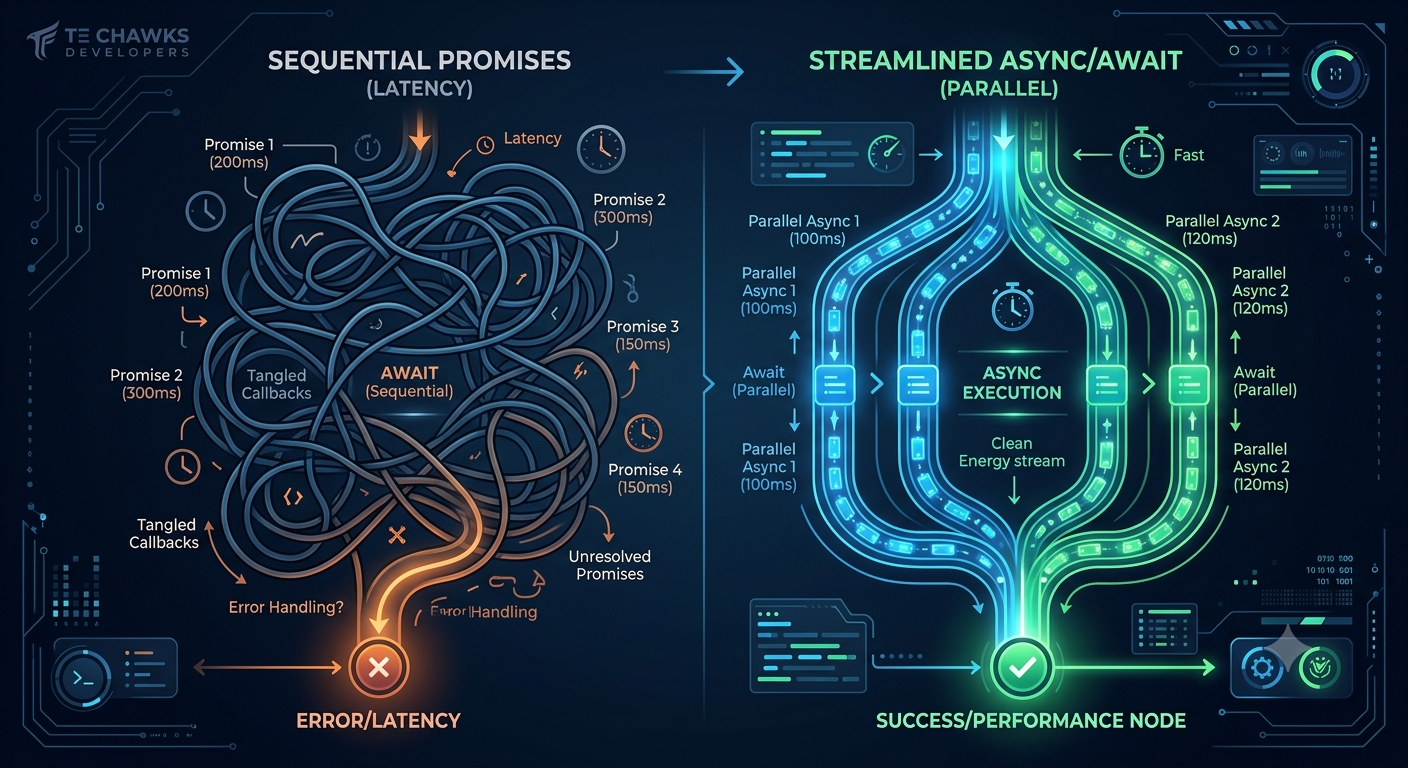
    While async/await makes asynchronous code look synchronous, treating it identically to standard code leads to performance bottlenecks and hidden bugs. Common mistakes include running requests sequentially when they could run in parallel, or wrapping everything in messy try/catch blocks that clutter your business logic.
    Follow these four steps to clean up your async code and make it rock-solid:


    Step 1: Parallelize Independent Operations
    A common antipattern is awaiting independent API calls back-to-back, which doubles or triples your total execution time.
    Bad Pattern (Sequential):


    JavaScript
    const user = await fetchUser(userId); // Takes 200ms
    const posts = await fetchPosts(userId); // Takes 300ms (Total: 500ms)
    Action (Parallel): Use Promise.all or Promise.allSettled to execute independent promises concurrently.


    JavaScript
    const [user, posts] = await Promise.all([
    fetchUser(userId),
    fetchPosts(userId)
    ]); // Total: ~300ms


    Step 2: Use Promise.allSettled for Non-Critical Operations
    If you are fetching multiple resources and don't want a single minor failure (e.g., fetching user notifications) to break the entire page load, avoid Promise.all because it short-circuits on the first error.
    Action: Use Promise.allSettled to handle partial successes gracefully.


    JavaScript
    const results = await Promise.allSettled([fetchProfile(), fetchAds()]);
    const profile = results[0].status === 'fulfilled' ? results[0].value : null;
    Step 3: Implement a Clean Error-Handling Wrapper
    Instead of littering your controllers with repetitive try/catch blocks, use a lightweight utility wrapper function (similar to the Go programming language style).
    Action: Create a reusable helper to handle promise errors cleanly without throwing unhandled exceptions:


    JavaScript
    const to = (promise) =>
    promise
    .then((data) => [null, data])
    .catch((err) => [err, null]);
    // Usage:
    const [err, user] = await to(fetchUser(userId));
    if (err) return handleUserError(err);


    Step 4: Always Cancel Unmounted/Aborted Requests
    In frontend frameworks (or Node.js microservices), unhandled async responses after a component unmounts or a client disconnects can lead to memory leaks or state corruption.
    Action: Pass an AbortController signal to your fetch or HTTP client requests to cancel pending operations cleanly when they are no longer needed.


    Key Takeaways
    Concurrency over Sequentiality: Use Promise.all whenever operations are independent of one another.
    Fail Gracefully: Choose Promise.allSettled when partial success is acceptable.
    Clean Control Flow: Use wrapper utilities or dedicated middleware to keep async error handling readable and consistent.


    CTA
    Looking to sharpen your coding skills and master software architecture? Join thousands of software developers, frontend engineers, and backend specialists building cleaner, faster applications. Join the Developers & Coding Community today!
    How to Write Clean, Scalable Async/Await Code in JavaScript (Without Unhandled Rejections) While async/await makes asynchronous code look synchronous, treating it identically to standard code leads to performance bottlenecks and hidden bugs. Common mistakes include running requests sequentially when they could run in parallel, or wrapping everything in messy try/catch blocks that clutter your business logic. Follow these four steps to clean up your async code and make it rock-solid: Step 1: Parallelize Independent Operations A common antipattern is awaiting independent API calls back-to-back, which doubles or triples your total execution time. Bad Pattern (Sequential): JavaScript const user = await fetchUser(userId); // Takes 200ms const posts = await fetchPosts(userId); // Takes 300ms (Total: 500ms) Action (Parallel): Use Promise.all or Promise.allSettled to execute independent promises concurrently. JavaScript const [user, posts] = await Promise.all([ fetchUser(userId), fetchPosts(userId) ]); // Total: ~300ms Step 2: Use Promise.allSettled for Non-Critical Operations If you are fetching multiple resources and don't want a single minor failure (e.g., fetching user notifications) to break the entire page load, avoid Promise.all because it short-circuits on the first error. Action: Use Promise.allSettled to handle partial successes gracefully. JavaScript const results = await Promise.allSettled([fetchProfile(), fetchAds()]); const profile = results[0].status === 'fulfilled' ? results[0].value : null; Step 3: Implement a Clean Error-Handling Wrapper Instead of littering your controllers with repetitive try/catch blocks, use a lightweight utility wrapper function (similar to the Go programming language style). Action: Create a reusable helper to handle promise errors cleanly without throwing unhandled exceptions: JavaScript const to = (promise) => promise .then((data) => [null, data]) .catch((err) => [err, null]); // Usage: const [err, user] = await to(fetchUser(userId)); if (err) return handleUserError(err); Step 4: Always Cancel Unmounted/Aborted Requests In frontend frameworks (or Node.js microservices), unhandled async responses after a component unmounts or a client disconnects can lead to memory leaks or state corruption. Action: Pass an AbortController signal to your fetch or HTTP client requests to cancel pending operations cleanly when they are no longer needed. Key Takeaways Concurrency over Sequentiality: Use Promise.all whenever operations are independent of one another. Fail Gracefully: Choose Promise.allSettled when partial success is acceptable. Clean Control Flow: Use wrapper utilities or dedicated middleware to keep async error handling readable and consistent. CTA Looking to sharpen your coding skills and master software architecture? Join thousands of software developers, frontend engineers, and backend specialists building cleaner, faster applications. Join the Developers & Coding Community today!
    0 Comments 0 Shares 221 Views 0 Reviews
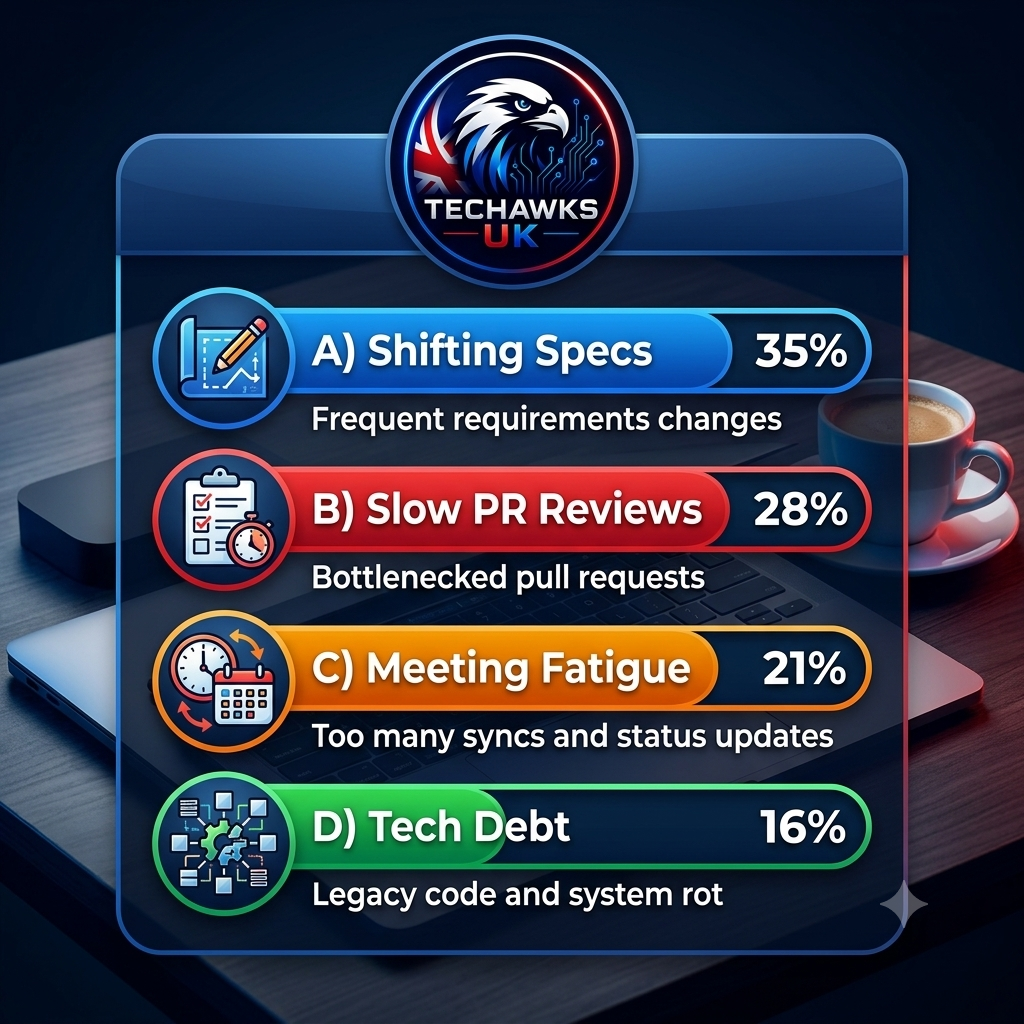
  • Poll: What Is Your Team’s Biggest Bottleneck to Shipping Fast?


    Speed in tech isn't just about writing code faster; it’s about reducing the friction between an idea and its deployment. When engineering, product, and design teams get stuck in slow delivery cycles, the root cause usually falls into one of four core operational areas:


    Unclear or Changing Requirements: Specs that shift halfway through a sprint, forcing rework.
    Slow Code Reviews & QA: PRs sitting in review queues for days while context fades.
    Meeting Overload: Context-switching every 45 minutes, destroying deep-work state.
    Technical Debt: Legacy architecture and flaky test suites breaking pipeline builds.
    Identifying your team's primary bottleneck is the first step toward building a sustainable engineering pace.


    πŸ“Š Quick Poll for the UK Tech Community
    Which of these is currently the biggest obstacle to your team’s delivery speed?
    πŸ”΄ A) Moving goalposts & shifting requirements
    🟠 B) PR queues & slow QA loops
    🟑 C) Too many sync meetings & calendar fragmentation
    🟒 D) Tech debt & flaky CI/CD pipelines
    (Drop your answer A, B, C, or D in the comments below!)


    Key Takeaways
    Audit Your Process: Take time each quarter to identify which single bottleneck is draining your team's velocity the most.
    Batch Code Reviews: Set dedicated async review windows (e.g., first thing in the morning and right after lunch) so PRs don't stall for days.
    Protect Focus Blocks: Implement 3- to 4-hour "no-meeting" focus blocks so developers can write complex code without interruption.


    CTA (Join Techawks UK)
    Want to benchmark your engineering processes against top tech teams across the UK?


    πŸ‘‰ [Join Techawks UK Today] to exchange operational playbooks, join technical roundtables, and network with local tech leaders.
    Poll: What Is Your Team’s Biggest Bottleneck to Shipping Fast? Speed in tech isn't just about writing code faster; it’s about reducing the friction between an idea and its deployment. When engineering, product, and design teams get stuck in slow delivery cycles, the root cause usually falls into one of four core operational areas: Unclear or Changing Requirements: Specs that shift halfway through a sprint, forcing rework. Slow Code Reviews & QA: PRs sitting in review queues for days while context fades. Meeting Overload: Context-switching every 45 minutes, destroying deep-work state. Technical Debt: Legacy architecture and flaky test suites breaking pipeline builds. Identifying your team's primary bottleneck is the first step toward building a sustainable engineering pace. πŸ“Š Quick Poll for the UK Tech Community Which of these is currently the biggest obstacle to your team’s delivery speed? πŸ”΄ A) Moving goalposts & shifting requirements 🟠 B) PR queues & slow QA loops 🟑 C) Too many sync meetings & calendar fragmentation 🟒 D) Tech debt & flaky CI/CD pipelines (Drop your answer A, B, C, or D in the comments below!) Key Takeaways Audit Your Process: Take time each quarter to identify which single bottleneck is draining your team's velocity the most. Batch Code Reviews: Set dedicated async review windows (e.g., first thing in the morning and right after lunch) so PRs don't stall for days. Protect Focus Blocks: Implement 3- to 4-hour "no-meeting" focus blocks so developers can write complex code without interruption. CTA (Join Techawks UK) Want to benchmark your engineering processes against top tech teams across the UK? πŸ‘‰ [Join Techawks UK Today] to exchange operational playbooks, join technical roundtables, and network with local tech leaders.
    0 Comments 0 Shares 820 Views 0 Reviews
  • How to Accelerate Your Tech Career in Canada (Without Switching Jobs Every Year)


    In a competitive national job market, continuous job-hopping isn't the only (or best) route to senior roles and compensation growth. The most sought-after engineers, product leads, and technical architects in Canada share a common trait: they position themselves as high-value, strategic contributors within their local and national ecosystems.
    Here is how you can systematically future-proof your tech career from coast to coast:


    1. Connect Code to Business Metrics
    Writing clean code is expected; understanding how that code drives bottom-line growth is what earns promotions.
    Actionable Advice: In your next 1-on-1, ask your engineering manager or product lead: "What key metric is this quarter's roadmap attempting to move?" Tailor your daily engineering decisions around those outcomes (e.g., reducing latency to lower infrastructure spend or improving user retention).


    2. Maintain a "Public" Track Record
    Relying solely on your resume during performance reviews or job searches puts you at a disadvantage. You need a live, accessible track record of your accomplishments.
    Actionable Advice: Keep a personal "brag document" to track completed features, bug reductions, and process optimizations with exact metrics. Share non-proprietary technical lessons through blog posts, open-source contributions, or internal tech talks.


    3. Build a Cross-Province Tech Network
    Networking isn't about collecting casual contacts on LinkedIn—it’s about cultivating high-trust relationships with peers and leaders across Canadian innovation hubs.
    Actionable Advice: Make it a habit to connect with two tech professionals outside your immediate region each month (e.g., if you are in Toronto, reach out to an engineering manager in Calgary or Vancouver). Discuss shared technical challenges rather than job openings.


    Key Takeaways
    Quantify Value: Frame technical accomplishments in terms of business impact and revenue.
    Document Wins Regularly: Keep an updated log of project metrics for internal reviews and external authority.
    Expand Beyond Your City: Build relationships across major Canadian tech hubs to keep a pulse on national industry trends.


    CTA (Join Techawks Canada)
    Ready to elevate your technical career and build high-value connections with founders, engineers, and product leaders across Canada?


    πŸ‘‰ [Join Techawks Canada Today] to access regional career playbooks, peer mentorship, and exclusive national networking events.
    How to Accelerate Your Tech Career in Canada (Without Switching Jobs Every Year) In a competitive national job market, continuous job-hopping isn't the only (or best) route to senior roles and compensation growth. The most sought-after engineers, product leads, and technical architects in Canada share a common trait: they position themselves as high-value, strategic contributors within their local and national ecosystems. Here is how you can systematically future-proof your tech career from coast to coast: 1. Connect Code to Business Metrics Writing clean code is expected; understanding how that code drives bottom-line growth is what earns promotions. Actionable Advice: In your next 1-on-1, ask your engineering manager or product lead: "What key metric is this quarter's roadmap attempting to move?" Tailor your daily engineering decisions around those outcomes (e.g., reducing latency to lower infrastructure spend or improving user retention). 2. Maintain a "Public" Track Record Relying solely on your resume during performance reviews or job searches puts you at a disadvantage. You need a live, accessible track record of your accomplishments. Actionable Advice: Keep a personal "brag document" to track completed features, bug reductions, and process optimizations with exact metrics. Share non-proprietary technical lessons through blog posts, open-source contributions, or internal tech talks. 3. Build a Cross-Province Tech Network Networking isn't about collecting casual contacts on LinkedIn—it’s about cultivating high-trust relationships with peers and leaders across Canadian innovation hubs. Actionable Advice: Make it a habit to connect with two tech professionals outside your immediate region each month (e.g., if you are in Toronto, reach out to an engineering manager in Calgary or Vancouver). Discuss shared technical challenges rather than job openings. Key Takeaways Quantify Value: Frame technical accomplishments in terms of business impact and revenue. Document Wins Regularly: Keep an updated log of project metrics for internal reviews and external authority. Expand Beyond Your City: Build relationships across major Canadian tech hubs to keep a pulse on national industry trends. CTA (Join Techawks Canada) Ready to elevate your technical career and build high-value connections with founders, engineers, and product leaders across Canada? πŸ‘‰ [Join Techawks Canada Today] to access regional career playbooks, peer mentorship, and exclusive national networking events.
    0 Comments 0 Shares 756 Views 0 Reviews
  • How to Future-Proof Your Tech Career in the UK (Without Endless Job Hopping)


    Whether you are based in London’s fintech hubs, Manchester’s growing digital scene, or working remotely across the UK, standing out in tech requires more than just submitting pull requests or managing Jira boards. The professionals who navigate market shifts smoothly are those who systematically build domain expertise, cross-functional understanding, and local industry presence.
    To future-proof your tech career without relying on constant job-hopping, focus on three actionable strategies:


    1. Master "Business Context," Not Just Tech Stacks
    Tools and frameworks evolve rapidly, but business fundamentals remain constant. The most valuable engineers and product leaders understand why a feature is being built and how it impacts revenue or user retention.
    Actionable Advice: In your next one-on-one, ask your lead or manager: "Which key business metrics are driving our current roadmap?" Frame your daily technical decisions around those business outcomes to position yourself as a strategic problem solver.


    2. Document Your Wins Publicly (Internal & External Personal Branding)
    Doing great work quietly rarely leads to rapid promotion or new opportunities. You need to create a track record that speaks for you when you aren't in the room.
    Actionable Advice: Maintain a private "brag sheet" where you log projects completed, bugs fixed, processes optimized, and performance improvements (with metrics). Share non-sensitive lessons learned via technical blog posts, internal tech talks, or on LinkedIn.


    3. Build a "Micro-Network" in the UK Tech Scene
    Networking doesn't mean collecting hundreds of casual connections. It’s about building deep, high-trust relationships with peers, mentors, and local industry leaders.
    Actionable Advice: Aim to have one meaningful conversation a month with someone outside your immediate team—a peer at another UK tech company, a speaker at a local meetup, or a contributor to an open-source project you follow.
    By shifting your mindset from purely technical execution to strategic visibility and networking, you create job security that belongs to you, not your employer.


    Key Takeaways
    Connect Tech to Revenue: Translate your technical achievements into clear business outcomes.
    Track Your Impact: Maintain a log of quantified wins to use during performance reviews and portfolio building.
    Network Intentionally: Focus on building 10–12 strong regional relationships rather than hundreds of superficial ones.


    CTA (Join Techawks UK)
    Ready to take control of your career and connect with ambitious engineers, founders, and tech leaders across the UK?


    πŸ‘‰ [Join Techawks UK Today] to gain access to peer mentorship, career growth discussions, and exclusive local industry events.
    How to Future-Proof Your Tech Career in the UK (Without Endless Job Hopping) Whether you are based in London’s fintech hubs, Manchester’s growing digital scene, or working remotely across the UK, standing out in tech requires more than just submitting pull requests or managing Jira boards. The professionals who navigate market shifts smoothly are those who systematically build domain expertise, cross-functional understanding, and local industry presence. To future-proof your tech career without relying on constant job-hopping, focus on three actionable strategies: 1. Master "Business Context," Not Just Tech Stacks Tools and frameworks evolve rapidly, but business fundamentals remain constant. The most valuable engineers and product leaders understand why a feature is being built and how it impacts revenue or user retention. Actionable Advice: In your next one-on-one, ask your lead or manager: "Which key business metrics are driving our current roadmap?" Frame your daily technical decisions around those business outcomes to position yourself as a strategic problem solver. 2. Document Your Wins Publicly (Internal & External Personal Branding) Doing great work quietly rarely leads to rapid promotion or new opportunities. You need to create a track record that speaks for you when you aren't in the room. Actionable Advice: Maintain a private "brag sheet" where you log projects completed, bugs fixed, processes optimized, and performance improvements (with metrics). Share non-sensitive lessons learned via technical blog posts, internal tech talks, or on LinkedIn. 3. Build a "Micro-Network" in the UK Tech Scene Networking doesn't mean collecting hundreds of casual connections. It’s about building deep, high-trust relationships with peers, mentors, and local industry leaders. Actionable Advice: Aim to have one meaningful conversation a month with someone outside your immediate team—a peer at another UK tech company, a speaker at a local meetup, or a contributor to an open-source project you follow. By shifting your mindset from purely technical execution to strategic visibility and networking, you create job security that belongs to you, not your employer. Key Takeaways Connect Tech to Revenue: Translate your technical achievements into clear business outcomes. Track Your Impact: Maintain a log of quantified wins to use during performance reviews and portfolio building. Network Intentionally: Focus on building 10–12 strong regional relationships rather than hundreds of superficial ones. CTA (Join Techawks UK) Ready to take control of your career and connect with ambitious engineers, founders, and tech leaders across the UK? πŸ‘‰ [Join Techawks UK Today] to gain access to peer mentorship, career growth discussions, and exclusive local industry events.
    0 Comments 0 Shares 567 Views 0 Reviews
  • The 48-Hour Problem Validation Challenge: Test Demand Before You Build
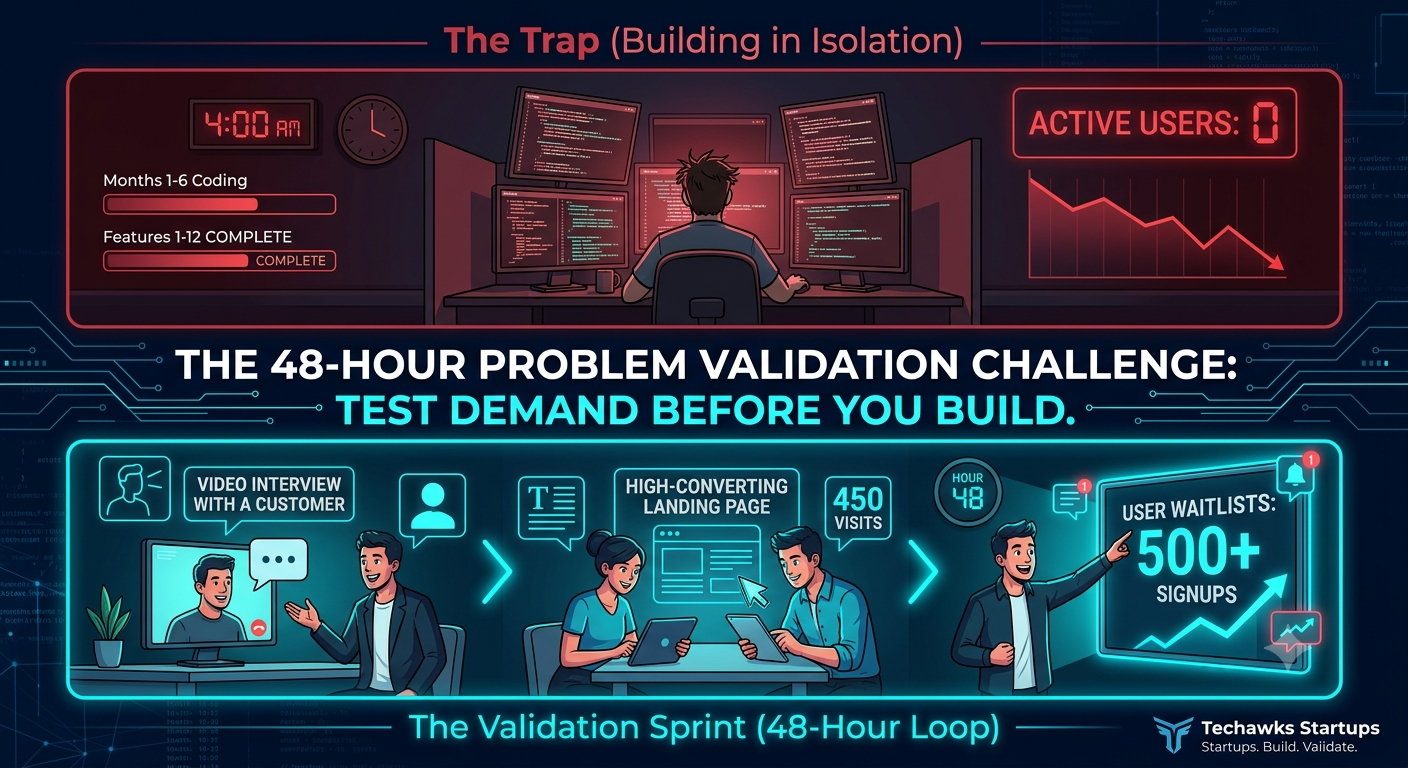
    Founders often waste months—and tens of thousands of dollars—building polished Minimum Viable Products (MVPs) only to launch to total silence. True validation doesn't come from positive feedback from friends; it comes from proving that prospective customers feel enough pain to give you their time, data, or money right now.
    Here is your 2-day actionable protocol to validate problem-solution fit:


    Day 1: Conduct 5 "Mom Test" Customer Interviews
    The Challenge: Speak to 5 ideal target users without pitching your product concept once.
    The Rules: Talk about their past behaviors and existing workflows, not hypothetical future promises ("Would you use a tool that...?").
    Ask: "How do you currently solve [Problem]?" and "How much time or money did that cost you last month?"
    The Benchmark: If none of your interviewees have actively spent money or effort trying to fix the problem in the last 90 days, it is a nice-to-have, not a hair-on-fire priority.


    Day 2: Launch a Low-Fidelity Smoke Test
    The Challenge: Build a simple, single-page landing page explaining your value proposition with a clear call-to-action (CTA).
    The Mechanics: Use a no-code builder to launch the page in under 3 hours.
    Define a high-intent conversion goal: a paid pre-order, a deposit, or a detailed onboarding questionnaire (not just an email newsletter signup).
    Drive 100–200 targeted visitors via direct outreach, niche community posts, or small test ad budgets.
    The Benchmark: Aim for a minimum 5% to 10% high-intent conversion rate. If users won't trade contact information or join a waitlist for your core promise, refactoring your messaging or target customer profile is necessary before building.


    Key Takeaways
    Validate pain, not opinions: Focus on how customers currently solve their problems today rather than asking for opinions on your future product.
    Require high-intent skin in the game: Look for validation signals like deposit payments, detailed onboarding forms, or letter-of-intent (LOI) signups.
    Speed to insight over perfection: You can validate core demand in 48 hours with low-code tools faster than building a multi-month prototype.


    CTA (Join Startup Founders & Entrepreneurs)
    Navigating early-stage validation, go-to-market strategies, or fundraising setup? [Join Startup Founders & Entrepreneurs] to swap teardowns, refine pitch decks, and build alongside fellow founders!
    The 48-Hour Problem Validation Challenge: Test Demand Before You Build Founders often waste months—and tens of thousands of dollars—building polished Minimum Viable Products (MVPs) only to launch to total silence. True validation doesn't come from positive feedback from friends; it comes from proving that prospective customers feel enough pain to give you their time, data, or money right now. Here is your 2-day actionable protocol to validate problem-solution fit: Day 1: Conduct 5 "Mom Test" Customer Interviews The Challenge: Speak to 5 ideal target users without pitching your product concept once. The Rules: Talk about their past behaviors and existing workflows, not hypothetical future promises ("Would you use a tool that...?"). Ask: "How do you currently solve [Problem]?" and "How much time or money did that cost you last month?" The Benchmark: If none of your interviewees have actively spent money or effort trying to fix the problem in the last 90 days, it is a nice-to-have, not a hair-on-fire priority. Day 2: Launch a Low-Fidelity Smoke Test The Challenge: Build a simple, single-page landing page explaining your value proposition with a clear call-to-action (CTA). The Mechanics: Use a no-code builder to launch the page in under 3 hours. Define a high-intent conversion goal: a paid pre-order, a deposit, or a detailed onboarding questionnaire (not just an email newsletter signup). Drive 100–200 targeted visitors via direct outreach, niche community posts, or small test ad budgets. The Benchmark: Aim for a minimum 5% to 10% high-intent conversion rate. If users won't trade contact information or join a waitlist for your core promise, refactoring your messaging or target customer profile is necessary before building. Key Takeaways Validate pain, not opinions: Focus on how customers currently solve their problems today rather than asking for opinions on your future product. Require high-intent skin in the game: Look for validation signals like deposit payments, detailed onboarding forms, or letter-of-intent (LOI) signups. Speed to insight over perfection: You can validate core demand in 48 hours with low-code tools faster than building a multi-month prototype. CTA (Join Startup Founders & Entrepreneurs) Navigating early-stage validation, go-to-market strategies, or fundraising setup? [Join Startup Founders & Entrepreneurs] to swap teardowns, refine pitch decks, and build alongside fellow founders!
    0 Comments 0 Shares 2K Views 0 Reviews
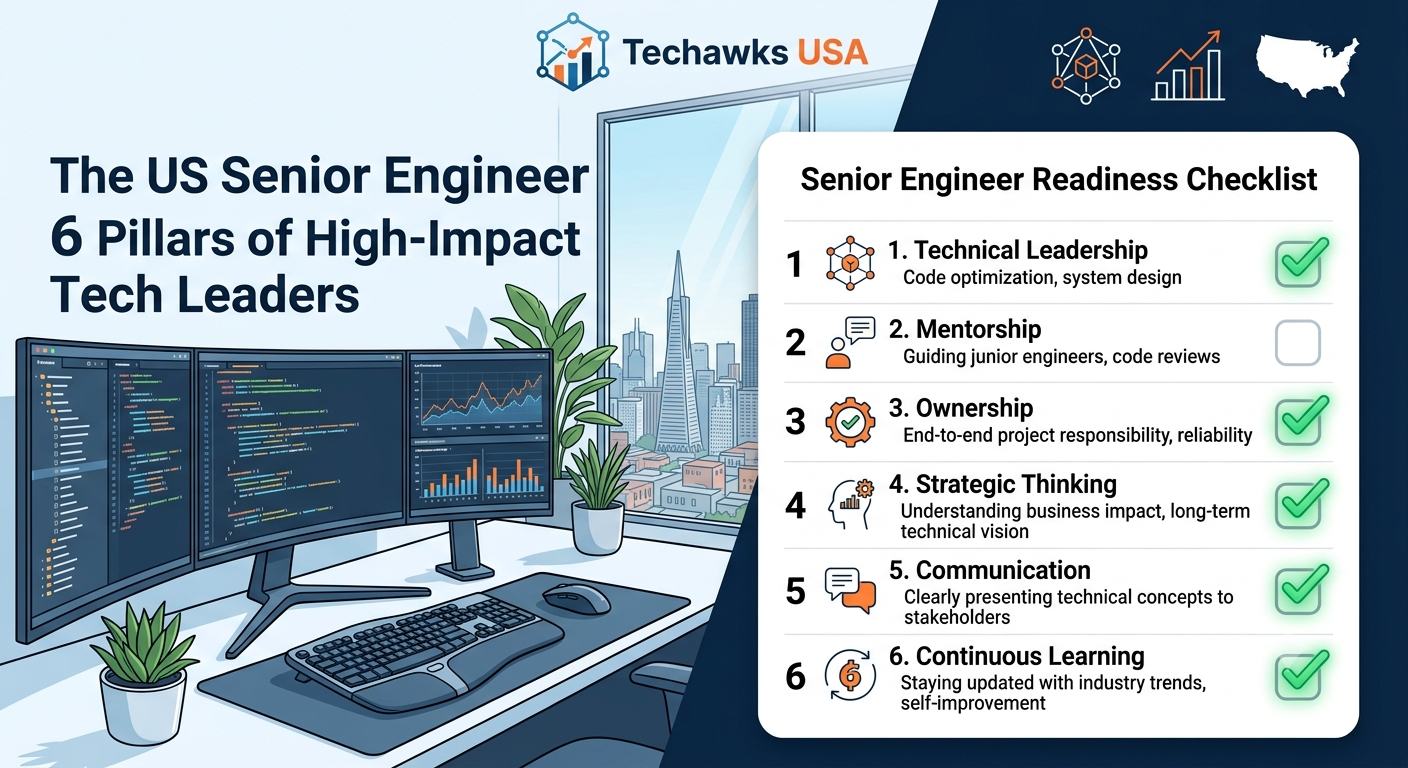
  • The US Senior Engineer Checklist: 6 Things You Must Master to Hit $300k+ TC


    Surpassing the Senior engineering threshold in the US tech ecosystem demands a shift from execution to influence. Use this checklist to evaluate your technical and architectural maturity.


    1. System Design & Architectural Ownership
    RFC / Design Doc Mastery: Author comprehensive Request for Comments (RFCs) that outline trade-offs, capacity planning, and failure modes before writing code.
    Cost-Aware Architecture: Calculate the infrastructure and cloud dollar cost of your system designs (compute, storage, data egress) before proposing them.
    Backward Compatibility: Ensure API changes and database migrations zero-downtime deploy across distributed systems.


    2. Production Readiness & Observability
    SLOs & SLAs: Define clear Service Level Objectives (SLOs) and Service Level Indicators (SLIs) for every microservice you own.
    On-Call Playbooks: Maintain detailed runbooks so any engineer on call can remediate incidents without escalating to you.
    Post-Mortem Culture: Drive blameless post-mortems focused on root-cause prevention rather than surface-level quick fixes.


    3. Cross-Functional Business Impact
    Product Alignment: Translate business metrics (CAC, LTV, churn) into technical key performance indicators (latency, throughput, uptime).
    Stakeholder Management: Explain technical debt and architectural investments in financial and business risk terms to non-technical leaders.


    4. Engineering Velocity & Automation
    CI/CD Optimization: Maintain pipeline build/test speeds so feature branches merge and deploy seamlessly.
    Shift-Left Security: Integrate automated SAST/DAST tools and dependency scanners into early developer workflows.


    5. Mentorship & Team Multiplication
    Code Review Rigor: Provide constructive, high-signal feedback that elevates junior developers without blocking PR velocity.
    Unblocking Others: Actively identify architectural bottlenecks across adjacent engineering pods and help solve them.


    6. Personal Brand & Internal Visibility
    Impact Documentation: Keep a running "Brag Document" tracking project metrics, architectural wins, and revenue impact for performance reviews.


    Technical Sharing: Present internal tech talks or author engineering blog posts highlighting technical wins.


    Key Takeaways
    Influence over execution: Senior-plus roles are defined by multiplying the impact of surrounding engineers, not just solo output.
    Architecture is business strategy: High earners in the US tech market evaluate cloud costs, reliability risks, and velocity trade-offs upfront.
    Document your impact: Quantifying technical wins in business terms is essential for promotions and high-tier compensation negotiations.


    CTA
    πŸ‡ΊπŸ‡Έ Looking to scale your engineering leadership, master system design, and navigate the US tech industry? Join the Techawks USA community for architecture breakdowns, career strategy guides, and high-signal developer networking!


    πŸ‘‰ [Join Techawks USA]
    The US Senior Engineer Checklist: 6 Things You Must Master to Hit $300k+ TC Surpassing the Senior engineering threshold in the US tech ecosystem demands a shift from execution to influence. Use this checklist to evaluate your technical and architectural maturity. 1. System Design & Architectural Ownership RFC / Design Doc Mastery: Author comprehensive Request for Comments (RFCs) that outline trade-offs, capacity planning, and failure modes before writing code. Cost-Aware Architecture: Calculate the infrastructure and cloud dollar cost of your system designs (compute, storage, data egress) before proposing them. Backward Compatibility: Ensure API changes and database migrations zero-downtime deploy across distributed systems. 2. Production Readiness & Observability SLOs & SLAs: Define clear Service Level Objectives (SLOs) and Service Level Indicators (SLIs) for every microservice you own. On-Call Playbooks: Maintain detailed runbooks so any engineer on call can remediate incidents without escalating to you. Post-Mortem Culture: Drive blameless post-mortems focused on root-cause prevention rather than surface-level quick fixes. 3. Cross-Functional Business Impact Product Alignment: Translate business metrics (CAC, LTV, churn) into technical key performance indicators (latency, throughput, uptime). Stakeholder Management: Explain technical debt and architectural investments in financial and business risk terms to non-technical leaders. 4. Engineering Velocity & Automation CI/CD Optimization: Maintain pipeline build/test speeds so feature branches merge and deploy seamlessly. Shift-Left Security: Integrate automated SAST/DAST tools and dependency scanners into early developer workflows. 5. Mentorship & Team Multiplication Code Review Rigor: Provide constructive, high-signal feedback that elevates junior developers without blocking PR velocity. Unblocking Others: Actively identify architectural bottlenecks across adjacent engineering pods and help solve them. 6. Personal Brand & Internal Visibility Impact Documentation: Keep a running "Brag Document" tracking project metrics, architectural wins, and revenue impact for performance reviews. Technical Sharing: Present internal tech talks or author engineering blog posts highlighting technical wins. Key Takeaways Influence over execution: Senior-plus roles are defined by multiplying the impact of surrounding engineers, not just solo output. Architecture is business strategy: High earners in the US tech market evaluate cloud costs, reliability risks, and velocity trade-offs upfront. Document your impact: Quantifying technical wins in business terms is essential for promotions and high-tier compensation negotiations. CTA πŸ‡ΊπŸ‡Έ Looking to scale your engineering leadership, master system design, and navigate the US tech industry? Join the Techawks USA community for architecture breakdowns, career strategy guides, and high-signal developer networking! πŸ‘‰ [Join Techawks USA]
    0 Comments 0 Shares 2K Views 0 Reviews
  • The Ultimate Pre-Interview Tech Checklist: 10 Critical Steps Before Every First Round
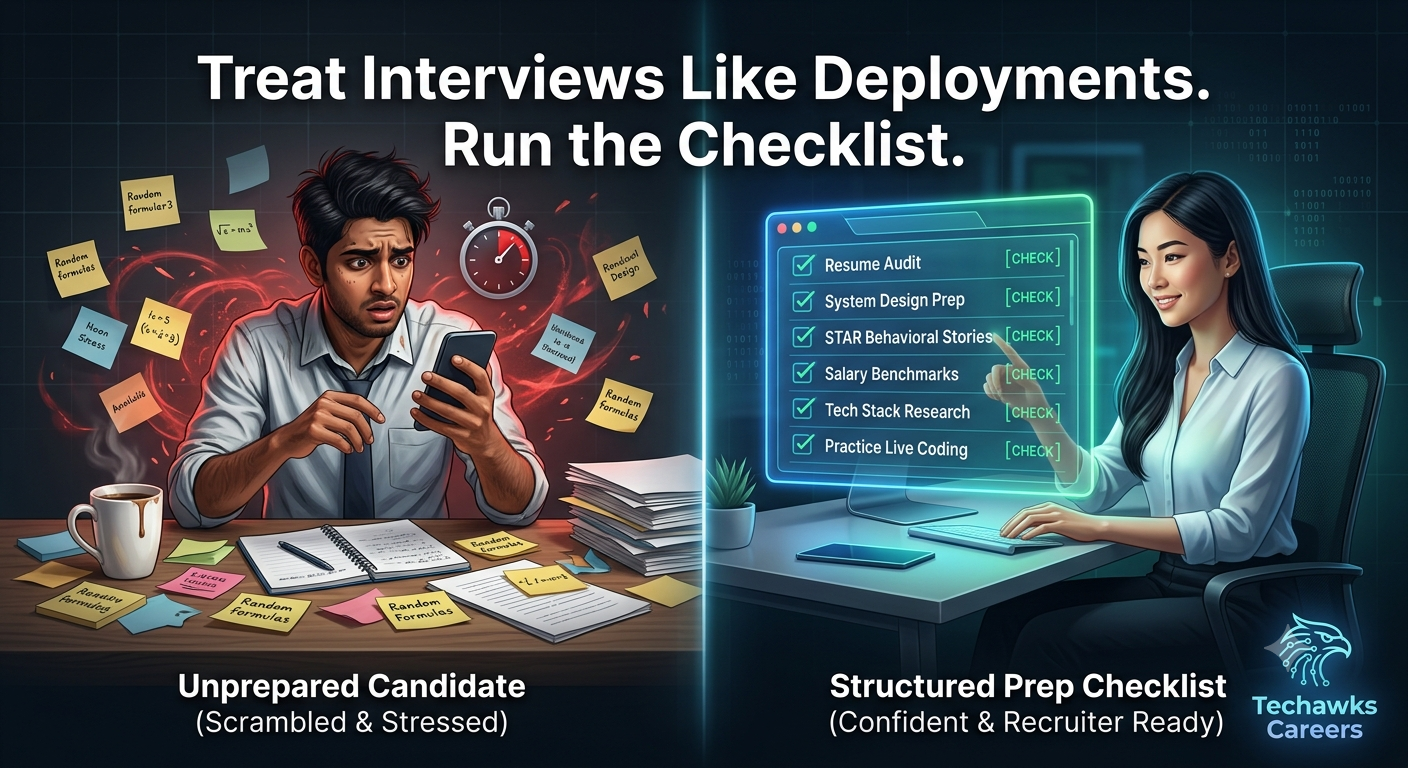
    Passing first-round technical and recruiter screens requires more than scanning your resume an hour before the call. To project confidence, competence, and clarity, treat your interview preparation like a deployment checklist.


    Work through these 10 actionable steps 24 to 48 hours before every interview:


    Phase 1: Company & Product Reconnaissance
    1. Test the Core Product: Sign up for the company’s product or app, try its main features, and note two areas of smooth UX and two potential technical improvements.
    2. Map the Tech Stack: Review engineering job postings, tech blogs, or GitHub profiles from the company to identify their primary databases, frameworks, and cloud providers.
    3. Research Recent Milestones: Identify recent product launches, major feature releases, or technical blog posts to ask informed questions during the interview.


    Phase 2: Technical & Behavioral Alignment
    4. Audit Your Resume Bullet Points: Be prepared to explain the architectural decisions, trade-offs, and metrics behind every project listed on your resume.
    5. Prepare 3 STAR Stories: Prepare concise Situation-Task-Action-Result (STAR) stories highlighting a complex bug fix, a technical trade-off debate, and a cross-functional disagreement.
    6. Rehearse Your "Tell Me About Yourself" Pitch: Keep your professional background pitch under 90 seconds, focusing on technical growth, recent impact, and why this specific role fits your trajectory.


    Phase 3: System & Live Coding Setup
    7. Verify Your Local Environment: Test your IDE, terminal extensions, node/python runtime versions, and local webcams to prevent technical glitches during live coding screens.
    8. Bookmark Documentation Quick-Links: Keep language syntax docs, standard library references, and key API specs open in separate browser tabs for quick reference.


    Phase 4: Strategic Questions for the Hiring Team
    9. Prepare 3 Reverse-Interview Questions: Draft questions focused on engineering culture, deployment frequency, on-call schedules, or tech debt management.
    10. Define Your Salary Expectation Range: Research benchmark salary data for the position, level, and location so you can answer compensation questions confidently.


    Key Takeaways
    Systematize Preparation: Treat every interview prep like a deployment procedure to eliminate missed details.
    Understand the Business: Candidates who test the actual product and understand company constraints stand out immediately.
    Control the Technical Environment: Eliminate setup friction by auditing your local IDE and testing equipment well ahead of time.


    CTA
    How do you prepare for high-stakes technical interviews? Join Tech Jobs & Opportunities to access downloadable interview checklists, review salary benchmarks, and practice mock interviews with fellow software engineers.
    The Ultimate Pre-Interview Tech Checklist: 10 Critical Steps Before Every First Round Passing first-round technical and recruiter screens requires more than scanning your resume an hour before the call. To project confidence, competence, and clarity, treat your interview preparation like a deployment checklist. Work through these 10 actionable steps 24 to 48 hours before every interview: Phase 1: Company & Product Reconnaissance 1. Test the Core Product: Sign up for the company’s product or app, try its main features, and note two areas of smooth UX and two potential technical improvements. 2. Map the Tech Stack: Review engineering job postings, tech blogs, or GitHub profiles from the company to identify their primary databases, frameworks, and cloud providers. 3. Research Recent Milestones: Identify recent product launches, major feature releases, or technical blog posts to ask informed questions during the interview. Phase 2: Technical & Behavioral Alignment 4. Audit Your Resume Bullet Points: Be prepared to explain the architectural decisions, trade-offs, and metrics behind every project listed on your resume. 5. Prepare 3 STAR Stories: Prepare concise Situation-Task-Action-Result (STAR) stories highlighting a complex bug fix, a technical trade-off debate, and a cross-functional disagreement. 6. Rehearse Your "Tell Me About Yourself" Pitch: Keep your professional background pitch under 90 seconds, focusing on technical growth, recent impact, and why this specific role fits your trajectory. Phase 3: System & Live Coding Setup 7. Verify Your Local Environment: Test your IDE, terminal extensions, node/python runtime versions, and local webcams to prevent technical glitches during live coding screens. 8. Bookmark Documentation Quick-Links: Keep language syntax docs, standard library references, and key API specs open in separate browser tabs for quick reference. Phase 4: Strategic Questions for the Hiring Team 9. Prepare 3 Reverse-Interview Questions: Draft questions focused on engineering culture, deployment frequency, on-call schedules, or tech debt management. 10. Define Your Salary Expectation Range: Research benchmark salary data for the position, level, and location so you can answer compensation questions confidently. Key Takeaways Systematize Preparation: Treat every interview prep like a deployment procedure to eliminate missed details. Understand the Business: Candidates who test the actual product and understand company constraints stand out immediately. Control the Technical Environment: Eliminate setup friction by auditing your local IDE and testing equipment well ahead of time. CTA How do you prepare for high-stakes technical interviews? Join Tech Jobs & Opportunities to access downloadable interview checklists, review salary benchmarks, and practice mock interviews with fellow software engineers.
    0 Comments 0 Shares 2K Views 0 Reviews