• Building Cross-Border Fintech Architecture: 4 Non-Negotiable System Design Rules
    As the UAE solidifies its position as a global tech hub connecting Middle Eastern, Asian, and European markets, engineering teams frequently face the challenge of processing multi-currency transactions across distributed nodes. Handling high-frequency payments across different monetary networks requires absolute data consistency and fault-tolerant architecture.


    Whether you are building ledger systems, payment gateways, or remittance rails, here are four engineering standards every team should follow:


    Enforce Double-Entry Bookkeeping Principles
    Never store user balances as a single mutable integer column (UPDATE accounts SET balance = balance + amount). Instead, implement an immutable double-entry ledger where every financial transaction consists of equal and opposite debit and credit entries. This preserves a complete audit trail and prevents balance drift.


    Mitigate Currency Conversion Race Conditions
    Exchange rates fluctuate constantly. When handling multi-currency conversions, snapshot the exchange rate at the exact moment a transaction quote is generated, sign the quote with a cryptographic HMAC, and attach an explicit expiration time (TTL) to prevent front-running or arbitrage during execution.


    Design for Distributed Idempotency
    Network blips across cross-border API calls are common. Ensure every transaction payload carries a unique client-generated Idempotency Key stored in Redis or a distributed lock service. If a payment request is retried due to a timeout, your backend returns the original status without double-charging the user.


    Implement Local Data Residency and Encryption Controls
    Store and process sensitive financial and customer data in accordance with local cloud region requirements (e.g., using UAE-based cloud regions like me-central-1 or me-south-1). Ensure field-level encryption for critical identifiers using hardware security modules (HSM) or dedicated key management systems.


    Key Takeaways
    Immutable double-entry ledgers ensure complete auditability and prevent balance corruptions.
    Signed, time-bound conversion quotes protect against foreign exchange rate volatility during execution.
    Distributed idempotency keys guarantee transaction safety across unstable network connections.


    CTA (Join Techawks UAE)
    Scaling fintech and enterprise systems across global markets requires battle-tested engineering. Join Techawks UAE today to connect with tech leaders, cloud architects, and software engineers driving innovation in the region.
    Building Cross-Border Fintech Architecture: 4 Non-Negotiable System Design Rules As the UAE solidifies its position as a global tech hub connecting Middle Eastern, Asian, and European markets, engineering teams frequently face the challenge of processing multi-currency transactions across distributed nodes. Handling high-frequency payments across different monetary networks requires absolute data consistency and fault-tolerant architecture. Whether you are building ledger systems, payment gateways, or remittance rails, here are four engineering standards every team should follow: Enforce Double-Entry Bookkeeping Principles Never store user balances as a single mutable integer column (UPDATE accounts SET balance = balance + amount). Instead, implement an immutable double-entry ledger where every financial transaction consists of equal and opposite debit and credit entries. This preserves a complete audit trail and prevents balance drift. Mitigate Currency Conversion Race Conditions Exchange rates fluctuate constantly. When handling multi-currency conversions, snapshot the exchange rate at the exact moment a transaction quote is generated, sign the quote with a cryptographic HMAC, and attach an explicit expiration time (TTL) to prevent front-running or arbitrage during execution. Design for Distributed Idempotency Network blips across cross-border API calls are common. Ensure every transaction payload carries a unique client-generated Idempotency Key stored in Redis or a distributed lock service. If a payment request is retried due to a timeout, your backend returns the original status without double-charging the user. Implement Local Data Residency and Encryption Controls Store and process sensitive financial and customer data in accordance with local cloud region requirements (e.g., using UAE-based cloud regions like me-central-1 or me-south-1). Ensure field-level encryption for critical identifiers using hardware security modules (HSM) or dedicated key management systems. Key Takeaways Immutable double-entry ledgers ensure complete auditability and prevent balance corruptions. Signed, time-bound conversion quotes protect against foreign exchange rate volatility during execution. Distributed idempotency keys guarantee transaction safety across unstable network connections. CTA (Join Techawks UAE) Scaling fintech and enterprise systems across global markets requires battle-tested engineering. Join Techawks UAE today to connect with tech leaders, cloud architects, and software engineers driving innovation in the region.
    0 Comments 0 Shares 21 Views 0 Reviews
  • How to Master Remote Technical Interviews in the Canadian Tech Market
    Whether you are based in Toronto, Vancouver, Montreal, or working remotely from anywhere across Canada, technical hiring processes have largely shifted to virtual-first formats.
    Successfully landing your next role means knowing how to communicate complex technical concepts through a screen just as clearly as you write code.Here are three core strategies to elevate your technical interview performance:


    1. Talk Through Your Problem-Solving Strategy Out Loud
    In a remote interview, silence can create a disconnect. Interviewers are assessing how you think, not just your final solution.
    Break down the problem statement before writing a single line of code.State your assumptions clearly and clarify edge cases up front.
    Walk the interviewer through your thought process as you evaluate trade-offs (e.g., time complexity vs. space complexity).


    2. Contextualize Your Experience for the Canadian Ecosystem
    Canadian tech companies—ranging from early-stage startups to major enterprise hubs—prioritize scalable, cross-functional collaboration. When discussing past projects:
    Emphasize practical business impact alongside technical achievements (e.g., "Optimized API latency by 35%, which improved end-user checkout conversion")
    Highlight experience with modern cloud tooling (AWS, GCP, or Azure) and agile workflows tailored to remote environments.


    3. Treat the System Design Phase like an Interactive Architecture Review
    System design questions are designed to test real-world trade-offs.
    Use virtual whiteboarding tools efficiently. Sketch out clear components (databases, load balancers, microservices).
    Ask probing questions about scale, expected traffic, and constraints before proposing a high-level architecture.
    Address security, data privacy, and maintainability early in the discussion.


    Key Takeaways
    Communication over execution: Clearly explaining your logic is just as vital as writing functional code.Business-driven metrics: Frame your technical contributions around measurable outcomes and business value.Collaborative design: Treat system design discussions as a pair-programming session with a peer rather than an exam.


    CTA
    Looking to connect with top tech talent, industry mentors, and developers across the country? [Join Techawks Canada] today to access exclusive resources, community events, and technical discussions.
    How to Master Remote Technical Interviews in the Canadian Tech Market Whether you are based in Toronto, Vancouver, Montreal, or working remotely from anywhere across Canada, technical hiring processes have largely shifted to virtual-first formats. Successfully landing your next role means knowing how to communicate complex technical concepts through a screen just as clearly as you write code.Here are three core strategies to elevate your technical interview performance: 1. Talk Through Your Problem-Solving Strategy Out Loud In a remote interview, silence can create a disconnect. Interviewers are assessing how you think, not just your final solution. Break down the problem statement before writing a single line of code.State your assumptions clearly and clarify edge cases up front. Walk the interviewer through your thought process as you evaluate trade-offs (e.g., time complexity vs. space complexity). 2. Contextualize Your Experience for the Canadian Ecosystem Canadian tech companies—ranging from early-stage startups to major enterprise hubs—prioritize scalable, cross-functional collaboration. When discussing past projects: Emphasize practical business impact alongside technical achievements (e.g., "Optimized API latency by 35%, which improved end-user checkout conversion") Highlight experience with modern cloud tooling (AWS, GCP, or Azure) and agile workflows tailored to remote environments. 3. Treat the System Design Phase like an Interactive Architecture Review System design questions are designed to test real-world trade-offs. Use virtual whiteboarding tools efficiently. Sketch out clear components (databases, load balancers, microservices). Ask probing questions about scale, expected traffic, and constraints before proposing a high-level architecture. Address security, data privacy, and maintainability early in the discussion. Key Takeaways Communication over execution: Clearly explaining your logic is just as vital as writing functional code.Business-driven metrics: Frame your technical contributions around measurable outcomes and business value.Collaborative design: Treat system design discussions as a pair-programming session with a peer rather than an exam. CTA Looking to connect with top tech talent, industry mentors, and developers across the country? [Join Techawks Canada] today to access exclusive resources, community events, and technical discussions.
    0 Comments 0 Shares 24 Views 0 Reviews
  • Designing Resilient Distributed Systems: 4 Circuit Breaker Patterns Every US Engineering Team Should Master
    In high-throughput, cloud-native architecture, failure is guaranteed. The true test of a engineering setup isn't whether services fail, but how gracefully the system degrades when they do. Implementing a circuit breaker pattern (using libraries like Resilience4j, Sentinel, or Istio/Envoy service meshes) prevents a single slow third-party API or database connection from consuming all application threads and crashing your entire platform.


    Here are four essential strategies for implementing circuit breakers effectively in production:


    Define Explicit Failure and Slow-Call Thresholds
    Do not trigger a trip solely on 5xx error responses. Configure your breaker to measure slow execution times (e.g., requests taking over 1.5s) alongside explicit network timeouts. If 50% of requests fail or time out within a 10-second rolling window, open the circuit immediately.


    Leverage the Half-Open State for Smooth Recovery
    Once a circuit opens, set a cool-down timer (e.g., 30 seconds) before transitioning to a Half-Open state. In this state, allow a limited trial batch of requests (e.g., 10 requests) through to test downstream health. If they succeed, reset to Closed; if any fail, revert to Open.


    Provide Meaningful Fallbacks
    An open circuit should never default to an unhandled crash for the end-user. Design predictable fallback responses:
    Cached Data: Return slightly stale data from an in-memory cache.
    Degraded UI: Hide optional widgets or recommendations while maintaining core functionality.
    Queued Execution: Accept payload writes asynchronously into a message broker for deferred processing.
    Pair Circuit Breakers with Distributed Tracing
    A tripped breaker is a symptom, not the root cause. Propagate W3C Trace Context or Jaeger headers through all requests so your observability tools can immediately pinpoint which downstream dependency triggered the isolation.


    Key Takeaways
    Circuit breakers isolate failing dependencies before resource exhaustion spreads across services.
    The Half-Open state enables automated, controlled recovery without manual operational intervention.
    Fallbacks protect user experience by offering graceful degradation instead of hard application failures.


    CTA (Join Techawks USA)
    Building scalable, fault-tolerant infrastructure demands practical systems engineering. Join Techawks USA today to collaborate with staff engineers, architects, and tech leaders driving innovation across the US tech ecosystem.
    Designing Resilient Distributed Systems: 4 Circuit Breaker Patterns Every US Engineering Team Should Master In high-throughput, cloud-native architecture, failure is guaranteed. The true test of a engineering setup isn't whether services fail, but how gracefully the system degrades when they do. Implementing a circuit breaker pattern (using libraries like Resilience4j, Sentinel, or Istio/Envoy service meshes) prevents a single slow third-party API or database connection from consuming all application threads and crashing your entire platform. Here are four essential strategies for implementing circuit breakers effectively in production: Define Explicit Failure and Slow-Call Thresholds Do not trigger a trip solely on 5xx error responses. Configure your breaker to measure slow execution times (e.g., requests taking over 1.5s) alongside explicit network timeouts. If 50% of requests fail or time out within a 10-second rolling window, open the circuit immediately. Leverage the Half-Open State for Smooth Recovery Once a circuit opens, set a cool-down timer (e.g., 30 seconds) before transitioning to a Half-Open state. In this state, allow a limited trial batch of requests (e.g., 10 requests) through to test downstream health. If they succeed, reset to Closed; if any fail, revert to Open. Provide Meaningful Fallbacks An open circuit should never default to an unhandled crash for the end-user. Design predictable fallback responses: Cached Data: Return slightly stale data from an in-memory cache. Degraded UI: Hide optional widgets or recommendations while maintaining core functionality. Queued Execution: Accept payload writes asynchronously into a message broker for deferred processing. Pair Circuit Breakers with Distributed Tracing A tripped breaker is a symptom, not the root cause. Propagate W3C Trace Context or Jaeger headers through all requests so your observability tools can immediately pinpoint which downstream dependency triggered the isolation. Key Takeaways Circuit breakers isolate failing dependencies before resource exhaustion spreads across services. The Half-Open state enables automated, controlled recovery without manual operational intervention. Fallbacks protect user experience by offering graceful degradation instead of hard application failures. CTA (Join Techawks USA) Building scalable, fault-tolerant infrastructure demands practical systems engineering. Join Techawks USA today to collaborate with staff engineers, architects, and tech leaders driving innovation across the US tech ecosystem.
    0 Comments 0 Shares 23 Views 0 Reviews
  • How to Build a Production-Ready API Architecture: 5 Non-Negotiable Rules.
    Building scalable backend systems isn't about using the trendiest framework—it’s about implementing sound design principles that stand up to real-world traffic. Whether you are building with Node.js, Go, or Python, here are five architectural rules every engineer should follow before deploying to production:


    Implement Rate Limiting Early
    Protect your infrastructure from both accidental loops and malicious denial-of-service attacks. Use token bucket or leaky bucket algorithms (via Redis) to enforce request limits per user or IP address.


    Standardize Error Handling and Status Codes
    Never return generic 500 Internal Server Error responses with unhelpful payloads. Use predictable HTTP status codes (e.g., 400 for client errors, 401 for unauthenticated requests, 429 for rate limits) paired with a standard JSON error schema:


    JSON
    "error":
    "code": "INVALID_PAYLOAD",
    "message": "Field 'email' must be a valid email address.",
    "timestamp": "2026-08-03T12:00:00Z"


    Decouple Heavy Workflows with Queues
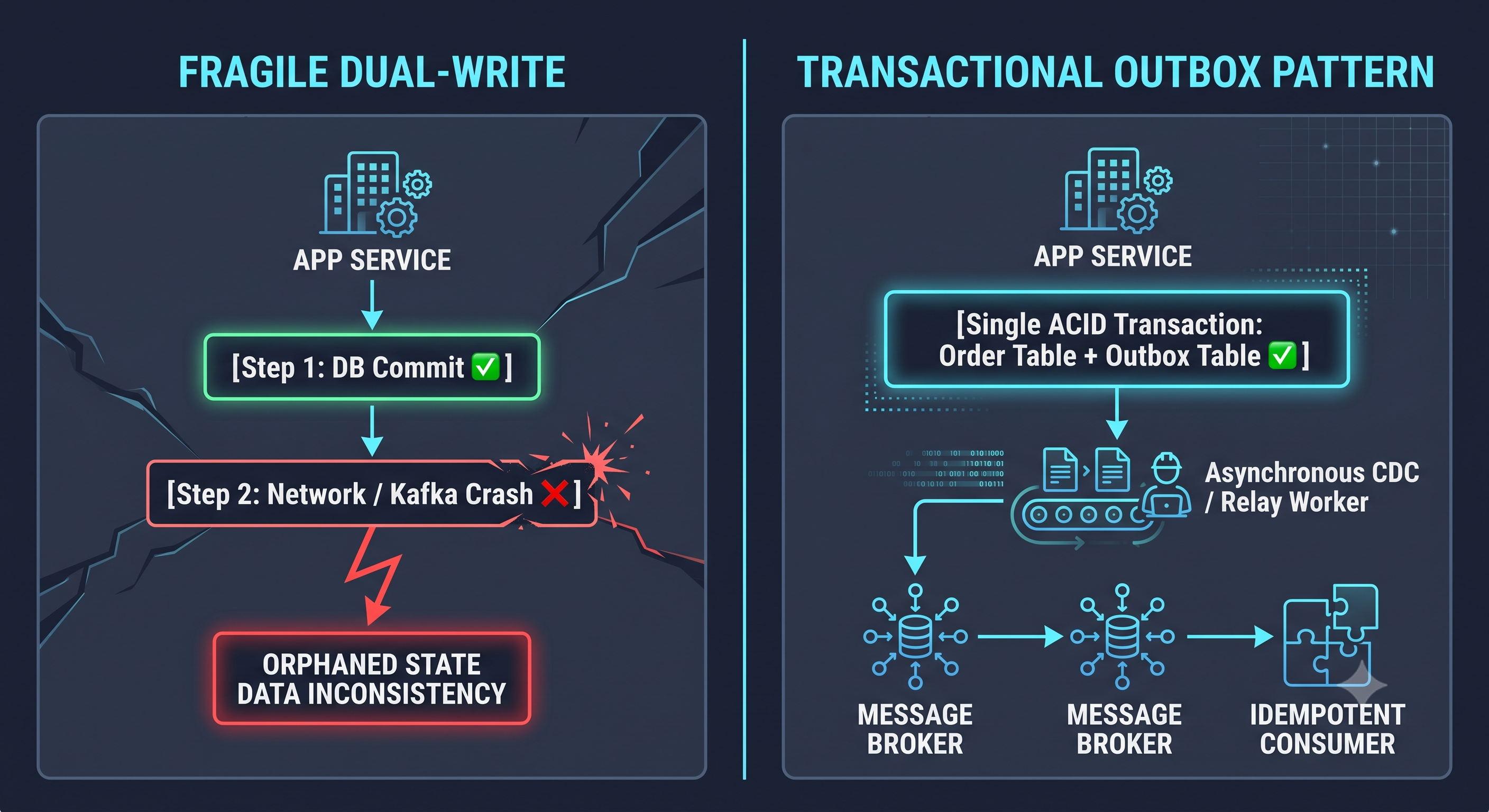
    If an endpoint takes more than 200ms to process, it shouldn't be synchronous. Offload background tasks like sending emails, processing images, or generating PDFs to a message broker like RabbitMQ or BullMQ.


    Design for Idempotency
    Network drops happen. Ensure that mutating requests (like payment processing or creation endpoints) use idempotency keys. If a client retries a request due to a timeout, your system should yield the original response without duplicating the action.


    Log for Observability, Not Just Debugging
    Avoid console.log() statements. Use structured logging (JSON format) with trace IDs so you can track a single request’s lifecycle across multiple microservices.


    Key Takeaways
    Rate limiting prevents resource exhaustion before it starts.
    Predictable error structures simplify frontend integration and debugging.
    Asynchronous message queues keep response times low under heavy load.
    Idempotent endpoints guarantee data integrity during network failures.


    CTA (Join Techawks India)
    Level up your backend engineering skills with developers across the country. Join Techawks India today to access exclusive architecture breakdowns, code reviews, and tech discussions.
    How to Build a Production-Ready API Architecture: 5 Non-Negotiable Rules. Building scalable backend systems isn't about using the trendiest framework—it’s about implementing sound design principles that stand up to real-world traffic. Whether you are building with Node.js, Go, or Python, here are five architectural rules every engineer should follow before deploying to production: Implement Rate Limiting Early Protect your infrastructure from both accidental loops and malicious denial-of-service attacks. Use token bucket or leaky bucket algorithms (via Redis) to enforce request limits per user or IP address. Standardize Error Handling and Status Codes Never return generic 500 Internal Server Error responses with unhelpful payloads. Use predictable HTTP status codes (e.g., 400 for client errors, 401 for unauthenticated requests, 429 for rate limits) paired with a standard JSON error schema: JSON "error": "code": "INVALID_PAYLOAD", "message": "Field 'email' must be a valid email address.", "timestamp": "2026-08-03T12:00:00Z" Decouple Heavy Workflows with Queues If an endpoint takes more than 200ms to process, it shouldn't be synchronous. Offload background tasks like sending emails, processing images, or generating PDFs to a message broker like RabbitMQ or BullMQ. Design for Idempotency Network drops happen. Ensure that mutating requests (like payment processing or creation endpoints) use idempotency keys. If a client retries a request due to a timeout, your system should yield the original response without duplicating the action. Log for Observability, Not Just Debugging Avoid console.log() statements. Use structured logging (JSON format) with trace IDs so you can track a single request’s lifecycle across multiple microservices. Key Takeaways Rate limiting prevents resource exhaustion before it starts. Predictable error structures simplify frontend integration and debugging. Asynchronous message queues keep response times low under heavy load. Idempotent endpoints guarantee data integrity during network failures. CTA (Join Techawks India) Level up your backend engineering skills with developers across the country. Join Techawks India today to access exclusive architecture breakdowns, code reviews, and tech discussions.
    0 Comments 0 Shares 24 Views 0 Reviews
  • How Data Structures and Algorithms Actually Apply to Real-World Software Engineering
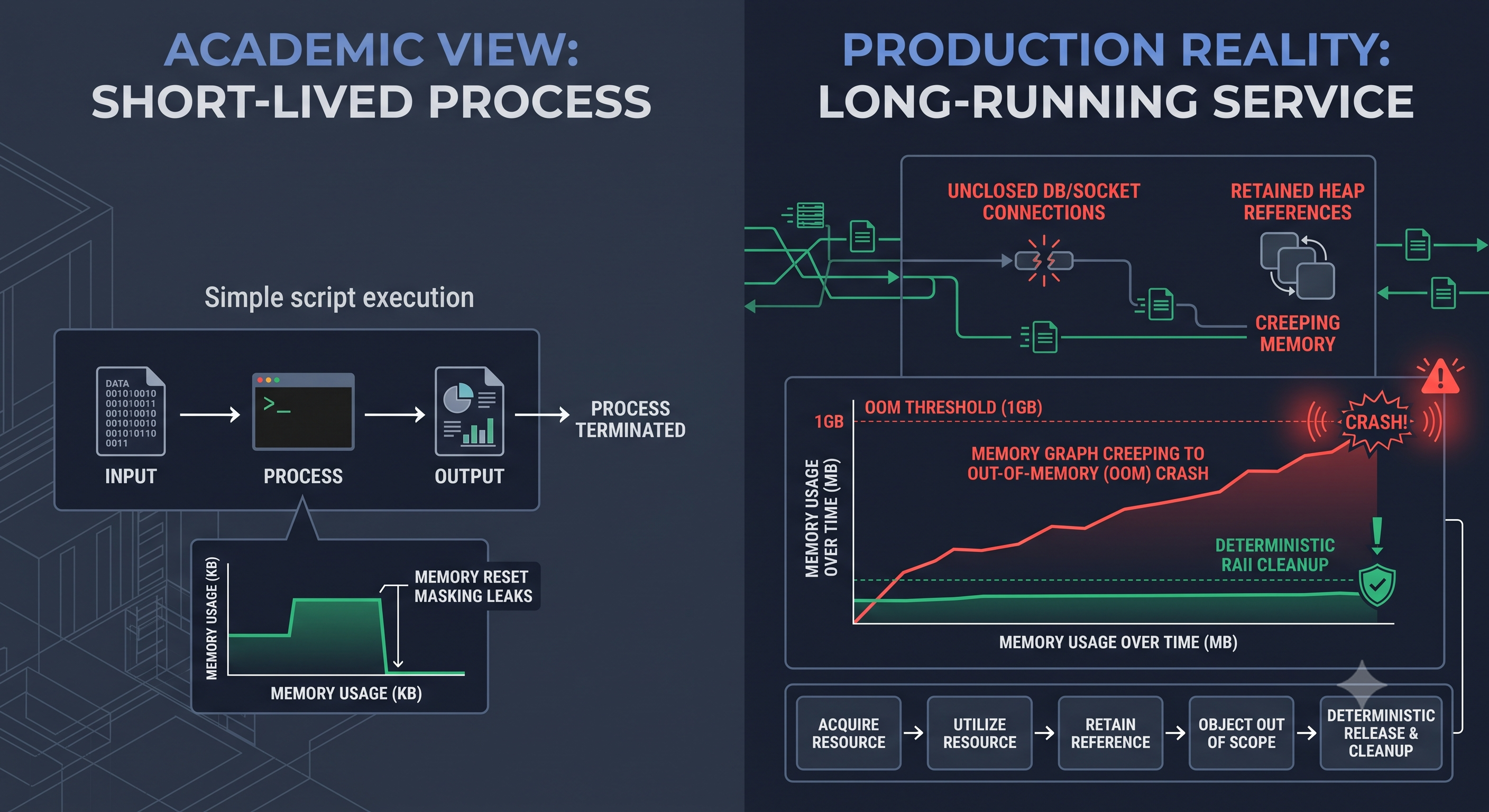
    When you study DSA for class exams or coding challenges, problems feel abstract—reversing linked lists or balancing trees in a controlled environment. However, when software engineers build scalable web apps, mobile services, or data pipelines, these concepts dictate how fast a system runs and how much server memory it consumes.Here is how foundational data structures map directly to real-world engineering challenges


    1. Hash Tables (Objects / Dictionaries) vs. Arrays
    The Academic View: Searching an array takes $O(n)$ time, while a Hash Table offers $O(1)$ constant time lookup on average.
    The Production Reality: Imagine building a user authentication middleware that runs on every API request. If you store session tokens in an Array, every API call requires scanning through every active user—slowing down the app as users grow. Using a Hash Map or Redis key-value store guarantees instant authorization checks regardless of user count.


    2. Queues in Asynchronous Background Processing
    The Academic View: A First-In, First-Out (FIFO) queue buffers data elements for sequential processing.
    The Production Reality: When a user signs up or uploads a video on a platform, processing tasks (like rendering thumbnails or sending welcome emails) shouldn't block the UI. Engineering teams send these tasks to background message queues (e.g., RabbitMQ, Kafka, or AWS SQS). The application responds instantly, while worker processes pull tasks from the queue in order.


    3. Graphs in Recommendation Systems & Social Networks
    The Academic View: Graphs consist of nodes (vertices) connected by edges, traversed using Breadth-First Search (BFS) or Depth-First Search (DFS).
    The Production Reality: Social networks like LinkedIn or Instagram rely on graph databases. Users are nodes, and connections or friendships are edges. Finding "mutual connections" or "people you may know" uses BFS traversal algorithms to discover degree-of-separation paths efficiently across millions of users.


    4. Trees in Database Indexing
    The Academic View: Binary Search Trees and B-Trees keep data sorted for logarithmic search time ($O(\log n)$).
    The Production Reality: Relational databases like PostgreSQL and MySQL use B-Trees to build indexes on columns. Searching through millions of database rows without an index requires a slow full-table scan; an indexed search pinpoints data in milliseconds.How to Shift Your Study ApproachInstead of just memorizing syntax for coding tests, ask yourself: "Where in a modern web application would this data structure save server memory or reduce latency?" Linking abstract theory to system behavior is what separates top CS students from industry-ready software engineers.


    Key Takeaways
    Algorithms Impact Performance: DSA concepts govern system responsiveness, database speed, and hosting costs in real applications.Select for Scalability: Choosing an $O(1)$ lookup or an $O(\log n)$ search structure prevents server slowdowns when user traffic scales.Connect Theory to Architecture: Understanding background queues, indexing trees, and graph traversal makes complex software design intuitive.


    CTA
    Want to bridge the gap between computer science coursework and building real-world software? Join Students in Tech to access project guides, join peer coding sessions, and connect with senior engineers who can mentor your journey.
    How Data Structures and Algorithms Actually Apply to Real-World Software Engineering When you study DSA for class exams or coding challenges, problems feel abstract—reversing linked lists or balancing trees in a controlled environment. However, when software engineers build scalable web apps, mobile services, or data pipelines, these concepts dictate how fast a system runs and how much server memory it consumes.Here is how foundational data structures map directly to real-world engineering challenges 1. Hash Tables (Objects / Dictionaries) vs. Arrays The Academic View: Searching an array takes $O(n)$ time, while a Hash Table offers $O(1)$ constant time lookup on average. The Production Reality: Imagine building a user authentication middleware that runs on every API request. If you store session tokens in an Array, every API call requires scanning through every active user—slowing down the app as users grow. Using a Hash Map or Redis key-value store guarantees instant authorization checks regardless of user count. 2. Queues in Asynchronous Background Processing The Academic View: A First-In, First-Out (FIFO) queue buffers data elements for sequential processing. The Production Reality: When a user signs up or uploads a video on a platform, processing tasks (like rendering thumbnails or sending welcome emails) shouldn't block the UI. Engineering teams send these tasks to background message queues (e.g., RabbitMQ, Kafka, or AWS SQS). The application responds instantly, while worker processes pull tasks from the queue in order. 3. Graphs in Recommendation Systems & Social Networks The Academic View: Graphs consist of nodes (vertices) connected by edges, traversed using Breadth-First Search (BFS) or Depth-First Search (DFS). The Production Reality: Social networks like LinkedIn or Instagram rely on graph databases. Users are nodes, and connections or friendships are edges. Finding "mutual connections" or "people you may know" uses BFS traversal algorithms to discover degree-of-separation paths efficiently across millions of users. 4. Trees in Database Indexing The Academic View: Binary Search Trees and B-Trees keep data sorted for logarithmic search time ($O(\log n)$). The Production Reality: Relational databases like PostgreSQL and MySQL use B-Trees to build indexes on columns. Searching through millions of database rows without an index requires a slow full-table scan; an indexed search pinpoints data in milliseconds.How to Shift Your Study ApproachInstead of just memorizing syntax for coding tests, ask yourself: "Where in a modern web application would this data structure save server memory or reduce latency?" Linking abstract theory to system behavior is what separates top CS students from industry-ready software engineers. Key Takeaways Algorithms Impact Performance: DSA concepts govern system responsiveness, database speed, and hosting costs in real applications.Select for Scalability: Choosing an $O(1)$ lookup or an $O(\log n)$ search structure prevents server slowdowns when user traffic scales.Connect Theory to Architecture: Understanding background queues, indexing trees, and graph traversal makes complex software design intuitive. CTA Want to bridge the gap between computer science coursework and building real-world software? Join Students in Tech to access project guides, join peer coding sessions, and connect with senior engineers who can mentor your journey.
    0 Comments 0 Shares 429 Views 0 Reviews
  • How to Stop LLM Hallucinations: A 4-Step Prompt Engineering Strategy

    LLMs are incredible at reasoning and transformation, but notoriously unreliable as knowledge bases. When pushed for specific facts without constraints, models routinely invent believable falsehoods. The secret to reliable output isn't a larger model; it is framing the input to minimize ambiguity.
    Instead of relying on luck, structure your prompts using this 4-step precision framework:

    Supply explicit context (RAG pattern)
    Weak: "Summarize our return policy."
    Strong: "Based strictly on the text provided below, summarize the return policy. If the answer is not contained in the text, reply 'Information not available.'"

    Assign a clear persona & role
    Specify the expertise level, tone, and strict boundaries.
    Example: "Act as a meticulous senior code auditor. Identify performance bottlenecks in the following function. Do not comment on syntax or styling."

    Enforce Chain-of-Thought (CoT) reasoning
    Instruct the model to break down its logic step-by-step before producing the final answer. Forcing step-by-step reasoning significantly reduces logical leaps and errors.
    Example: "First, analyze the input parameters. Second, trace the loop execution. Third, output the final output value."

    Define structured, deterministic output formats
    Ask for outputs in formats like JSON, XML, or Markdown tables with precise keys. This prevents conversational padding and forces the model into structural compliance.
    How to Stop LLM Hallucinations: A 4-Step Prompt Engineering Strategy LLMs are incredible at reasoning and transformation, but notoriously unreliable as knowledge bases. When pushed for specific facts without constraints, models routinely invent believable falsehoods. The secret to reliable output isn't a larger model; it is framing the input to minimize ambiguity. Instead of relying on luck, structure your prompts using this 4-step precision framework: Supply explicit context (RAG pattern) Weak: "Summarize our return policy." Strong: "Based strictly on the text provided below, summarize the return policy. If the answer is not contained in the text, reply 'Information not available.'" Assign a clear persona & role Specify the expertise level, tone, and strict boundaries. Example: "Act as a meticulous senior code auditor. Identify performance bottlenecks in the following function. Do not comment on syntax or styling." Enforce Chain-of-Thought (CoT) reasoning Instruct the model to break down its logic step-by-step before producing the final answer. Forcing step-by-step reasoning significantly reduces logical leaps and errors. Example: "First, analyze the input parameters. Second, trace the loop execution. Third, output the final output value." Define structured, deterministic output formats Ask for outputs in formats like JSON, XML, or Markdown tables with precise keys. This prevents conversational padding and forces the model into structural compliance.
    0 Comments 0 Shares 2K Views 0 Reviews