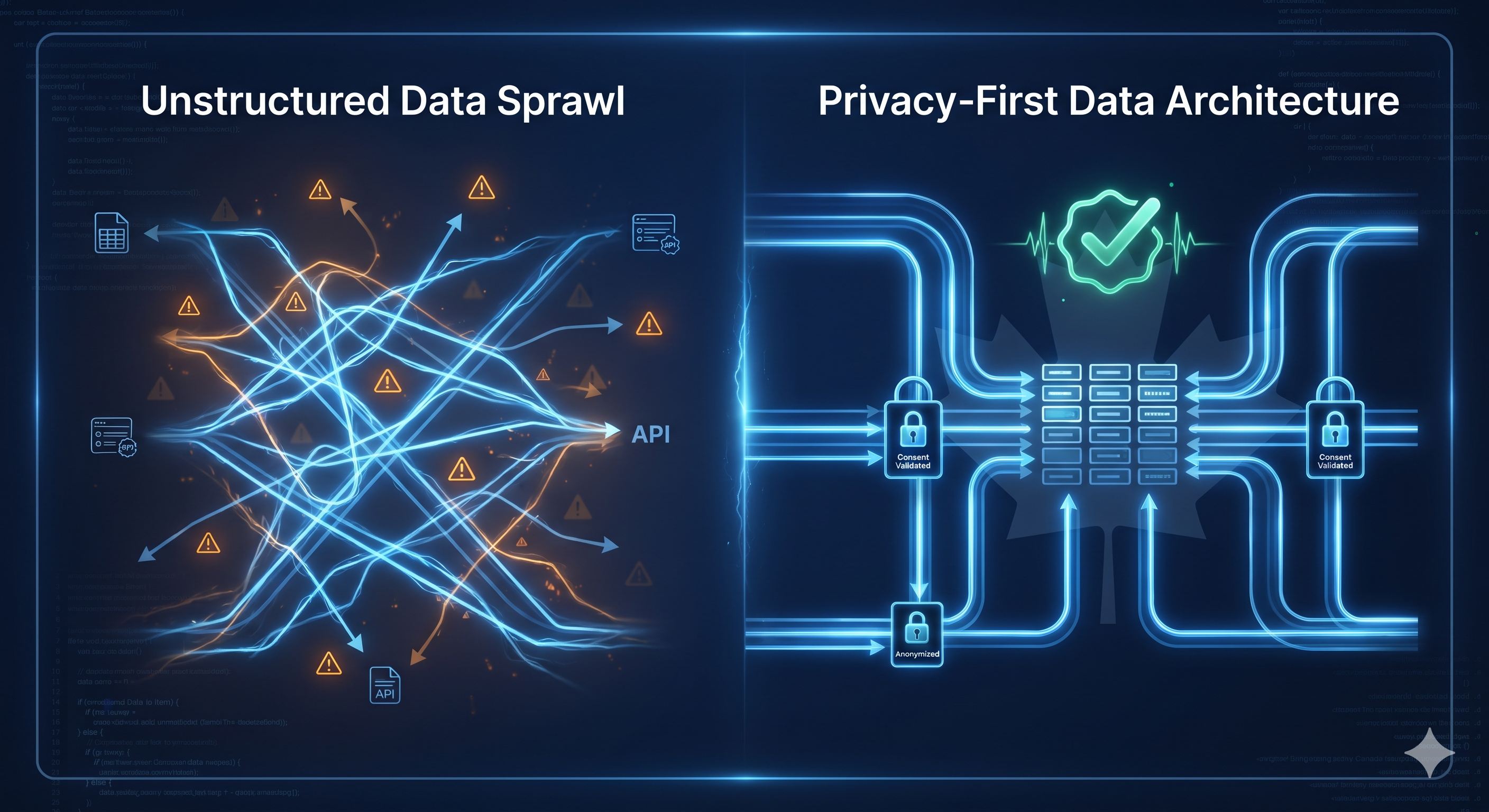
• The Consent Illusion: Why Your Canadian Data Architecture Will Fail a Strict Privacy Audit
    With Canadian engineering teams building increasingly complex software stacks—integrating third-party analytics, customer data platforms, and automated decision-making tools—data governance has shifted from a legal afterthought to an active engineering challenge. Regulations across Canadian jurisdictions demand radical transparency around how personal information is collected, retained, and transferred.


    Why It Matters
    When data collection is decentralized across multiple microservices without a unified governance layer, tracking consent withdrawal, data portability requests, or retention limits becomes nearly impossible. If your architecture cannot programmatically isolate, delete, or anonymize user information upon request, your organization faces severe regulatory friction, steep penalties, and a rapid erosion of user trust.


    What You Need to Know: Engineering for Canadian Data Compliance
    To build resilient, privacy-forward applications that stand up to modern regulatory standards, development teams must enforce core data practices:


    Map Your Data Lifecycles Programmatically: You cannot protect what you haven't inventoried. Build automated data-mapping scripts to trace where personal information enters your system, how it flows between services, and where storage snapshots reside.


    Implement Granular Consent and Opt-In Workflows: Move away from ambiguous, bundled terms of service. Implement explicit, trackable consent management states that allow users to withdraw permission or request data disposal seamlessly.


    Automate Data Minimization and Anonymization: Never store raw personal data longer than necessary. Strip identifiers early in your ingestion pipeline, and ensure non-production environments (like staging and testing clusters) use synthetic or anonymized data sets.


    Discussion Question
    How does your engineering team handle data disposal and consent tracking across your microservices? Are you managing privacy compliance through code, or relying on manual documentation?


    CTA (Join Techawks Canada)
    Want to connect with Canadian tech leaders, software architects, and engineers solving data governance and cloud scale challenges? Join Techawks Canada to stay ahead of the curve.
    The Consent Illusion: Why Your Canadian Data Architecture Will Fail a Strict Privacy Audit With Canadian engineering teams building increasingly complex software stacks—integrating third-party analytics, customer data platforms, and automated decision-making tools—data governance has shifted from a legal afterthought to an active engineering challenge. Regulations across Canadian jurisdictions demand radical transparency around how personal information is collected, retained, and transferred. Why It Matters When data collection is decentralized across multiple microservices without a unified governance layer, tracking consent withdrawal, data portability requests, or retention limits becomes nearly impossible. If your architecture cannot programmatically isolate, delete, or anonymize user information upon request, your organization faces severe regulatory friction, steep penalties, and a rapid erosion of user trust. What You Need to Know: Engineering for Canadian Data Compliance To build resilient, privacy-forward applications that stand up to modern regulatory standards, development teams must enforce core data practices: Map Your Data Lifecycles Programmatically: You cannot protect what you haven't inventoried. Build automated data-mapping scripts to trace where personal information enters your system, how it flows between services, and where storage snapshots reside. Implement Granular Consent and Opt-In Workflows: Move away from ambiguous, bundled terms of service. Implement explicit, trackable consent management states that allow users to withdraw permission or request data disposal seamlessly. Automate Data Minimization and Anonymization: Never store raw personal data longer than necessary. Strip identifiers early in your ingestion pipeline, and ensure non-production environments (like staging and testing clusters) use synthetic or anonymized data sets. Discussion Question How does your engineering team handle data disposal and consent tracking across your microservices? Are you managing privacy compliance through code, or relying on manual documentation? CTA (Join Techawks Canada) Want to connect with Canadian tech leaders, software architects, and engineers solving data governance and cloud scale challenges? Join Techawks Canada to stay ahead of the curve.
    0 Commentarii 0 Distribuiri 539 Views 0 previzualizare
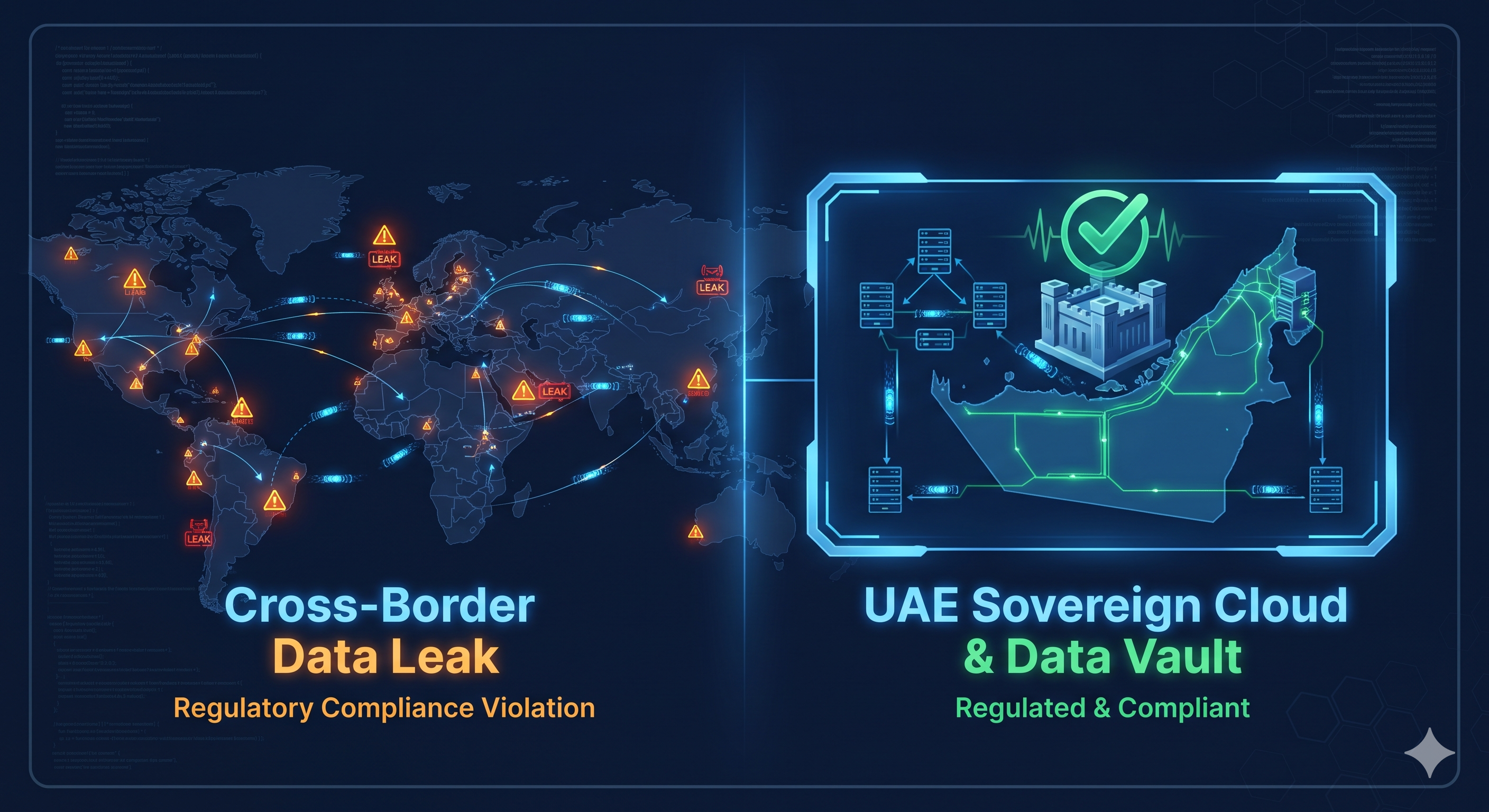
  • The Sovereign Cloud Trap: Why Multi-Region AI Pipelines Are Violating UAE Compliance
    With the UAE's data center market surging past billions in investments and powering dense GPU clusters for high-performance AI workloads, regional engineering standards have fundamentally evolved. Government digital transformation mandates, Central Bank regulations, and stricter frameworks around sovereign data residency dictate that sensitive, confidential, and government-class data must remain localized and heavily governed.


    Why It Matters
    When software architectures rely on global multi-region endpoints without enforcing strict data residency boundaries, you expose your organization to regulatory penalties, failed security audits, and lost enterprise contracts. Data sovereignty isn't just about where your primary database sits; it includes logging, telemetry, backup snapshots, and secondary API routing. If data crosses an unauthorized boundary during inference or caching, your compliance posture breaks instantly.


    What You Need to Know: Engineering for UAE Data Sovereignty
    To keep your tech stack fully compliant while scaling modern AI and cloud architectures in the UAE, engineering teams must implement strict residency controls:


    Deploy Inside Domestic Sovereign Regions: Leverage dedicated local cloud availability zones (such as UAE-based sovereign cloud infrastructure) to ensure all compute and storage nodes reside physically within the country.


    Enforce Hard Geographic Boundaries: Configure cloud policy controls and network routing tables to explicitly block resource creation or data replication outside approved domestic regions. Never let global billing or telemetry services silently leak data cross-border.


    Isolate AI Inference and Token Logging: When integrating LLMs and agentic pipelines, ensure prompt payloads, completion logs, and vector embeddings are stored within local data vaults rather than streaming to external global multi-tenant endpoints.


    Discussion Question
    How is your engineering team auditing data residency across your cloud and AI pipelines? Are you enforcing strict local routing, or are global third-party APIs creating compliance blind spots?


    CTA (Join Techawks UAE)
    Want to connect with UAE-based tech leaders, cloud architects, and engineers building the future of sovereign AI and infrastructure? Join Techawks UAE to stay ahead of the curve.
    The Sovereign Cloud Trap: Why Multi-Region AI Pipelines Are Violating UAE Compliance With the UAE's data center market surging past billions in investments and powering dense GPU clusters for high-performance AI workloads, regional engineering standards have fundamentally evolved. Government digital transformation mandates, Central Bank regulations, and stricter frameworks around sovereign data residency dictate that sensitive, confidential, and government-class data must remain localized and heavily governed. Why It Matters When software architectures rely on global multi-region endpoints without enforcing strict data residency boundaries, you expose your organization to regulatory penalties, failed security audits, and lost enterprise contracts. Data sovereignty isn't just about where your primary database sits; it includes logging, telemetry, backup snapshots, and secondary API routing. If data crosses an unauthorized boundary during inference or caching, your compliance posture breaks instantly. What You Need to Know: Engineering for UAE Data Sovereignty To keep your tech stack fully compliant while scaling modern AI and cloud architectures in the UAE, engineering teams must implement strict residency controls: Deploy Inside Domestic Sovereign Regions: Leverage dedicated local cloud availability zones (such as UAE-based sovereign cloud infrastructure) to ensure all compute and storage nodes reside physically within the country. Enforce Hard Geographic Boundaries: Configure cloud policy controls and network routing tables to explicitly block resource creation or data replication outside approved domestic regions. Never let global billing or telemetry services silently leak data cross-border. Isolate AI Inference and Token Logging: When integrating LLMs and agentic pipelines, ensure prompt payloads, completion logs, and vector embeddings are stored within local data vaults rather than streaming to external global multi-tenant endpoints. Discussion Question How is your engineering team auditing data residency across your cloud and AI pipelines? Are you enforcing strict local routing, or are global third-party APIs creating compliance blind spots? CTA (Join Techawks UAE) Want to connect with UAE-based tech leaders, cloud architects, and engineers building the future of sovereign AI and infrastructure? Join Techawks UAE to stay ahead of the curve.
    0 Commentarii 0 Distribuiri 520 Views 0 previzualizare
  • The Multi-Regulator Maze: Why UK Tech Compliance Is Your Next Engineering Bottleneck
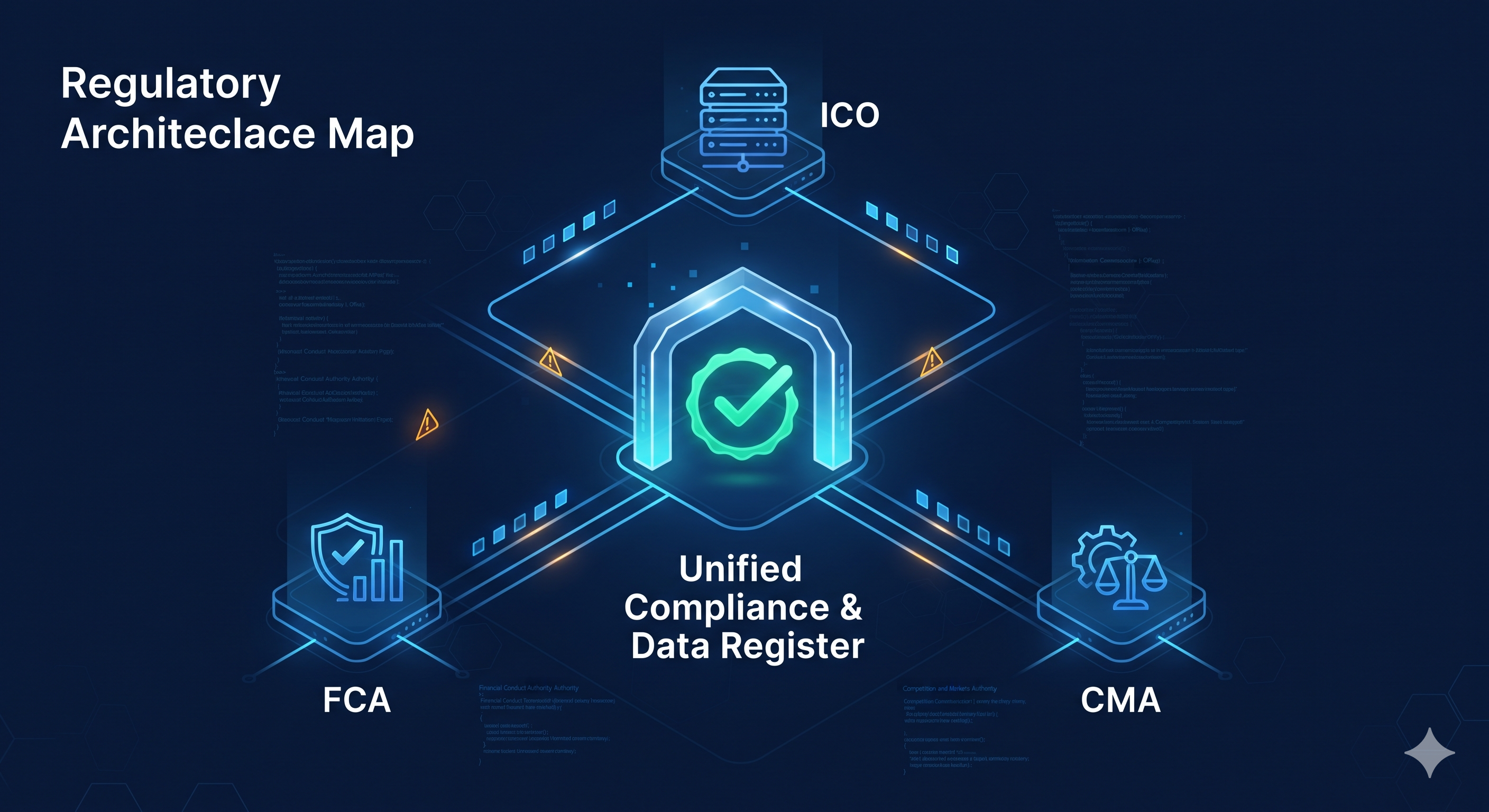
    Unlike regions with single, centralized codebooks, the UK tech landscape relies on a multi-regulator, principles-based approach. Regulatory bodies like the Information Commissioner's Office (ICO), the Financial Conduct Authority (FCA), and the Competition and Markets Authority (CMA) are ramping up cross-sector scrutiny—especially regarding AI deployment, automated decision-making, and shadow data flows.


    Why It Matters
    When software architectures and data pipelines are built in isolation from regulatory mapping, engineering velocity screeches to a halt the moment an audit hits. If you deploy AI systems that make or inform consequential decisions about individuals without maintaining documented Data Protection Impact Assessments (DPIAs), strict traceability, and explicit data governance, your business faces heavy legal friction, broken deployments, and severe reputational damage.


    What You Need to Know: Engineering for Regulatory Resilience
    To ensure your tech stack can survive rigorous regulatory scrutiny without sacrificing development speed, implement these practices:


    Build an Active AI and Data Register: An audit trail only works if it is dynamic. Implement continuous discovery mechanisms across your repositories and cloud clusters to track every active model, data source, and third-party API integration.


    Embed Privacy and Explainability by Design: Never treat model transparency as a UI add-on. Ensure your engineering teams can technically explain how downstream outputs are generated, satisfying both UK GDPR principles and sector-specific oversight guidelines.


    Map Multi-Regulator Obligations Early: If your product touches financial services, healthcare, or cross-border EU markets, map your system requirements against overlapping mandates (such as ICO guidelines, FCA principles, and extraterritorial frameworks) before writing code, rather than patching compliance holes post-launch.


    Discussion Question
    How is your engineering team bridging the gap between rapid software delivery and complex multi-regulator compliance? Are you tracking your data dependencies programmatically?


    CTA (Join Techawks UK)
    Want to connect with UK-based engineers, tech leaders, and innovators navigating the future of regulation, cloud scale, and software architecture? Join Techawks UK to stay ahead of the curve.
    The Multi-Regulator Maze: Why UK Tech Compliance Is Your Next Engineering Bottleneck Unlike regions with single, centralized codebooks, the UK tech landscape relies on a multi-regulator, principles-based approach. Regulatory bodies like the Information Commissioner's Office (ICO), the Financial Conduct Authority (FCA), and the Competition and Markets Authority (CMA) are ramping up cross-sector scrutiny—especially regarding AI deployment, automated decision-making, and shadow data flows. Why It Matters When software architectures and data pipelines are built in isolation from regulatory mapping, engineering velocity screeches to a halt the moment an audit hits. If you deploy AI systems that make or inform consequential decisions about individuals without maintaining documented Data Protection Impact Assessments (DPIAs), strict traceability, and explicit data governance, your business faces heavy legal friction, broken deployments, and severe reputational damage. What You Need to Know: Engineering for Regulatory Resilience To ensure your tech stack can survive rigorous regulatory scrutiny without sacrificing development speed, implement these practices: Build an Active AI and Data Register: An audit trail only works if it is dynamic. Implement continuous discovery mechanisms across your repositories and cloud clusters to track every active model, data source, and third-party API integration. Embed Privacy and Explainability by Design: Never treat model transparency as a UI add-on. Ensure your engineering teams can technically explain how downstream outputs are generated, satisfying both UK GDPR principles and sector-specific oversight guidelines. Map Multi-Regulator Obligations Early: If your product touches financial services, healthcare, or cross-border EU markets, map your system requirements against overlapping mandates (such as ICO guidelines, FCA principles, and extraterritorial frameworks) before writing code, rather than patching compliance holes post-launch. Discussion Question How is your engineering team bridging the gap between rapid software delivery and complex multi-regulator compliance? Are you tracking your data dependencies programmatically? CTA (Join Techawks UK) Want to connect with UK-based engineers, tech leaders, and innovators navigating the future of regulation, cloud scale, and software architecture? Join Techawks UK to stay ahead of the curve.
    0 Commentarii 0 Distribuiri 538 Views 0 previzualizare
  • The Billion-Scale Bottleneck: Why Your System Architecture Crumbles Under India’s Traffic Spikes
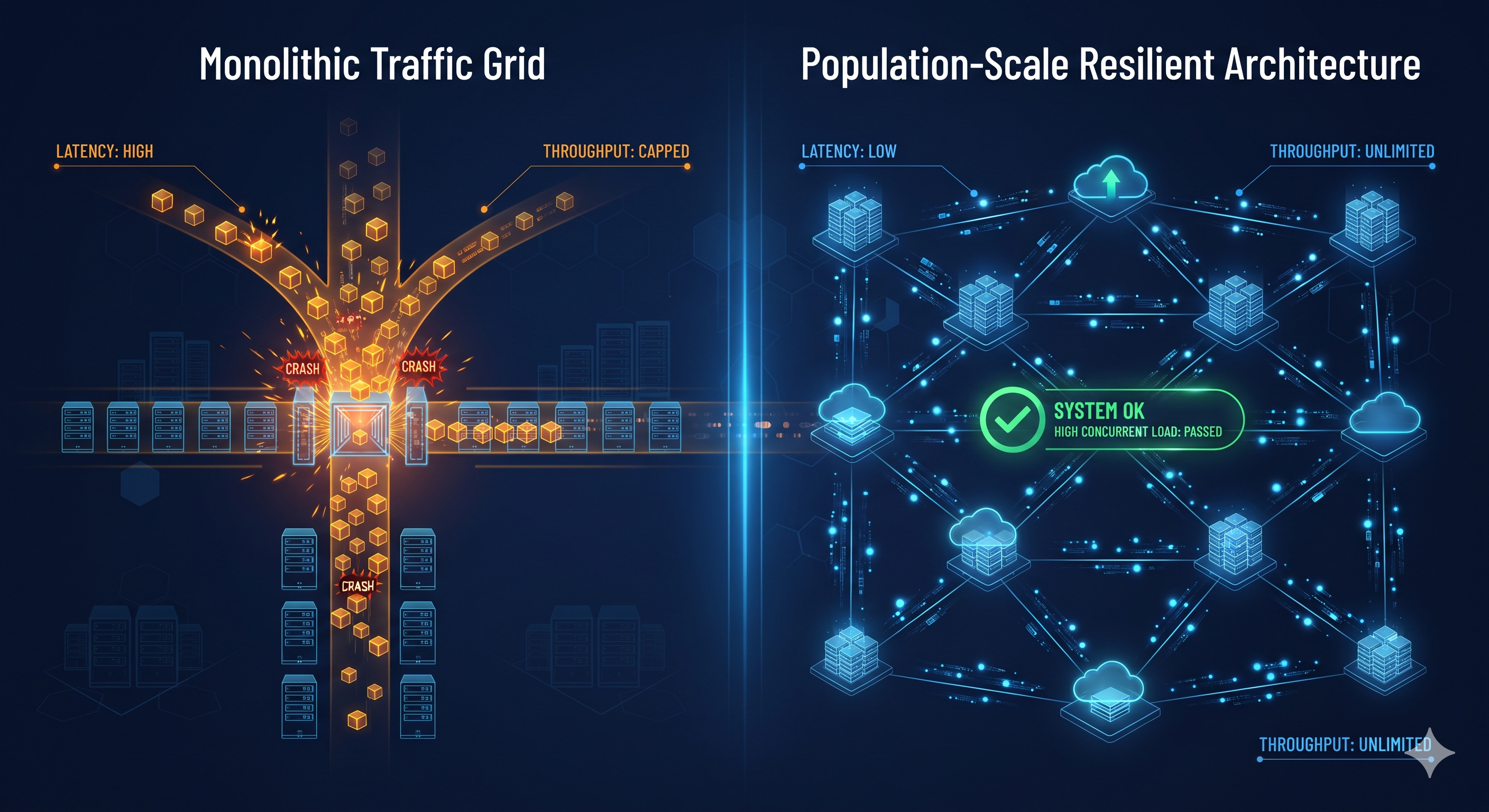
    With India’s tech landscape evolving at breakneck speed, engineering teams are no longer building for niche regional cohorts; they are designing for massive, concurrent, population-scale distribution. Whether you're scaling UPI-integrated payment gateways, multi-tenant vertical SaaS, or high-throughput logistics platforms, traditional monolithic architectures and naive database queries hit a hard ceiling the moment real Indian scale hits.


    Why It Matters
    When concurrency explodes, unoptimized database queries, missing indexes, and unmanaged connection pools turn minor code inefficiencies into catastrophic system crashes. If your backend cannot gracefully handle traffic surges or manage distributed state under extreme load, you aren't just losing users—you are losing market trust in an ecosystem where speed and resilience define category leaders.


    What You Need to Know: Engineering for Population-Scale Resilience
    To build systems that survive India's heaviest traffic spikes and scale seamlessly, engineering teams must adopt high-performance architectural patterns:


    Implement Aggressive Connection Pooling & Caching: Never let raw database requests absorb high-frequency spikes. Put high-speed caching layers (like Redis) in front of your primary database and tightly manage connection limits to prevent thread starvation.


    Design for Asynchronous Event-Driven Workflows: Move heavy, non-critical computations (like notifications, report generation, and analytics logging) out of the synchronous request-response cycle using robust message brokers and queue systems (such as Kafka or RabbitMQ).


    Load Test Under Realistic Constraints: Don't rely on synthetic staging benchmarks. Simulate erratic network latency, sudden traffic surges, and localized bandwidth constraints to discover where your system breaks before your users do.


    Discussion Question
    How does your team handle high-concurrency traffic spikes? Are you relying on horizontal auto-scaling, or have you had to redesign your database access patterns from the ground up?


    CTA (Join Techawks India)
    Want to master high-scale architecture, system design, and cutting-edge engineering practices tailored for the Indian tech ecosystem? Join Techawks India to connect with top-tier engineers building the future.
    The Billion-Scale Bottleneck: Why Your System Architecture Crumbles Under India’s Traffic Spikes With India’s tech landscape evolving at breakneck speed, engineering teams are no longer building for niche regional cohorts; they are designing for massive, concurrent, population-scale distribution. Whether you're scaling UPI-integrated payment gateways, multi-tenant vertical SaaS, or high-throughput logistics platforms, traditional monolithic architectures and naive database queries hit a hard ceiling the moment real Indian scale hits. Why It Matters When concurrency explodes, unoptimized database queries, missing indexes, and unmanaged connection pools turn minor code inefficiencies into catastrophic system crashes. If your backend cannot gracefully handle traffic surges or manage distributed state under extreme load, you aren't just losing users—you are losing market trust in an ecosystem where speed and resilience define category leaders. What You Need to Know: Engineering for Population-Scale Resilience To build systems that survive India's heaviest traffic spikes and scale seamlessly, engineering teams must adopt high-performance architectural patterns: Implement Aggressive Connection Pooling & Caching: Never let raw database requests absorb high-frequency spikes. Put high-speed caching layers (like Redis) in front of your primary database and tightly manage connection limits to prevent thread starvation. Design for Asynchronous Event-Driven Workflows: Move heavy, non-critical computations (like notifications, report generation, and analytics logging) out of the synchronous request-response cycle using robust message brokers and queue systems (such as Kafka or RabbitMQ). Load Test Under Realistic Constraints: Don't rely on synthetic staging benchmarks. Simulate erratic network latency, sudden traffic surges, and localized bandwidth constraints to discover where your system breaks before your users do. Discussion Question How does your team handle high-concurrency traffic spikes? Are you relying on horizontal auto-scaling, or have you had to redesign your database access patterns from the ground up? CTA (Join Techawks India) Want to master high-scale architecture, system design, and cutting-edge engineering practices tailored for the Indian tech ecosystem? Join Techawks India to connect with top-tier engineers building the future.
    0 Commentarii 0 Distribuiri 401 Views 0 previzualizare
  • The Configuration Drift Trap: Why Manual Hotfixes Are Silently Killing Your Multi-Cluster Uptime
    With modern cloud engineering heavily dependent on declarative automation, GitOps, and complex platform architectures, operational strain is shifting away from simple resource provisioning toward fleet-wide lifecycle consistency. Enterprise data highlights that configuration drift and manual hotfixes account for the vast majority of production outages in distributed cloud environments.


    Why It Matters
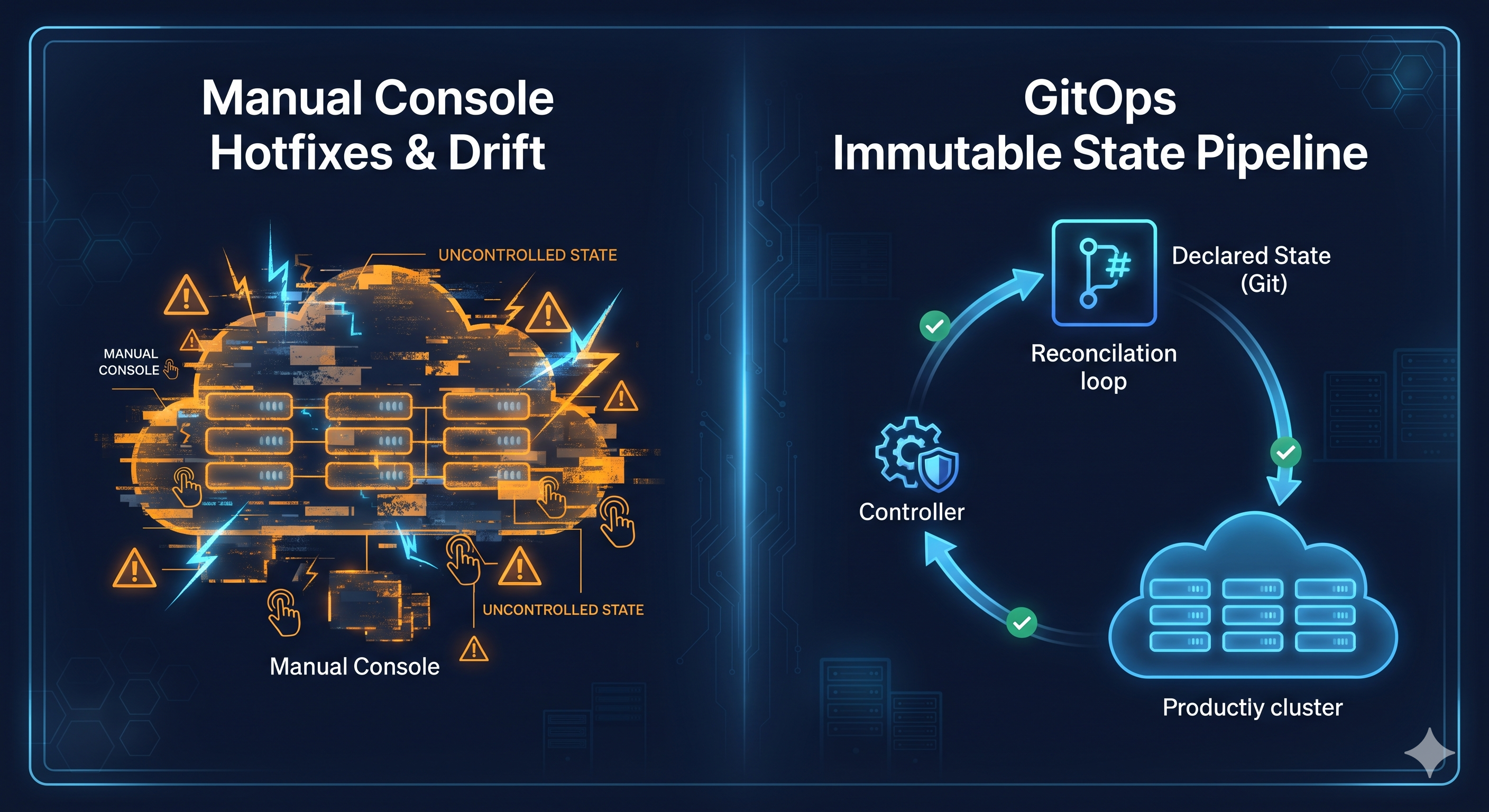
    When engineers bypass declarative pipelines to make manual adjustments directly in cloud consoles or cluster nodes, they break the single source of truth. Automated CI/CD tools (like Argo CD) and Infrastructure as Code engines (like Terraform or OpenTofu) cannot protect your infrastructure if reality diverges from code. Without strict reconciliation loops and automated drift detection, your teams spend more time fighting accidental state drift than building reliable features.


    What You Need to Know: Enforcing True Infrastructure Immutability
    To protect your cloud environments from drift and ensure reliable scale, platform and DevOps teams must implement strict discipline:


    Lock Down Direct Access: Strip away manual console write permissions for production environments. Force all changes—infrastructure adjustments, scaling patches, and security updates—through pull requests and version-controlled Git repositories.


    Automate Continuous Reconciliation: Set up scheduled plan evaluations and reconciliation loops (using GitOps controllers or IaC drift alerts) that actively compare live cluster state against your declared repository state and trigger automated alerts on mismatch.


    Embrace Immutable Infrastructure Patterns: Treat servers and container nodes as disposable assets. Instead of SSH-ing into a live instance to patch a bug, destroy and recreate the node from a hardened, version-controlled golden image or container registry.


    Discussion Question
    How do you currently handle configuration drift in your multi-cluster environments? Are you catching manual hotfixes through automated reconciliation, or only discovering them during the next deployment failure?


    CTA (Join Cloud, DevOps & Open Source)
    Want to master advanced Kubernetes orchestration, GitOps workflows, and production-grade infrastructure automation? Join Cloud, DevOps & Open Source to connect with global cloud engineers building resilient systems.
    The Configuration Drift Trap: Why Manual Hotfixes Are Silently Killing Your Multi-Cluster Uptime With modern cloud engineering heavily dependent on declarative automation, GitOps, and complex platform architectures, operational strain is shifting away from simple resource provisioning toward fleet-wide lifecycle consistency. Enterprise data highlights that configuration drift and manual hotfixes account for the vast majority of production outages in distributed cloud environments. Why It Matters When engineers bypass declarative pipelines to make manual adjustments directly in cloud consoles or cluster nodes, they break the single source of truth. Automated CI/CD tools (like Argo CD) and Infrastructure as Code engines (like Terraform or OpenTofu) cannot protect your infrastructure if reality diverges from code. Without strict reconciliation loops and automated drift detection, your teams spend more time fighting accidental state drift than building reliable features. What You Need to Know: Enforcing True Infrastructure Immutability To protect your cloud environments from drift and ensure reliable scale, platform and DevOps teams must implement strict discipline: Lock Down Direct Access: Strip away manual console write permissions for production environments. Force all changes—infrastructure adjustments, scaling patches, and security updates—through pull requests and version-controlled Git repositories. Automate Continuous Reconciliation: Set up scheduled plan evaluations and reconciliation loops (using GitOps controllers or IaC drift alerts) that actively compare live cluster state against your declared repository state and trigger automated alerts on mismatch. Embrace Immutable Infrastructure Patterns: Treat servers and container nodes as disposable assets. Instead of SSH-ing into a live instance to patch a bug, destroy and recreate the node from a hardened, version-controlled golden image or container registry. Discussion Question How do you currently handle configuration drift in your multi-cluster environments? Are you catching manual hotfixes through automated reconciliation, or only discovering them during the next deployment failure? CTA (Join Cloud, DevOps & Open Source) Want to master advanced Kubernetes orchestration, GitOps workflows, and production-grade infrastructure automation? Join Cloud, DevOps & Open Source to connect with global cloud engineers building resilient systems.
    0 Commentarii 0 Distribuiri 158 Views 0 previzualizare
  • The Black-Box Trap: Why Designing AI Interfaces Like SaaS Dashboards Destroys User Trust
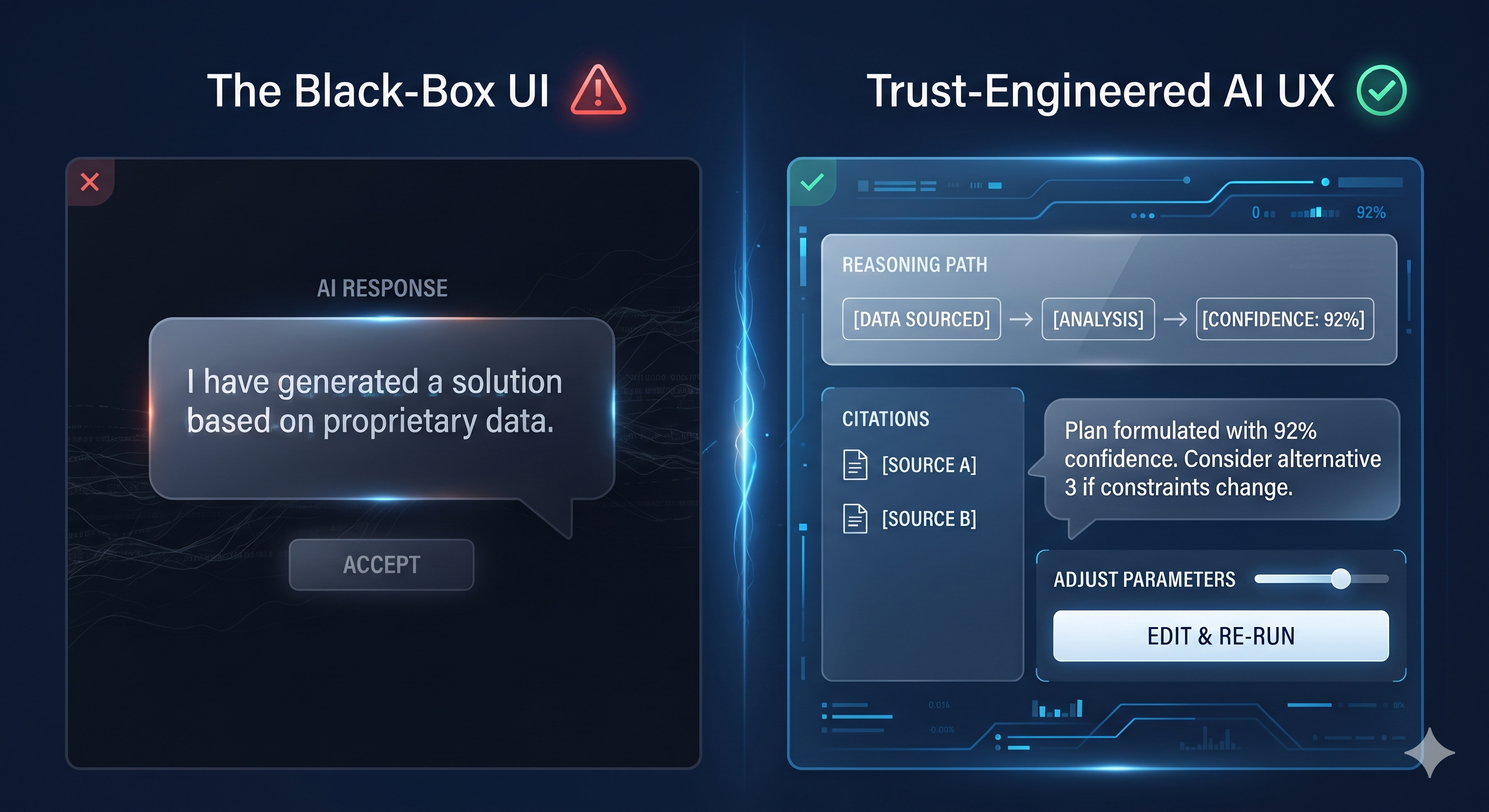
    With software rapidly evolving from static forms into autonomous, multi-step agentic workflows, product managers and UX designers face a profound paradigm shift. Traditional UI was built on predictability: click a button, get a guaranteed state change. AI systems, however, are probabilistic. When design systems fail to account for non-determinism, opacity, and confidence gaps, users experience profound cognitive friction and quickly lose trust.


    Why It Matters
    Industry data shows that the vast majority of AI product drop-offs stem not from model capability limitations, but from poor interface design that fails to communicate system intent. If your interface acts like an oracle instead of a transparent collaborator, users cannot calibrate their trust. Products that fail to expose model confidence, provide granular feedback loops, or offer graceful failure-state recovery will always struggle with long-term retention.


    What You Need to Know: Core UX Patterns for AI-Native Products
    To build products that users actually trust and adopt, modern product teams must master these interaction patterns:


    Design Transparency as an Interface: Never present AI output as an absolute, opaque fact. Surface confidence indicators, underlying data sources, and reasoning steps directly in the UI so users can verify decisions at a glance.


    Build Explicit Guardrails & Reversal Paths: Give users immediate, low-friction control to edit, roll back, or override autonomous actions. Never trap a user in an automated loop without a manual escape hatch.


    Design for Probabilistic Failure States: Traditional apps show error banners when code crashes. AI apps need graceful recovery states for when the model's output is ambiguous, incomplete, or logically flawed.


    Discussion Question
    How is your product team currently designing for AI transparency and failure recovery? Are you surfacing model confidence cues, or leaving users in the dark?


    CTA (Join Product, UX & Design)
    Want to master AI-native product strategy, modern UX frameworks, and user psychology for complex systems? Join Product, UX & Design to connect with global product leaders shaping the future of software.
    The Black-Box Trap: Why Designing AI Interfaces Like SaaS Dashboards Destroys User Trust With software rapidly evolving from static forms into autonomous, multi-step agentic workflows, product managers and UX designers face a profound paradigm shift. Traditional UI was built on predictability: click a button, get a guaranteed state change. AI systems, however, are probabilistic. When design systems fail to account for non-determinism, opacity, and confidence gaps, users experience profound cognitive friction and quickly lose trust. Why It Matters Industry data shows that the vast majority of AI product drop-offs stem not from model capability limitations, but from poor interface design that fails to communicate system intent. If your interface acts like an oracle instead of a transparent collaborator, users cannot calibrate their trust. Products that fail to expose model confidence, provide granular feedback loops, or offer graceful failure-state recovery will always struggle with long-term retention. What You Need to Know: Core UX Patterns for AI-Native Products To build products that users actually trust and adopt, modern product teams must master these interaction patterns: Design Transparency as an Interface: Never present AI output as an absolute, opaque fact. Surface confidence indicators, underlying data sources, and reasoning steps directly in the UI so users can verify decisions at a glance. Build Explicit Guardrails & Reversal Paths: Give users immediate, low-friction control to edit, roll back, or override autonomous actions. Never trap a user in an automated loop without a manual escape hatch. Design for Probabilistic Failure States: Traditional apps show error banners when code crashes. AI apps need graceful recovery states for when the model's output is ambiguous, incomplete, or logically flawed. Discussion Question How is your product team currently designing for AI transparency and failure recovery? Are you surfacing model confidence cues, or leaving users in the dark? CTA (Join Product, UX & Design) Want to master AI-native product strategy, modern UX frameworks, and user psychology for complex systems? Join Product, UX & Design to connect with global product leaders shaping the future of software.
    0 Commentarii 0 Distribuiri 151 Views 0 previzualizare
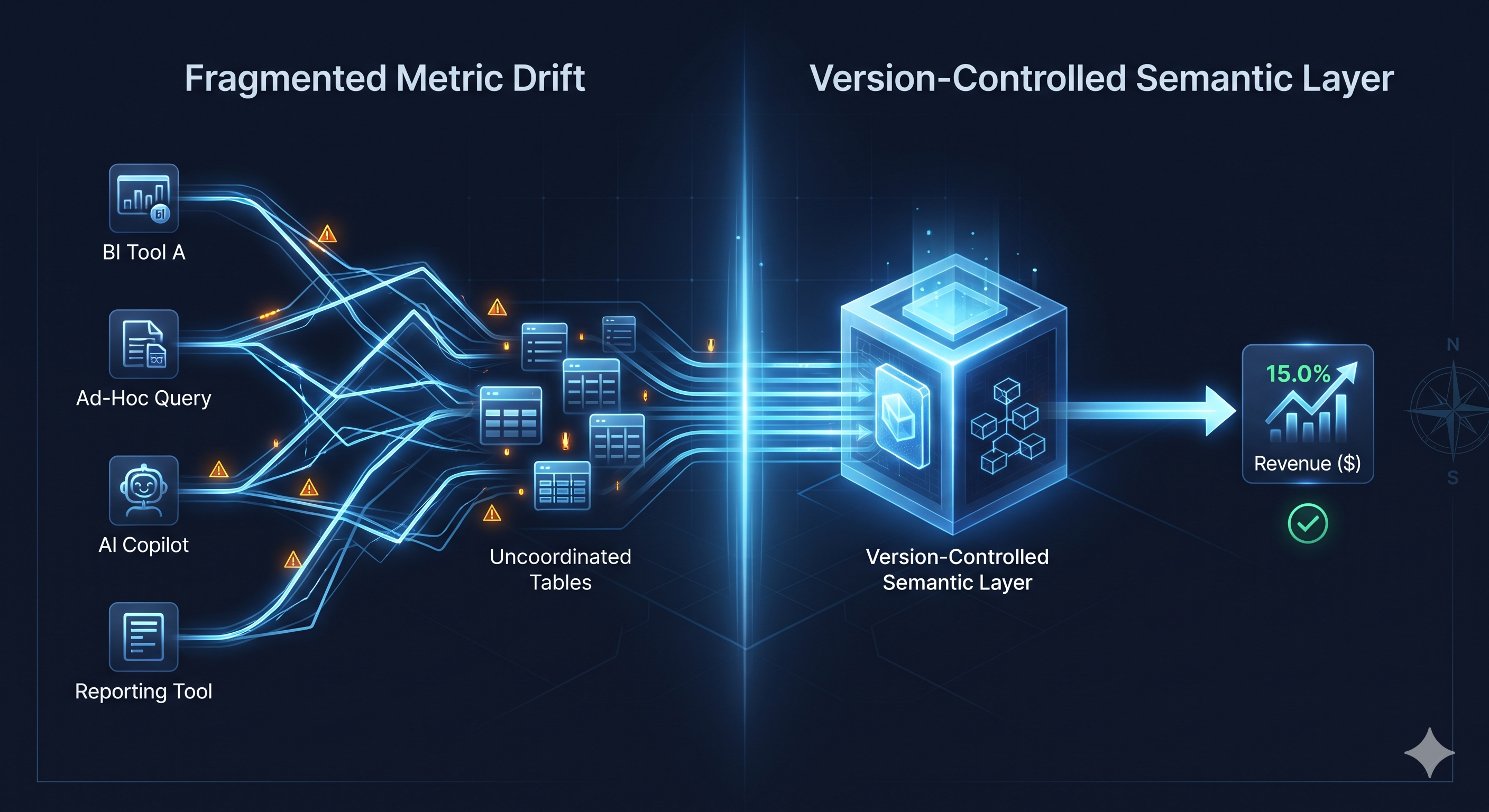
  • The Metric Drift Illusion: Why Your Dashboards Agree on Nothing and Your AI is Lying
    With modern data architectures shifting toward decentralized domains, semantic layers, and automated AI consumption, data teams face a structural crisis. When every department calculates core metrics independently across disconnected dbt models, looker views, or ad-hoc SQL scripts, you don't have a data-driven culture—you have an organized guessing game.


    Why It Matters
    Traditional reporting treated metrics as UI-level logic inside individual dashboards. When business users or LLM agents query a data warehouse directly, they don't see those dashboard filters or hidden business rules. If your business definitions live inside fragmented tools rather than a centralized governed layer, AI agents will hallucinate metrics, executives will argue over spreadsheet discrepancies in board meetings, and trust in analytics will evaporate.


    What You Need to Know: Engineering a Single Source of Truth
    To eliminate metric drift and make your data stack AI-ready, data professionals must implement rigorous semantic governance:


    Centralize Metric Definitions as Code: Move away from dashboard-locked formulas. Define business-critical metrics (like ARR, churn, or net retention) once in code using version-controlled semantic layers or transformation tools.


    Enforce Grain and Join Boundaries: Clearly document and lock down table grains and foreign-key join paths. Prevent users and AI tools from carelessly performing many-to-many joins that result in silent double-counting and fanouts.


    Expose Governed Context to AI Layers: Never plug an LLM directly into raw, unmapped database schemas. Feed AI tools structured metadata and semantic definitions so natural language queries resolve to the exact same governed SQL every single time.


    Discussion Question
    How does your team currently handle metric definitions? Are you using a centralized semantic layer, or do different departments still maintain their own independent dashboard formulas?


    CTA (Join Data Science & Analytics)
    Want to master advanced data modeling, semantic architecture, and modern analytics engineering patterns? Join Data Science & Analytics to connect with global data professionals building reliable, scalable systems.
    The Metric Drift Illusion: Why Your Dashboards Agree on Nothing and Your AI is Lying With modern data architectures shifting toward decentralized domains, semantic layers, and automated AI consumption, data teams face a structural crisis. When every department calculates core metrics independently across disconnected dbt models, looker views, or ad-hoc SQL scripts, you don't have a data-driven culture—you have an organized guessing game. Why It Matters Traditional reporting treated metrics as UI-level logic inside individual dashboards. When business users or LLM agents query a data warehouse directly, they don't see those dashboard filters or hidden business rules. If your business definitions live inside fragmented tools rather than a centralized governed layer, AI agents will hallucinate metrics, executives will argue over spreadsheet discrepancies in board meetings, and trust in analytics will evaporate. What You Need to Know: Engineering a Single Source of Truth To eliminate metric drift and make your data stack AI-ready, data professionals must implement rigorous semantic governance: Centralize Metric Definitions as Code: Move away from dashboard-locked formulas. Define business-critical metrics (like ARR, churn, or net retention) once in code using version-controlled semantic layers or transformation tools. Enforce Grain and Join Boundaries: Clearly document and lock down table grains and foreign-key join paths. Prevent users and AI tools from carelessly performing many-to-many joins that result in silent double-counting and fanouts. Expose Governed Context to AI Layers: Never plug an LLM directly into raw, unmapped database schemas. Feed AI tools structured metadata and semantic definitions so natural language queries resolve to the exact same governed SQL every single time. Discussion Question How does your team currently handle metric definitions? Are you using a centralized semantic layer, or do different departments still maintain their own independent dashboard formulas? CTA (Join Data Science & Analytics) Want to master advanced data modeling, semantic architecture, and modern analytics engineering patterns? Join Data Science & Analytics to connect with global data professionals building reliable, scalable systems.
    0 Commentarii 0 Distribuiri 171 Views 0 previzualizare
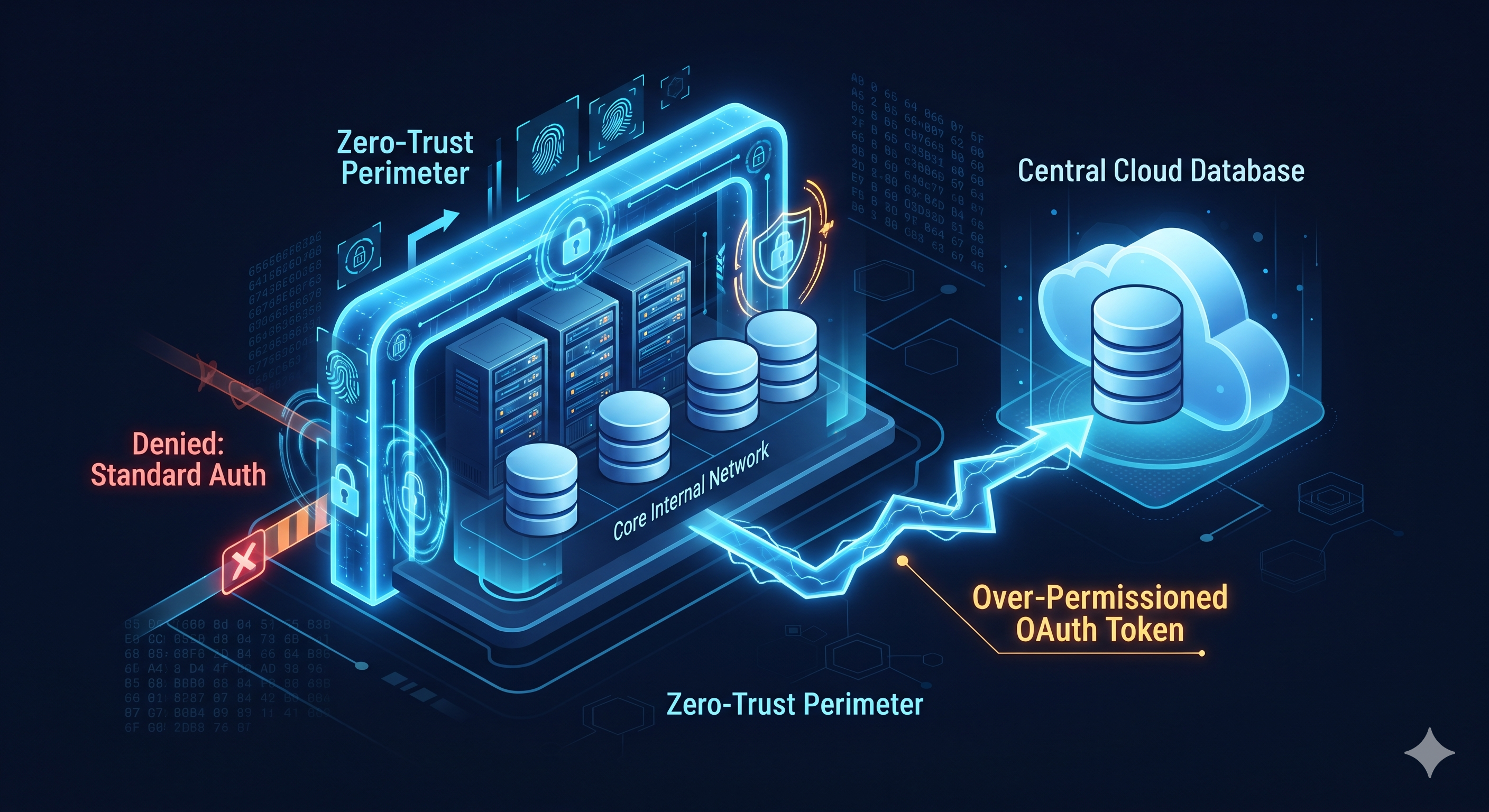
  • The OAuth Backdoor: How Third-Party Integrations Are Bypassing Your Perimeter
    With software ecosystems depending heavily on interconnected APIs, SaaS platforms, and third-party vendor tokens, the attack surface has fundamentally shifted. Threat intelligence data highlights a massive surge in supply chain and integration-based compromises. Attackers no longer need to brute-force a heavily guarded front door when they can walk straight through an over-permissioned third-party integration's back door using valid, legitimate credentials.


    Why It Matters
    When you grant an external application or plugin OAuth access to your environment, you are often handing over broad scopes—such as reading user data, modifying configurations, or querying internal APIs. If that vendor suffers a breach, or if their OAuth tokens are intercepted via session hijacking, attackers inherit those broad permissions instantly. A security posture is only as strong as its least secure integrated dependency.


    What You Need to Know: Hardening Your API and OAuth Attack Surface
    To protect your organization from third-party token abuse and integration blind spots, security teams must enforce rigorous access governance:


    Enforce Principle of Least Privilege for Scopes: Never grant blanket or wildcard permissions (admin, full_access) to third-party integrations. Audit OAuth scopes stringently and restrict tokens strictly to the absolute minimum resources required.


    Continuous Token Auditing & Lifecycle Management: Implement automated inventory tracking for all active third-party API keys, webhooks, and OAuth tokens. Revoke stale integrations immediately if they haven't been actively utilized within 30 days.


    Behavioral Anomaly Monitoring: Monitor API calls and token usage patterns for abnormal activity—such as an external service querying internal endpoints at odd hours, downloading bulk data volumes, or shifting geolocation profiles.


    Discussion Question
    When was the last time your security team audited all active third-party OAuth integrations and API tokens connected to your core environment? How do you track hidden shadow integrations?


    CTA (Join Cybersecurity & Ethical Hacking)
    Want to master advanced threat hunting, penetration testing, and modern cloud defense strategies? Join Cybersecurity & Ethical Hacking to connect with global security professionals protecting the digital frontier.
    The OAuth Backdoor: How Third-Party Integrations Are Bypassing Your Perimeter With software ecosystems depending heavily on interconnected APIs, SaaS platforms, and third-party vendor tokens, the attack surface has fundamentally shifted. Threat intelligence data highlights a massive surge in supply chain and integration-based compromises. Attackers no longer need to brute-force a heavily guarded front door when they can walk straight through an over-permissioned third-party integration's back door using valid, legitimate credentials. Why It Matters When you grant an external application or plugin OAuth access to your environment, you are often handing over broad scopes—such as reading user data, modifying configurations, or querying internal APIs. If that vendor suffers a breach, or if their OAuth tokens are intercepted via session hijacking, attackers inherit those broad permissions instantly. A security posture is only as strong as its least secure integrated dependency. What You Need to Know: Hardening Your API and OAuth Attack Surface To protect your organization from third-party token abuse and integration blind spots, security teams must enforce rigorous access governance: Enforce Principle of Least Privilege for Scopes: Never grant blanket or wildcard permissions (admin, full_access) to third-party integrations. Audit OAuth scopes stringently and restrict tokens strictly to the absolute minimum resources required. Continuous Token Auditing & Lifecycle Management: Implement automated inventory tracking for all active third-party API keys, webhooks, and OAuth tokens. Revoke stale integrations immediately if they haven't been actively utilized within 30 days. Behavioral Anomaly Monitoring: Monitor API calls and token usage patterns for abnormal activity—such as an external service querying internal endpoints at odd hours, downloading bulk data volumes, or shifting geolocation profiles. Discussion Question When was the last time your security team audited all active third-party OAuth integrations and API tokens connected to your core environment? How do you track hidden shadow integrations? CTA (Join Cybersecurity & Ethical Hacking) Want to master advanced threat hunting, penetration testing, and modern cloud defense strategies? Join Cybersecurity & Ethical Hacking to connect with global security professionals protecting the digital frontier.
    0 Commentarii 0 Distribuiri 139 Views 0 previzualizare
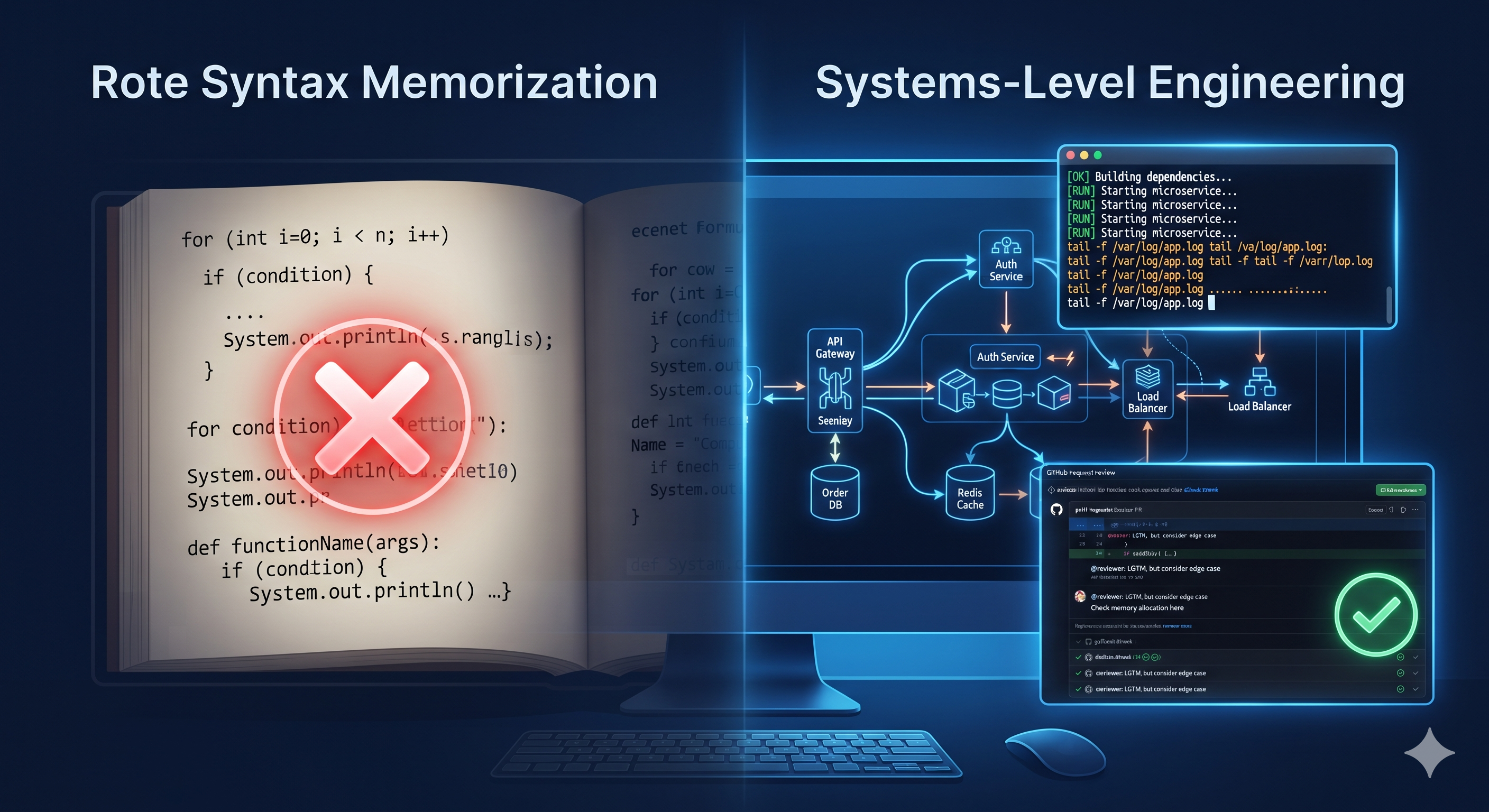
  • The Syntax Trap: Why Memorizing Code Is Ruining Your Engineering Career
    With modern software engineering ecosystems dominated by automated code generation, cloud infrastructure, and complex microservices, tech companies are no longer looking for human syntax compilers. AI can write a boilerplate function or a sorting algorithm in seconds. What AI cannot do is debug why a distributed transaction timed out across three cloud regions, or trace a memory leak hidden deep inside an unoptimized database query.


    Why It Matters
    When students focus entirely on language syntax and isolated algorithmic puzzles, they miss the invisible mechanics that keep real production software alive. If you don't understand how HTTP protocols work under the hood, how version control branching handles merge conflicts, or how operating systems manage memory allocation, you will struggle to move past junior-level roles. Building a lasting engineering career requires shifting your focus from writing isolated code blocks to understanding data flow, architecture, and system constraints.


    What You Need to Know: The Student’s Blueprint for Real-World Competence
    To bridge the gap between classroom theory and industry-grade engineering, master these core fundamentals:


    Master the Command Line & Linux: Stop relying exclusively on graphical user interfaces. Most servers, containers, and cloud environments run on Linux. Learn how to navigate terminals, inspect process logs, and manage environment variables natively.


    Read Code Before You Write It: Spend time exploring open-source repositories on GitHub. Read how seasoned engineers structure folder hierarchies, handle error exceptions, and write modular unit tests. Reading code is the fastest way to accelerate your own design intuition.


    Trace Data from Frontend to Database: Build end-to-end applications where you manually handle API requests, validate schemas, and write raw SQL queries. Knowing how data moves across a network boundary separates average coders from true software engineers.


    Discussion Question
    What is the biggest gap you've noticed between what they teach you in school and what you actually need to build real-world software?


    CTA (Join Students in Tech)
    Want to skip the fluff, build a standout portfolio, and master the practical skills tech companies actually hire for? Join Students in Tech to connect with peers and mentors building the future of software.
    The Syntax Trap: Why Memorizing Code Is Ruining Your Engineering Career With modern software engineering ecosystems dominated by automated code generation, cloud infrastructure, and complex microservices, tech companies are no longer looking for human syntax compilers. AI can write a boilerplate function or a sorting algorithm in seconds. What AI cannot do is debug why a distributed transaction timed out across three cloud regions, or trace a memory leak hidden deep inside an unoptimized database query. Why It Matters When students focus entirely on language syntax and isolated algorithmic puzzles, they miss the invisible mechanics that keep real production software alive. If you don't understand how HTTP protocols work under the hood, how version control branching handles merge conflicts, or how operating systems manage memory allocation, you will struggle to move past junior-level roles. Building a lasting engineering career requires shifting your focus from writing isolated code blocks to understanding data flow, architecture, and system constraints. What You Need to Know: The Student’s Blueprint for Real-World Competence To bridge the gap between classroom theory and industry-grade engineering, master these core fundamentals: Master the Command Line & Linux: Stop relying exclusively on graphical user interfaces. Most servers, containers, and cloud environments run on Linux. Learn how to navigate terminals, inspect process logs, and manage environment variables natively. Read Code Before You Write It: Spend time exploring open-source repositories on GitHub. Read how seasoned engineers structure folder hierarchies, handle error exceptions, and write modular unit tests. Reading code is the fastest way to accelerate your own design intuition. Trace Data from Frontend to Database: Build end-to-end applications where you manually handle API requests, validate schemas, and write raw SQL queries. Knowing how data moves across a network boundary separates average coders from true software engineers. Discussion Question What is the biggest gap you've noticed between what they teach you in school and what you actually need to build real-world software? CTA (Join Students in Tech) Want to skip the fluff, build a standout portfolio, and master the practical skills tech companies actually hire for? Join Students in Tech to connect with peers and mentors building the future of software.
    0 Commentarii 0 Distribuiri 110 Views 0 previzualizare
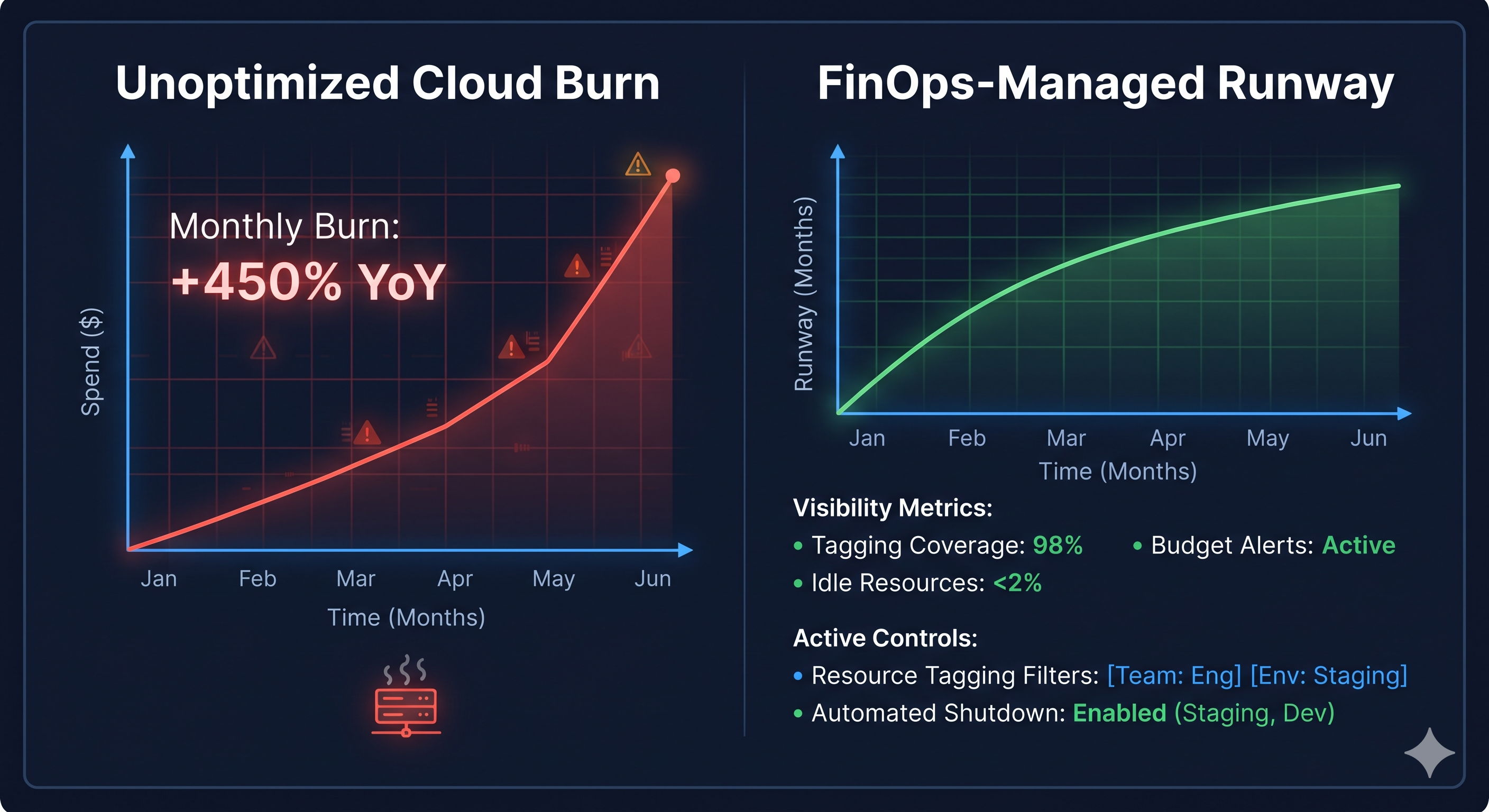
  • The Silent Runway Killer: Why Your Cloud Architecture Is Bleeding Cash Before Product-Market Fit
    With early-stage technology startups balancing lean capital and complex modern tech stacks, infrastructure waste has become the hidden tax on innovation. Founders frequently copy enterprise architectural patterns—over-provisioning databases, running staging environments 24/7, and failing to track token or compute overhead—under the assumption that "good engineering" requires maximum scale from day zero.


    Why It Matters
    When cloud and AI token expenditures scale faster than your customer acquisition, your runway shrinks long before you achieve product-market fit. Treating your infrastructure budget as a static utility rather than a managed variable means you are burning precious capital on idle compute, unoptimized database queries, and redundant staging pipelines that no one is looking at.


    What You Need to Know: Financial Guardrails for Technical Founders
    To stretch your runway and build a capital-efficient startup, enforce these foundational FinOps principles early:


    Aggressive Environment Scheduling: Stop paying for 24/7 staging, development, and testing clusters. Implement automated shutdown scripts to spin down non-production environments during off-hours, instantly cutting compute waste by over 50%.


    Granular Resource Tagging: Mandate strict cost-allocation metadata tags (team, environment, service) upon resource creation. If you can't trace an AWS or GCP bill back to a specific feature or customer cohort, you cannot optimize it.


    Decouple Scaling from Architecture: Avoid over-provisioning database instances and microservice clusters for traffic you haven't earned yet. Start with managed serverless or single-instance configurations, and scale horizontally only when real performance bottlenecks demand it.


    Discussion Question
    How are you managing your cloud and AI token burn right now? Have you implemented automated cost-tracking, or are you waiting until your next funding round to look at infrastructure efficiency?


    CTA (Join Startup Founders & Entrepreneurs)
    Want strategic insights, capital-efficient scaling playbooks, and direct connections with fellow founders solving the hardest startup challenges? Join Startup Founders & Entrepreneurs to build smarter and scale faster.
    The Silent Runway Killer: Why Your Cloud Architecture Is Bleeding Cash Before Product-Market Fit With early-stage technology startups balancing lean capital and complex modern tech stacks, infrastructure waste has become the hidden tax on innovation. Founders frequently copy enterprise architectural patterns—over-provisioning databases, running staging environments 24/7, and failing to track token or compute overhead—under the assumption that "good engineering" requires maximum scale from day zero. Why It Matters When cloud and AI token expenditures scale faster than your customer acquisition, your runway shrinks long before you achieve product-market fit. Treating your infrastructure budget as a static utility rather than a managed variable means you are burning precious capital on idle compute, unoptimized database queries, and redundant staging pipelines that no one is looking at. What You Need to Know: Financial Guardrails for Technical Founders To stretch your runway and build a capital-efficient startup, enforce these foundational FinOps principles early: Aggressive Environment Scheduling: Stop paying for 24/7 staging, development, and testing clusters. Implement automated shutdown scripts to spin down non-production environments during off-hours, instantly cutting compute waste by over 50%. Granular Resource Tagging: Mandate strict cost-allocation metadata tags (team, environment, service) upon resource creation. If you can't trace an AWS or GCP bill back to a specific feature or customer cohort, you cannot optimize it. Decouple Scaling from Architecture: Avoid over-provisioning database instances and microservice clusters for traffic you haven't earned yet. Start with managed serverless or single-instance configurations, and scale horizontally only when real performance bottlenecks demand it. Discussion Question How are you managing your cloud and AI token burn right now? Have you implemented automated cost-tracking, or are you waiting until your next funding round to look at infrastructure efficiency? CTA (Join Startup Founders & Entrepreneurs) Want strategic insights, capital-efficient scaling playbooks, and direct connections with fellow founders solving the hardest startup challenges? Join Startup Founders & Entrepreneurs to build smarter and scale faster.
    0 Commentarii 0 Distribuiri 142 Views 0 previzualizare
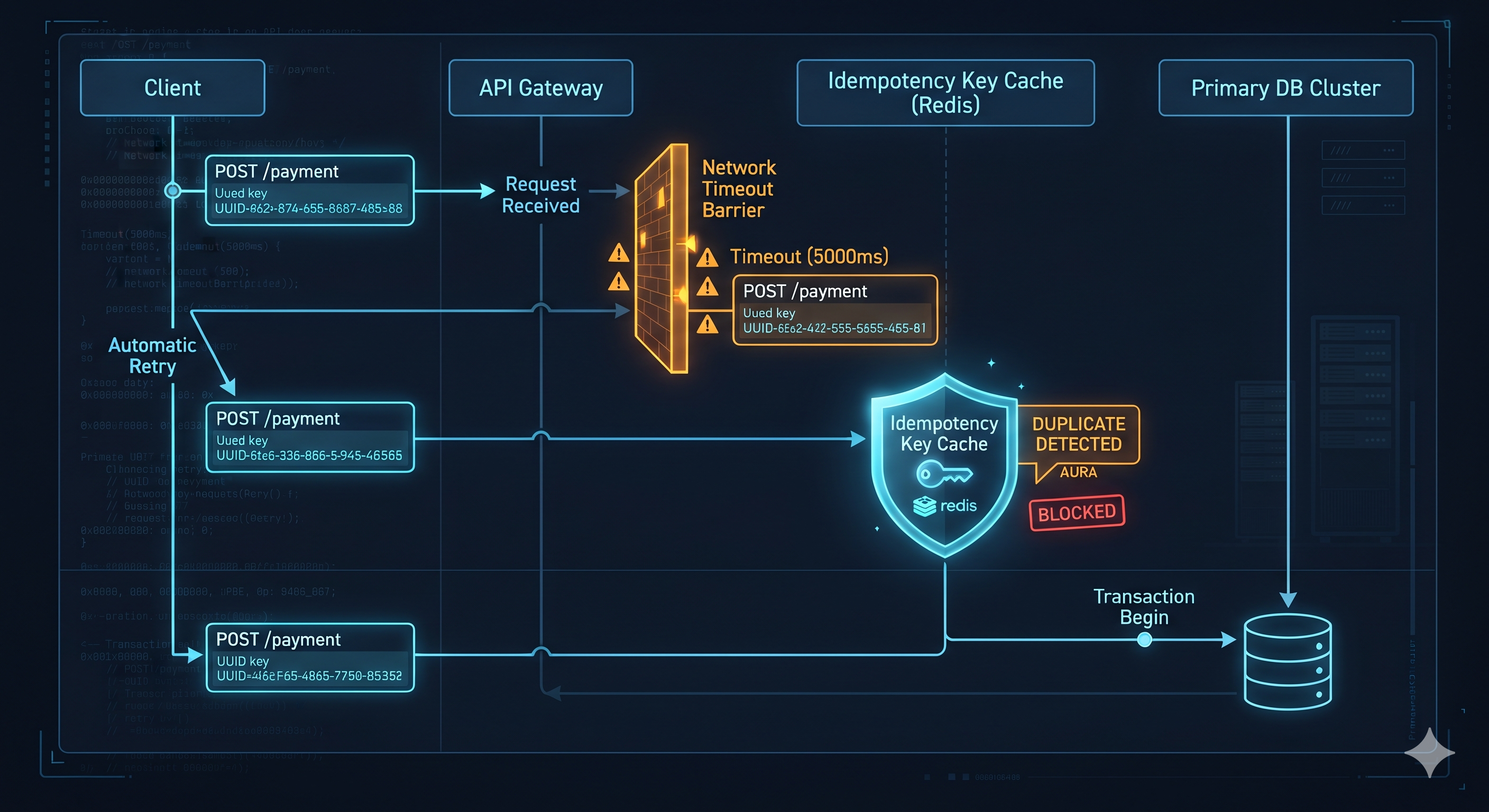
  • The Illusion of Idempotency: Why Your API Retries Are Secretly Corrupting Your Database
    With distributed systems handling massive concurrent workloads, building fault-tolerant applications requires more than just wrapping network calls in a try/catch block or throwing a exponential backoff wrapper around an API client. When packets vanish or timeouts occur in transit, the client doesn't know if the server failed before processing the request or after executing it successfully.


    Why It Matters
    If your API endpoints accept mutations (like creating a resource or transferring funds) without strict idempotency enforcement, automatic retries will inevitably result in duplicate data, ghost records, and financial discrepancies. Relying on auto-generated database IDs on the server side is no longer enough when distributed networks guarantee packet duplication and out-of-order delivery.


    What You Need to Know: Engineering True Idempotency
    To write rock-solid APIs that survive network partitions and client retries, implement these architectural patterns:


    Idempotency Keys via Headers: Require clients to generate and send a unique cryptographic identifier (like a UUID v4) in a custom header (e.g., X-Idempotency-Key) for every mutating request.


    Atomic State Tracking: Store the incoming idempotency key in a high-speed transactional store (such as Redis) with a strict Time-To-Live (TTL) alongside a status flag (PROCESSING, COMPLETED, FAILED).


    Optimistic Locking & Unique Constraints: Leverage database-level unique constraints on natural business keys to ensure that even if cache layers fail, the database rejects duplicate writes at the storage layer.


    Discussion Question
    How do you currently handle idempotency in your microservices? Are you managing state locks at the API gateway layer or handling uniqueness strictly inside your database constraints?


    CTA (Join Developers & Coding)
    Want to level up your backend architecture, master distributed systems, and write production-grade code that never breaks under pressure? Join Developers & Coding to connect with global engineers solving hard problems every day.
    The Illusion of Idempotency: Why Your API Retries Are Secretly Corrupting Your Database With distributed systems handling massive concurrent workloads, building fault-tolerant applications requires more than just wrapping network calls in a try/catch block or throwing a exponential backoff wrapper around an API client. When packets vanish or timeouts occur in transit, the client doesn't know if the server failed before processing the request or after executing it successfully. Why It Matters If your API endpoints accept mutations (like creating a resource or transferring funds) without strict idempotency enforcement, automatic retries will inevitably result in duplicate data, ghost records, and financial discrepancies. Relying on auto-generated database IDs on the server side is no longer enough when distributed networks guarantee packet duplication and out-of-order delivery. What You Need to Know: Engineering True Idempotency To write rock-solid APIs that survive network partitions and client retries, implement these architectural patterns: Idempotency Keys via Headers: Require clients to generate and send a unique cryptographic identifier (like a UUID v4) in a custom header (e.g., X-Idempotency-Key) for every mutating request. Atomic State Tracking: Store the incoming idempotency key in a high-speed transactional store (such as Redis) with a strict Time-To-Live (TTL) alongside a status flag (PROCESSING, COMPLETED, FAILED). Optimistic Locking & Unique Constraints: Leverage database-level unique constraints on natural business keys to ensure that even if cache layers fail, the database rejects duplicate writes at the storage layer. Discussion Question How do you currently handle idempotency in your microservices? Are you managing state locks at the API gateway layer or handling uniqueness strictly inside your database constraints? CTA (Join Developers & Coding) Want to level up your backend architecture, master distributed systems, and write production-grade code that never breaks under pressure? Join Developers & Coding to connect with global engineers solving hard problems every day.
    0 Commentarii 0 Distribuiri 57 Views 0 previzualizare
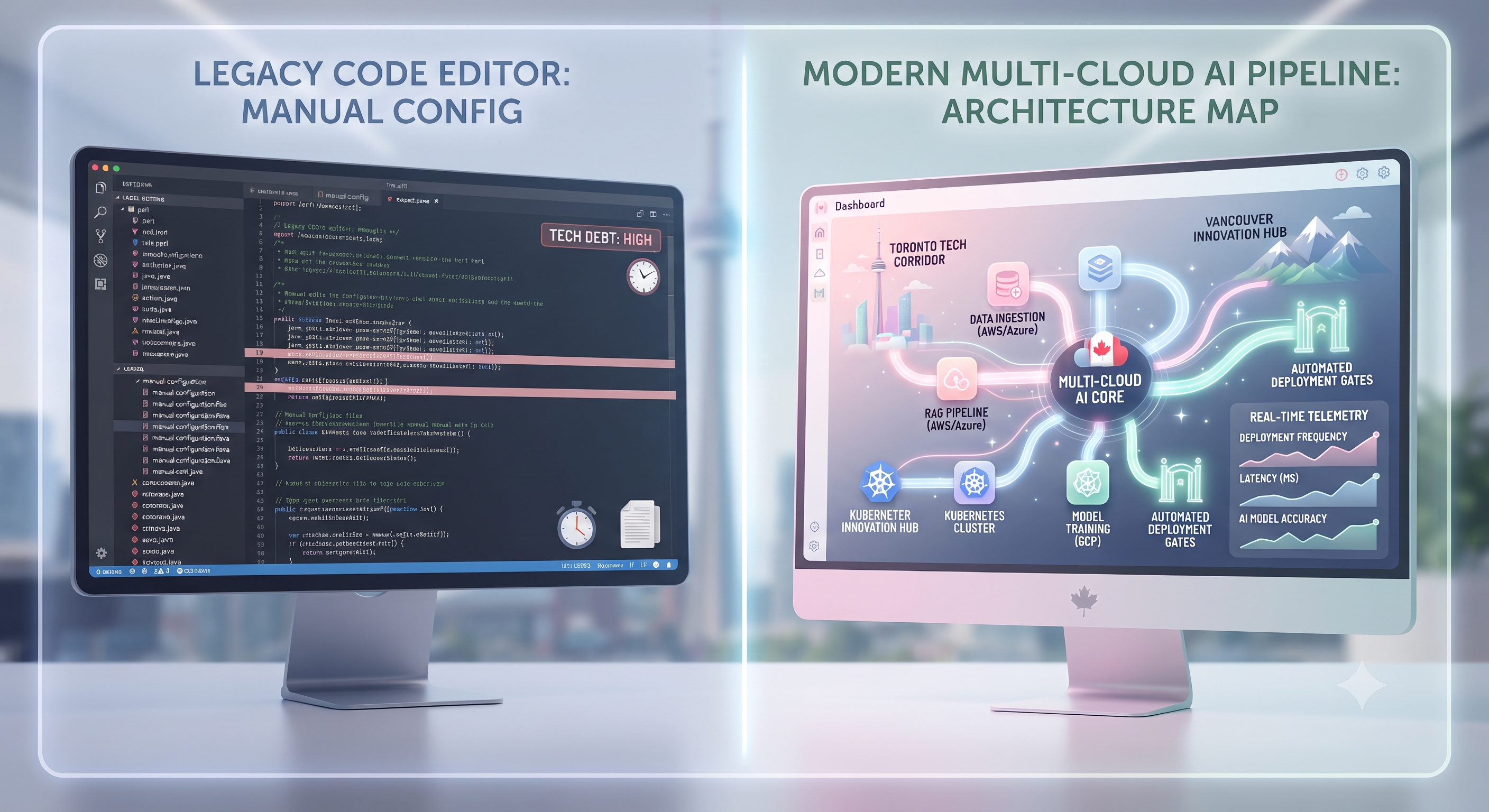
  • Modern Canadian Privacy & AI Governance: The 4-Step Compliance Readiness Checklist
    As Canadian engineering teams, startups, and enterprises rapidly scale AI-driven features and cloud applications, compliance is no longer a passive afterthought. Operating across Canadian jurisdictions requires balancing federal standards with rigorous provincial mandates—such as mandatory data deletion rights, strict portability frameworks, and explicit transparency obligations regarding automated decision systems.


    Whether you are handling customer records in Toronto, managing user data in Vancouver, or processing insights for Quebec residents, your data pipelines must be transparent, secure, and provable.


    Use this 4-step checklist to audit your Canadian tech stack for compliance readiness:


    Map Your Complete Data Inventory: Build a comprehensive data map identifying every location where personal information, customer records, and user prompts are stored, processed, or transferred across your repositories.


    Classify Automated Decision Systems (ADS): Document where your application utilizes AI models or automated workflows to make decisions about individuals, ensuring clear mechanisms for explanation and human review.


    Enforce Strict Cross-Border Transfer Controls: Review your third-party cloud and vendor agreements to ensure personal information sent outside of Canada is governed by robust security safeguards and privacy impact assessments.


    Automate Data Retention & Disposal Policies: Implement technical safeguards to automatically purge personal data that is no longer necessary for its original collection purpose, minimizing vulnerability.


    Discussion Question: How is your team adapting data governance workflows to meet rising federal and provincial compliance standards in Canada? Let’s discuss below!


    CTA (Join Techawks Canada): Want to connect with Canadian software engineers, tech founders, and leaders navigating modern architecture and compliance? Join the Techawks Canada community
    Modern Canadian Privacy & AI Governance: The 4-Step Compliance Readiness Checklist As Canadian engineering teams, startups, and enterprises rapidly scale AI-driven features and cloud applications, compliance is no longer a passive afterthought. Operating across Canadian jurisdictions requires balancing federal standards with rigorous provincial mandates—such as mandatory data deletion rights, strict portability frameworks, and explicit transparency obligations regarding automated decision systems. Whether you are handling customer records in Toronto, managing user data in Vancouver, or processing insights for Quebec residents, your data pipelines must be transparent, secure, and provable. Use this 4-step checklist to audit your Canadian tech stack for compliance readiness: Map Your Complete Data Inventory: Build a comprehensive data map identifying every location where personal information, customer records, and user prompts are stored, processed, or transferred across your repositories. Classify Automated Decision Systems (ADS): Document where your application utilizes AI models or automated workflows to make decisions about individuals, ensuring clear mechanisms for explanation and human review. Enforce Strict Cross-Border Transfer Controls: Review your third-party cloud and vendor agreements to ensure personal information sent outside of Canada is governed by robust security safeguards and privacy impact assessments. Automate Data Retention & Disposal Policies: Implement technical safeguards to automatically purge personal data that is no longer necessary for its original collection purpose, minimizing vulnerability. Discussion Question: How is your team adapting data governance workflows to meet rising federal and provincial compliance standards in Canada? Let’s discuss below! CTA (Join Techawks Canada): Want to connect with Canadian software engineers, tech founders, and leaders navigating modern architecture and compliance? Join the Techawks Canada community
    0 Commentarii 0 Distribuiri 397 Views 0 previzualizare
Sponsorizeaza Paginile