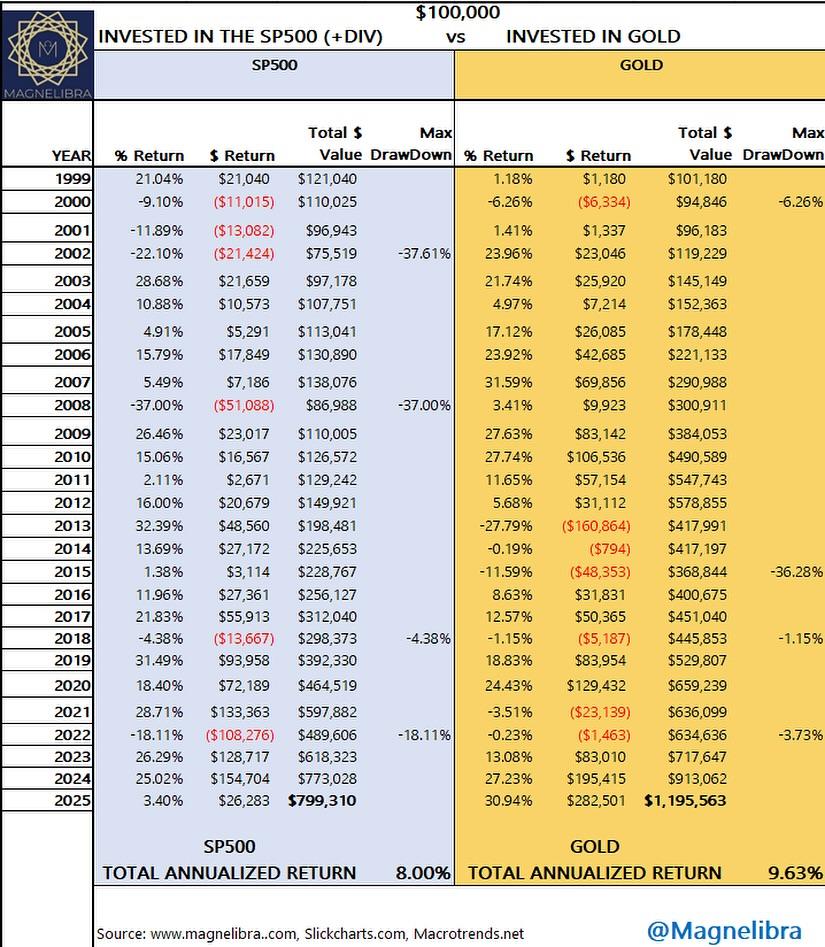
• This chart flips a long-standing market narrative on its head. Over the past 25+ years, gold has significantly outperformed the S&P 500 delivering a total annualized return of 9.63%, compared to just 8.00% for the S&P 500 (including dividends). Starting from $100,000 in 1999, a gold investor would now be sitting on nearly $1.2 million, while the same investment in the S&P 500 would be just under $800k.

    It’s a striking reminder that asset allocation matters and that sometimes the best-performing asset isn’t the one with the flashiest headlines. Gold, often dismissed as dead money, quietly crushed equities during several major equity drawdowns: the dot-com bust, the 2008 GFC, and more recently in 2022. While equities offer income and compound growth, gold has proved to be an unmatched hedge across cycles.

    For long-term investors, the lesson is clear the best portfolio isn’t always 100% stocks. Real diversification, especially across major asset classes like equities and gold, is how you preserve wealth and capture upside across market regimes.

    I can hear the comments now… now do Bitcoin… we all know Bitcoin is king

    #Gold #SP500 #LongTermInvesting #AssetAllocation #WealthPreservation #FinancialFreedom #PortfolioStrategy #InvestingWisdom #MacroTrends #InvestmentReturns #Diversify #HardAssets #InflationHedge #MacroInsights #MarketCycles
    This chart flips a long-standing market narrative on its head. Over the past 25+ years, gold has significantly outperformed the S&P 500 delivering a total annualized return of 9.63%, compared to just 8.00% for the S&P 500 (including dividends). Starting from $100,000 in 1999, a gold investor would now be sitting on nearly $1.2 million, while the same investment in the S&P 500 would be just under $800k. It’s a striking reminder that asset allocation matters and that sometimes the best-performing asset isn’t the one with the flashiest headlines. Gold, often dismissed as dead money, quietly crushed equities during several major equity drawdowns: the dot-com bust, the 2008 GFC, and more recently in 2022. While equities offer income and compound growth, gold has proved to be an unmatched hedge across cycles. For long-term investors, the lesson is clear the best portfolio isn’t always 100% stocks. Real diversification, especially across major asset classes like equities and gold, is how you preserve wealth and capture upside across market regimes. I can hear the comments now… now do Bitcoin… we all know Bitcoin is king 👑 🦍 #Gold #SP500 #LongTermInvesting #AssetAllocation #WealthPreservation #FinancialFreedom #PortfolioStrategy #InvestingWisdom #MacroTrends #InvestmentReturns #Diversify #HardAssets #InflationHedge #MacroInsights #MarketCycles
    ·613 مشاهدة ·0 معاينة
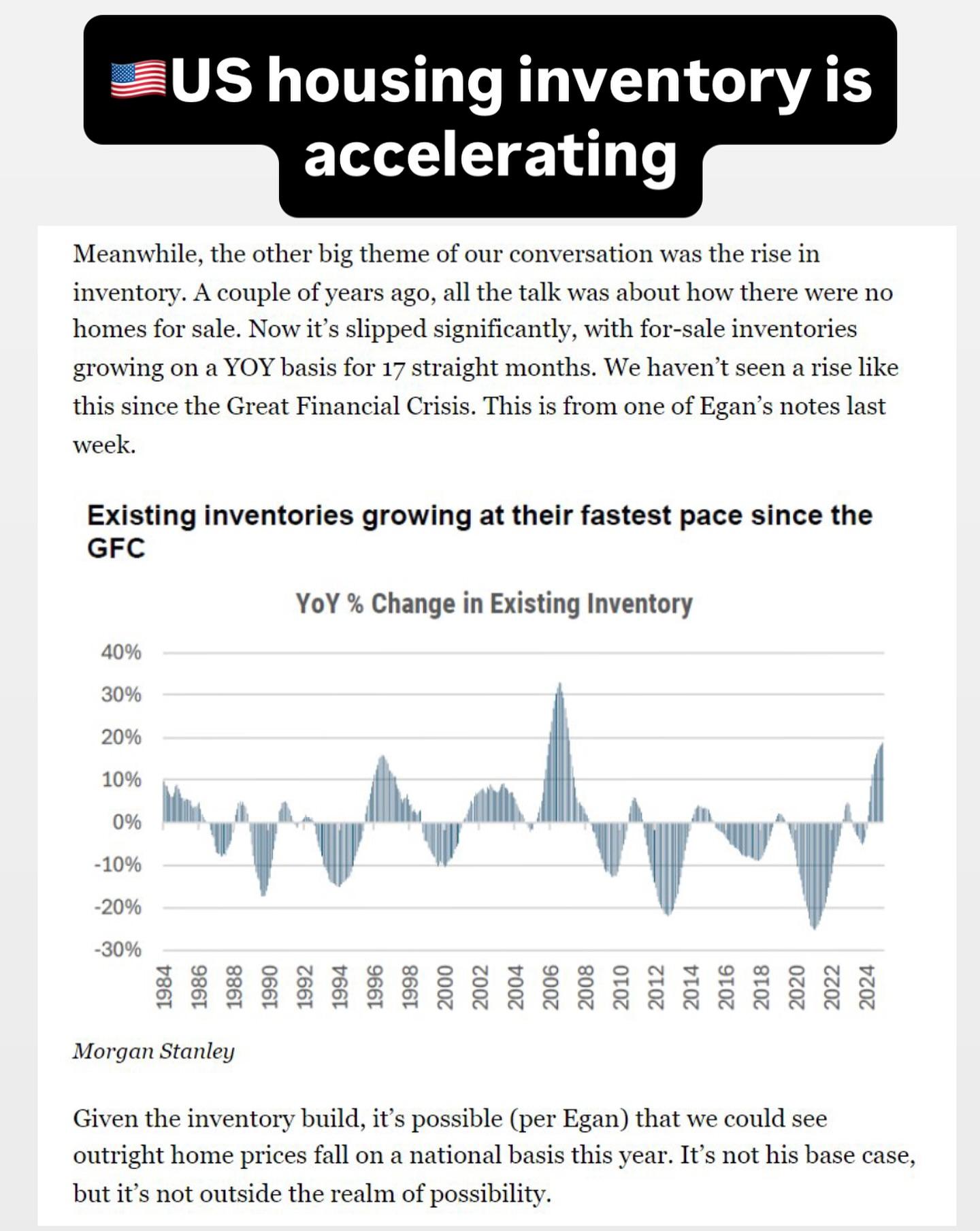
  • US housing market is quietly undergoing a significant shift. For-sale inventory has now increased on a year-over-year basis for 17 consecutive months something we haven’t seen since the aftermath of the Global Financial Crisis. According to Morgan Stanley, the current pace of inventory growth is the fastest in decades.

    This trend marks a reversal from the post-pandemic era when tight inventory fueled double digit home price increases across the country. While prices haven’t started falling nationally just yet, the build-up in supply could start to weigh on valuations, especially in overheated markets.

    Morgan Stanley’s housing strategist Jim Egan notes that although price declines aren’t the base case, they’re no longer out of the question given the data. With mortgage rates still elevated and affordability stretched, more supply could tip the balance potentially cooling home price growth or even reversing it in some regions.

    #HousingMarket #realestate #realestatenews #realestateagent #HomePrices #HousingInventory #MacroInsights #MorganStanley #RealEstateAnalysis #HousingData #MarketUpdate #SupplyAndDemand #Homebuyers #USEconomy
    🇺🇸US housing market is quietly undergoing a significant shift. For-sale inventory has now increased on a year-over-year basis for 17 consecutive months something we haven’t seen since the aftermath of the Global Financial Crisis. According to Morgan Stanley, the current pace of inventory growth is the fastest in decades. This trend marks a reversal from the post-pandemic era when tight inventory fueled double digit home price increases across the country. While prices haven’t started falling nationally just yet, the build-up in supply could start to weigh on valuations, especially in overheated markets. Morgan Stanley’s housing strategist Jim Egan notes that although price declines aren’t the base case, they’re no longer out of the question given the data. With mortgage rates still elevated and affordability stretched, more supply could tip the balance potentially cooling home price growth or even reversing it in some regions. #HousingMarket #realestate #realestatenews #realestateagent #HomePrices #HousingInventory #MacroInsights #MorganStanley #RealEstateAnalysis #HousingData #MarketUpdate #SupplyAndDemand #Homebuyers #USEconomy
    ·701 مشاهدة ·0 معاينة
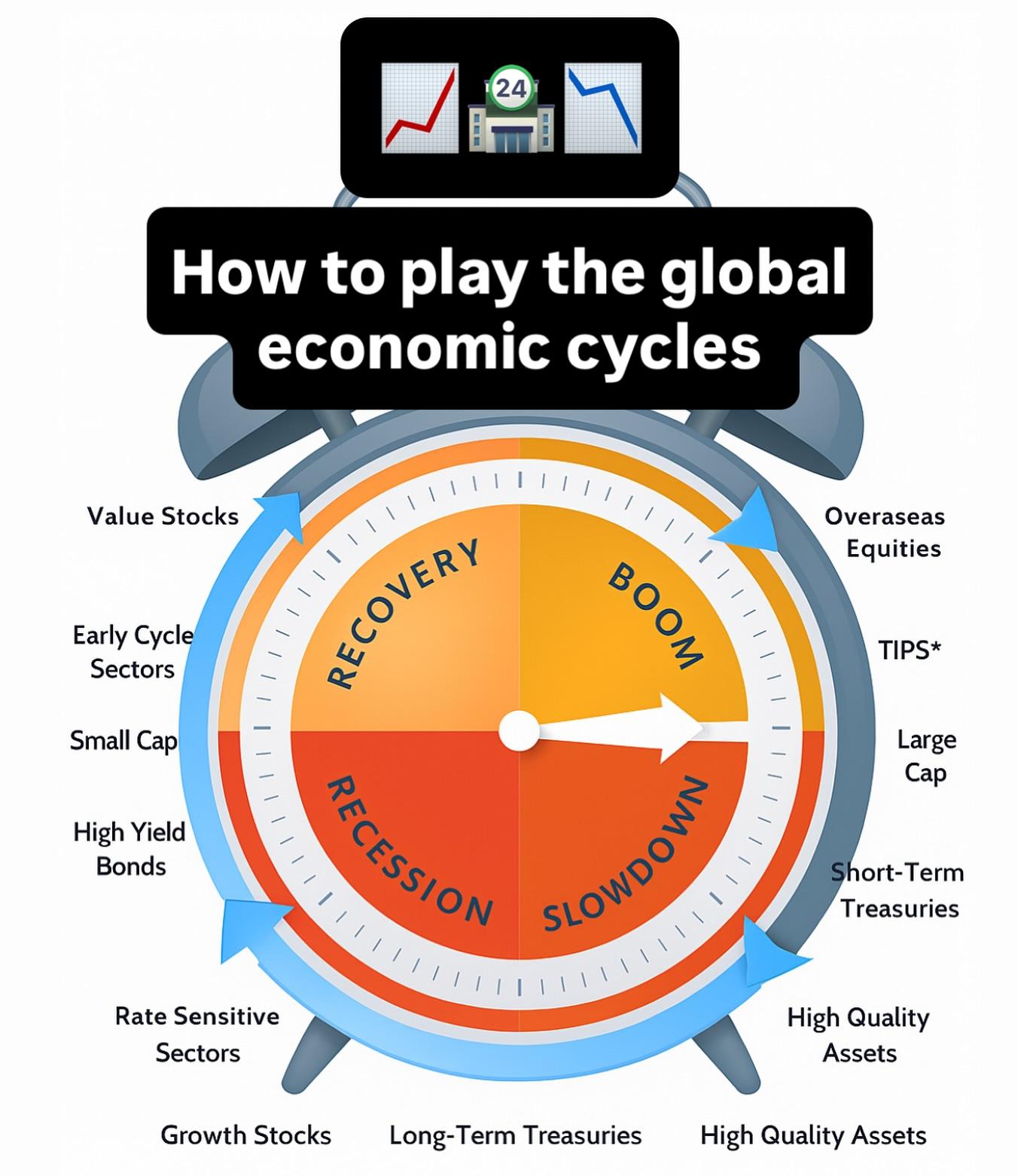
  • a simplified yet strategic view of how investors might align their portfolios with different phases of the global economic cycle. Each stage—recession, recovery, boom, and slowdown—tends to favor certain asset classes based on macro conditions and capital flows.

    During a recession, when growth contracts and uncertainty is high, investors often rotate into long-term treasuries and high-quality assets that offer stability. Growth stocks can also be favored as markets begin to anticipate recovery and future earnings potential.

    As the economy shifts into recovery, risk appetite begins to return. Value stocks, early-cycle sectors, small caps, and high-yield bonds typically outperform as confidence builds and monetary policy remains supportive.

    In the boom phase, economic activity is strong and earnings growth broad-based. Investors tend to favor large caps, TIPS (inflation-protected securities), and overseas equities, which benefit from global demand and reflation.

    As the cycle enters a slowdown, caution returns. Capital tends to rotate back into short-term treasuries and high-quality assets, which are better positioned to weather declining growth or margin pressures.

    The cyclical rotation shown here underscores the value of staying flexible and understanding how macro trends shape relative performance across asset classes.

    #stockmarket #macroeconomics #hedgefunds #nasdaq #qqq #moneymarket #stocktrading #GlobalMarkets #AssetAllocation #InvestmentStrategy #MarketCycles #MacroInsights #EconomicOutlook #PortfolioManagement
    a simplified yet strategic view of how investors might align their portfolios with different phases of the global economic cycle. Each stage—recession, recovery, boom, and slowdown—tends to favor certain asset classes based on macro conditions and capital flows. During a recession, when growth contracts and uncertainty is high, investors often rotate into long-term treasuries and high-quality assets that offer stability. Growth stocks can also be favored as markets begin to anticipate recovery and future earnings potential. As the economy shifts into recovery, risk appetite begins to return. Value stocks, early-cycle sectors, small caps, and high-yield bonds typically outperform as confidence builds and monetary policy remains supportive. In the boom phase, economic activity is strong and earnings growth broad-based. Investors tend to favor large caps, TIPS (inflation-protected securities), and overseas equities, which benefit from global demand and reflation. As the cycle enters a slowdown, caution returns. Capital tends to rotate back into short-term treasuries and high-quality assets, which are better positioned to weather declining growth or margin pressures. The cyclical rotation shown here underscores the value of staying flexible and understanding how macro trends shape relative performance across asset classes. #stockmarket #macroeconomics #hedgefunds #nasdaq #qqq #moneymarket #stocktrading #GlobalMarkets #AssetAllocation #InvestmentStrategy #MarketCycles #MacroInsights #EconomicOutlook #PortfolioManagement
    ·1كيلو بايت مشاهدة ·0 معاينة
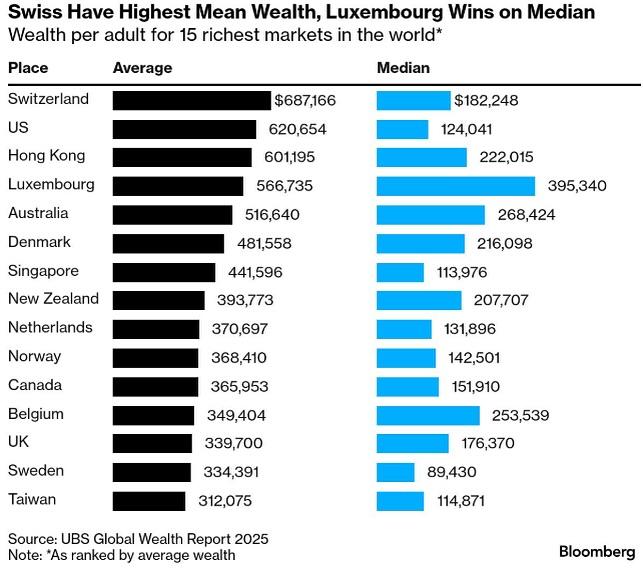
  • Switzerland leads in average wealth per adult at over $687,000, but Luxembourg takes the crown for median wealth nearly $400,000 signaling more evenly distributed affluence. The U.S., by contrast, shows a sharp gap: second in average wealth but much lower in median, highlighting deep inequality.

    Hong Kong, Australia, and Denmark also post strong numbers on both metrics, while countries like Belgium and New Zealand punch above their weight in median terms. Singapore and the UK despite their economic might, reveal wider wealth disparities.

    Average tells you how wealthy a country is. Median tells you how wealthy its people feel.

    #wealthcreation #wealthbuilding #macroeconomics #GlobalWealth #MedianVsAverage #Inequality #wealth #Luxembourg #Switzerland #USWealthGap #WealthInequality #MacroInsights #Bloomberg #PersonalFinance #EconomicIndicators #money
    Switzerland leads in average wealth per adult at over $687,000, but Luxembourg takes the crown for median wealth nearly $400,000 signaling more evenly distributed affluence. The U.S., by contrast, shows a sharp gap: second in average wealth but much lower in median, highlighting deep inequality. Hong Kong, Australia, and Denmark also post strong numbers on both metrics, while countries like Belgium and New Zealand punch above their weight in median terms. Singapore and the UK despite their economic might, reveal wider wealth disparities. Average tells you how wealthy a country is. Median tells you how wealthy its people feel. #wealthcreation #wealthbuilding #macroeconomics #GlobalWealth #MedianVsAverage #Inequality #wealth #Luxembourg #Switzerland #USWealthGap #WealthInequality #MacroInsights #Bloomberg #PersonalFinance #EconomicIndicators #money
    ·1كيلو بايت مشاهدة ·0 معاينة
Techawks - Powered By Pantrade Blockchain https://techawks.com