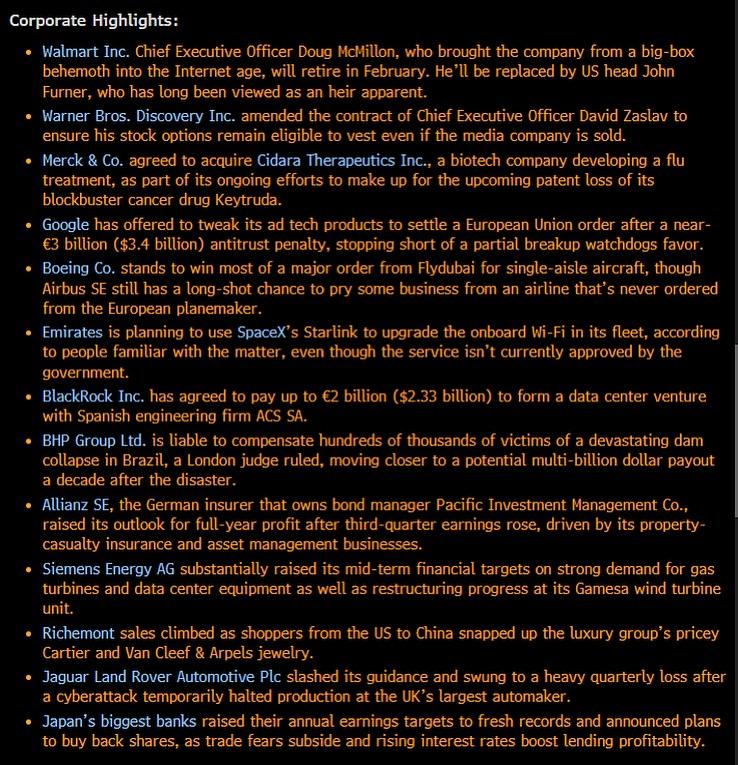
• Corporate highlights #bloomberg #stocks #qqq
    Corporate highlights #bloomberg #stocks #qqq
    ·53 Views ·0 önizleme
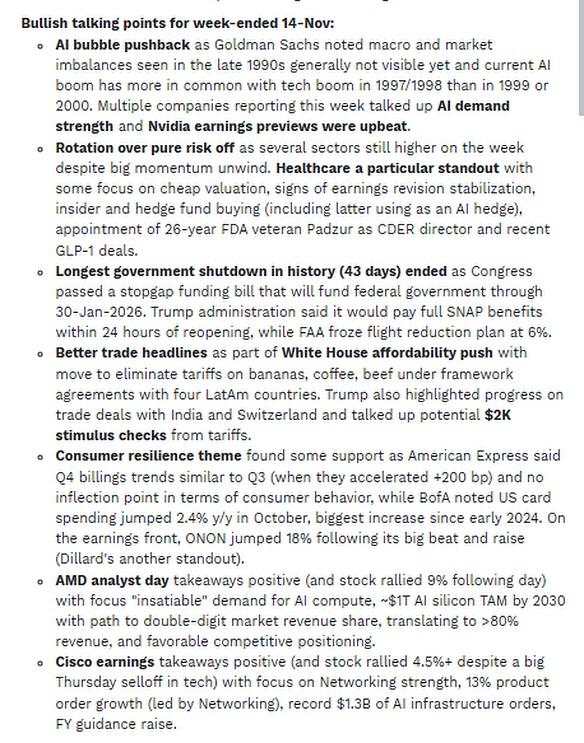
  • Current bullish talking points #ndx #qqq #stocks #markets
    Current bullish talking points #ndx #qqq #stocks #markets
    ·59 Views ·0 önizleme
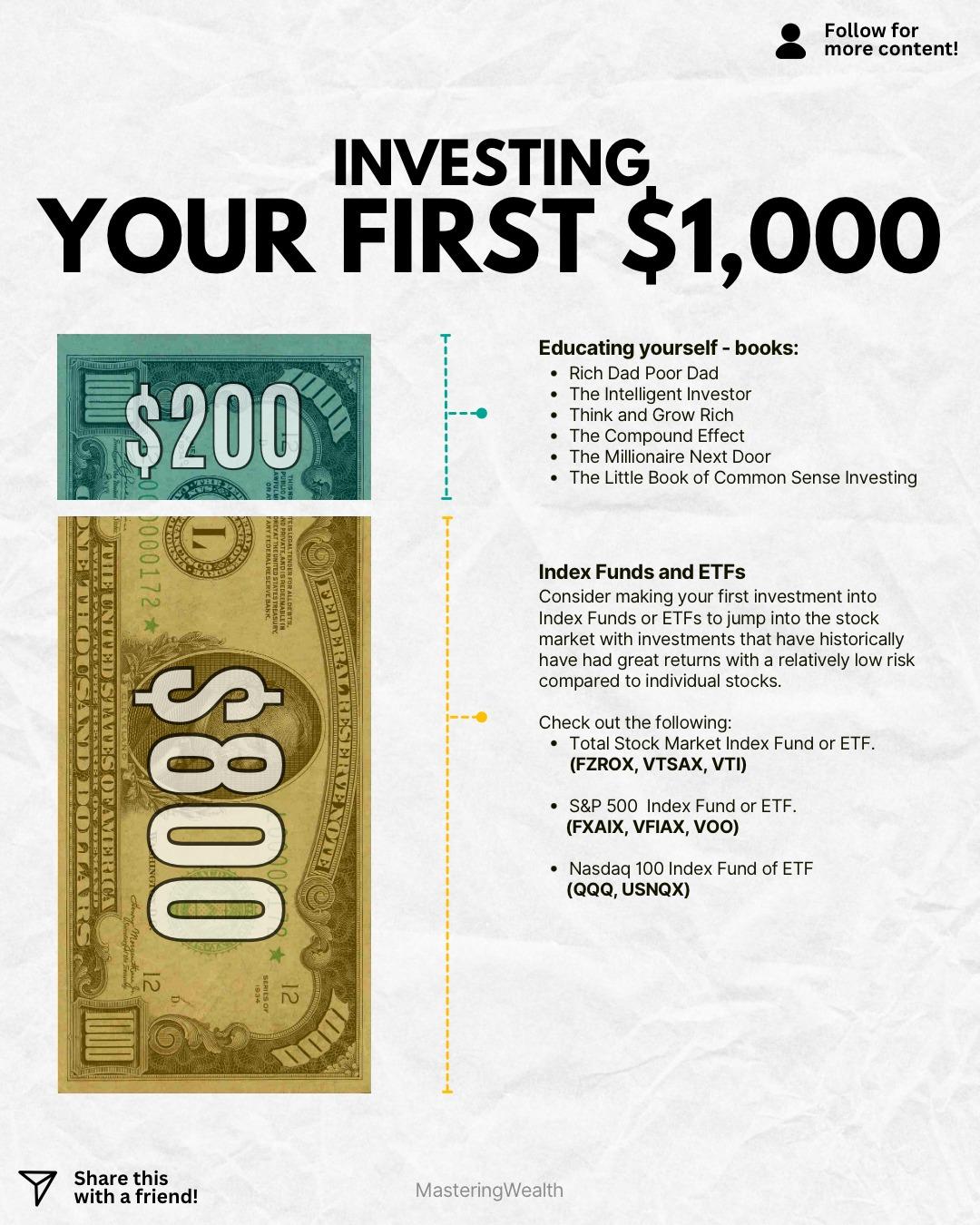
  • So you’ve saved your first $1,000 and you’re wondering what to do next. Should you invest it, save it, or use it to learn more about money? The truth is, your first thousand dollars is less about growing it fast and more about building the foundation for your long-term wealth.

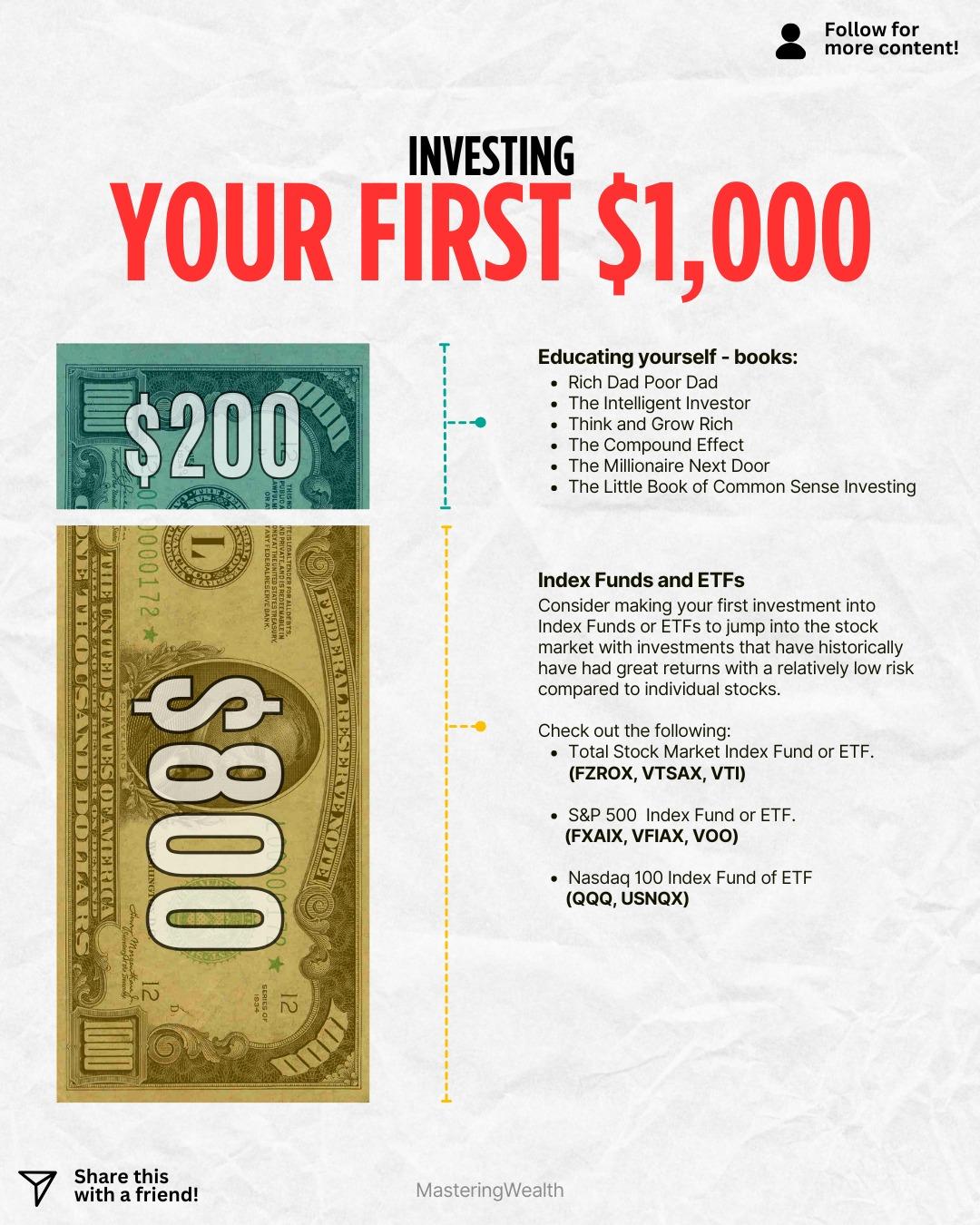
    Start by investing in yourself. Use around $200 to buy books that teach you how money works, how to think like an investor, and how to make smarter financial decisions. Great options include Rich Dad Poor Dad, The Intelligent Investor, The Millionaire Next Door, and The Compound Effect. These aren’t just books; they’re tools to help you shift from consumer thinking to investor thinking.

    With the remaining $800, it’s time to enter the investing world. A great place to start is with index funds or ETFs because they let you own small pieces of hundreds of companies with one purchase. This spreads your risk and helps you grow your money steadily through the power of compound interest.

    Some great starting options include the Total Stock Market Index Fund (FZROX, VTSAX, VTI), the S&P 500 Index Fund (FXAIX, VFIAX, VOO), or the Nasdaq 100 Index Fund (QQQ, USNQX). These funds have historically produced solid long-term returns and require no advanced investing experience.

    The key is to start early and stay consistent. You don’t need to be an expert to invest wisely; you just need patience and a plan. Even a small amount like $1,000 can grow into something significant when combined with time, education, and consistent investing.

    Comment “Stocks” if you want a link to see my dividend portfolio and learn how I invest for long-term growth and passive income.

    If you were given $1,000 today, would you invest it, save it, or spend it?

    Follow @MasteringWealth for more simple, practical investing tips that help you build wealth step by step, even if you’re just starting out.

    Disclaimer: This content is for educational purposes only and not financial advice. Always do your own research or consult a financial professional before making investment decisions.
    💰 So you’ve saved your first $1,000 and you’re wondering what to do next. Should you invest it, save it, or use it to learn more about money? The truth is, your first thousand dollars is less about growing it fast and more about building the foundation for your long-term wealth. 📚 Start by investing in yourself. Use around $200 to buy books that teach you how money works, how to think like an investor, and how to make smarter financial decisions. Great options include Rich Dad Poor Dad, The Intelligent Investor, The Millionaire Next Door, and The Compound Effect. These aren’t just books; they’re tools to help you shift from consumer thinking to investor thinking. 📈 With the remaining $800, it’s time to enter the investing world. A great place to start is with index funds or ETFs because they let you own small pieces of hundreds of companies with one purchase. This spreads your risk and helps you grow your money steadily through the power of compound interest. Some great starting options include the Total Stock Market Index Fund (FZROX, VTSAX, VTI), the S&P 500 Index Fund (FXAIX, VFIAX, VOO), or the Nasdaq 100 Index Fund (QQQ, USNQX). These funds have historically produced solid long-term returns and require no advanced investing experience. 🚀 The key is to start early and stay consistent. You don’t need to be an expert to invest wisely; you just need patience and a plan. Even a small amount like $1,000 can grow into something significant when combined with time, education, and consistent investing. 💬 Comment “Stocks” if you want a link to see my dividend portfolio and learn how I invest for long-term growth and passive income. 🤔 If you were given $1,000 today, would you invest it, save it, or spend it? 👉 Follow @MasteringWealth for more simple, practical investing tips that help you build wealth step by step, even if you’re just starting out. ⚠️ Disclaimer: This content is for educational purposes only and not financial advice. Always do your own research or consult a financial professional before making investment decisions.
    ·167 Views ·0 önizleme
  • Starting your investing journey with your first $1,000 can feel overwhelming but the key is to focus on building a strong foundation. The smartest approach is to split it between educating yourself and putting your money to work in investments. For example, dedicating $200 to books on personal finance and investing gives you knowledge that will pay off for the rest of your life. The remaining $800 can then be used to buy index funds or ETFs that have proven track records of steady long term returns .

    Some of the best beginner books include Rich Dad Poor Dad, The Intelligent Investor, Think and Grow Rich, The Compound Effect, The Millionaire Next Door, and The Little Book of Common Sense Investing . These books cover the mindset, strategies, and discipline needed to build wealth. They teach you how money works, how to avoid debt traps, and why consistent investing outperforms chasing quick wins. Knowledge truly compounds just like money does.

    For the $800 portion, index funds and ETFs are a great place to start because they are diversified and relatively low risk compared to picking individual stocks. A Total Stock Market Index Fund like FZROX or VTSAX allows you to own thousands of companies at once. The S&P 500 funds like VFIAX or VOO give you access to the largest U.S. companies while Nasdaq 100 funds like QQQ focus more on tech driven growth. Investing in these allows your money to grow steadily with the market over time.

    If you want to see the exact stocks and ETFs I am currently holding in my portfolio, comment “Stocks” below and I will share the link with you .

    What would you personally do with your first $1,000 to invest? Would you focus more on learning, buying ETFs, or taking a chance on individual stocks?

    For more tips on investing, building wealth, and managing your money, make sure to follow me @MasteringWealth .

    Disclaimer: This content is for educational purposes only and is not financial advice. Always do your own research or consult with a licensed financial professional before making investment decisions.
    Starting your investing journey with your first $1,000 can feel overwhelming 💵 but the key is to focus on building a strong foundation. The smartest approach is to split it between educating yourself and putting your money to work in investments. For example, dedicating $200 to books on personal finance and investing gives you knowledge that will pay off for the rest of your life. The remaining $800 can then be used to buy index funds or ETFs that have proven track records of steady long term returns 📈. Some of the best beginner books include Rich Dad Poor Dad, The Intelligent Investor, Think and Grow Rich, The Compound Effect, The Millionaire Next Door, and The Little Book of Common Sense Investing 📚. These books cover the mindset, strategies, and discipline needed to build wealth. They teach you how money works, how to avoid debt traps, and why consistent investing outperforms chasing quick wins. Knowledge truly compounds just like money does. For the $800 portion, index funds and ETFs are a great place to start because they are diversified and relatively low risk compared to picking individual stocks. A Total Stock Market Index Fund like FZROX or VTSAX allows you to own thousands of companies at once. The S&P 500 funds like VFIAX or VOO give you access to the largest U.S. companies while Nasdaq 100 funds like QQQ focus more on tech driven growth. Investing in these allows your money to grow steadily with the market over time. If you want to see the exact stocks and ETFs I am currently holding in my portfolio, comment “Stocks” below and I will share the link with you 🔗. What would you personally do with your first $1,000 to invest? Would you focus more on learning, buying ETFs, or taking a chance on individual stocks? 🤔 For more tips on investing, building wealth, and managing your money, make sure to follow me @MasteringWealth 🚀. Disclaimer: This content is for educational purposes only and is not financial advice. Always do your own research or consult with a licensed financial professional before making investment decisions.
    ·294 Views ·0 önizleme
  • Got your first $1,000 and ready to start investing? Here is a practical way to split that money to build both knowledge and wealth

    Start by using $200 to invest in yourself. Read personal finance and investing books that can give you a mindset shift and teach you how money actually works. Some of the best books include Rich Dad Poor Dad, The Intelligent Investor, The Millionaire Next Door, Think and Grow Rich, The Compound Effect, and The Little Book of Common Sense Investing

    The remaining $800 can go straight into index funds or ETFs. These are low cost diversified investments that spread your money across hundreds of companies, making them a safer option for beginner investors.

    Instead of trying to pick individual stocks, you can own the entire market. Some popular options are:
    Total Market Index Funds like FZROX, VTSAX, or VTI
    S&P 500 Index Funds like FXAIX, VFIAX, or VOO
    Nasdaq 100 Index Funds like QQQ or USNQX

    These investments have historically delivered solid long term returns with less risk compared to stock picking. They also allow you to stay invested without needing to check the market every day

    So how is this relevant to personal finance and building wealth? Because this is the blueprint for starting small but building big. You are not just buying assets. You are developing the habit of consistently investing while learning how to make smarter money decisions every step of the way

    Want to see which specific funds I am currently investing in for long term growth and passive income? Comment “Stocks” and I will DM you a link to my full portfolio

    If someone gave you $1,000 today with only one condition that it had to be invested wisely, how would you spend it? Let me know

    Follow @MasteringWealth for more simple strategies to grow your money and take control of your financial future

    Disclaimer: This post is for educational purposes only and is not financial advice. Always do your own research or consult a licensed financial advisor before making investment decisions.
    💰 Got your first $1,000 and ready to start investing? Here is a practical way to split that money to build both knowledge and wealth Start by using $200 to invest in yourself. Read personal finance and investing books that can give you a mindset shift and teach you how money actually works. Some of the best books include Rich Dad Poor Dad, The Intelligent Investor, The Millionaire Next Door, Think and Grow Rich, The Compound Effect, and The Little Book of Common Sense Investing 📚 The remaining $800 can go straight into index funds or ETFs. These are low cost diversified investments that spread your money across hundreds of companies, making them a safer option for beginner investors. Instead of trying to pick individual stocks, you can own the entire market. Some popular options are: 🟢 Total Market Index Funds like FZROX, VTSAX, or VTI 🟢 S&P 500 Index Funds like FXAIX, VFIAX, or VOO 🟢 Nasdaq 100 Index Funds like QQQ or USNQX These investments have historically delivered solid long term returns with less risk compared to stock picking. They also allow you to stay invested without needing to check the market every day So how is this relevant to personal finance and building wealth? Because this is the blueprint for starting small but building big. You are not just buying assets. You are developing the habit of consistently investing while learning how to make smarter money decisions every step of the way 🧠 Want to see which specific funds I am currently investing in for long term growth and passive income? Comment “Stocks” and I will DM you a link to my full portfolio 🔍 If someone gave you $1,000 today with only one condition that it had to be invested wisely, how would you spend it? Let me know 💬 Follow @MasteringWealth for more simple strategies to grow your money and take control of your financial future 💼 📌 Disclaimer: This post is for educational purposes only and is not financial advice. Always do your own research or consult a licensed financial advisor before making investment decisions.
    ·569 Views ·0 önizleme
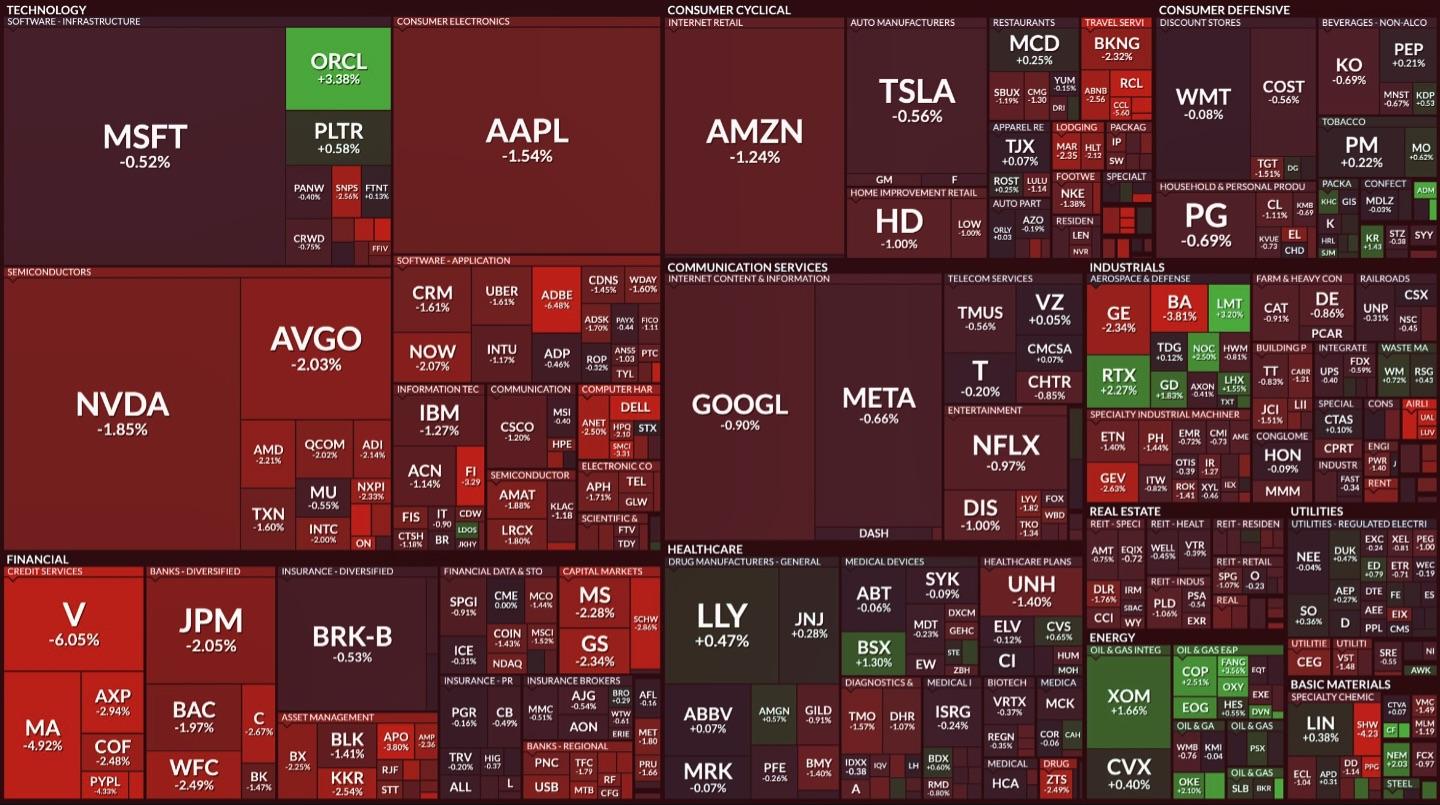
  • Today should be fun… S&P 500 has performed so far in early trading #markets #stockmarket #nasdaq #qqq #ndx
    Today should be fun… S&P 500 has performed so far in early trading #markets #stockmarket #nasdaq #qqq #ndx
    ·261 Views ·0 önizleme
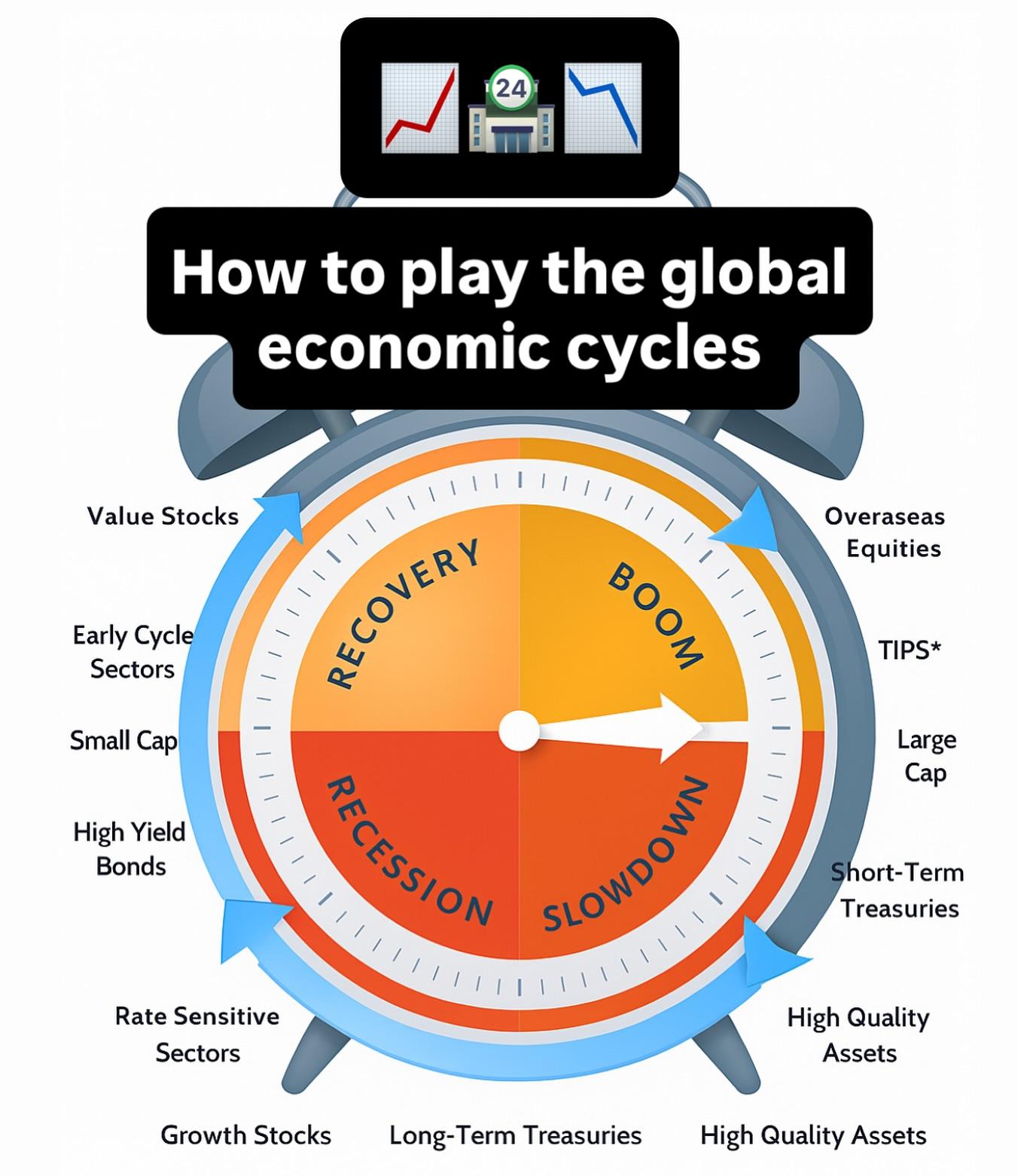
  • a simplified yet strategic view of how investors might align their portfolios with different phases of the global economic cycle. Each stage—recession, recovery, boom, and slowdown—tends to favor certain asset classes based on macro conditions and capital flows.

    During a recession, when growth contracts and uncertainty is high, investors often rotate into long-term treasuries and high-quality assets that offer stability. Growth stocks can also be favored as markets begin to anticipate recovery and future earnings potential.

    As the economy shifts into recovery, risk appetite begins to return. Value stocks, early-cycle sectors, small caps, and high-yield bonds typically outperform as confidence builds and monetary policy remains supportive.

    In the boom phase, economic activity is strong and earnings growth broad-based. Investors tend to favor large caps, TIPS (inflation-protected securities), and overseas equities, which benefit from global demand and reflation.

    As the cycle enters a slowdown, caution returns. Capital tends to rotate back into short-term treasuries and high-quality assets, which are better positioned to weather declining growth or margin pressures.

    The cyclical rotation shown here underscores the value of staying flexible and understanding how macro trends shape relative performance across asset classes.

    #stockmarket #macroeconomics #hedgefunds #nasdaq #qqq #moneymarket #stocktrading #GlobalMarkets #AssetAllocation #InvestmentStrategy #MarketCycles #MacroInsights #EconomicOutlook #PortfolioManagement
    a simplified yet strategic view of how investors might align their portfolios with different phases of the global economic cycle. Each stage—recession, recovery, boom, and slowdown—tends to favor certain asset classes based on macro conditions and capital flows. During a recession, when growth contracts and uncertainty is high, investors often rotate into long-term treasuries and high-quality assets that offer stability. Growth stocks can also be favored as markets begin to anticipate recovery and future earnings potential. As the economy shifts into recovery, risk appetite begins to return. Value stocks, early-cycle sectors, small caps, and high-yield bonds typically outperform as confidence builds and monetary policy remains supportive. In the boom phase, economic activity is strong and earnings growth broad-based. Investors tend to favor large caps, TIPS (inflation-protected securities), and overseas equities, which benefit from global demand and reflation. As the cycle enters a slowdown, caution returns. Capital tends to rotate back into short-term treasuries and high-quality assets, which are better positioned to weather declining growth or margin pressures. The cyclical rotation shown here underscores the value of staying flexible and understanding how macro trends shape relative performance across asset classes. #stockmarket #macroeconomics #hedgefunds #nasdaq #qqq #moneymarket #stocktrading #GlobalMarkets #AssetAllocation #InvestmentStrategy #MarketCycles #MacroInsights #EconomicOutlook #PortfolioManagement
    ·1K Views ·0 önizleme
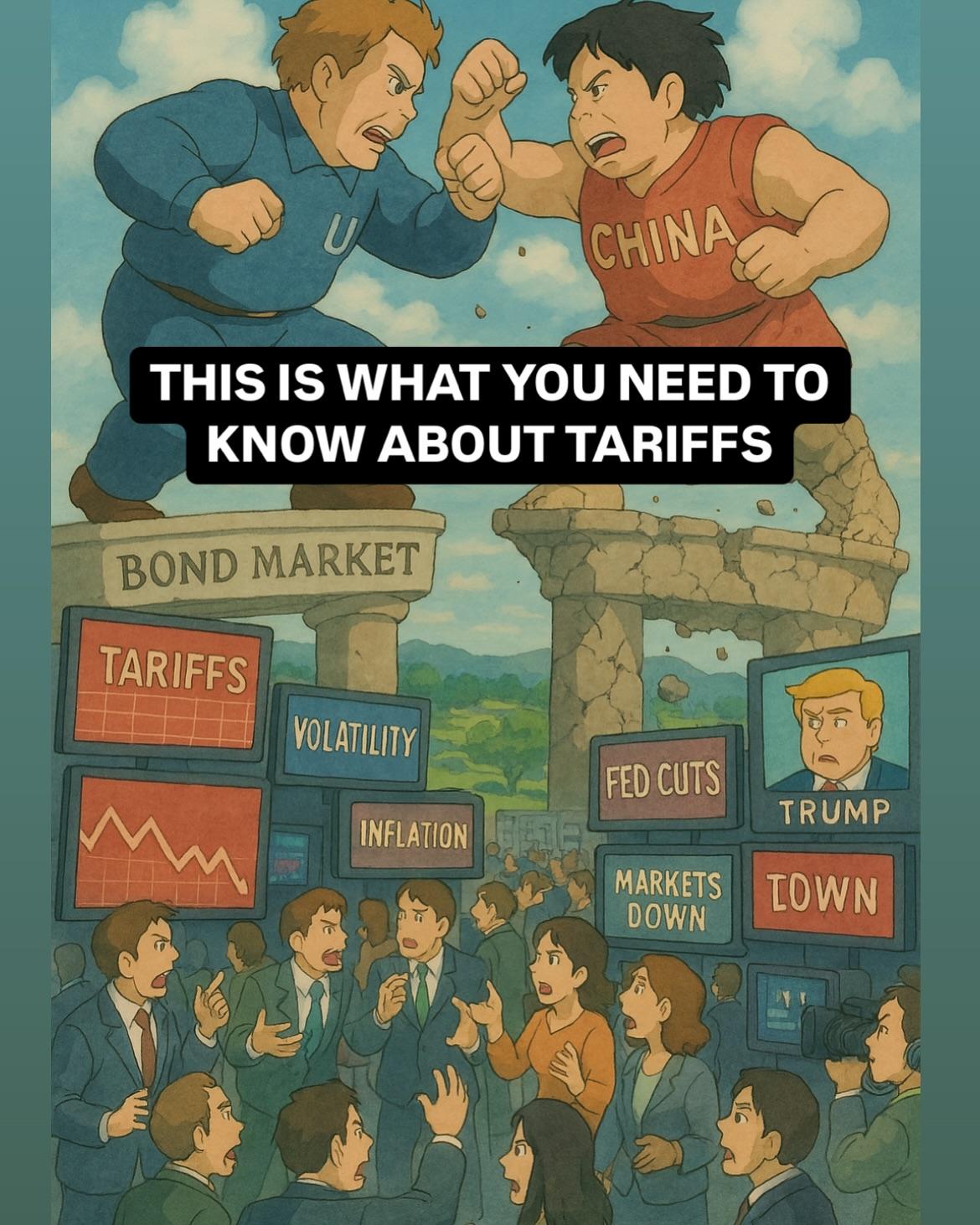
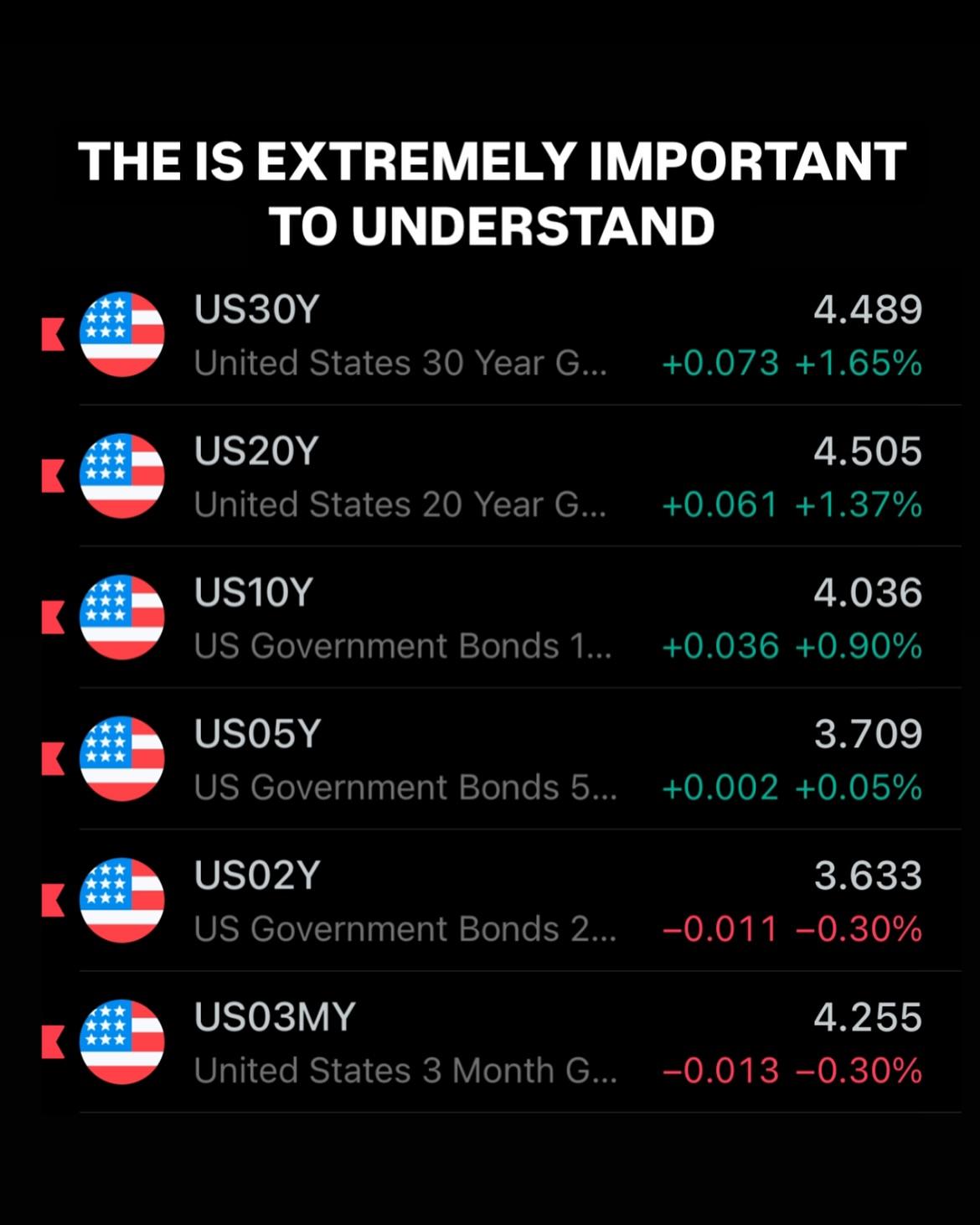
  • Most people are missing the real battle here — it’s not about tariffs or headlines, it’s about the bond market.
    The US looks chaotic on purpose to pressure China into bleeding reserves, liquidating assets, and defending their currency while forcing the world to choose between systems.

    Yields are rising not because “no one wants US debt,” but because other countries are under massive stress and are forced to sell Treasuries to defend their economies.

    This is about restoring credibility, showing fiscal dominance, and protecting the US financial system long-term — even if it means short-term pain through inflation and unemployment.

    If the Fed cuts now, it would destroy trust. Stability must come through strength, not printing. The real story is playing out in the bond market, not the headlines.

    It’s brutal, messy, but absolutely necessary.

    This is Jerome Powel - Paul A. Volcker moment. To maintain credibility and show fiscal dominance.


    #investing #stockmarket #stocks #BondMarket #FiscalDiscipline #GlobalEconomy #qqq #nasdaq #USDebt #InterestRates #MarketStress #FinancialSystem #Tariffs #Inflation #Unemployment #StayFocused #stayhard #bitcoin #financialfreedom
    Most people are missing the real battle here — it’s not about tariffs or headlines, it’s about the bond market. The US looks chaotic on purpose to pressure China into bleeding reserves, liquidating assets, and defending their currency while forcing the world to choose between systems. Yields are rising not because “no one wants US debt,” but because other countries are under massive stress and are forced to sell Treasuries to defend their economies. This is about restoring credibility, showing fiscal dominance, and protecting the US financial system long-term — even if it means short-term pain through inflation and unemployment. If the Fed cuts now, it would destroy trust. Stability must come through strength, not printing. The real story is playing out in the bond market, not the headlines. It’s brutal, messy, but absolutely necessary. This is Jerome Powel - Paul A. Volcker moment. To maintain credibility and show fiscal dominance. 🇺🇸🦍 #investing #stockmarket #stocks #BondMarket #FiscalDiscipline #GlobalEconomy #qqq #nasdaq #USDebt #InterestRates #MarketStress #FinancialSystem #Tariffs #Inflation #Unemployment #StayFocused #stayhard #bitcoin #financialfreedom
    ·2K Views ·0 önizleme
  • Let me break it all down… and tell you what’s really not being discussed at all.

    Right now, it’s not just about tariffs, wild headlines, or endless debate.

    40% of the $36 trillion U.S. national debt must soon be refinanced.

    If yields stay elevated, the risk of a sovereign debt spiral grows dramatically — which is why the chaos in headlines is pushing capital back into bonds: a necessary, though painful, adjustment.

    It’s like going to the dentist.

    Getting the filling today might hurt — but ignoring it would eventually cost you the whole tooth.

    This short-term economic pain is designed to prevent much greater long-term damage.

    Saving the bond market is critical.

    It’s not about propping up Wall Street — it’s about protecting Main Street, stabilizing the financial system, and preserving trust in U.S. assets.

    Meanwhile, investor psychology is in full effect:
    Loss aversion, confirmation bias, and headline-driven volatility are whipsawing emotions.

    Volatility itself isn’t bad — but chasing every short-term move is dangerous. Zooming out matters more now than ever.

    One major tweet or announcement could dramatically flip sentiment — but it will likely come after bond yields fall meaningfully.

    Until I see real capitulation in positioning and yields, risk remains elevated.

    One tweet can change all this over night and the panic is over.

    Short-term pain now is far better than systemic collapse later.

    #StockMarket #Finance #Macroeconomics #Markets #Economy #Investing #Nasdaq #QQQ #Bonds #BondMarket #Treasuries #Trading #hedgefund #hedgefunds
    Let me break it all down… and tell you what’s really not being discussed at all. Right now, it’s not just about tariffs, wild headlines, or endless debate. 40% of the $36 trillion U.S. national debt must soon be refinanced. If yields stay elevated, the risk of a sovereign debt spiral grows dramatically — which is why the chaos in headlines is pushing capital back into bonds: a necessary, though painful, adjustment. It’s like going to the dentist. Getting the filling today might hurt — but ignoring it would eventually cost you the whole tooth. This short-term economic pain is designed to prevent much greater long-term damage. Saving the bond market is critical. It’s not about propping up Wall Street — it’s about protecting Main Street, stabilizing the financial system, and preserving trust in U.S. assets. Meanwhile, investor psychology is in full effect: Loss aversion, confirmation bias, and headline-driven volatility are whipsawing emotions. Volatility itself isn’t bad — but chasing every short-term move is dangerous. Zooming out matters more now than ever. One major tweet or announcement could dramatically flip sentiment — but it will likely come after bond yields fall meaningfully. Until I see real capitulation in positioning and yields, risk remains elevated. One tweet can change all this over night and the panic is over. Short-term pain now is far better than systemic collapse later. #StockMarket #Finance #Macroeconomics #Markets #Economy #Investing #Nasdaq #QQQ #Bonds #BondMarket #Treasuries #Trading #hedgefund #hedgefunds
    ·1K Views ·0 önizleme
Techawks - Powered By Pantrade Blockchain https://techawks.com