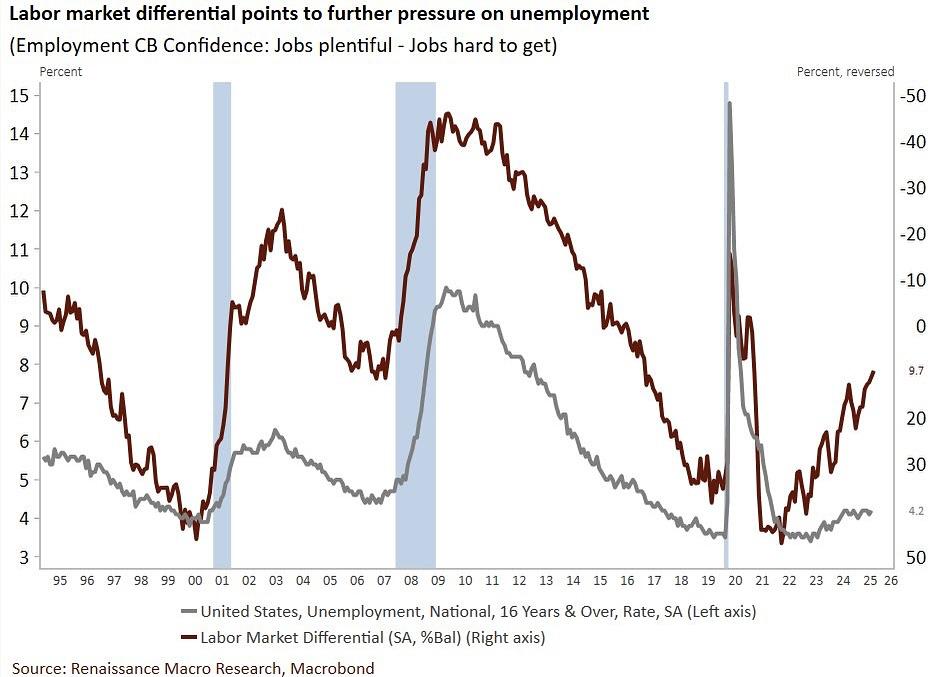
• Consumers are turning more cautious on the labour market. The Labor Differential, which measures the gap between those saying “jobs are plentiful” versus “jobs are hard to get,” dropped to just 9.7 in August its lowest reading in years. The shift reflects a growing sense that the market is softening, with more people now reporting that finding work is getting tougher.

    This matters because the Labor Differential has historically been a leading indicator for unemployment trends. With consumer sentiment weakening, pressure on the broader jobs market could build further in the months ahead, challenging the resilience of the economy.

    #JobsReport #Unemployment #LaborMarket #Economy #Recession #Macro #Markets #Employment #JobMarket #EconomicOutlook
    Consumers are turning more cautious on the labour market. The Labor Differential, which measures the gap between those saying “jobs are plentiful” versus “jobs are hard to get,” dropped to just 9.7 in August its lowest reading in years. The shift reflects a growing sense that the market is softening, with more people now reporting that finding work is getting tougher. This matters because the Labor Differential has historically been a leading indicator for unemployment trends. With consumer sentiment weakening, pressure on the broader jobs market could build further in the months ahead, challenging the resilience of the economy. #JobsReport #Unemployment #LaborMarket #Economy #Recession #Macro #Markets #Employment #JobMarket #EconomicOutlook
    ·299 Vue ·0 Aperçu
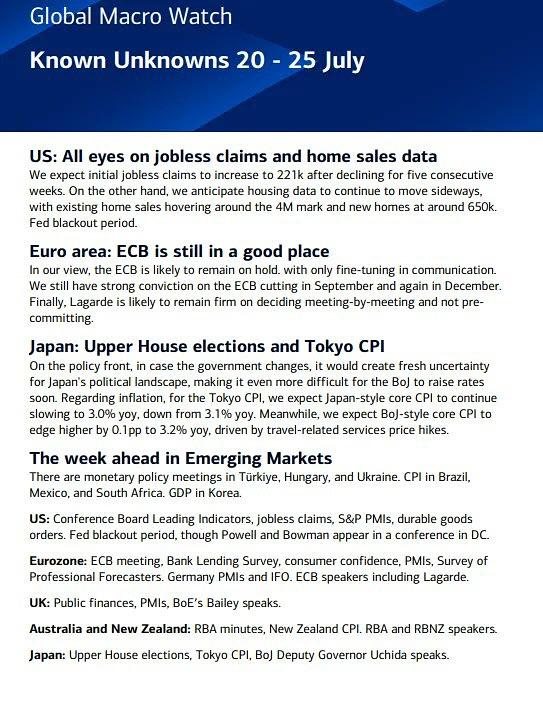
  • A busy week ahead across global markets.

    In the US, jobless claims and housing data will be front and center. Europe eyes the ECB’s July meeting with steady rates expected, while Japan’s Upper House elections and CPI prints could shape BoJ policy signals. Emerging markets will navigate rate decisions, CPI releases, and GDP prints across Brazil, Mexico, Turkey, South Africa, and Korea.

    Earnings season heats up with major names like Tesla, Alphabet, Intel, and Dow reporting midweek. Macro meets micro.

    #GlobalMacro #EarningsSeason #ECB #BoJ #USJobs #EmergingMarkets #CPI #InterestRates #MarketsThisWeek #Macroeconomics #Investing #FinanceNews #MarketWatch #EarningsCalendar #EconomicOutlook
    A busy week ahead across global markets. In the US, jobless claims and housing data will be front and center. Europe eyes the ECB’s July meeting with steady rates expected, while Japan’s Upper House elections and CPI prints could shape BoJ policy signals. Emerging markets will navigate rate decisions, CPI releases, and GDP prints across Brazil, Mexico, Turkey, South Africa, and Korea. Earnings season heats up with major names like Tesla, Alphabet, Intel, and Dow reporting midweek. Macro meets micro. #GlobalMacro #EarningsSeason #ECB #BoJ #USJobs #EmergingMarkets #CPI #InterestRates #MarketsThisWeek #Macroeconomics #Investing #FinanceNews #MarketWatch #EarningsCalendar #EconomicOutlook
    ·1KB Vue ·0 Aperçu
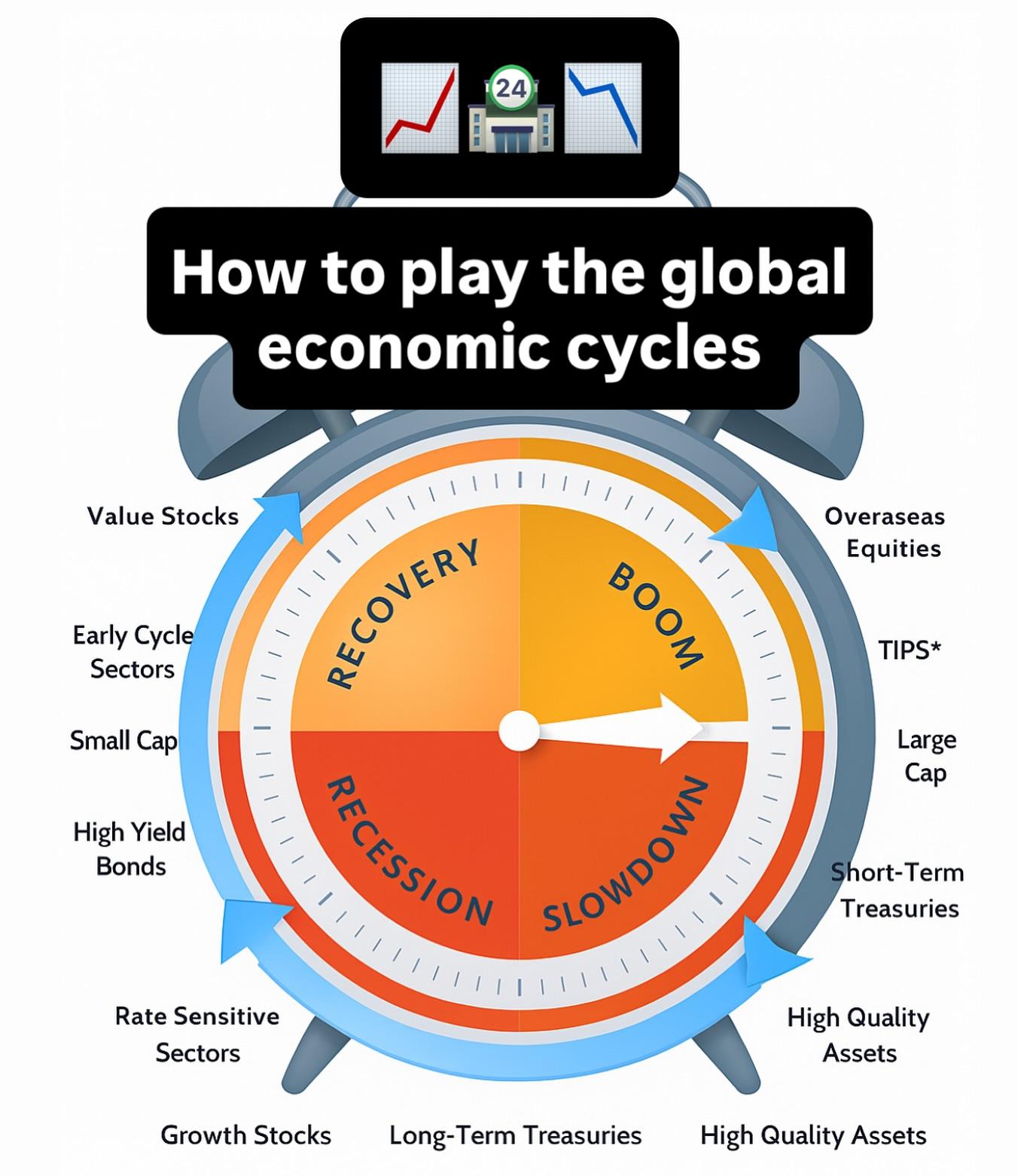
  • a simplified yet strategic view of how investors might align their portfolios with different phases of the global economic cycle. Each stage—recession, recovery, boom, and slowdown—tends to favor certain asset classes based on macro conditions and capital flows.

    During a recession, when growth contracts and uncertainty is high, investors often rotate into long-term treasuries and high-quality assets that offer stability. Growth stocks can also be favored as markets begin to anticipate recovery and future earnings potential.

    As the economy shifts into recovery, risk appetite begins to return. Value stocks, early-cycle sectors, small caps, and high-yield bonds typically outperform as confidence builds and monetary policy remains supportive.

    In the boom phase, economic activity is strong and earnings growth broad-based. Investors tend to favor large caps, TIPS (inflation-protected securities), and overseas equities, which benefit from global demand and reflation.

    As the cycle enters a slowdown, caution returns. Capital tends to rotate back into short-term treasuries and high-quality assets, which are better positioned to weather declining growth or margin pressures.

    The cyclical rotation shown here underscores the value of staying flexible and understanding how macro trends shape relative performance across asset classes.

    #stockmarket #macroeconomics #hedgefunds #nasdaq #qqq #moneymarket #stocktrading #GlobalMarkets #AssetAllocation #InvestmentStrategy #MarketCycles #MacroInsights #EconomicOutlook #PortfolioManagement
    a simplified yet strategic view of how investors might align their portfolios with different phases of the global economic cycle. Each stage—recession, recovery, boom, and slowdown—tends to favor certain asset classes based on macro conditions and capital flows. During a recession, when growth contracts and uncertainty is high, investors often rotate into long-term treasuries and high-quality assets that offer stability. Growth stocks can also be favored as markets begin to anticipate recovery and future earnings potential. As the economy shifts into recovery, risk appetite begins to return. Value stocks, early-cycle sectors, small caps, and high-yield bonds typically outperform as confidence builds and monetary policy remains supportive. In the boom phase, economic activity is strong and earnings growth broad-based. Investors tend to favor large caps, TIPS (inflation-protected securities), and overseas equities, which benefit from global demand and reflation. As the cycle enters a slowdown, caution returns. Capital tends to rotate back into short-term treasuries and high-quality assets, which are better positioned to weather declining growth or margin pressures. The cyclical rotation shown here underscores the value of staying flexible and understanding how macro trends shape relative performance across asset classes. #stockmarket #macroeconomics #hedgefunds #nasdaq #qqq #moneymarket #stocktrading #GlobalMarkets #AssetAllocation #InvestmentStrategy #MarketCycles #MacroInsights #EconomicOutlook #PortfolioManagement
    ·1KB Vue ·0 Aperçu
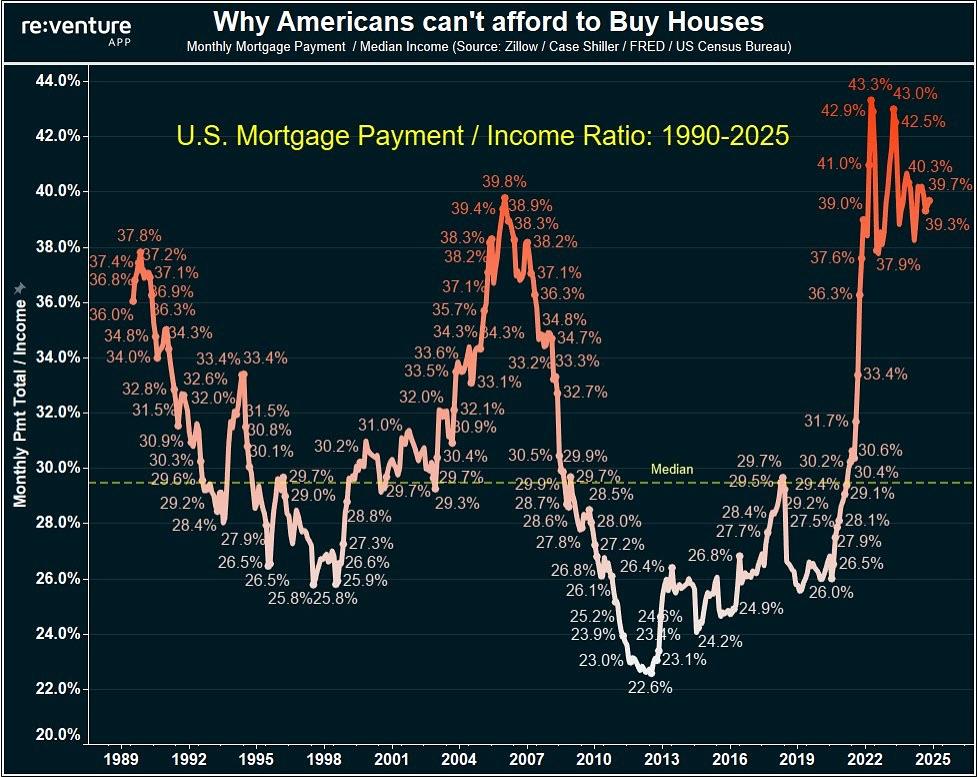
  • US housing affordability is now at its worst point in over 35 years.

    A median-income American must now spend nearly 40% of their income just to cover a mortgage. Historically, that number hovered around 29% and during the 2012 bottom, it dipped below 23%.

    I wonder how this ends?

    #realestate #housing #realestateagent #realestateagency #Housing #RealEstateMarket #HomeAffordability #MortgageRates #USHousing #MacroEconomics #InterestRates #PropertyPrices #HousingBubble #FederalReserve #EconomicOutlook #Homebuyers #RealEstateInvesting
    🇺🇸US housing affordability is now at its worst point in over 35 years. A median-income American must now spend nearly 40% of their income just to cover a mortgage. Historically, that number hovered around 29% and during the 2012 bottom, it dipped below 23%. I wonder how this ends? #realestate #housing #realestateagent #realestateagency #Housing #RealEstateMarket #HomeAffordability #MortgageRates #USHousing #MacroEconomics #InterestRates #PropertyPrices #HousingBubble #FederalReserve #EconomicOutlook #Homebuyers #RealEstateInvesting
    ·836 Vue ·0 Aperçu
Techawks - Powered By Pantrade Blockchain https://techawks.com