English
 Arabic
 French
 Spanish
 Portuguese
 Deutsch
 Turkish
 Dutch
Dutch
 Italiano
 Russian
 Romaian
 Portuguese (Brazil)
 Greek
Greek
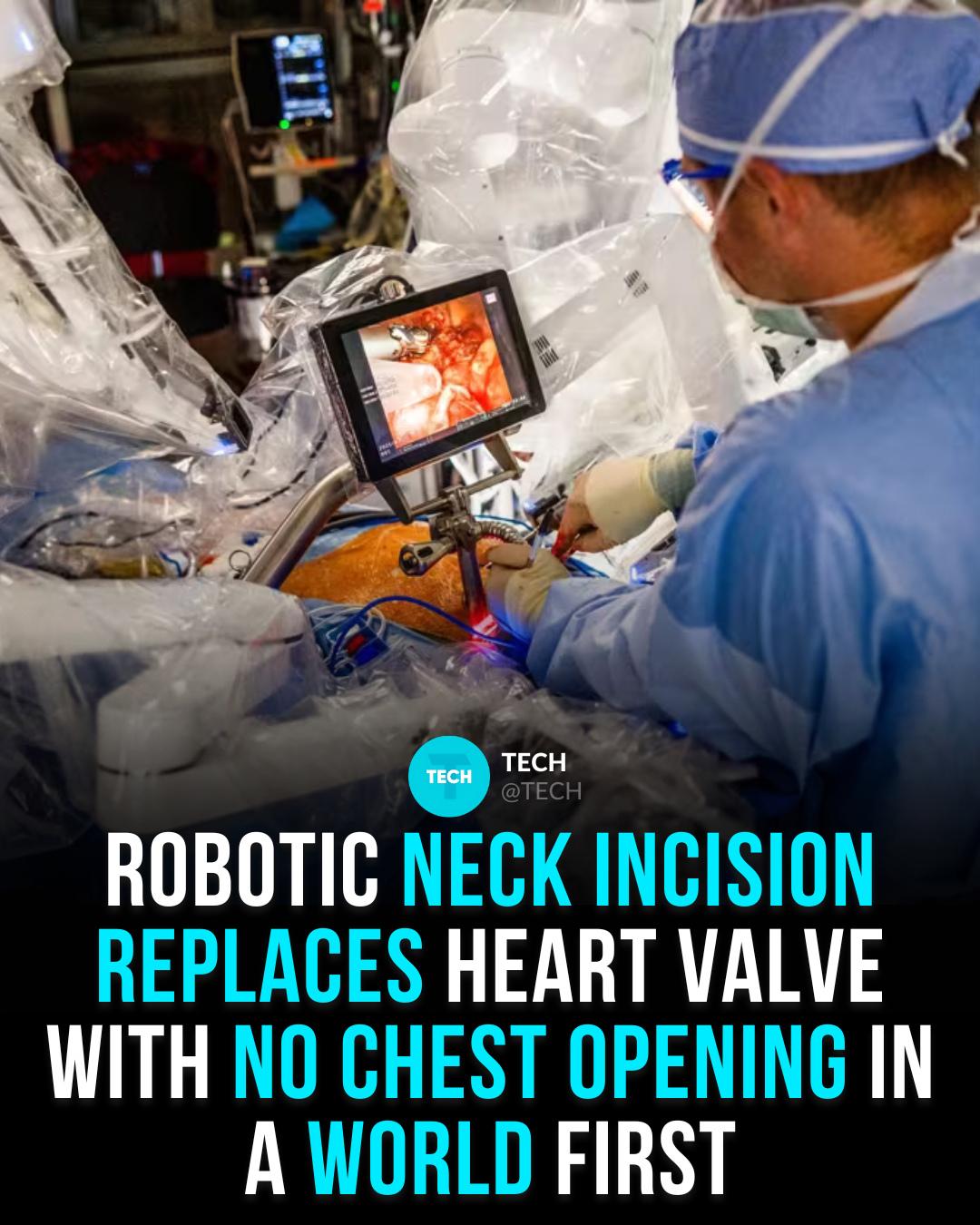
Cleveland Clinic surgeons just completed the world's first robotic aortic valve replacement through a tiny neck incision, eliminating the need to crack open the chest entirely. Dr. Marijan Koprivanac led the pioneering transcervical approach that replaces failing heart valves through four small incisions, with the main entry point hidden in a natural neck crease similar to thyroid surgery.
The results from the first four patients aged 60 to 74 years have stunned the medical community, with one patient returning to gym workouts just seven days after surgery and another back to farm work within three weeks. Traditional aortic valve replacement requires breaking the sternum and spreading the ribs apart, leading to months of painful recovery and strict lifting restrictions that this revolutionary technique completely avoids.
Dr. Koprivanac spent years perfecting the approach after learning transcervical thymectomies during surgical training, recognizing that the neck provides excellent access to view the aorta and aortic valve from above. He practiced the technique on 20 cadavers at Cleveland Clinic's anatomy lab before treating actual patients, using specialized retractors and robotic arms for millimeter-precise valve removal and replacement through the narrow cervical corridor.
The average surgical time was 140 minutes with hospital stays ranging from just 3 to 6 days, compared to traditional open-heart surgery that often requires weeks of recovery. Pain management consisted entirely of over-the-counter acetaminophen and ibuprofen, with patients reporting minimal discomfort throughout their recovery process.
The results from the first four patients aged 60 to 74 years have stunned the medical community, with one patient returning to gym workouts just seven days after surgery and another back to farm work within three weeks. Traditional aortic valve replacement requires breaking the sternum and spreading the ribs apart, leading to months of painful recovery and strict lifting restrictions that this revolutionary technique completely avoids.
Dr. Koprivanac spent years perfecting the approach after learning transcervical thymectomies during surgical training, recognizing that the neck provides excellent access to view the aorta and aortic valve from above. He practiced the technique on 20 cadavers at Cleveland Clinic's anatomy lab before treating actual patients, using specialized retractors and robotic arms for millimeter-precise valve removal and replacement through the narrow cervical corridor.
The average surgical time was 140 minutes with hospital stays ranging from just 3 to 6 days, compared to traditional open-heart surgery that often requires weeks of recovery. Pain management consisted entirely of over-the-counter acetaminophen and ibuprofen, with patients reporting minimal discomfort throughout their recovery process.
Cleveland Clinic surgeons just completed the world's first robotic aortic valve replacement through a tiny neck incision, eliminating the need to crack open the chest entirely. Dr. Marijan Koprivanac led the pioneering transcervical approach that replaces failing heart valves through four small incisions, with the main entry point hidden in a natural neck crease similar to thyroid surgery.
The results from the first four patients aged 60 to 74 years have stunned the medical community, with one patient returning to gym workouts just seven days after surgery and another back to farm work within three weeks. Traditional aortic valve replacement requires breaking the sternum and spreading the ribs apart, leading to months of painful recovery and strict lifting restrictions that this revolutionary technique completely avoids.
Dr. Koprivanac spent years perfecting the approach after learning transcervical thymectomies during surgical training, recognizing that the neck provides excellent access to view the aorta and aortic valve from above. He practiced the technique on 20 cadavers at Cleveland Clinic's anatomy lab before treating actual patients, using specialized retractors and robotic arms for millimeter-precise valve removal and replacement through the narrow cervical corridor.
The average surgical time was 140 minutes with hospital stays ranging from just 3 to 6 days, compared to traditional open-heart surgery that often requires weeks of recovery. Pain management consisted entirely of over-the-counter acetaminophen and ibuprofen, with patients reporting minimal discomfort throughout their recovery process.
·70 مشاهدة
·0 معاينة