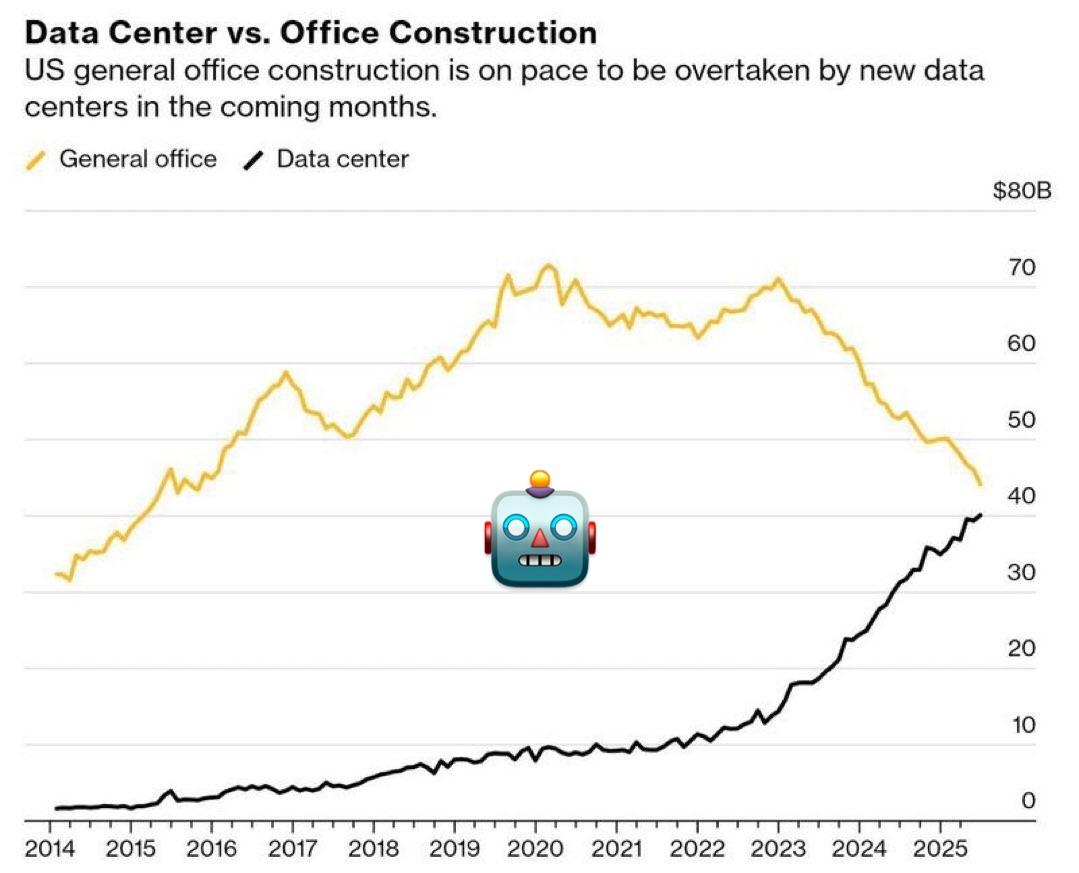
• Data centers vs office construction #datacenters #ai
    Data centers vs office construction #datacenters #ai
    ·69 Ansichten ·0 Bewertungen
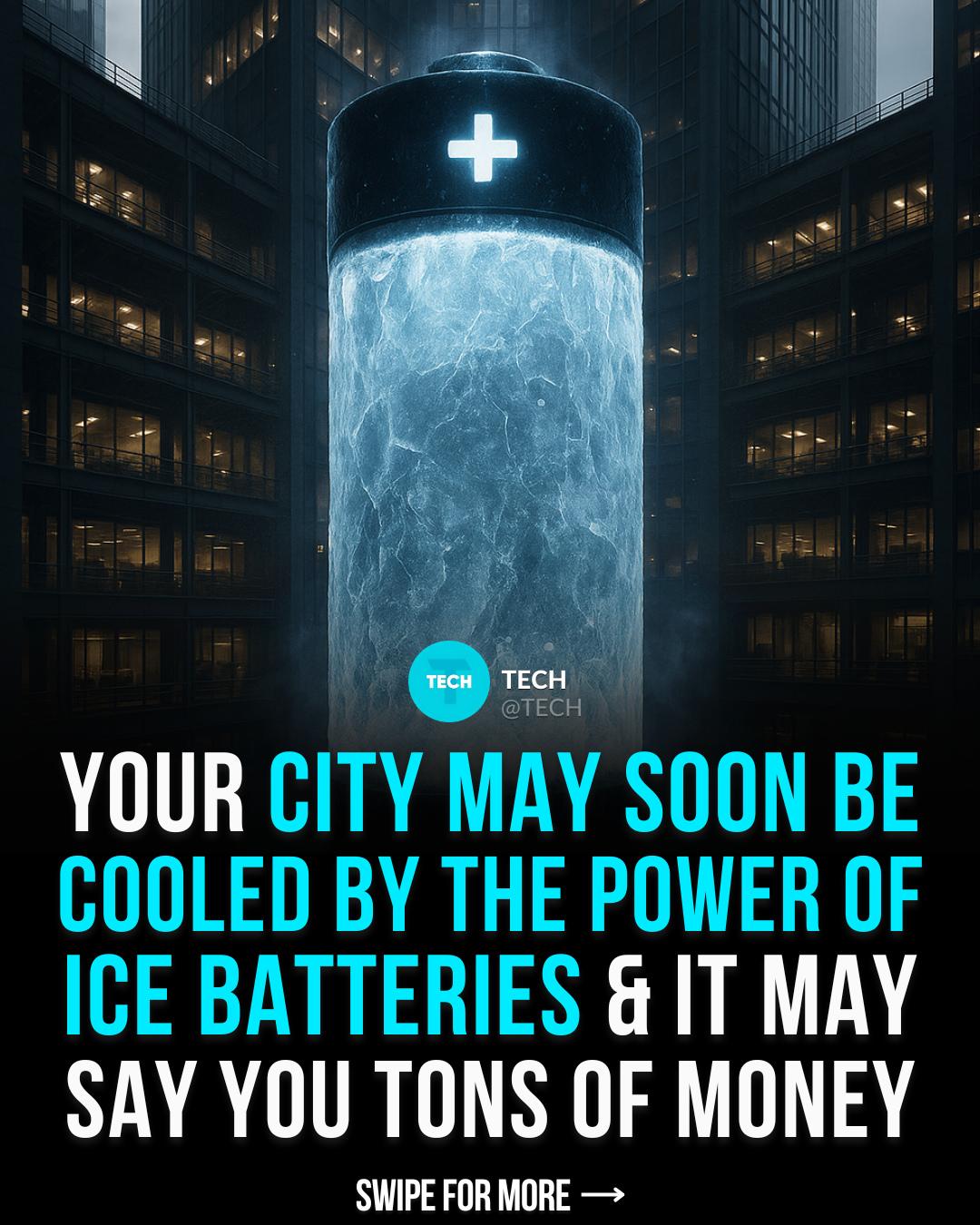
  • Cities are learning to cool with time, not just power. So-called ice batteries, thermal energy storage tanks that freeze liquid overnight, let buildings ride the next day’s heat on yesterday’s cold. Shifting chillers to off-peak hours trims grid stress when temperatures spike and electricity is priciest, creating a smoother balance between supply and demand.⁠

    The numbers are real, not theoretical. Manhattan’s 30-story Eleven Madison freezes roughly 500,000 pounds of ice each night and reports up to a 40% cut in cooling costs. Trane and others have installed more than 4,000 systems worldwide, a tiny slice of six million U.S. commercial buildings but a proof that scaling is possible and increasingly attractive in hotter climates.⁠

    The tech is getting smarter at the material level. In The Journal of Physical Chemistry C, a Texas A&M team led by Patrick Shamberger tuned salt hydrates, salts that lock in water molecules, to freeze and thaw at HVAC-friendly temperatures without degrading. Their focus is phase segregation, the tendency for the material to split into solid and liquid zones over many cycles. By optimizing “nucleation particles,” especially those containing barium, the system triggers cleaner, repeatable freezing with higher efficiency.⁠

    Why this matters now: cooling already eats about 20% of building electricity, and AI data centers are adding heavy, always-on thermal loads. Ice batteries do not eliminate energy use, but they move it to when power is cleaner and cheaper, lowering peak demand and postponing the need for new plants.⁠

    A century after barges hauled river ice down the Hudson, engineered ice may again be the quiet workhorse that keeps modern life comfortable, only this time with chemistry doing the steering and research ensuring decades of reliable performance.⁠

    #tech #energy #hvac #buildings #energystorage #grid #climate #datacenters #materials
    Cities are learning to cool with time, not just power. So-called ice batteries, thermal energy storage tanks that freeze liquid overnight, let buildings ride the next day’s heat on yesterday’s cold. Shifting chillers to off-peak hours trims grid stress when temperatures spike and electricity is priciest, creating a smoother balance between supply and demand.⁠ ⁠ The numbers are real, not theoretical. Manhattan’s 30-story Eleven Madison freezes roughly 500,000 pounds of ice each night and reports up to a 40% cut in cooling costs. Trane and others have installed more than 4,000 systems worldwide, a tiny slice of six million U.S. commercial buildings but a proof that scaling is possible and increasingly attractive in hotter climates.⁠ ⁠ The tech is getting smarter at the material level. In The Journal of Physical Chemistry C, a Texas A&M team led by Patrick Shamberger tuned salt hydrates, salts that lock in water molecules, to freeze and thaw at HVAC-friendly temperatures without degrading. Their focus is phase segregation, the tendency for the material to split into solid and liquid zones over many cycles. By optimizing “nucleation particles,” especially those containing barium, the system triggers cleaner, repeatable freezing with higher efficiency.⁠ ⁠ Why this matters now: cooling already eats about 20% of building electricity, and AI data centers are adding heavy, always-on thermal loads. Ice batteries do not eliminate energy use, but they move it to when power is cleaner and cheaper, lowering peak demand and postponing the need for new plants.⁠ ⁠ A century after barges hauled river ice down the Hudson, engineered ice may again be the quiet workhorse that keeps modern life comfortable, only this time with chemistry doing the steering and research ensuring decades of reliable performance.⁠ ⁠ #tech #energy #hvac #buildings #energystorage #grid #climate #datacenters #materials
    ·132 Ansichten ·0 Bewertungen
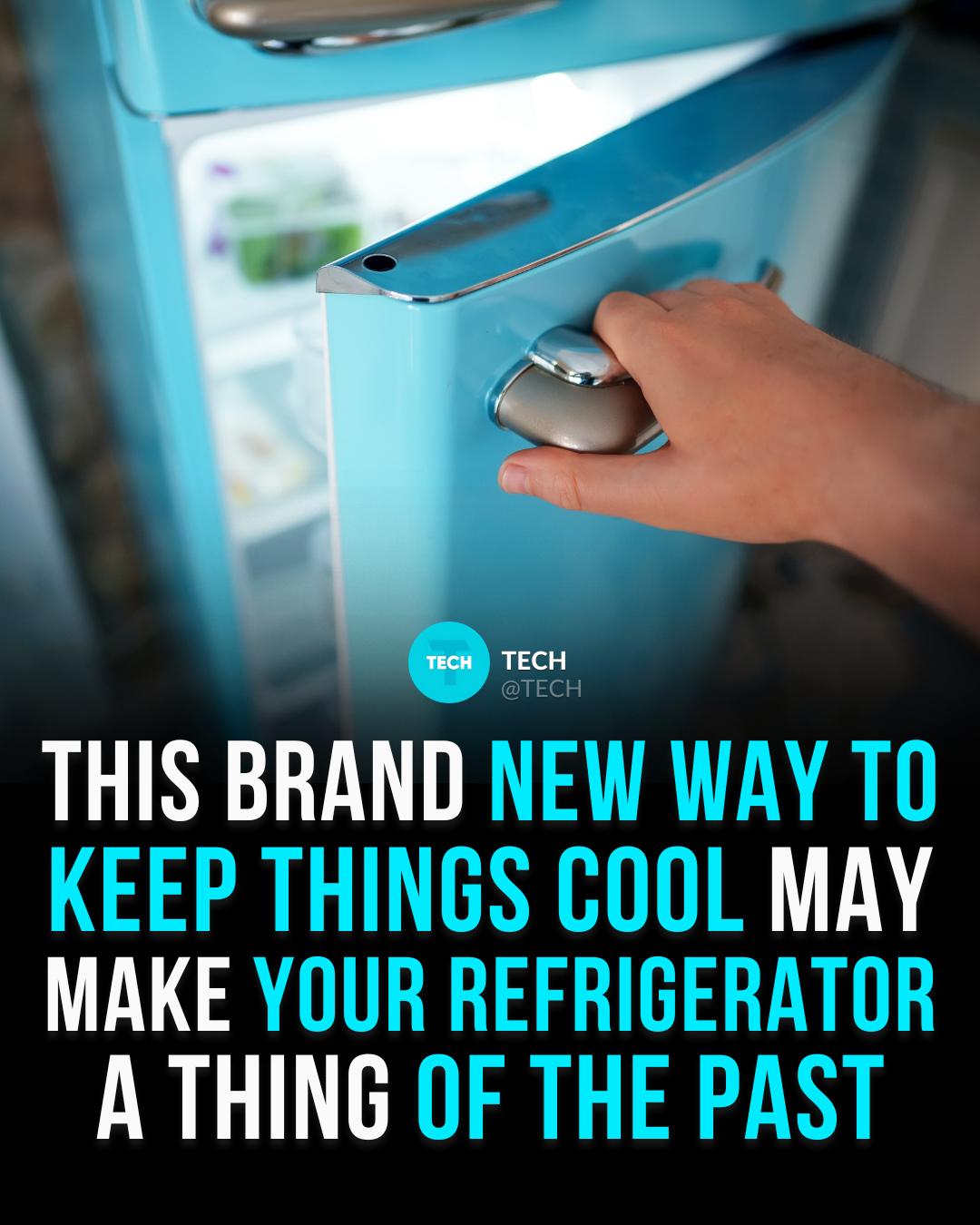
  • First, a fridge without the fumes. Scientists at Lawrence Berkeley National Laboratory have built a new “ionocaloric” cycle that cools by moving ions through a material to shift its melting point, the same physics behind road salt melting ice. In lab tests, a sodium–iodine salt and ethylene carbonate delivered a 25 °C temperature swing using under one volt, a bigger lift than most solid-state “caloric” approaches and without hydrofluorocarbon refrigerants.⁠

    Because it toggles a solid–liquid phase change, the working fluid can be pumped, avoiding compressors and complex valves. The team’s models suggest efficiency on par with, or better than, today’s vapor-compression systems. Using ethylene carbonate, which can be synthesized from captured CO₂, the refrigerant footprint could be not just low but potentially carbon-negative. If prototypes scale, the same cycle could also supply efficient water and process heating, trimming emissions from buildings and industry that are notoriously hard to decarbonize.⁠

    Now, a data center that chills with the sea. Off Shanghai, Hailanyun’s first commercial underwater AI facility places sealed server pods beneath offshore wind turbines and circulates seawater across radiators to carry heat away. Internal assessments with a Chinese institute report at least 30% lower electricity use for cooling compared with land sites, and the company says the farm is powered 97% by the nearby wind array.⁠

    One operational pod holds 198 racks, enough for roughly 396–792 AI-ready servers, and the company claims capacity to train a GPT-3.5-class model in a day. Microsoft’s earlier Project Natick found submerged servers can fail less often, but scaling raises new risks, including thermal plumes, acoustic sabotage, corrosion, biofouling, and slow maintenance cycles. From ions to oceans, cooling is being rewired for an AI-hungry, climate-strained future.⁠

    #tech #ai #cooling #climate #datacenters #materials #energy #sustainability #berkeleylab

    Source: 10.1126/science.ade1696
    First, a fridge without the fumes. Scientists at Lawrence Berkeley National Laboratory have built a new “ionocaloric” cycle that cools by moving ions through a material to shift its melting point, the same physics behind road salt melting ice. In lab tests, a sodium–iodine salt and ethylene carbonate delivered a 25 °C temperature swing using under one volt, a bigger lift than most solid-state “caloric” approaches and without hydrofluorocarbon refrigerants.⁠ ⁠ Because it toggles a solid–liquid phase change, the working fluid can be pumped, avoiding compressors and complex valves. The team’s models suggest efficiency on par with, or better than, today’s vapor-compression systems. Using ethylene carbonate, which can be synthesized from captured CO₂, the refrigerant footprint could be not just low but potentially carbon-negative. If prototypes scale, the same cycle could also supply efficient water and process heating, trimming emissions from buildings and industry that are notoriously hard to decarbonize.⁠ ⁠ Now, a data center that chills with the sea. Off Shanghai, Hailanyun’s first commercial underwater AI facility places sealed server pods beneath offshore wind turbines and circulates seawater across radiators to carry heat away. Internal assessments with a Chinese institute report at least 30% lower electricity use for cooling compared with land sites, and the company says the farm is powered 97% by the nearby wind array.⁠ ⁠ One operational pod holds 198 racks, enough for roughly 396–792 AI-ready servers, and the company claims capacity to train a GPT-3.5-class model in a day. Microsoft’s earlier Project Natick found submerged servers can fail less often, but scaling raises new risks, including thermal plumes, acoustic sabotage, corrosion, biofouling, and slow maintenance cycles. From ions to oceans, cooling is being rewired for an AI-hungry, climate-strained future.⁠ ⁠ #tech #ai #cooling #climate #datacenters #materials #energy #sustainability #berkeleylab⁠ ⁠ Source: 10.1126/science.ade1696
    ·172 Ansichten ·0 Bewertungen
  • It began as an accident. Columbia University engineers were tuning laser chips for LiDAR when one prototype started behaving strangely, spitting out light that wasn’t just powerful—it was organized. Instead of a single color, the laser split into dozens of perfectly spaced hues, a “frequency comb” that could carry many data streams at once. One laser had become a rainbow of information.⁠

    Ordinarily, that kind of light requires bulky, power-hungry lab gear. But the Columbia team, led by Michal Lipson, managed to do it all on a chip. They used a multimode laser diode, the same kind found in industrial cutters, then cleaned its messy output with a self-injection locking mechanism built into a silicon photonics circuit. The system purified the beam, creating a stable, coherent light that naturally split into precise frequency bands.⁠

    Each band acts as a separate communication channel, allowing dozens of data streams to move in parallel through a single fiber. The result, published in *Nature Photonics*, is a compact, high-efficiency light source that replaces racks of lasers with one fingernail-sized chip. Lead author Andres Gil-Molina says it turns “a very powerful laser into dozens of clean, high-power channels,” cutting cost, power use, and space.⁠

    The timing is perfect. Data centers powering artificial intelligence are straining under massive data demands, most still using single-wavelength lasers. This “rainbow-on-a-chip” brings lab-grade optics to the hardware backbone of the internet—and could soon reshape everything from optical clocks and quantum networks to LiDAR and spectrometers.⁠

    #tech #ai #frequencycomb #photonics #datacenters #siliconphotonics #opticalcommunications #quantum #innovation
    It began as an accident. Columbia University engineers were tuning laser chips for LiDAR when one prototype started behaving strangely, spitting out light that wasn’t just powerful—it was organized. Instead of a single color, the laser split into dozens of perfectly spaced hues, a “frequency comb” that could carry many data streams at once. One laser had become a rainbow of information.⁠ ⁠ Ordinarily, that kind of light requires bulky, power-hungry lab gear. But the Columbia team, led by Michal Lipson, managed to do it all on a chip. They used a multimode laser diode, the same kind found in industrial cutters, then cleaned its messy output with a self-injection locking mechanism built into a silicon photonics circuit. The system purified the beam, creating a stable, coherent light that naturally split into precise frequency bands.⁠ ⁠ Each band acts as a separate communication channel, allowing dozens of data streams to move in parallel through a single fiber. The result, published in *Nature Photonics*, is a compact, high-efficiency light source that replaces racks of lasers with one fingernail-sized chip. Lead author Andres Gil-Molina says it turns “a very powerful laser into dozens of clean, high-power channels,” cutting cost, power use, and space.⁠ ⁠ The timing is perfect. Data centers powering artificial intelligence are straining under massive data demands, most still using single-wavelength lasers. This “rainbow-on-a-chip” brings lab-grade optics to the hardware backbone of the internet—and could soon reshape everything from optical clocks and quantum networks to LiDAR and spectrometers.⁠ ⁠ #tech #ai #frequencycomb #photonics #datacenters #siliconphotonics #opticalcommunications #quantum #innovation
    ·155 Ansichten ·0 Bewertungen
  • AI-related stocks have driven:
    - 75% of S&P 500 returns since ChatGPT’s launch in November 2022
    - 80% of earnings growth over the same period
    - 90% of capital spending growth
    - Data centers are now eclipsing office construction spending.
    - In the PJM region (the largest regional transmission organization, covering 13 states and D.C.), 70% of last year’s electricity cost increases were due to data center demand.

    #ai #datacenters
    AI-related stocks have driven: - 75% of S&P 500 returns since ChatGPT’s launch in November 2022 - 80% of earnings growth over the same period - 90% of capital spending growth - Data centers are now eclipsing office construction spending. - In the PJM region (the largest regional transmission organization, covering 13 states and D.C.), 70% of last year’s electricity cost increases were due to data center demand. #ai #datacenters
    ·181 Ansichten ·0 Bewertungen
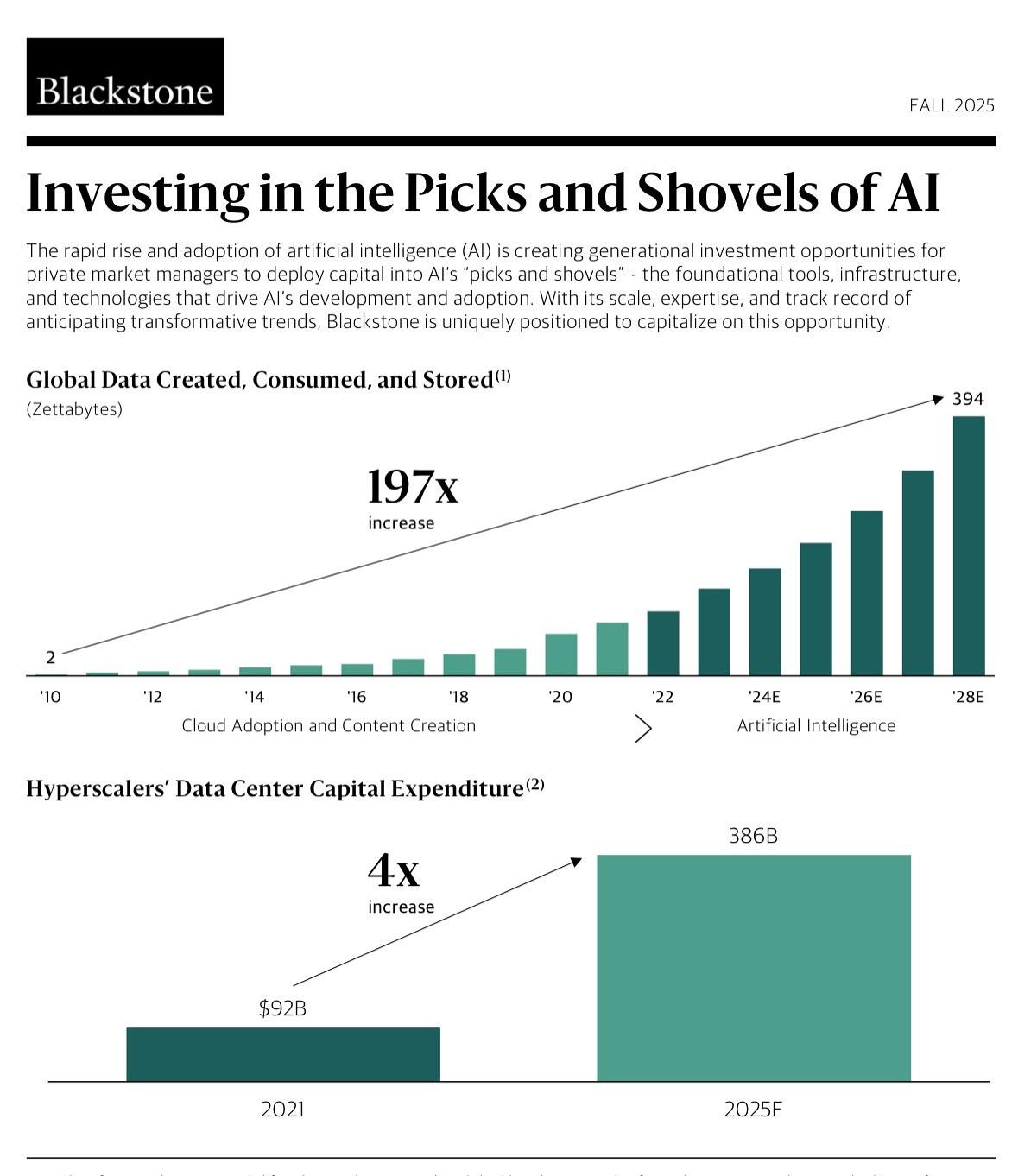
  • Investing in the Picks and Shovels of AI AI isn’t just about chatbots and cool demos. Behind the scenes, a massive buildout is underway:

    Data: Hyperscalers are set to invest $2T in infrastructure over the next 5 years.

    Power: AI’s electricity demand could rise 40% in the next decade, pushing investment into renewables and grid upgrades.

    Compute: The cost of AI compute has dropped 99% since 2023, fueling exponential adoption.

    Blackstone is betting on the “picks & shovels” of AI data centers, chips, energy, cooling, and networking rather than chasing high-risk startups. With a $100B global data center portfolio, they’re positioning themselves as the backbone of the AI revolution.

    This is the real infrastructure layer of AI. Whoever controls cheap energy + data + compute will own the future.

    #AI #investing101 #ArtificialIntelligence #Blackstone #DataCenters #Investing #TechInfrastructure #ainews #energy #DigitalEconomy
    Investing in the Picks and Shovels of AI AI isn’t just about chatbots and cool demos. Behind the scenes, a massive buildout is underway: Data: Hyperscalers are set to invest $2T in infrastructure over the next 5 years. Power: AI’s electricity demand could rise 40% in the next decade, pushing investment into renewables and grid upgrades. Compute: The cost of AI compute has dropped 99% since 2023, fueling exponential adoption. 📈 Blackstone is betting on the “picks & shovels” of AI data centers, chips, energy, cooling, and networking rather than chasing high-risk startups. With a $100B global data center portfolio, they’re positioning themselves as the backbone of the AI revolution. This is the real infrastructure layer of AI. Whoever controls cheap energy + data + compute will own the future. #AI #investing101 #ArtificialIntelligence #Blackstone #DataCenters #Investing #TechInfrastructure #ainews #energy #DigitalEconomy
    ·529 Ansichten ·0 Bewertungen
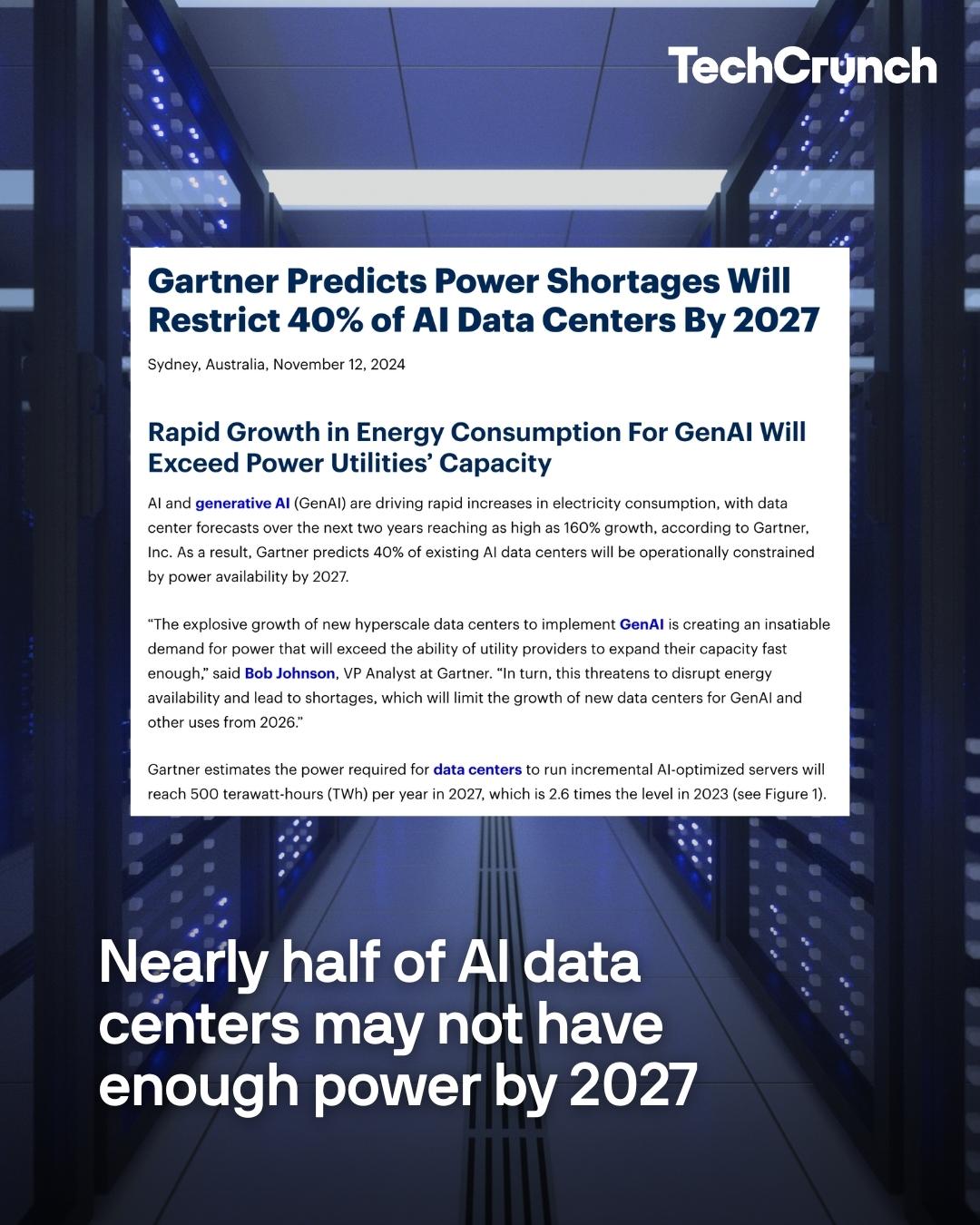
  • AI’s insatiable thirst for electricity is expected to surge in the coming years, potentially leading to power shortages for data centers.

    New servers last year demanded 195 terawatt-hours of electricity, according to a new report from Gartner. That’s as much as 18 million households use in a year. But by 2027, new servers could command 500 terawatt-hours, or 46 million households’ worth.

    That’s over and above the juice used by existing data centers, which already consumed 349 terawatt hours in 2022, according to a Goldman Sachs estimate. Without additional sources of carbon-free power, pollution from AI training and use could skyrocket. Sam Altman’s big bet on fusion power — over $375 million — is starting to make more sense.

    Image Credits: dotshock

    #TechCrunch #technews #artificialintelligence #AI #climate #datacenters
    AI’s insatiable thirst for electricity is expected to surge in the coming years, potentially leading to power shortages for data centers. New servers last year demanded 195 terawatt-hours of electricity, according to a new report from Gartner. That’s as much as 18 million households use in a year. But by 2027, new servers could command 500 terawatt-hours, or 46 million households’ worth. That’s over and above the juice used by existing data centers, which already consumed 349 terawatt hours in 2022, according to a Goldman Sachs estimate. Without additional sources of carbon-free power, pollution from AI training and use could skyrocket. Sam Altman’s big bet on fusion power — over $375 million — is starting to make more sense. Image Credits: dotshock #TechCrunch #technews #artificialintelligence #AI #climate #datacenters
    ·230 Ansichten ·0 Bewertungen
  • Microsoft will spend $80 billion in fiscal 2025 to build data centers designed for AI workloads. This significant investment aims to enhance the infrastructure for training AI models and deploying AI applications, with more than half of the spending expected to occur in the United States.

    Brad Smith, Microsoft’s Vice Chair and President, highlighted the role of U.S. innovations in shaping the future of AI and called for continued support to maintain this edge.

    This comes amid fierce competition, with companies worldwide, including China, aggressively building their own AI infrastructure. As this global competition intensifies, Microsoft’s investment will not only strengthen its cloud and AI platforms but also solidify the U.S.’s position as a global AI leader.

    Follow us (@artificialintelligenceee) for everything latest from the AI world.

    Image by Ryan Young

    #ai #microsoft #aidatacenters #unitedstates
    Microsoft will spend $80 billion in fiscal 2025 to build data centers designed for AI workloads. This significant investment aims to enhance the infrastructure for training AI models and deploying AI applications, with more than half of the spending expected to occur in the United States. Brad Smith, Microsoft’s Vice Chair and President, highlighted the role of U.S. innovations in shaping the future of AI and called for continued support to maintain this edge. This comes amid fierce competition, with companies worldwide, including China, aggressively building their own AI infrastructure. As this global competition intensifies, Microsoft’s investment will not only strengthen its cloud and AI platforms but also solidify the U.S.’s position as a global AI leader. Follow us (👉@artificialintelligenceee) for everything latest from the AI world. Image by Ryan Young #ai #microsoft #aidatacenters #unitedstates
    ·235 Ansichten ·0 Bewertungen
Techawks - Powered By Pantrade Blockchain https://techawks.com