• Japan is quietly becoming the most important macro story in the world. How long can this go on for?

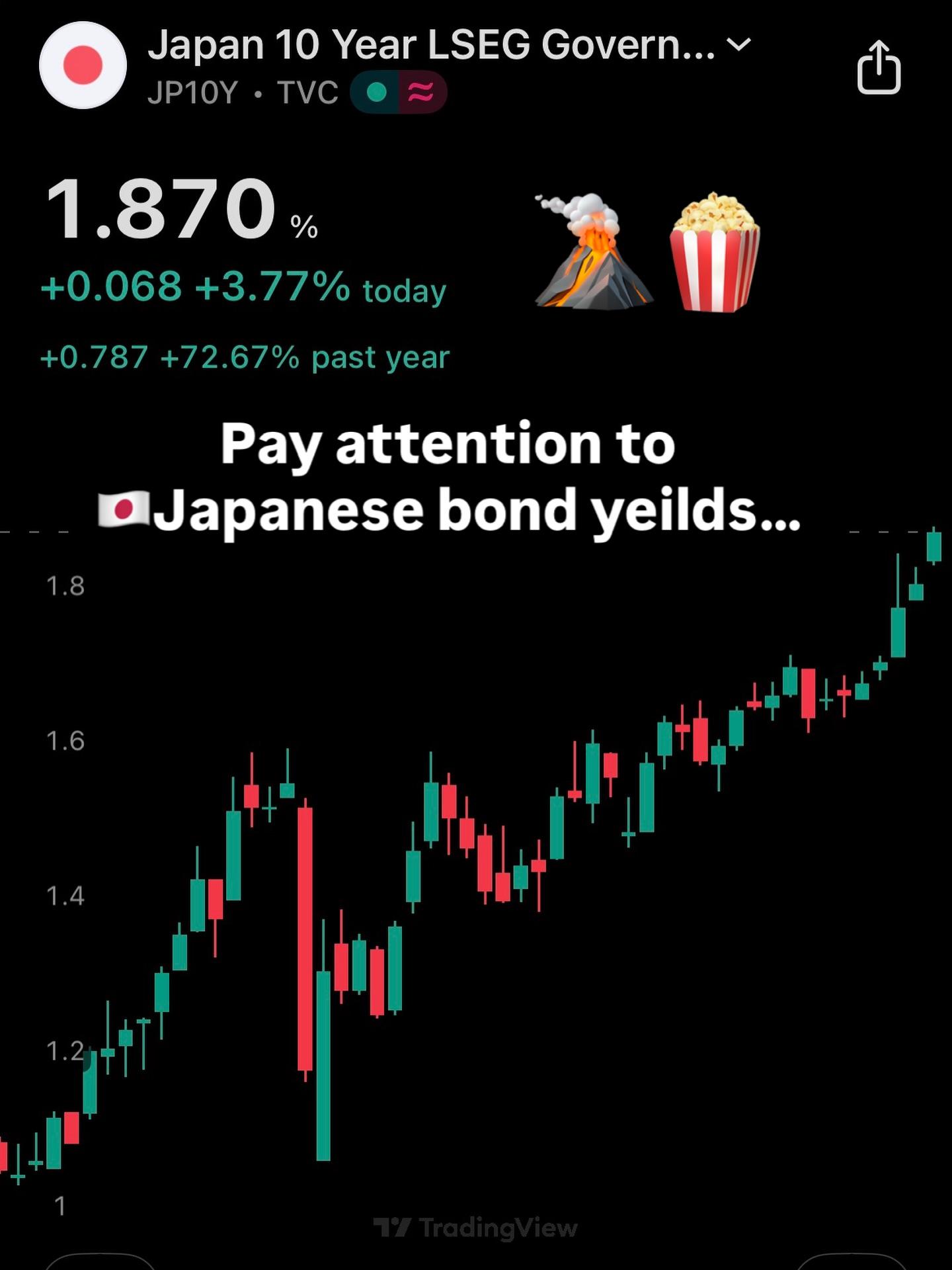
    The country with the highest debt to GDP ratio on earth is now facing rising yields. The 10 year Japanese government bond is pushing toward 2 percent up more than 70 percent in a year.

    Japan has lived in a world of near zero rates for decades. A world where its central bank could buy its own bonds indefinitely, keep yields pinned down, and create the illusion of stability. That era is ending.

    The Bank of Japan has tried every tool: negative rates, quantitative easing, and now yield curve control. But there’s a simple truth: markets eventually overpower intervention.

    If the BoJ keeps buying bonds to suppress yields, the currency weakens.

    If it stops buying, yields spike and debt service costs explode.

    Japan is stuck between two bad choices.

    The debt burden is over 250 percent of GDP. Higher rates mean higher interest expenses, and that means more borrowing just to pay the interest. The problem becomes exponential.

    If yield curve control breaks, you will see one of two outcomes:

    A currency crisis the yen collapses to absorb the pressure.

    A bond crisis yields blow out and force deleveraging at a scale Japan hasn’t seen in modern history.

    For years investors believed Japan could never break. Zero rates were permanent. Demographics were destiny. Now the market is testing that assumption.

    Japan matters because it’s the endgame experiment:
    What happens when a government prints for decades, monetizes debt, and finally runs out of tools?

    Everyone focuses on the United States. But if Japan snaps first, it will be a global shockwave.

    How does this end? Incredibly slowly… then all at once.

    Liquidity is what everyone is grasping for 😮‍💨

    #japan #macro #markets #bonds #economics #investing #finance #interestrates #debt #yen #bankofjapan #globalmacro #riskmanagement #wealthbuilding #economy #marketanalysis
    Japan is quietly becoming the most important macro story in the world. How long can this go on for? The country with the highest debt to GDP ratio on earth is now facing rising yields. The 10 year Japanese government bond is pushing toward 2 percent up more than 70 percent in a year. Japan has lived in a world of near zero rates for decades. A world where its central bank could buy its own bonds indefinitely, keep yields pinned down, and create the illusion of stability. That era is ending. The Bank of Japan has tried every tool: negative rates, quantitative easing, and now yield curve control. But there’s a simple truth: markets eventually overpower intervention. If the BoJ keeps buying bonds to suppress yields, the currency weakens. If it stops buying, yields spike and debt service costs explode. Japan is stuck between two bad choices. The debt burden is over 250 percent of GDP. Higher rates mean higher interest expenses, and that means more borrowing just to pay the interest. The problem becomes exponential. If yield curve control breaks, you will see one of two outcomes: A currency crisis the yen collapses to absorb the pressure. A bond crisis yields blow out and force deleveraging at a scale Japan hasn’t seen in modern history. For years investors believed Japan could never break. Zero rates were permanent. Demographics were destiny. Now the market is testing that assumption. Japan matters because it’s the endgame experiment: What happens when a government prints for decades, monetizes debt, and finally runs out of tools? Everyone focuses on the United States. But if Japan snaps first, it will be a global shockwave. How does this end? Incredibly slowly… then all at once. Liquidity is what everyone is grasping for 😮‍💨 #japan #macro #markets #bonds #economics #investing #finance #interestrates #debt #yen #bankofjapan #globalmacro #riskmanagement #wealthbuilding #economy #marketanalysis
    ·306 Vue ·0 Aperçu
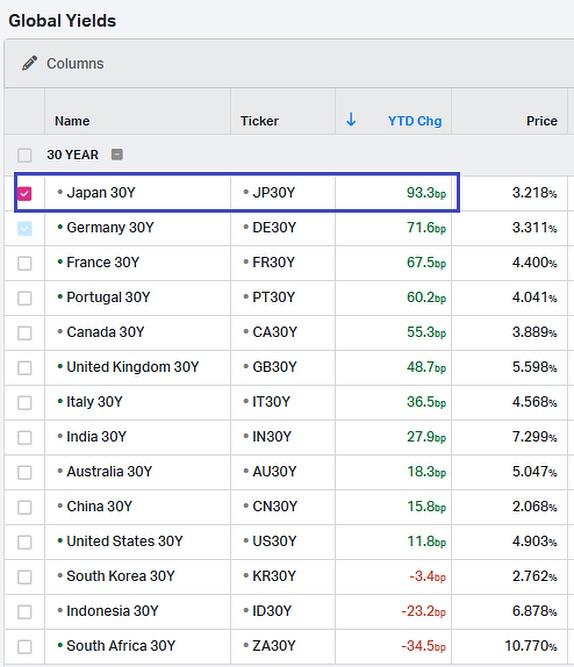
  • Japan’s 30-Year Yield has surged nearly 1ppt this year, now above 3.2%

    Why it matters: Japan carries the highest debt-to-GDP ratio in the developed world (250%+). Rising yields dramatically increase the cost of servicing that debt, straining government finances and raising the risk of fiscal stress. It also matters globally Japanese investors are among the biggest buyers of US Treasuries and European bonds. If they pull capital back home for higher returns, global borrowing costs could rise too.

    This isn’t just a Japan story it’s a warning signal for debt sustainability worldwide.

    #Bonds #GlobalMarkets #Japan #InterestRates #DebtCrisis #Finance #Investing #Economy #Markets #Treasuries #Macroeconomics
    Japan’s 30-Year Yield has surged nearly 1ppt this year, now above 3.2% 📈 Why it matters: Japan carries the highest debt-to-GDP ratio in the developed world (250%+). Rising yields dramatically increase the cost of servicing that debt, straining government finances and raising the risk of fiscal stress. It also matters globally Japanese investors are among the biggest buyers of US Treasuries and European bonds. If they pull capital back home for higher returns, global borrowing costs could rise too. This isn’t just a Japan story it’s a warning signal for debt sustainability worldwide. #Bonds #GlobalMarkets #Japan #InterestRates #DebtCrisis #Finance #Investing #Economy #Markets #Treasuries #Macroeconomics
    ·513 Vue ·0 Aperçu
  • US corporate bankruptcies surged again in June, setting 2025 on pace for the busiest year of filings since 2010. S&P Global recorded 63 new filings in June (down slightly from 64 in May), bringing the total to 371 for the first half of the year the highest H1 figure in more than a decade.

    Rising debt levels, tighter corporate liquidity, a cooling job market, sticky inflation, and tariffs are all putting pressure on balance sheets. With the Fed holding rates steady through the summer, the squeeze is real.

    But beyond the headlines of large corporations, small and medium-sized businesses face the toughest challenges. They are the backbone of most economies, providing the majority of jobs and sustaining local communities, yet they are often most vulnerable in times like these. Supporting them is vitally important. Buying locally and backing family-run businesses isn’t just a feel-good move — it strengthens the foundation of our economies when resilience matters most.

    If you can please buy locally and support small businesses

    #USEconomy #Bankruptcy #Markets #CorporateFinance #EconomicResilience #SmallBusinessSupport #smallbuisness #business #SupportLocal #SMEs #Inflation #InterestRates #Financial
    US corporate bankruptcies surged again in June, setting 2025 on pace for the busiest year of filings since 2010. S&P Global recorded 63 new filings in June (down slightly from 64 in May), bringing the total to 371 for the first half of the year the highest H1 figure in more than a decade. Rising debt levels, tighter corporate liquidity, a cooling job market, sticky inflation, and tariffs are all putting pressure on balance sheets. With the Fed holding rates steady through the summer, the squeeze is real. But beyond the headlines of large corporations, small and medium-sized businesses face the toughest challenges. They are the backbone of most economies, providing the majority of jobs and sustaining local communities, yet they are often most vulnerable in times like these. Supporting them is vitally important. Buying locally and backing family-run businesses isn’t just a feel-good move — it strengthens the foundation of our economies when resilience matters most. If you can please buy locally and support small businesses 🤝♥️🙏 #USEconomy #Bankruptcy #Markets #CorporateFinance #EconomicResilience #SmallBusinessSupport #smallbuisness #business #SupportLocal #SMEs #Inflation #InterestRates #Financial
    ·673 Vue ·0 Aperçu
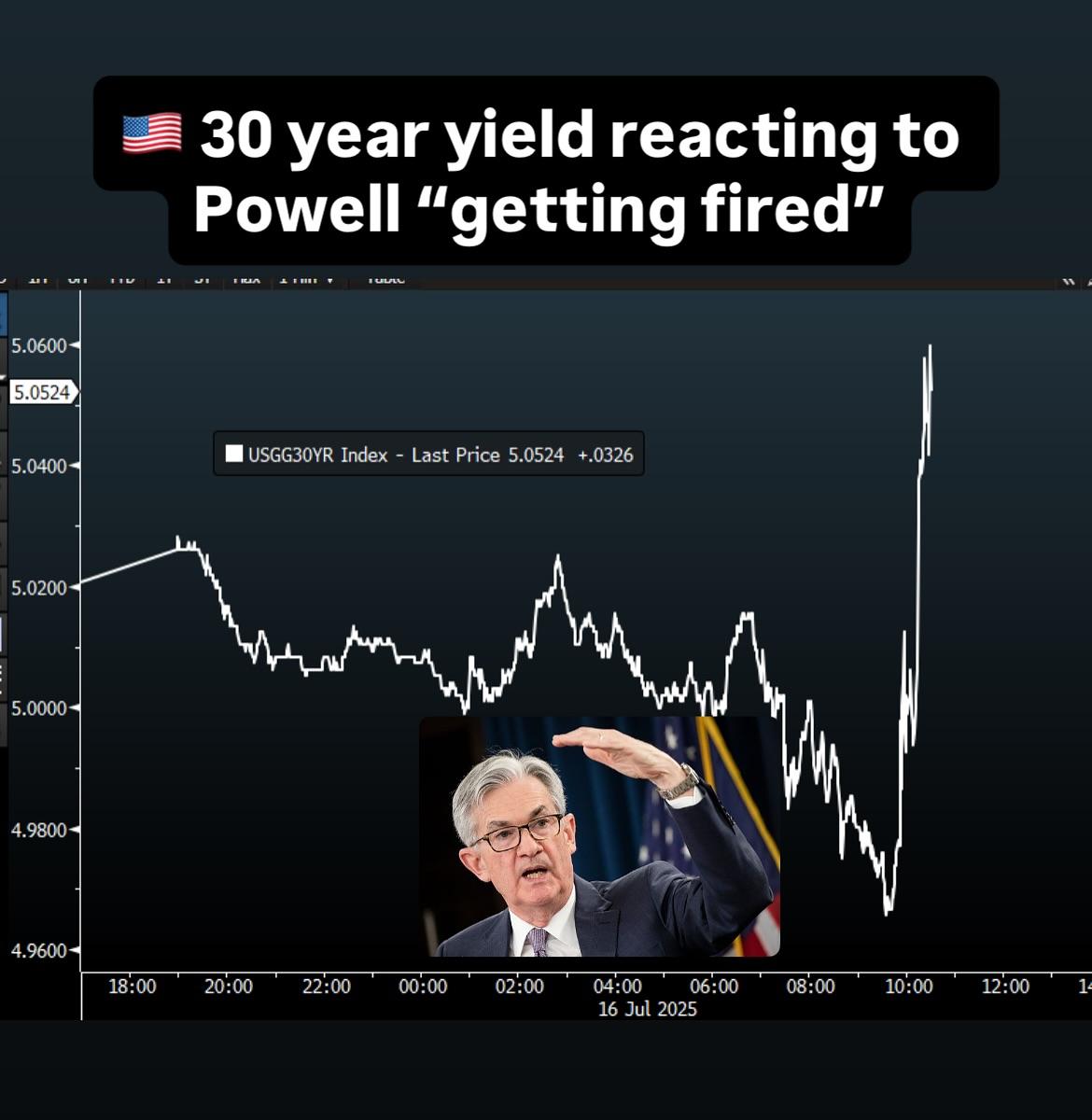
  • More nonsense… what drives emotion then action… everyone worried… The idea of a President firing the Federal Reserve Chair undermines the core principle of central bank independence. The Fed’s credibility hinges on its ability to make monetary decisions free from political interference. Any public pressure or threat from the executive branch not only damages market confidence but also incentivizes the Fed to double down on its restrictive stance tightening policy further to prove it’s not bending to political will. In moments like this, perception is policy. The Fed cannot afford to appear influenced, especially when inflation and financial stability are at stake. We have high inequality, stock markets at all time high and the bond yields spiking higher… cutting would not be fiscally responsible in my view. #FederalReserve #MonetaryPolicy #FedIndependence #Macroeconomics #InterestRates #FiscalPolicy #CentralBanking #Inflation #Markets
    More nonsense… what drives emotion then action… everyone worried… 🇺🇸🎡🎪The idea of a President firing the Federal Reserve Chair undermines the core principle of central bank independence. The Fed’s credibility hinges on its ability to make monetary decisions free from political interference. Any public pressure or threat from the executive branch not only damages market confidence but also incentivizes the Fed to double down on its restrictive stance tightening policy further to prove it’s not bending to political will. In moments like this, perception is policy. The Fed cannot afford to appear influenced, especially when inflation and financial stability are at stake. We have high inequality, stock markets at all time high and the bond yields spiking higher… cutting would not be fiscally responsible in my view. #FederalReserve #MonetaryPolicy #FedIndependence #Macroeconomics #InterestRates #FiscalPolicy #CentralBanking #Inflation #Markets
    ·476 Vue ·0 Aperçu
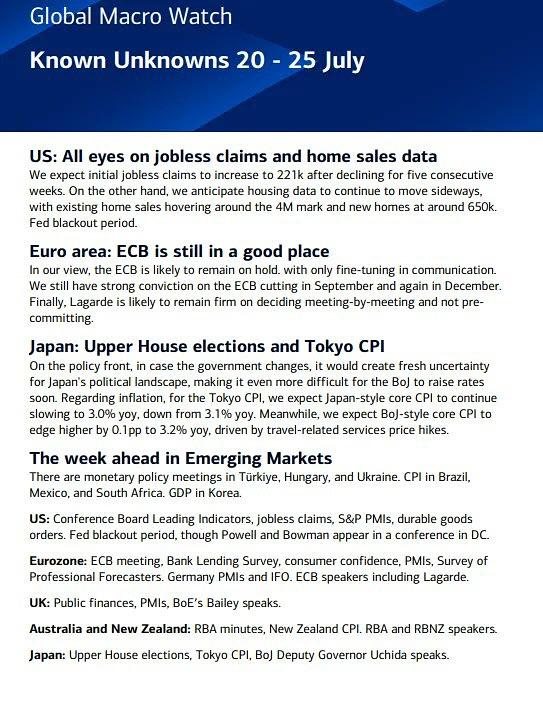
  • A busy week ahead across global markets.

    In the US, jobless claims and housing data will be front and center. Europe eyes the ECB’s July meeting with steady rates expected, while Japan’s Upper House elections and CPI prints could shape BoJ policy signals. Emerging markets will navigate rate decisions, CPI releases, and GDP prints across Brazil, Mexico, Turkey, South Africa, and Korea.

    Earnings season heats up with major names like Tesla, Alphabet, Intel, and Dow reporting midweek. Macro meets micro.

    #GlobalMacro #EarningsSeason #ECB #BoJ #USJobs #EmergingMarkets #CPI #InterestRates #MarketsThisWeek #Macroeconomics #Investing #FinanceNews #MarketWatch #EarningsCalendar #EconomicOutlook
    A busy week ahead across global markets. In the US, jobless claims and housing data will be front and center. Europe eyes the ECB’s July meeting with steady rates expected, while Japan’s Upper House elections and CPI prints could shape BoJ policy signals. Emerging markets will navigate rate decisions, CPI releases, and GDP prints across Brazil, Mexico, Turkey, South Africa, and Korea. Earnings season heats up with major names like Tesla, Alphabet, Intel, and Dow reporting midweek. Macro meets micro. #GlobalMacro #EarningsSeason #ECB #BoJ #USJobs #EmergingMarkets #CPI #InterestRates #MarketsThisWeek #Macroeconomics #Investing #FinanceNews #MarketWatch #EarningsCalendar #EconomicOutlook
    ·1KB Vue ·0 Aperçu
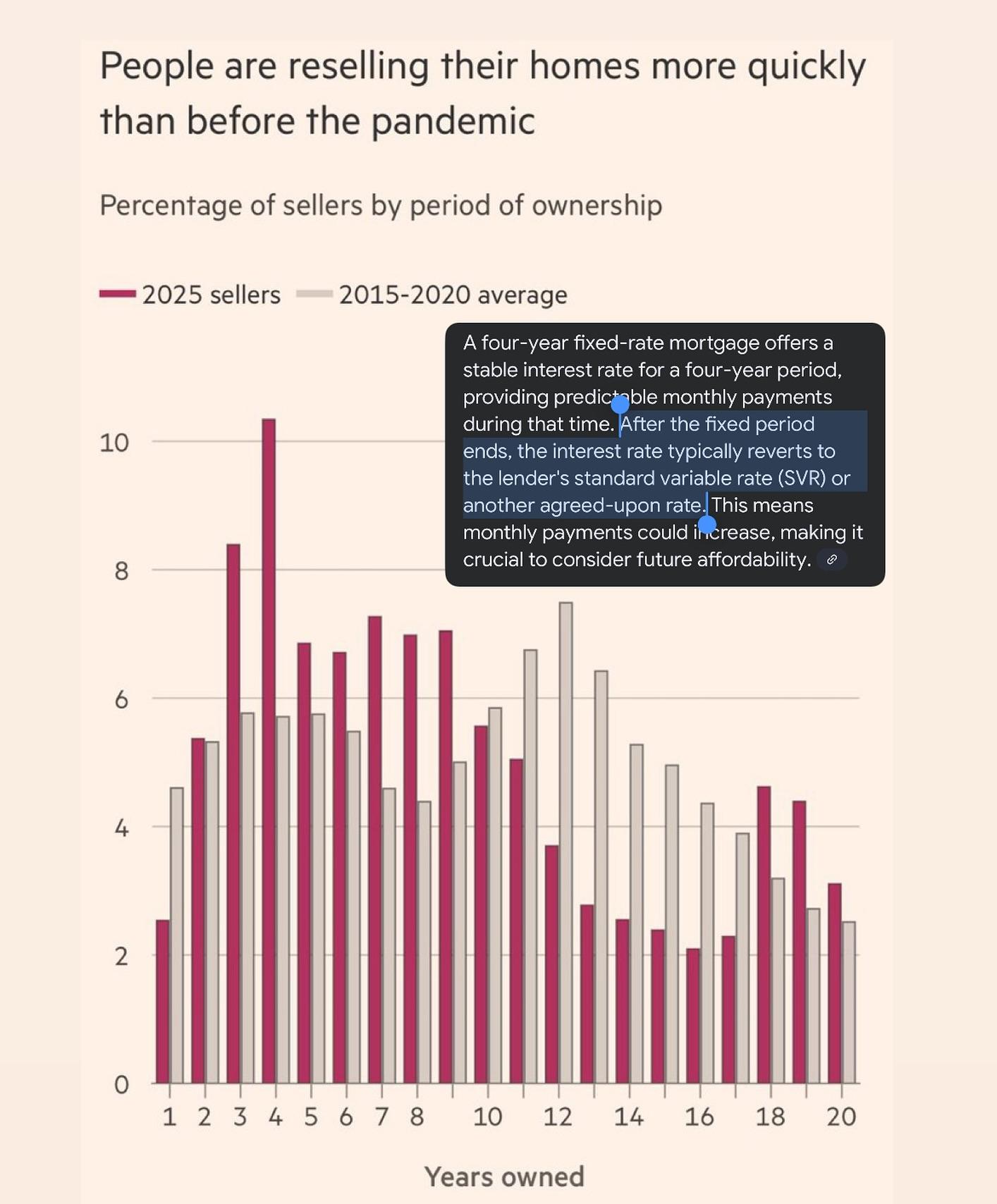
  • UK homeowners are selling faster than ever, with a significant spike in resales between years 3 to 5 of ownership. This trend reflects mounting financial strain as interest payments surge. In contrast to the US where 30-year fixed-rate mortgages are standard UK borrowers typically lock in rates for just 2 to 5 years. Once these expire, many are hit with steep increases under the lender’s standard variable rate, creating an affordability crunch that’s forcing sales.

    But housing pressures don’t exist in isolation. Wage compression, particularly in white-collar jobs affected by AI and automation, is limiting income growth. This means rising mortgage costs are colliding with flat or falling take-home pay. On top of that, UK businesses are being hit from multiple sides: record-high tax burdens are crippling margins, while a persistently dysfunctional labor market… marked by shortages in key sectors and structural mismatches continues to drive up costs and reduce productivity.

    Homeowners aren’t just moving they’re being squeezed out.

    #property #ukproperty #homes #realestate #Mortgage #InterestRates #WageCompression #AIImpact #UK #CostOfLiving #PropertyMarket #RealEstateUK #BusinessStrain #Economy2025 #ForcedToSell #smallbusiness
    UK homeowners are selling faster than ever, with a significant spike in resales between years 3 to 5 of ownership. This trend reflects mounting financial strain as interest payments surge. In contrast to the US where 30-year fixed-rate mortgages are standard UK borrowers typically lock in rates for just 2 to 5 years. Once these expire, many are hit with steep increases under the lender’s standard variable rate, creating an affordability crunch that’s forcing sales. But housing pressures don’t exist in isolation. Wage compression, particularly in white-collar jobs affected by AI and automation, is limiting income growth. This means rising mortgage costs are colliding with flat or falling take-home pay. On top of that, UK businesses are being hit from multiple sides: record-high tax burdens are crippling margins, while a persistently dysfunctional labor market… marked by shortages in key sectors and structural mismatches continues to drive up costs and reduce productivity. Homeowners aren’t just moving they’re being squeezed out. #property #ukproperty #homes #realestate #Mortgage #InterestRates #WageCompression #AIImpact #UK #CostOfLiving #PropertyMarket #RealEstateUK #BusinessStrain #Economy2025 #ForcedToSell #smallbusiness
    ·712 Vue ·0 Aperçu
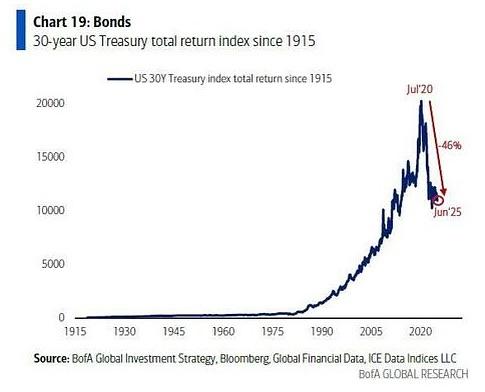
  • 30-year U.S. Treasuries have now suffered a staggering 46% drawdown from their peak in July 2020 a historic loss in an asset class long considered the benchmark for safety and stability. The long bond, often seen as the ultimate safe haven, has endured one of the most brutal bear markets in over a century.

    This collapse reflects the impact of sharply rising interest rates following a period of unprecedented monetary stimulus. It also highlights the risk embedded in duration when rates move higher, long-dated fixed income instruments get hit hardest.

    It’s a stark reminder that even “safe” assets are not immune to volatility in a world of policy shifts and inflation surprises. For investors, this period has rewritten the risk-reward playbook for bonds and emphasized the importance of adapting allocation strategies when the macro backdrop changes.

    #Bonds #Treasuries #InterestRates #FixedIncome #Inflation #MonetaryPolicy #MarketVolatility #MacroInvesting #AssetAllocation #BofA #InvestingInsights
    30-year U.S. Treasuries have now suffered a staggering 46% drawdown from their peak in July 2020 a historic loss in an asset class long considered the benchmark for safety and stability. The long bond, often seen as the ultimate safe haven, has endured one of the most brutal bear markets in over a century. This collapse reflects the impact of sharply rising interest rates following a period of unprecedented monetary stimulus. It also highlights the risk embedded in duration when rates move higher, long-dated fixed income instruments get hit hardest. It’s a stark reminder that even “safe” assets are not immune to volatility in a world of policy shifts and inflation surprises. For investors, this period has rewritten the risk-reward playbook for bonds and emphasized the importance of adapting allocation strategies when the macro backdrop changes. #Bonds #Treasuries #InterestRates #FixedIncome #Inflation #MonetaryPolicy #MarketVolatility #MacroInvesting #AssetAllocation #BofA #InvestingInsights
    ·711 Vue ·0 Aperçu
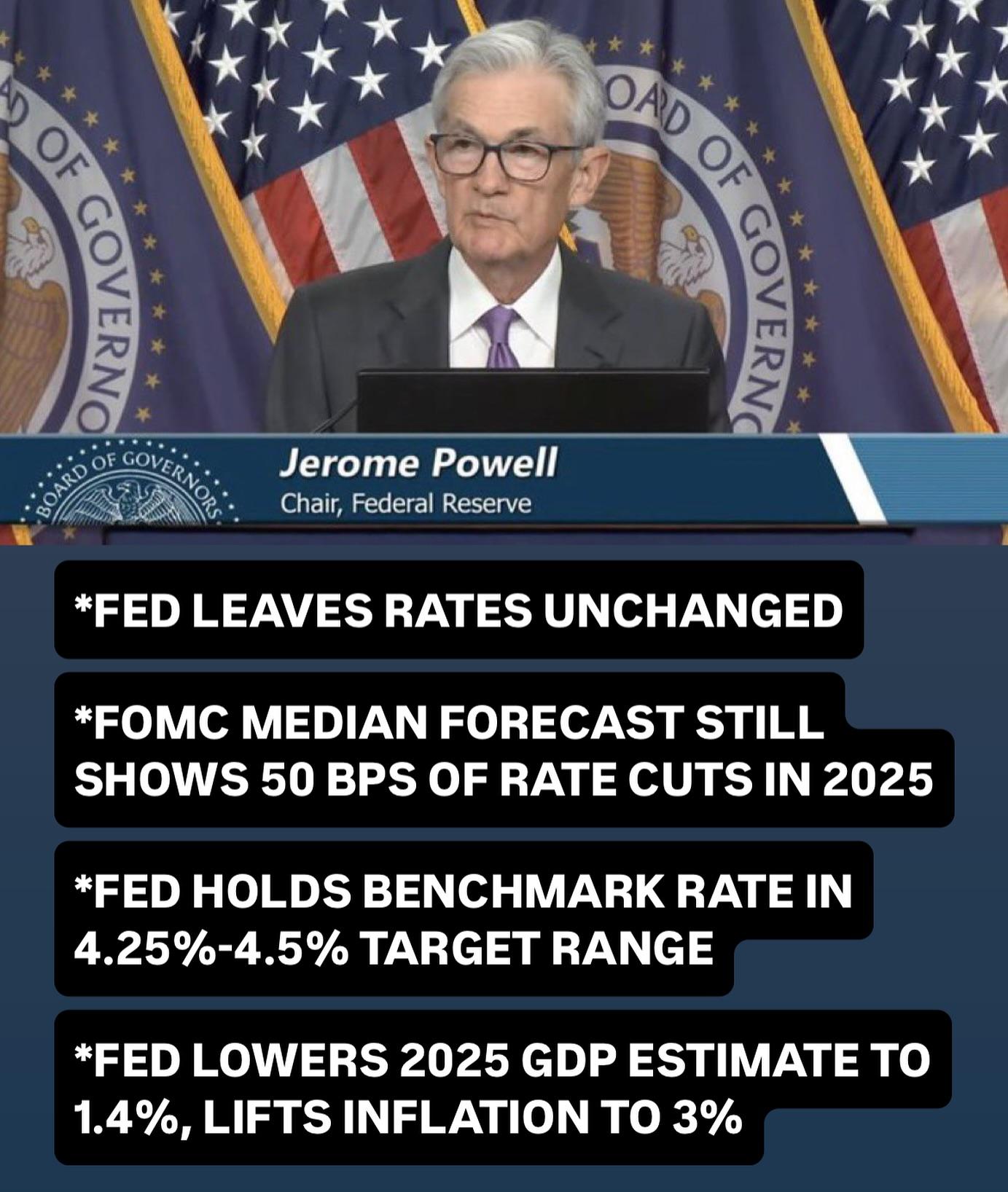
  • The Federal Reserve just wrapped up its latest policy meeting, holding interest rates steady within the 4.25%–4.50% range. The updated dot plot shows that the FOMC still projects 50 basis points of rate cuts in 2025, consistent with the previous outlook. However, the economic projections were revised: the Fed now expects GDP growth in 2025 to come in softer at 1.4%, while inflation is forecasted slightly higher, up to 3%.

    This signals a more cautious stance going forward. The Fed is clearly watching inflation pressures closely, and even though rate cuts are still penciled in, the upward revision in inflation expectations suggests they may remain patient. With the economy slowing and inflation staying sticky, policy flexibility remains key.

    Holding the line…

    #FederalReserve #FOMC #InterestRates #MacroUpdate #Inflation #MonetaryPolicy #JeromePowell #Markets #RateOutlook #FedMeeting
    The Federal Reserve just wrapped up its latest policy meeting, holding interest rates steady within the 4.25%–4.50% range. The updated dot plot shows that the FOMC still projects 50 basis points of rate cuts in 2025, consistent with the previous outlook. However, the economic projections were revised: the Fed now expects GDP growth in 2025 to come in softer at 1.4%, while inflation is forecasted slightly higher, up to 3%. This signals a more cautious stance going forward. The Fed is clearly watching inflation pressures closely, and even though rate cuts are still penciled in, the upward revision in inflation expectations suggests they may remain patient. With the economy slowing and inflation staying sticky, policy flexibility remains key. Holding the line… 🦍🇺🇸 #FederalReserve #FOMC #InterestRates #MacroUpdate #Inflation #MonetaryPolicy #JeromePowell #Markets #RateOutlook #FedMeeting
    ·337 Vue ·0 Aperçu
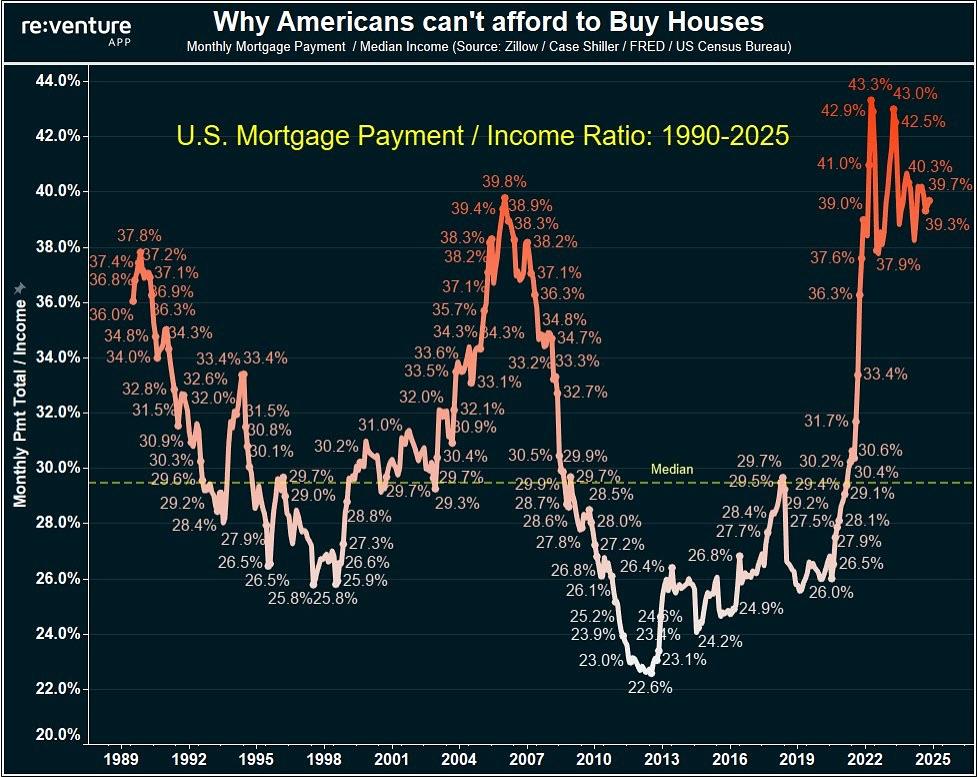
  • US housing affordability is now at its worst point in over 35 years.

    A median-income American must now spend nearly 40% of their income just to cover a mortgage. Historically, that number hovered around 29% and during the 2012 bottom, it dipped below 23%.

    I wonder how this ends?

    #realestate #housing #realestateagent #realestateagency #Housing #RealEstateMarket #HomeAffordability #MortgageRates #USHousing #MacroEconomics #InterestRates #PropertyPrices #HousingBubble #FederalReserve #EconomicOutlook #Homebuyers #RealEstateInvesting
    🇺🇸US housing affordability is now at its worst point in over 35 years. A median-income American must now spend nearly 40% of their income just to cover a mortgage. Historically, that number hovered around 29% and during the 2012 bottom, it dipped below 23%. I wonder how this ends? #realestate #housing #realestateagent #realestateagency #Housing #RealEstateMarket #HomeAffordability #MortgageRates #USHousing #MacroEconomics #InterestRates #PropertyPrices #HousingBubble #FederalReserve #EconomicOutlook #Homebuyers #RealEstateInvesting
    ·833 Vue ·0 Aperçu
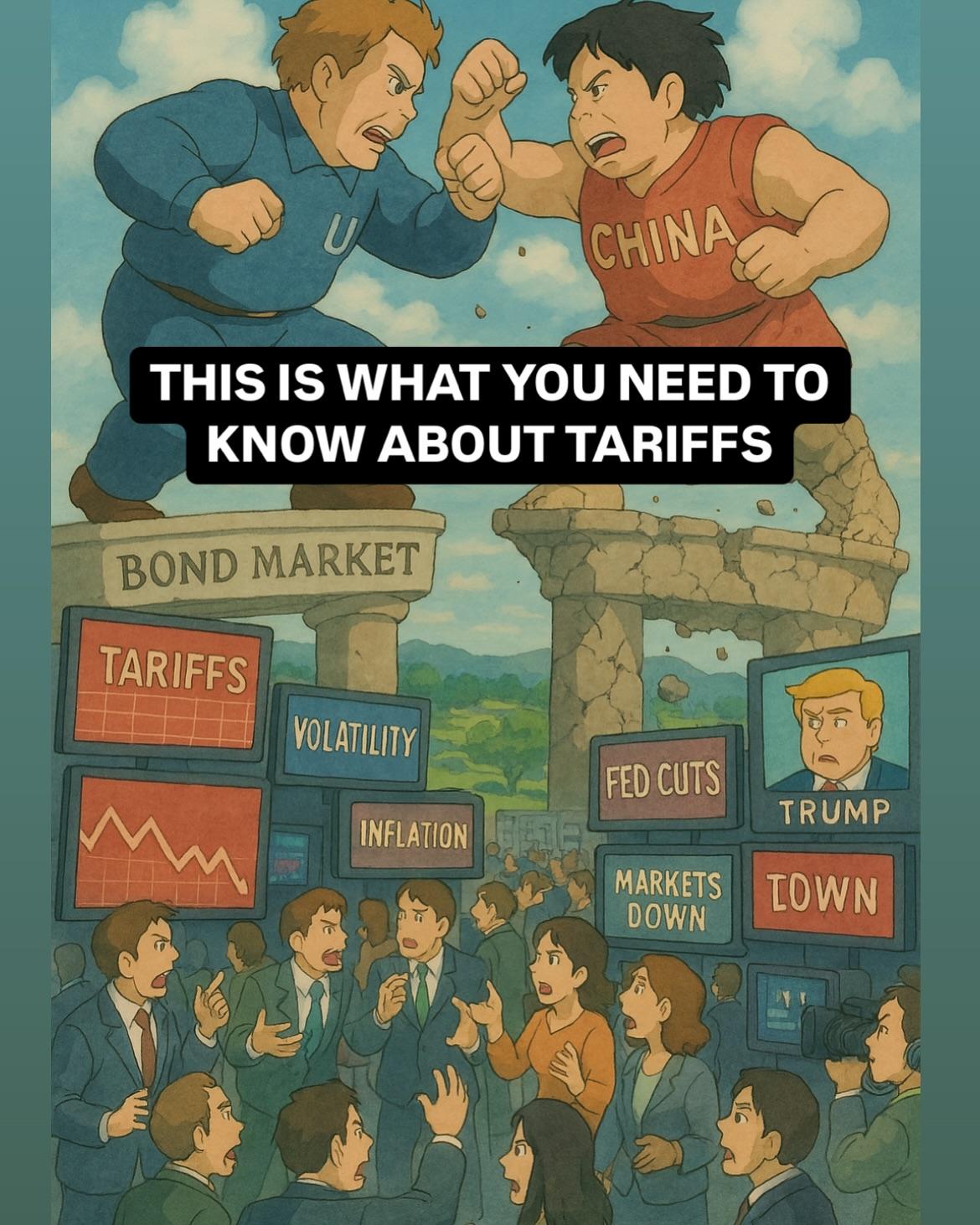
  • Most people are missing the real battle here — it’s not about tariffs or headlines, it’s about the bond market.
    The US looks chaotic on purpose to pressure China into bleeding reserves, liquidating assets, and defending their currency while forcing the world to choose between systems.

    Yields are rising not because “no one wants US debt,” but because other countries are under massive stress and are forced to sell Treasuries to defend their economies.

    This is about restoring credibility, showing fiscal dominance, and protecting the US financial system long-term — even if it means short-term pain through inflation and unemployment.

    If the Fed cuts now, it would destroy trust. Stability must come through strength, not printing. The real story is playing out in the bond market, not the headlines.

    It’s brutal, messy, but absolutely necessary.

    This is Jerome Powel - Paul A. Volcker moment. To maintain credibility and show fiscal dominance.


    #investing #stockmarket #stocks #BondMarket #FiscalDiscipline #GlobalEconomy #qqq #nasdaq #USDebt #InterestRates #MarketStress #FinancialSystem #Tariffs #Inflation #Unemployment #StayFocused #stayhard #bitcoin #financialfreedom
    Most people are missing the real battle here — it’s not about tariffs or headlines, it’s about the bond market. The US looks chaotic on purpose to pressure China into bleeding reserves, liquidating assets, and defending their currency while forcing the world to choose between systems. Yields are rising not because “no one wants US debt,” but because other countries are under massive stress and are forced to sell Treasuries to defend their economies. This is about restoring credibility, showing fiscal dominance, and protecting the US financial system long-term — even if it means short-term pain through inflation and unemployment. If the Fed cuts now, it would destroy trust. Stability must come through strength, not printing. The real story is playing out in the bond market, not the headlines. It’s brutal, messy, but absolutely necessary. This is Jerome Powel - Paul A. Volcker moment. To maintain credibility and show fiscal dominance. 🇺🇸🦍 #investing #stockmarket #stocks #BondMarket #FiscalDiscipline #GlobalEconomy #qqq #nasdaq #USDebt #InterestRates #MarketStress #FinancialSystem #Tariffs #Inflation #Unemployment #StayFocused #stayhard #bitcoin #financialfreedom
    ·2KB Vue ·0 Aperçu
Plus de résultats
Techawks - Powered By Pantrade Blockchain https://techawks.com