• A Surat businessman just did something unbelievable.

    He cleared ₹90 lakh worth of loans for 290 farmers, turning his mother’s death anniversary into a moment of hope for an entire village.

    What began as a tribute…
    became a lifeline.

    Families who had lived under debt for decades woke up debt-free — no interest, no repayments, no fear.

    His act is a reminder that real impact doesn’t always come from headlines or big speeches.
    Sometimes, it comes from humanity.

    One act of kindness.
    Hundreds of lives changed.

    Follow @marketing.growmatics for more powerful stories

    #Surat #Farmers #GoodNewsIndia #InspiringStories
    #HumanityFirst #KindnessMatters #RealLifeHeroes
    #IndiaNews #MarketingGrowmatics #ViralStory

    A Surat businessman just did something unbelievable. He cleared ₹90 lakh worth of loans for 290 farmers, turning his mother’s death anniversary into a moment of hope for an entire village. What began as a tribute… became a lifeline. Families who had lived under debt for decades woke up debt-free — no interest, no repayments, no fear. His act is a reminder that real impact doesn’t always come from headlines or big speeches. Sometimes, it comes from humanity. One act of kindness. Hundreds of lives changed. ➡️ Follow @marketing.growmatics for more powerful stories #Surat #Farmers #GoodNewsIndia #InspiringStories #HumanityFirst #KindnessMatters #RealLifeHeroes #IndiaNews #MarketingGrowmatics #ViralStory
    ·48 Ansichten ·0 Bewertungen
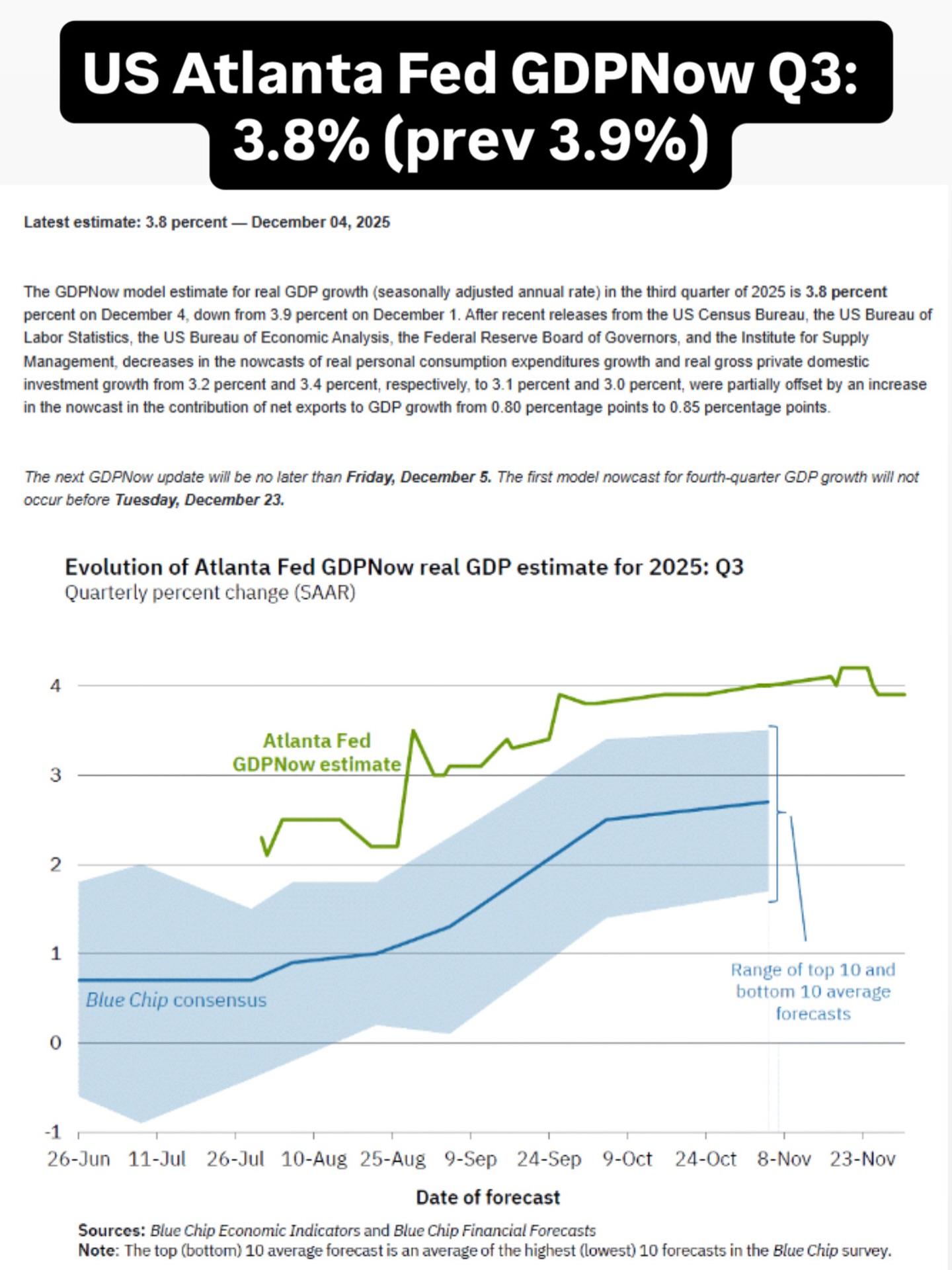
  • The Atlanta Fed just revised its GDPNow estimate for Q3 down slightly from 3.9% to 3.8%. Still strong, still above trend, and still well above what most forecasters expected just a few months ago.

    But here’s the interesting part:

    While the US economy continues to outperform expectations, other major economies are showing cracks:

    Japan is wrestling with rising bond yields and the limits of yield curve control.

    Europe is stagnating.

    China is fighting deflationary pressure and structural debt issues.

    Meanwhile, US growth remains resilient driven by consumer spending, investment, and ongoing fiscal momentum.

    A number like 3.8% doesn’t sound dramatic, but in a world of slowing growth, this level of momentum makes a statement. The US continues to be the global outlier the economy everyone bets against, yet the one capital keeps flowing back to.

    No wonder global investors overweight US equities and Treasuries. The U.S. isn’t just participating in the global cycle it’s defining it.

    The real question:

    Does this strength give the Fed room to stay tighter for longer, or does it simply delay the slowdown the market keeps trying to price in?

    Because if the economy really is this strong rate cuts aren’t a certainty. They become a negotiation.

    #GDP #Economy #Macro #AtlantaFed #Growth #Finance #Markets #USMarket #Investing #RecessionNarrative #DataDriven
    The Atlanta Fed just revised its GDPNow estimate for Q3 down slightly from 3.9% to 3.8%. Still strong, still above trend, and still well above what most forecasters expected just a few months ago. But here’s the interesting part: While the US economy continues to outperform expectations, other major economies are showing cracks: Japan is wrestling with rising bond yields and the limits of yield curve control. Europe is stagnating. China is fighting deflationary pressure and structural debt issues. Meanwhile, US growth remains resilient driven by consumer spending, investment, and ongoing fiscal momentum. A number like 3.8% doesn’t sound dramatic, but in a world of slowing growth, this level of momentum makes a statement. The US continues to be the global outlier the economy everyone bets against, yet the one capital keeps flowing back to. No wonder global investors overweight US equities and Treasuries. The U.S. isn’t just participating in the global cycle it’s defining it. The real question: Does this strength give the Fed room to stay tighter for longer, or does it simply delay the slowdown the market keeps trying to price in? Because if the economy really is this strong rate cuts aren’t a certainty. They become a negotiation. #GDP #Economy #Macro #AtlantaFed #Growth #Finance #Markets #USMarket #Investing #RecessionNarrative #DataDriven
    ·142 Ansichten ·0 Bewertungen
  • Netflix has reached an agreement to spend nearly 83 billion dollars to acquire Warner Bros.’ studios and streaming division!

    After a fierce bidding competition, Warner Bros. Discovery selected Netflix to take over its film, television, and streaming operations in a cash-and-stock deal. The offer amounts to about 28 dollars per share, translating to roughly 72 billion in equity and close to 83 billion once the assumed debt is included.

    If regulators approve the deal, one platform could become the primary home for Harry Potter, DC, HBO, and a significant portion of global entertainment.

    -
    #EntertainmentNews #StreamingWars #MediaDeal #Hollywood #TechAndMedia
    Netflix has reached an agreement to spend nearly 83 billion dollars to acquire Warner Bros.’ studios and streaming division! 🍿😲 After a fierce bidding competition, Warner Bros. Discovery selected Netflix to take over its film, television, and streaming operations in a cash-and-stock deal. The offer amounts to about 28 dollars per share, translating to roughly 72 billion in equity and close to 83 billion once the assumed debt is included. If regulators approve the deal, one platform could become the primary home for Harry Potter, DC, HBO, and a significant portion of global entertainment. - #EntertainmentNews #StreamingWars #MediaDeal #Hollywood #TechAndMedia
    ·195 Ansichten ·0 Bewertungen
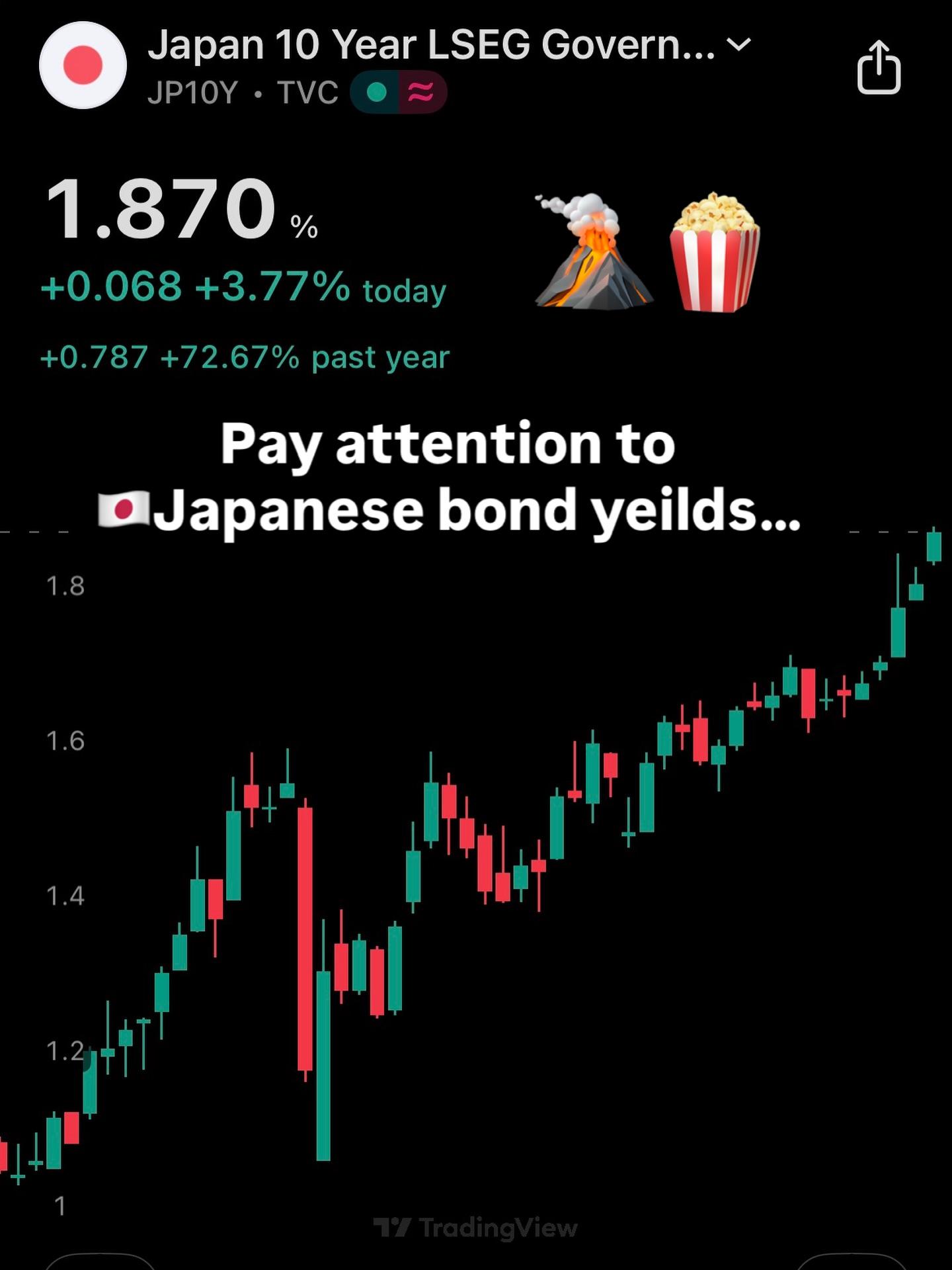
  • Japan is quietly becoming the most important macro story in the world. How long can this go on for?

    The country with the highest debt to GDP ratio on earth is now facing rising yields. The 10 year Japanese government bond is pushing toward 2 percent up more than 70 percent in a year.

    Japan has lived in a world of near zero rates for decades. A world where its central bank could buy its own bonds indefinitely, keep yields pinned down, and create the illusion of stability. That era is ending.

    The Bank of Japan has tried every tool: negative rates, quantitative easing, and now yield curve control. But there’s a simple truth: markets eventually overpower intervention.

    If the BoJ keeps buying bonds to suppress yields, the currency weakens.

    If it stops buying, yields spike and debt service costs explode.

    Japan is stuck between two bad choices.

    The debt burden is over 250 percent of GDP. Higher rates mean higher interest expenses, and that means more borrowing just to pay the interest. The problem becomes exponential.

    If yield curve control breaks, you will see one of two outcomes:

    A currency crisis the yen collapses to absorb the pressure.

    A bond crisis yields blow out and force deleveraging at a scale Japan hasn’t seen in modern history.

    For years investors believed Japan could never break. Zero rates were permanent. Demographics were destiny. Now the market is testing that assumption.

    Japan matters because it’s the endgame experiment:
    What happens when a government prints for decades, monetizes debt, and finally runs out of tools?

    Everyone focuses on the United States. But if Japan snaps first, it will be a global shockwave.

    How does this end? Incredibly slowly… then all at once.

    Liquidity is what everyone is grasping for 😮‍💨

    #japan #macro #markets #bonds #economics #investing #finance #interestrates #debt #yen #bankofjapan #globalmacro #riskmanagement #wealthbuilding #economy #marketanalysis
    Japan is quietly becoming the most important macro story in the world. How long can this go on for? The country with the highest debt to GDP ratio on earth is now facing rising yields. The 10 year Japanese government bond is pushing toward 2 percent up more than 70 percent in a year. Japan has lived in a world of near zero rates for decades. A world where its central bank could buy its own bonds indefinitely, keep yields pinned down, and create the illusion of stability. That era is ending. The Bank of Japan has tried every tool: negative rates, quantitative easing, and now yield curve control. But there’s a simple truth: markets eventually overpower intervention. If the BoJ keeps buying bonds to suppress yields, the currency weakens. If it stops buying, yields spike and debt service costs explode. Japan is stuck between two bad choices. The debt burden is over 250 percent of GDP. Higher rates mean higher interest expenses, and that means more borrowing just to pay the interest. The problem becomes exponential. If yield curve control breaks, you will see one of two outcomes: A currency crisis the yen collapses to absorb the pressure. A bond crisis yields blow out and force deleveraging at a scale Japan hasn’t seen in modern history. For years investors believed Japan could never break. Zero rates were permanent. Demographics were destiny. Now the market is testing that assumption. Japan matters because it’s the endgame experiment: What happens when a government prints for decades, monetizes debt, and finally runs out of tools? Everyone focuses on the United States. But if Japan snaps first, it will be a global shockwave. How does this end? Incredibly slowly… then all at once. Liquidity is what everyone is grasping for 😮‍💨 #japan #macro #markets #bonds #economics #investing #finance #interestrates #debt #yen #bankofjapan #globalmacro #riskmanagement #wealthbuilding #economy #marketanalysis
    ·304 Ansichten ·0 Bewertungen
  • Tether reported $4.9 billion Q2 2025 profits, averaging $1.63 billion monthly from Treasury yields on $157 billion USDT supply.

    Year-to-date through Q3, earnings topped $10 billion, with $127 billion in Treasuries making it a top U.S. debt holder.

    The model funds AI and renewables, with $6.8 billion excess reserves backing dominance in emerging markets.

    Join the free telegram in our bio for daily crypto news and insights
    Tether reported $4.9 billion Q2 2025 profits, averaging $1.63 billion monthly from Treasury yields on $157 billion USDT supply. ⠀ Year-to-date through Q3, earnings topped $10 billion, with $127 billion in Treasuries making it a top U.S. debt holder. ⠀ The model funds AI and renewables, with $6.8 billion excess reserves backing dominance in emerging markets. ⠀ Join the free telegram in our bio for daily crypto news and insights 📲
    ·93 Ansichten ·0 Bewertungen
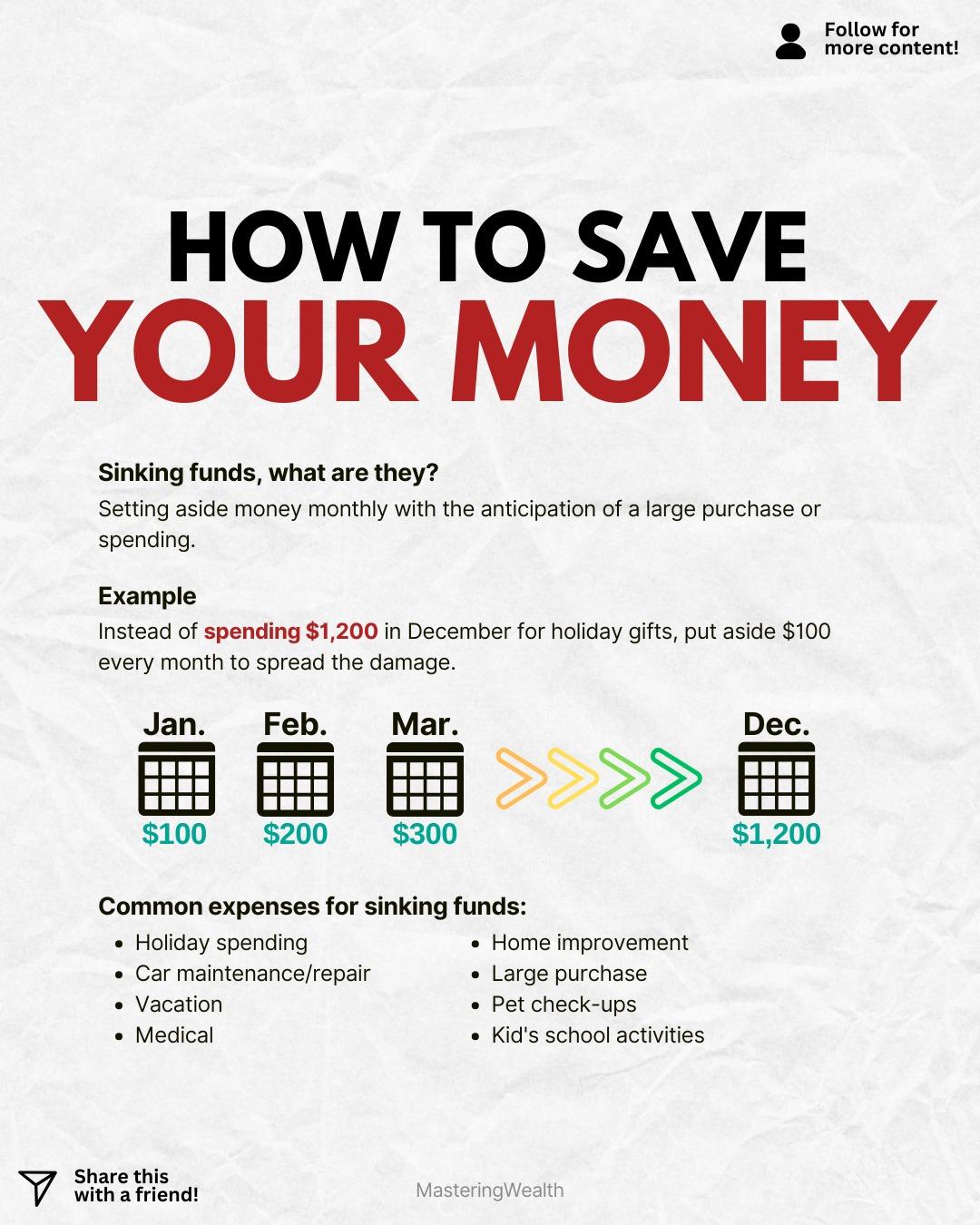
  • Saving money becomes much easier when you plan for expenses before they happen. The graphic in this post explains sinking funds which are one of the most effective budgeting tools for long term financial stability. Instead of being surprised by large costs, you prepare for them little by little throughout the year.

    A sinking fund is money you set aside each month for a specific future expense. It is different from your emergency fund because it is designed for expenses you already know are coming. Holidays, vacations, car repairs, and medical costs are all perfect examples.

    The chart shows how simple it can be. Instead of spending one thousand two hundred dollars in December for gifts, you put aside one hundred dollars every month. By the end of the year you have the full amount ready without stressing your budget.

    This method works because it spreads out the financial pressure. You avoid going into debt or dipping into savings for predictable expenses. Your budget becomes smoother and your money becomes easier to control.

    Common sinking fund categories include holiday spending, home improvement, large purchases, pet check ups, school activities, vacations, and car maintenance. You can have as many or as few categories as you want. The goal is to give every dollar a purpose and reduce last minute financial surprises.

    Using sinking funds consistently helps you stay ahead of your expenses. It also helps you create better saving habits because you learn to plan instead of react. This is one of the simplest steps toward financial stability and long term peace of mind.

    Comment “Stocks” if you want a link to see my dividend portfolio and learn how investing fits into a balanced financial plan.

    Which sinking fund category do you think would help you the most if you added it to your budget right now?

    For more visuals and tips on budgeting, saving, investing, and building wealth step by step, follow @MasteringWealth for daily financial education.

    This content is for educational purposes only and is not financial advice. Always research carefully or consult a licensed professional before making financial decisions.
    Saving money becomes much easier when you plan for expenses before they happen. The graphic in this post explains sinking funds which are one of the most effective budgeting tools for long term financial stability. Instead of being surprised by large costs, you prepare for them little by little throughout the year. A sinking fund is money you set aside each month for a specific future expense. It is different from your emergency fund because it is designed for expenses you already know are coming. Holidays, vacations, car repairs, and medical costs are all perfect examples. The chart shows how simple it can be. Instead of spending one thousand two hundred dollars in December for gifts, you put aside one hundred dollars every month. By the end of the year you have the full amount ready without stressing your budget. This method works because it spreads out the financial pressure. You avoid going into debt or dipping into savings for predictable expenses. Your budget becomes smoother and your money becomes easier to control. Common sinking fund categories include holiday spending, home improvement, large purchases, pet check ups, school activities, vacations, and car maintenance. You can have as many or as few categories as you want. The goal is to give every dollar a purpose and reduce last minute financial surprises. Using sinking funds consistently helps you stay ahead of your expenses. It also helps you create better saving habits because you learn to plan instead of react. This is one of the simplest steps toward financial stability and long term peace of mind. 💬 Comment “Stocks” if you want a link to see my dividend portfolio and learn how investing fits into a balanced financial plan. Which sinking fund category do you think would help you the most if you added it to your budget right now? For more visuals and tips on budgeting, saving, investing, and building wealth step by step, follow @MasteringWealth for daily financial education. ⚠️ This content is for educational purposes only and is not financial advice. Always research carefully or consult a licensed professional before making financial decisions.
    ·225 Ansichten ·0 Bewertungen
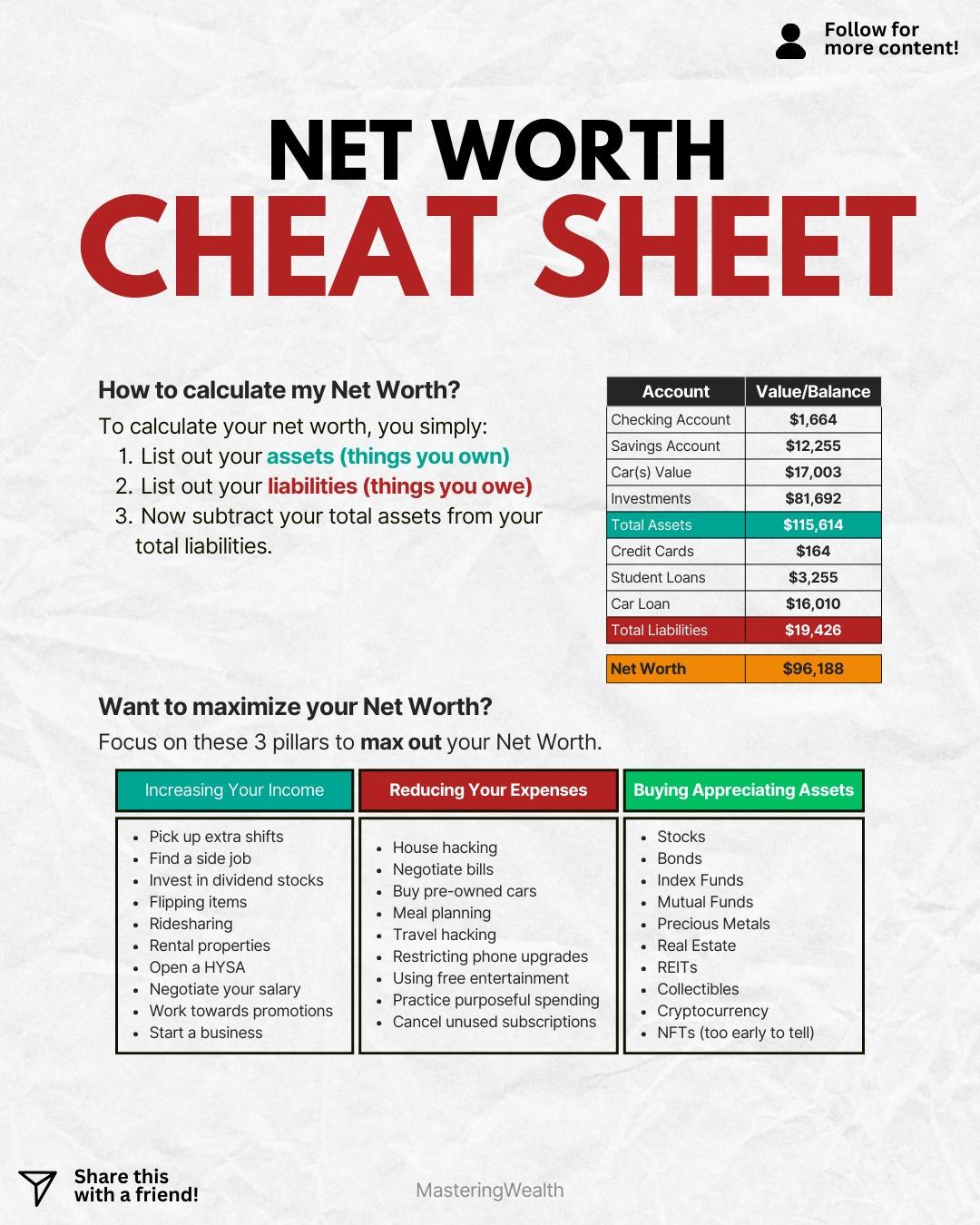
  • Your net worth is one of the clearest indicators of your financial health. It shows the full picture of what you own compared to what you owe. The visual in this post breaks down the steps to calculate it and gives you simple ways to increase it over time.

    To calculate your net worth, start by listing all of your assets which includes cash, savings, investments, and the value of major items like a car. Then list all your liabilities which are debts such as credit cards, student loans, and car loans. Once you subtract your total liabilities from your total assets, the result is your net worth.

    This number does not define your value as a person, but it does help you understand your financial progress. Tracking your net worth each month gives you clarity on whether you are moving forward or backward. It also helps you identify which areas need improvement.

    There are three main ways to grow your net worth over time. The first is to increase your income which can be done through side jobs, promotions, skill building, or investing in dividend stocks or rental properties. The second is reducing expenses by negotiating bills, eliminating unused subscriptions, and making smarter spending decisions.

    The third method is buying appreciating assets which grow in value such as stocks, bonds, index funds, real estate, precious metals, and mutual funds. When you consistently buy assets that rise in value, your net worth increases automatically. Small improvements in each of these areas compound into major long term results.

    Understanding your net worth helps you stay in control of your financial journey. It gives you a clear target to improve and a way to measure your growth. The goal is not perfection but progress over time.

    Comment “Stocks” if you want a link to see my dividend portfolio and learn how I use appreciating assets to increase my net worth.

    Which pillar do you feel you need to focus on the most right now: increasing income, reducing expenses, or buying more assets?

    This content is for educational purposes only and is not financial advice. Always research carefully or consult a licensed professional before making investment decisions.
    Your net worth is one of the clearest indicators of your financial health. It shows the full picture of what you own compared to what you owe. The visual in this post breaks down the steps to calculate it and gives you simple ways to increase it over time. To calculate your net worth, start by listing all of your assets which includes cash, savings, investments, and the value of major items like a car. Then list all your liabilities which are debts such as credit cards, student loans, and car loans. Once you subtract your total liabilities from your total assets, the result is your net worth. This number does not define your value as a person, but it does help you understand your financial progress. Tracking your net worth each month gives you clarity on whether you are moving forward or backward. It also helps you identify which areas need improvement. There are three main ways to grow your net worth over time. The first is to increase your income which can be done through side jobs, promotions, skill building, or investing in dividend stocks or rental properties. The second is reducing expenses by negotiating bills, eliminating unused subscriptions, and making smarter spending decisions. The third method is buying appreciating assets which grow in value such as stocks, bonds, index funds, real estate, precious metals, and mutual funds. When you consistently buy assets that rise in value, your net worth increases automatically. Small improvements in each of these areas compound into major long term results. Understanding your net worth helps you stay in control of your financial journey. It gives you a clear target to improve and a way to measure your growth. The goal is not perfection but progress over time. 💬 Comment “Stocks” if you want a link to see my dividend portfolio and learn how I use appreciating assets to increase my net worth. Which pillar do you feel you need to focus on the most right now: increasing income, reducing expenses, or buying more assets? ⚠️ This content is for educational purposes only and is not financial advice. Always research carefully or consult a licensed professional before making investment decisions.
    ·227 Ansichten ·0 Bewertungen
  • Despite official US boycott, participants agreed for shared responsibilities in dealing with the challenges of climate change and reforms in the UN with the objective of equitable global governance

    The first ever G20 summit on the African continent concluded on Sunday, November 23 on a note of shared responsibilities to deal with global inequality and growing debt crisis among the poor and developing countries.

    Read the full article on our website.
    Despite official US boycott, participants agreed for shared responsibilities in dealing with the challenges of climate change and reforms in the UN with the objective of equitable global governance The first ever G20 summit on the African continent concluded on Sunday, November 23 on a note of shared responsibilities to deal with global inequality and growing debt crisis among the poor and developing countries. 📲 Read the full article on our website.
    ·53 Ansichten ·0 Bewertungen
  • Most people don’t realize how much mental clarity comes from getting their money under control...

    When you’re not constantly stressed about bills, debt, or the next paycheck…

    You start thinking clearer.

    You move with more purpose.

    And you finally have the space to be intentional with your moves.

    That's why this game isn't just about money... it’s about the freedom to think and control the direction of your life.

    As always, do your own homework before making any investing decisions.
    Most people don’t realize how much mental clarity comes from getting their money under control... When you’re not constantly stressed about bills, debt, or the next paycheck… You start thinking clearer. You move with more purpose. And you finally have the space to be intentional with your moves. That's why this game isn't just about money... it’s about the freedom to think and control the direction of your life. As always, do your own homework before making any investing decisions.
    ·58 Ansichten ·0 Bewertungen
  • Most people think earning more money automatically makes you rich. But the truth is, your income doesn’t determine your wealth — your habits do. You can make six figures and still live paycheck to paycheck if your spending and debt eat away at everything you earn.

    Let’s look at the example in this post. Pugsley earns $120,000 per year, but after $95,000 in expenses and $10,000 in debt payments, he only invests $15,000 annually. Wednesday earns less at $80,000, but with lower expenses and no debt, she invests $20,000 each year.

    After 20 years, Pugsley ends up with about $945,000, while Wednesday has over $1.26 million. Despite earning less, she builds more wealth simply because she keeps more of what she earns. This is the perfect reminder that it’s not about what you make, it’s about what you keep and invest.

    High earners often fall into lifestyle inflation — upgrading cars, homes, and vacations as their income rises. But wealth grows when you maintain discipline, track your spending, and consistently invest a portion of your income. Even small differences in savings rates can lead to massive results when compounded over decades.

    True financial freedom doesn’t come from having the biggest paycheck, but from creating systems that make your money work for you. When your investments generate enough income to cover your expenses, that’s when you achieve real wealth.

    Comment “Stocks” if you want a link to see my dividend portfolio and learn how I invest for long-term growth.

    If your income doubled tomorrow, what would you do differently with your money?

    Follow @MasteringWealth for more posts that teach you how to invest smarter, control your spending, and build wealth that lasts for generations.

    Disclaimer: This content is for educational purposes only and not financial advice. Always do your own research or speak with a financial professional before making investment decisions.
    💰 Most people think earning more money automatically makes you rich. But the truth is, your income doesn’t determine your wealth — your habits do. You can make six figures and still live paycheck to paycheck if your spending and debt eat away at everything you earn. Let’s look at the example in this post. Pugsley earns $120,000 per year, but after $95,000 in expenses and $10,000 in debt payments, he only invests $15,000 annually. Wednesday earns less at $80,000, but with lower expenses and no debt, she invests $20,000 each year. After 20 years, Pugsley ends up with about $945,000, while Wednesday has over $1.26 million. Despite earning less, she builds more wealth simply because she keeps more of what she earns. This is the perfect reminder that it’s not about what you make, it’s about what you keep and invest. 📈 High earners often fall into lifestyle inflation — upgrading cars, homes, and vacations as their income rises. But wealth grows when you maintain discipline, track your spending, and consistently invest a portion of your income. Even small differences in savings rates can lead to massive results when compounded over decades. 🧠 True financial freedom doesn’t come from having the biggest paycheck, but from creating systems that make your money work for you. When your investments generate enough income to cover your expenses, that’s when you achieve real wealth. 💬 Comment “Stocks” if you want a link to see my dividend portfolio and learn how I invest for long-term growth. 🤔 If your income doubled tomorrow, what would you do differently with your money? 👉 Follow @MasteringWealth for more posts that teach you how to invest smarter, control your spending, and build wealth that lasts for generations. ⚠️ Disclaimer: This content is for educational purposes only and not financial advice. Always do your own research or speak with a financial professional before making investment decisions.
    ·113 Ansichten ·0 Bewertungen
Weitere Ergebnisse
Techawks - Powered By Pantrade Blockchain https://techawks.com