• San Francisco just turned its waterfront into a floating football arena — literally.

    Ahead of the NWSL Championship Weekend, the league installed a full-size floating soccer field on the San Francisco Bay to kick off celebrations and draw national attention to the rise of women’s sports.

    This wasn’t built for gameplay — it was built for visibility.
    A high-impact stunt designed to pull media, fans, and passersby into the momentum before the finals even begin.

    Floating pitch → photo magnet
    Waterfront activation → crowd puller
    Championship weekend → cultural moment

    A bold reminder that modern sports marketing isn’t just about the match…
    it’s about creating a spectacle around the match.

    Do you think more leagues should try ideas this audacious?

    @NWSL #MarketingMentor

    San Francisco just turned its waterfront into a floating football arena — literally. Ahead of the NWSL Championship Weekend, the league installed a full-size floating soccer field on the San Francisco Bay to kick off celebrations and draw national attention to the rise of women’s sports. This wasn’t built for gameplay — it was built for visibility. A high-impact stunt designed to pull media, fans, and passersby into the momentum before the finals even begin. Floating pitch → photo magnet Waterfront activation → crowd puller Championship weekend → cultural moment A bold reminder that modern sports marketing isn’t just about the match… it’s about creating a spectacle around the match. Do you think more leagues should try ideas this audacious? @NWSL #MarketingMentor
    ·87 Views ·0 Reviews

  • A Japanese team just took a sharp step toward cleaning Earth’s crowded orbit without ever touching the trash. At Tohoku University, researchers demonstrated a bi-directional plasma thruster that fires two opposed jets of ionized gas, one to slow a target hulk and the other to cancel the recoil that would shove the cleanup craft away.⁠

    Plasma is a charged gas, so directing it at debris can bleed off speed until the object dips into the atmosphere and burns up. The catch has always been Newton’s third law, the same push that slows the junk kicks the remover backward. This engine solves that by balancing thrust in real time, keeping the chaser parked on target instead of drifting off.⁠

    The team also added a “cusp” magnetic field, a configuration borrowed from fusion research, to corral and focus the plasma. In vacuum-chamber tests, that tweak boosted performance, tripling the deceleration reported in earlier experiments and delivering measured pushes in the tens of millinewtons at kilowatt-class power. Researchers note that this could make future debris-cleaning missions far more efficient, extending operational lifetimes and allowing smaller spacecraft to take on bigger jobs.⁠

    Practical perks matter in orbit, and this design runs on argon, which is cheaper and easier to source than xenon common in ion engines. At projected levels, about 30 millinewtons of sustained braking could deorbit a one-ton object in roughly 100 days, a scale that targets the largest collision risks that could trigger a Kessler-style chain reaction.⁠

    There’s work ahead, from standoff distance control to propellant budgets for long burns. But the core result, peer-reviewed in Scientific Reports on August 20, 2025, shows a path to contact-free debris removal that is stable, scalable, and built from known physics rather than wishful thinking.
    A Japanese team just took a sharp step toward cleaning Earth’s crowded orbit without ever touching the trash. At Tohoku University, researchers demonstrated a bi-directional plasma thruster that fires two opposed jets of ionized gas, one to slow a target hulk and the other to cancel the recoil that would shove the cleanup craft away.⁠ ⁠ Plasma is a charged gas, so directing it at debris can bleed off speed until the object dips into the atmosphere and burns up. The catch has always been Newton’s third law, the same push that slows the junk kicks the remover backward. This engine solves that by balancing thrust in real time, keeping the chaser parked on target instead of drifting off.⁠ ⁠ The team also added a “cusp” magnetic field, a configuration borrowed from fusion research, to corral and focus the plasma. In vacuum-chamber tests, that tweak boosted performance, tripling the deceleration reported in earlier experiments and delivering measured pushes in the tens of millinewtons at kilowatt-class power. Researchers note that this could make future debris-cleaning missions far more efficient, extending operational lifetimes and allowing smaller spacecraft to take on bigger jobs.⁠ ⁠ Practical perks matter in orbit, and this design runs on argon, which is cheaper and easier to source than xenon common in ion engines. At projected levels, about 30 millinewtons of sustained braking could deorbit a one-ton object in roughly 100 days, a scale that targets the largest collision risks that could trigger a Kessler-style chain reaction.⁠ ⁠ There’s work ahead, from standoff distance control to propellant budgets for long burns. But the core result, peer-reviewed in Scientific Reports on August 20, 2025, shows a path to contact-free debris removal that is stable, scalable, and built from known physics rather than wishful thinking.
    ·126 Views ·0 Reviews
  • A leaf-sized robot skims across a pond, its tiny legs ticking in rhythm with invisible heat pulses. The magic isn’t in a motor, it’s in the way it’s made. University of Virginia engineers devised HydroSpread, a manufacturing method that builds soft machines directly on liquid, where fragile films form flawlessly and complex shapes are cut with light.⁠

    Instead of peeling ultrathin polymers from glass and hoping they survive, droplets land on water and self-spread into uniform, hair-thin sheets. A laser etches fins, legs, even intricate logos, while the liquid substrate wicks away heat to prevent warping. The result is precision without the usual casualties, and patterns detailed enough to choreograph motion at millimeter scale.⁠

    Those sheets become bilayer actuators, two layers that expand differently when warmed. Under an infrared lamp, they bend and snap on command, turning tiny temperature swings into thrust. In demos, HydroFlexor paddled with fin-like strokes and HydroBuckler “walked” on water by buckling its legs, echoing the surface-savvy gait of strider insects.⁠

    Because fabrication happens on water from the start, integration gets easier: microheaters, magnetic fillers, or light-responsive materials can be added without risky transfers. That opens a path to autonomous micromachines that steer with sunlight or fields instead of bulky batteries and gears.⁠

    The same approach could also deliver skin-conforming medical sensors, flexible circuits that shrug off bends, and fleets of disposable samplers that skim lakes for pollutants. HydroSpread isn’t just a clever trick, it’s a playbook for building machines that thrive where rigid tech fails.⁠

    #softrobotics #robotics #materials #microbots #uva #scienceadvances #environmentalmonitoring #wearables #biomimetics
    A leaf-sized robot skims across a pond, its tiny legs ticking in rhythm with invisible heat pulses. The magic isn’t in a motor, it’s in the way it’s made. University of Virginia engineers devised HydroSpread, a manufacturing method that builds soft machines directly on liquid, where fragile films form flawlessly and complex shapes are cut with light.⁠ ⁠ Instead of peeling ultrathin polymers from glass and hoping they survive, droplets land on water and self-spread into uniform, hair-thin sheets. A laser etches fins, legs, even intricate logos, while the liquid substrate wicks away heat to prevent warping. The result is precision without the usual casualties, and patterns detailed enough to choreograph motion at millimeter scale.⁠ ⁠ Those sheets become bilayer actuators, two layers that expand differently when warmed. Under an infrared lamp, they bend and snap on command, turning tiny temperature swings into thrust. In demos, HydroFlexor paddled with fin-like strokes and HydroBuckler “walked” on water by buckling its legs, echoing the surface-savvy gait of strider insects.⁠ ⁠ Because fabrication happens on water from the start, integration gets easier: microheaters, magnetic fillers, or light-responsive materials can be added without risky transfers. That opens a path to autonomous micromachines that steer with sunlight or fields instead of bulky batteries and gears.⁠ ⁠ The same approach could also deliver skin-conforming medical sensors, flexible circuits that shrug off bends, and fleets of disposable samplers that skim lakes for pollutants. HydroSpread isn’t just a clever trick, it’s a playbook for building machines that thrive where rigid tech fails.⁠ ⁠ #softrobotics #robotics #materials #microbots #uva #scienceadvances #environmentalmonitoring #wearables #biomimetics
    ·207 Views ·0 Reviews
  • China just cranked a superconducting magnet to 35.1 tesla, roughly 351,000 gauss, about 700,000 times Earth’s field, and kept it stable for 30 minutes before a clean shutdown. Built by the Institute of Plasma Physics at the Chinese Academy of Sciences, the all-superconducting system pairs a high-temperature insert coil with low-temperature outer coils, creating a tougher, steadier field without quenching or drift.⁠

    The hybrid “magnet sandwich” mattered because engineers had to tame stress concentration, shielding currents, and multi-field coupling at cryogenic temperatures. By refining materials and geometry, they delivered record strength in a steady, fully superconducting device, a new platform for experiments that demand brute magnetic power with razor stability.⁠

    This matters for fusion, where magnetic cages confine plasma hotter than the Sun. ASIPP is a key supplier to ITER and to China’s domestic fusion program, and advances like this inform future correction coils, feeders, and high-field subsystems. Beyond reactors, stronger stable fields can accelerate NMR spectroscopy, maglev transport, electromagnetic propulsion, induction heating, and ultra-efficient power systems.⁠

    At the opposite extreme of scale, UC Berkeley engineers flew the smallest untethered robot yet, 9.4 millimeters across and only 21 milligrams. It lifts off when an external magnetic field spins a tiny rotor, hovers around 310 hertz, climbs near 340 hertz, steers by field orientation, and even recovers from gentle bumps without onboard sensors.⁠

    Range is currently about 10 centimeters from the coils, however beamformed fields, lighter designs, and onboard converters could unlock micro fliers with cameras and sensors for inspections, search and rescue, or greenhouse pollination. Magnetic control is stretching from star-hot plasmas to rice-grain robots, and the toolkit is getting sharper at both ends.⁠

    #tech #superconductors #fusion #magnetics #robotics #microdrones #energy #china #ucberkeley
    China just cranked a superconducting magnet to 35.1 tesla, roughly 351,000 gauss, about 700,000 times Earth’s field, and kept it stable for 30 minutes before a clean shutdown. Built by the Institute of Plasma Physics at the Chinese Academy of Sciences, the all-superconducting system pairs a high-temperature insert coil with low-temperature outer coils, creating a tougher, steadier field without quenching or drift.⁠ ⁠ The hybrid “magnet sandwich” mattered because engineers had to tame stress concentration, shielding currents, and multi-field coupling at cryogenic temperatures. By refining materials and geometry, they delivered record strength in a steady, fully superconducting device, a new platform for experiments that demand brute magnetic power with razor stability.⁠ ⁠ This matters for fusion, where magnetic cages confine plasma hotter than the Sun. ASIPP is a key supplier to ITER and to China’s domestic fusion program, and advances like this inform future correction coils, feeders, and high-field subsystems. Beyond reactors, stronger stable fields can accelerate NMR spectroscopy, maglev transport, electromagnetic propulsion, induction heating, and ultra-efficient power systems.⁠ ⁠ At the opposite extreme of scale, UC Berkeley engineers flew the smallest untethered robot yet, 9.4 millimeters across and only 21 milligrams. It lifts off when an external magnetic field spins a tiny rotor, hovers around 310 hertz, climbs near 340 hertz, steers by field orientation, and even recovers from gentle bumps without onboard sensors.⁠ ⁠ Range is currently about 10 centimeters from the coils, however beamformed fields, lighter designs, and onboard converters could unlock micro fliers with cameras and sensors for inspections, search and rescue, or greenhouse pollination. Magnetic control is stretching from star-hot plasmas to rice-grain robots, and the toolkit is getting sharper at both ends.⁠ ⁠ #tech #superconductors #fusion #magnetics #robotics #microdrones #energy #china #ucberkeley
    ·225 Views ·0 Reviews
  • Apple is turning accessories into a style statement. The new crossbody strap for iPhone 17, priced at ₹5,900, is made from recycled PET yarns and comes with adjustable magnetic sliders. A blend of utility, sustainability and luxury in one strap.

    #Techinformer #iPhone #Apple
    Apple is turning accessories into a style statement. The new crossbody strap for iPhone 17, priced at ₹5,900, is made from recycled PET yarns and comes with adjustable magnetic sliders. A blend of utility, sustainability and luxury in one strap. #Techinformer #iPhone #Apple
    ·98 Views ·0 Reviews
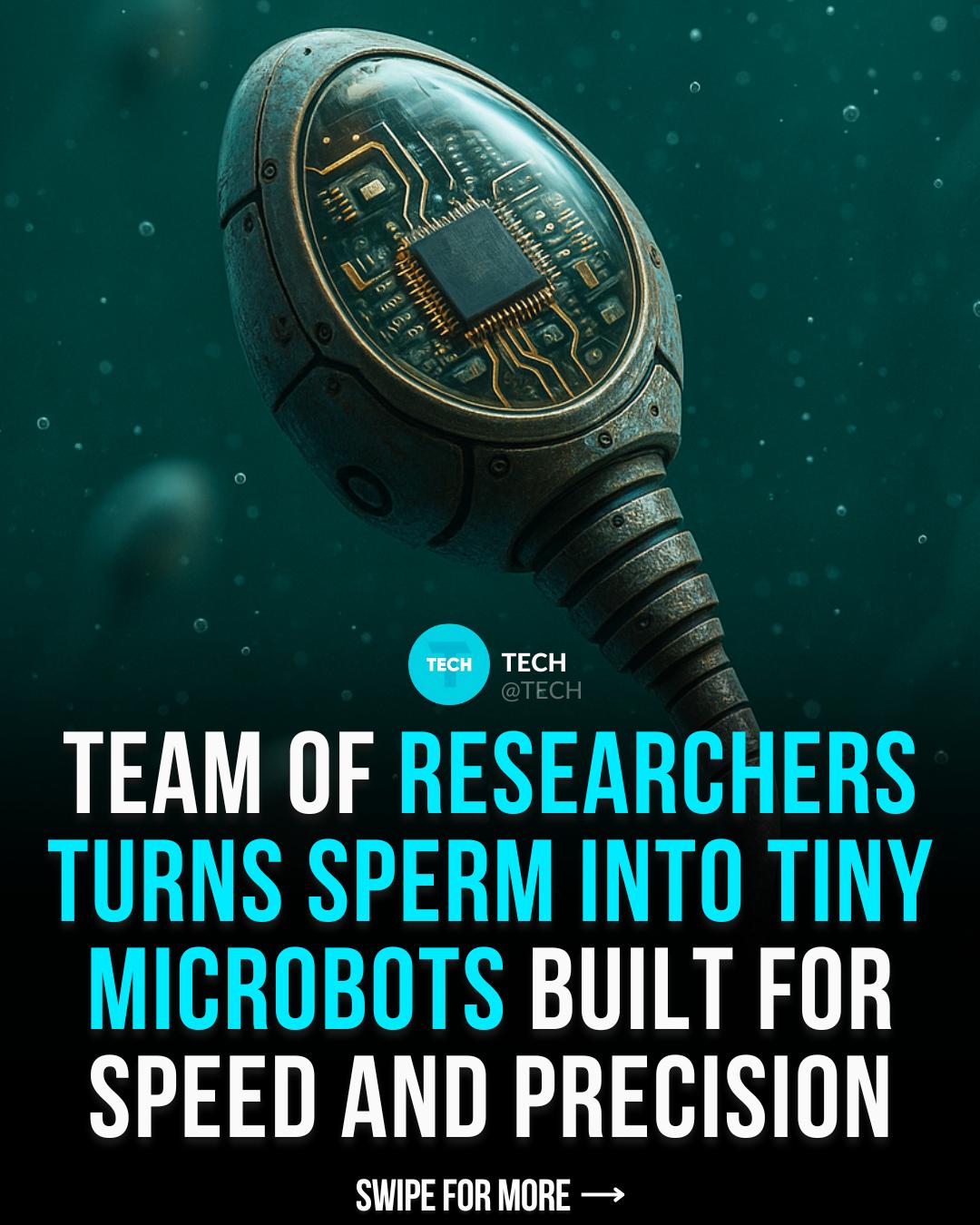
  • Meet the microrobot that already knows how to swim: a living sperm cell, upgraded with magnetic steering and X-ray visibility. Researchers have transformed these cells into sperm bots by coating them with iron-oxide nanoparticles, creating programmable machines that can be guided with external magnetic fields and tracked in real time through a life-size model of the female reproductive tract.⁠

    Sperm cells are naturally fast, flexible, biodegradable, and well tolerated by the body. With magnetic control, they can be piloted from the cervix through the uterus to the fallopian tubes, places that are often difficult to reach with conventional methods. When loaded with medicine, they become highly targeted delivery vehicles for treating uterine cancer, fibroids, or endometriosis while minimizing damage to healthy tissue.⁠

    This breakthrough also provides a new way to study fertility. Tracking sperm inside the body has long been nearly impossible, limiting efforts to understand infertility and improve IVF outcomes. X-ray visible sperm bots open the door to noninvasive observation of sperm transport, fertilization dynamics, and blockages within reproductive pathways.⁠

    Initial safety results are promising. Tests showed no significant toxicity to human uterine cells after 72 hours of exposure, and nanoparticle coatings improved steering and visibility without compromising biocompatibility. Further testing in animal models and eventually humans will be necessary, but the early foundation is strong.⁠

    The creation of sperm bots marks a significant step in biohybrid microrobotics, merging biological design with advanced engineering. What was once a single reproductive cell is now being reimagined as a precision tool for diagnostics, drug delivery, and medical exploration.⁠

    Soure: s44182-025-00044-1
    Meet the microrobot that already knows how to swim: a living sperm cell, upgraded with magnetic steering and X-ray visibility. Researchers have transformed these cells into sperm bots by coating them with iron-oxide nanoparticles, creating programmable machines that can be guided with external magnetic fields and tracked in real time through a life-size model of the female reproductive tract.⁠ ⁠ Sperm cells are naturally fast, flexible, biodegradable, and well tolerated by the body. With magnetic control, they can be piloted from the cervix through the uterus to the fallopian tubes, places that are often difficult to reach with conventional methods. When loaded with medicine, they become highly targeted delivery vehicles for treating uterine cancer, fibroids, or endometriosis while minimizing damage to healthy tissue.⁠ ⁠ This breakthrough also provides a new way to study fertility. Tracking sperm inside the body has long been nearly impossible, limiting efforts to understand infertility and improve IVF outcomes. X-ray visible sperm bots open the door to noninvasive observation of sperm transport, fertilization dynamics, and blockages within reproductive pathways.⁠ ⁠ Initial safety results are promising. Tests showed no significant toxicity to human uterine cells after 72 hours of exposure, and nanoparticle coatings improved steering and visibility without compromising biocompatibility. Further testing in animal models and eventually humans will be necessary, but the early foundation is strong.⁠ ⁠ The creation of sperm bots marks a significant step in biohybrid microrobotics, merging biological design with advanced engineering. What was once a single reproductive cell is now being reimagined as a precision tool for diagnostics, drug delivery, and medical exploration.⁠ ⁠ Soure: s44182-025-00044-1
    ·199 Views ·0 Reviews
  • Find your twin partners in comments!
    .
    .
    .
    .
    .
    #waterfall #train #bir #paragliding #journey #local #beer #meghalaya #hampi #bali #scuba #rishikesh #thailand #magnet #chandratal
    Find your twin partners in comments! . . . . . #waterfall #train #bir #paragliding #journey #local #beer #meghalaya #hampi #bali #scuba #rishikesh #thailand #magnet #chandratal
    ·282 Views ·0 Reviews
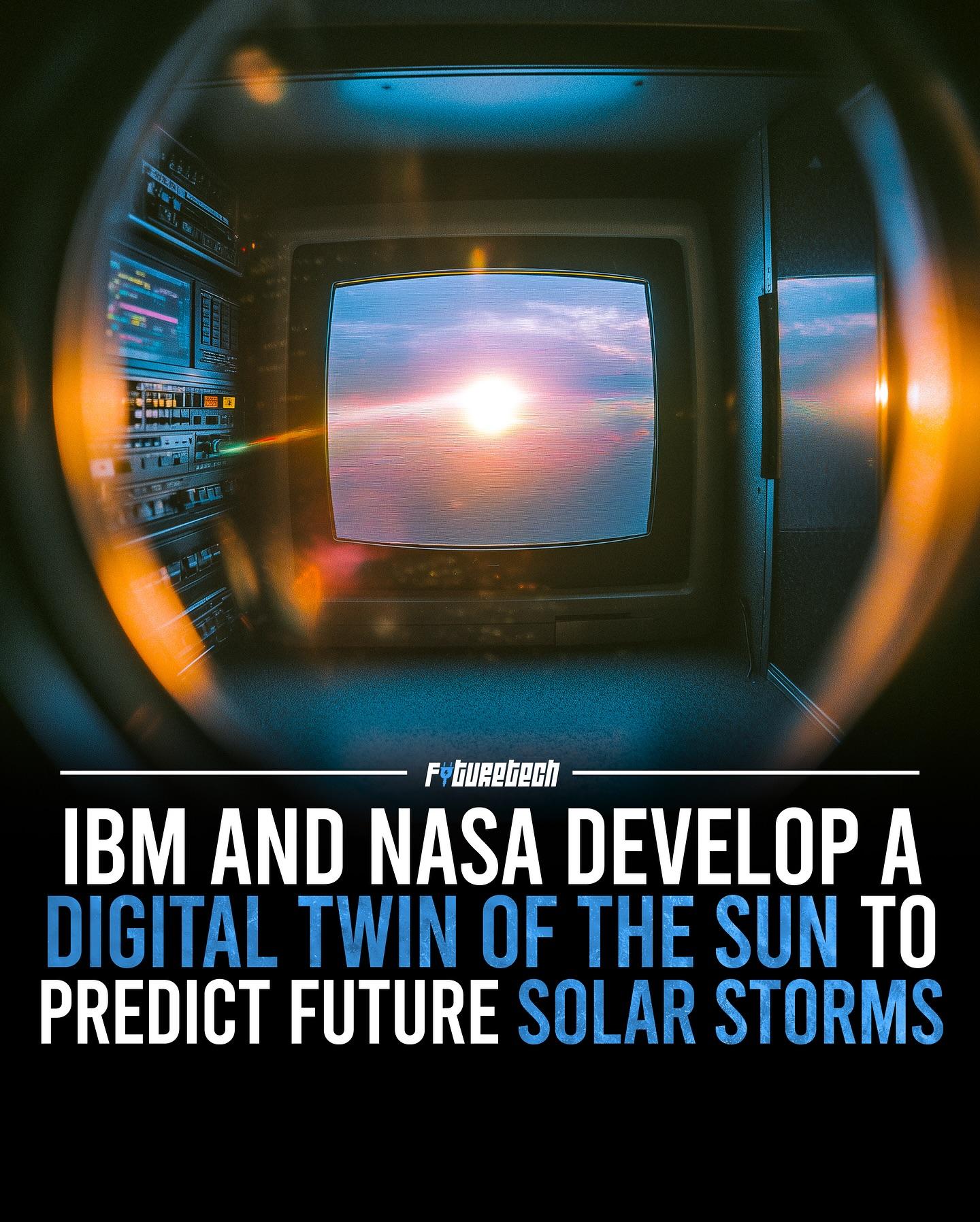
  • Artificial intelligence may soon unravel some of the Sun’s deepest mysteries. On August 20, IBM and NASA revealed Surya, a foundation model designed specifically for solar research. Trained on vast datasets of solar activity, the AI aims to sharpen predictions of solar weather and flares—sudden bursts of electromagnetic radiation that can endanger astronauts in orbit and disrupt communications on Earth.

    The project began by standardizing the diverse data formats used in solar studies, allowing the model to process them seamlessly. At its core is a long-range vision transformer, an advanced AI architecture capable of examining extremely high-resolution images and mapping connections between features, no matter how far apart they appear.

    To enhance efficiency, the team integrated a method called spectral gating. By filtering out noise, this technique reduces memory consumption by up to five percent while improving the clarity and accuracy of the processed data.

    @FutureTech | #FutureTech
    Artificial intelligence may soon unravel some of the Sun’s deepest mysteries. On August 20, IBM and NASA revealed Surya, a foundation model designed specifically for solar research. Trained on vast datasets of solar activity, the AI aims to sharpen predictions of solar weather and flares—sudden bursts of electromagnetic radiation that can endanger astronauts in orbit and disrupt communications on Earth. The project began by standardizing the diverse data formats used in solar studies, allowing the model to process them seamlessly. At its core is a long-range vision transformer, an advanced AI architecture capable of examining extremely high-resolution images and mapping connections between features, no matter how far apart they appear. To enhance efficiency, the team integrated a method called spectral gating. By filtering out noise, this technique reduces memory consumption by up to five percent while improving the clarity and accuracy of the processed data. @FutureTech | #FutureTech 🔌
    ·292 Views ·0 Reviews
  • For decades, Frank Sinatra mesmerized the world with his legendary voice, magnetic charm, and Rat Pack cool—but behind the spotlight, the FBI was quietly keeping tabs on him!

    Beginning in the 1940s, federal agents launched a long-running investigation into Sinatra’s suspected ties to organized crime. He was repeatedly spotted in the company of notorious mob figures like Sam Giancana and Lucky Luciano, fueling speculation that he served as a go-between for the mafia and powerful political figures. Some reports even suggest he played a role in helping John F. Kennedy gain crucial union backing through mob connections.

    Though Sinatra was never formally charged with any crime, the FBI amassed a staggering 2,403-page file detailing his alleged underworld links. The dossier contains surveillance logs, informant interviews, and reports covering everything from gambling operations to extortion threats.

    To this day, historians debate just how deep Sinatra’s ties went—and whether his celebrity status helped him evade legal consequences. One thing is clear: the Chairman of the Board’s legacy extends far beyond music.

    -
    #history #trending #photography #franksinatra #vintage #storytelling #explore
    For decades, Frank Sinatra mesmerized the world with his legendary voice, magnetic charm, and Rat Pack cool—but behind the spotlight, the FBI was quietly keeping tabs on him! Beginning in the 1940s, federal agents launched a long-running investigation into Sinatra’s suspected ties to organized crime. He was repeatedly spotted in the company of notorious mob figures like Sam Giancana and Lucky Luciano, fueling speculation that he served as a go-between for the mafia and powerful political figures. Some reports even suggest he played a role in helping John F. Kennedy gain crucial union backing through mob connections. Though Sinatra was never formally charged with any crime, the FBI amassed a staggering 2,403-page file detailing his alleged underworld links. The dossier contains surveillance logs, informant interviews, and reports covering everything from gambling operations to extortion threats. To this day, historians debate just how deep Sinatra’s ties went—and whether his celebrity status helped him evade legal consequences. One thing is clear: the Chairman of the Board’s legacy extends far beyond music. - #history #trending #photography #franksinatra #vintage #storytelling #explore
    ·248 Views ·0 Reviews
  • 'X-Men' director Jake Schreier says the upcoming film will be 'recognizably different from what came before'

    "The core idea of what 'X-Men' is involves complexity. It's an incredible opportunity with super interesting characters and [much] internal conflict. These characters are wrestling with their identity and place in the world-that's inherently interesting and complex material"

    He can't say much else because the 'red sniper dot is out there somewhere'

    FROM @theplaylist
    .
    .
    .
    Page For Every Major Movie Updates
    Share With Your Movie Lover Family/Friends
    Follow For More Update
    .
    .
    .
    #marvelstudios #marvelcharacters #marvelfans #jackschreier #thundebolts #director #movies #movieupdates #xmen #mutants #charlesxavier #magneto #cyclops #jeangrey #thecinemareporter
    'X-Men' director Jake Schreier says the upcoming film will be 'recognizably different from what came before' "The core idea of what 'X-Men' is involves complexity. It's an incredible opportunity with super interesting characters and [much] internal conflict. These characters are wrestling with their identity and place in the world-that's inherently interesting and complex material" He can't say much else because the 'red sniper dot is out there somewhere' FROM @theplaylist . . . Page For Every Major Movie Updates🎬 Share With Your Movie Lover Family/Friends🍿 Follow For More Update📽️ . . . #marvelstudios #marvelcharacters #marvelfans #jackschreier #thundebolts #director #movies #movieupdates #xmen #mutants #charlesxavier #magneto #cyclops #jeangrey #thecinemareporter
    ·676 Views ·0 Reviews
More Results
Techawks - Powered By Pantrade Blockchain https://techawks.com