• Myth vs. Fact: “Because Federal AI Legislation Stalled, Canadian AI Products Don’t Require Automated Decision Guardrails”
    A common architectural fallacy inside Canadian tech hubs—from the Waterloo-Toronto corridor to Vancouver and Montreal—is that Canada remains a relaxed regulatory sandbox for automated systems while federal bills get debated.


    Engineering leads keep confusing legislative delay on Parliament Hill with an absence of binding law.


    Here is the production reality:
    ❌ The Myth:
    “Since Bill C-27 and AIDA died on the order paper and federal privacy overhauls are still making their way through committee, we don't need automated decision-making (ADM) transparency or explainability hooks in production.”


    ✅ The Reality:
    Canada already has an active, GDPR-grade enforcement regime with statutory teeth: Quebec’s Law 25. It has no minimum size threshold, applies extraterritorially across Canada if you process data from a single Quebec resident, and enforces strict algorithmic transparency.


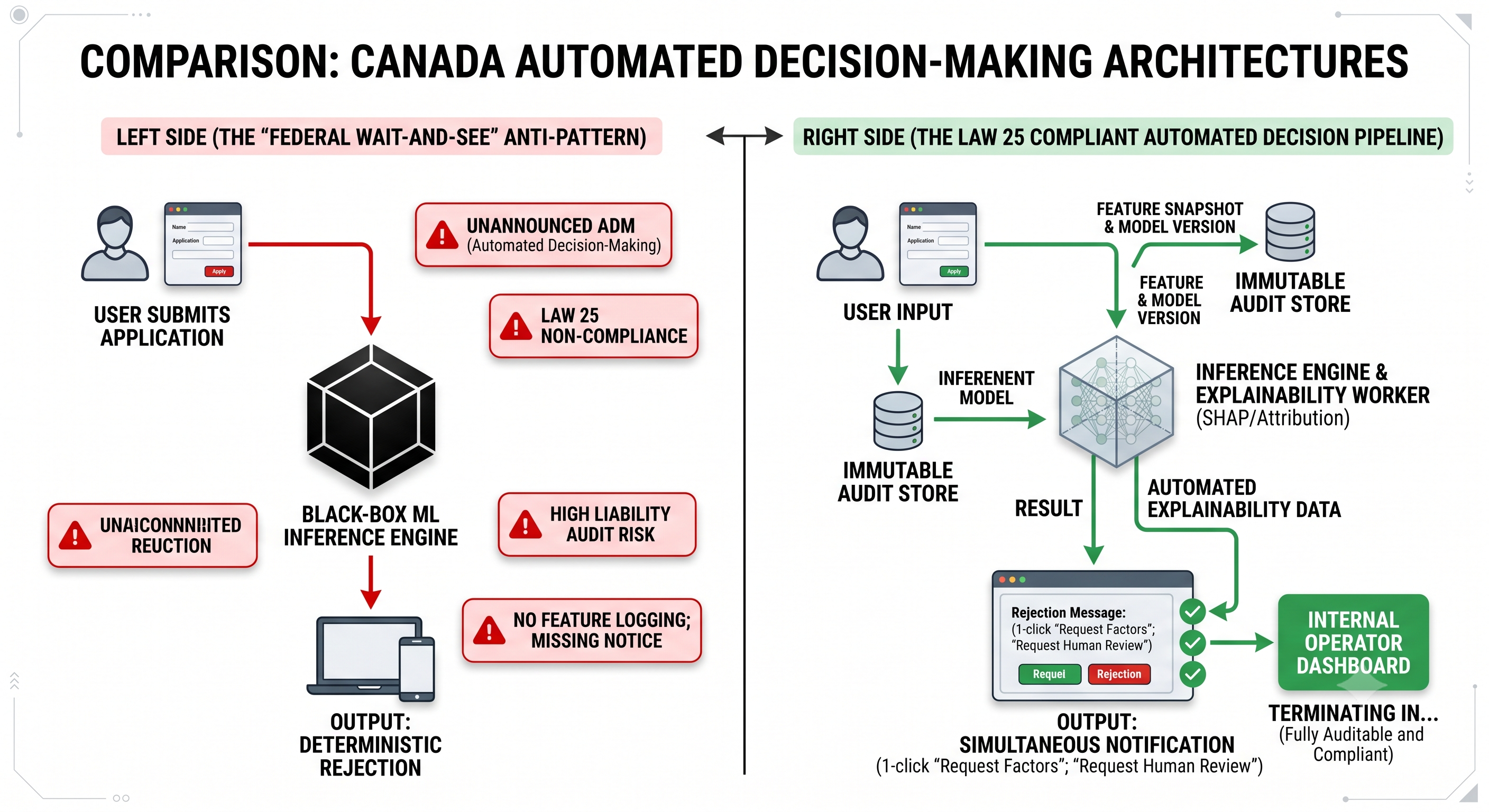
    If your microservices or predictive ML models make decisions that directly impact users (e.g., credit approvals, hiring screening, dynamic pricing, or risk tiering), relying on black-box inference triggers clear operational failures:


    Mandatory Point-of-Decision Notice
    Under Law 25, you cannot bury AI usage in a generic privacy policy. The moment an automated process makes a decision without human intervention, the system must explicitly inform the user no later than when the decision is communicated.


    The "Right to Factor Explainability" Endpoint
    Individuals have a statutory right to request:
    The specific personal data points consumed by the model.
    The primary parameters, weights, and factors that generated the decision.


    A direct mechanism to rectify incorrect source data.
    If your architecture treats inference as a one-way POST request without persisting the deterministic feature vector and SHAP/attribution weights, fulfilling this audit request within statutory timelines is nearly impossible.


    Statutory Human-in-the-Loop Remediation
    Compliance requires giving users the ability to submit observations and request a manual review by an authorized team member who can overturn the decision. With Commission d'accès à l'information (CAI) penalities scaling up to $25 million CAD or 4% of worldwide turnover, along with a statutory private right of action, algorithmic unaccountability carries immediate financial risk.


    The Production Blueprint for Canadian Tech:
    Decouple your feature extraction pipeline and log the exact input snapshot into an auditable telemetry store alongside the model version.
    Build an asynchronous explainability worker that computes feature importance at inference time, ready to serve transparent plain-text rationales.
    Provide an automated escalation queue routing contested decisions directly to internal human operators.


    Discussion Question
    How is your team handling automated decision logging: Are you instrumenting feature importance and explainability traces directly into your inference pipelines, or relying on ad-hoc post-mortems?


    CTA (Join Techawks Canada)
    Build robust, legally sound engineering systems that scale across provincial and international borders. Join Techawks Canada to connect with technical architects, software engineers, and engineering leaders building production-grade software across Canada.
    Myth vs. Fact: “Because Federal AI Legislation Stalled, Canadian AI Products Don’t Require Automated Decision Guardrails” A common architectural fallacy inside Canadian tech hubs—from the Waterloo-Toronto corridor to Vancouver and Montreal—is that Canada remains a relaxed regulatory sandbox for automated systems while federal bills get debated. Engineering leads keep confusing legislative delay on Parliament Hill with an absence of binding law. Here is the production reality: ❌ The Myth: “Since Bill C-27 and AIDA died on the order paper and federal privacy overhauls are still making their way through committee, we don't need automated decision-making (ADM) transparency or explainability hooks in production.” ✅ The Reality: Canada already has an active, GDPR-grade enforcement regime with statutory teeth: Quebec’s Law 25. It has no minimum size threshold, applies extraterritorially across Canada if you process data from a single Quebec resident, and enforces strict algorithmic transparency. If your microservices or predictive ML models make decisions that directly impact users (e.g., credit approvals, hiring screening, dynamic pricing, or risk tiering), relying on black-box inference triggers clear operational failures: Mandatory Point-of-Decision Notice Under Law 25, you cannot bury AI usage in a generic privacy policy. The moment an automated process makes a decision without human intervention, the system must explicitly inform the user no later than when the decision is communicated. The "Right to Factor Explainability" Endpoint Individuals have a statutory right to request: The specific personal data points consumed by the model. The primary parameters, weights, and factors that generated the decision. A direct mechanism to rectify incorrect source data. If your architecture treats inference as a one-way POST request without persisting the deterministic feature vector and SHAP/attribution weights, fulfilling this audit request within statutory timelines is nearly impossible. Statutory Human-in-the-Loop Remediation Compliance requires giving users the ability to submit observations and request a manual review by an authorized team member who can overturn the decision. With Commission d'accès à l'information (CAI) penalities scaling up to $25 million CAD or 4% of worldwide turnover, along with a statutory private right of action, algorithmic unaccountability carries immediate financial risk. The Production Blueprint for Canadian Tech: Decouple your feature extraction pipeline and log the exact input snapshot into an auditable telemetry store alongside the model version. Build an asynchronous explainability worker that computes feature importance at inference time, ready to serve transparent plain-text rationales. Provide an automated escalation queue routing contested decisions directly to internal human operators. Discussion Question How is your team handling automated decision logging: Are you instrumenting feature importance and explainability traces directly into your inference pipelines, or relying on ad-hoc post-mortems? CTA (Join Techawks Canada) Build robust, legally sound engineering systems that scale across provincial and international borders. Join Techawks Canada to connect with technical architects, software engineers, and engineering leaders building production-grade software across Canada.
    0 Commentarios 0 Acciones 224 Views 0 Vista previa
  • Myth vs. Fact: “Because the UK Has No AI Act, Your Deployment Has No Legal Guardrails”


    A pervasive misconception in the UK tech ecosystem is that because Westminster rejected the EU’s horizontal, monolithic AI Act in favour of a “pro-innovation” strategy, building AI products in the UK is essentially an unregulated greenfield.


    Engineers and founders keep confusing the absence of a single codified statute with an absence of statutory enforcement.


    Here is the architectural reality:


    ❌ The Myth:
    “The UK operates on voluntary AI safety pledges and light-touch principles. We don’t need formal AI compliance pipelines unless we sell directly into the EU.”


    ✅ The Reality:
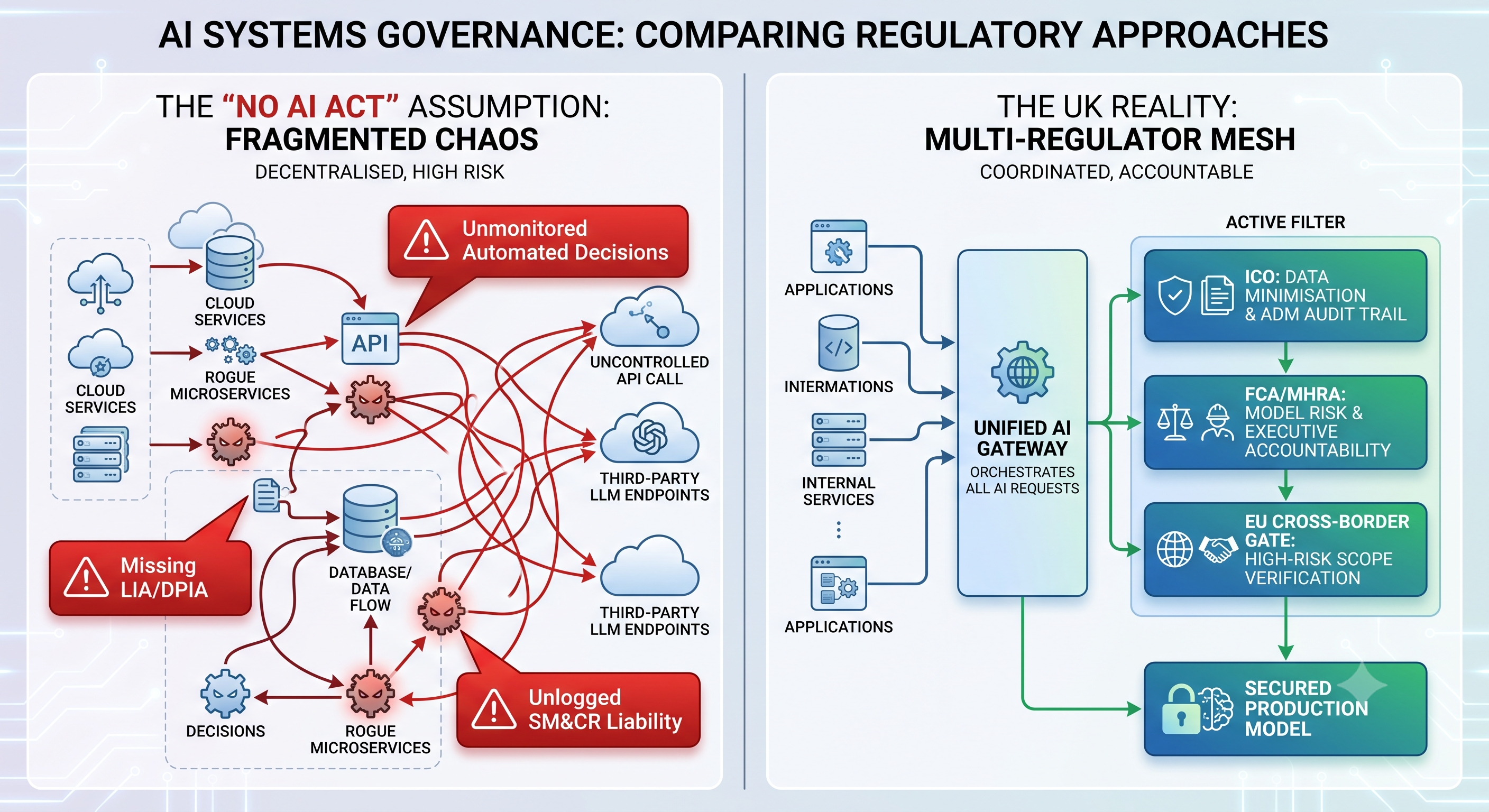
    The UK’s decentralised, sector-led regime is often harder to navigate than a unified framework. Instead of a single omnibus checklist, UK engineering teams are subject to overlapping enforcement from multiple regulators, each turning existing statutory powers into binding AI mandates.


    If you deploy models, automated decision-making (ADM), or algorithmic pipelines in the UK, your architecture is currently governed across three active fronts:


    The ICO’s Statutory AI Code of Practice & UK GDPR
    Under statutory duty, the Information Commissioner’s Office (ICO) enforces strict data protection rules around AI. Under the Data (Use and Access) framework, deploying automated decisions with legal or significant effects requires auditable safeguards: mandatory human-in-the-loop remediation, explainability traces, and pre-deployment Data Protection Impact Assessments (DPIAs).


    Sector Regulators with Real Teeth (FCA, MHRA, CMA)
    The UK doesn't have an "AI Police"—it has existing statutory bodies that have weaponised their core remits against algorithmic drift. If you deploy AI in fintech, the FCA’s Consumer Duty and Senior Managers Regime (SM&CR) holds individual executives directly accountable for discriminatory or hallucinated AI outputs. In healthcare, the MHRA treats diagnostic ML as medical software with strict lifecycle surveillance.


    The Extraterritorial Spillover
    If your UK-built API serves European users or processes downstream outputs used in the EU, your architecture falls directly under the EU AI Act’s extraterritorial scope anyway—including conformity assessments and post-market tracking for high-risk domains.


    The Engineering Takeaway for UK Builders:
    Stop treating AI governance as legal documentation after deployment. Implement an Immutable AI Asset Register and telemetry logs today: trace training datasets, log model inference checkpoints, and ensure every automated decision produces an auditable rationale.


    Discussion Question
    Is your UK engineering team maintaining a centralized AI model and tool register, or are departments quietly adopting black-box APIs without a documented DPIA?


    CTA (Join Techawks UK)
    Cut through policy confusion with practical, production-ready engineering standards. Join Techawks UK to connect with tech founders, systems architects, and engineering leaders building compliant, world-class technology across the UK.
    Myth vs. Fact: “Because the UK Has No AI Act, Your Deployment Has No Legal Guardrails” A pervasive misconception in the UK tech ecosystem is that because Westminster rejected the EU’s horizontal, monolithic AI Act in favour of a “pro-innovation” strategy, building AI products in the UK is essentially an unregulated greenfield. Engineers and founders keep confusing the absence of a single codified statute with an absence of statutory enforcement. Here is the architectural reality: ❌ The Myth: “The UK operates on voluntary AI safety pledges and light-touch principles. We don’t need formal AI compliance pipelines unless we sell directly into the EU.” ✅ The Reality: The UK’s decentralised, sector-led regime is often harder to navigate than a unified framework. Instead of a single omnibus checklist, UK engineering teams are subject to overlapping enforcement from multiple regulators, each turning existing statutory powers into binding AI mandates. If you deploy models, automated decision-making (ADM), or algorithmic pipelines in the UK, your architecture is currently governed across three active fronts: The ICO’s Statutory AI Code of Practice & UK GDPR Under statutory duty, the Information Commissioner’s Office (ICO) enforces strict data protection rules around AI. Under the Data (Use and Access) framework, deploying automated decisions with legal or significant effects requires auditable safeguards: mandatory human-in-the-loop remediation, explainability traces, and pre-deployment Data Protection Impact Assessments (DPIAs). Sector Regulators with Real Teeth (FCA, MHRA, CMA) The UK doesn't have an "AI Police"—it has existing statutory bodies that have weaponised their core remits against algorithmic drift. If you deploy AI in fintech, the FCA’s Consumer Duty and Senior Managers Regime (SM&CR) holds individual executives directly accountable for discriminatory or hallucinated AI outputs. In healthcare, the MHRA treats diagnostic ML as medical software with strict lifecycle surveillance. The Extraterritorial Spillover If your UK-built API serves European users or processes downstream outputs used in the EU, your architecture falls directly under the EU AI Act’s extraterritorial scope anyway—including conformity assessments and post-market tracking for high-risk domains. The Engineering Takeaway for UK Builders: Stop treating AI governance as legal documentation after deployment. Implement an Immutable AI Asset Register and telemetry logs today: trace training datasets, log model inference checkpoints, and ensure every automated decision produces an auditable rationale. Discussion Question Is your UK engineering team maintaining a centralized AI model and tool register, or are departments quietly adopting black-box APIs without a documented DPIA? CTA (Join Techawks UK) Cut through policy confusion with practical, production-ready engineering standards. Join Techawks UK to connect with tech founders, systems architects, and engineering leaders building compliant, world-class technology across the UK.
    0 Commentarios 0 Acciones 234 Views 0 Vista previa
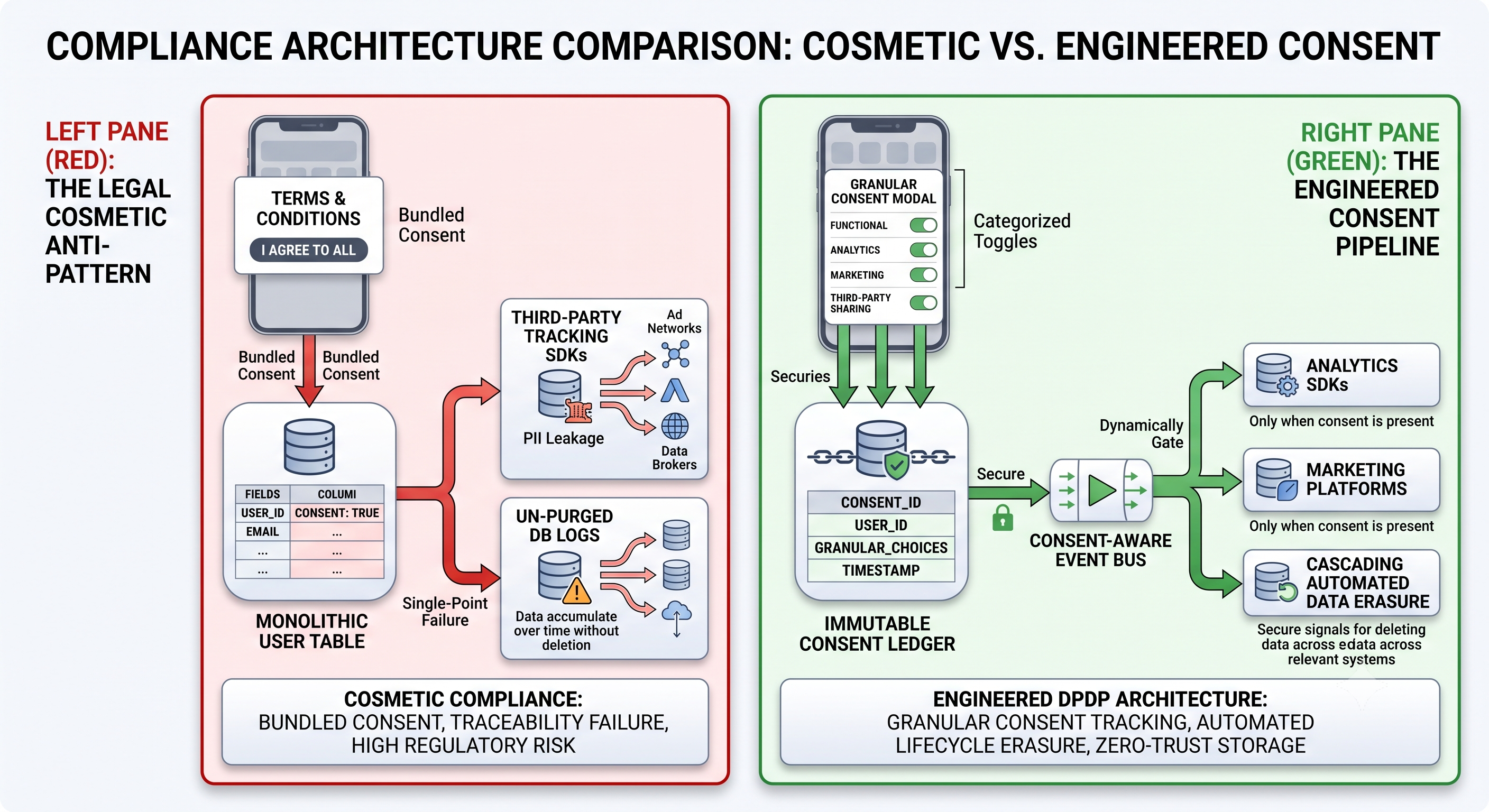
  • The DPDP Compliance Mirage: Why a Privacy Policy Update Won’t Save Indian Startups from ₹250 Crore Penalties


    Across the Indian tech ecosystem—from Bengaluru SaaS ventures to Mumbai fintechs—a dangerous misconception has set in:


    ❌ The Myth: "DPDP compliance is a legal check-the-box exercise. Just update terms, publish a grievance officer email, and show a 'By signing up, you agree' consent banner."


    ✅ The Reality: India’s Digital Personal Data Protection framework strictly bans bundled consent, pre-ticked checkboxes, and unconditional terms of service. True compliance requires granular consent ledgers, purpose-limited data lifecycles, and automated Right-to-Erasure workflows.


    Where Legacy Indian Tech Architectures Will Break:
    The Single-Boolean Consent Flaw: Storing is_consent_given = true on your users table will fail compliance scrutiny. The law mandates granular, unbundled consent across specific processing purposes (e.g., core fulfillment vs. promotional analytics vs. third-party SDK sharing). If challenged, you must provide verifiable proof of the exact policy version and granular permissions granted at that timestamp.


    The "Soft-Delete" Illusion: In most Indian codebases, user deletion is merely setting is_deleted = true. Under DPDP’s Right to Erasure, holding plaintext personally identifiable information (PII) indefinitely across transaction logs, read replicas, and vector embeddings without an ongoing lawful purpose creates direct legal exposure.


    Third-Party Telemetry Leaks: When an app initializes third-party analytics, crash reporting, or advertising SDKs before explicit consent is granted, customer PII and device fingerprints get transmitted externally. Under the Act, the data fiduciary remains strictly liable for processors down the pipeline.


    The Engineering Blueprint for DPDP Readiness:
    Build an Immutable Consent Ledger: Implement a dedicated event log tracking User_ID, Purpose_Category, Policy_Version_Hash, and Timestamp. Every state change (opt-in or revocation) must publish an event to message brokers.


    Implement Dynamic Feature Gating: Decouple third-party trackers and non-essential APIs from initial app boot. Gate non-essential SDK network calls behind dynamic consent flags queried at runtime.


    Automate Cascading Erasure Pipelines: Build asynchronous workers (Kafka/SQS) that listen for withdrawal/deletion events to purge or irreversibly cryptographically tokenize customer PII across caching layers, data warehouses, and downstream microservices.


    The takeaway: A privacy policy written by a top law firm cannot compensate for an un-auditable database. If your engineering schema cannot programmatically trace and revoke consent per data field, your platform remains exposed.


    Discussion Question
    Has your team audited third-party analytics and ad SDKs for DPDP compliance, or are trackers still firing before explicit user consent is registered?


    CTA (Join Techawks India)
    Join Techawks India to discuss local engineering regulations, dissect sovereign tech architectures, and scale resilient products with India’s leading technologists.
    The DPDP Compliance Mirage: Why a Privacy Policy Update Won’t Save Indian Startups from ₹250 Crore Penalties Across the Indian tech ecosystem—from Bengaluru SaaS ventures to Mumbai fintechs—a dangerous misconception has set in: ❌ The Myth: "DPDP compliance is a legal check-the-box exercise. Just update terms, publish a grievance officer email, and show a 'By signing up, you agree' consent banner." ✅ The Reality: India’s Digital Personal Data Protection framework strictly bans bundled consent, pre-ticked checkboxes, and unconditional terms of service. True compliance requires granular consent ledgers, purpose-limited data lifecycles, and automated Right-to-Erasure workflows. Where Legacy Indian Tech Architectures Will Break: The Single-Boolean Consent Flaw: Storing is_consent_given = true on your users table will fail compliance scrutiny. The law mandates granular, unbundled consent across specific processing purposes (e.g., core fulfillment vs. promotional analytics vs. third-party SDK sharing). If challenged, you must provide verifiable proof of the exact policy version and granular permissions granted at that timestamp. The "Soft-Delete" Illusion: In most Indian codebases, user deletion is merely setting is_deleted = true. Under DPDP’s Right to Erasure, holding plaintext personally identifiable information (PII) indefinitely across transaction logs, read replicas, and vector embeddings without an ongoing lawful purpose creates direct legal exposure. Third-Party Telemetry Leaks: When an app initializes third-party analytics, crash reporting, or advertising SDKs before explicit consent is granted, customer PII and device fingerprints get transmitted externally. Under the Act, the data fiduciary remains strictly liable for processors down the pipeline. The Engineering Blueprint for DPDP Readiness: Build an Immutable Consent Ledger: Implement a dedicated event log tracking User_ID, Purpose_Category, Policy_Version_Hash, and Timestamp. Every state change (opt-in or revocation) must publish an event to message brokers. Implement Dynamic Feature Gating: Decouple third-party trackers and non-essential APIs from initial app boot. Gate non-essential SDK network calls behind dynamic consent flags queried at runtime. Automate Cascading Erasure Pipelines: Build asynchronous workers (Kafka/SQS) that listen for withdrawal/deletion events to purge or irreversibly cryptographically tokenize customer PII across caching layers, data warehouses, and downstream microservices. The takeaway: A privacy policy written by a top law firm cannot compensate for an un-auditable database. If your engineering schema cannot programmatically trace and revoke consent per data field, your platform remains exposed. Discussion Question Has your team audited third-party analytics and ad SDKs for DPDP compliance, or are trackers still firing before explicit user consent is registered? CTA (Join Techawks India) Join Techawks India to discuss local engineering regulations, dissect sovereign tech architectures, and scale resilient products with India’s leading technologists.
    0 Commentarios 0 Acciones 250 Views 0 Vista previa
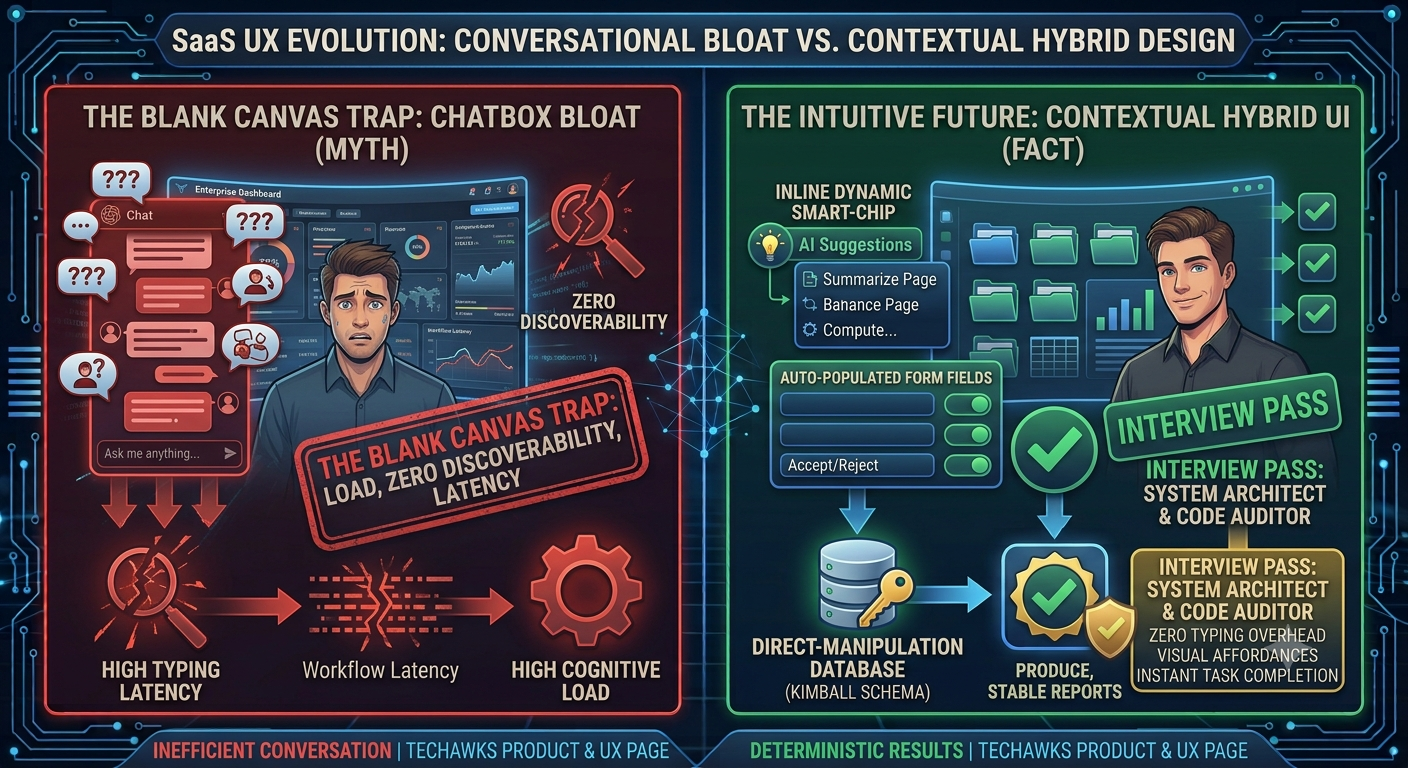
  • The Conversational Crutch: Why Slapping a Chatbox on Your SaaS Is Lazy Product Design


    As generative AI toolkits became plug-and-play, product roadmaps fell victim to a massive industry misconception:


    ❌ The Myth: "Chat is the universal interface of the future. Replacing menus, forms, and control panels with an open prompt box eliminates UI complexity and gives users ultimate flexibility."


    ✅ The Reality: An empty prompt box forces maximum cognitive load onto the user. It trades clear affordances for a blank-canvas paralysis, slow typing speeds, and non-deterministic UX.


    Why the "Everything-as-a-Chat" Pattern Fails:
    The Death of Discoverability: Traditional graphical user interfaces (GUIs) communicate what is possible through visible affordances—buttons, sliders, toggles, and filters. A blinking cursor in a chatbox tells the user nothing about system capabilities, boundary limits, or failure states.


    The Prompt Tax (Input Friction): Pointing and clicking takes 200 milliseconds. Typing a structured, context-rich prompt takes 30 seconds. Forcing users to articulate routine operations in natural language slows down workflows rather than accelerating them.


    Loss of Spatial State & Correction Loops: In a GUI, tweaking a single parameter (like a date range or toggle) is an instant, localized adjustment. In a conversational interface, adjusting one variable requires re-prompting, reading a full response stream, and hoping the model doesn't drift or alter previous variables.


    The Better Pattern: Hybrid Contextual Micro-Interactions
    World-class AI UX embeds intelligence directly into existing UI paradigms rather than segregating it into a floating chat drawer:


    Generative Affordances & Inline Controls: Instead of asking the user to prompt, anticipate their next step. Offer contextual AI suggestions as inline chips, hover-state shortcuts, or dynamic form pre-fills that can be accepted with a single click.


    Bi-Directional Canvas UX: Keep the artifact (document, spreadsheet, canvas, or dashboard) front-and-center. Let the AI manipulate the canvas directly while keeping familiar UI levers (sliders, diff reviews, undo buttons) intact for tactile human control.


    Scaffolding Over Blank Inputs: Replace the open prompt box with structured scaffolding—pre-built system templates, parameter slot-filling, and guided prompt builders that constrain the solution space.


    The takeaway: Great UX is about reducing cognitive overhead, not showcasing model capabilities. The most powerful AI interface isn't a conversation—it's an interface so frictionless that the user barely realizes an AI is doing the heavy lifting.


    Discussion Question
    Where in your product has conversational AI actually reduced task-completion time, and where did it just add an unnecessary layer of typing?


    CTA (Join Product, UX & Design)
    Join the Product, UX & Design community to debate emerging interaction patterns, dissect real-world design systems, and build intuitive, human-centered products.
    The Conversational Crutch: Why Slapping a Chatbox on Your SaaS Is Lazy Product Design As generative AI toolkits became plug-and-play, product roadmaps fell victim to a massive industry misconception: ❌ The Myth: "Chat is the universal interface of the future. Replacing menus, forms, and control panels with an open prompt box eliminates UI complexity and gives users ultimate flexibility." ✅ The Reality: An empty prompt box forces maximum cognitive load onto the user. It trades clear affordances for a blank-canvas paralysis, slow typing speeds, and non-deterministic UX. Why the "Everything-as-a-Chat" Pattern Fails: The Death of Discoverability: Traditional graphical user interfaces (GUIs) communicate what is possible through visible affordances—buttons, sliders, toggles, and filters. A blinking cursor in a chatbox tells the user nothing about system capabilities, boundary limits, or failure states. The Prompt Tax (Input Friction): Pointing and clicking takes 200 milliseconds. Typing a structured, context-rich prompt takes 30 seconds. Forcing users to articulate routine operations in natural language slows down workflows rather than accelerating them. Loss of Spatial State & Correction Loops: In a GUI, tweaking a single parameter (like a date range or toggle) is an instant, localized adjustment. In a conversational interface, adjusting one variable requires re-prompting, reading a full response stream, and hoping the model doesn't drift or alter previous variables. The Better Pattern: Hybrid Contextual Micro-Interactions World-class AI UX embeds intelligence directly into existing UI paradigms rather than segregating it into a floating chat drawer: Generative Affordances & Inline Controls: Instead of asking the user to prompt, anticipate their next step. Offer contextual AI suggestions as inline chips, hover-state shortcuts, or dynamic form pre-fills that can be accepted with a single click. Bi-Directional Canvas UX: Keep the artifact (document, spreadsheet, canvas, or dashboard) front-and-center. Let the AI manipulate the canvas directly while keeping familiar UI levers (sliders, diff reviews, undo buttons) intact for tactile human control. Scaffolding Over Blank Inputs: Replace the open prompt box with structured scaffolding—pre-built system templates, parameter slot-filling, and guided prompt builders that constrain the solution space. The takeaway: Great UX is about reducing cognitive overhead, not showcasing model capabilities. The most powerful AI interface isn't a conversation—it's an interface so frictionless that the user barely realizes an AI is doing the heavy lifting. Discussion Question Where in your product has conversational AI actually reduced task-completion time, and where did it just add an unnecessary layer of typing? CTA (Join Product, UX & Design) Join the Product, UX & Design community to debate emerging interaction patterns, dissect real-world design systems, and build intuitive, human-centered products.
    0 Commentarios 0 Acciones 243 Views 0 Vista previa
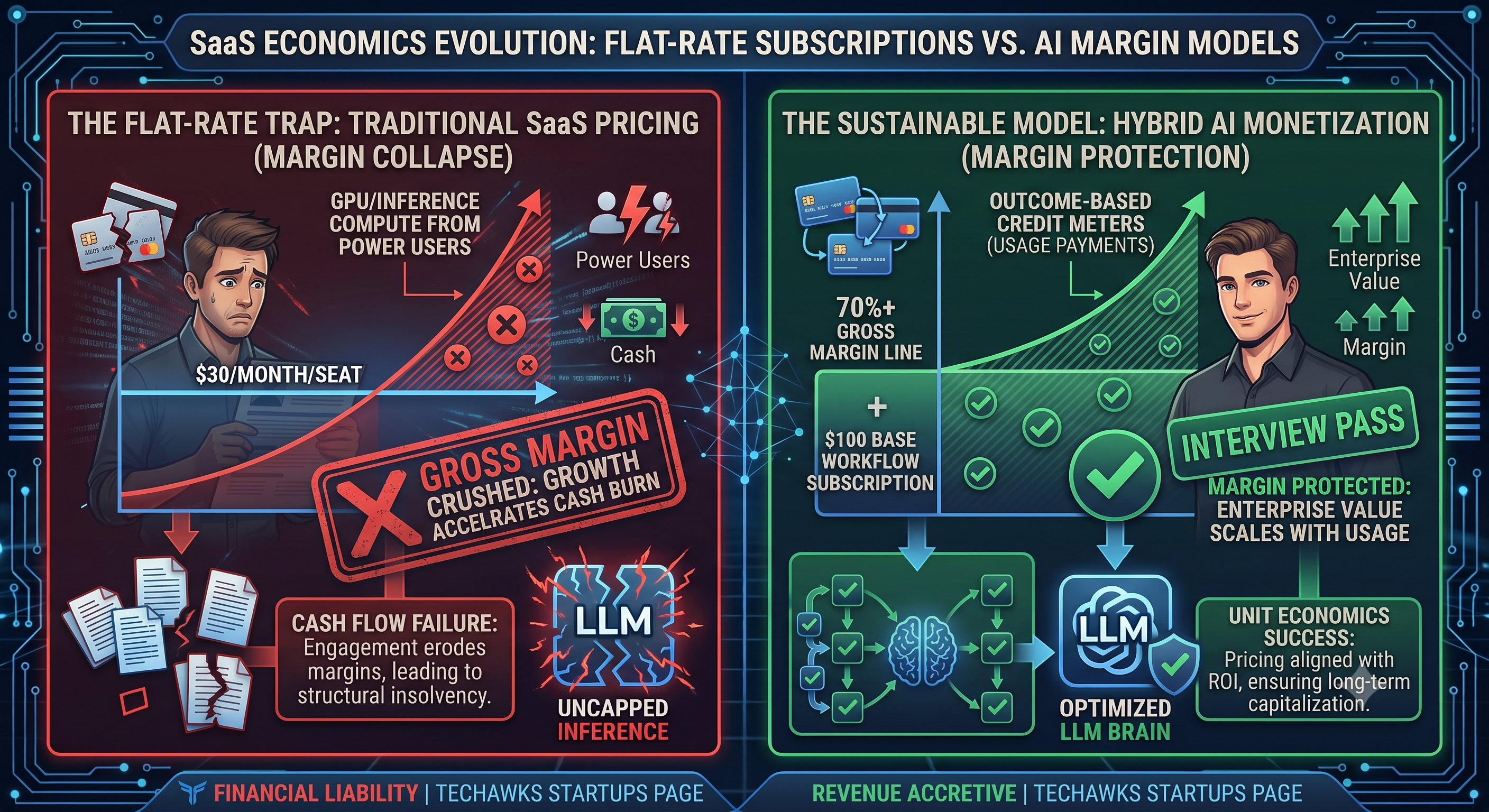
  • The Flat-Rate Trap: Why Classic SaaS Pricing Is Silently Bankrupting AI Startups


    Founders raised on the playbook of the 2010s are running into a structural wall:


    ❌ The Myth: "Charge a flat $30 to $50 per-seat monthly subscription. Software has near-zero marginal cost, so more daily active users automatically equals higher margins and enterprise valuation."


    ✅ The Reality: In traditional SaaS, the marginal cost of serving user number 10,000 was effectively zero. In AI-native applications, growth without metered unit economics scales cost faster than revenue. Power users don't boost your bottom line—they erode your gross margins.


    The Anatomy of the Margin Collapse:
    The Variable Cost-of-Goods-Sold (COGS) Reality: In conventional B2B software, hosting and infrastructure make up roughly 10% to 15% of revenue, leaving gross margins of 80% to 85%. In AI-native products, inference compute, token egress, embedding lookups, and multi-agent loops sit directly inside COGS.


    The Power-User Inversion: On a flat-rate tier, casual users subsidize power users. But as your core audience matures, a customer running complex multi-step agent workflows can easily cost $60/month in API/GPU compute against a $30/month subscription—turning your most engaged champions into your largest financial liabilities.


    The Valuation Penalty: Late-seed and Series A investors evaluate gross margins above all else. Startups posting 40% gross margins get valued like low-margin IT services rather than high-multiple software companies.


    How High-Defensibility Founders Price Today:
    Decouple Platform Access from Execution Units: Move to a hybrid model. Charge a predictable base subscription for UI, workflow integrations, and seat permissions, paired with credit-based or metered billing for high-compute model invocations.


    Price by Outcome, Not Just Per-Seat: Instead of billing per user seat, align pricing with delivered business units (e.g., contracts audited, tickets resolved, database schemas migrated). This anchors price to real ROI rather than raw token usage.


    Implement Tiered Inference Routing: Don't route simple queries to high-cost reasoning models. Dynamically downgrade casual extraction and classification to small open-weight models, preserving expensive inference budgets only for complex reasoning tasks.


    The takeaway: Building a defensible startup isn't just about owning proprietary data—it's about surviving your own product engagement. If your unit economics can't survive a power user, your business model is a liability disguised as traction.


    Discussion Question
    What does your gross margin look like after factoring in model inference and GPU compute? Have you shifted to hybrid or credit-based pricing, or are you still relying on flat per-seat subscriptions?


    CTA (Join Startup Founders & Entrepreneurs)
    Join the Startup Founders & Entrepreneurs community to benchmark unit economics, dissect real AI pricing strategies, and build defensible, capital-efficient businesses.
    The Flat-Rate Trap: Why Classic SaaS Pricing Is Silently Bankrupting AI Startups Founders raised on the playbook of the 2010s are running into a structural wall: ❌ The Myth: "Charge a flat $30 to $50 per-seat monthly subscription. Software has near-zero marginal cost, so more daily active users automatically equals higher margins and enterprise valuation." ✅ The Reality: In traditional SaaS, the marginal cost of serving user number 10,000 was effectively zero. In AI-native applications, growth without metered unit economics scales cost faster than revenue. Power users don't boost your bottom line—they erode your gross margins. The Anatomy of the Margin Collapse: The Variable Cost-of-Goods-Sold (COGS) Reality: In conventional B2B software, hosting and infrastructure make up roughly 10% to 15% of revenue, leaving gross margins of 80% to 85%. In AI-native products, inference compute, token egress, embedding lookups, and multi-agent loops sit directly inside COGS. The Power-User Inversion: On a flat-rate tier, casual users subsidize power users. But as your core audience matures, a customer running complex multi-step agent workflows can easily cost $60/month in API/GPU compute against a $30/month subscription—turning your most engaged champions into your largest financial liabilities. The Valuation Penalty: Late-seed and Series A investors evaluate gross margins above all else. Startups posting 40% gross margins get valued like low-margin IT services rather than high-multiple software companies. How High-Defensibility Founders Price Today: Decouple Platform Access from Execution Units: Move to a hybrid model. Charge a predictable base subscription for UI, workflow integrations, and seat permissions, paired with credit-based or metered billing for high-compute model invocations. Price by Outcome, Not Just Per-Seat: Instead of billing per user seat, align pricing with delivered business units (e.g., contracts audited, tickets resolved, database schemas migrated). This anchors price to real ROI rather than raw token usage. Implement Tiered Inference Routing: Don't route simple queries to high-cost reasoning models. Dynamically downgrade casual extraction and classification to small open-weight models, preserving expensive inference budgets only for complex reasoning tasks. The takeaway: Building a defensible startup isn't just about owning proprietary data—it's about surviving your own product engagement. If your unit economics can't survive a power user, your business model is a liability disguised as traction. Discussion Question What does your gross margin look like after factoring in model inference and GPU compute? Have you shifted to hybrid or credit-based pricing, or are you still relying on flat per-seat subscriptions? CTA (Join Startup Founders & Entrepreneurs) Join the Startup Founders & Entrepreneurs community to benchmark unit economics, dissect real AI pricing strategies, and build defensible, capital-efficient businesses.
    0 Commentarios 0 Acciones 79 Views 0 Vista previa
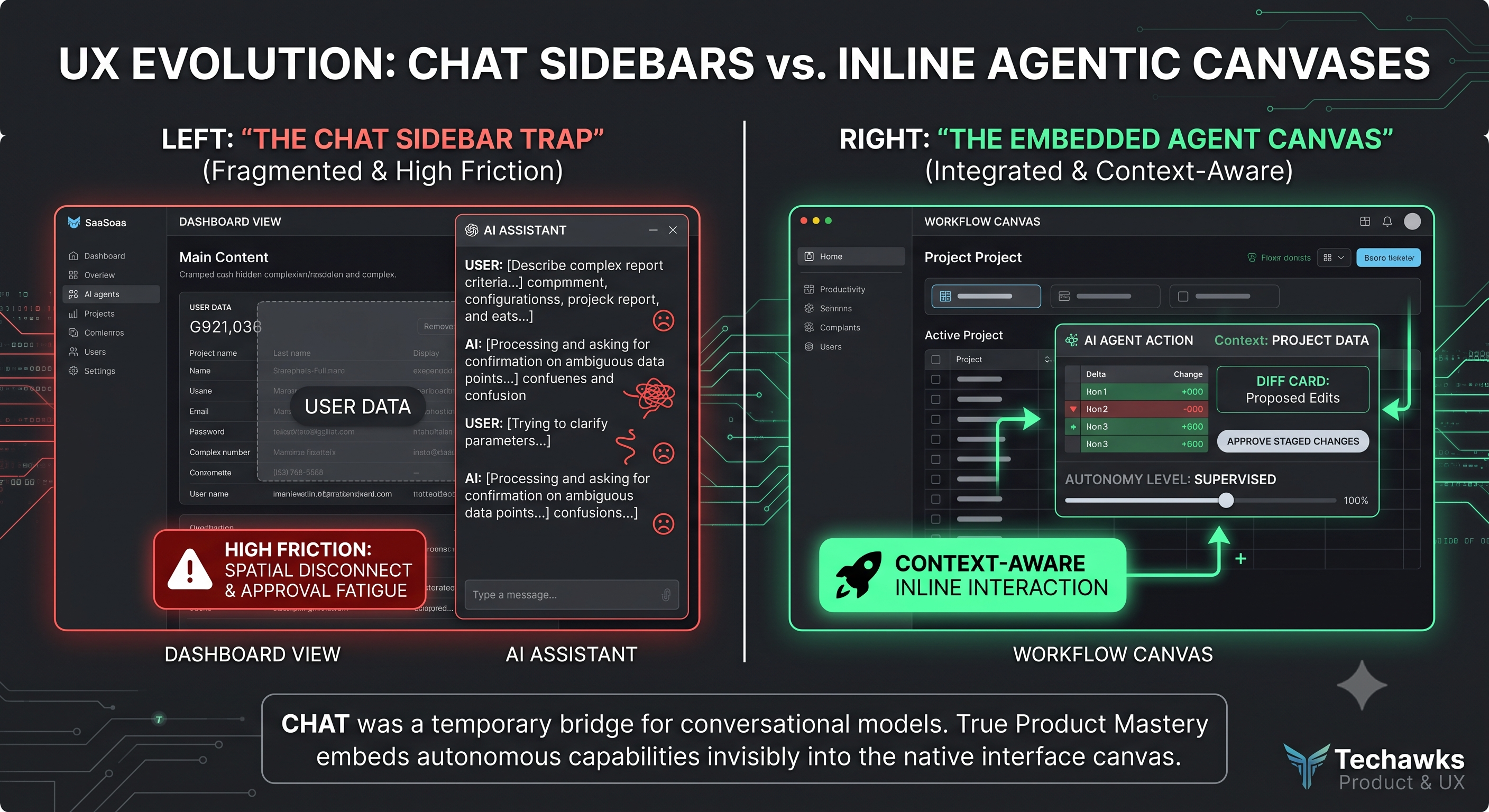
  • The Chat Window Is a UX Failure: Why Enterprise Workflows Are Rejecting Conversational Interfaces


    Product teams across SaaS made a collective design bet: “Natural language is the universal interface. Replace complex dashboards with a chat bar, and users will type their way to value.”


    Users aren’t adopting it. Instead, they bounce back to rigid tables and buttons.


    The conversational paradigm collapses in enterprise software due to three core interaction design breakdowns:


    The Blank Canvas Tax (Zero Affordance): A text input offers zero visual discovery. Users don’t want to guess magical prompt syntax to extract a report; traditional UI buttons and filter chips visually map system capabilities directly into the user’s mental model.


    Context Fragmentation: Forcing a user to jump out of their working canvas into a narrow side-drawer chat window fragments spatial context. When an agent acts on complex tables or canvas nodes, forcing the explanation into a vertical text stream forces users to read through terminal-like walls of prose just to verify an edit.


    The "Confirm Everything" Approval Fatigue: Chatbot workflows often alternate between two extremes: executing actions blindly (destroying trust) or asking "Are you sure?" at every trivial step (destroying velocity).


    The Product Shift: Embedded, Inline Agentic UX


    High-performing product designers are ditching chat sidebars for Contextual Canvas Primitives:


    Diff Over Dialogue: Don't tell the user what changed in conversational text. Render inline visual diffs (strikethroughs, color-coded delta rows, preview cards) directly inside the artifact where the work lives.


    Granular Checkpoint Cards: Reserve human-in-the-loop gates strictly for high-blast-radius mutations (e.g., spending budget, deleting records, emailing external clients). Make low-stakes, reversible edits instant, backed by a persistent global undo/replay buffer.


    The Shared Autonomy Dial: Allow users to calibrate agent delegation per task:


    Draft/Propose Mode: Agent produces editable staged states.


    Supervised Mode: Agent auto-executes routine steps and pauses at critical branches.


    Delegated Mode: Agent executes autonomously with a clean historical audit log.


    Chat was a temporary bridge for conversational models. True product mastery embeds autonomous capabilities invisibly into the native interface canvas.


    Discussion Question
    Where in your product has a conversational interface actually reduced friction, and where did it just add an unnecessary layer of prompt-typing over a button?


    CTA
    Design intuitive user journeys, master AI interaction paradigms, and lead the future of user experience. Join Product, UX & Design at Techawks Product & UX.
    The Chat Window Is a UX Failure: Why Enterprise Workflows Are Rejecting Conversational Interfaces Product teams across SaaS made a collective design bet: “Natural language is the universal interface. Replace complex dashboards with a chat bar, and users will type their way to value.” Users aren’t adopting it. Instead, they bounce back to rigid tables and buttons. The conversational paradigm collapses in enterprise software due to three core interaction design breakdowns: The Blank Canvas Tax (Zero Affordance): A text input offers zero visual discovery. Users don’t want to guess magical prompt syntax to extract a report; traditional UI buttons and filter chips visually map system capabilities directly into the user’s mental model. Context Fragmentation: Forcing a user to jump out of their working canvas into a narrow side-drawer chat window fragments spatial context. When an agent acts on complex tables or canvas nodes, forcing the explanation into a vertical text stream forces users to read through terminal-like walls of prose just to verify an edit. The "Confirm Everything" Approval Fatigue: Chatbot workflows often alternate between two extremes: executing actions blindly (destroying trust) or asking "Are you sure?" at every trivial step (destroying velocity). The Product Shift: Embedded, Inline Agentic UX High-performing product designers are ditching chat sidebars for Contextual Canvas Primitives: Diff Over Dialogue: Don't tell the user what changed in conversational text. Render inline visual diffs (strikethroughs, color-coded delta rows, preview cards) directly inside the artifact where the work lives. Granular Checkpoint Cards: Reserve human-in-the-loop gates strictly for high-blast-radius mutations (e.g., spending budget, deleting records, emailing external clients). Make low-stakes, reversible edits instant, backed by a persistent global undo/replay buffer. The Shared Autonomy Dial: Allow users to calibrate agent delegation per task: Draft/Propose Mode: Agent produces editable staged states. Supervised Mode: Agent auto-executes routine steps and pauses at critical branches. Delegated Mode: Agent executes autonomously with a clean historical audit log. Chat was a temporary bridge for conversational models. True product mastery embeds autonomous capabilities invisibly into the native interface canvas. Discussion Question Where in your product has a conversational interface actually reduced friction, and where did it just add an unnecessary layer of prompt-typing over a button? CTA Design intuitive user journeys, master AI interaction paradigms, and lead the future of user experience. Join Product, UX & Design at Techawks Product & UX.
    0 Commentarios 0 Acciones 158 Views 0 Vista previa
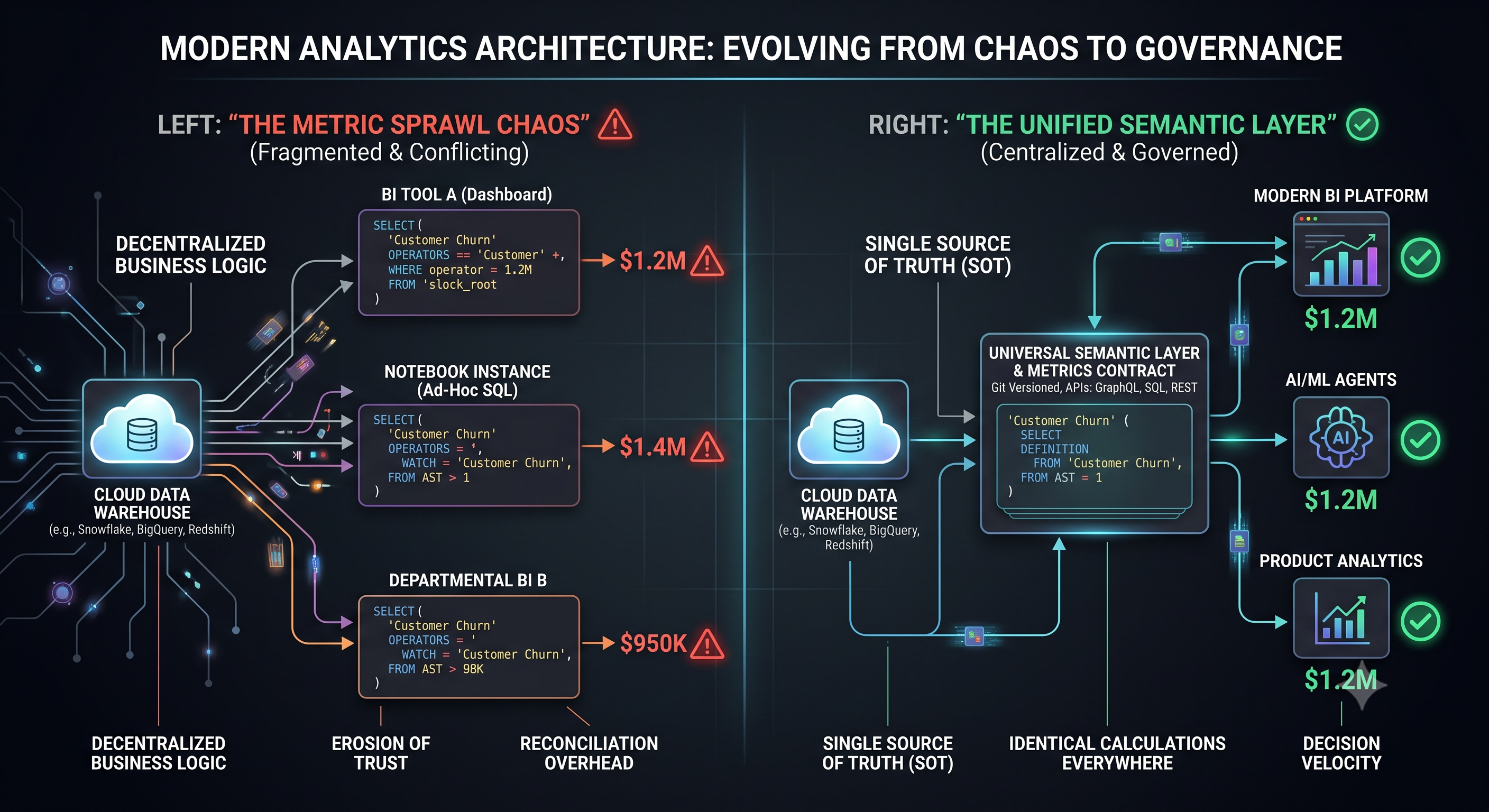
  • The Metric Drift Disaster: Why Your Data Warehouse Is Just a Fragmented Math Engine


    Modern analytics stacks made data ingestion and physical storage cheap, but they spawned a quiet crisis: distributed metric logic.


    When organizations give every team their own BI tool, notebook instance, or downstream dashboard, business logic naturally scatters across hundreds of un-versioned SQL models. Finance calculates "Revenue" excluding pending refunds, Sales calculates it including pipeline promises, and Product filters out internal trial accounts via an undocumented WHERE clause.


    The result is metric drift: data teams spend up to 40% of their time reconciling why downstream numbers don't match, eroding stakeholder trust in the warehouse.


    The Fix: Elevate the Universal Semantic Layer


    Stop embedding mission-critical KPI formulas inside individual BI dashboard queries or one-off dbt models. Decouple your business logic from both your physical storage and your presentation layer:


    Centralize Semantics as Code: Treat definitions like software. Write your dimensions and measures once into a governed semantic catalog (using tools like Cube, dbt Semantic Layer, or headless metrics layers) backed by Git version control.


    Decouple Presentation from Aggregation: Ban raw SQL aggregation inside BI tools. Your dashboards, AI agents, and notebooks should query standard APIs that resolve against the central semantic contract, guaranteeing identical calculations everywhere.


    Enforce Upstream Data Contracts: Combine semantic definitions with data contracts at the ingestion boundary. When upstream application schemas change, automated CI pipelines must block breaking shifts before they silently invalidate downstream metric models.


    Dashboards are just viewing panes. If your metrics aren't governed in an explicit layer between your warehouse and your users, you aren't building a single source of truth—you are running an unverified calculation factory.


    Discussion Question
    How does your team eliminate metric discrepancies: do you enforce a centralized semantic layer, or are you still chasing down divergent SQL queries across multiple dashboards?


    CTA
    Master modern analytics architecture, build unified semantic models, and eliminate data fragmentation. Join Data Science & Analytics at Techawks Data & Analytics.
    The Metric Drift Disaster: Why Your Data Warehouse Is Just a Fragmented Math Engine Modern analytics stacks made data ingestion and physical storage cheap, but they spawned a quiet crisis: distributed metric logic. When organizations give every team their own BI tool, notebook instance, or downstream dashboard, business logic naturally scatters across hundreds of un-versioned SQL models. Finance calculates "Revenue" excluding pending refunds, Sales calculates it including pipeline promises, and Product filters out internal trial accounts via an undocumented WHERE clause. The result is metric drift: data teams spend up to 40% of their time reconciling why downstream numbers don't match, eroding stakeholder trust in the warehouse. The Fix: Elevate the Universal Semantic Layer Stop embedding mission-critical KPI formulas inside individual BI dashboard queries or one-off dbt models. Decouple your business logic from both your physical storage and your presentation layer: Centralize Semantics as Code: Treat definitions like software. Write your dimensions and measures once into a governed semantic catalog (using tools like Cube, dbt Semantic Layer, or headless metrics layers) backed by Git version control. Decouple Presentation from Aggregation: Ban raw SQL aggregation inside BI tools. Your dashboards, AI agents, and notebooks should query standard APIs that resolve against the central semantic contract, guaranteeing identical calculations everywhere. Enforce Upstream Data Contracts: Combine semantic definitions with data contracts at the ingestion boundary. When upstream application schemas change, automated CI pipelines must block breaking shifts before they silently invalidate downstream metric models. Dashboards are just viewing panes. If your metrics aren't governed in an explicit layer between your warehouse and your users, you aren't building a single source of truth—you are running an unverified calculation factory. Discussion Question How does your team eliminate metric discrepancies: do you enforce a centralized semantic layer, or are you still chasing down divergent SQL queries across multiple dashboards? CTA Master modern analytics architecture, build unified semantic models, and eliminate data fragmentation. Join Data Science & Analytics at Techawks Data & Analytics.
    0 Commentarios 0 Acciones 167 Views 0 Vista previa
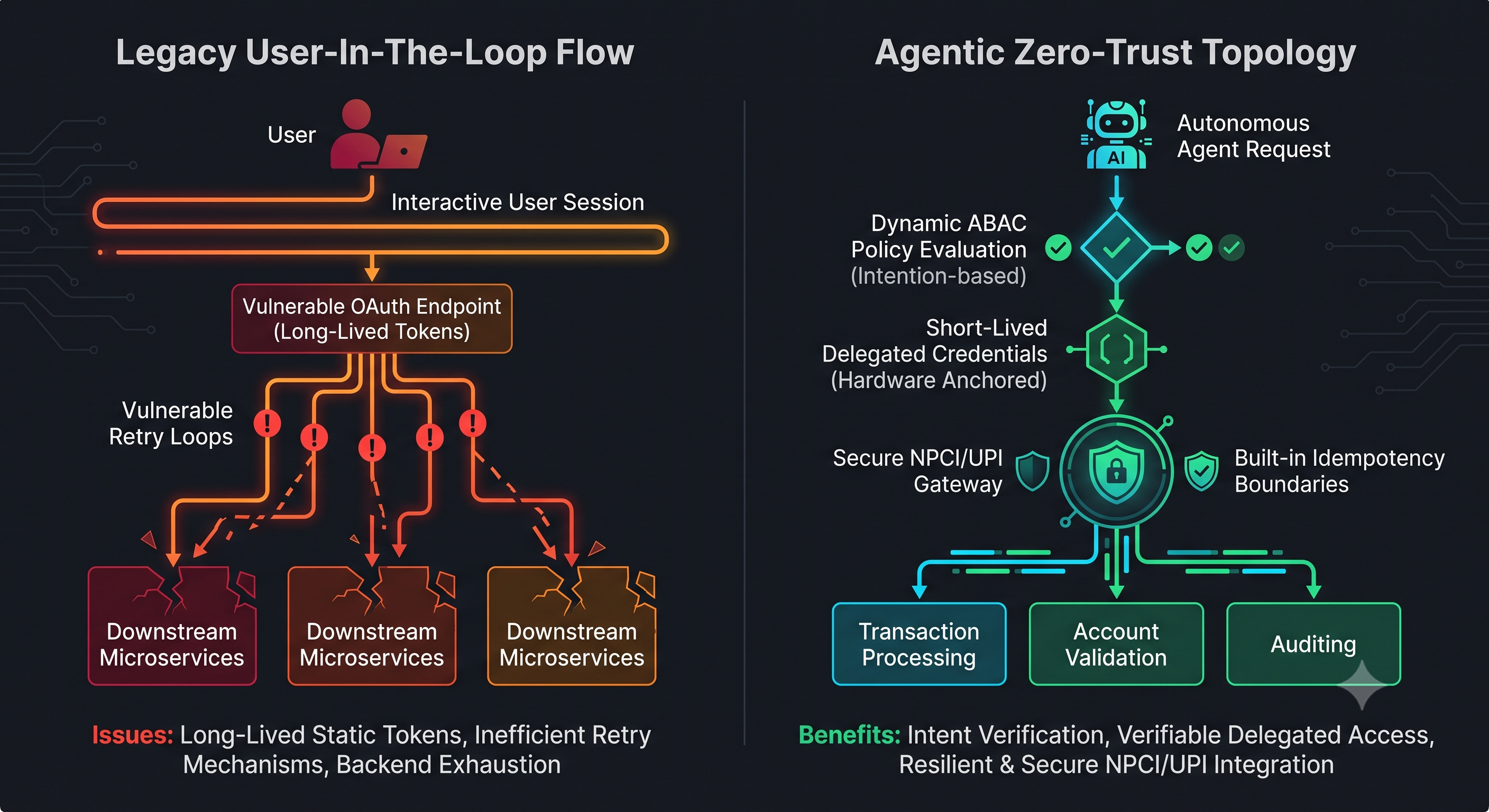
  • Why Autonomous AI Agents Will Break Traditional API Gateways (And How NPCI’s New Protocol Changes System Design)


    NPCI recently began architecting an official registry and authorization protocol for autonomous AI agents operating on UPI rails.


    This is not just another fintech update; it exposes a structural flaw in how we design distributed systems.


    For the past decade, Indian engineering teams solved scale using a standard recipe: OAuth tokens, rate-limiting per user session, two-factor SMS/device binding, and reactive fraud scoring.


    Autonomous AI agents break this model completely:


    The Non-Human Identity (NHI) Crisis: When an agent acts on behalf of a user across multi-step execution chains (e.g., booking tickets, negotiating prices, and settling balances), static tokens and session cookies become prime attack surfaces. Over-privileged machine credentials leak context and create authorization blindspots.


    Cascading Retries & Thundering Herds: Human users pause when a transaction stalls. Deterministic LLM agents programmed to complete tasks trigger automated, concurrent retries that can drown stateless orchestration switches and core banking adapters in milliseconds.


    State Drift in Distributed Transactions: UPI relies on choreography-based SAGA patterns for eventual consistency between the payer PSP, the NPCI switch, and issuer/acquirer banks. If an autonomous agent cancels or pivots a workflow mid-execution while a multi-party ledger settlement is asynchronous, traditional reconciliation pipelines fail.


    How to architect for the agentic era:


    Move from RBAC to ABAC (Attribute-Based Access Control): Bind permissions not just to a machine identity, but dynamically evaluate intent, spending caps, and environmental context per invocation.


    Implement Idempotency Keys with Cryptographic Proof: Ensure agent-triggered actions carry deterministic client-generated idempotency keys bound to the user’s master identity, preventing duplicate debits during agent orchestration retries.


    Hardware-Anchored Delegation: Require agents to carry short-lived, verifiable credentials issued by user-authenticated enclaves, rather than storing long-lived payment-capable API tokens on third-party servers.


    Discussion Question
    Is your backend ready to distinguish between an intentional API burst and an autonomous AI agent caught in a recursive execution loop? How are you tackling non-human identity governance today?


    CTA
    Sharpen your engineering chops with India’s sharpest tech minds. Join Techawks India to debate real-world system architecture, scaling patterns, and engineering edge-cases.
    Why Autonomous AI Agents Will Break Traditional API Gateways (And How NPCI’s New Protocol Changes System Design) NPCI recently began architecting an official registry and authorization protocol for autonomous AI agents operating on UPI rails. This is not just another fintech update; it exposes a structural flaw in how we design distributed systems. For the past decade, Indian engineering teams solved scale using a standard recipe: OAuth tokens, rate-limiting per user session, two-factor SMS/device binding, and reactive fraud scoring. Autonomous AI agents break this model completely: The Non-Human Identity (NHI) Crisis: When an agent acts on behalf of a user across multi-step execution chains (e.g., booking tickets, negotiating prices, and settling balances), static tokens and session cookies become prime attack surfaces. Over-privileged machine credentials leak context and create authorization blindspots. Cascading Retries & Thundering Herds: Human users pause when a transaction stalls. Deterministic LLM agents programmed to complete tasks trigger automated, concurrent retries that can drown stateless orchestration switches and core banking adapters in milliseconds. State Drift in Distributed Transactions: UPI relies on choreography-based SAGA patterns for eventual consistency between the payer PSP, the NPCI switch, and issuer/acquirer banks. If an autonomous agent cancels or pivots a workflow mid-execution while a multi-party ledger settlement is asynchronous, traditional reconciliation pipelines fail. How to architect for the agentic era: Move from RBAC to ABAC (Attribute-Based Access Control): Bind permissions not just to a machine identity, but dynamically evaluate intent, spending caps, and environmental context per invocation. Implement Idempotency Keys with Cryptographic Proof: Ensure agent-triggered actions carry deterministic client-generated idempotency keys bound to the user’s master identity, preventing duplicate debits during agent orchestration retries. Hardware-Anchored Delegation: Require agents to carry short-lived, verifiable credentials issued by user-authenticated enclaves, rather than storing long-lived payment-capable API tokens on third-party servers. Discussion Question Is your backend ready to distinguish between an intentional API burst and an autonomous AI agent caught in a recursive execution loop? How are you tackling non-human identity governance today? CTA Sharpen your engineering chops with India’s sharpest tech minds. Join Techawks India to debate real-world system architecture, scaling patterns, and engineering edge-cases.
    0 Commentarios 0 Acciones 462 Views 0 Vista previa
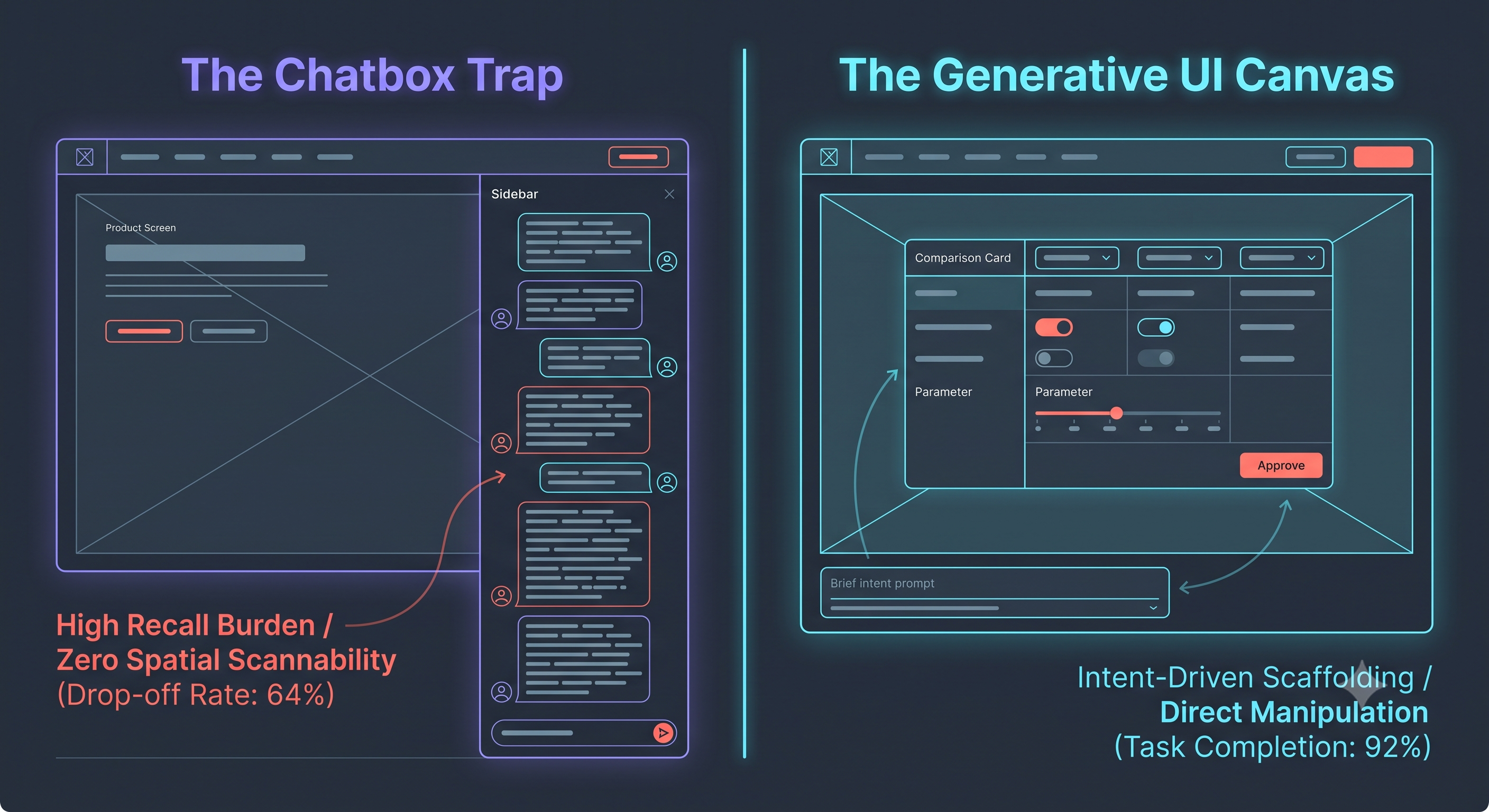
  • The Chat Box Is Lazy UX: Why Conversational Interfaces Are Failing Complex Products


    Over the last two years, product teams responded to the AI wave by putting a text input and a streaming message thread onto every dashboard. The assumption was simple: natural language is universal, so conversational UI must be the ultimate interface.


    In practice, chat-first interfaces are breaking down across complex enterprise workflows.


    A blank text box violates core usability heuristics:


    Zero Discoverability: A blank input forces the user to recall system capabilities from memory rather than recognizing them visually. If users don't know what to ask, the feature doesn't exist.


    Massive Cognitive Load: Writing a multi-clause prompt to filter a dataset requires significantly more mental effort than clicking two checkboxes and a date picker.


    Lack of Direct Manipulation: When an AI tool returns a 400-word wall of conversational text, users cannot slice the data, reorder columns, or inspect outliers without initiating another slow round-trip prompt.


    The future of AI product design isn't conversational text—it is Generative UI (GenUI) and outcome-oriented scaffolding.


    Instead of confining AI to a sidebar thread, build adaptive interfaces where natural language acts as an accelerator, not the container:


    Intent to Structured Component: When an agent acts on user intent, do not stream paragraphs. Stream interactive components—stateful comparison tables, editable parameter cards, interactive sliders, or visual diffs.


    Keep Direct Manipulation First-Class: Give users instant visual controls to tweak the agent's output. Changing a parameter should take a single toggle, not a 30-word re-prompt.


    Design the Decision Checkpoints: Autonomous agents should not work in an invisible black box until completion. Surface state snapshots, intermediate tool runs, and explicit approval gates for destructive actions.


    Stop asking your users to write essays to operate your software. Design systems that turn fuzzy intent into clear, manipulable interfaces.


    Discussion Question
    Are your AI features trapped in an isolated sidebar chat, or has your team started integrating dynamic, generative UI components directly into user canvases?


    CTA (Join Product, UX & Design)
    Tired of superficial chat wrappers and ready to design high-impact, human-in-the-loop AI software?


    👉 Join the Techawks Product, UX & Design Community to explore real GenUI design systems, challenge interaction dogma, and build intuitive products alongside top design leaders:
    The Chat Box Is Lazy UX: Why Conversational Interfaces Are Failing Complex Products Over the last two years, product teams responded to the AI wave by putting a text input and a streaming message thread onto every dashboard. The assumption was simple: natural language is universal, so conversational UI must be the ultimate interface. In practice, chat-first interfaces are breaking down across complex enterprise workflows. A blank text box violates core usability heuristics: Zero Discoverability: A blank input forces the user to recall system capabilities from memory rather than recognizing them visually. If users don't know what to ask, the feature doesn't exist. Massive Cognitive Load: Writing a multi-clause prompt to filter a dataset requires significantly more mental effort than clicking two checkboxes and a date picker. Lack of Direct Manipulation: When an AI tool returns a 400-word wall of conversational text, users cannot slice the data, reorder columns, or inspect outliers without initiating another slow round-trip prompt. The future of AI product design isn't conversational text—it is Generative UI (GenUI) and outcome-oriented scaffolding. Instead of confining AI to a sidebar thread, build adaptive interfaces where natural language acts as an accelerator, not the container: Intent to Structured Component: When an agent acts on user intent, do not stream paragraphs. Stream interactive components—stateful comparison tables, editable parameter cards, interactive sliders, or visual diffs. Keep Direct Manipulation First-Class: Give users instant visual controls to tweak the agent's output. Changing a parameter should take a single toggle, not a 30-word re-prompt. Design the Decision Checkpoints: Autonomous agents should not work in an invisible black box until completion. Surface state snapshots, intermediate tool runs, and explicit approval gates for destructive actions. Stop asking your users to write essays to operate your software. Design systems that turn fuzzy intent into clear, manipulable interfaces. Discussion Question Are your AI features trapped in an isolated sidebar chat, or has your team started integrating dynamic, generative UI components directly into user canvases? CTA (Join Product, UX & Design) Tired of superficial chat wrappers and ready to design high-impact, human-in-the-loop AI software? 👉 Join the Techawks Product, UX & Design Community to explore real GenUI design systems, challenge interaction dogma, and build intuitive products alongside top design leaders:
    0 Commentarios 0 Acciones 223 Views 0 Vista previa
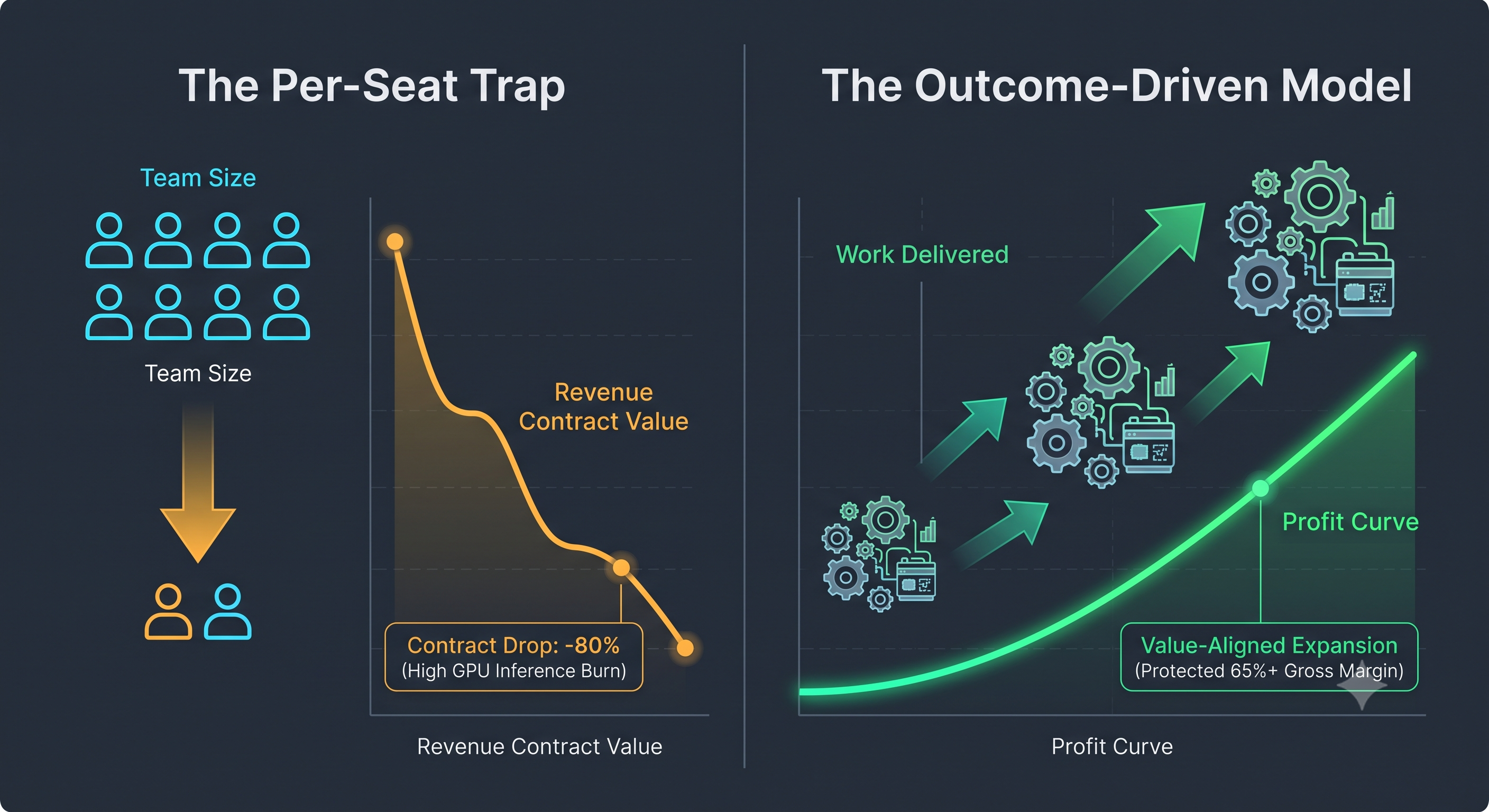
  • Per-Seat Pricing Is Cannibalizing Your AI Startup


    Founders are still borrowing the classic SaaS playbook: build a tool, launch a $29/user/month tier, and pray for viral seat expansion across enterprise departments.


    That playbook was designed for systems of record (like Salesforce or Jira) where more human workers meant more logins. But if your product is an agentic system of work, human headcount is no longer your growth engine—it is your ceiling.


    When an AI workflow cuts a client's 10-person customer support or QA team down to two operators, per-seat pricing cuts your contract value by 80% while your compute costs per user skyrocket.


    To stop killing your margins and burning enterprise value, restructure your unit economics:


    Price for the Outcome, Not the Dashboard Access: Anchor your tiering to the business deliverable your product replaces or generates—resolutions reached, PRs reviewed, documents audited, or campaigns deployed. If you replace $80,000 worth of manual operations, capture value from that delta rather than charging for a login email.


    Guard the P90 Compute Cliff: In classical software, marginal cost per user is near zero. In AI products, compute burns real margin. A flat unlimited seat model means your top 10% power users (P90) can easily burn more in model inference and vector retrieval than their entire monthly subscription fee.


    Adopt the Hybrid Floor Model: Pure consumption makes revenue volatile; pure seats shrink your contract sizes. Protect your runway with a predictable platform base fee (covering core access and baseline compute) paired with metered outcome bands.


    If your product makes teams leaner, your pricing model cannot depend on teams getting larger.


    Discussion Question
    Are you currently billing customers based on login seats, raw API token pass-throughs, or defined work outcomes—and where is that putting the squeeze on your gross margins?


    CTA (Join Startup Founders & Entrepreneurs)
    Tired of watching software dogma cap your startup's growth and margin profile?


    👉 Join the Techawks Startup Founders & Entrepreneurs Community to dissect real pricing models, master sustainable unit economics, and build resilient ventures alongside seasoned operators:
    Per-Seat Pricing Is Cannibalizing Your AI Startup Founders are still borrowing the classic SaaS playbook: build a tool, launch a $29/user/month tier, and pray for viral seat expansion across enterprise departments. That playbook was designed for systems of record (like Salesforce or Jira) where more human workers meant more logins. But if your product is an agentic system of work, human headcount is no longer your growth engine—it is your ceiling. When an AI workflow cuts a client's 10-person customer support or QA team down to two operators, per-seat pricing cuts your contract value by 80% while your compute costs per user skyrocket. To stop killing your margins and burning enterprise value, restructure your unit economics: Price for the Outcome, Not the Dashboard Access: Anchor your tiering to the business deliverable your product replaces or generates—resolutions reached, PRs reviewed, documents audited, or campaigns deployed. If you replace $80,000 worth of manual operations, capture value from that delta rather than charging for a login email. Guard the P90 Compute Cliff: In classical software, marginal cost per user is near zero. In AI products, compute burns real margin. A flat unlimited seat model means your top 10% power users (P90) can easily burn more in model inference and vector retrieval than their entire monthly subscription fee. Adopt the Hybrid Floor Model: Pure consumption makes revenue volatile; pure seats shrink your contract sizes. Protect your runway with a predictable platform base fee (covering core access and baseline compute) paired with metered outcome bands. If your product makes teams leaner, your pricing model cannot depend on teams getting larger. Discussion Question Are you currently billing customers based on login seats, raw API token pass-throughs, or defined work outcomes—and where is that putting the squeeze on your gross margins? CTA (Join Startup Founders & Entrepreneurs) Tired of watching software dogma cap your startup's growth and margin profile? 👉 Join the Techawks Startup Founders & Entrepreneurs Community to dissect real pricing models, master sustainable unit economics, and build resilient ventures alongside seasoned operators:
    0 Commentarios 0 Acciones 178 Views 0 Vista previa
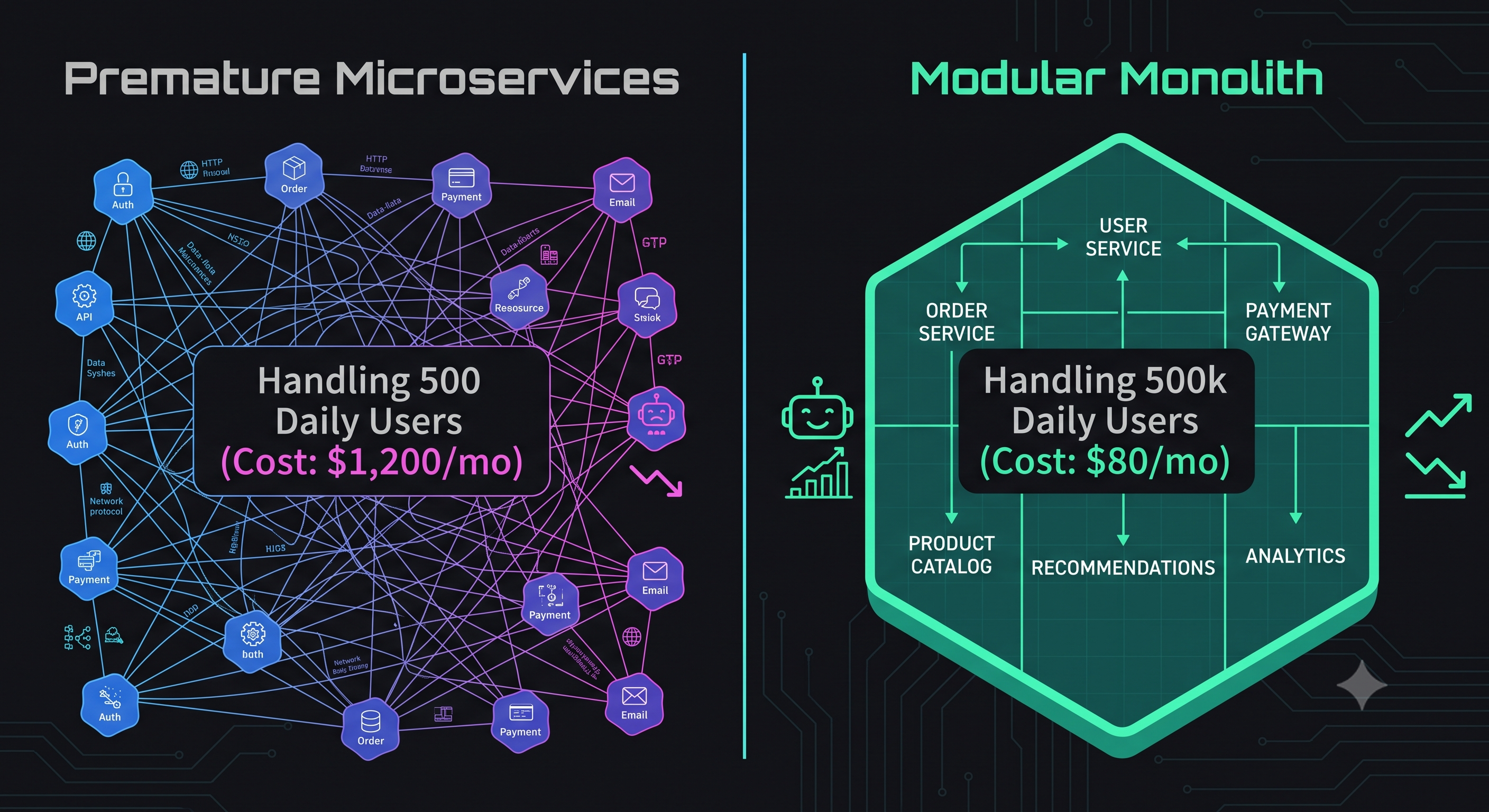
  • Stop Splitting Your Backend Into Microservices Before You Hit 100k Users


    Every engineering team wants to design like Netflix on day one. You draw twelve microservices on a Miro board, spin up Kubernetes clusters, configure service meshes, and spend three weeks debugging distributed tracing—all for an app serving 40 active users.
    Here is the truth: premature distribution is technical debt disguised as good architecture.


    When you split an early-stage system into distributed services:
    Refactoring becomes network calls: Changing a schema now requires three PRs, cross-team coordination, and API versioning.
    Transactions become nightmares: Instead of an ACID transaction in a single database, you are wrestling with eventual consistency and the Saga pattern.
    Latency increases: In-memory function calls are replaced by HTTP/gRPC overhead and network jitter.


    Build a modular monolith first.
    Write clean boundaries inside a single repository and deploy a single artifact. Group features by domain modules with explicit interfaces. When—and only when—a single module has fundamentally distinct scaling requirements or team ownership boundaries, carve it out.
    Until your database CPU is melting despite solid indexing and read replicas, keep it under one roof.


    Key Takeaways
    Distributed systems solve organizational scaling bottlenecks, not basic code organization.
    A well-structured monolith scales to millions of requests when paired with proper caching and optimized database queries.
    Design strict internal domain boundaries now so splitting services later takes days, not months of emergency refactoring.


    CTA
    Tired of over-engineered tech stacks and hype-driven development?


    👉 Join the Techawks Community to connect with pragmatic engineers, challenge standard industry dogma, and build software that actually ships:
    Stop Splitting Your Backend Into Microservices Before You Hit 100k Users Every engineering team wants to design like Netflix on day one. You draw twelve microservices on a Miro board, spin up Kubernetes clusters, configure service meshes, and spend three weeks debugging distributed tracing—all for an app serving 40 active users. Here is the truth: premature distribution is technical debt disguised as good architecture. When you split an early-stage system into distributed services: Refactoring becomes network calls: Changing a schema now requires three PRs, cross-team coordination, and API versioning. Transactions become nightmares: Instead of an ACID transaction in a single database, you are wrestling with eventual consistency and the Saga pattern. Latency increases: In-memory function calls are replaced by HTTP/gRPC overhead and network jitter. Build a modular monolith first. Write clean boundaries inside a single repository and deploy a single artifact. Group features by domain modules with explicit interfaces. When—and only when—a single module has fundamentally distinct scaling requirements or team ownership boundaries, carve it out. Until your database CPU is melting despite solid indexing and read replicas, keep it under one roof. Key Takeaways Distributed systems solve organizational scaling bottlenecks, not basic code organization. A well-structured monolith scales to millions of requests when paired with proper caching and optimized database queries. Design strict internal domain boundaries now so splitting services later takes days, not months of emergency refactoring. CTA Tired of over-engineered tech stacks and hype-driven development? 👉 Join the Techawks Community to connect with pragmatic engineers, challenge standard industry dogma, and build software that actually ships:
    0 Commentarios 0 Acciones 182 Views 0 Vista previa
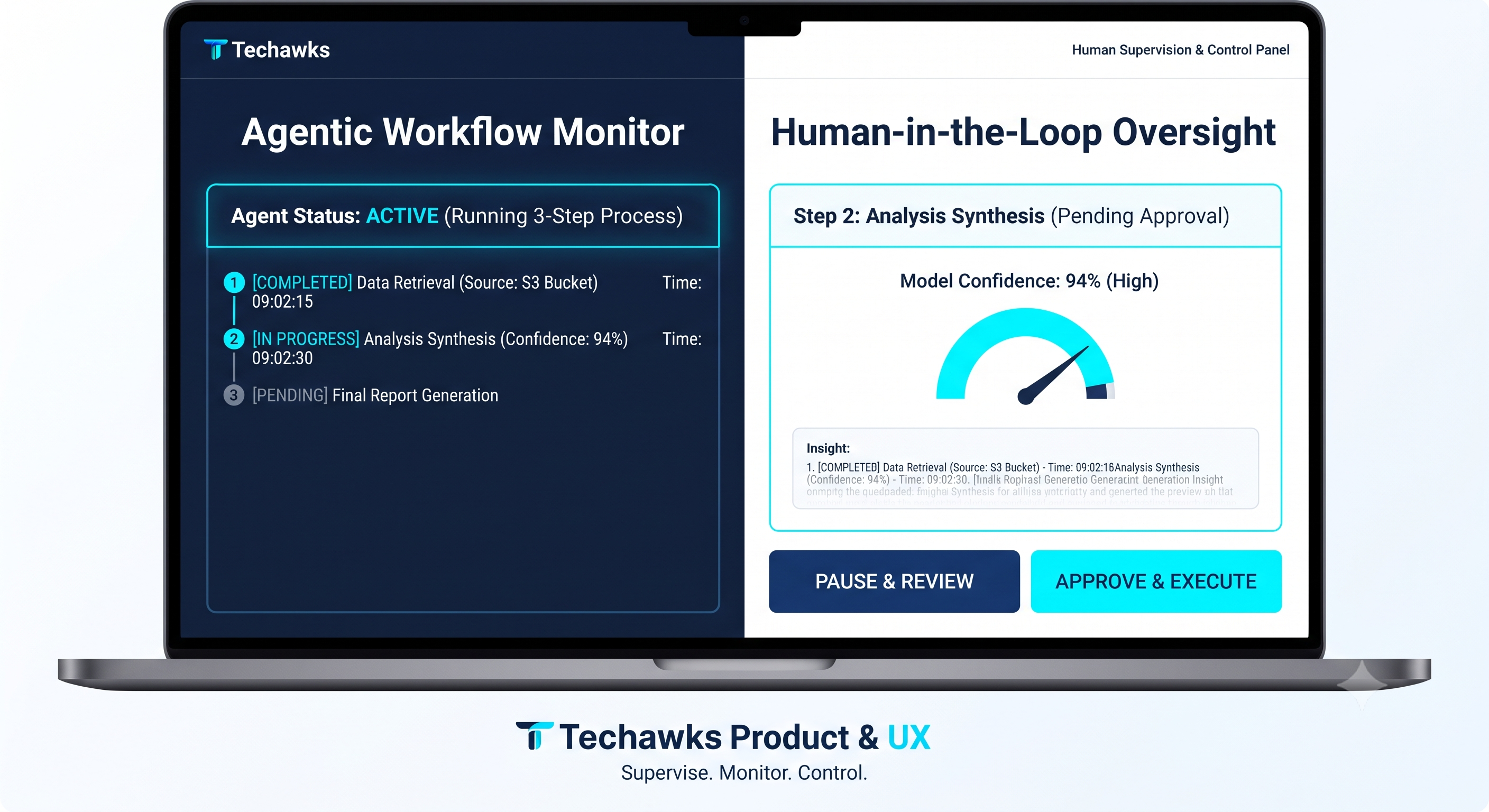
  • Stop Designing AI Like a Chatbot: The 4-Step Agentic UX & Supervision Checklist for Modern Product Teams


    As products shift from simple text prompts to autonomous, multi-step agentic workflows, the role of product managers and designers has fundamentally evolved. You are no longer just designing static screens or linear forms; you are building supervision spaces where humans delegate, monitor, and override automated decisions.


    To build trust, reduce cognitive load, and prevent user churn in modern AI applications, use this actionable Agentic UX checklist:


    Design for Radical Transparency: Never treat AI output as an absolute black box. Surface confidence scores, cite data sources, and show the intermediate steps an agent takes so users understand why a recommendation was made.


    Implement Seamless Interruption & Override Controls: Give users absolute authority. Ensure every automated action can be previewed, paused, edited, or stopped mid-flight without breaking the entire workflow.


    Build Clear Failure-State Design: When models hallucinate, hit rate limits, or encounter ambiguous inputs, avoid generic error spinners. Design graceful fallback states with clear manual recovery paths.


    Prioritize Calm Over Complexity: Resist the urge to clutter dashboards with endless model metrics. Use progressive disclosure to reveal technical complexity only when the user explicitly requests a deep dive.


    Discussion Question: What is your biggest friction point when designing for AI-driven products—communicating model uncertainty without losing user trust, or building intuitive controls for multi-step agent workflows? Let us know below!


    CTA (Join Product, UX & Design): Ready to build the next generation of user-centric digital experiences? Join Product, UX & Design to access advanced frameworks, teardowns, and top-tier career growth resources.
    Stop Designing AI Like a Chatbot: The 4-Step Agentic UX & Supervision Checklist for Modern Product Teams As products shift from simple text prompts to autonomous, multi-step agentic workflows, the role of product managers and designers has fundamentally evolved. You are no longer just designing static screens or linear forms; you are building supervision spaces where humans delegate, monitor, and override automated decisions. To build trust, reduce cognitive load, and prevent user churn in modern AI applications, use this actionable Agentic UX checklist: Design for Radical Transparency: Never treat AI output as an absolute black box. Surface confidence scores, cite data sources, and show the intermediate steps an agent takes so users understand why a recommendation was made. Implement Seamless Interruption & Override Controls: Give users absolute authority. Ensure every automated action can be previewed, paused, edited, or stopped mid-flight without breaking the entire workflow. Build Clear Failure-State Design: When models hallucinate, hit rate limits, or encounter ambiguous inputs, avoid generic error spinners. Design graceful fallback states with clear manual recovery paths. Prioritize Calm Over Complexity: Resist the urge to clutter dashboards with endless model metrics. Use progressive disclosure to reveal technical complexity only when the user explicitly requests a deep dive. Discussion Question: What is your biggest friction point when designing for AI-driven products—communicating model uncertainty without losing user trust, or building intuitive controls for multi-step agent workflows? Let us know below! CTA (Join Product, UX & Design): Ready to build the next generation of user-centric digital experiences? Join Product, UX & Design to access advanced frameworks, teardowns, and top-tier career growth resources.
    0 Commentarios 0 Acciones 184 Views 0 Vista previa
Resultados de la búsqueda