• Debunking the Top 4 Tech Infrastructure Myths in the UAE


    Myth #1: "Hosting data on any major global cloud region automatically satisfies UAE data compliance."
    Fact: Data residency laws depend on data sensitivity.
    The Reality: Under UAE Federal Decree-Law No. 45/2021 (PDPL), certain types of sensitive personal or regulated industry data must reside within local borders. While general public applications can leverage global nodes, hosting health, financial, or government-adjacent data often requires local regions (such as AWS me-central-1 or Azure UAE nodes).
    Action: Audit your data classification levels before selecting your primary database host.


    Myth #2: "Translating app text to Arabic is enough for local product adoption."
    Fact: Localization is a structural UX effort, not just a translation task.
    The Reality: True regional localization requires full Right-to-Left (RTL) layout adaptation. Simply translating text without flipping UI elements, adjusting font rendering, or redesigning navigation flows creates clunky user experiences that hurt conversion.
    Action: Design with CSS logical properties (like margin-inline-start) from day one to ensure UI flexibility across both LTR and RTL layouts.


    Myth #3: "Global payment gateways are all you need to convert UAE customers."
    Fact: Local payment preferences directly impact cart abandonment.
    The Reality: While credit cards are widely used, a huge portion of UAE consumers prefer frictionless options like Apple Pay, localized debit options, and regional Buy-Now-Pay-Later (BNPL) providers.
    Action: Integrate local payment aggregators or native regional APIs to offer a comprehensive checkout experience.


    Myth #4: "Enterprise communications work identically across all global regions without local tweaks."
    Fact: Regional network and telecom dynamics require proactive setup.
    The Reality: Unoptimized real-time communication protocols (VoIP, WebRTC) and un-cached media streams can suffer from higher latency or blocking if not configured with local enterprise-grade VPNs or regional CDN edge locations.
    Action: Deploy Middle East CDN edge nodes and test WebRTC fallback protocols specifically across UAE networks.


    Key Takeaways
    Verify Residency Requirements: Always map data sensitivity against local PDPL guidelines before locking down hosting infrastructure.
    Layout > Direct Translation: Build modular UI components natively designed for Right-to-Left (RTL) workflows.
    Optimize for Local Checkout: Reduce drop-off rates by offering payment methods native to Middle Eastern consumer habits.


    CTA
    Want to build smarter tech in the Emirates? Join Techawks UAE today to exchange vetted technical insights, optimize your stack, and connect with peer developers across the region!
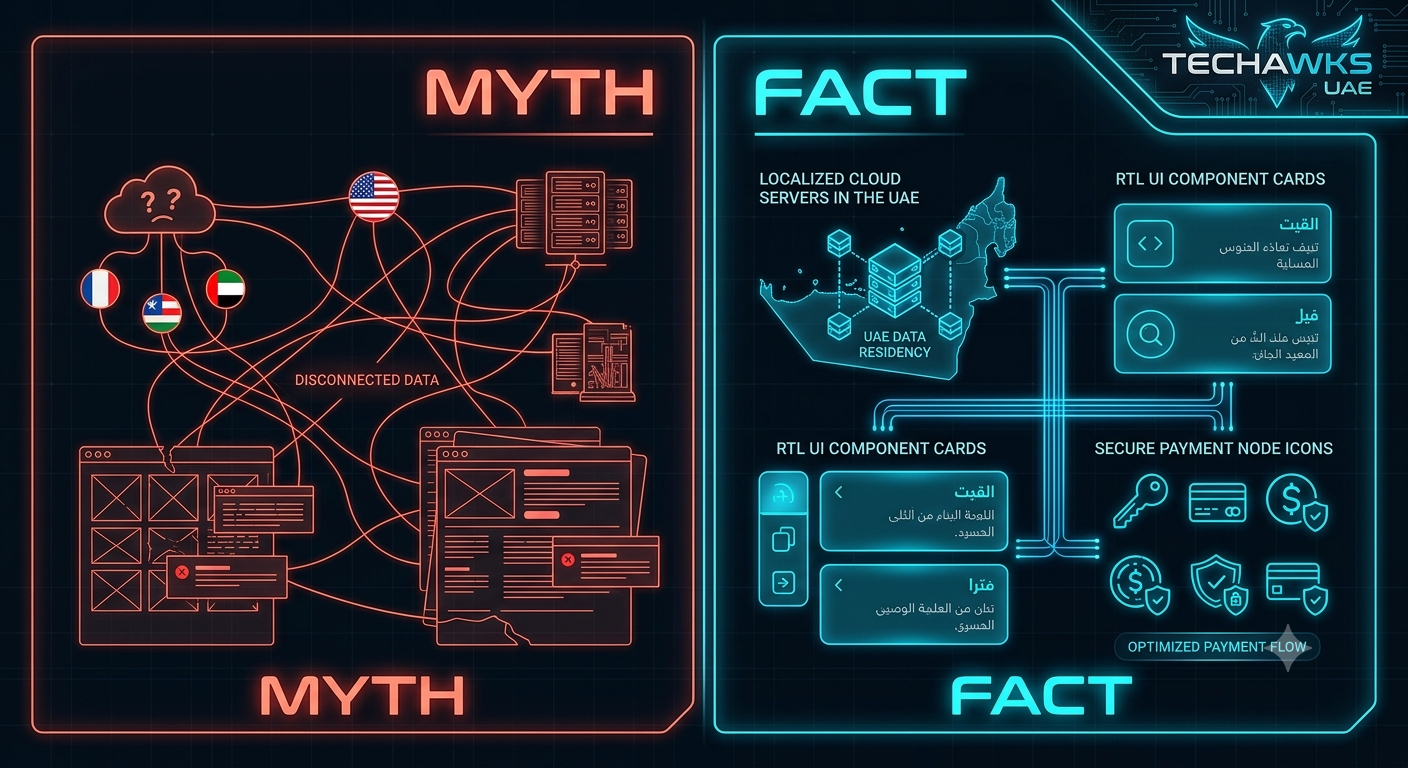
    Debunking the Top 4 Tech Infrastructure Myths in the UAE Myth #1: "Hosting data on any major global cloud region automatically satisfies UAE data compliance." Fact: Data residency laws depend on data sensitivity. The Reality: Under UAE Federal Decree-Law No. 45/2021 (PDPL), certain types of sensitive personal or regulated industry data must reside within local borders. While general public applications can leverage global nodes, hosting health, financial, or government-adjacent data often requires local regions (such as AWS me-central-1 or Azure UAE nodes). Action: Audit your data classification levels before selecting your primary database host. Myth #2: "Translating app text to Arabic is enough for local product adoption." Fact: Localization is a structural UX effort, not just a translation task. The Reality: True regional localization requires full Right-to-Left (RTL) layout adaptation. Simply translating text without flipping UI elements, adjusting font rendering, or redesigning navigation flows creates clunky user experiences that hurt conversion. Action: Design with CSS logical properties (like margin-inline-start) from day one to ensure UI flexibility across both LTR and RTL layouts. Myth #3: "Global payment gateways are all you need to convert UAE customers." Fact: Local payment preferences directly impact cart abandonment. The Reality: While credit cards are widely used, a huge portion of UAE consumers prefer frictionless options like Apple Pay, localized debit options, and regional Buy-Now-Pay-Later (BNPL) providers. Action: Integrate local payment aggregators or native regional APIs to offer a comprehensive checkout experience. Myth #4: "Enterprise communications work identically across all global regions without local tweaks." Fact: Regional network and telecom dynamics require proactive setup. The Reality: Unoptimized real-time communication protocols (VoIP, WebRTC) and un-cached media streams can suffer from higher latency or blocking if not configured with local enterprise-grade VPNs or regional CDN edge locations. Action: Deploy Middle East CDN edge nodes and test WebRTC fallback protocols specifically across UAE networks. Key Takeaways Verify Residency Requirements: Always map data sensitivity against local PDPL guidelines before locking down hosting infrastructure. Layout > Direct Translation: Build modular UI components natively designed for Right-to-Left (RTL) workflows. Optimize for Local Checkout: Reduce drop-off rates by offering payment methods native to Middle Eastern consumer habits. CTA Want to build smarter tech in the Emirates? Join Techawks UAE today to exchange vetted technical insights, optimize your stack, and connect with peer developers across the region!
    0 التعليقات 0 المشاركات 982 مشاهدة 0 معاينة
  • The Essential Canadian Tech Team Onboarding & Compliance Checklist
    Setting your systems up for long-term success in Canada requires balancing technical performance with PIPEDA compliance, provincial regulations, and local infrastructure setup. Run through this checklist to keep your stack audit-ready:


    1. Privacy & Data Governance (PIPEDA & Provincial Laws)
    Map Personal Data Workflows: Identify all user data collected and ensure compliance with PIPEDA (Personal Information Protection and Electronic Documents Act) principles.
    Provincial Compliance Check: If operating in or serving residents of Quebec, verify alignment with Law 25 obligations (e.g., mandatory privacy impact assessments and strict consent rules).
    In-Region Data Residency: Determine if client contracts or local sector regulations require hosting user data within Canadian borders (e.g., AWS ca-central-1 in Montreal or ca-west-1 in Calgary).


    2. Digital Marketing & Communication Compliance
    CASL Opt-In Audits: Review your user onboarding and email subscription flows to ensure explicit, double opt-in consent mechanisms compliant with CASL (Canada’s Anti-Spam Legislation).
    Unsubscribe Mechanisms: Test that all transactional and marketing messaging pipelines include functional, one-click unsubscribe links.


    3. Bilingual UX & Accessibility Standards
    Bilingual Support (English/French): Ensure your user interface supports seamless language toggling and dynamic text rendering for French UI components.
    Accessibility (AODA/ACA): Audit web and mobile applications against WCAG 2.1 Level AA standards to meet federal and provincial accessibility mandates.


    4. Localized Payment & Financial Operations
    Interac & Regional Payment Integration: Incorporate Interac e-Transfer or debit payment options alongside standard credit channels to reduce cart abandonment.
    Multi-Currency & Tax Handling: Configure backend billing systems to correctly calculate provincial tax rates (GST, PST, HST, QST) based on customer location.


    Key Takeaways
    Bilingual & Accessible First: Building English/French localization and WCAG accessibility into your UI early prevents costly retrofits.
    Consent Over Assumption: CASL and PIPEDA mandate clear consent mechanisms across all user collection touchpoints.
    Regional Hosting Awareness: Leverage Canadian cloud regions to satisfy local data residency requirements and optimize latency.


    CTA
    Building or scaling tech in Canada? Join Techawks Canada today to connect with local developers, engineering leaders, and tech innovators driving the nation's digital growth!
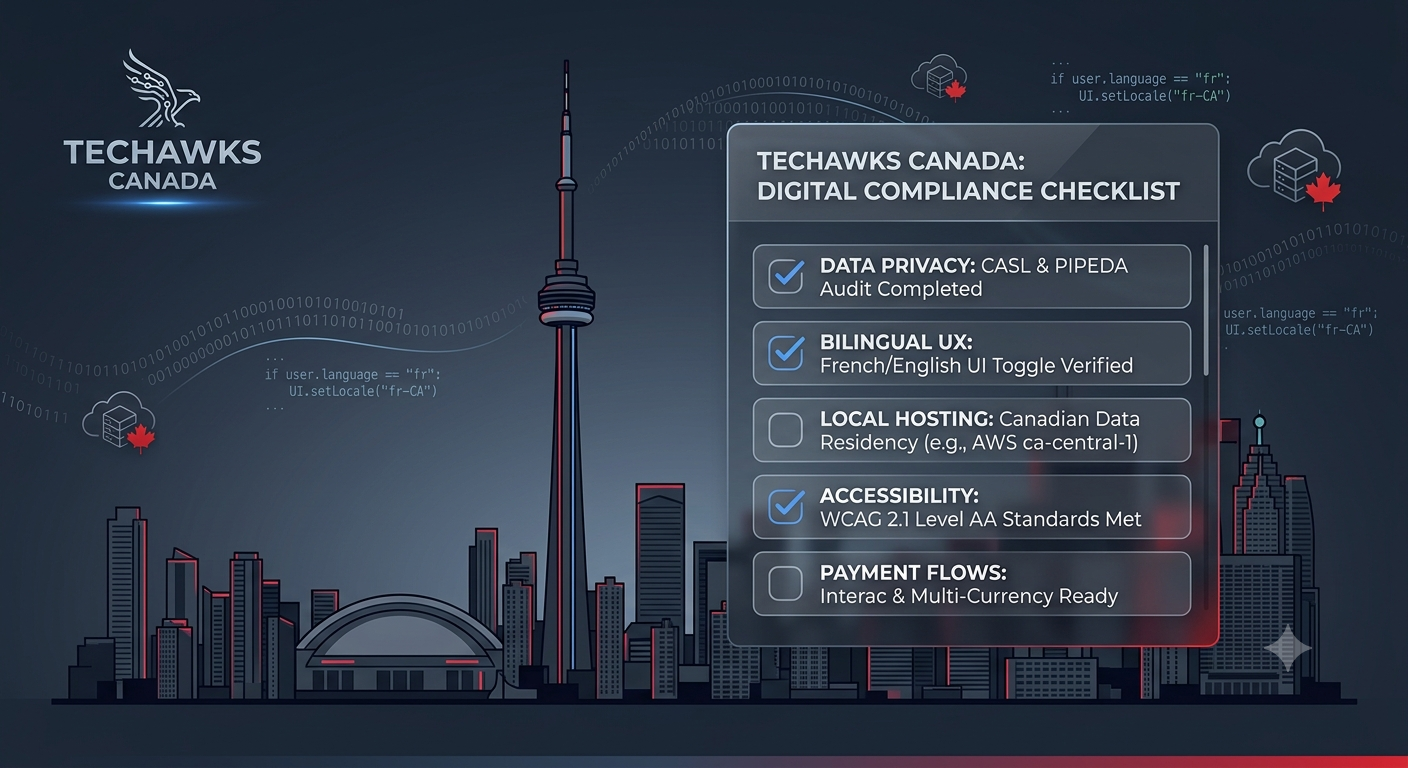
    The Essential Canadian Tech Team Onboarding & Compliance Checklist Setting your systems up for long-term success in Canada requires balancing technical performance with PIPEDA compliance, provincial regulations, and local infrastructure setup. Run through this checklist to keep your stack audit-ready: 1. Privacy & Data Governance (PIPEDA & Provincial Laws) Map Personal Data Workflows: Identify all user data collected and ensure compliance with PIPEDA (Personal Information Protection and Electronic Documents Act) principles. Provincial Compliance Check: If operating in or serving residents of Quebec, verify alignment with Law 25 obligations (e.g., mandatory privacy impact assessments and strict consent rules). In-Region Data Residency: Determine if client contracts or local sector regulations require hosting user data within Canadian borders (e.g., AWS ca-central-1 in Montreal or ca-west-1 in Calgary). 2. Digital Marketing & Communication Compliance CASL Opt-In Audits: Review your user onboarding and email subscription flows to ensure explicit, double opt-in consent mechanisms compliant with CASL (Canada’s Anti-Spam Legislation). Unsubscribe Mechanisms: Test that all transactional and marketing messaging pipelines include functional, one-click unsubscribe links. 3. Bilingual UX & Accessibility Standards Bilingual Support (English/French): Ensure your user interface supports seamless language toggling and dynamic text rendering for French UI components. Accessibility (AODA/ACA): Audit web and mobile applications against WCAG 2.1 Level AA standards to meet federal and provincial accessibility mandates. 4. Localized Payment & Financial Operations Interac & Regional Payment Integration: Incorporate Interac e-Transfer or debit payment options alongside standard credit channels to reduce cart abandonment. Multi-Currency & Tax Handling: Configure backend billing systems to correctly calculate provincial tax rates (GST, PST, HST, QST) based on customer location. Key Takeaways Bilingual & Accessible First: Building English/French localization and WCAG accessibility into your UI early prevents costly retrofits. Consent Over Assumption: CASL and PIPEDA mandate clear consent mechanisms across all user collection touchpoints. Regional Hosting Awareness: Leverage Canadian cloud regions to satisfy local data residency requirements and optimize latency. CTA Building or scaling tech in Canada? Join Techawks Canada today to connect with local developers, engineering leaders, and tech innovators driving the nation's digital growth!
    0 التعليقات 0 المشاركات 1كيلو بايت مشاهدة 0 معاينة
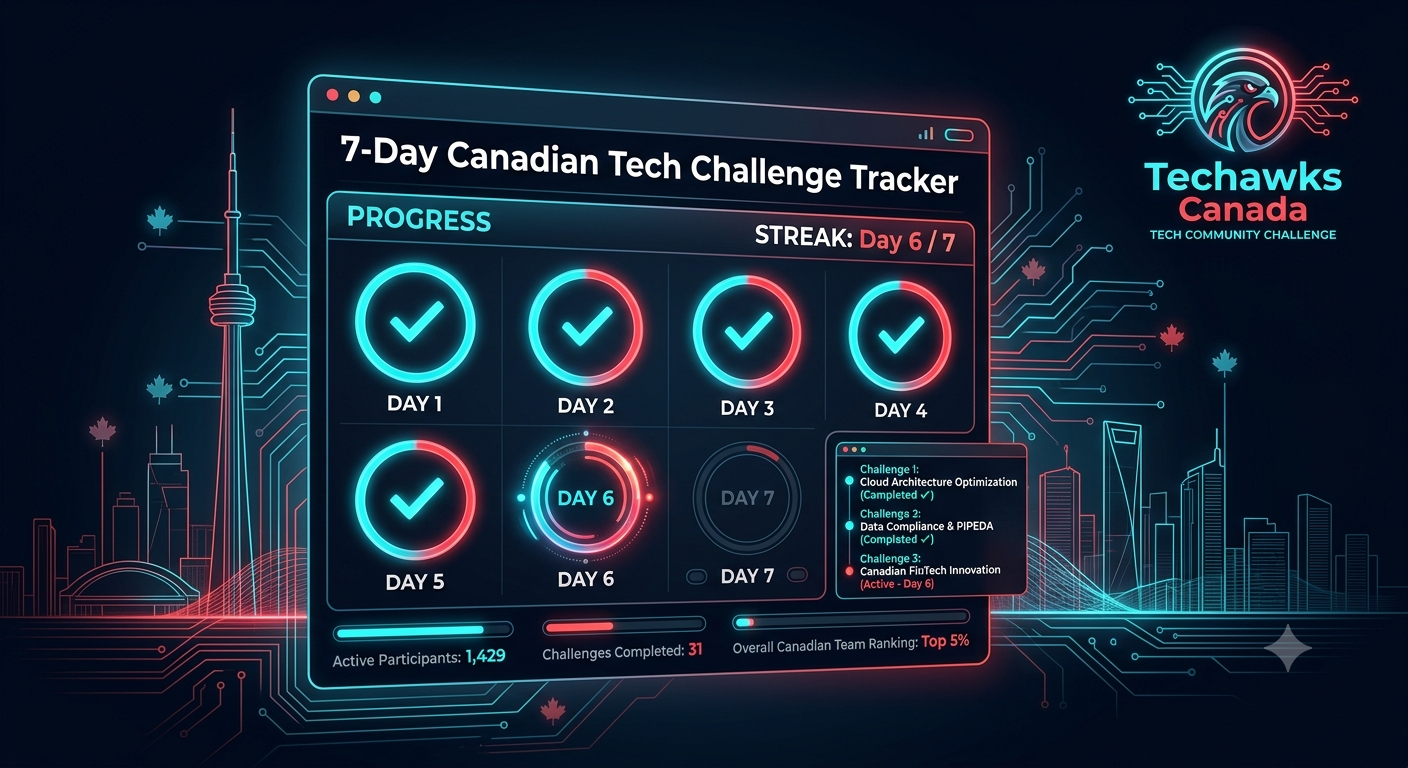
  • The 7-Day Canadian Tech Stack & Compliance Challenge
    Take on one micro-task each day this week to refine your engineering standards, ensure local compliance, and optimize performance for Canadian users:


    Day 1: The PIPEDA & Law 25 Privacy Audit
    The Task: Review your user data intake pipelines against Canadian privacy standards.
    Action: Ensure personal information (PII) is encrypted at rest and in transit, and confirm that explicit, granular consent mechanisms are active for users in Quebec (Law 25) and nationwide (PIPEDA).


    Day 2: The CASL Opt-In Verification
    The Task: Audit your transactional and marketing email triggers.
    Action: Confirm that all user onboarding flows use clear, affirmative opt-in checkboxes compliant with Canada’s Anti-Spam Legislation (CASL) and verify that unsubscriptions auto-process in real time.


    Day 3: The Coast-to-Coast Latency Test
    The Task: Measure response times across Canadian geographies.
    Action: Run performance benchmarks from both Eastern and Western Canadian nodes (e.g., AWS ca-central-1 in Montreal and ca-west-1 in Calgary). Tune your CDN edge caching to ensure low latency from Vancouver to Halifax.


    Day 4: The Bilingual UX & Typography Test
    The Task: Test your web or mobile app in French (fr-CA).
    Action: Switch your locale setting to verify that UI components, dynamic forms, and error states render correctly without text truncation or layout breaking.


    Day 5: The Accessibility (WCAG 2.1 AA) Drill
    The Task: Test keyboard navigation and screen reader compatibility.
    Action: Audit your core user flows to ensure compliance with accessibility frameworks (like AODA and ACA). Resolve high-priority contrast or ARIA-label issues.


    Day 6: The Localized Billing & Tax Logic Audit
    The Task: Review your checkout and invoicing logic.
    Action: Verify that your system correctly calculates localized provincial taxes (GST, PST, HST, QST) based on billing address and supports seamless regional payment options (such as Interac e-Transfer or localized card networks).


    Day 7: The Security & Access Sentry
    The Task: Lock down production access permissions.
    Action: Perform a sweep of your IAM roles, enforce multi-factor authentication (MFA) across all team accounts, and revoke lingering permissions for inactive contributors or vendors.


    Key Takeaways
    Compliance by Design: Architecting for PIPEDA, Law 25, and CASL prevents major regulatory fines and builds trust with privacy-conscious Canadian users.
    Performance Across Regions: Multi-region Canadian cloud deployments ensure low-latency experiences across large geographic spans.
    Accessible & Inclusive UX: Building bilingual (EN/FR) support and WCAG accessibility into your UI early eliminates expensive engineering rework later.


    CTA
    Did your team complete the 7-day challenge? Join Techawks Canada today to share your audit results, connect with peer engineers, and collaborate with tech leaders shaping the future of Canadian innovation!
    The 7-Day Canadian Tech Stack & Compliance Challenge Take on one micro-task each day this week to refine your engineering standards, ensure local compliance, and optimize performance for Canadian users: Day 1: The PIPEDA & Law 25 Privacy Audit The Task: Review your user data intake pipelines against Canadian privacy standards. Action: Ensure personal information (PII) is encrypted at rest and in transit, and confirm that explicit, granular consent mechanisms are active for users in Quebec (Law 25) and nationwide (PIPEDA). Day 2: The CASL Opt-In Verification The Task: Audit your transactional and marketing email triggers. Action: Confirm that all user onboarding flows use clear, affirmative opt-in checkboxes compliant with Canada’s Anti-Spam Legislation (CASL) and verify that unsubscriptions auto-process in real time. Day 3: The Coast-to-Coast Latency Test The Task: Measure response times across Canadian geographies. Action: Run performance benchmarks from both Eastern and Western Canadian nodes (e.g., AWS ca-central-1 in Montreal and ca-west-1 in Calgary). Tune your CDN edge caching to ensure low latency from Vancouver to Halifax. Day 4: The Bilingual UX & Typography Test The Task: Test your web or mobile app in French (fr-CA). Action: Switch your locale setting to verify that UI components, dynamic forms, and error states render correctly without text truncation or layout breaking. Day 5: The Accessibility (WCAG 2.1 AA) Drill The Task: Test keyboard navigation and screen reader compatibility. Action: Audit your core user flows to ensure compliance with accessibility frameworks (like AODA and ACA). Resolve high-priority contrast or ARIA-label issues. Day 6: The Localized Billing & Tax Logic Audit The Task: Review your checkout and invoicing logic. Action: Verify that your system correctly calculates localized provincial taxes (GST, PST, HST, QST) based on billing address and supports seamless regional payment options (such as Interac e-Transfer or localized card networks). Day 7: The Security & Access Sentry The Task: Lock down production access permissions. Action: Perform a sweep of your IAM roles, enforce multi-factor authentication (MFA) across all team accounts, and revoke lingering permissions for inactive contributors or vendors. Key Takeaways Compliance by Design: Architecting for PIPEDA, Law 25, and CASL prevents major regulatory fines and builds trust with privacy-conscious Canadian users. Performance Across Regions: Multi-region Canadian cloud deployments ensure low-latency experiences across large geographic spans. Accessible & Inclusive UX: Building bilingual (EN/FR) support and WCAG accessibility into your UI early eliminates expensive engineering rework later. CTA Did your team complete the 7-day challenge? Join Techawks Canada today to share your audit results, connect with peer engineers, and collaborate with tech leaders shaping the future of Canadian innovation!
    0 التعليقات 0 المشاركات 1كيلو بايت مشاهدة 0 معاينة
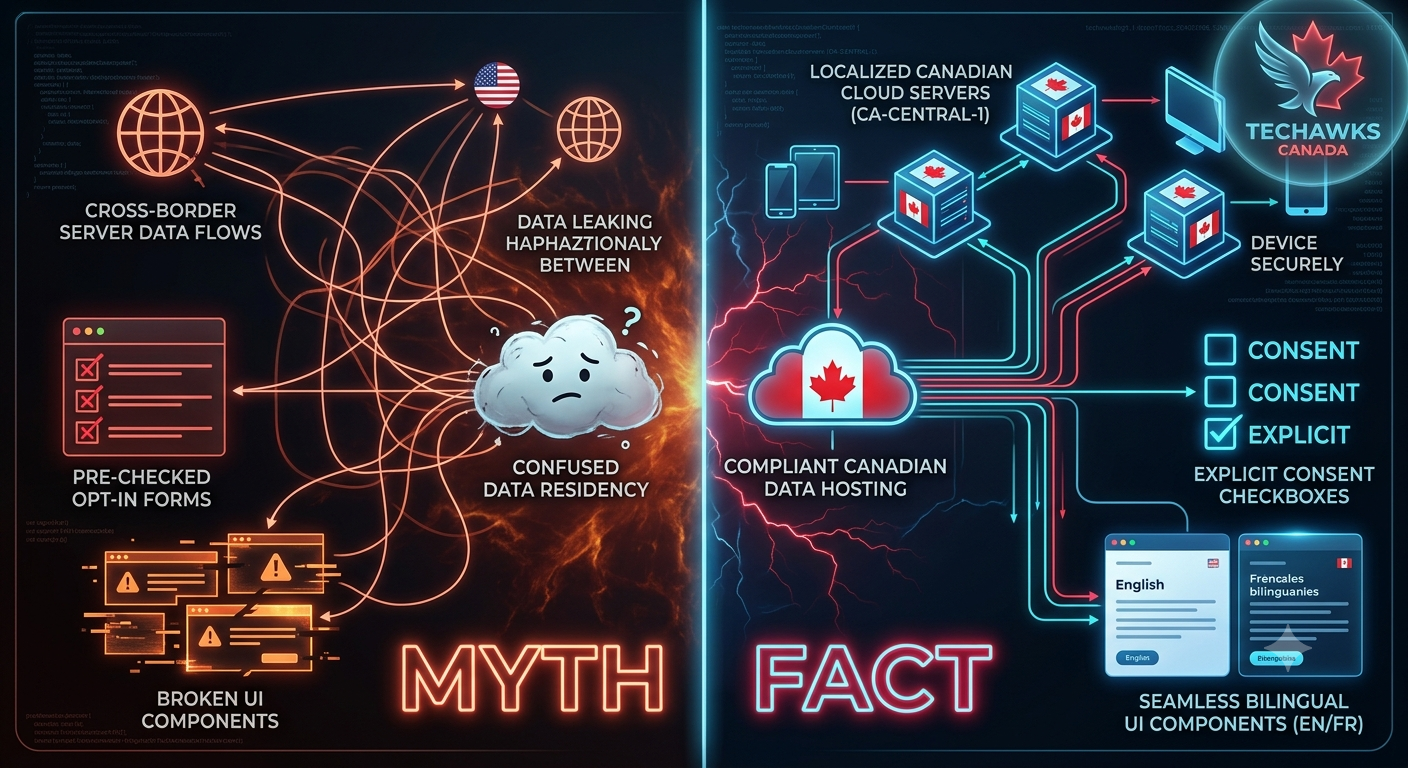
  • Debunking the Top 4 Tech Infrastructure & Compliance Myths in Canada


    Myth #1: "Hosting data in US-East data centers is fine for all Canadian users as long as latency is low."
    Fact: Data residency obligations vary significantly by province and sector.
    The Reality: While general commercial applications may leverage cross-border hosting under PIPEDA, regulated sectors (such as healthcare, public services, and financial services) or operations subject to provincial mandates (like Quebec’s Law 25) often require strict in-region data residency or explicit transfer disclosures.
    Action: Utilize dedicated Canadian cloud infrastructure regions—such as AWS Canada Central (ca-central-1 in Montreal) or AWS Canada West (ca-west-1 in Calgary)—to ensure local data residency and low latency.


    Myth #2: "Implied consent is always sufficient under PIPEDA for tracking user data."
    Fact: Modern privacy laws demand explicit, granular consent—especially for sensitive data.
    The Reality: Federal guidelines and Quebec’s Law 25 require express opt-in consent when dealing with sensitive personal information, third-party tracking cookies, or profiling technologies. Relying on passive or pre-checked agreement boxes exposes your platform to severe regulatory penalties.
    Action: Implement dynamic cookie consent banners that allow Canadian users to explicitly opt into specific data collection categories before scripts execute.


    Myth #3: "Translating app text to French is all you need for Quebec compliance."
    Fact: Localization requires comprehensive structural UX and legal alignment.
    The Reality: Proper French localization (fr-CA) isn't just about translating static labels; it requires handling expanded character counts, dynamic form field rendering, translated legal/privacy documentation, and ensuring equal functional feature parity across languages.
    Action: Build multi-language support into your design system and i18n framework early to prevent text truncation and broken layouts.


    Myth #4: "Standard marketing email opt-outs comply with Canada's Anti-Spam Legislation (CASL)."
    Fact: CASL enforces strict opt-in rules and clear sender identification.
    The Reality: CASL is one of the toughest anti-spam frameworks globally. Pre-checked consent boxes during checkout or registration are illegal under CASL. You must collect explicit, un-checked opt-in consent and display clear physical contact details in every commercial email.
    Action: Audit all intake forms to ensure opt-in checkboxes default to unchecked and maintain audit logs of user consent dates and sources.


    Key Takeaways
    Leverage In-Region Infrastructure: Use local Canadian cloud nodes (ca-central-1, ca-west-1) to streamline compliance and lower latency across the provinces.
    Explicit Opt-In is Required: Ditch pre-checked boxes for marketing and data tracking to stay compliant with CASL, PIPEDA, and Law 25.
    True Localization Goes Beyond Translation: Engineer multi-language support into your core UI components from day one.


    CTA
    Want to build smarter tech in Canada? Join Techawks Canada today to exchange vetted technical insights, optimize your stack, and connect with peer developers across the country!
    Debunking the Top 4 Tech Infrastructure & Compliance Myths in Canada Myth #1: "Hosting data in US-East data centers is fine for all Canadian users as long as latency is low." Fact: Data residency obligations vary significantly by province and sector. The Reality: While general commercial applications may leverage cross-border hosting under PIPEDA, regulated sectors (such as healthcare, public services, and financial services) or operations subject to provincial mandates (like Quebec’s Law 25) often require strict in-region data residency or explicit transfer disclosures. Action: Utilize dedicated Canadian cloud infrastructure regions—such as AWS Canada Central (ca-central-1 in Montreal) or AWS Canada West (ca-west-1 in Calgary)—to ensure local data residency and low latency. Myth #2: "Implied consent is always sufficient under PIPEDA for tracking user data." Fact: Modern privacy laws demand explicit, granular consent—especially for sensitive data. The Reality: Federal guidelines and Quebec’s Law 25 require express opt-in consent when dealing with sensitive personal information, third-party tracking cookies, or profiling technologies. Relying on passive or pre-checked agreement boxes exposes your platform to severe regulatory penalties. Action: Implement dynamic cookie consent banners that allow Canadian users to explicitly opt into specific data collection categories before scripts execute. Myth #3: "Translating app text to French is all you need for Quebec compliance." Fact: Localization requires comprehensive structural UX and legal alignment. The Reality: Proper French localization (fr-CA) isn't just about translating static labels; it requires handling expanded character counts, dynamic form field rendering, translated legal/privacy documentation, and ensuring equal functional feature parity across languages. Action: Build multi-language support into your design system and i18n framework early to prevent text truncation and broken layouts. Myth #4: "Standard marketing email opt-outs comply with Canada's Anti-Spam Legislation (CASL)." Fact: CASL enforces strict opt-in rules and clear sender identification. The Reality: CASL is one of the toughest anti-spam frameworks globally. Pre-checked consent boxes during checkout or registration are illegal under CASL. You must collect explicit, un-checked opt-in consent and display clear physical contact details in every commercial email. Action: Audit all intake forms to ensure opt-in checkboxes default to unchecked and maintain audit logs of user consent dates and sources. Key Takeaways Leverage In-Region Infrastructure: Use local Canadian cloud nodes (ca-central-1, ca-west-1) to streamline compliance and lower latency across the provinces. Explicit Opt-In is Required: Ditch pre-checked boxes for marketing and data tracking to stay compliant with CASL, PIPEDA, and Law 25. True Localization Goes Beyond Translation: Engineer multi-language support into your core UI components from day one. CTA Want to build smarter tech in Canada? Join Techawks Canada today to exchange vetted technical insights, optimize your stack, and connect with peer developers across the country!
    0 التعليقات 0 المشاركات 872 مشاهدة 0 معاينة
  • The 3-Tier Rule: How to Future-Proof Your Tech Career Beyond the Next Hype Cycle
    If your entire value as a developer or technical professional relies on knowing a specific framework or tool, you're constantly at the mercy of the hype cycle.


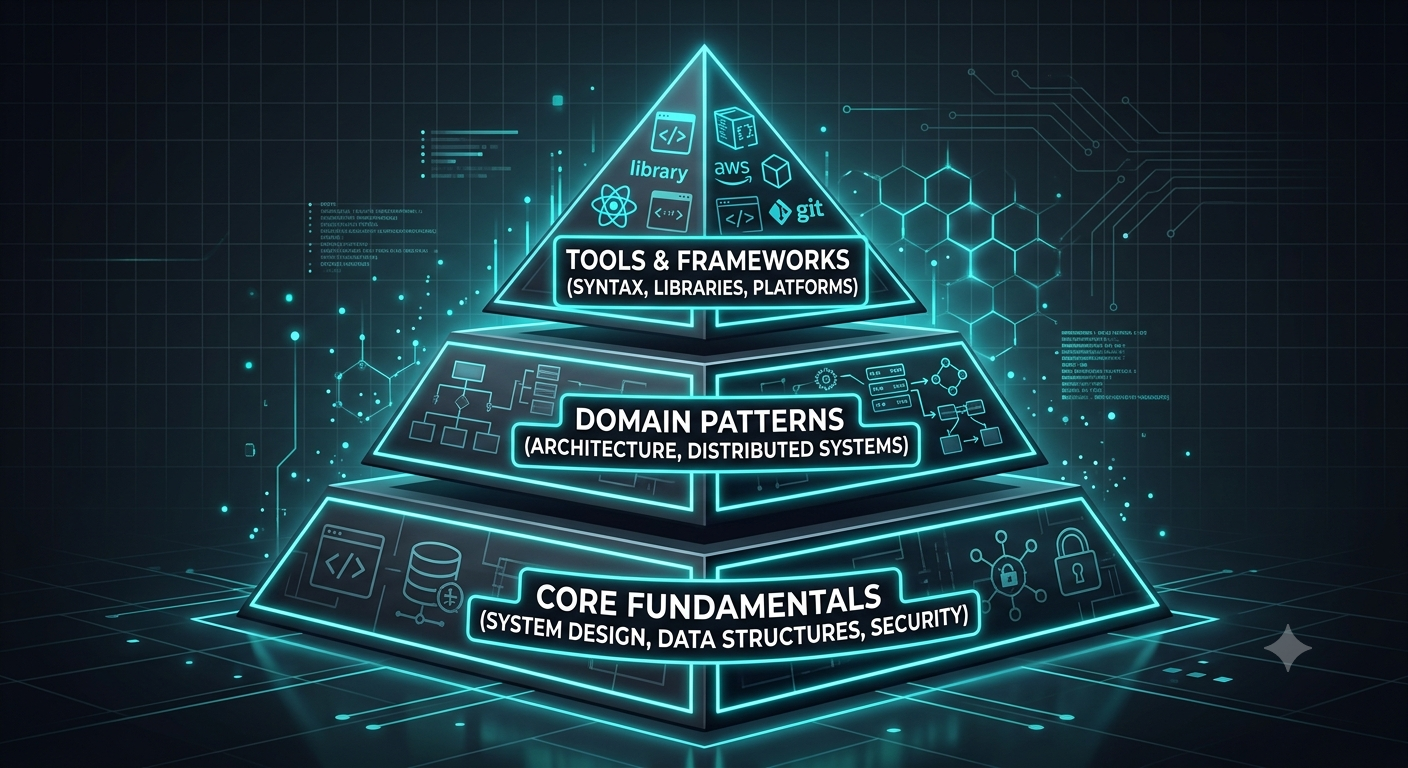
    To build a resilient, long-term tech career, structure your continuous learning using The 3-Tier Skill Stack:


    1. Tier 1: The Core Fundamentals (The Bedrock)
    What it is: System design, data structures, networking, security, and algorithmic thinking.
    Why it matters: Fundamentals rarely change. A deep understanding of how systems handle concurrency, memory, and latency will serve you whether you are writing Rust, Python, or a language that hasn't been invented yet.
    Action: Allocate 30% of your dedicated learning time to fundamentals, even as a senior engineer.


    2. Tier 2: Adaptable Domain Patterns (The Engine)
    What it is: Architectural patterns, distributed systems, event-driven design, and API design principles.
    Why it matters: Frameworks come and go, but the architectural problems they solve remain identical. When you master patterns rather than syntax, switching stacks takes days, not months.
    Action: Whenever you learn a new library, ask yourself: "What underlying architectural pattern is this abstraction hiding?"


    3. Tier 3: High-Leverage Execution Tools (The Edge)
    What it is: Specific syntax, modern AI coding tools, deployment platforms, and niche libraries.
    Why it matters: This is where your immediate daily productivity lives. It gets you hired today, but relying only on Tier 3 makes you vulnerable tomorrow.
    Action: Treat tools as disposable. Be quick to adopt what speeds you up, but never confuse tool fluency with core capability.


    Key Takeaways
    Tools decay, principles compound: Invest the majority of your long-term energy into low-turnover knowledge.
    Learn patterns, not just syntax: Understanding why an architecture works makes you adaptable across any tech stack.
    Stay curious, stay grounded: Use the latest tools to execute faster, but rely on fundamentals to solve the hard problems.


    CTA
    Looking to grow alongside engineers who prioritize deep technical mastery?
    Join the Techawks General Community today to share insights, level up your career, and connect with global tech professionals.
    The 3-Tier Rule: How to Future-Proof Your Tech Career Beyond the Next Hype Cycle If your entire value as a developer or technical professional relies on knowing a specific framework or tool, you're constantly at the mercy of the hype cycle. To build a resilient, long-term tech career, structure your continuous learning using The 3-Tier Skill Stack: 1. Tier 1: The Core Fundamentals (The Bedrock) What it is: System design, data structures, networking, security, and algorithmic thinking. Why it matters: Fundamentals rarely change. A deep understanding of how systems handle concurrency, memory, and latency will serve you whether you are writing Rust, Python, or a language that hasn't been invented yet. Action: Allocate 30% of your dedicated learning time to fundamentals, even as a senior engineer. 2. Tier 2: Adaptable Domain Patterns (The Engine) What it is: Architectural patterns, distributed systems, event-driven design, and API design principles. Why it matters: Frameworks come and go, but the architectural problems they solve remain identical. When you master patterns rather than syntax, switching stacks takes days, not months. Action: Whenever you learn a new library, ask yourself: "What underlying architectural pattern is this abstraction hiding?" 3. Tier 3: High-Leverage Execution Tools (The Edge) What it is: Specific syntax, modern AI coding tools, deployment platforms, and niche libraries. Why it matters: This is where your immediate daily productivity lives. It gets you hired today, but relying only on Tier 3 makes you vulnerable tomorrow. Action: Treat tools as disposable. Be quick to adopt what speeds you up, but never confuse tool fluency with core capability. Key Takeaways Tools decay, principles compound: Invest the majority of your long-term energy into low-turnover knowledge. Learn patterns, not just syntax: Understanding why an architecture works makes you adaptable across any tech stack. Stay curious, stay grounded: Use the latest tools to execute faster, but rely on fundamentals to solve the hard problems. CTA Looking to grow alongside engineers who prioritize deep technical mastery? Join the Techawks General Community today to share insights, level up your career, and connect with global tech professionals.
    0 التعليقات 0 المشاركات 1كيلو بايت مشاهدة 0 معاينة
  • Which Area of Technical Debt Holds Your Team Back the Most?


    Every engineering team takes on technical debt. But high-performing teams know where their debt lives and proactively manage it before it halts velocity.
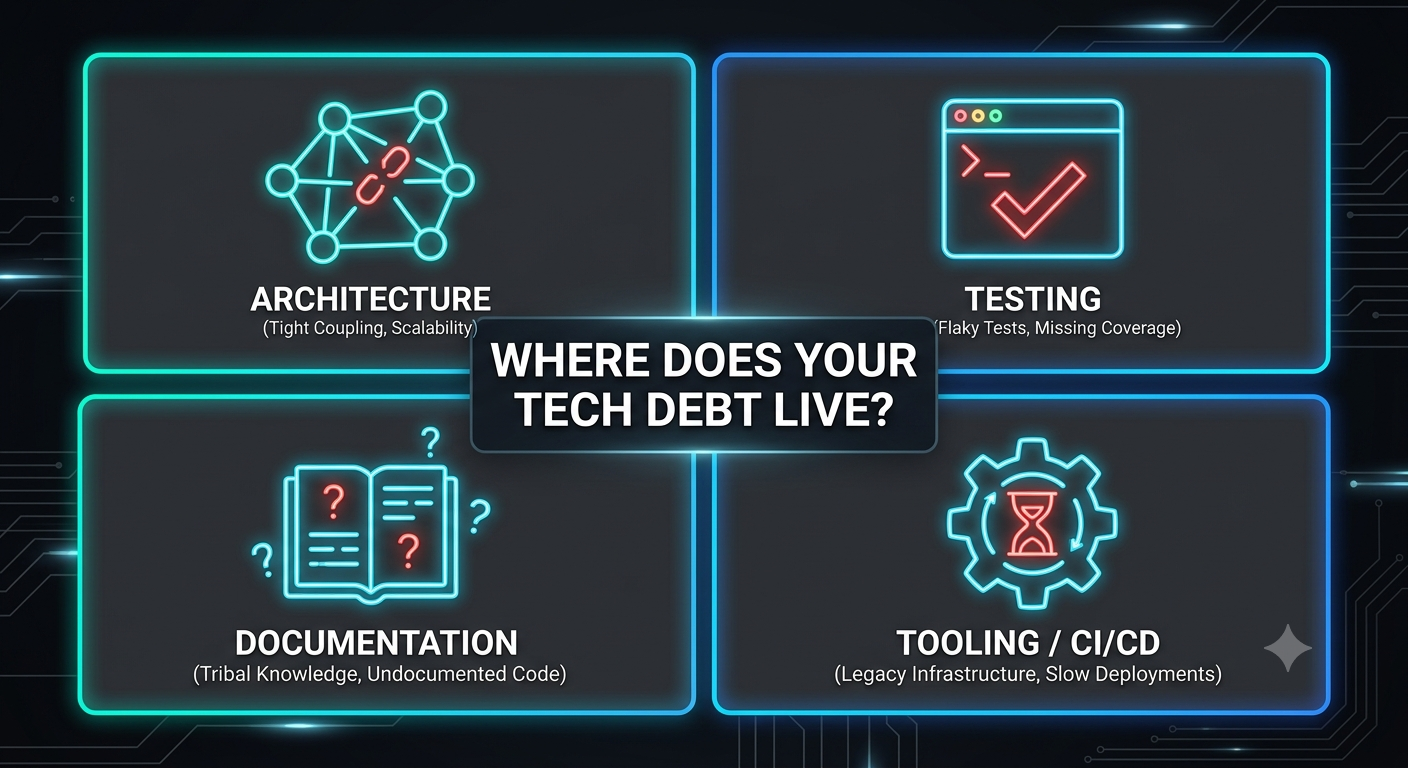
    To help frame how we tackle debt, let’s break down the 4 Core Dimensions of Tech Debt:
    Architecture Debt: Monoliths that should be microservices (or vice versa), tight coupling, and brittle integration points that make simple changes risky.
    Testing & Quality Debt: Flaky test suites, low coverage on critical paths, or manual QA bottlenecks that turn releases into high-stress events.
    Documentation & Context Debt: Zero onboarding guides, tribal knowledge locked in senior devs' heads, and missing API specs.
    Tooling & Dependency Debt: Outdated frameworks, deprecated libraries, and slow CI/CD pipelines that waste hours every day.


    🗳️ Community Poll:
    If you could eliminate ONE category of tech debt from your codebase tomorrow, which would it be?
    A) Architecture & Design (Tight coupling, scalability bottlenecks)
    B) Test Suite & QA (Flaky tests, manual deployment checks)
    C) Documentation & Context (Tribal knowledge, missing specs)
    D) Tooling & Infrastructure (Legacy dependencies, slow CI/CD)
    (Vote in the poll options above and drop your reasoning in the comments!)


    Key Takeaways
    Identify before you refactor: Categorizing technical debt helps you prioritize fixes that yield the highest return on developer velocity.
    Documentation is leverage: Missing context (Type C debt) often slows down teams just as much as broken code.
    Make debt visible: Refactoring shouldn't be a secret project—track it as part of your team's regular sprint allocation.


    CTA
    Want to master engineering leadership, system design, and clean architecture practices?
    Join the Techawks General Community today to participate in weekly polls, trade strategies with lead engineers worldwide, and level up your engineering workflow.
    Which Area of Technical Debt Holds Your Team Back the Most? Every engineering team takes on technical debt. But high-performing teams know where their debt lives and proactively manage it before it halts velocity. To help frame how we tackle debt, let’s break down the 4 Core Dimensions of Tech Debt: Architecture Debt: Monoliths that should be microservices (or vice versa), tight coupling, and brittle integration points that make simple changes risky. Testing & Quality Debt: Flaky test suites, low coverage on critical paths, or manual QA bottlenecks that turn releases into high-stress events. Documentation & Context Debt: Zero onboarding guides, tribal knowledge locked in senior devs' heads, and missing API specs. Tooling & Dependency Debt: Outdated frameworks, deprecated libraries, and slow CI/CD pipelines that waste hours every day. 🗳️ Community Poll: If you could eliminate ONE category of tech debt from your codebase tomorrow, which would it be? A) Architecture & Design (Tight coupling, scalability bottlenecks) B) Test Suite & QA (Flaky tests, manual deployment checks) C) Documentation & Context (Tribal knowledge, missing specs) D) Tooling & Infrastructure (Legacy dependencies, slow CI/CD) (Vote in the poll options above and drop your reasoning in the comments!) Key Takeaways Identify before you refactor: Categorizing technical debt helps you prioritize fixes that yield the highest return on developer velocity. Documentation is leverage: Missing context (Type C debt) often slows down teams just as much as broken code. Make debt visible: Refactoring shouldn't be a secret project—track it as part of your team's regular sprint allocation. CTA Want to master engineering leadership, system design, and clean architecture practices? Join the Techawks General Community today to participate in weekly polls, trade strategies with lead engineers worldwide, and level up your engineering workflow.
    0 التعليقات 0 المشاركات 441 مشاهدة 0 معاينة
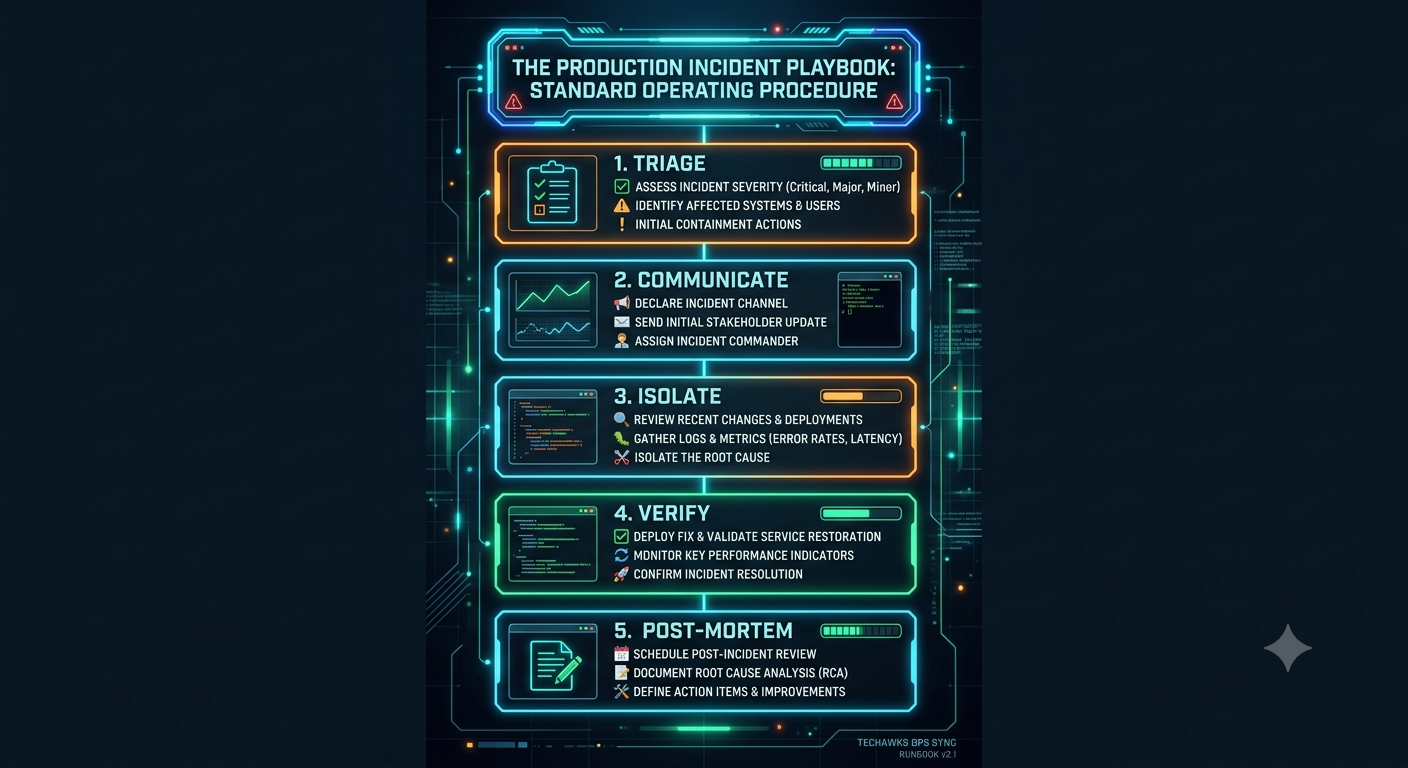
  • The Production Incident Checklist: 5 Steps to Systematic Incident Response
    When critical services fail, high-stakes pressure often leads to hasty decisions, making outages longer and worse. Save this Production Incident Response Checklist to keep your team calm, structured, and fast when things break.


    🛑 Step 1: Triage & Contain (Stop the Bleeding)
    Goal: Restore basic service availability before finding the root cause.
    Actions: Roll back immediately: If a deployment happened within the last 2 hours, revert it first—investigate later.
    Apply circuit breakers: Degrade non-essential features (e.g., disable recommendations to save core checkout APIs).
    Scale up resources: Throw temporary bandwidth or compute power at the issue if traffic spikes are causing bottlenecks.


    📢 Step 2: Establish Single-Point Communication
    Goal: Prevent multi-channel noise and align internal teams.
    Actions: Appoint an Incident Commander (IC) who manages updates, while technical leads focus solely on debugging.
    Open a dedicated incident channel or bridge (e.g., #incident-2026-08-05).
    Publish an initial status update to stakeholders within 15 minutes, even if it's just: "We are actively investigating."


    🔍 Step 3: Isolate the Root Cause
    Goal: Locate the point of failure systematically.
    Actions: Check recent changes (code deployments, feature flags, infrastructure updates, DB migrations).
    Inspect core metrics: Error rates, Latency, Saturation, and Traffic (The 4 Golden Signals).
    Isolate external dependencies: Is third-party API latency cascading into your system?


    🛠️ Step 4: Verify and Monitor the Fix
    Goal: Ensure stability before closing the incident.
    Actions: Deploy the hotfix to a staging environment first if time permits, or monitor canary releases closely.
    Validate that latency and error rates return to baseline.
    Keep heightened monitoring active for at least 1 hour post-fix.


    📝 Step 5: Blameless Post-Mortem
    Goal: Turn failures into permanent system resilience.
    Actions: Focus on system weaknesses, not individual mistakes ("Why did the system allow this invalid input?" vs. "Who pushed this bug?").
    Define actionable tickets with assigned owners to prevent recurrence.


    Key Takeaways
    Mitigate first, debug second: Restoring service to users is always a higher priority than discovering the root cause.
    Communication reduces stress: Assigning an Incident Commander keeps developers focused on solving the problem without constant status requests.
    Failure is input for resilience: A incident is only wasted if you don't use the post-mortem to fortify your architecture.


    CTA
    Want to level up your system design and engineering practices with world-class peers?
    Join the Techawks General Community today to access exclusive architecture guides, incident runbooks, and actionable technical discussions!
    The Production Incident Checklist: 5 Steps to Systematic Incident Response When critical services fail, high-stakes pressure often leads to hasty decisions, making outages longer and worse. Save this Production Incident Response Checklist to keep your team calm, structured, and fast when things break. 🛑 Step 1: Triage & Contain (Stop the Bleeding) Goal: Restore basic service availability before finding the root cause. Actions: Roll back immediately: If a deployment happened within the last 2 hours, revert it first—investigate later. Apply circuit breakers: Degrade non-essential features (e.g., disable recommendations to save core checkout APIs). Scale up resources: Throw temporary bandwidth or compute power at the issue if traffic spikes are causing bottlenecks. 📢 Step 2: Establish Single-Point Communication Goal: Prevent multi-channel noise and align internal teams. Actions: Appoint an Incident Commander (IC) who manages updates, while technical leads focus solely on debugging. Open a dedicated incident channel or bridge (e.g., #incident-2026-08-05). Publish an initial status update to stakeholders within 15 minutes, even if it's just: "We are actively investigating." 🔍 Step 3: Isolate the Root Cause Goal: Locate the point of failure systematically. Actions: Check recent changes (code deployments, feature flags, infrastructure updates, DB migrations). Inspect core metrics: Error rates, Latency, Saturation, and Traffic (The 4 Golden Signals). Isolate external dependencies: Is third-party API latency cascading into your system? 🛠️ Step 4: Verify and Monitor the Fix Goal: Ensure stability before closing the incident. Actions: Deploy the hotfix to a staging environment first if time permits, or monitor canary releases closely. Validate that latency and error rates return to baseline. Keep heightened monitoring active for at least 1 hour post-fix. 📝 Step 5: Blameless Post-Mortem Goal: Turn failures into permanent system resilience. Actions: Focus on system weaknesses, not individual mistakes ("Why did the system allow this invalid input?" vs. "Who pushed this bug?"). Define actionable tickets with assigned owners to prevent recurrence. Key Takeaways Mitigate first, debug second: Restoring service to users is always a higher priority than discovering the root cause. Communication reduces stress: Assigning an Incident Commander keeps developers focused on solving the problem without constant status requests. Failure is input for resilience: A incident is only wasted if you don't use the post-mortem to fortify your architecture. CTA Want to level up your system design and engineering practices with world-class peers? Join the Techawks General Community today to access exclusive architecture guides, incident runbooks, and actionable technical discussions!
    0 التعليقات 0 المشاركات 797 مشاهدة 0 معاينة
  • The Expanding Role of Metallized Polyester Film Capacitors in Industrial and Automotive Applications
    The increasing adoption of advanced electronic systems has created significant growth opportunities for the Metallized Polyester Film Capacitor Market. These capacitors are widely recognized for their excellent electrical stability, compact size, self-healing characteristics, and affordability. They have become an integral part of industrial machinery, automotive electronics, telecommunications...
    0 التعليقات 0 المشاركات 428 مشاهدة 0 معاينة
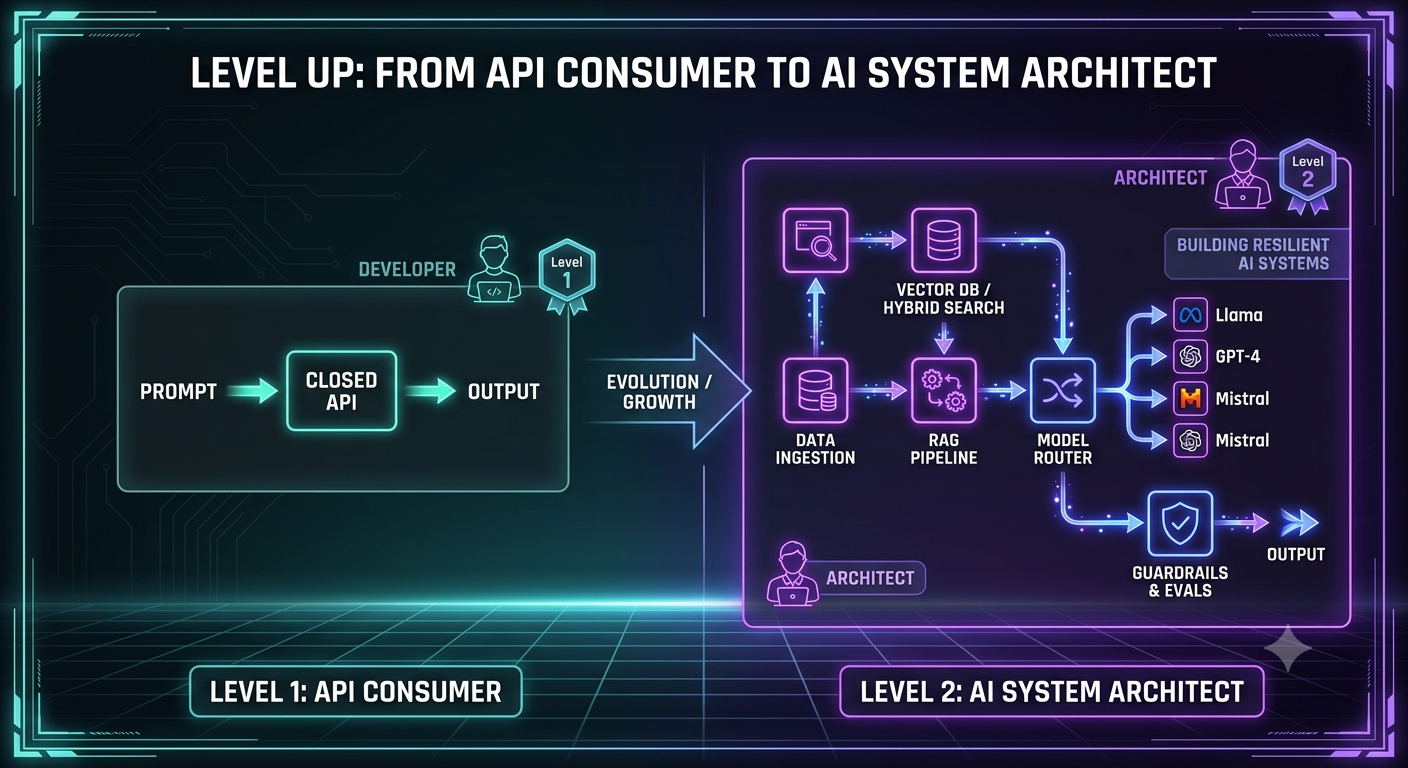
  • The AI Engineer’s Roadmap: Moving from API Consumer to System Architect
    The barrier to entry for building with AI has never been lower, but the bar for building reliable, enterprise-ready AI applications keeps rising.


    To future-proof your career in AI engineering, move up the value chain by mastering the 3 Pillars of Advanced AI Systems:


    1. Data Pipeline & Retrieval Mastery (Context Engineering)
    The Problem: Off-the-shelf LLMs don't know your domain data and suffer from hallucinations.
    The Skill: Go beyond basic vector search. Master Advanced Retrieval-Augmented Generation (RAG)—including hybrid search (keyword + semantic), re-ranking algorithms, metadata filtering, and chunking strategies.
    Action: Stop focusing only on the prompt. Invest time in learning how vector databases index data and how to clean unstructured context for optimal retrieval.


    2. Evaluation & Guardrails (The Deterministic Layer)
    The Problem: Non-deterministic outputs make traditional testing methods obsolete.
    The Skill: Build automated evaluation suites (Eval pipelines). Learn to measure metric dimensions like faithfulness, answer relevance, and context recall using tools like Ragas or custom LLM-as-a-judge frameworks.
    Action: Before deploying any feature, set up benchmark datasets to evaluate model output regressions whenever you update prompts or underlying models.


    3. Latency, Cost, & Fine-Tuning (Optimization)
    The Problem: SOTA closed models can be slow, expensive, and introduce vendor lock-in.
    The Skill: Know when to use a frontier model versus fine-tuning smaller, open-weights models (e.g., Llama, Mistral) for specific, structured tasks. Master caching techniques and task routing.
    Action: Learn parameter-efficient fine-tuning techniques like LoRA/QLoRA, and understand how to deploy local inference engines for low-latency workloads.


    Key Takeaways
    Context is king: The quality of an AI application depends more on data pipeline architecture than prompt engineering.
    Evals over intuition: Reliable AI engineers build automated test suites to measure model performance programmatically.
    Optimize for production: Knowing how to balance cost, latency, and accuracy using hybrid architectures makes you indispensable.


    CTA
    Ready to build production-ready AI alongside top engineers?
    Join the AI Builders & Enthusiasts community today to trade architecture blueprints, get hands-on project feedback, and master the future of AI engineering.
    The AI Engineer’s Roadmap: Moving from API Consumer to System Architect The barrier to entry for building with AI has never been lower, but the bar for building reliable, enterprise-ready AI applications keeps rising. To future-proof your career in AI engineering, move up the value chain by mastering the 3 Pillars of Advanced AI Systems: 1. Data Pipeline & Retrieval Mastery (Context Engineering) The Problem: Off-the-shelf LLMs don't know your domain data and suffer from hallucinations. The Skill: Go beyond basic vector search. Master Advanced Retrieval-Augmented Generation (RAG)—including hybrid search (keyword + semantic), re-ranking algorithms, metadata filtering, and chunking strategies. Action: Stop focusing only on the prompt. Invest time in learning how vector databases index data and how to clean unstructured context for optimal retrieval. 2. Evaluation & Guardrails (The Deterministic Layer) The Problem: Non-deterministic outputs make traditional testing methods obsolete. The Skill: Build automated evaluation suites (Eval pipelines). Learn to measure metric dimensions like faithfulness, answer relevance, and context recall using tools like Ragas or custom LLM-as-a-judge frameworks. Action: Before deploying any feature, set up benchmark datasets to evaluate model output regressions whenever you update prompts or underlying models. 3. Latency, Cost, & Fine-Tuning (Optimization) The Problem: SOTA closed models can be slow, expensive, and introduce vendor lock-in. The Skill: Know when to use a frontier model versus fine-tuning smaller, open-weights models (e.g., Llama, Mistral) for specific, structured tasks. Master caching techniques and task routing. Action: Learn parameter-efficient fine-tuning techniques like LoRA/QLoRA, and understand how to deploy local inference engines for low-latency workloads. Key Takeaways Context is king: The quality of an AI application depends more on data pipeline architecture than prompt engineering. Evals over intuition: Reliable AI engineers build automated test suites to measure model performance programmatically. Optimize for production: Knowing how to balance cost, latency, and accuracy using hybrid architectures makes you indispensable. CTA Ready to build production-ready AI alongside top engineers? Join the AI Builders & Enthusiasts community today to trade architecture blueprints, get hands-on project feedback, and master the future of AI engineering.
    0 التعليقات 0 المشاركات 694 مشاهدة 0 معاينة
  • Where is Your LLM Pipeline Bottlenecking in Production?


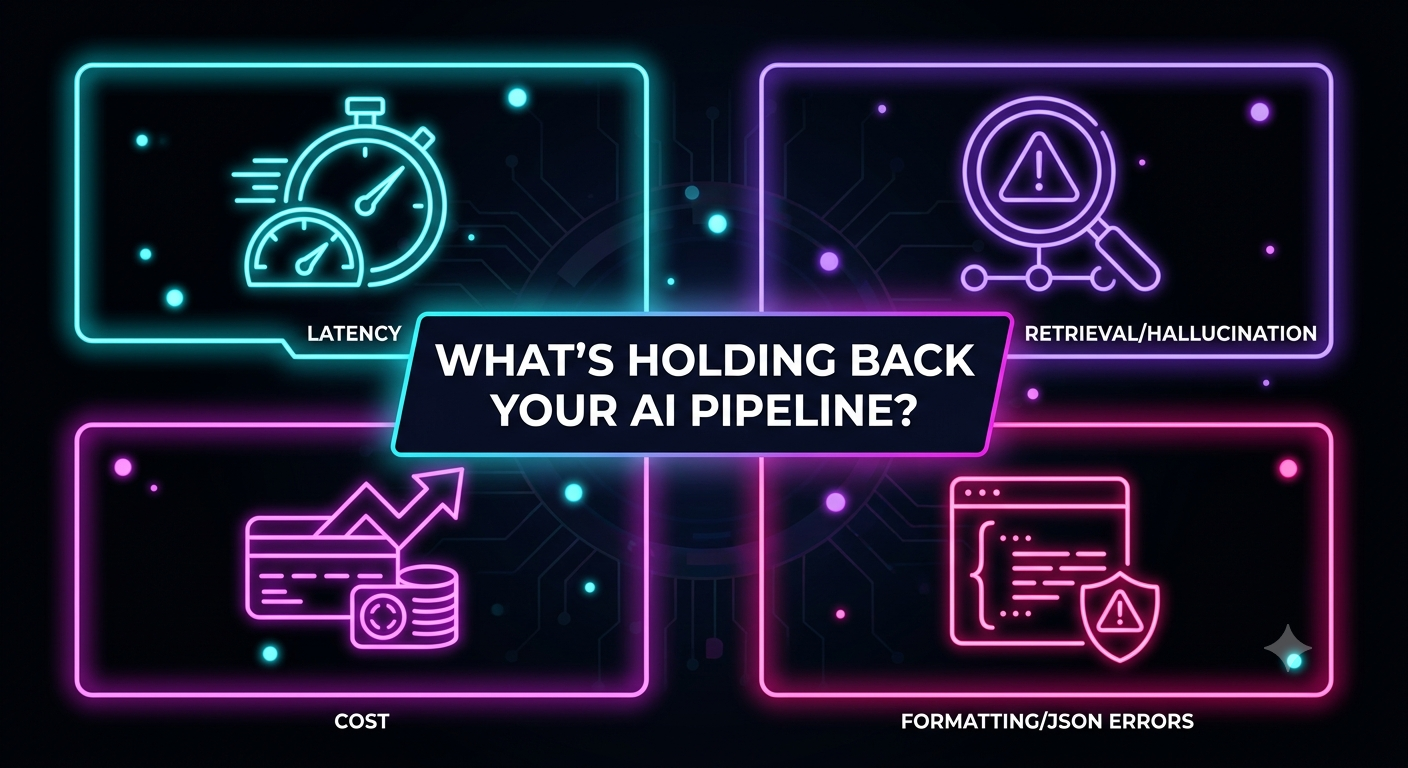
    When scaling LLM-powered applications from demo to production, developers inevitably hit a performance wall. High-performing AI teams evaluate their architecture across 4 Critical Vectors:
    Latency & Time-to-First-Token (TTFT): Streaming issues, slow model inference, or heavy sequential RAG operations making the UI feel sluggish.
    Context Quality & Retrieval Accuracy: Vector DB noise, poor chunking strategies, or hallucinated details ruining user trust.
    Inference Cost at Scale: Enterprise bills ballooning due to unnecessary calls to top-tier frontier models for simple tasks.
    Output Determinism & Reliability: Model outputs breaking JSON schemas, ignoring prompt constraints, or failing silent safety checks.


    🗳️ Community Poll:
    If you could instantly solve ONE engineering bottleneck in your AI stack today, which would it be?
    A) High Latency / Slow Response Times (TTFT, streaming bottlenecks)
    B) Low Retrieval Accuracy / Hallucinations (RAG noise, chunking issues)
    C) Unpredictable API Costs (High token usage, over-reliance on large models)
    D) Unreliable Output Formatting (Broken JSON, schema failures)
    (Vote in the poll above and drop your favorite workarounds in the comments!)


    Key Takeaways
    Profile early: Don't wait for production traffic to discover whether your latency is coming from vector search or LLM generation.
    Tier your models: Save high-parameter models for complex reasoning; route structured or simple extraction tasks to smaller, faster models.
    Enforce structured outputs: Use function calling or strict JSON schema enforcement layers to prevent downstream parsing failures.


    CTA
    Looking to benchmark your AI stack with developers building production-grade systems?
    Join the AI Builders & Enthusiasts community today to trade optimization tips, debug RAG architectures, and build better AI together!
    Where is Your LLM Pipeline Bottlenecking in Production? When scaling LLM-powered applications from demo to production, developers inevitably hit a performance wall. High-performing AI teams evaluate their architecture across 4 Critical Vectors: Latency & Time-to-First-Token (TTFT): Streaming issues, slow model inference, or heavy sequential RAG operations making the UI feel sluggish. Context Quality & Retrieval Accuracy: Vector DB noise, poor chunking strategies, or hallucinated details ruining user trust. Inference Cost at Scale: Enterprise bills ballooning due to unnecessary calls to top-tier frontier models for simple tasks. Output Determinism & Reliability: Model outputs breaking JSON schemas, ignoring prompt constraints, or failing silent safety checks. 🗳️ Community Poll: If you could instantly solve ONE engineering bottleneck in your AI stack today, which would it be? A) High Latency / Slow Response Times (TTFT, streaming bottlenecks) B) Low Retrieval Accuracy / Hallucinations (RAG noise, chunking issues) C) Unpredictable API Costs (High token usage, over-reliance on large models) D) Unreliable Output Formatting (Broken JSON, schema failures) (Vote in the poll above and drop your favorite workarounds in the comments!) Key Takeaways Profile early: Don't wait for production traffic to discover whether your latency is coming from vector search or LLM generation. Tier your models: Save high-parameter models for complex reasoning; route structured or simple extraction tasks to smaller, faster models. Enforce structured outputs: Use function calling or strict JSON schema enforcement layers to prevent downstream parsing failures. CTA Looking to benchmark your AI stack with developers building production-grade systems? Join the AI Builders & Enthusiasts community today to trade optimization tips, debug RAG architectures, and build better AI together!
    0 التعليقات 0 المشاركات 468 مشاهدة 0 معاينة