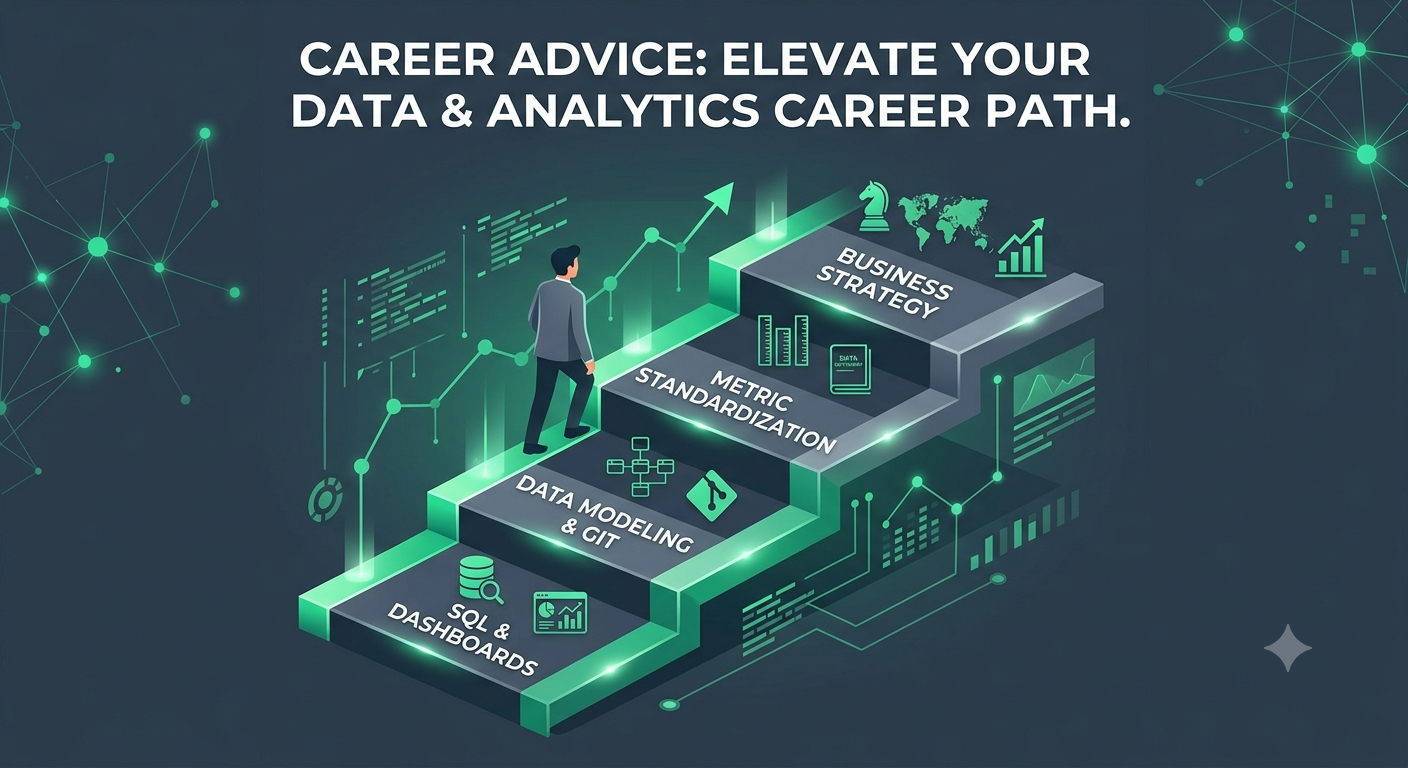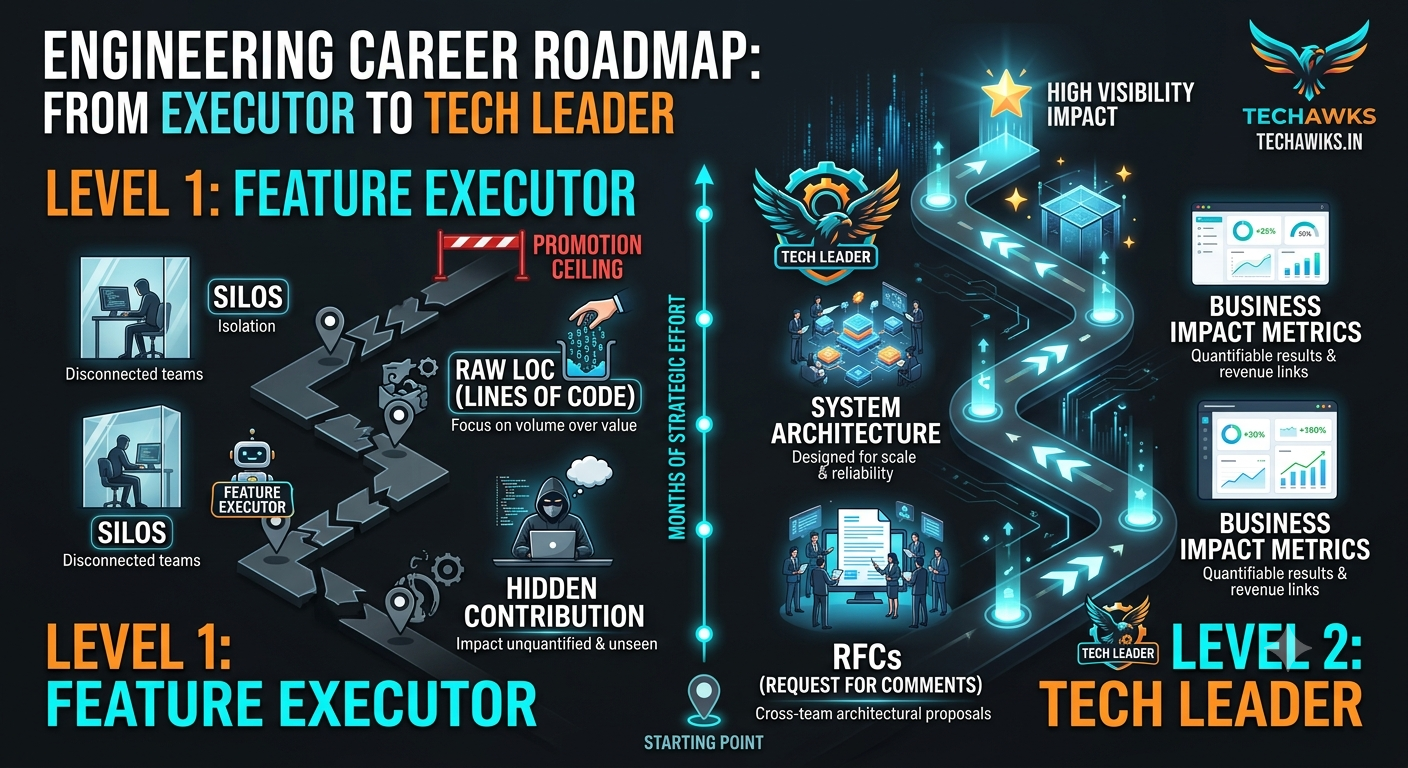
• Which Data Modeling Approach Powers Your Analytics Stack? (Vote & Compare)
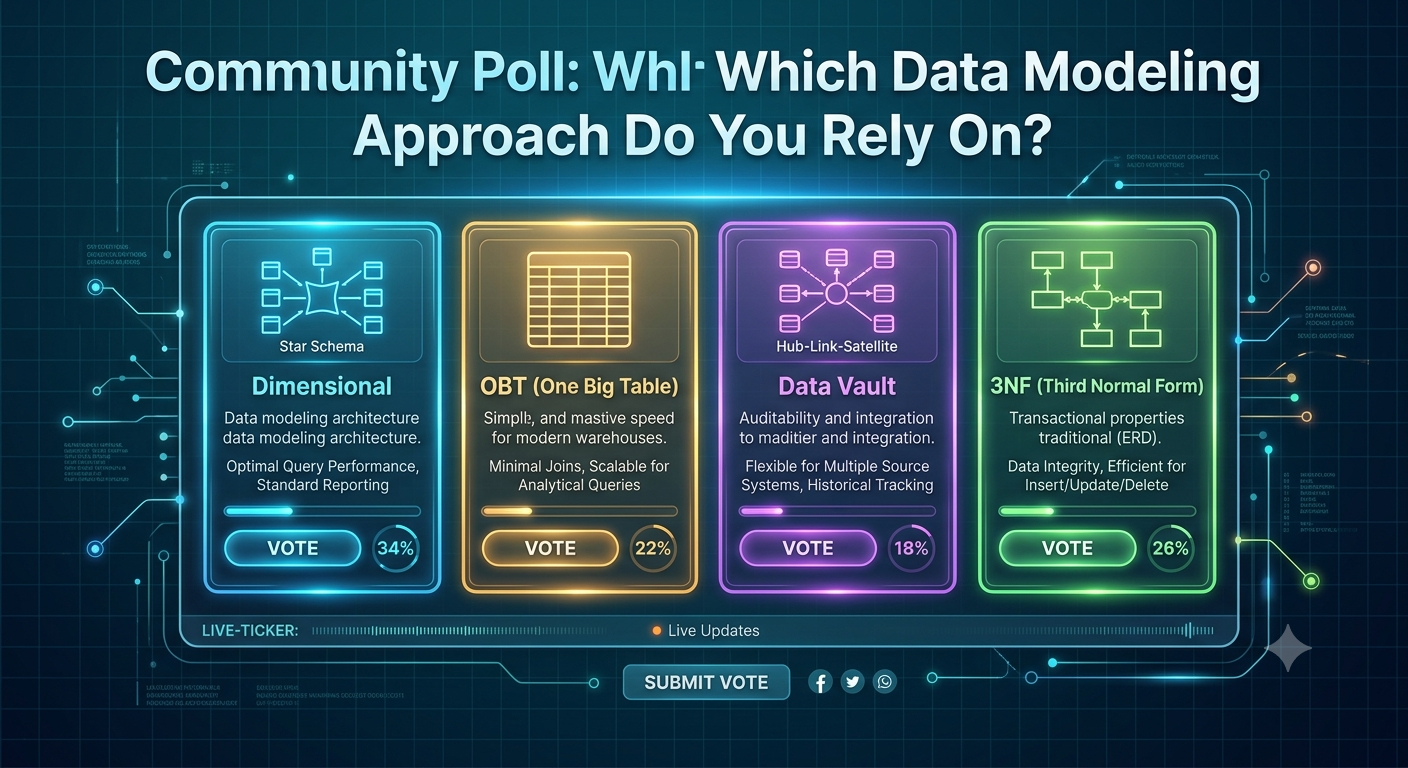
    Data architectures evolve, but foundational modeling patterns remain critical for organizing analytical data efficiently. Cast your vote below, then check out the practical breakdown for when to leverage each strategy:


    📊 Poll Question:
    What is your team's primary approach for structuring analytical data models?
    Option A: Dimensional Modeling (Star / Snowflake Schema)
    Option B: One Big Table (OBT / Wide Tables)
    Option C: Data Vault (Hubs, Links, and Satellites)
    Option D: Normalized / Relational (3NF)


    💡 When to Use Each Approach:
    If you chose A (Dimensional Modeling): The gold standard for business intelligence. By separating facts (quantitative measurements) from dimensions (contextual attributes), you ensure intuitive querying for tools like Tableau or PowerBI while keeping query joins fast and readable.
    If you chose B (OBT): Gaining massive popularity with modern cloud data warehouses (Snowflake, BigQuery, ClickHouse). Denormalizing data into a single wide table eliminates join overhead, making nested analytical queries lightning-fast at scale.
    If you chose C (Data Vault): Best for enterprise-scale environments with constantly shifting source systems. Data Vault isolates changes by decoupling business keys (Hubs), relationships (Links), and descriptive context (Satellites), offering auditability and long-term scalability.
    If you chose D (3NF): Great for transactional systems (OLTP), but usually a bottleneck for analytics (OLAP). If your reporting tables are heavily normalized, consider transforming them into Star Schema or OBT layers to avoid expensive multi-table joins.


    Key Takeaways
    No one-size-fits-all: Choose OBT for raw query speed, Dimensional for self-serve BI usability, and Data Vault for complex enterprise auditability.
    Decouple OLTP and OLAP: Never expose raw 3NF operational schemas directly to reporting tools; transform them into analytical structures first.
    Prioritize stakeholder clarity: A model is only effective if business analysts can easily query and understand the underlying data relationships.


    CTA
    Want to dive deeper into data modeling frameworks and modern warehouse architectures?
    👉 Join our Data Science & Analytics community today to participate in architectural discussions, vote in weekly polls, and level up your data engineering skills!
    Which Data Modeling Approach Powers Your Analytics Stack? (Vote & Compare) Data architectures evolve, but foundational modeling patterns remain critical for organizing analytical data efficiently. Cast your vote below, then check out the practical breakdown for when to leverage each strategy: 📊 Poll Question: What is your team's primary approach for structuring analytical data models? Option A: Dimensional Modeling (Star / Snowflake Schema) Option B: One Big Table (OBT / Wide Tables) Option C: Data Vault (Hubs, Links, and Satellites) Option D: Normalized / Relational (3NF) 💡 When to Use Each Approach: If you chose A (Dimensional Modeling): The gold standard for business intelligence. By separating facts (quantitative measurements) from dimensions (contextual attributes), you ensure intuitive querying for tools like Tableau or PowerBI while keeping query joins fast and readable. If you chose B (OBT): Gaining massive popularity with modern cloud data warehouses (Snowflake, BigQuery, ClickHouse). Denormalizing data into a single wide table eliminates join overhead, making nested analytical queries lightning-fast at scale. If you chose C (Data Vault): Best for enterprise-scale environments with constantly shifting source systems. Data Vault isolates changes by decoupling business keys (Hubs), relationships (Links), and descriptive context (Satellites), offering auditability and long-term scalability. If you chose D (3NF): Great for transactional systems (OLTP), but usually a bottleneck for analytics (OLAP). If your reporting tables are heavily normalized, consider transforming them into Star Schema or OBT layers to avoid expensive multi-table joins. Key Takeaways No one-size-fits-all: Choose OBT for raw query speed, Dimensional for self-serve BI usability, and Data Vault for complex enterprise auditability. Decouple OLTP and OLAP: Never expose raw 3NF operational schemas directly to reporting tools; transform them into analytical structures first. Prioritize stakeholder clarity: A model is only effective if business analysts can easily query and understand the underlying data relationships. CTA Want to dive deeper into data modeling frameworks and modern warehouse architectures? 👉 Join our Data Science & Analytics community today to participate in architectural discussions, vote in weekly polls, and level up your data engineering skills!
    0 Comentários 0 Compartilhamentos 236 Visualizações 0 Anterior
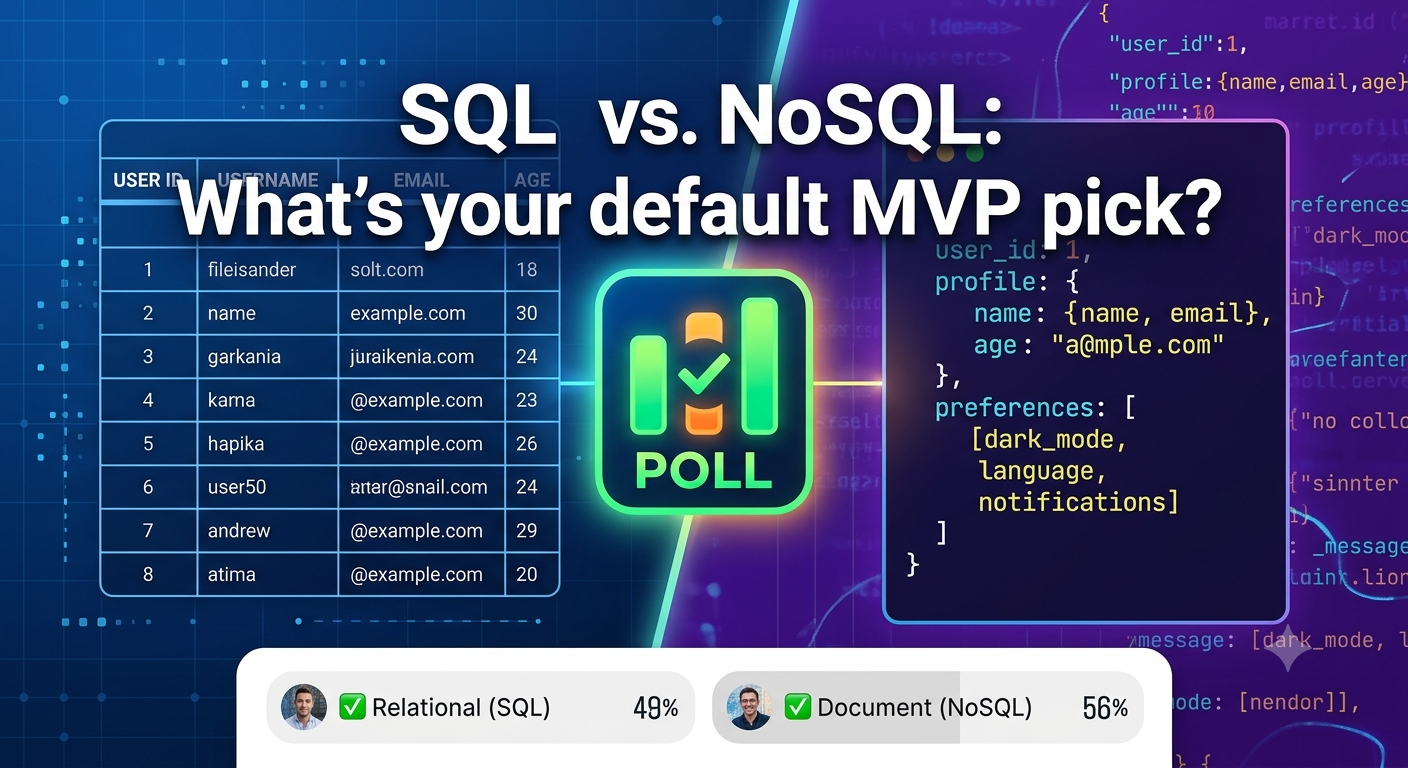
  • Database Selection Dilemma: Relational vs. Document Stores for New Projects
    Choosing between a Relational DB (like PostgreSQL or MySQL) and a Document Store (like MongoDB) isn't about which technology is "better"—it's about matching your data access patterns to your domain logic.
    Here is a quick framework to make the right call:


    Choose a Relational DB (SQL) when:
    Data integrity is non-negotiable: You require strict schema enforcement and full ACID compliance (e.g., financial transactions, inventory tracking).
    Relationships are complex: Your domain involves heavy cross-referencing, multi-table joins, and normalized structures.
    Query patterns are unpredictable: SQL allows you to run ad-hoc analytical queries without restructuring your entire dataset.


    Choose a Document Store (NoSQL) when:
    Schemas are fluid or evolving rapidly: You are prototyping rapidly or working with highly unstructured data where attributes vary per record.
    High-write throughput & horizontal scale: You need to partition data across multiple nodes with low-latency reads for pre-aggregated documents.
    Hierarchical data structures: Your entity contains nested arrays/objects that are naturally fetched and written together (e.g., user preferences or catalog items).


    📊 Community Poll
    When bootstrapping a brand-new production MVP today, what is your default database choice?
    🟢 PostgreSQL (Reliable, rich feature set, JSON support)
    🟡 MongoDB / Document DB (Flexible schema, rapid iteration)
    🔵 SQLite / Embedded DB (Lightweight, simple deployment)
    🟣 It depends entirely on the domain logic
    (Cast your vote in the comments below with a brief reason why!)


    Key Takeaways
    Design for access patterns: Choose your database based on how you write and read data, not just framework defaults.
    Postgres bridges the gap: Modern SQL databases handle JSON documents remarkably well, giving you flexibility alongside relational integrity.
    Avoid premature optimization: Pick the tool that minimizes architectural complexity for your team's current velocity.


    CTA
    Debating system architecture choices for your next big build? Join Developers & Coding on Techawks today to discuss database strategies, get code feedback, and level up with fellow engineers.
    Database Selection Dilemma: Relational vs. Document Stores for New Projects Choosing between a Relational DB (like PostgreSQL or MySQL) and a Document Store (like MongoDB) isn't about which technology is "better"—it's about matching your data access patterns to your domain logic. Here is a quick framework to make the right call: Choose a Relational DB (SQL) when: Data integrity is non-negotiable: You require strict schema enforcement and full ACID compliance (e.g., financial transactions, inventory tracking). Relationships are complex: Your domain involves heavy cross-referencing, multi-table joins, and normalized structures. Query patterns are unpredictable: SQL allows you to run ad-hoc analytical queries without restructuring your entire dataset. Choose a Document Store (NoSQL) when: Schemas are fluid or evolving rapidly: You are prototyping rapidly or working with highly unstructured data where attributes vary per record. High-write throughput & horizontal scale: You need to partition data across multiple nodes with low-latency reads for pre-aggregated documents. Hierarchical data structures: Your entity contains nested arrays/objects that are naturally fetched and written together (e.g., user preferences or catalog items). 📊 Community Poll When bootstrapping a brand-new production MVP today, what is your default database choice? 🟢 PostgreSQL (Reliable, rich feature set, JSON support) 🟡 MongoDB / Document DB (Flexible schema, rapid iteration) 🔵 SQLite / Embedded DB (Lightweight, simple deployment) 🟣 It depends entirely on the domain logic (Cast your vote in the comments below with a brief reason why!) Key Takeaways Design for access patterns: Choose your database based on how you write and read data, not just framework defaults. Postgres bridges the gap: Modern SQL databases handle JSON documents remarkably well, giving you flexibility alongside relational integrity. Avoid premature optimization: Pick the tool that minimizes architectural complexity for your team's current velocity. CTA Debating system architecture choices for your next big build? Join Developers & Coding on Techawks today to discuss database strategies, get code feedback, and level up with fellow engineers.
    0 Comentários 0 Compartilhamentos 135 Visualizações 0 Anterior
  • System Architecture Poll: How Do You Enforce API Microservice Resilience at Scale?
    The Big Challenge:
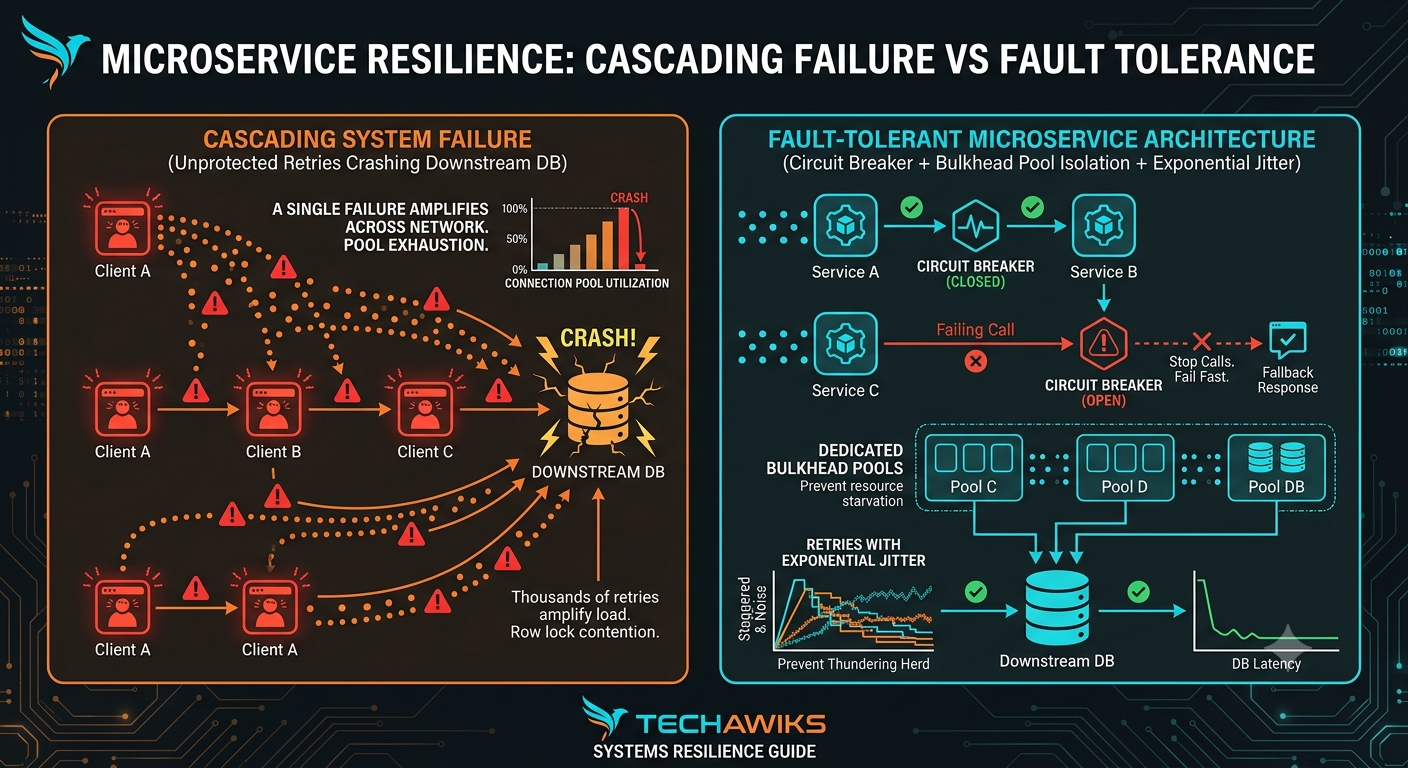
    In distributed cloud architecture, partial network failures are inevitable. When service A calls service B, a delayed response or timeout can quickly back up thread pools, consume CPU/memory resources, and trigger catastrophic failure across your entire system.


    🗳️ POLL:Which design pattern is your primary defense against cascading microservice failures?
    🔴 A) Circuit Breakers (e.g., Resilience4j, Envoy — Stop calls when error thresholds are crossed)
    🔵 B) Exponential Backoff & Jitter (Retry requests with randomized, increasing delays)
    🟡 C) Bulkheads & Isolation (Isolate thread/connection pools per downstream dependency)
    🟢 D) Rate Limiting & Shedding (Throttle or drop excess incoming requests at the edge API gateway)


    💡 The Architectural Breakdown
    1. Circuit Breakers (Option A): Preventing Resource Exhaustion
    How it works: Tracks response failure rates over a sliding window. When failures exceed a threshold, the breaker transitions to an Open State, failing fast immediately without making network calls.
    Why it wins: Prevents failing services from being overwhelmed while freeing up threads and memory on caller pods.


    2. Exponential Backoff with Jitter (Option B): Mitigating Thundering Herds
    How it works: Retries failed requests with exponentially increasing delays (e.g., $100\text{ ms}$, $200\text{ ms}$, $400\text{ ms}$) added with randomized noise (jitter).
    Why it wins: Prevents thousands of retry attempts from hitting a recovering downstream database or service all at the exact same millisecond.


    3. Bulkheads (Option C): Containing Explosive Blast Radii
    How it works: Allocates dedicated thread pools and connection limits for each distinct dependency.
    Why it wins: If payment gateway integration slows down, it only exhausts its allocated pool without starving product catalog or user profile services.


    Key Takeaways
    Fail Fast: Use Circuit Breakers to stop sending requests to degraded downstream dependencies.
    Randomize Retries: Always add jitter to exponential backoff algorithms to prevent retry stampedes.
    Isolate Resources: Implement Bulkhead patterns to limit the blast radius of slow or failing internal APIs.


    CTA
    🇺🇸 Architecting resilient, distributed systems for US enterprise environments?Get hands-on fault-tolerance patterns, cloud infrastructure strategies, and expert engineering insights.👉 Join Techawks USA to connect with principal architects and build reliable cloud systems!
    System Architecture Poll: How Do You Enforce API Microservice Resilience at Scale? The Big Challenge: In distributed cloud architecture, partial network failures are inevitable. When service A calls service B, a delayed response or timeout can quickly back up thread pools, consume CPU/memory resources, and trigger catastrophic failure across your entire system. 🗳️ POLL:Which design pattern is your primary defense against cascading microservice failures? 🔴 A) Circuit Breakers (e.g., Resilience4j, Envoy — Stop calls when error thresholds are crossed) 🔵 B) Exponential Backoff & Jitter (Retry requests with randomized, increasing delays) 🟡 C) Bulkheads & Isolation (Isolate thread/connection pools per downstream dependency) 🟢 D) Rate Limiting & Shedding (Throttle or drop excess incoming requests at the edge API gateway) 💡 The Architectural Breakdown 1. Circuit Breakers (Option A): Preventing Resource Exhaustion How it works: Tracks response failure rates over a sliding window. When failures exceed a threshold, the breaker transitions to an Open State, failing fast immediately without making network calls. Why it wins: Prevents failing services from being overwhelmed while freeing up threads and memory on caller pods. 2. Exponential Backoff with Jitter (Option B): Mitigating Thundering Herds How it works: Retries failed requests with exponentially increasing delays (e.g., $100\text{ ms}$, $200\text{ ms}$, $400\text{ ms}$) added with randomized noise (jitter). Why it wins: Prevents thousands of retry attempts from hitting a recovering downstream database or service all at the exact same millisecond. 3. Bulkheads (Option C): Containing Explosive Blast Radii How it works: Allocates dedicated thread pools and connection limits for each distinct dependency. Why it wins: If payment gateway integration slows down, it only exhausts its allocated pool without starving product catalog or user profile services. Key Takeaways Fail Fast: Use Circuit Breakers to stop sending requests to degraded downstream dependencies. Randomize Retries: Always add jitter to exponential backoff algorithms to prevent retry stampedes. Isolate Resources: Implement Bulkhead patterns to limit the blast radius of slow or failing internal APIs. CTA 🇺🇸 Architecting resilient, distributed systems for US enterprise environments?Get hands-on fault-tolerance patterns, cloud infrastructure strategies, and expert engineering insights.👉 Join Techawks USA to connect with principal architects and build reliable cloud systems!
    0 Comentários 0 Compartilhamentos 144 Visualizações 0 Anterior
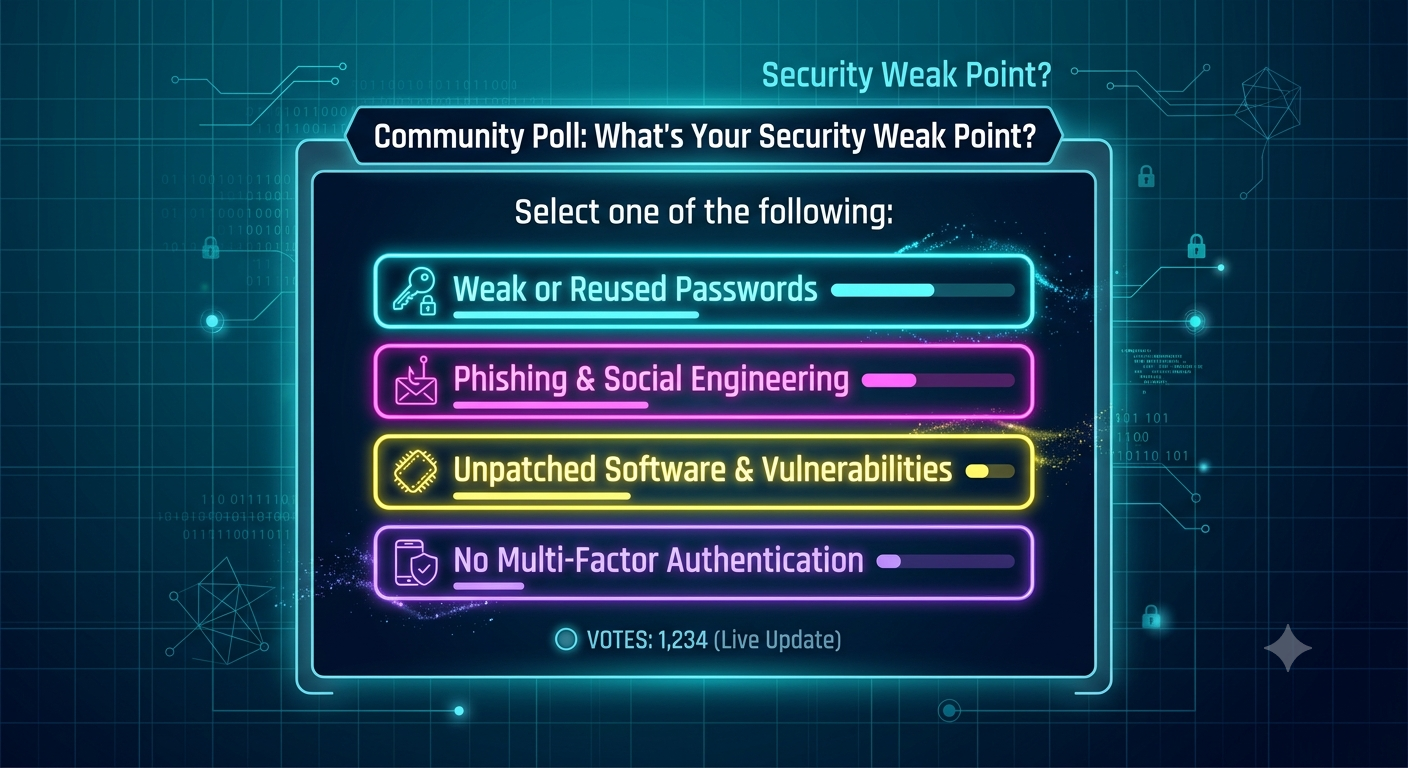
  • Which Security Practice Is Your Weakest Link? (Vote & Test Your Defense)
    Good security hygiene isn't about complex hacks; it's about the daily habits that prevent 90% of opportunistic attacks. Cast your vote below, then check out the actionable tips to fix each vulnerability:


    📊 Poll Question:
    Which of these foundational security practices do you find hardest to keep up with?
    Option A: Multi-Factor Authentication (MFA) on all accounts
    Option B: Timely OS & Software Patching
    Option C: Using a Password Manager for Unique Credentials
    Option D: Regular, Isolated Data Backups


    💡 How to Fix Your Weak Spot Right Now:
    If you chose A (MFA): Switch from SMS-based MFA to an authenticator app (like Google Authenticator or Authy) or a hardware key (YubiKey). SMS interception is a common vector; app-based TOTP is vastly more secure.
    If you chose B (Patching): Enable automatic updates for operating systems and key software. Most exploit kits target known vulnerabilities that already have patches available.
    If you chose C (Password Management): Audit your accounts. Never reuse passwords across services. A password manager lets you generate 16+ character complex strings without the headache of memorization.
    If you chose D (Backups): Follow the 3-2-1 Rule: 3 total copies of your data, 2 different storage media types, and 1 off-site or offline copy (to protect against ransomware).


    Key Takeaways
    Basics win games: The vast majority of breaches exploit basic lapses like reused passwords or delayed patches.
    MFA is essential: Adding a second factor stops automated brute-force attacks in their tracks.
    Air-gap your backups: Backups connected to your primary network can be encrypted by ransomware along with your live files.


    CTA
    Want to benchmark your security knowledge and learn how to audit defenses like a pro?
    👉 Join our Cybersecurity & Ethical Hacking community today to participate in daily quizzes, discussion polls, and hands-on labs!
    Which Security Practice Is Your Weakest Link? (Vote & Test Your Defense) Good security hygiene isn't about complex hacks; it's about the daily habits that prevent 90% of opportunistic attacks. Cast your vote below, then check out the actionable tips to fix each vulnerability: 📊 Poll Question: Which of these foundational security practices do you find hardest to keep up with? Option A: Multi-Factor Authentication (MFA) on all accounts Option B: Timely OS & Software Patching Option C: Using a Password Manager for Unique Credentials Option D: Regular, Isolated Data Backups 💡 How to Fix Your Weak Spot Right Now: If you chose A (MFA): Switch from SMS-based MFA to an authenticator app (like Google Authenticator or Authy) or a hardware key (YubiKey). SMS interception is a common vector; app-based TOTP is vastly more secure. If you chose B (Patching): Enable automatic updates for operating systems and key software. Most exploit kits target known vulnerabilities that already have patches available. If you chose C (Password Management): Audit your accounts. Never reuse passwords across services. A password manager lets you generate 16+ character complex strings without the headache of memorization. If you chose D (Backups): Follow the 3-2-1 Rule: 3 total copies of your data, 2 different storage media types, and 1 off-site or offline copy (to protect against ransomware). Key Takeaways Basics win games: The vast majority of breaches exploit basic lapses like reused passwords or delayed patches. MFA is essential: Adding a second factor stops automated brute-force attacks in their tracks. Air-gap your backups: Backups connected to your primary network can be encrypted by ransomware along with your live files. CTA Want to benchmark your security knowledge and learn how to audit defenses like a pro? 👉 Join our Cybersecurity & Ethical Hacking community today to participate in daily quizzes, discussion polls, and hands-on labs!
    0 Comentários 0 Compartilhamentos 304 Visualizações 0 Anterior
  • System Design: How Do You Handle Database Writes During Flash Sales in India?


    The Big Question:
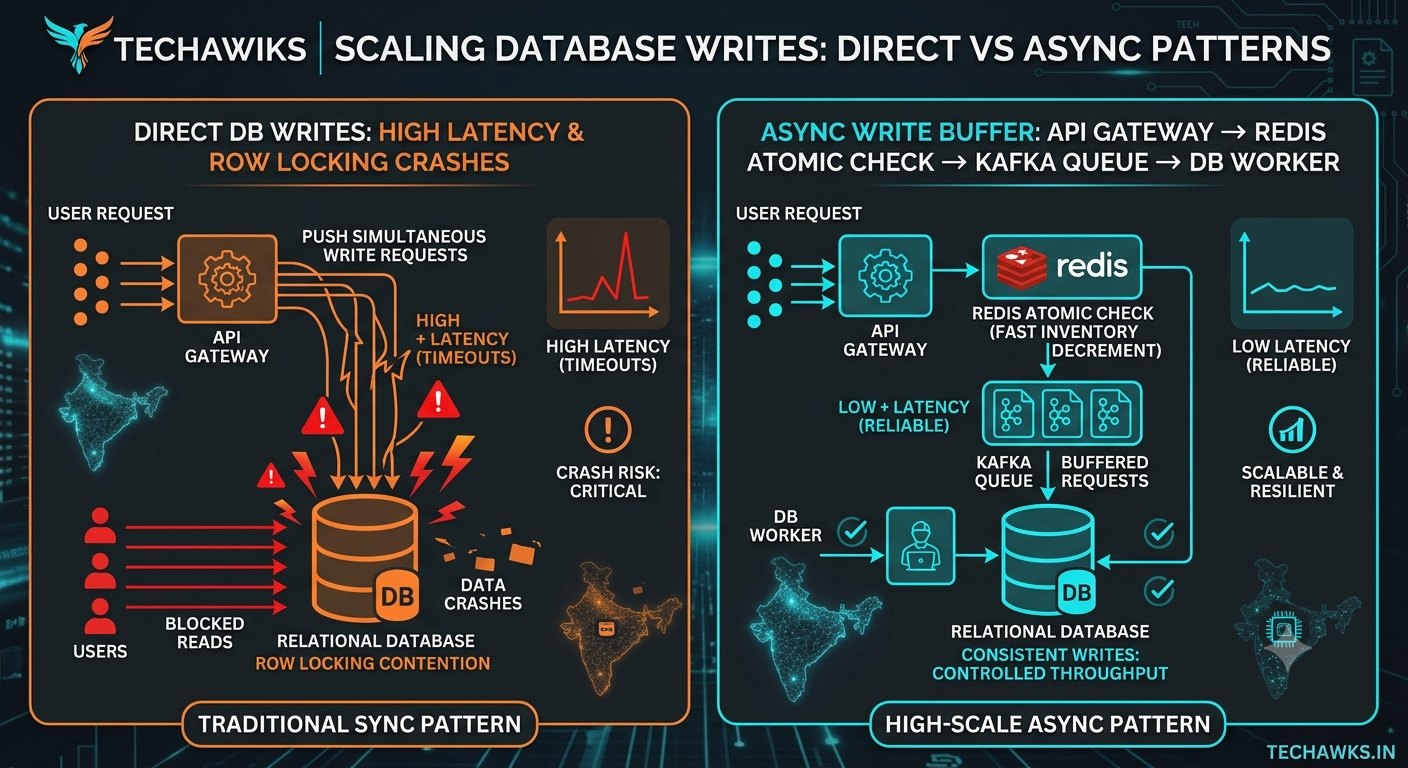
    When designing high-throughput systems for Indian scale—like festival sales or flash ticket drops—direct database writes will instantly bottleneck your connection pool and lock rows.


    🗳️ POLL:
    Which pattern do you use to absorb massive write spikes?
    🔴 A) Message Queue Buffering (Kafka/RabbitMQ $\to$ Async Worker $\to$ DB)
    🔵 B) Redis Atomic In-Memory Locks (INCRBY / Lua Scripts $\to$ Sync later)
    🟡 C) Database Sharding & Row Locking (Pessimistic/Optimistic Locks)
    🟢 D) Rate Limiting at API Gateway (Throttle traffic before it hits backend)


    💡 The Engineering Breakdown
    Why Option A & B are Preferred for Scale:Redis Atomic Operations (Option B):
    How it works: Instead of querying PostgreSQL/MySQL to check stock > 0, maintain the counter in Redis. Use atomic Lua scripts to decrement inventory instantly in RAM (<1\text{ ms})


    Why it wins: Prevents database lock contention while guaranteeing zero double-selling.Message Queue Buffering (Option A):How it works: Accept the order, push the payload into Kafka or RabbitMQ, and return an immediate 202 Accepted response to the user.Why it wins: Decouples API availability from database write throughput. Background workers process database writes at a controlled, steady pace.


    Why Option C Fails Under Heavy Concurrency:
    Row Lock Bottlenecks: Holding a pessimistic lock (SELECT FOR UPDATE) across hundreds of concurrent database connections will quickly exhaust DB pool limits and cause widespread timeout errors (HTTP 504).


    Key Takeaways
    Decouple Writes: Never write directly to relational databases during extreme traffic surges.
    Leverage In-Memory Speed: Use Redis for fast, atomic inventory checks before persisting state.
    Async User Experience: Return fast "order processing" receipts to users and process actual stock allocation asynchronously via queues.


    CTA
    🇮🇳 Designing distributed systems for Indian enterprise scale?
    Get deep-dive architecture breakdowns, practical trade-off analyses, and real-world system design guides.


    👉 Join Techawks India to connect with senior architects and tech leads building resilient software!
    System Design: How Do You Handle Database Writes During Flash Sales in India? The Big Question: When designing high-throughput systems for Indian scale—like festival sales or flash ticket drops—direct database writes will instantly bottleneck your connection pool and lock rows. 🗳️ POLL: Which pattern do you use to absorb massive write spikes? 🔴 A) Message Queue Buffering (Kafka/RabbitMQ $\to$ Async Worker $\to$ DB) 🔵 B) Redis Atomic In-Memory Locks (INCRBY / Lua Scripts $\to$ Sync later) 🟡 C) Database Sharding & Row Locking (Pessimistic/Optimistic Locks) 🟢 D) Rate Limiting at API Gateway (Throttle traffic before it hits backend) 💡 The Engineering Breakdown Why Option A & B are Preferred for Scale:Redis Atomic Operations (Option B): How it works: Instead of querying PostgreSQL/MySQL to check stock > 0, maintain the counter in Redis. Use atomic Lua scripts to decrement inventory instantly in RAM (<1\text{ ms}) Why it wins: Prevents database lock contention while guaranteeing zero double-selling.Message Queue Buffering (Option A):How it works: Accept the order, push the payload into Kafka or RabbitMQ, and return an immediate 202 Accepted response to the user.Why it wins: Decouples API availability from database write throughput. Background workers process database writes at a controlled, steady pace. Why Option C Fails Under Heavy Concurrency: Row Lock Bottlenecks: Holding a pessimistic lock (SELECT FOR UPDATE) across hundreds of concurrent database connections will quickly exhaust DB pool limits and cause widespread timeout errors (HTTP 504). Key Takeaways Decouple Writes: Never write directly to relational databases during extreme traffic surges. Leverage In-Memory Speed: Use Redis for fast, atomic inventory checks before persisting state. Async User Experience: Return fast "order processing" receipts to users and process actual stock allocation asynchronously via queues. CTA 🇮🇳 Designing distributed systems for Indian enterprise scale? Get deep-dive architecture breakdowns, practical trade-off analyses, and real-world system design guides. 👉 Join Techawks India to connect with senior architects and tech leads building resilient software!
    0 Comentários 0 Compartilhamentos 61 Visualizações 0 Anterior
  • Kubernetes Deployment vs. StatefulSet: Which Do You Use for Databases?


    The Big Question:
    When running a stateful application—like PostgreSQL, MySQL, or MongoDB—on Kubernetes, which controller should you use to manage your pods?


    🗳️ POLL:
    How do you deploy databases in your Kubernetes cluster?
    🔴 A) StatefulSet (Proper identity & persistent storage mapping)
    🔵 B) Deployment with PVC attached (Quick & risky)
    🟡 C) Managed Database Service outside K8s (RDS, Cloud SQL, etc.)
    🟢 D) Custom Operator (e.g., CloudNativePG, Zalando)


    💡 The Practical Breakdown
    Why Deployment Fails for Databases:
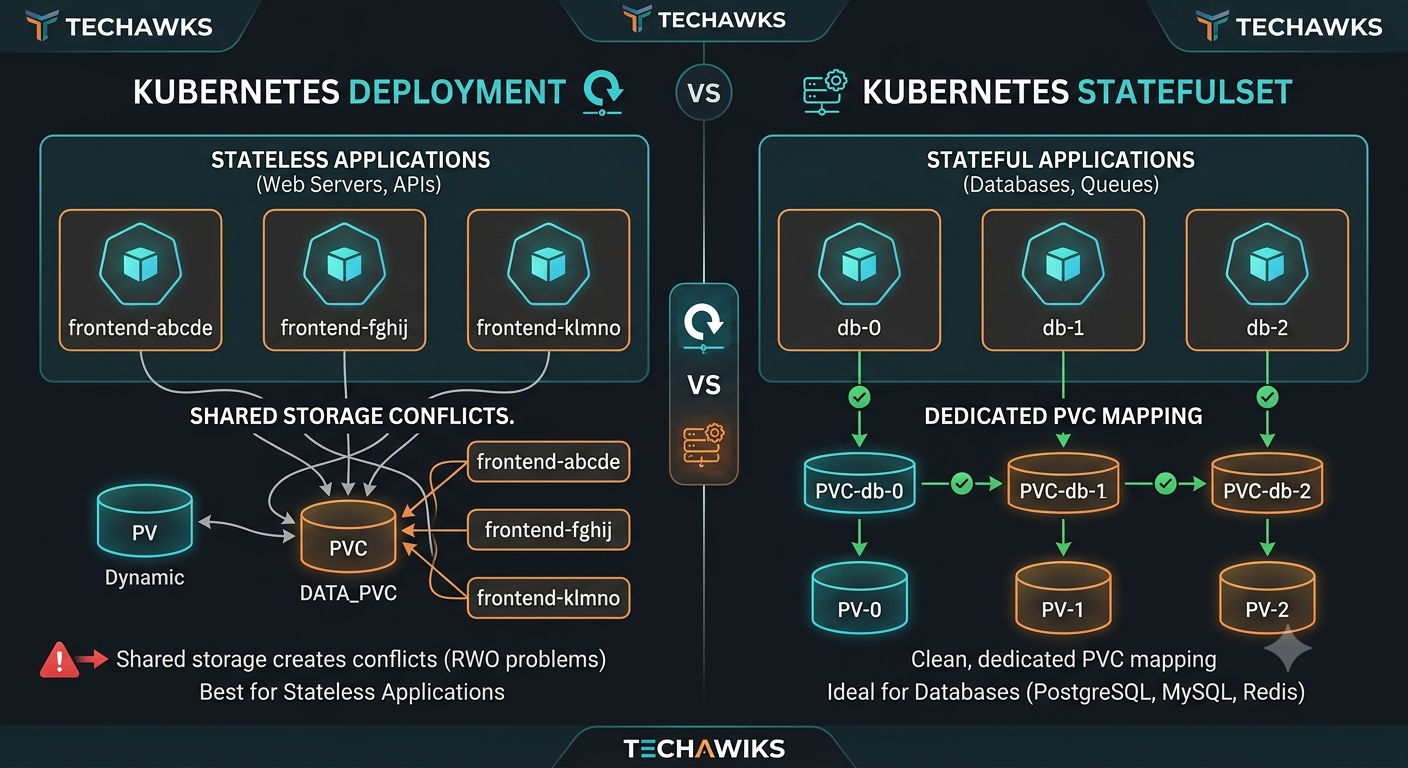
    Pods are stateless and interchangeable: A Deployment treats pods like cattle. If a pod crashes, K8s replaces it with a completely random host name and dynamic identity.
    Storage conflicts: Attaching a ReadWriteOnce Persistent Volume (PV) to a standard Deployment can lead to locking issues during rolling updates, as two pods attempt to mount the same volume simultaneously.


    Why StatefulSet is Built for State:
    Stable Network IDs: Pods get deterministic names (e.g., db-0, db-1), which is crucial for master-replica clustering.
    Ordered Deployment & Scaling: Pods are created, updated, and deleted sequentially ($0 \to 1 \to 2$).
    Dedicated Persistent Volume Claim (PVC) per Pod: Each replica maintains its own persistent storage binding, preserving data even if the pod restarts


    Key Takeaways
    Stateless = Deployments: Web servers, APIs, microservices.
    Stateful = StatefulSets or Operators: Databases, Redis clusters, Kafka nodes.
    Best Practice: For production databases, leverage a dedicated Kubernetes Operator (Option D) on top of StatefulSets to handle automated failover, backups, and point-in-time recovery seamlessly.


    CTA
    🚀 Want to master production-grade Kubernetes architecture, CI/CD pipelines, and cloud-native practices?
    👉 Join Cloud, DevOps & Open Source to level up your engineering skills with hands-on labs and expert-led discussions!.
    Kubernetes Deployment vs. StatefulSet: Which Do You Use for Databases? The Big Question: When running a stateful application—like PostgreSQL, MySQL, or MongoDB—on Kubernetes, which controller should you use to manage your pods? 🗳️ POLL: How do you deploy databases in your Kubernetes cluster? 🔴 A) StatefulSet (Proper identity & persistent storage mapping) 🔵 B) Deployment with PVC attached (Quick & risky) 🟡 C) Managed Database Service outside K8s (RDS, Cloud SQL, etc.) 🟢 D) Custom Operator (e.g., CloudNativePG, Zalando) 💡 The Practical Breakdown Why Deployment Fails for Databases: Pods are stateless and interchangeable: A Deployment treats pods like cattle. If a pod crashes, K8s replaces it with a completely random host name and dynamic identity. Storage conflicts: Attaching a ReadWriteOnce Persistent Volume (PV) to a standard Deployment can lead to locking issues during rolling updates, as two pods attempt to mount the same volume simultaneously. Why StatefulSet is Built for State: Stable Network IDs: Pods get deterministic names (e.g., db-0, db-1), which is crucial for master-replica clustering. Ordered Deployment & Scaling: Pods are created, updated, and deleted sequentially ($0 \to 1 \to 2$). Dedicated Persistent Volume Claim (PVC) per Pod: Each replica maintains its own persistent storage binding, preserving data even if the pod restarts Key Takeaways Stateless = Deployments: Web servers, APIs, microservices. Stateful = StatefulSets or Operators: Databases, Redis clusters, Kafka nodes. Best Practice: For production databases, leverage a dedicated Kubernetes Operator (Option D) on top of StatefulSets to handle automated failover, backups, and point-in-time recovery seamlessly. CTA 🚀 Want to master production-grade Kubernetes architecture, CI/CD pipelines, and cloud-native practices? 👉 Join Cloud, DevOps & Open Source to level up your engineering skills with hands-on labs and expert-led discussions!.
    0 Comentários 0 Compartilhamentos 218 Visualizações 0 Anterior
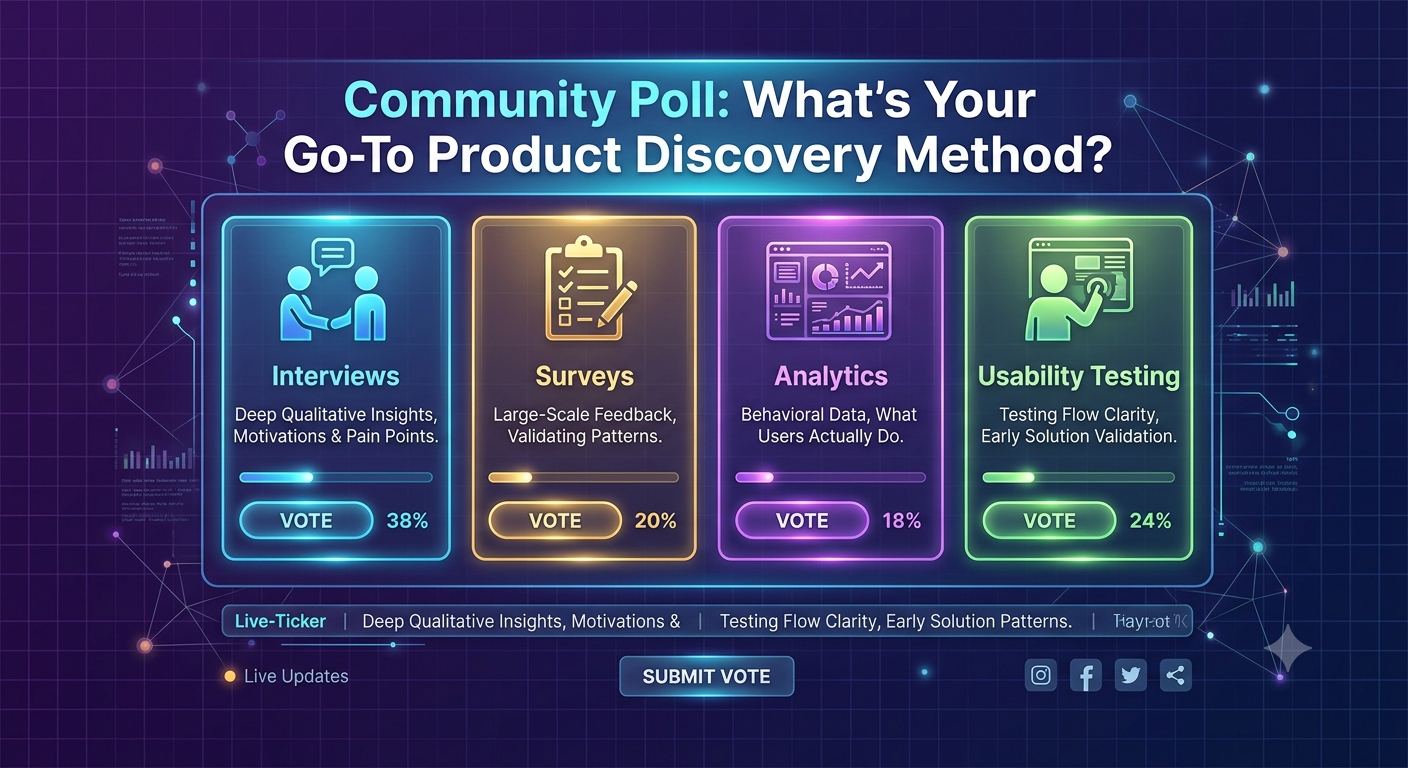
  • Which Product Discovery Method Yields Your Best User Insights? (Vote & Discuss)


    Great product strategy relies on balancing qualitative understanding (why users act) with quantitative validation (what users do). Cast your vote below, then check out the practical guidance on when to deploy each discovery technique:


    📊 Poll Question:
    When starting a new feature discovery phase, what is your team's primary go-to method for gathering user insights?
    Option A: 1-on-1 User Interviews (Qualitative)
    Option B: Quantitative Surveys & In-App Polls
    Option C: Product Analytics & Behavioral Data (e.g., Mixpanel, Amplitude)
    Option D: Rapid Usability Testing with Low-Fi Prototypes


    💡 When to Use Each Discovery Method:
    If you chose A (1-on-1 Interviews): Best for understanding underlying motivations, emotional friction, and mental models during early problem exploration. Tip: Focus on past behavior rather than hypothetical future actions—ask "Tell me about the last time you..." instead of "Would you use..."
    If you chose B (Surveys & In-App Polls): Great for validating patterns at scale after qualitative research has identified the key hypotheses. Tip: Keep in-app micro-surveys under 3 questions to maximize response rates without interrupting key user workflows.
    If you chose C (Behavioral Analytics): Unbeatable for revealing what users actually do vs. what they say they do. Tip: Look for drop-off points in key conversion funnels or unexpected navigation patterns to generate new research questions.
    If you chose D (Rapid Usability Testing): Ideal for testing execution logic and UI clarity before committing engineering sprint cycles. Tip: Test with 5–6 users per iteration; research shows this catches up to 85% of usability issues.


    Key Takeaways
    Triangulate your data: Combine qualitative insights (interviews) with quantitative data (analytics) to validate both the problem and the solution.
    Beware of hypothetical feedback: Users are notoriously poor at predicting their future behavior; focus on real past experiences.
    Iterate before code: Use low-fidelity prototypes early to catch usability friction while changes are still fast and cheap to make.


    CTA
    Want to sharpen your product discovery framework and collaborate with top UX strategists?
    👉 Join our Product, UX & Design community today to participate in weekly teardowns, share discovery frameworks, and elevate your product craft!
    Which Product Discovery Method Yields Your Best User Insights? (Vote & Discuss) Great product strategy relies on balancing qualitative understanding (why users act) with quantitative validation (what users do). Cast your vote below, then check out the practical guidance on when to deploy each discovery technique: 📊 Poll Question: When starting a new feature discovery phase, what is your team's primary go-to method for gathering user insights? Option A: 1-on-1 User Interviews (Qualitative) Option B: Quantitative Surveys & In-App Polls Option C: Product Analytics & Behavioral Data (e.g., Mixpanel, Amplitude) Option D: Rapid Usability Testing with Low-Fi Prototypes 💡 When to Use Each Discovery Method: If you chose A (1-on-1 Interviews): Best for understanding underlying motivations, emotional friction, and mental models during early problem exploration. Tip: Focus on past behavior rather than hypothetical future actions—ask "Tell me about the last time you..." instead of "Would you use..." If you chose B (Surveys & In-App Polls): Great for validating patterns at scale after qualitative research has identified the key hypotheses. Tip: Keep in-app micro-surveys under 3 questions to maximize response rates without interrupting key user workflows. If you chose C (Behavioral Analytics): Unbeatable for revealing what users actually do vs. what they say they do. Tip: Look for drop-off points in key conversion funnels or unexpected navigation patterns to generate new research questions. If you chose D (Rapid Usability Testing): Ideal for testing execution logic and UI clarity before committing engineering sprint cycles. Tip: Test with 5–6 users per iteration; research shows this catches up to 85% of usability issues. Key Takeaways Triangulate your data: Combine qualitative insights (interviews) with quantitative data (analytics) to validate both the problem and the solution. Beware of hypothetical feedback: Users are notoriously poor at predicting their future behavior; focus on real past experiences. Iterate before code: Use low-fidelity prototypes early to catch usability friction while changes are still fast and cheap to make. CTA Want to sharpen your product discovery framework and collaborate with top UX strategists? 👉 Join our Product, UX & Design community today to participate in weekly teardowns, share discovery frameworks, and elevate your product craft!
    0 Comentários 0 Compartilhamentos 226 Visualizações 0 Anterior
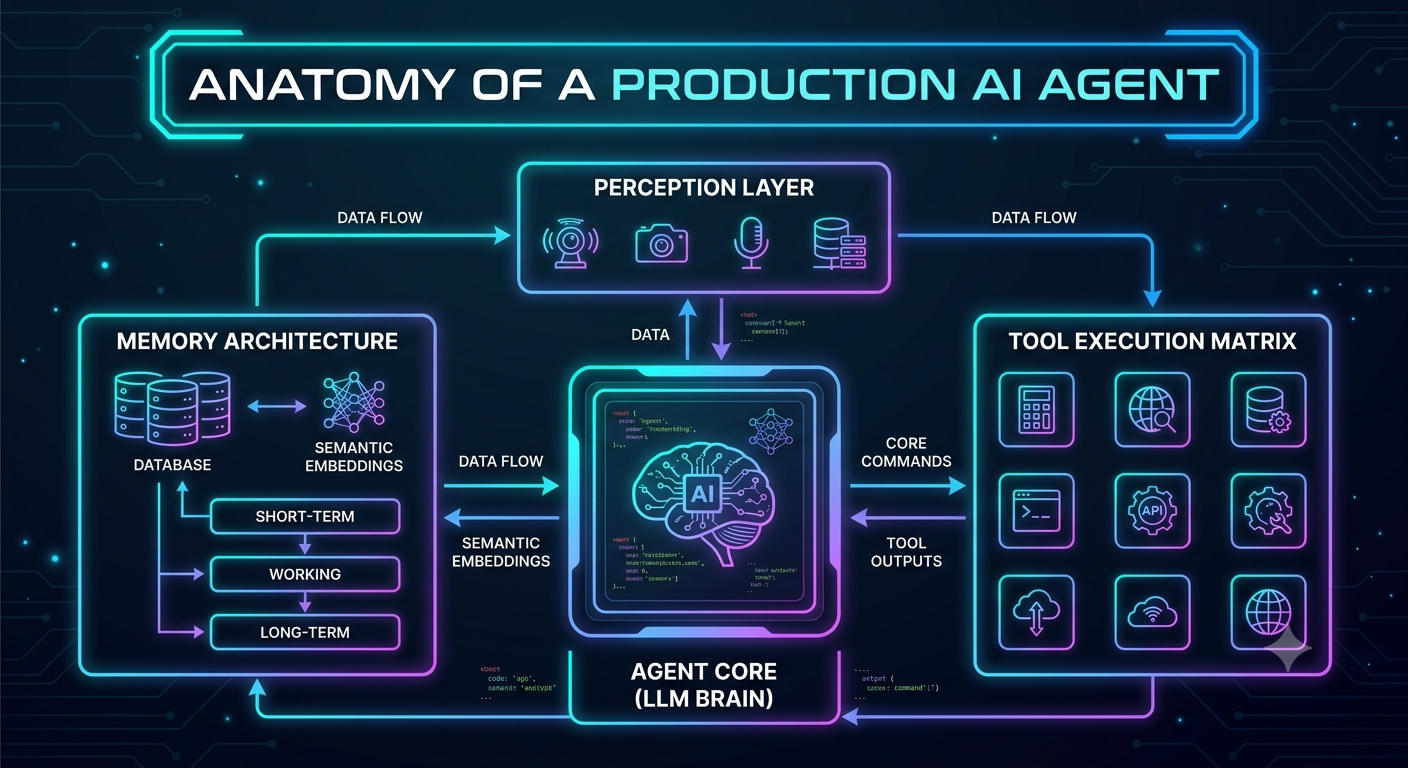
  • The AI Agent Architecture Blueprint: 4 Components for Autonomous Workflows


    Moving from static single-prompt completions to autonomous agents requires orchestrating feedback loops. Every production-grade AI agent relies on 4 Fundamental Building Blocks:


    +-----------------------------------------------------------------------------+
    | 1. PERCEPTION |
    | (User Input, Environment Sensors, Multimodal Parsers) |
    +------------------------------+----------------------------------------------+
    |
    v
    +----------------------------------------------------------------------------+
    | 2. BRAIN (LLM) |
    | (Task Decomposition, Planning, Decision Reasoning) |
    +--------------+-------------------------------+----------------------------+
    | ^
    v |
    +------------------------------+---------------+---------------------------+
    | 3. MEMORY | 4. TOOLS |
    | (Short-term: Conversation) | (APIs, Code Interpreters, |
    | (Long-term: Vector Store) | Database Connectors) |
    +------------------------------+--------------------------------------------+


    1. Perception (The Ingestion Layer)
    Function: Translates raw inputs—text, structured JSON, code, or images—into normalized context the LLM can evaluate.
    Best Practice: Always sanitize inputs and explicitly separate system instructions from untrusted user content to prevent prompt injection attacks.


    2. The Brain (Planning & Decision Engine)
    Function: Breaks down a high-level goal into smaller, sequential sub-tasks.
    Best Practice: Implement structured planning techniques like ReAct (Reasoning + Acting) or Plan-and-Solve. Enforce a maximum step limit (e.g., max 10 execution loops) to prevent infinite loops when an agent gets stuck.


    3. Memory System (Context Persistence)
    Short-Term Memory: Retains immediate chat history within the active context window.
    Long-Term Memory: Uses semantic search over vector databases to retrieve past execution logs, user preferences, or domain knowledge when relevant.
    Best Practice: Periodically summarize short-term context to conserve token limits and keep inference latency low.


    4. Tool Execution (Action Layer)
    Function: Gives the agent "hands" to interact with external systems via API calls, SQL queries, or custom code execution.
    Best Practice: Never give an agent write access to production databases or external APIs without human-in-the-loop (HITL) approval gates for destructive actions.


    Key Takeaways
    Limit autonomous loops: Guard against budget burn and infinite recursion by placing strict step limits on reasoning loops.
    Decouple planning from execution: Let the LLM plan actions in structured formats (like JSON), but let deterministic code validate and execute those actions.
    Implement Human-in-the-Loop (HITL): Require manual verification for critical operations (e.g., payments, data deletions, external emails).


    CTA
    Building autonomous agents, RAG systems, or AI infrastructure?
    Join the AI Builders & Enthusiasts community today to access step-by-step system designs, code templates, and technical discussions with fellow AI developers!
    The AI Agent Architecture Blueprint: 4 Components for Autonomous Workflows Moving from static single-prompt completions to autonomous agents requires orchestrating feedback loops. Every production-grade AI agent relies on 4 Fundamental Building Blocks: +-----------------------------------------------------------------------------+ | 1. PERCEPTION | | (User Input, Environment Sensors, Multimodal Parsers) | +------------------------------+----------------------------------------------+ | v +----------------------------------------------------------------------------+ | 2. BRAIN (LLM) | | (Task Decomposition, Planning, Decision Reasoning) | +--------------+-------------------------------+----------------------------+ | ^ v | +------------------------------+---------------+---------------------------+ | 3. MEMORY | 4. TOOLS | | (Short-term: Conversation) | (APIs, Code Interpreters, | | (Long-term: Vector Store) | Database Connectors) | +------------------------------+--------------------------------------------+ 1. Perception (The Ingestion Layer) Function: Translates raw inputs—text, structured JSON, code, or images—into normalized context the LLM can evaluate. Best Practice: Always sanitize inputs and explicitly separate system instructions from untrusted user content to prevent prompt injection attacks. 2. The Brain (Planning & Decision Engine) Function: Breaks down a high-level goal into smaller, sequential sub-tasks. Best Practice: Implement structured planning techniques like ReAct (Reasoning + Acting) or Plan-and-Solve. Enforce a maximum step limit (e.g., max 10 execution loops) to prevent infinite loops when an agent gets stuck. 3. Memory System (Context Persistence) Short-Term Memory: Retains immediate chat history within the active context window. Long-Term Memory: Uses semantic search over vector databases to retrieve past execution logs, user preferences, or domain knowledge when relevant. Best Practice: Periodically summarize short-term context to conserve token limits and keep inference latency low. 4. Tool Execution (Action Layer) Function: Gives the agent "hands" to interact with external systems via API calls, SQL queries, or custom code execution. Best Practice: Never give an agent write access to production databases or external APIs without human-in-the-loop (HITL) approval gates for destructive actions. Key Takeaways Limit autonomous loops: Guard against budget burn and infinite recursion by placing strict step limits on reasoning loops. Decouple planning from execution: Let the LLM plan actions in structured formats (like JSON), but let deterministic code validate and execute those actions. Implement Human-in-the-Loop (HITL): Require manual verification for critical operations (e.g., payments, data deletions, external emails). CTA Building autonomous agents, RAG systems, or AI infrastructure? Join the AI Builders & Enthusiasts community today to access step-by-step system designs, code templates, and technical discussions with fellow AI developers!
    0 Comentários 0 Compartilhamentos 45 Visualizações 0 Anterior
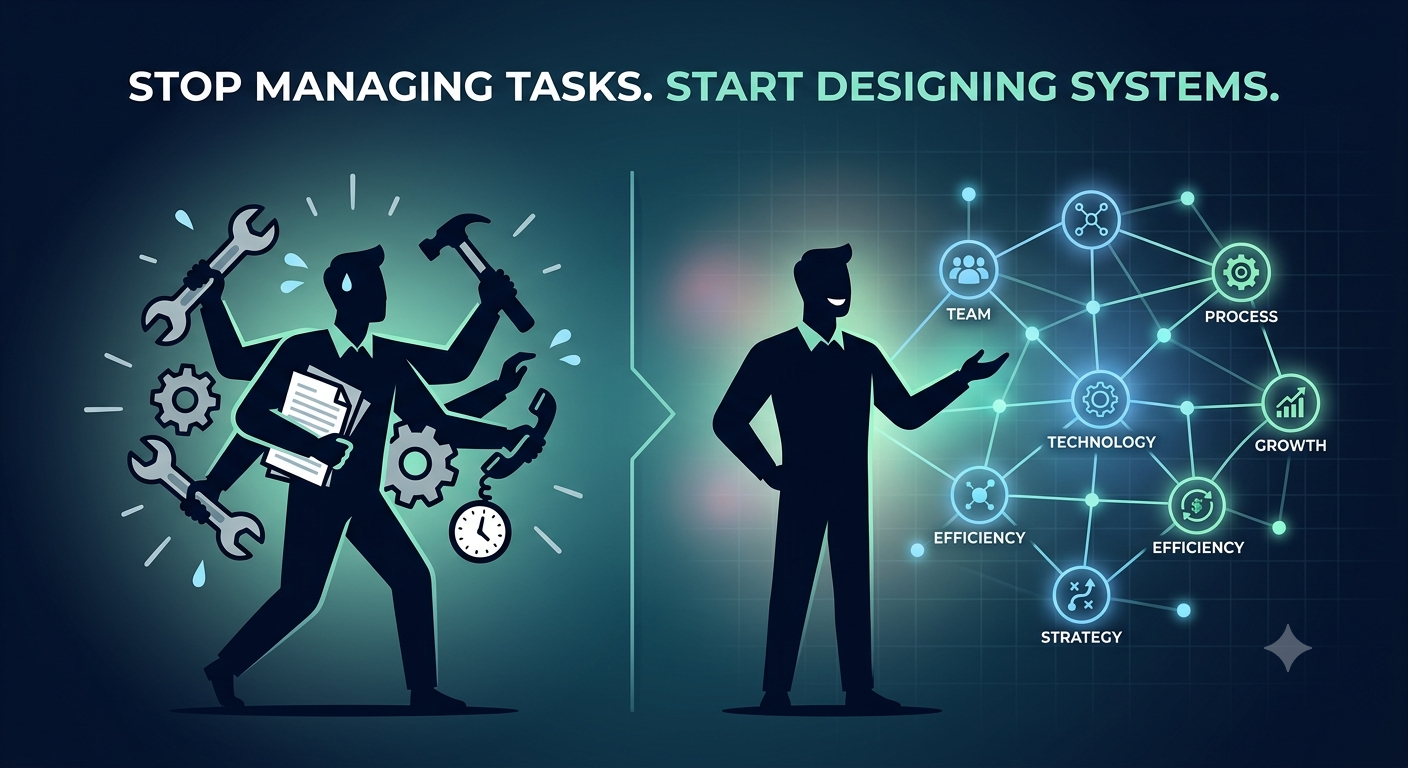
  • The First-10-Hires Framework: Transitioning from Solo Founder to Systems Builder


    Many technical and product founders fall into a common trap when expanding their team: hiring for general bandwidth instead of specific leverage. They bring on talented generalists, delegate execution verbally, and then find themselves constantly intervening to fix alignment or execution errors.
    To build an organization that scales reliably beyond your direct capacity, shift your founder mindset from execution operator to systems architect using this 3-step hiring framework:


    1. Document the Workflow Before Hiring
    Never recruit for a core operational role until you have manually executed the workflow yourself and documented a baseline protocol.
    Define the input and output: What specific data, asset, or context initiates the task, and what exact result defines "done"?
    Outline standard operating principles: Give your early hires clear boundary conditions and guidelines, not micro-managed task lists.
    Set success metrics: Establish 1–2 quantifiable key performance indicators (KPIs) for the role from day one.


    2. Hire for "Problem-Ownership," Not Just Skill Sets
    In early-stage startups, scope is fluid. Hiring someone who only executes defined tickets requires you to remain the perpetual problem solver.
    Look for ownership history: During interviews, evaluate candidates on how they handled ambiguity in past roles.
    Test for initiative: Ask: "When presented with a broken process without an obvious manager, how did you identify and resolve the root cause?"
    Delegate outcomes, not activities: Assign responsibility for a metric (e.g., "Reduce onboarding drop-off by 15%") rather than an isolated task list.


    3. Build Asynchronous Decision Records
    As teams grow past 5 to 10 people, context fragmentation slows down velocity. Avoid spending hours in status meetings by establishing lightweight decision systems early:
    Maintain a central Architecture & Business Decision Record (ADR/BDR) log.
    Require team leads to document the context, options considered, and chosen direction for major product or strategic choices.
    This builds an institutional memory that allows new hires to self-onboard and make decisions aligned with your core strategy.


    Key Takeaways
    Systematize before delegating: Build and document a repeatable baseline process before handing off critical operational functions.
    Hire owners, not task executors: Focus on recruiting individuals who take full accountability for outcomes rather than just managing checklist items.
    Document decisions asynchronously: Reduce meeting fatigue and context loss by keeping a running, accessible record of strategic choices.


    CTA
    Scaling an early-stage startup and navigating team design or hiring challenges? Join Startup Founders & Entrepreneurs on Techawks today to share growth strategies, access proven frameworks, and connect with fellow founders.
    The First-10-Hires Framework: Transitioning from Solo Founder to Systems Builder Many technical and product founders fall into a common trap when expanding their team: hiring for general bandwidth instead of specific leverage. They bring on talented generalists, delegate execution verbally, and then find themselves constantly intervening to fix alignment or execution errors. To build an organization that scales reliably beyond your direct capacity, shift your founder mindset from execution operator to systems architect using this 3-step hiring framework: 1. Document the Workflow Before Hiring Never recruit for a core operational role until you have manually executed the workflow yourself and documented a baseline protocol. Define the input and output: What specific data, asset, or context initiates the task, and what exact result defines "done"? Outline standard operating principles: Give your early hires clear boundary conditions and guidelines, not micro-managed task lists. Set success metrics: Establish 1–2 quantifiable key performance indicators (KPIs) for the role from day one. 2. Hire for "Problem-Ownership," Not Just Skill Sets In early-stage startups, scope is fluid. Hiring someone who only executes defined tickets requires you to remain the perpetual problem solver. Look for ownership history: During interviews, evaluate candidates on how they handled ambiguity in past roles. Test for initiative: Ask: "When presented with a broken process without an obvious manager, how did you identify and resolve the root cause?" Delegate outcomes, not activities: Assign responsibility for a metric (e.g., "Reduce onboarding drop-off by 15%") rather than an isolated task list. 3. Build Asynchronous Decision Records As teams grow past 5 to 10 people, context fragmentation slows down velocity. Avoid spending hours in status meetings by establishing lightweight decision systems early: Maintain a central Architecture & Business Decision Record (ADR/BDR) log. Require team leads to document the context, options considered, and chosen direction for major product or strategic choices. This builds an institutional memory that allows new hires to self-onboard and make decisions aligned with your core strategy. Key Takeaways Systematize before delegating: Build and document a repeatable baseline process before handing off critical operational functions. Hire owners, not task executors: Focus on recruiting individuals who take full accountability for outcomes rather than just managing checklist items. Document decisions asynchronously: Reduce meeting fatigue and context loss by keeping a running, accessible record of strategic choices. CTA Scaling an early-stage startup and navigating team design or hiring challenges? Join Startup Founders & Entrepreneurs on Techawks today to share growth strategies, access proven frameworks, and connect with fellow founders.
    0 Comentários 0 Compartilhamentos 484 Visualizações 0 Anterior
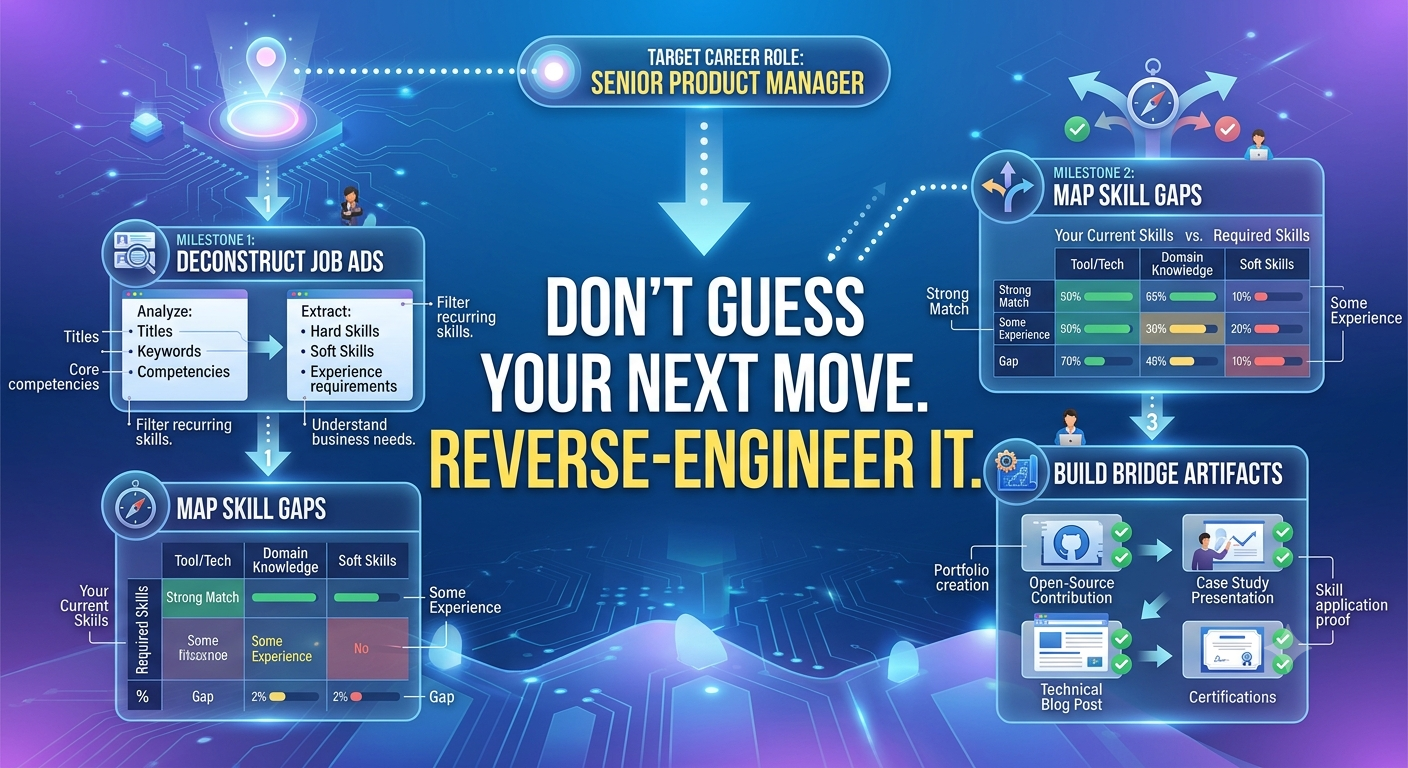
  • The Reverse-Engineering Method: How to Map Your Tech Career Backwards to Fast-Track Your Next Role
    Navigating a career move in technology—whether transitioning into engineering, product management, or data analytics—can feel overwhelming due to endless skill lists and vague job descriptions.
    Instead of trying to learn everything, top candidates use reverse-engineering to streamline their preparation. Here is a 3-step framework to map your path with precision:


    1. Aggregate a "Master Skills Matrix"
    Collect 10 to 15 job postings for your desired role across different companies. Paste the requirements into a simple spreadsheet or document and highlight recurring themes:
    Must-have core tech stack: Tools or languages mentioned in over 70% of the listings.
    Secondary domain knowledge: Methodologies (e.g., Agile, CI/CD, A/B testing) or soft skills (e.g., cross-functional stakeholder management).
    Key performance metrics: What outcomes do companies expect this person to drive?


    2. Perform an Honest Gap Analysis
    Compare your current background directly against the Master Skills Matrix. Group your qualifications into three distinct tiers:
    Green (Proven): Skills you have applied in past projects with quantifiable outcomes.
    Yellow (Theoretical): Concepts you understand, but haven't built or delivered in a professional environment.
    Red (Missing): Critical skills or tools you haven't touched yet.
    Your immediate focus should only be turning Yellow items into Green through focused, portfolio-backed execution—not trying to resolve every Red item at once.


    3. Build "Bridge Artifacts"
    Employers don't hire candidates based on course certificates; they hire based on proof of execution. Convert your "Yellow" skills into public proof:
    If you lack professional experience in a required framework, build a fully deployed open-source project that solves a real-world problem using it.
    If you lack stakeholder management experience, document how you coordinated cross-functional feedback during a side project or volunteer initiative.
    When you present concrete artifacts alongside your resume, you bypass the guesswork and demonstrate readiness on day one.


    Key Takeaways
    Deconstruct the market: Build your strategy around real job descriptions, not generalized advice.
    Prioritize bridging the gap: Focus on turning theoretical knowledge into verifiable proof of work.
    Proof > Certification: A working project or documented problem-solving framework carries far more weight than a completion badge.


    CTA
    Looking for structured guidance on navigating tech recruitment, refining your application strategy, or discovering your next role? Join Tech Jobs & Opportunities on Techawks today to gain insights, get mentorship, and connect with active recruiters.
    The Reverse-Engineering Method: How to Map Your Tech Career Backwards to Fast-Track Your Next Role Navigating a career move in technology—whether transitioning into engineering, product management, or data analytics—can feel overwhelming due to endless skill lists and vague job descriptions. Instead of trying to learn everything, top candidates use reverse-engineering to streamline their preparation. Here is a 3-step framework to map your path with precision: 1. Aggregate a "Master Skills Matrix" Collect 10 to 15 job postings for your desired role across different companies. Paste the requirements into a simple spreadsheet or document and highlight recurring themes: Must-have core tech stack: Tools or languages mentioned in over 70% of the listings. Secondary domain knowledge: Methodologies (e.g., Agile, CI/CD, A/B testing) or soft skills (e.g., cross-functional stakeholder management). Key performance metrics: What outcomes do companies expect this person to drive? 2. Perform an Honest Gap Analysis Compare your current background directly against the Master Skills Matrix. Group your qualifications into three distinct tiers: Green (Proven): Skills you have applied in past projects with quantifiable outcomes. Yellow (Theoretical): Concepts you understand, but haven't built or delivered in a professional environment. Red (Missing): Critical skills or tools you haven't touched yet. Your immediate focus should only be turning Yellow items into Green through focused, portfolio-backed execution—not trying to resolve every Red item at once. 3. Build "Bridge Artifacts" Employers don't hire candidates based on course certificates; they hire based on proof of execution. Convert your "Yellow" skills into public proof: If you lack professional experience in a required framework, build a fully deployed open-source project that solves a real-world problem using it. If you lack stakeholder management experience, document how you coordinated cross-functional feedback during a side project or volunteer initiative. When you present concrete artifacts alongside your resume, you bypass the guesswork and demonstrate readiness on day one. Key Takeaways Deconstruct the market: Build your strategy around real job descriptions, not generalized advice. Prioritize bridging the gap: Focus on turning theoretical knowledge into verifiable proof of work. Proof > Certification: A working project or documented problem-solving framework carries far more weight than a completion badge. CTA Looking for structured guidance on navigating tech recruitment, refining your application strategy, or discovering your next role? Join Tech Jobs & Opportunities on Techawks today to gain insights, get mentorship, and connect with active recruiters.
    0 Comentários 0 Compartilhamentos 566 Visualizações 0 Anterior
  • From Data Analyst to Senior Analytics Engineer: 4 Critical Mindset Shifts
    Many data professionals plateau early because they focus exclusively on technical syntax—learning yet another BI tool or mastering obscure Python libraries. While technical proficiency is necessary, career progression hinges on how you apply those tools to create sustainable value.


    Here are 4 practical shifts to transition from an entry-level analyst to a high-impact data leader:


    1. Shift from "Answering Questions" to "Defining Metrics"
    Junior Mindset: Executing SQL queries strictly based on tickets assigned to you by stakeholders.
    Senior Mindset: Interrogating the request. Ask why the metric matters, how it drives revenue or efficiency, and build standardized metric definitions across the entire organization so everyone speaks the same language.


    2. Treat Data Models as Software Products
    Junior Mindset: Writing one-off, 500-line SQL scripts with nested subqueries to solve an immediate question.
    Senior Mindset: Building modular, reusable, and documented data models (using tools like dbt). Implement version control via Git, write data quality tests, and design schema that scale gracefully as company data grows.


    3. Master the Art of Data Storytelling
    Junior Mindset: Sending stakeholders a dense dashboard full of 15 charts and leaving them to draw their own conclusions.
    Senior Mindset: Curating a clear narrative. Focus on 2–3 key performance indicators (KPIs), highlight actionable anomalies, and explicitly answer: "So what? What action should we take based on this data?"


    4. Build Business Domain Knowledge
    Junior Mindset: Treating all datasets the same regardless of industry.
    Senior Mindset: Immersing yourself in the core business model. Understand unit economics, customer acquisition costs (CAC), lifetime value (LTV), or operational bottlenecks. The best data professionals understand the business just as well as the executives they advise.


    Key Takeaways
    Value over volume: Producing fewer, higher-quality, standardized data models creates more impact than delivering dozens of ad-hoc dashboards.
    Adopt software engineering practices: Version control, automated testing, and modular architecture turn fragile scripts into robust data products.
    Focus on business context: Technical skills are only as valuable as the business decisions they inform.


    CTA
    Ready to elevate your analytics career and master modern data stack architecture?
    👉 Join our Data Science & Analytics community today to connect with industry peers, access hands-on learning paths, and accelerate your career!
    From Data Analyst to Senior Analytics Engineer: 4 Critical Mindset Shifts Many data professionals plateau early because they focus exclusively on technical syntax—learning yet another BI tool or mastering obscure Python libraries. While technical proficiency is necessary, career progression hinges on how you apply those tools to create sustainable value. Here are 4 practical shifts to transition from an entry-level analyst to a high-impact data leader: 1. Shift from "Answering Questions" to "Defining Metrics" Junior Mindset: Executing SQL queries strictly based on tickets assigned to you by stakeholders. Senior Mindset: Interrogating the request. Ask why the metric matters, how it drives revenue or efficiency, and build standardized metric definitions across the entire organization so everyone speaks the same language. 2. Treat Data Models as Software Products Junior Mindset: Writing one-off, 500-line SQL scripts with nested subqueries to solve an immediate question. Senior Mindset: Building modular, reusable, and documented data models (using tools like dbt). Implement version control via Git, write data quality tests, and design schema that scale gracefully as company data grows. 3. Master the Art of Data Storytelling Junior Mindset: Sending stakeholders a dense dashboard full of 15 charts and leaving them to draw their own conclusions. Senior Mindset: Curating a clear narrative. Focus on 2–3 key performance indicators (KPIs), highlight actionable anomalies, and explicitly answer: "So what? What action should we take based on this data?" 4. Build Business Domain Knowledge Junior Mindset: Treating all datasets the same regardless of industry. Senior Mindset: Immersing yourself in the core business model. Understand unit economics, customer acquisition costs (CAC), lifetime value (LTV), or operational bottlenecks. The best data professionals understand the business just as well as the executives they advise. Key Takeaways Value over volume: Producing fewer, higher-quality, standardized data models creates more impact than delivering dozens of ad-hoc dashboards. Adopt software engineering practices: Version control, automated testing, and modular architecture turn fragile scripts into robust data products. Focus on business context: Technical skills are only as valuable as the business decisions they inform. CTA Ready to elevate your analytics career and master modern data stack architecture? 👉 Join our Data Science & Analytics community today to connect with industry peers, access hands-on learning paths, and accelerate your career!
    0 Comentários 0 Compartilhamentos 447 Visualizações 0 Anterior
  • From Code Monkey to Tech Lead: How to Build High-Visibility Engineering Impact in India


    The Industry Dilemma:


    In India's fast-paced tech ecosystem, standard performance metrics often reward silent execution until promotion cycles hit—where management asks, "What high-impact systems did this engineer own?"
    To transition from a Senior Software Engineer to a Lead or Staff Architect, you must shift your focus from volume of code to business ownership.


    🚀 3 Practical Strategies to Drive High-Visibility Impact
    1. Write RFCs (Request for Comments) Before You Write Code
    The Action: Before kicking off major features, author a clear design document outlining architecture, edge cases, trade-offs, and security impacts.
    Why it Works: RFCs force alignment early, prevent costly refactors, and establish you as a technical authority across cross-functional teams (Product, QA, DevOps).


    2. Become a "Force Multiplier" for Your Team
    The Action: Automate tedious developer workflows (e.g., local mock data generators, CI/CD pipeline checks), write onboarding docs, and actively mentor junior devs.
    Why it Works: Engineering leaders look for people who elevate the entire pod, not just individual contributors who hoard domain knowledge.


    3. Quantify Your Wins in Business Metrics
    The Action: Don't just list "Migrated database endpoints" on your performance review. Frame it as:
    ❌ Bad: "Refactored payment gateway integration."
    ✅ Good: "Reduced API p99 latency from 450ms to 120ms, dropping checkout drop-offs by 4%."
    Why it Works: Engineering managers and directors think in costs, reliability, and revenue—speak their language.


    🛠️ Your 30-Day Action Plan
    Identify a Pain Point: Find one repetitive bottleneck in your squad's weekly sprint (e.g., flaky integration tests).
    Propose a Solution: Write a 1-page proposal detailing the fix and estimated time saved.
    Execute & Share: Build it, roll it out, and present the results in your team's bi-weekly demo.


    Key Takeaways
    Design First: Architectural clarity (RFCs) creates more leadership visibility than raw pull requests.
    Multiply Impact: Elevate team productivity through tooling, documentation, and mentorship.
    Speak Business: Frame technical achievements around latency, cost savings, and reliability.


    CTA
    🇮🇳 Looking to navigate your tech career in top Indian startups and GCCs?
    Get real-world career roadmaps, architecture guides, and peer mentorship from industry leaders.
    👉 Join Techawks India and build a high-impact engineering career today!
    From Code Monkey to Tech Lead: How to Build High-Visibility Engineering Impact in India The Industry Dilemma: In India's fast-paced tech ecosystem, standard performance metrics often reward silent execution until promotion cycles hit—where management asks, "What high-impact systems did this engineer own?" To transition from a Senior Software Engineer to a Lead or Staff Architect, you must shift your focus from volume of code to business ownership. 🚀 3 Practical Strategies to Drive High-Visibility Impact 1. Write RFCs (Request for Comments) Before You Write Code The Action: Before kicking off major features, author a clear design document outlining architecture, edge cases, trade-offs, and security impacts. Why it Works: RFCs force alignment early, prevent costly refactors, and establish you as a technical authority across cross-functional teams (Product, QA, DevOps). 2. Become a "Force Multiplier" for Your Team The Action: Automate tedious developer workflows (e.g., local mock data generators, CI/CD pipeline checks), write onboarding docs, and actively mentor junior devs. Why it Works: Engineering leaders look for people who elevate the entire pod, not just individual contributors who hoard domain knowledge. 3. Quantify Your Wins in Business Metrics The Action: Don't just list "Migrated database endpoints" on your performance review. Frame it as: ❌ Bad: "Refactored payment gateway integration." ✅ Good: "Reduced API p99 latency from 450ms to 120ms, dropping checkout drop-offs by 4%." Why it Works: Engineering managers and directors think in costs, reliability, and revenue—speak their language. 🛠️ Your 30-Day Action Plan Identify a Pain Point: Find one repetitive bottleneck in your squad's weekly sprint (e.g., flaky integration tests). Propose a Solution: Write a 1-page proposal detailing the fix and estimated time saved. Execute & Share: Build it, roll it out, and present the results in your team's bi-weekly demo. Key Takeaways Design First: Architectural clarity (RFCs) creates more leadership visibility than raw pull requests. Multiply Impact: Elevate team productivity through tooling, documentation, and mentorship. Speak Business: Frame technical achievements around latency, cost savings, and reliability. CTA 🇮🇳 Looking to navigate your tech career in top Indian startups and GCCs? Get real-world career roadmaps, architecture guides, and peer mentorship from industry leaders. 👉 Join Techawks India and build a high-impact engineering career today!
    0 Comentários 0 Compartilhamentos 118 Visualizações 0 Anterior
Páginas impulsionada