• Scaling Past 25 Billion Monthly Transactions: Why Distributed State Partitioning is the Backbone of India's Digital Public Infrastructure
    The Problem & Failure Modes
    As India's digital public infrastructure (DPI) handles hundreds of millions of daily transactions across hundreds of live banks, engineers face a severe architectural bottleneck: hotspotting. When millions of micro-payments hit specific merchant nodes or bank gateways simultaneously, traditional database row-locks create massive thread contention. The result? Transaction timeouts, cascading retries, and frustrating user delays at checkout counters.


    [ High-Concurrency Peak Traffic (25B+ Monthly Requests) ]
    │
    ▼
    ┌──────────────────────────┐
    │ Monolithic Database Core │
    │ (Global Row-Locking) │
    └─────────────┬────────────┘
    │
    [ Thread Contention & Crash ]
    │
    ┌───────────┴───────────┐
    ▼ ▼
    [ Anti-Pattern ] [ Resilient Standard ]
    Synchronous locking Decentralized sharding,
    on centralized DB idempotent message queues,
    tables during peaks. and asynchronous state reconciliation.
    3 Production-Grade Engineering Principles
    Decentralized Partitioning (Sharding): Distribute transaction state using consistent hashing keys (such as user or merchant hash ranges) rather than sequential auto-incrementing IDs to eliminate database write bottlenecks.


    Asynchronous Idempotency Tokens: Ensure every payment request carries a unique idempotency key through the event bus. This guarantees that duplicate retries caused by flaky mobile networks execute exactly once without double-debiting.


    Graceful Shedding & Backpressure: Implement intelligent rate-limiting and circuit breakers at the API gateway layer to protect downstream core banking systems during festival surges and flash sales.


    Discussion Question
    How does your engineering team manage database contention and high concurrency spikes when designing backend systems for massive consumer scale in India?


    CTA (Join Techawks India)
    Want to build resilient distributed systems and discuss high-scale engineering challenges tailored to the Indian tech ecosystem? Join the Techawks India community to connect with top local builders.
    Scaling Past 25 Billion Monthly Transactions: Why Distributed State Partitioning is the Backbone of India's Digital Public Infrastructure The Problem & Failure Modes As India's digital public infrastructure (DPI) handles hundreds of millions of daily transactions across hundreds of live banks, engineers face a severe architectural bottleneck: hotspotting. When millions of micro-payments hit specific merchant nodes or bank gateways simultaneously, traditional database row-locks create massive thread contention. The result? Transaction timeouts, cascading retries, and frustrating user delays at checkout counters. [ High-Concurrency Peak Traffic (25B+ Monthly Requests) ] │ ▼ ┌──────────────────────────┐ │ Monolithic Database Core │ │ (Global Row-Locking) │ └─────────────┬────────────┘ │ [ Thread Contention & Crash ] │ ┌───────────┴───────────┐ ▼ ▼ [ Anti-Pattern ] [ Resilient Standard ] Synchronous locking Decentralized sharding, on centralized DB idempotent message queues, tables during peaks. and asynchronous state reconciliation. 3 Production-Grade Engineering Principles Decentralized Partitioning (Sharding): Distribute transaction state using consistent hashing keys (such as user or merchant hash ranges) rather than sequential auto-incrementing IDs to eliminate database write bottlenecks. Asynchronous Idempotency Tokens: Ensure every payment request carries a unique idempotency key through the event bus. This guarantees that duplicate retries caused by flaky mobile networks execute exactly once without double-debiting. Graceful Shedding & Backpressure: Implement intelligent rate-limiting and circuit breakers at the API gateway layer to protect downstream core banking systems during festival surges and flash sales. Discussion Question How does your engineering team manage database contention and high concurrency spikes when designing backend systems for massive consumer scale in India? CTA (Join Techawks India) Want to build resilient distributed systems and discuss high-scale engineering challenges tailored to the Indian tech ecosystem? Join the Techawks India community to connect with top local builders.
    0 Comentários 0 Compartilhamentos 42 Visualizações 0 Anterior
  • Complying with PIPEDA and Canadian Data Sovereignty is Fully Solved by Hosting Data in a Canadian Cloud Region
    The Fallacy of "Geographic Compliance"
    A pervasive myth among Canadian engineering and legal teams is that data residency equates to data sovereignty. While the Personal Information Protection and Electronic Documents Act (PIPEDA) and the Digital Charter Implementation Act (Bill C-27) emphasize protecting Canadian personal information, the reality is complex.


    If your US-headquartered parent company retains root administrative access, or if your encryption keys are managed within a global KMS where foreign entities hold quorum, Canadian data is legally accessible via foreign extraterritorial subpoenas (like the US CLOUD Act), regardless of which physical data center it rests in. True compliance requires localized control.


    Architecture Comparison: Naive Residency vs. Sovereign Canadian Control
    Plaintext
    [ ANTI-PATTERN: Naive Canadian Regional Setup ]
    Canadian User ──> Toronto Data Center (AWS/Azure/GCP) ──> Centralized US Admin Access / Shared Global KMS
    (Result: Potential foreign jurisdictional reach, unsegmented audit trails, compliance exposure)


    [ RESILIENT SOVEREIGN STANDARD: Zero-Trust Localized Enclave ]
    Canadian User ──> Local Edge / App Tier ──> Canada-Resident HSM + CMEK ──> Immutable Regional Audit Logs
    (Result: Cryptographic isolation, strict RBAC audit trails, robust PIPEDA alignment)
    Actionable Principles for Canadian Sovereign Architecture
    Enforce Customer-Managed Encryption Keys (CMEK) within Canada: Never rely solely on provider-managed default encryption. Implement dedicated Canadian Hardware Security Modules (HSMs) or regional Key Management Services where administrative access is strictly governed by Canadian personnel and bound by Canadian jurisdiction.


    Implement Strict Least-Privilege Access Control (RBAC) with Canadian Residency: Your global support team should not have standing administrative access to production Canadian customer data. Enforce role-based controls that restrict data plane access to vetted personnel physically located within Canada.


    Audit Third-Party Sub-processors (PIPEDA Principle 3): PIPEDA requires accountability for personal information transferred to third parties. Ensure your SaaS vendors, logging aggregators, and analytics platforms also adhere to Canadian data sovereignty principles, or are contractually bound to reject foreign data access requests.


    Design for Data Minimization & Pseudonymization: Reduce your compliance blast radius. Tokenize, hash, or pseudonymize sensitive PII before it reaches multi-tenant logging systems or data lakes, ensuring that even if access is compromised, the raw data remains unintelligible without secondary keys.


    Discussion Question
    What is the biggest compliance hurdle your Canadian engineering team has faced when balancing the need for global SaaS tooling with strict domestic data sovereignty requirements?


    CTA (Join Techawks Canada)
    Ready to master sovereign cloud architecture, regulatory compliance engineering, and secure systems design with elite Canadian technology leaders? Join the Techawks Canada community at [Techawks Canada Community Link] to share architectural blueprints, navigate C-27 implications, and exchange engineering best practices.
    Complying with PIPEDA and Canadian Data Sovereignty is Fully Solved by Hosting Data in a Canadian Cloud Region The Fallacy of "Geographic Compliance" A pervasive myth among Canadian engineering and legal teams is that data residency equates to data sovereignty. While the Personal Information Protection and Electronic Documents Act (PIPEDA) and the Digital Charter Implementation Act (Bill C-27) emphasize protecting Canadian personal information, the reality is complex. If your US-headquartered parent company retains root administrative access, or if your encryption keys are managed within a global KMS where foreign entities hold quorum, Canadian data is legally accessible via foreign extraterritorial subpoenas (like the US CLOUD Act), regardless of which physical data center it rests in. True compliance requires localized control. Architecture Comparison: Naive Residency vs. Sovereign Canadian Control Plaintext [ ANTI-PATTERN: Naive Canadian Regional Setup ] Canadian User ──> Toronto Data Center (AWS/Azure/GCP) ──> Centralized US Admin Access / Shared Global KMS (Result: Potential foreign jurisdictional reach, unsegmented audit trails, compliance exposure) [ RESILIENT SOVEREIGN STANDARD: Zero-Trust Localized Enclave ] Canadian User ──> Local Edge / App Tier ──> Canada-Resident HSM + CMEK ──> Immutable Regional Audit Logs (Result: Cryptographic isolation, strict RBAC audit trails, robust PIPEDA alignment) Actionable Principles for Canadian Sovereign Architecture Enforce Customer-Managed Encryption Keys (CMEK) within Canada: Never rely solely on provider-managed default encryption. Implement dedicated Canadian Hardware Security Modules (HSMs) or regional Key Management Services where administrative access is strictly governed by Canadian personnel and bound by Canadian jurisdiction. Implement Strict Least-Privilege Access Control (RBAC) with Canadian Residency: Your global support team should not have standing administrative access to production Canadian customer data. Enforce role-based controls that restrict data plane access to vetted personnel physically located within Canada. Audit Third-Party Sub-processors (PIPEDA Principle 3): PIPEDA requires accountability for personal information transferred to third parties. Ensure your SaaS vendors, logging aggregators, and analytics platforms also adhere to Canadian data sovereignty principles, or are contractually bound to reject foreign data access requests. Design for Data Minimization & Pseudonymization: Reduce your compliance blast radius. Tokenize, hash, or pseudonymize sensitive PII before it reaches multi-tenant logging systems or data lakes, ensuring that even if access is compromised, the raw data remains unintelligible without secondary keys. Discussion Question What is the biggest compliance hurdle your Canadian engineering team has faced when balancing the need for global SaaS tooling with strict domestic data sovereignty requirements? CTA (Join Techawks Canada) Ready to master sovereign cloud architecture, regulatory compliance engineering, and secure systems design with elite Canadian technology leaders? Join the Techawks Canada community at [Techawks Canada Community Link] to share architectural blueprints, navigate C-27 implications, and exchange engineering best practices.
    0 Comentários 0 Compartilhamentos 3KB Visualizações 0 Anterior
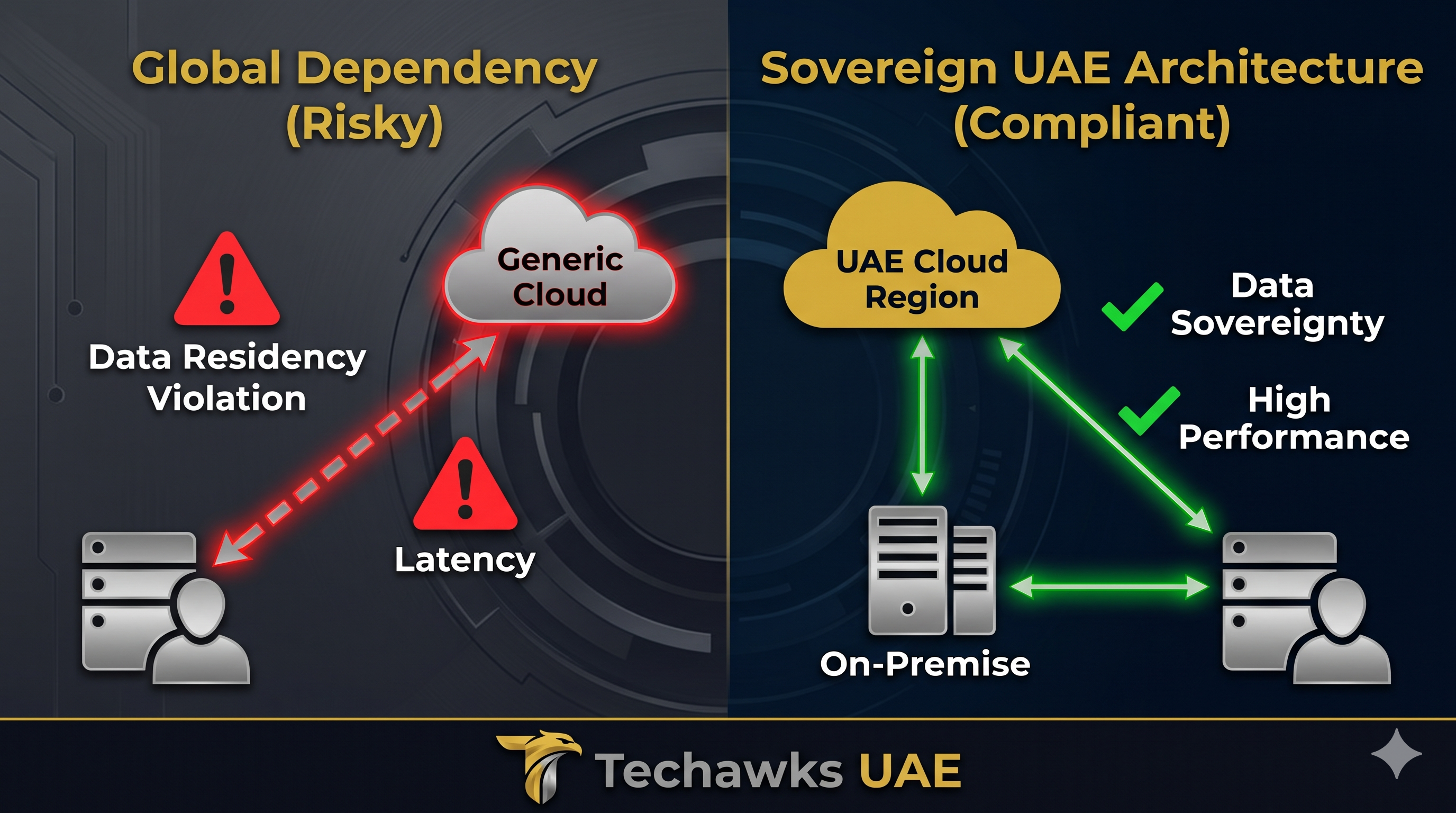
  • Achieving UAE Data Residency and Compliance Is Fully Handled by Deploying in the Middle East Cloud Region
    The Fallacy of "Geographic Proximity Equals Compliance"
    A widespread misconception among regional engineering teams in Dubai and Abu Dhabi is that spinning up resources in local cloud data centers is sufficient to satisfy the UAE Data Protection Law (Federal Decree-Law No. 45 of 2021) and UAE Information Assurance (IA) standards.


    In reality, cloud compliance is a shared governance model that requires rigorous application-layer controls. If cryptographic keys are managed by out-of-country parent entities, or if telemetry and personal data flow into global multi-tenant logging systems without local masking, your organization remains non-compliant regardless of where the physical servers sit.


    Architecture Comparison: Naive Regional Deployment vs. Sovereign UAE Compliance Standard
    Plaintext
    [ ANTI-PATTERN: Naive Local Region Setup ]
    UAE User Request ──> Local Cloud Region (UAE Data Center) ──> Centralized Global KMS / Foreign Admin Access
    (Result: Unsegmented telemetry export, extraterritorial key access, regulatory non-compliance exposure)


    [ RESILIENT UAE SOVEREIGN STANDARD: Zero-Trust Localized Enclave ]
    UAE User Request ──> Isolated Compute Pod ──> UAE-Resident HSM + CMEK ──> Immutable Local Audit Logs
    (Result: Complete data sovereignty, cryptographic isolation, full alignment with UAE regulatory mandates)
    Actionable Principles for UAE-Scale Engineering
    Implement Local Key Management (HSM / CMEK): Ensure that encryption keys safeguarding sensitive citizen and enterprise data never leave UAE borders. Utilize local Hardware Security Modules (HSMs) and Customer-Managed Encryption Keys (CMEK) to retain absolute cryptographic custody.


    Enforce Strict Data Localization and Redaction: Mask or tokenize Personally Identifiable Information (PII) at the edge before any logging or debugging data is mirrored to global monitoring tools. Keep raw operational data strictly within local storage tiers.


    Adopt Zero-Trust Identity and Access Boundaries: Separate administrative privileges so that global support teams cannot access UAE production environments without localized, auditable multi-factor approvals and time-bound session constraints.


    Automate Compliance Verification Audits: Integrate automated policy-as-code checks (using tools like OPA/Gatekeeper or cloud native posture management) to continuously verify that no storage buckets, databases, or logging streams have drifted outside designated UAE sovereign boundaries.


    Discussion Question
    What is the most challenging requirement your team has faced when aligning high-speed cloud architectures with UAE data protection and cybersecurity frameworks?


    CTA (Join Techawks UAE)
    Ready to master high-performance cloud architecture, sovereign data governance, and secure systems design with elite tech leaders across Dubai, Abu Dhabi, and the wider region? Join the Techawks UAE community at [Techawks UAE Community Link] to exchange architectural playbooks, security frameworks, and engineering insights.
    Achieving UAE Data Residency and Compliance Is Fully Handled by Deploying in the Middle East Cloud Region The Fallacy of "Geographic Proximity Equals Compliance" A widespread misconception among regional engineering teams in Dubai and Abu Dhabi is that spinning up resources in local cloud data centers is sufficient to satisfy the UAE Data Protection Law (Federal Decree-Law No. 45 of 2021) and UAE Information Assurance (IA) standards. In reality, cloud compliance is a shared governance model that requires rigorous application-layer controls. If cryptographic keys are managed by out-of-country parent entities, or if telemetry and personal data flow into global multi-tenant logging systems without local masking, your organization remains non-compliant regardless of where the physical servers sit. Architecture Comparison: Naive Regional Deployment vs. Sovereign UAE Compliance Standard Plaintext [ ANTI-PATTERN: Naive Local Region Setup ] UAE User Request ──> Local Cloud Region (UAE Data Center) ──> Centralized Global KMS / Foreign Admin Access (Result: Unsegmented telemetry export, extraterritorial key access, regulatory non-compliance exposure) [ RESILIENT UAE SOVEREIGN STANDARD: Zero-Trust Localized Enclave ] UAE User Request ──> Isolated Compute Pod ──> UAE-Resident HSM + CMEK ──> Immutable Local Audit Logs (Result: Complete data sovereignty, cryptographic isolation, full alignment with UAE regulatory mandates) Actionable Principles for UAE-Scale Engineering Implement Local Key Management (HSM / CMEK): Ensure that encryption keys safeguarding sensitive citizen and enterprise data never leave UAE borders. Utilize local Hardware Security Modules (HSMs) and Customer-Managed Encryption Keys (CMEK) to retain absolute cryptographic custody. Enforce Strict Data Localization and Redaction: Mask or tokenize Personally Identifiable Information (PII) at the edge before any logging or debugging data is mirrored to global monitoring tools. Keep raw operational data strictly within local storage tiers. Adopt Zero-Trust Identity and Access Boundaries: Separate administrative privileges so that global support teams cannot access UAE production environments without localized, auditable multi-factor approvals and time-bound session constraints. Automate Compliance Verification Audits: Integrate automated policy-as-code checks (using tools like OPA/Gatekeeper or cloud native posture management) to continuously verify that no storage buckets, databases, or logging streams have drifted outside designated UAE sovereign boundaries. Discussion Question What is the most challenging requirement your team has faced when aligning high-speed cloud architectures with UAE data protection and cybersecurity frameworks? CTA (Join Techawks UAE) Ready to master high-performance cloud architecture, sovereign data governance, and secure systems design with elite tech leaders across Dubai, Abu Dhabi, and the wider region? Join the Techawks UAE community at [Techawks UAE Community Link] to exchange architectural playbooks, security frameworks, and engineering insights.
    0 Comentários 0 Compartilhamentos 3KB Visualizações 0 Anterior
  • Compliance with UK GDPR and Data Residency is Fully Solved by Ticking a Box on Your US Cloud Console
    The Fallacy of "One-Click Compliance"
    A common pitfall among UK engineering and compliance teams is assuming that selecting a London (eu-west-2) data center region automatically fulfills all legal obligations under the UK GDPR and the Data Protection Act.


    In reality, cloud infrastructure governance goes far beyond physical server location. If parent entities subject to foreign jurisdiction maintain administrative access, telemetry collection rights, or centralized root keys without local cryptographic controls, data sovereignty is compromised. Production systems operating in regulated UK sectors (such as FinTech, HealthTech, and Public Digital Services) must enforce zero-trust encryption and localized access boundaries.


    Architecture Comparison: Naive Regional Deployment vs. Sovereign UK Architecture
    Plaintext
    [ ANTI-PATTERN: Naive Multi-Tenant Regional Setup ]
    UK User Request ──> London Data Center (AWS/Azure/GCP) ──> Centralized US Admin Access / Shared KMS Root Keys
    (Result: Potential foreign jurisdictional reach, unsegmented audit logs, compliance breach exposure)


    [ RESILIENT SOVEREIGN STANDARD: Zero-Trust Localized Control ]
    UK User Request ──> Local Edge / Application Tier ──> UK-Isolated Storage + Local Hardware Security Module (HSM)
    (Result: Cryptographic isolation, strict RBAC audit trails, robust UK GDPR compliance)
    Actionable Principles for UK Engineering Teams
    Enforce Customer-Managed Encryption Keys (CMEK): Never allow cloud providers to manage your primary encryption keys by default. Store and manage cryptographic keys within UK-hosted Hardware Security Modules (HSMs) or dedicated Key Management Services where foreign administrative access is cryptographically blocked.


    Implement Strict Least-Privilege IAM Boundaries: Separate administrative access so that global support teams cannot bypass local audit trails. Enforce role-based access control (RBAC) that restricts data-plane operations to personnel vetted within the UK/EEA jurisdiction.


    Design for Data Minimization & Anonymization: Reduce compliance surface area by tokenizing, hashing, or pseudonomizing personally identifiable information (PII) before it touches secondary analytics pipelines or multi-tenant logging aggregators.


    Maintain Immutable, Localized Audit Logs: Streamline regulatory reporting by ensuring all access logs, authentication attempts, and authorization failures are securely written to tamper-proof, write-once-read-many (WORM) storage confined strictly to the UK region.


    Discussion Question
    What is the toughest compliance hurdle your engineering team has faced when balancing multi-cloud scalability with UK/EU data residency mandates?


    CTA (Join Techawks UK)
    Ready to master sovereign cloud architecture, regulatory compliance engineering, and high-performance systems with elite UK tech leaders? Join the Techawks UK community at [Techawks UK Community Link] to share architectural frameworks, compliance playbooks, and engineering roundtables.
    Compliance with UK GDPR and Data Residency is Fully Solved by Ticking a Box on Your US Cloud Console The Fallacy of "One-Click Compliance" A common pitfall among UK engineering and compliance teams is assuming that selecting a London (eu-west-2) data center region automatically fulfills all legal obligations under the UK GDPR and the Data Protection Act. In reality, cloud infrastructure governance goes far beyond physical server location. If parent entities subject to foreign jurisdiction maintain administrative access, telemetry collection rights, or centralized root keys without local cryptographic controls, data sovereignty is compromised. Production systems operating in regulated UK sectors (such as FinTech, HealthTech, and Public Digital Services) must enforce zero-trust encryption and localized access boundaries. Architecture Comparison: Naive Regional Deployment vs. Sovereign UK Architecture Plaintext [ ANTI-PATTERN: Naive Multi-Tenant Regional Setup ] UK User Request ──> London Data Center (AWS/Azure/GCP) ──> Centralized US Admin Access / Shared KMS Root Keys (Result: Potential foreign jurisdictional reach, unsegmented audit logs, compliance breach exposure) [ RESILIENT SOVEREIGN STANDARD: Zero-Trust Localized Control ] UK User Request ──> Local Edge / Application Tier ──> UK-Isolated Storage + Local Hardware Security Module (HSM) (Result: Cryptographic isolation, strict RBAC audit trails, robust UK GDPR compliance) Actionable Principles for UK Engineering Teams Enforce Customer-Managed Encryption Keys (CMEK): Never allow cloud providers to manage your primary encryption keys by default. Store and manage cryptographic keys within UK-hosted Hardware Security Modules (HSMs) or dedicated Key Management Services where foreign administrative access is cryptographically blocked. Implement Strict Least-Privilege IAM Boundaries: Separate administrative access so that global support teams cannot bypass local audit trails. Enforce role-based access control (RBAC) that restricts data-plane operations to personnel vetted within the UK/EEA jurisdiction. Design for Data Minimization & Anonymization: Reduce compliance surface area by tokenizing, hashing, or pseudonomizing personally identifiable information (PII) before it touches secondary analytics pipelines or multi-tenant logging aggregators. Maintain Immutable, Localized Audit Logs: Streamline regulatory reporting by ensuring all access logs, authentication attempts, and authorization failures are securely written to tamper-proof, write-once-read-many (WORM) storage confined strictly to the UK region. Discussion Question What is the toughest compliance hurdle your engineering team has faced when balancing multi-cloud scalability with UK/EU data residency mandates? CTA (Join Techawks UK) Ready to master sovereign cloud architecture, regulatory compliance engineering, and high-performance systems with elite UK tech leaders? Join the Techawks UK community at [Techawks UK Community Link] to share architectural frameworks, compliance playbooks, and engineering roundtables.
    0 Comentários 0 Compartilhamentos 2KB Visualizações 0 Anterior
  • Achieving True Multi-Region Active-Active Architecture Simply Means Running the Same Database Stack Across US-East-1 and US-West-2
    The Fallacy of "It Runs in Two Places"
    A pervasive myth among US engineering teams is that high availability (HA) is achieved by spinning up duplicate infrastructure in us-east-1 and us-west-2. This often results in a "hot-standby" configuration masquerading as active-active, or worse, a multi-master setup that cannot handle write conflicts.


    When a transcontinental network partition hits (a common occurrence for US backbone providers), standard asynchronous replication creates split-brain scenarios where both sides accept conflicting writes for the same user ID. True multi-region active-active requires architectural patterns that embrace eventual consistency or utilize specialized distributed databases.


    Architecture Comparison: Naive Multi-Region vs. Resilient Global State
    Plaintext
    [ ANTI-PATTERN: Naive Asynchronous Multi-Master ]
    User Request ──> (Load Balancer) ──> Region A (us-east-1) R/W DB ──(Async Sync)──> Region B (us-west-2) R/W DB
    ^ ^
    └─── Network Partition (Split-Brain Scenario) ───┘
    (Result: Conflicting writes accepted in both regions, data inconsistency, complex reconciliation nightmares)


    [ RESILIENT GLOBAL STANDARD: Regional Sharding + Global Consensus ]
    User Request ──> (Global Traffic Mgr) ──> Local Region (us-east-1) ──> Local Writeable Shard
    ^
    └─── Strong Consistency Consensus Layer (e.g., Raft/Paxos) ───> Geo-Partitioned Replicas
    (Result: Localized write latency, global read consistency, system guarantees ordering and conflict resolution)
    Actionable Principles for US-Scale Multi-Region Design
    Geo-Partitioning / Data Locality: Do not try to make all data available everywhere simultaneously. Determine the user's home region (e.g., based on their US state or ISP) and pin their primary write partition to that AWS region (e.g., users in California write to us-west-2, users in New York write to us-east-1). This solves 90% of conflict issues.


    Embrace Conflict-Free Replicated Data Types (CRDTs): For data that must be updated globally (like a shopping cart), adopt CRDT-based data structures. These guarantee data convergence mathematically, preventing loss or divergence even during network partitions across the US.


    Global Traffic Management is Not Enough: Relying solely on DNS-based failover (e.g., AWS Route53 health checks) is too slow. True active-active requires the application layer itself to be aware of regional state and route requests intelligently based on data gravity, not just latency.


    Use Distributed SQL Operators: Stop managing raw database instances. Adopt production-grade distributed SQL databases (like CockroachDB or Yugabyte) that are built from the ground up with consensus protocols (Raft) to handle multi-region ACID compliance automatically, abstracting away the complexity of conflict resolution.


    Discussion Question
    What is the worst "split-brain" scenario you’ve encountered in a multi-region US deployment, and what architectural guardrail did you implement to prevent it from happening again?


    CTA (Join Techawks USA)
    Ready to master global-scale architecture, resilient cloud patterns, and distributed systems with elite US engineering leaders? Join the Techawks USA community at [Techawks USA Community Link] to access architectural deep dives, career roundtables, and US-specific industry insights.
    Achieving True Multi-Region Active-Active Architecture Simply Means Running the Same Database Stack Across US-East-1 and US-West-2 The Fallacy of "It Runs in Two Places" A pervasive myth among US engineering teams is that high availability (HA) is achieved by spinning up duplicate infrastructure in us-east-1 and us-west-2. This often results in a "hot-standby" configuration masquerading as active-active, or worse, a multi-master setup that cannot handle write conflicts. When a transcontinental network partition hits (a common occurrence for US backbone providers), standard asynchronous replication creates split-brain scenarios where both sides accept conflicting writes for the same user ID. True multi-region active-active requires architectural patterns that embrace eventual consistency or utilize specialized distributed databases. Architecture Comparison: Naive Multi-Region vs. Resilient Global State Plaintext [ ANTI-PATTERN: Naive Asynchronous Multi-Master ] User Request ──> (Load Balancer) ──> Region A (us-east-1) R/W DB ──(Async Sync)──> Region B (us-west-2) R/W DB ^ ^ └─── Network Partition (Split-Brain Scenario) ───┘ (Result: Conflicting writes accepted in both regions, data inconsistency, complex reconciliation nightmares) [ RESILIENT GLOBAL STANDARD: Regional Sharding + Global Consensus ] User Request ──> (Global Traffic Mgr) ──> Local Region (us-east-1) ──> Local Writeable Shard ^ └─── Strong Consistency Consensus Layer (e.g., Raft/Paxos) ───> Geo-Partitioned Replicas (Result: Localized write latency, global read consistency, system guarantees ordering and conflict resolution) Actionable Principles for US-Scale Multi-Region Design Geo-Partitioning / Data Locality: Do not try to make all data available everywhere simultaneously. Determine the user's home region (e.g., based on their US state or ISP) and pin their primary write partition to that AWS region (e.g., users in California write to us-west-2, users in New York write to us-east-1). This solves 90% of conflict issues. Embrace Conflict-Free Replicated Data Types (CRDTs): For data that must be updated globally (like a shopping cart), adopt CRDT-based data structures. These guarantee data convergence mathematically, preventing loss or divergence even during network partitions across the US. Global Traffic Management is Not Enough: Relying solely on DNS-based failover (e.g., AWS Route53 health checks) is too slow. True active-active requires the application layer itself to be aware of regional state and route requests intelligently based on data gravity, not just latency. Use Distributed SQL Operators: Stop managing raw database instances. Adopt production-grade distributed SQL databases (like CockroachDB or Yugabyte) that are built from the ground up with consensus protocols (Raft) to handle multi-region ACID compliance automatically, abstracting away the complexity of conflict resolution. Discussion Question What is the worst "split-brain" scenario you’ve encountered in a multi-region US deployment, and what architectural guardrail did you implement to prevent it from happening again? CTA (Join Techawks USA) Ready to master global-scale architecture, resilient cloud patterns, and distributed systems with elite US engineering leaders? Join the Techawks USA community at [Techawks USA Community Link] to access architectural deep dives, career roundtables, and US-specific industry insights.
    0 Comentários 0 Compartilhamentos 2KB Visualizações 0 Anterior
  • Tech Startups Must Scale Infrastructure Early to Handle "Hyper-Growth"
    The Fallacy of Pre-Emptive Over-Engineering
    Many technical founders fall into the trap of architecting for Netflix-scale traffic when they have fewer than 100 active users. They invest weeks of engineering bandwidth into complex microservices, service meshes, and auto-scaling node pools.


    The reality? Monoliths are vastly superior for early-stage validation. A clean, modular monolith deployed on a single managed instance (like a robust VPS or PaaS) gives you rapid iteration velocity, simplified debugging, and predictable, minimal cloud costs. Premature distribution introduces network latency, debugging nightmares, and operational overhead that founders simply cannot afford when pivoting quickly.


    Architecture Comparison: Anti-Premature Scale vs. Lean Monolith
    Plaintext
    [ ANTI-PATTERN: Premature Microservices & Multi-Region Clusters ]
    User ──> Global CDN ──> Load Balancer ──> Multi-Region K8s ──> Distributed DB + Service Mesh
    (Result: High cloud burn rate, complex debugging, slow feature iteration velocity)


    [ RESILIENT STARTUP STANDARD: Modular Monolith ]
    User ──> Managed Reverse Proxy (Nginx/Caddy) ──> Modular Monolith (Single Instance) ──> Managed DB
    (Result: Low burn rate, rapid feature deployment, clean domain boundaries for future splitting)
    Actionable Scaling Principles for Founders
    Build a Modular Monolith: Structure your codebase into strict internal packages or modules (e.g., auth, billing, core). This gives you the clean separation of microservices without the network boundary overhead, making it trivial to extract a service only when real bottlenecks appear.


    Maximize Managed Services: Avoid self-hosting databases, caching layers, or monitoring tools early on. Use managed cloud primitives to keep your engineering team focused on product features, not server maintenance.


    Define Scale Triggers First: Establish clear, quantitative thresholds for when to refactor (e.g., "We will extract the notification worker when background job latency exceeds 500ms consistently"). Never refactor based on hypothetical future traffic.


    Protect Your Runway: Every dollar spent on idle cloud capacity is a dollar taken away from customer acquisition and product iteration. Keep your burn rate lean until revenue or organic usage forces infrastructure expansion.


    Discussion Question
    At what user milestone or traffic threshold did your startup finally split its monolith into services, and what warning signs told you it was time?


    CTA (Join Startup Founders & Entrepreneurs)
    Ready to build, scale, and fund your tech startup with fellow founders who have been in the trenches? Join the Techawks Startup Founders & Entrepreneurs community at [Techawks Startups Community Link] to share architecture strategies, pitch decks, and growth playbooks.
    Tech Startups Must Scale Infrastructure Early to Handle "Hyper-Growth" The Fallacy of Pre-Emptive Over-Engineering Many technical founders fall into the trap of architecting for Netflix-scale traffic when they have fewer than 100 active users. They invest weeks of engineering bandwidth into complex microservices, service meshes, and auto-scaling node pools. The reality? Monoliths are vastly superior for early-stage validation. A clean, modular monolith deployed on a single managed instance (like a robust VPS or PaaS) gives you rapid iteration velocity, simplified debugging, and predictable, minimal cloud costs. Premature distribution introduces network latency, debugging nightmares, and operational overhead that founders simply cannot afford when pivoting quickly. Architecture Comparison: Anti-Premature Scale vs. Lean Monolith Plaintext [ ANTI-PATTERN: Premature Microservices & Multi-Region Clusters ] User ──> Global CDN ──> Load Balancer ──> Multi-Region K8s ──> Distributed DB + Service Mesh (Result: High cloud burn rate, complex debugging, slow feature iteration velocity) [ RESILIENT STARTUP STANDARD: Modular Monolith ] User ──> Managed Reverse Proxy (Nginx/Caddy) ──> Modular Monolith (Single Instance) ──> Managed DB (Result: Low burn rate, rapid feature deployment, clean domain boundaries for future splitting) Actionable Scaling Principles for Founders Build a Modular Monolith: Structure your codebase into strict internal packages or modules (e.g., auth, billing, core). This gives you the clean separation of microservices without the network boundary overhead, making it trivial to extract a service only when real bottlenecks appear. Maximize Managed Services: Avoid self-hosting databases, caching layers, or monitoring tools early on. Use managed cloud primitives to keep your engineering team focused on product features, not server maintenance. Define Scale Triggers First: Establish clear, quantitative thresholds for when to refactor (e.g., "We will extract the notification worker when background job latency exceeds 500ms consistently"). Never refactor based on hypothetical future traffic. Protect Your Runway: Every dollar spent on idle cloud capacity is a dollar taken away from customer acquisition and product iteration. Keep your burn rate lean until revenue or organic usage forces infrastructure expansion. Discussion Question At what user milestone or traffic threshold did your startup finally split its monolith into services, and what warning signs told you it was time? CTA (Join Startup Founders & Entrepreneurs) Ready to build, scale, and fund your tech startup with fellow founders who have been in the trenches? Join the Techawks Startup Founders & Entrepreneurs community at [Techawks Startups Community Link] to share architecture strategies, pitch decks, and growth playbooks.
    0 Comentários 0 Compartilhamentos 216 Visualizações 0 Anterior
  • Kubernetes Cost Spikes Aren't Inevitable: A Practical Tool Review of OpenCost and Kubecost for Granular FinOps
    Problem Definition & Failure Modes
    As organizations scale microservices on Kubernetes, visibility into Cluster Cost Allocation (FinOps) becomes a major operational blind spot.


    The 'Shared Namespace' Anti-Pattern: Aggregating costs at the cluster level makes it impossible to determine if an idle staging environment or a resource-hungry production service is driving the spike.


    The Cloud Bill Shock Trap: Relying solely on native cloud provider dashboards (like AWS Cost Explorer) often provides data too late and too abstractly to allow for meaningful engineering optimization.


    Architectural Workflow
    Plaintext
    [ Fragile FinOps Architecture ]
    Kubernetes Cluster ──> Cloud Provider Billing API ──> Monolithic Invoices (Zero Granularity)


    vs.


    [ Resilient FinOps Architecture ]
    Kubernetes Cluster ──> OpenCost / Kubecost Metrics Exporter ──> Prometheus ──> Granular Cost Dashboard (Namespace/Label Level)
    Production-Grade Engineering Principles
    Implement Real-Time Allocation: Integrate open-source tools like OpenCost or Kubecost directly into the cluster to capture metrics on CPU, RAM, GPU, storage, and network egress, allocating costs to specific Kubernetes concepts (namespace, deployment, service, label).


    Right-Sizing Feedback Loops: Expose granular cost dashboards to engineering teams, not just finance. This creates a direct feedback loop, allowing developers to correlate code deployments with immediate cost impact and optimize resource requests/limits.


    Automate Anomaly Detection: Configure alerts for sudden cost spikes within specific namespaces. This catches misconfigurations or runaway pods (e.g., an infinite logging loop consuming PVC storage) before the end-of-month bill arrives.


    Unified Multi-Cluster Visibility: Utilize tools (specifically Kubecost Enterprise) that aggregate cost data across multiple Kubernetes clusters, whether they are on-prem (bare metal) or distributed across EKS, GKE, and AKS, providing a single pane of glass for global infrastructure spend.


    Discussion Question
    What is your biggest challenge in attributing Kubernetes costs back to individual product teams, and have you successfully implemented automated resource requests/limits adjustments based on FinOps data?


    CTA (Join Cloud, DevOps & Open Source)
    Want to master Kubernetes cost optimization, scalable infrastructure patterns, and the latest cloud-native tools? Join the Cloud, DevOps & Open Source community on Techawks to connect with leading engineers and level up your operational expertise.
    Kubernetes Cost Spikes Aren't Inevitable: A Practical Tool Review of OpenCost and Kubecost for Granular FinOps Problem Definition & Failure Modes As organizations scale microservices on Kubernetes, visibility into Cluster Cost Allocation (FinOps) becomes a major operational blind spot. The 'Shared Namespace' Anti-Pattern: Aggregating costs at the cluster level makes it impossible to determine if an idle staging environment or a resource-hungry production service is driving the spike. The Cloud Bill Shock Trap: Relying solely on native cloud provider dashboards (like AWS Cost Explorer) often provides data too late and too abstractly to allow for meaningful engineering optimization. Architectural Workflow Plaintext [ Fragile FinOps Architecture ] Kubernetes Cluster ──> Cloud Provider Billing API ──> Monolithic Invoices (Zero Granularity) vs. [ Resilient FinOps Architecture ] Kubernetes Cluster ──> OpenCost / Kubecost Metrics Exporter ──> Prometheus ──> Granular Cost Dashboard (Namespace/Label Level) Production-Grade Engineering Principles Implement Real-Time Allocation: Integrate open-source tools like OpenCost or Kubecost directly into the cluster to capture metrics on CPU, RAM, GPU, storage, and network egress, allocating costs to specific Kubernetes concepts (namespace, deployment, service, label). Right-Sizing Feedback Loops: Expose granular cost dashboards to engineering teams, not just finance. This creates a direct feedback loop, allowing developers to correlate code deployments with immediate cost impact and optimize resource requests/limits. Automate Anomaly Detection: Configure alerts for sudden cost spikes within specific namespaces. This catches misconfigurations or runaway pods (e.g., an infinite logging loop consuming PVC storage) before the end-of-month bill arrives. Unified Multi-Cluster Visibility: Utilize tools (specifically Kubecost Enterprise) that aggregate cost data across multiple Kubernetes clusters, whether they are on-prem (bare metal) or distributed across EKS, GKE, and AKS, providing a single pane of glass for global infrastructure spend. Discussion Question What is your biggest challenge in attributing Kubernetes costs back to individual product teams, and have you successfully implemented automated resource requests/limits adjustments based on FinOps data? CTA (Join Cloud, DevOps & Open Source) Want to master Kubernetes cost optimization, scalable infrastructure patterns, and the latest cloud-native tools? Join the Cloud, DevOps & Open Source community on Techawks to connect with leading engineers and level up your operational expertise.
    0 Comentários 0 Compartilhamentos 122 Visualizações 0 Anterior
  • Moving Beyond Monolithic Prompts: Why Stateful Graph Orchestration (Like LangGraph) Is Replacing Basic Chains in Production AI
    The Problem with Basic Linear Chains
    For years, developers built AI applications using simple sequential chains (Input -> LLM -> Output). While great for quick prototypes, they introduce critical failure modes as systems scale:


    Zero Loop Control: Linear chains cannot safely handle cyclic logic, self-correction, or iterative refinement without breaking down.


    Opaque State Management: As multi-agent workflows expand, tracking conversation history, intermediate tool outputs, and memory across steps turns into a debugging nightmare.


    Brittle Error Handling: When a tool call fails or a model hallucinates an invalid argument, basic chains fail completely rather than gracefully routing to fallback mechanisms or human-in-the-loop validation.


    Architectural Workflow Comparison
    Plaintext
    [ ANTI-PATTERN: Monolithic Linear Chain ]
    User Request -> Prompt -> Single LLM Call -> Tool Execution -> Final Output (Fails silently on loops or complex state)


    [ RESILIENT STANDARD: Stateful Graph Orchestration ]
    User Request -> State Schema Initialization
    │
    ▼
    [ Agent Reasoning Node ] ──(Needs Tool?)──► [ Tool Execution Node ]
    │ │
    (Task Complete) │
    ▼ ▼
    [ Validation Node ] ◄──────────────────────────────┘
    │
    (Passed) │ (Failed/Needs Review)
    ┌────────┴────────┐
    ▼ ▼
    [ Secure Output ] [ Human-in-the-Loop Review ]
    Production-Grade Engineering Principles
    Embrace Graph-Based Architectures: Move away from black-box scripts toward stateful graph models (such as LangGraph) where control flow, conditional branching, and cycles are explicitly defined.


    Explicit State Schemas: Treat agent memory and variables as typed state objects passed explicitly between nodes, ensuring complete visibility and immutability across execution steps.


    Incorporate Human-in-the-Loop Checkpoints: Design interrupt points into your agent execution graphs before critical tool operations (like database mutations or financial transactions) to maintain rigorous safety boundaries.


    Isolate Tool Execution: Decouple reasoning nodes from execution sandboxes, using strict schema validation (like Pydantic) to verify tool inputs and outputs before updating global state.


    Discussion Question
    How does your engineering team handle state persistence and cyclic agent workflows in production? Are you transitioning to graph-based orchestrators, or are you still relying on custom wrapper scripts?


    CTA (Join AI Builders & Enthusiasts)
    Want to master production-grade AI engineering and connect with global builders solving hard architectural challenges? Join the AI Builders & Enthusiasts community today to build resilient, enterprise-ready intelligent systems.
    Moving Beyond Monolithic Prompts: Why Stateful Graph Orchestration (Like LangGraph) Is Replacing Basic Chains in Production AI The Problem with Basic Linear Chains For years, developers built AI applications using simple sequential chains (Input -> LLM -> Output). While great for quick prototypes, they introduce critical failure modes as systems scale: Zero Loop Control: Linear chains cannot safely handle cyclic logic, self-correction, or iterative refinement without breaking down. Opaque State Management: As multi-agent workflows expand, tracking conversation history, intermediate tool outputs, and memory across steps turns into a debugging nightmare. Brittle Error Handling: When a tool call fails or a model hallucinates an invalid argument, basic chains fail completely rather than gracefully routing to fallback mechanisms or human-in-the-loop validation. Architectural Workflow Comparison Plaintext [ ANTI-PATTERN: Monolithic Linear Chain ] User Request -> Prompt -> Single LLM Call -> Tool Execution -> Final Output (Fails silently on loops or complex state) [ RESILIENT STANDARD: Stateful Graph Orchestration ] User Request -> State Schema Initialization │ ▼ [ Agent Reasoning Node ] ──(Needs Tool?)──► [ Tool Execution Node ] │ │ (Task Complete) │ ▼ ▼ [ Validation Node ] ◄──────────────────────────────┘ │ (Passed) │ (Failed/Needs Review) ┌────────┴────────┐ ▼ ▼ [ Secure Output ] [ Human-in-the-Loop Review ] Production-Grade Engineering Principles Embrace Graph-Based Architectures: Move away from black-box scripts toward stateful graph models (such as LangGraph) where control flow, conditional branching, and cycles are explicitly defined. Explicit State Schemas: Treat agent memory and variables as typed state objects passed explicitly between nodes, ensuring complete visibility and immutability across execution steps. Incorporate Human-in-the-Loop Checkpoints: Design interrupt points into your agent execution graphs before critical tool operations (like database mutations or financial transactions) to maintain rigorous safety boundaries. Isolate Tool Execution: Decouple reasoning nodes from execution sandboxes, using strict schema validation (like Pydantic) to verify tool inputs and outputs before updating global state. Discussion Question How does your engineering team handle state persistence and cyclic agent workflows in production? Are you transitioning to graph-based orchestrators, or are you still relying on custom wrapper scripts? CTA (Join AI Builders & Enthusiasts) Want to master production-grade AI engineering and connect with global builders solving hard architectural challenges? Join the AI Builders & Enthusiasts community today to build resilient, enterprise-ready intelligent systems.
    0 Comentários 0 Compartilhamentos 83 Visualizações 0 Anterior
  • Escaping Configuration Hell: Why Typed Configs (Like Pkl) Are Replacing YAML in Modern Cloud Architecture
    The Problem with Traditional Configuration
    For years, infrastructure and application configurations have relied heavily on markup and data-serialization languages like YAML and JSON. While human-readable at first glance, they introduce critical failure modes as systems scale:


    Zero Type Safety: Everything is essentially a string until runtime, meaning type mismatches surface only when production services fail to boot.


    Configuration Sprawl: Lack of real composition models leads developers to copy-paste massive blocks across environments, breeding redundancy and hidden bugs.


    Brittle Validation: Catching malformed properties requires writing complex, external validation scripts that easily fall out of sync with actual schemas.


    Architectural Workflow Comparison
    Plaintext
    [ ANTI-PATTERN: Raw YAML Config Hell ]
    Developer edits 2,000-line YAML -> No IDE Type Checking -> Silent Type Coercion Error -> Production Crash at Deploy


    [ RESILIENT STANDARD: Typed Configuration Pipeline ]
    Developer edits Schema-Backed Config -> Real-time IDE Validation & Autocomplete -> Static Type Checking -> Valid JSON/YAML Output Generated Safely
    Production-Grade Engineering Principles
    Embrace Programmable Configuration: Move away from static markup files toward typed configuration languages (such as Apple's open-source Pkl) that offer object-oriented features, classes, and types.


    Shift Validation Left: Catch configuration errors directly in your IDE during authoring rather than waiting for CI/CD pipelines or production runtimes.


    Enforce Schema Contracts: Treat configurations like code by maintaining strict schemas that dictate required fields, allowed value ranges, and explicit data types.


    Decouple Config Logic from Deployment: Keep environment-specific overrides modular and programmable, eliminating copy-paste duplication across staging and production environments.


    Discussion Question
    How does your team currently handle configuration drift and validation across multi-region microservice deployments? Have you explored typed configuration alternatives, or are you still relying on traditional schema validation tools?


    CTA (Join Techawks General Community)
    Want to level up your engineering architecture and connect with thousands of global tech professionals? Join the Techawks General Community today to master modern software development patterns.
    Escaping Configuration Hell: Why Typed Configs (Like Pkl) Are Replacing YAML in Modern Cloud Architecture The Problem with Traditional Configuration For years, infrastructure and application configurations have relied heavily on markup and data-serialization languages like YAML and JSON. While human-readable at first glance, they introduce critical failure modes as systems scale: Zero Type Safety: Everything is essentially a string until runtime, meaning type mismatches surface only when production services fail to boot. Configuration Sprawl: Lack of real composition models leads developers to copy-paste massive blocks across environments, breeding redundancy and hidden bugs. Brittle Validation: Catching malformed properties requires writing complex, external validation scripts that easily fall out of sync with actual schemas. Architectural Workflow Comparison Plaintext [ ANTI-PATTERN: Raw YAML Config Hell ] Developer edits 2,000-line YAML -> No IDE Type Checking -> Silent Type Coercion Error -> Production Crash at Deploy [ RESILIENT STANDARD: Typed Configuration Pipeline ] Developer edits Schema-Backed Config -> Real-time IDE Validation & Autocomplete -> Static Type Checking -> Valid JSON/YAML Output Generated Safely Production-Grade Engineering Principles Embrace Programmable Configuration: Move away from static markup files toward typed configuration languages (such as Apple's open-source Pkl) that offer object-oriented features, classes, and types. Shift Validation Left: Catch configuration errors directly in your IDE during authoring rather than waiting for CI/CD pipelines or production runtimes. Enforce Schema Contracts: Treat configurations like code by maintaining strict schemas that dictate required fields, allowed value ranges, and explicit data types. Decouple Config Logic from Deployment: Keep environment-specific overrides modular and programmable, eliminating copy-paste duplication across staging and production environments. Discussion Question How does your team currently handle configuration drift and validation across multi-region microservice deployments? Have you explored typed configuration alternatives, or are you still relying on traditional schema validation tools? CTA (Join Techawks General Community) Want to level up your engineering architecture and connect with thousands of global tech professionals? Join the Techawks General Community today to master modern software development patterns.
    0 Comentários 0 Compartilhamentos 73 Visualizações 0 Anterior
  • Navigating Canadian Data Sovereignty: Why 'Local-First' Cloud Architecture is the Defining Skill for Senior Engineers in Canada
    The Problem & Failure Modes
    Canadian tech enterprises—especially in finance, healthcare, and government-adjacent sectors—face rigorous regulatory scrutiny regarding where user data lives and travels. Relying blindly on default US-east or global multi-region setups introduces critical vulnerabilities:


    PIPEDA & Provincial Compliance Violations: Storing or routing personal identifiable information (PII) across international borders without proper safeguards or consent breaches federal and provincial privacy frameworks.


    The Latency Penalty: Routing Canadian user traffic through foreign data hubs introduces unnecessary round-trip latency, degrading user experience for applications built for local markets.


    Vendor Lock-In & Cross-Border Subpoenas: Storing sensitive workloads in foreign-controlled cloud regions exposes Canadian corporations to extraterritorial legal frameworks and compliance friction.


    Architecture Workflow
    [ CANADIAN END USER ] <--> [ Local Edge / CDN (Toronto/Vancouver) ]
    |
    [ SECURE DATA PIPELINE ] <--> [ Canadian Cloud Region (AWS/Azure/GCP Canada Central/East) ]
    |
    [ COMPLIANCE & AUDIT LOG ] <--> [ Sovereign Data Lakehouse / Local Storage ]
    3 Production-Grade Engineering Principles
    Design for Local Data Residency: Always configure infrastructure-as-code (Terraform/OpenTofu) to provision compute and storage strictly within Canadian cloud regions (e.g., ca-central-1 or ca-east-1), ensuring data never leaves national boundaries.


    Implement Zero-Trust PII Masking: Build automated middleware and data-loss prevention (DLP) proxies that scrub or tokenize sensitive customer identifiers before any payload touches third-party APIs or external logging services.


    Master Multi-Region Failover Within Canada: Rather than failing over across international borders, design high-availability architectures that switch between Canadian availability zones (e.g., Montreal and Toronto) to maintain uninterrupted compliance during outages.


    Discussion Question
    As a tech professional in Canada, how is your organization balancing the appeal of global multi-region cloud features with strict domestic data residency requirements?


    CTA
    Join Techawks Canada to master production-grade cloud architectures, data sovereignty patterns, and modern engineering practices tailored for the Canadian tech ecosystem.
    Navigating Canadian Data Sovereignty: Why 'Local-First' Cloud Architecture is the Defining Skill for Senior Engineers in Canada The Problem & Failure Modes Canadian tech enterprises—especially in finance, healthcare, and government-adjacent sectors—face rigorous regulatory scrutiny regarding where user data lives and travels. Relying blindly on default US-east or global multi-region setups introduces critical vulnerabilities: PIPEDA & Provincial Compliance Violations: Storing or routing personal identifiable information (PII) across international borders without proper safeguards or consent breaches federal and provincial privacy frameworks. The Latency Penalty: Routing Canadian user traffic through foreign data hubs introduces unnecessary round-trip latency, degrading user experience for applications built for local markets. Vendor Lock-In & Cross-Border Subpoenas: Storing sensitive workloads in foreign-controlled cloud regions exposes Canadian corporations to extraterritorial legal frameworks and compliance friction. Architecture Workflow [ CANADIAN END USER ] <--> [ Local Edge / CDN (Toronto/Vancouver) ] | [ SECURE DATA PIPELINE ] <--> [ Canadian Cloud Region (AWS/Azure/GCP Canada Central/East) ] | [ COMPLIANCE & AUDIT LOG ] <--> [ Sovereign Data Lakehouse / Local Storage ] 3 Production-Grade Engineering Principles Design for Local Data Residency: Always configure infrastructure-as-code (Terraform/OpenTofu) to provision compute and storage strictly within Canadian cloud regions (e.g., ca-central-1 or ca-east-1), ensuring data never leaves national boundaries. Implement Zero-Trust PII Masking: Build automated middleware and data-loss prevention (DLP) proxies that scrub or tokenize sensitive customer identifiers before any payload touches third-party APIs or external logging services. Master Multi-Region Failover Within Canada: Rather than failing over across international borders, design high-availability architectures that switch between Canadian availability zones (e.g., Montreal and Toronto) to maintain uninterrupted compliance during outages. Discussion Question As a tech professional in Canada, how is your organization balancing the appeal of global multi-region cloud features with strict domestic data residency requirements? CTA Join Techawks Canada to master production-grade cloud architectures, data sovereignty patterns, and modern engineering practices tailored for the Canadian tech ecosystem.
    0 Comentários 0 Compartilhamentos 91 Visualizações 0 Anterior
  • Navigating the UAE’s Data Sovereignty Shift: Why 'Local-First' AI Architecture is the New Gold Standard for Senior Engineers
    The Problem & Failure Modes
    The UAE is aggressively localizing its critical data infrastructure (think healthcare, finance, government services). For senior engineers, deploying a generic, US-hosted model (e.g., standard OpenAI or Anthropic API) is no longer just a technical choice; it's a potential compliance failure.


    The Latency Trap: Routing user requests to a distant region (e.g., US-East) adds unacceptable latency for real-time UAE applications, killing user experience in fintech or e-commerce.


    The Compliance Chasm: UAE regulators (like the UAE Data Office and sector-specific authorities) mandate that sensitive citizen data must remain within national borders. A simple API call to a global provider puts your organization at risk of severe penalties.


    The Innovation Stagnation: Relying on black-box global APIs prevents your team from fine-tuning models on proprietary Arabic datasets or specific industry knowledge crucial for the UAE market.


    Architecture Workflow
    To succeed, you must design a sovereign, hybrid architecture that keeps data and compute local while leveraging global knowledge safely.


    [ UAE END USER ] <--> [ LOCAL EDGE / PROXY ] <--> [ ON-PREM or UAE CLOUD REGION (e.g., AWS/Azure/G42) ]
    |
    [ SECURE DATA PIPELINES ] <--> [ EMBEDDED VECTOR DB ] <-- [ SECURE LOCAL LLM (e.g., Llama 3, Jais Fine-tune) ]
    3 Production-Grade Engineering Principles
    Master Hybrid Deployment Patterns: Learn to architect solutions where the heavy lifting—RAG (Retrieval-Augmented Generation) and inference—occurs inside a UAE cloud region or on-premises infrastructure. The global API should only be used as a failover, not the primary engine.


    Embrace 'Arabic-First' Fine-Tuning: The UAE market demands excellence in Arabic. Move beyond generic models and learn how to quantize and fine-tune open-source models (like Meta’s Llama 3 or core Arabic models like Jais) on local, secure datasets.


    Implement 'Sovereign Guardrails': As a senior engineer, you own the compliance. Implement strict data loss prevention (DLP) and PII (Personally Identifiable Information) scrubbing before any data is sent to an external model, ensuring privacy-by-design.


    Discussion Question
    As a UAE-based tech professional, what is the biggest hurdle you face in implementing local-first AI architecture: cost of infrastructure, lack of available local GPU compute, or internal resistance from management still pushing for the 'easiest' global API solution?


    CTA
    Join Techawks UAE to master the practical, localized engineering skills—from sovereign AI architecture to regulatory compliance—that are defining high-impact, senior roles across the Emirates.
    Navigating the UAE’s Data Sovereignty Shift: Why 'Local-First' AI Architecture is the New Gold Standard for Senior Engineers The Problem & Failure Modes The UAE is aggressively localizing its critical data infrastructure (think healthcare, finance, government services). For senior engineers, deploying a generic, US-hosted model (e.g., standard OpenAI or Anthropic API) is no longer just a technical choice; it's a potential compliance failure. The Latency Trap: Routing user requests to a distant region (e.g., US-East) adds unacceptable latency for real-time UAE applications, killing user experience in fintech or e-commerce. The Compliance Chasm: UAE regulators (like the UAE Data Office and sector-specific authorities) mandate that sensitive citizen data must remain within national borders. A simple API call to a global provider puts your organization at risk of severe penalties. The Innovation Stagnation: Relying on black-box global APIs prevents your team from fine-tuning models on proprietary Arabic datasets or specific industry knowledge crucial for the UAE market. Architecture Workflow To succeed, you must design a sovereign, hybrid architecture that keeps data and compute local while leveraging global knowledge safely. [ UAE END USER ] <--> [ LOCAL EDGE / PROXY ] <--> [ ON-PREM or UAE CLOUD REGION (e.g., AWS/Azure/G42) ] | [ SECURE DATA PIPELINES ] <--> [ EMBEDDED VECTOR DB ] <-- [ SECURE LOCAL LLM (e.g., Llama 3, Jais Fine-tune) ] 3 Production-Grade Engineering Principles Master Hybrid Deployment Patterns: Learn to architect solutions where the heavy lifting—RAG (Retrieval-Augmented Generation) and inference—occurs inside a UAE cloud region or on-premises infrastructure. The global API should only be used as a failover, not the primary engine. Embrace 'Arabic-First' Fine-Tuning: The UAE market demands excellence in Arabic. Move beyond generic models and learn how to quantize and fine-tune open-source models (like Meta’s Llama 3 or core Arabic models like Jais) on local, secure datasets. Implement 'Sovereign Guardrails': As a senior engineer, you own the compliance. Implement strict data loss prevention (DLP) and PII (Personally Identifiable Information) scrubbing before any data is sent to an external model, ensuring privacy-by-design. Discussion Question As a UAE-based tech professional, what is the biggest hurdle you face in implementing local-first AI architecture: cost of infrastructure, lack of available local GPU compute, or internal resistance from management still pushing for the 'easiest' global API solution? CTA Join Techawks UAE to master the practical, localized engineering skills—from sovereign AI architecture to regulatory compliance—that are defining high-impact, senior roles across the Emirates.
    0 Comentários 0 Compartilhamentos 124 Visualizações 0 Anterior
  • Mastering Kubernetes Ingress Migration: Why Moving from Ingress-NGINX to Kubernetes Gateway API is Essential for Senior Cloud Engineers
    The Problem & Failure Modes
    For years, Ingress-NGINX was the default entry point for Kubernetes traffic. However, its tight coupling of routing rules with controller implementation details created massive bottlenecks:


    Monolithic Controllers: A single configuration error or CVE in the NGINX controller could compromise cluster-wide routing.


    Role Confusion: Developers and cluster operators constantly fought over a single overloaded Ingress resource, blurring separation of concerns.


    Lack of Advanced Traffic Control: Native Ingress lacked fine-grained traffic splitting, header-based routing, and multi-tenant delegation without relying on messy annotations.


    Architecture Workflow
    [ ANTI-PATTERN: Monolithic Ingress-NGINX ]
    [Client] --> [Ingress-NGINX Controller] --> (Global Monolith Config) --> [Services]
    (Single Point of Failure / Retired)


    [ RESILIENT PATTERN: Kubernetes Gateway API ]
    [Client] --> [GatewayClass / Gateway] --> [HTTPRoute (Developer Managed)] --> [Services]
    (Infrastructure Managed) (App Team Managed)
    3 Production-Grade Engineering Principles
    Decouple Infrastructure from Application Routing: Use GatewayClass and Gateway objects managed by platform engineering teams to control ports, listeners, and load balancer lifecycles, leaving HTTPRoute objects to application developers.


    Embrace Role-Oriented Design: Implement strict boundaries where infrastructure administrators manage cross-cutting networking concerns, while namespace-scoped teams own their specific traffic routes safely.


    Plan Your Migration Early: Utilize tools like ingress2gateway to translate legacy resources into declarative Gateway API manifests before deprecation risks impact your production uptime.


    Discussion Question
    What is your team's strategy for transitioning legacy annotation-heavy Ingress rules to the Kubernetes Gateway API, and how are you handling multi-tenant route delegation?


    CTA
    Join Cloud, DevOps & Open Source to master production-grade cloud architectures, platform engineering patterns, and modern infrastructure tooling.
    Mastering Kubernetes Ingress Migration: Why Moving from Ingress-NGINX to Kubernetes Gateway API is Essential for Senior Cloud Engineers The Problem & Failure Modes For years, Ingress-NGINX was the default entry point for Kubernetes traffic. However, its tight coupling of routing rules with controller implementation details created massive bottlenecks: Monolithic Controllers: A single configuration error or CVE in the NGINX controller could compromise cluster-wide routing. Role Confusion: Developers and cluster operators constantly fought over a single overloaded Ingress resource, blurring separation of concerns. Lack of Advanced Traffic Control: Native Ingress lacked fine-grained traffic splitting, header-based routing, and multi-tenant delegation without relying on messy annotations. Architecture Workflow [ ANTI-PATTERN: Monolithic Ingress-NGINX ] [Client] --> [Ingress-NGINX Controller] --> (Global Monolith Config) --> [Services] (Single Point of Failure / Retired) [ RESILIENT PATTERN: Kubernetes Gateway API ] [Client] --> [GatewayClass / Gateway] --> [HTTPRoute (Developer Managed)] --> [Services] (Infrastructure Managed) (App Team Managed) 3 Production-Grade Engineering Principles Decouple Infrastructure from Application Routing: Use GatewayClass and Gateway objects managed by platform engineering teams to control ports, listeners, and load balancer lifecycles, leaving HTTPRoute objects to application developers. Embrace Role-Oriented Design: Implement strict boundaries where infrastructure administrators manage cross-cutting networking concerns, while namespace-scoped teams own their specific traffic routes safely. Plan Your Migration Early: Utilize tools like ingress2gateway to translate legacy resources into declarative Gateway API manifests before deprecation risks impact your production uptime. Discussion Question What is your team's strategy for transitioning legacy annotation-heavy Ingress rules to the Kubernetes Gateway API, and how are you handling multi-tenant route delegation? CTA Join Cloud, DevOps & Open Source to master production-grade cloud architectures, platform engineering patterns, and modern infrastructure tooling.
    0 Comentários 0 Compartilhamentos 95 Visualizações 0 Anterior
Páginas impulsionada