• Bugatti’s final Bolide is what happens when a race car is treated like a collectible sculpture

    The Bolide is a 40-unit, track-only Bugatti built around the 8.0 liter quad turbo W16 and priced near €4 million, roughly $4.7 million for this final car. With about 1,600 horsepower, a 1,450 kg FIA-spec carbon chassis, 0 to 300 km/h in roughly 11.5 seconds and around 2.5 g of cornering grip, it behaves like a modern endurance racer that can never legally touch a public road.

    For the handful of owners, the car is less a flex and more the closing chapter of Bugatti’s 20 year W16 story before the hybrid V16 Tourbillon takes over.

    #Bugatti #Bolide #Hypercar #LuxuryCars #Wealth

    Bugatti’s final Bolide is what happens when a race car is treated like a collectible sculpture 🏁💰 The Bolide is a 40-unit, track-only Bugatti built around the 8.0 liter quad turbo W16 and priced near €4 million, roughly $4.7 million for this final car. With about 1,600 horsepower, a 1,450 kg FIA-spec carbon chassis, 0 to 300 km/h in roughly 11.5 seconds and around 2.5 g of cornering grip, it behaves like a modern endurance racer that can never legally touch a public road. For the handful of owners, the car is less a flex and more the closing chapter of Bugatti’s 20 year W16 story before the hybrid V16 Tourbillon takes over. #Bugatti #Bolide #Hypercar #LuxuryCars #Wealth
    ·75 Views ·0 voorbeeld

  • A lot of what feels like sci fi today will be boringly normal in your lifetime

    AI friends, real time translation, cashless money, robotaxis, Mars missions, trillionaires, and shrinking populations are all moving from edge case to everyday reality within a single lifetime. AI companions already reach hundreds of millions of users and nearly a million people are 100 or older; digital payments are used by billions; and serious roadmaps for Mars missions, robotaxis, home robots, space tourism, and orbital data centers are funded and public, so this list is closer to your portfolio forecast than science fiction.

    If you treat these shifts as near certain and build skills, assets, and ownership around them, you give your future self an almost unfair head start.

    #Future #AI #Wealth #Innovation #BigShifts
    A lot of what feels like sci fi today will be boringly normal in your lifetime 🚀 AI friends, real time translation, cashless money, robotaxis, Mars missions, trillionaires, and shrinking populations are all moving from edge case to everyday reality within a single lifetime. AI companions already reach hundreds of millions of users and nearly a million people are 100 or older; digital payments are used by billions; and serious roadmaps for Mars missions, robotaxis, home robots, space tourism, and orbital data centers are funded and public, so this list is closer to your portfolio forecast than science fiction. If you treat these shifts as near certain and build skills, assets, and ownership around them, you give your future self an almost unfair head start. #Future #AI #Wealth #Innovation #BigShifts
    ·154 Views ·0 voorbeeld
  • Flossing could become the future of vaccination. In a groundbreaking study, researchers demonstrated that vaccine-coated dental floss can trigger robust immune responses by targeting a thin, permeable tissue between the teeth and gums called the junctional epithelium. Unlike other parts of the mouth, this layer is rich in immune cells and naturally leaky—perfect for absorbing vaccine molecules.⁠

    Using this method, scientists vaccinated mice against influenza by flossing their teeth with strands coated in inactivated virus. The results were remarkable: mice developed strong immunity not only in their gums, but throughout their bodies. Antibodies were detected in saliva, feces, lungs, spleens, and even bone marrow, indicating both mucosal and systemic immune protection. All vaccinated mice survived a lethal flu exposure. Unvaccinated ones did not.⁠

    The immune response was also sustained over time, showing promise for long-term protection. Researchers successfully repeated the method with other vaccine types, including mRNA and protein-based formulations, further confirming the versatility of the approach. Notably, eating or drinking after flossing didn’t diminish its effectiveness.⁠

    The team also tested delivery with human volunteers using floss picks coated in dye. Around 60% of the dye reached the target tissue—an encouraging sign that floss-based vaccines could be viable for people, too. The technique avoids risks linked to nasal sprays and bypasses needle use entirely.⁠

    Beyond effectiveness, this method offers practical advantages: it’s needle-free, requires no refrigeration, and could even be mailed. While it may not work for infants or people with advanced gum disease, it has the potential to revolutionize mass immunization efforts.⁠

    Source: s41551-025-01451-3
    Flossing could become the future of vaccination. In a groundbreaking study, researchers demonstrated that vaccine-coated dental floss can trigger robust immune responses by targeting a thin, permeable tissue between the teeth and gums called the junctional epithelium. Unlike other parts of the mouth, this layer is rich in immune cells and naturally leaky—perfect for absorbing vaccine molecules.⁠ ⁠ Using this method, scientists vaccinated mice against influenza by flossing their teeth with strands coated in inactivated virus. The results were remarkable: mice developed strong immunity not only in their gums, but throughout their bodies. Antibodies were detected in saliva, feces, lungs, spleens, and even bone marrow, indicating both mucosal and systemic immune protection. All vaccinated mice survived a lethal flu exposure. Unvaccinated ones did not.⁠ ⁠ The immune response was also sustained over time, showing promise for long-term protection. Researchers successfully repeated the method with other vaccine types, including mRNA and protein-based formulations, further confirming the versatility of the approach. Notably, eating or drinking after flossing didn’t diminish its effectiveness.⁠ ⁠ The team also tested delivery with human volunteers using floss picks coated in dye. Around 60% of the dye reached the target tissue—an encouraging sign that floss-based vaccines could be viable for people, too. The technique avoids risks linked to nasal sprays and bypasses needle use entirely.⁠ ⁠ Beyond effectiveness, this method offers practical advantages: it’s needle-free, requires no refrigeration, and could even be mailed. While it may not work for infants or people with advanced gum disease, it has the potential to revolutionize mass immunization efforts.⁠ ⁠ Source: s41551-025-01451-3
    ·32 Views ·0 voorbeeld
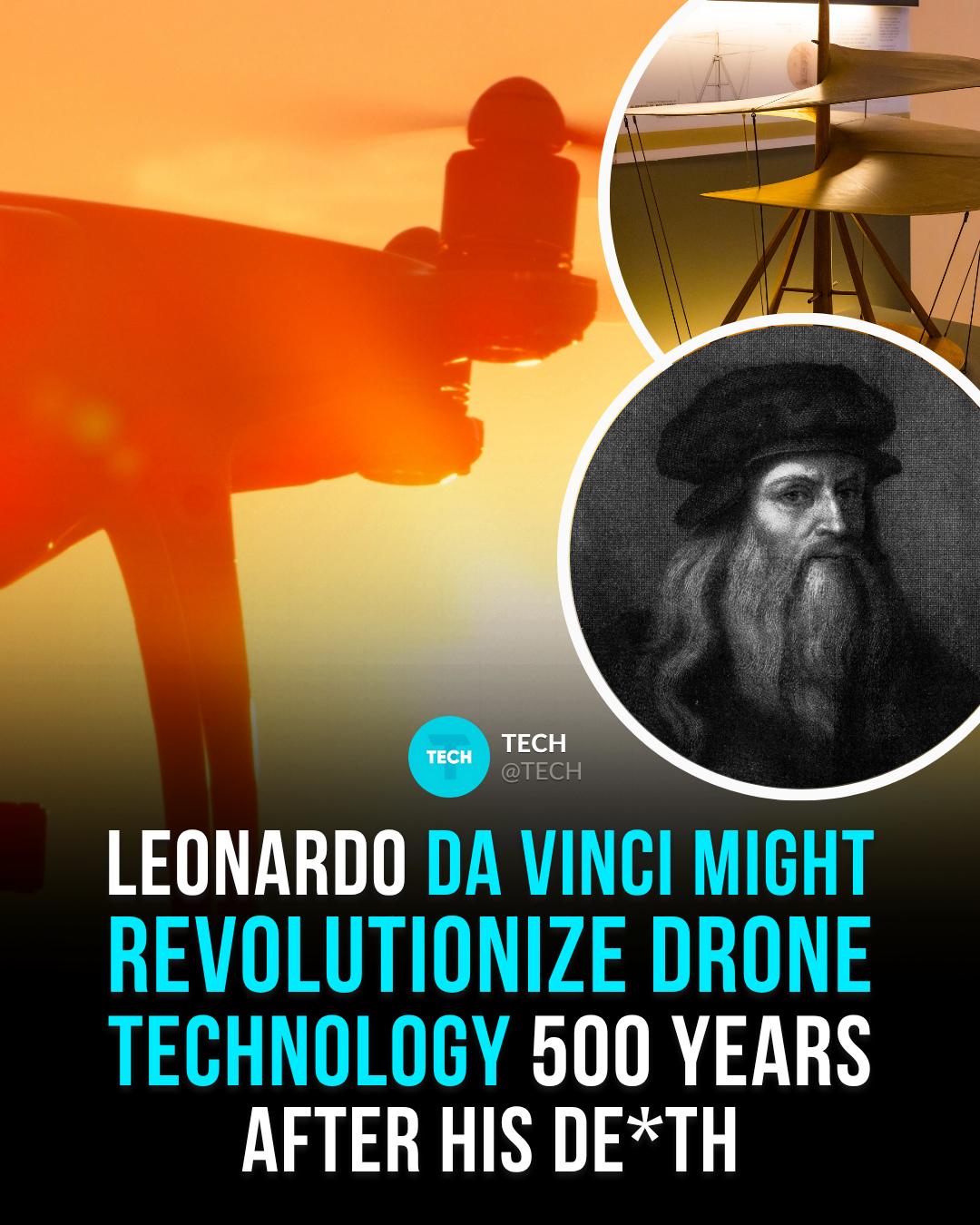
  • A Renaissance-era sketch may hold the key to building quieter drones. Scientists at Johns Hopkins University have revived Leonardo da Vinci’s “aerial screw,” a spiral rotor concept from the 1480s, and found it has a modern application: reducing the noise and energy demands of drone propellers. Through detailed computer simulations, they discovered that the helical rotor design offers surprising acoustic and aerodynamic benefits.⁠

    Unlike the sharp, narrow blades found on most commercial drones, da Vinci’s aerial screw has a broad, corkscrew-like surface that spins more slowly. That slower spin—and the smoother distribution of lift—means less turbulent airflow and fewer of the shrill, high-frequency tones typically produced by fast-spinning blades. Though the aerial screw generates slightly less lift than standard rotors, it compensates with greater surface area, resulting in more stable flight with far less noise and reduced mechanical power.⁠

    The implications for urban drone use are significant. Drones are increasingly being deployed for deliveries, inspections, and emergency response, but their noise—often compared to a swarm of angry bees—remains a major public complaint. A quieter rotor system could help drones integrate more seamlessly into everyday life without disturbing communities, especially in crowded cities where even subtle sounds can escalate into constant background noise.⁠

    While the researchers aren’t suggesting we swap all modern drone blades for da Vinci’s screw, they argue it’s time to revisit unconventional rotor shapes. Innovations sometimes mean looking forward—but other times, they mean rediscovering what we left behind. In this case, an idea sketched in the margins of history could reshape the future of flight, combining ancient vision with modern engineering.⁠

    Source: 2506.10223⁠

    #drones #technews #innovation #sciencefacts #engineering #futuretech #quiettech #davinci #designideas #droneflight #aerodynamics #techhistory #noisecanceling #urbanmobility
    A Renaissance-era sketch may hold the key to building quieter drones. Scientists at Johns Hopkins University have revived Leonardo da Vinci’s “aerial screw,” a spiral rotor concept from the 1480s, and found it has a modern application: reducing the noise and energy demands of drone propellers. Through detailed computer simulations, they discovered that the helical rotor design offers surprising acoustic and aerodynamic benefits.⁠ ⁠ Unlike the sharp, narrow blades found on most commercial drones, da Vinci’s aerial screw has a broad, corkscrew-like surface that spins more slowly. That slower spin—and the smoother distribution of lift—means less turbulent airflow and fewer of the shrill, high-frequency tones typically produced by fast-spinning blades. Though the aerial screw generates slightly less lift than standard rotors, it compensates with greater surface area, resulting in more stable flight with far less noise and reduced mechanical power.⁠ ⁠ The implications for urban drone use are significant. Drones are increasingly being deployed for deliveries, inspections, and emergency response, but their noise—often compared to a swarm of angry bees—remains a major public complaint. A quieter rotor system could help drones integrate more seamlessly into everyday life without disturbing communities, especially in crowded cities where even subtle sounds can escalate into constant background noise.⁠ ⁠ While the researchers aren’t suggesting we swap all modern drone blades for da Vinci’s screw, they argue it’s time to revisit unconventional rotor shapes. Innovations sometimes mean looking forward—but other times, they mean rediscovering what we left behind. In this case, an idea sketched in the margins of history could reshape the future of flight, combining ancient vision with modern engineering.⁠ ⁠ Source: 2506.10223⁠ ⁠ #drones #technews #innovation #sciencefacts #engineering #futuretech #quiettech #davinci #designideas #droneflight #aerodynamics #techhistory #noisecanceling #urbanmobility
    ·123 Views ·0 voorbeeld
  • A Japanese team just took a sharp step toward cleaning Earth’s crowded orbit without ever touching the trash. At Tohoku University, researchers demonstrated a bi-directional plasma thruster that fires two opposed jets of ionized gas, one to slow a target hulk and the other to cancel the recoil that would shove the cleanup craft away.⁠

    Plasma is a charged gas, so directing it at debris can bleed off speed until the object dips into the atmosphere and burns up. The catch has always been Newton’s third law, the same push that slows the junk kicks the remover backward. This engine solves that by balancing thrust in real time, keeping the chaser parked on target instead of drifting off.⁠

    The team also added a “cusp” magnetic field, a configuration borrowed from fusion research, to corral and focus the plasma. In vacuum-chamber tests, that tweak boosted performance, tripling the deceleration reported in earlier experiments and delivering measured pushes in the tens of millinewtons at kilowatt-class power. Researchers note that this could make future debris-cleaning missions far more efficient, extending operational lifetimes and allowing smaller spacecraft to take on bigger jobs.⁠

    Practical perks matter in orbit, and this design runs on argon, which is cheaper and easier to source than xenon common in ion engines. At projected levels, about 30 millinewtons of sustained braking could deorbit a one-ton object in roughly 100 days, a scale that targets the largest collision risks that could trigger a Kessler-style chain reaction.⁠

    There’s work ahead, from standoff distance control to propellant budgets for long burns. But the core result, peer-reviewed in Scientific Reports on August 20, 2025, shows a path to contact-free debris removal that is stable, scalable, and built from known physics rather than wishful thinking.
    A Japanese team just took a sharp step toward cleaning Earth’s crowded orbit without ever touching the trash. At Tohoku University, researchers demonstrated a bi-directional plasma thruster that fires two opposed jets of ionized gas, one to slow a target hulk and the other to cancel the recoil that would shove the cleanup craft away.⁠ ⁠ Plasma is a charged gas, so directing it at debris can bleed off speed until the object dips into the atmosphere and burns up. The catch has always been Newton’s third law, the same push that slows the junk kicks the remover backward. This engine solves that by balancing thrust in real time, keeping the chaser parked on target instead of drifting off.⁠ ⁠ The team also added a “cusp” magnetic field, a configuration borrowed from fusion research, to corral and focus the plasma. In vacuum-chamber tests, that tweak boosted performance, tripling the deceleration reported in earlier experiments and delivering measured pushes in the tens of millinewtons at kilowatt-class power. Researchers note that this could make future debris-cleaning missions far more efficient, extending operational lifetimes and allowing smaller spacecraft to take on bigger jobs.⁠ ⁠ Practical perks matter in orbit, and this design runs on argon, which is cheaper and easier to source than xenon common in ion engines. At projected levels, about 30 millinewtons of sustained braking could deorbit a one-ton object in roughly 100 days, a scale that targets the largest collision risks that could trigger a Kessler-style chain reaction.⁠ ⁠ There’s work ahead, from standoff distance control to propellant budgets for long burns. But the core result, peer-reviewed in Scientific Reports on August 20, 2025, shows a path to contact-free debris removal that is stable, scalable, and built from known physics rather than wishful thinking.
    ·124 Views ·0 voorbeeld
  • In San Diego, a small research team pointed a cheap residential satellite dish at the sky and watched the world's private traffic pour in. Using about $800 of off the shelf hardware and open source tools, they spent three years sweeping geostationary satellites that sit 22,000 miles above Earth and still quietly handle backhaul for airlines, remote cell towers, oil rigs, utilities, and governments. Instead of hardened, encrypted links, they kept finding raw, readable data flowing straight into their receiver.⁠

    From just 39 satellites, only a slice of the global geostationary fleet, the team captured private phone calls, text messages, in flight Wi Fi sessions, and internal corporate and government communications. A nine hour recording of T Mobile satellite backhaul revealed more than 2,700 phone numbers plus one side of users’ calls and SMS. Other links exposed browsing activity from passengers on commercial flights and traffic from rural internet customers whose data had been routed skyward without proper protection.⁠

    The leaks went far beyond consumer chatter. Mexican military and police units were broadcasting mission details, asset locations, and helicopter maintenance logs in the clear. U.S. vessels were transmitting unencrypted internal traffic that revealed ship identities and movements. Operators of critical infrastructure, including a major Latin American electric utility, were sending status reports, customer records, and failure alerts with no end to end encryption at all, creating an easy starting point for espionage or disruption.⁠

    After quiet disclosure, some firms, including T Mobile and AT&T, scrambled to add encryption, while others lagged behind. The researchers are now preparing an open source toolkit, named after their paper “Don’t Look Up,” so regulators, defenders, and operators can see for themselves what is leaking from orbit. The larger lesson is blunt, security by hoping nobody looks up is not security, it is an invitation.⁠

    #satellites #cybersecurity #encryption #infosec #space #communications #datasecurity #privacy #technology
    In San Diego, a small research team pointed a cheap residential satellite dish at the sky and watched the world's private traffic pour in. Using about $800 of off the shelf hardware and open source tools, they spent three years sweeping geostationary satellites that sit 22,000 miles above Earth and still quietly handle backhaul for airlines, remote cell towers, oil rigs, utilities, and governments. Instead of hardened, encrypted links, they kept finding raw, readable data flowing straight into their receiver.⁠ ⁠ From just 39 satellites, only a slice of the global geostationary fleet, the team captured private phone calls, text messages, in flight Wi Fi sessions, and internal corporate and government communications. A nine hour recording of T Mobile satellite backhaul revealed more than 2,700 phone numbers plus one side of users’ calls and SMS. Other links exposed browsing activity from passengers on commercial flights and traffic from rural internet customers whose data had been routed skyward without proper protection.⁠ ⁠ The leaks went far beyond consumer chatter. Mexican military and police units were broadcasting mission details, asset locations, and helicopter maintenance logs in the clear. U.S. vessels were transmitting unencrypted internal traffic that revealed ship identities and movements. Operators of critical infrastructure, including a major Latin American electric utility, were sending status reports, customer records, and failure alerts with no end to end encryption at all, creating an easy starting point for espionage or disruption.⁠ ⁠ After quiet disclosure, some firms, including T Mobile and AT&T, scrambled to add encryption, while others lagged behind. The researchers are now preparing an open source toolkit, named after their paper “Don’t Look Up,” so regulators, defenders, and operators can see for themselves what is leaking from orbit. The larger lesson is blunt, security by hoping nobody looks up is not security, it is an invitation.⁠ ⁠ #satellites #cybersecurity #encryption #infosec #space #communications #datasecurity #privacy #technology
    ·277 Views ·0 voorbeeld
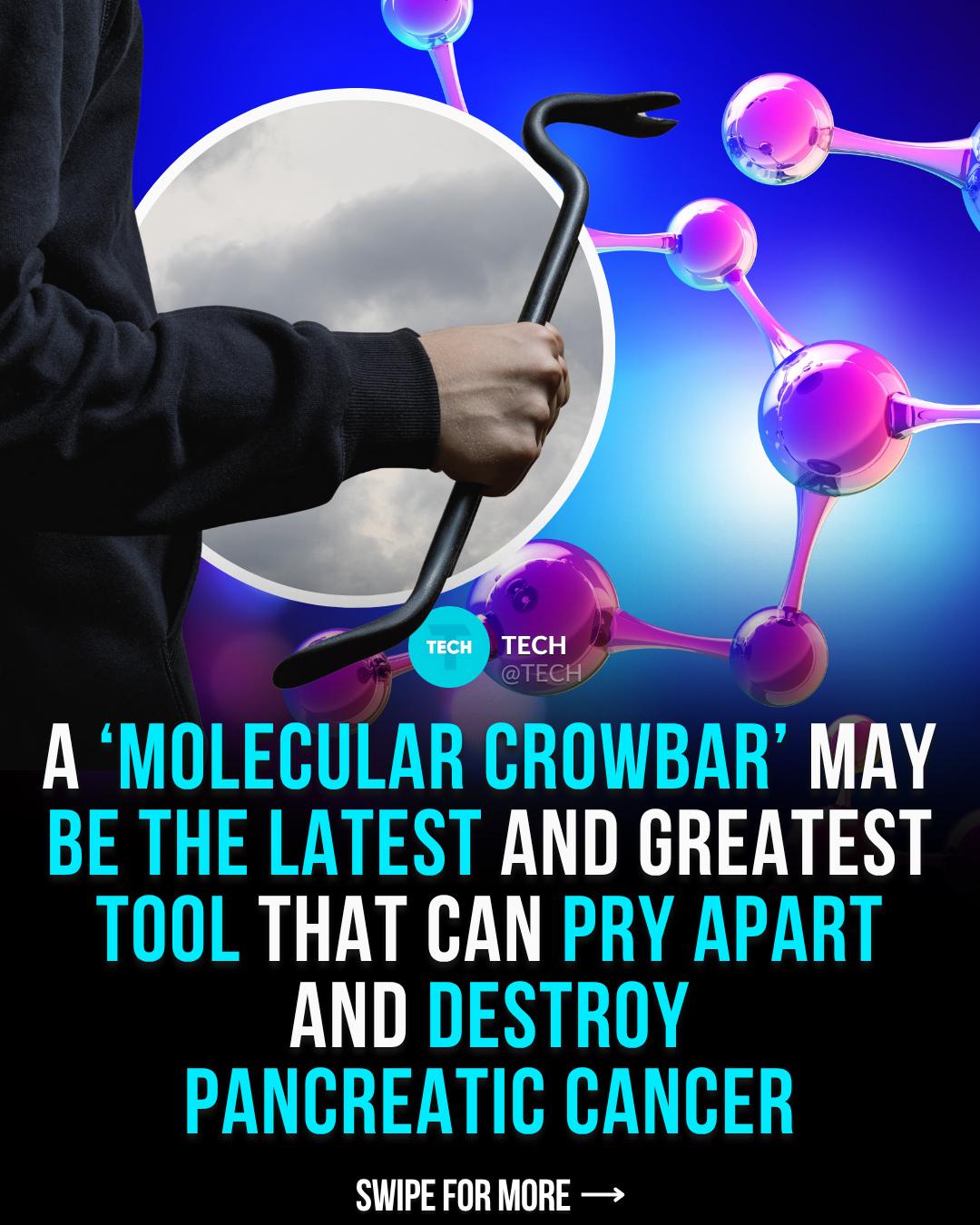
  • Researchers are closing in on one of the most stubborn molecular drivers of pancreatic cancer. Deep inside tumor cells and the fibrous tissues surrounding them, a fast-acting enzyme called Pin1 rewires signaling pathways that help cancers grow, spread, and evade therapy. A new effort by UC Riverside and City of Hope is using a precision-engineered “molecular crowbar” to pry this enzyme apart and trigger its destruction.⁠

    The strategy hinges on custom-designed compounds that bind tightly to Pin1, push it into an unstable shape, and mark it for removal by the cell’s own disposal machinery. Instead of simply blocking the enzyme’s activity, these degraders erase the protein entirely, offering a fundamentally different way to dismantle cancer’s internal wiring.⁠

    To move the approach forward, the teams strengthened the compounds’ stability in blood plasma, then mapped how they affect cancer cells and the surrounding fibroblasts drawn from patient biopsies. That dual targeting is critical, because the tumor microenvironment in pancreatic cancer forms a dense, treatment-resistant barrier that protects malignant cells from chemotherapy and immunotherapy.⁠

    In mouse models of peritoneal metastases—one of the deadliest complications of pancreatic, gastrointestinal, and abdominal cancers—the degraders sharply reduced tumor burden. The results offer rare proof-of-concept progress against a disease where survival is often measured in months.⁠

    Backed by a National Cancer Institute cooperative grant, the collaboration is now advancing these degraders toward clinical readiness. Because Pin1 is active across many tumor types, this approach could open a broader therapeutic class built around selective protein dismantling.⁠

    #tech #biotech #cancerresearch #pancreaticcancer #drugdiscovery #proteindegradation #molecularbiology #innovation #futuremedicine
    Researchers are closing in on one of the most stubborn molecular drivers of pancreatic cancer. Deep inside tumor cells and the fibrous tissues surrounding them, a fast-acting enzyme called Pin1 rewires signaling pathways that help cancers grow, spread, and evade therapy. A new effort by UC Riverside and City of Hope is using a precision-engineered “molecular crowbar” to pry this enzyme apart and trigger its destruction.⁠ ⁠ The strategy hinges on custom-designed compounds that bind tightly to Pin1, push it into an unstable shape, and mark it for removal by the cell’s own disposal machinery. Instead of simply blocking the enzyme’s activity, these degraders erase the protein entirely, offering a fundamentally different way to dismantle cancer’s internal wiring.⁠ ⁠ To move the approach forward, the teams strengthened the compounds’ stability in blood plasma, then mapped how they affect cancer cells and the surrounding fibroblasts drawn from patient biopsies. That dual targeting is critical, because the tumor microenvironment in pancreatic cancer forms a dense, treatment-resistant barrier that protects malignant cells from chemotherapy and immunotherapy.⁠ ⁠ In mouse models of peritoneal metastases—one of the deadliest complications of pancreatic, gastrointestinal, and abdominal cancers—the degraders sharply reduced tumor burden. The results offer rare proof-of-concept progress against a disease where survival is often measured in months.⁠ ⁠ Backed by a National Cancer Institute cooperative grant, the collaboration is now advancing these degraders toward clinical readiness. Because Pin1 is active across many tumor types, this approach could open a broader therapeutic class built around selective protein dismantling.⁠ ⁠ #tech #biotech #cancerresearch #pancreaticcancer #drugdiscovery #proteindegradation #molecularbiology #innovation #futuremedicine
    ·281 Views ·0 voorbeeld
  • Stepping into the future, here's a glimpse of what the kids of tomorrow might rock to capture the essence of 2023. From statement shoes that redefine comfort post-pandemic to the lasting impact of celeb culture, these objects may seem like a mixtape of chaos, but they narrate our style story.

    Check out the trends that ruled 2023 for us!

    #margotrobbie #emmacorin #oliviarodrigo #kendalljenner #sophiarichie #barbiecore #barbie #oldmoneyaesthetic #fashion #fashiontrends #gofynd
    Stepping into the future, here's a glimpse of what the kids of tomorrow might rock to capture the essence of 2023. 🚀👀 From statement shoes that redefine comfort post-pandemic to the lasting impact of celeb culture, these objects may seem like a mixtape of chaos, but they narrate our style story. Check out the trends that ruled 2023 for us! #margotrobbie #emmacorin #oliviarodrigo #kendalljenner #sophiarichie #barbiecore #barbie #oldmoneyaesthetic #fashion #fashiontrends #gofynd
    ·173 Views ·0 voorbeeld
  • Two boys are running for their lives across the notorious Sniper Alley, clutching their dog to their chests as they sprint. Sarajevo, 1995. For nearly four years the city has been under siege, its residents trapped in a landscape where everyday errands can turn into deadly gambles. The boys know the rhythm of danger by heart—the moments of deceptive calm, the sudden crack of a rifle from the surrounding hills.

    From the ridgelines that encircle the city, Serbian soldiers watch for movement through their scopes. Mixed among them are thrill-seeking foreign “human-safari” tourists who have come to witness, and sometimes participate in, the deadly sport of targeting civilians. Every dash across an exposed street is a roll of the dice.

    The boys run because they must. Their dog had broken loose during a mortar blast the night before, and retrieving him meant crossing one of the most perilous stretches of open ground in the city. The animal whimpers in their arms as they sprint past the bullet-pocked facades, weaving between burned-out trams, hoping the next shot is not meant for them.

    Behind them, the city groans under hunger, fear, and exhaustion. Ahead of them lies only a few dozen meters of open asphalt—but in Sarajevo during the siege, that is distance enough for life or death.
    Two boys are running for their lives across the notorious Sniper Alley, clutching their dog to their chests as they sprint. Sarajevo, 1995. For nearly four years the city has been under siege, its residents trapped in a landscape where everyday errands can turn into deadly gambles. The boys know the rhythm of danger by heart—the moments of deceptive calm, the sudden crack of a rifle from the surrounding hills. From the ridgelines that encircle the city, Serbian soldiers watch for movement through their scopes. Mixed among them are thrill-seeking foreign “human-safari” tourists who have come to witness, and sometimes participate in, the deadly sport of targeting civilians. Every dash across an exposed street is a roll of the dice. The boys run because they must. Their dog had broken loose during a mortar blast the night before, and retrieving him meant crossing one of the most perilous stretches of open ground in the city. The animal whimpers in their arms as they sprint past the bullet-pocked facades, weaving between burned-out trams, hoping the next shot is not meant for them. Behind them, the city groans under hunger, fear, and exhaustion. Ahead of them lies only a few dozen meters of open asphalt—but in Sarajevo during the siege, that is distance enough for life or death.
    ·132 Views ·0 voorbeeld
  • UnitedHealth Group has scrubbed much of its website mentioning its diversity, equity, and inclusion (DEI) policies, including pulling down blog posts and removing large sections from its website, TechCrunch has learned.

    According to archived copies of UnitedHealth’s website, several of the company’s web pages dedicated to DEI no longer load and now redirect to a “page not found” error.

    A section of the company’s career page that used to have a dedicated section for diversity, equity, and inclusion, along with its diversity initiatives, no longer appears on the same live page. UnitedHealth also removed a 2022 blog post featuring a conversation with its vice president of DEI.

    It’s not clear why UnitedHealth pulled down the pages, and if it represents a shift of verbiage or an actual change in its policies.

    Read more at the link in the bio

    Article by Zack Whittaker

    Image Credits: Patrick Sison / AP

    #TechCrunch #technews #policy #DEI #healthtech #Trump
    UnitedHealth Group has scrubbed much of its website mentioning its diversity, equity, and inclusion (DEI) policies, including pulling down blog posts and removing large sections from its website, TechCrunch has learned. According to archived copies of UnitedHealth’s website, several of the company’s web pages dedicated to DEI no longer load and now redirect to a “page not found” error. A section of the company’s career page that used to have a dedicated section for diversity, equity, and inclusion, along with its diversity initiatives, no longer appears on the same live page. UnitedHealth also removed a 2022 blog post featuring a conversation with its vice president of DEI. It’s not clear why UnitedHealth pulled down the pages, and if it represents a shift of verbiage or an actual change in its policies. Read more at the link in the bio 👆 Article by Zack Whittaker Image Credits: Patrick Sison / AP #TechCrunch #technews #policy #DEI #healthtech #Trump
    ·140 Views ·0 voorbeeld
Zoekresultaten
Techawks - Powered By Pantrade Blockchain https://techawks.com