• The US Tech Compliance & SOC 2 Readiness Checklist: 5 Core Trust Pillars for Scaling SaaS Startups


    As US technology startups scale from early seed traction to enterprise-ready growth, establishing automated compliance and rigorous data governance is non-negotiable. Passing an audit isn't just about checking legal boxes; it’s about proving to customers that their data is protected by enterprise-grade guardrails from day one.


    Audit and fortify your infrastructure for enterprise procurement with this SOC 2 readiness checklist:


    [ ] Automated Identity & Access Management (IAM): Enforce strict multi-factor authentication (MFA), role-based access control (RBAC), and automated offboarding across all internal developer tools and cloud consoles.


    [ ] Continuous Infrastructure Monitoring: Implement automated compliance scanners and log centralization tools to detect unauthorized configuration changes or security drift in real time.


    [ ] Version-Controlled Access & Change Management: Ensure every production code deployment, database migration, and infrastructure update goes through mandatory pull request reviews and CI/CD audit trails.


    [ ] Encrypted Data at Rest & in Transit: Mandate robust encryption standards (AES-256 for storage, TLS 1.3 for transit) backed by automated key rotation via AWS KMS or HashiCorp Vault.


    [ ] Formalized Incident Response Playbook: Document, test, and automate your incident detection, escalation, and post-mortem workflows so you can respond transparently to enterprise security questionnaires.


    Why It Matters
    Enterprise buyers don't just buy software—they buy risk reduction. Building compliance into your engineering workflow early accelerates your sales cycle, builds instant market trust, and sets your startup apart in a crowded ecosystem.


    Discussion Question
    What has been your startup's biggest bottleneck when transitioning from an ad-hoc security setup to formal SOC 2 compliance for enterprise sales? Let’s share notes below! 👇


    CTA (Join Techawks USA)
    Ready to build, scale, and sell to US enterprises? Join the Techawks USA community to connect with local founders, share compliance strategies, and accelerate your growth.

    The US Tech Compliance & SOC 2 Readiness Checklist: 5 Core Trust Pillars for Scaling SaaS Startups As US technology startups scale from early seed traction to enterprise-ready growth, establishing automated compliance and rigorous data governance is non-negotiable. Passing an audit isn't just about checking legal boxes; it’s about proving to customers that their data is protected by enterprise-grade guardrails from day one. Audit and fortify your infrastructure for enterprise procurement with this SOC 2 readiness checklist: [ ] Automated Identity & Access Management (IAM): Enforce strict multi-factor authentication (MFA), role-based access control (RBAC), and automated offboarding across all internal developer tools and cloud consoles. [ ] Continuous Infrastructure Monitoring: Implement automated compliance scanners and log centralization tools to detect unauthorized configuration changes or security drift in real time. [ ] Version-Controlled Access & Change Management: Ensure every production code deployment, database migration, and infrastructure update goes through mandatory pull request reviews and CI/CD audit trails. [ ] Encrypted Data at Rest & in Transit: Mandate robust encryption standards (AES-256 for storage, TLS 1.3 for transit) backed by automated key rotation via AWS KMS or HashiCorp Vault. [ ] Formalized Incident Response Playbook: Document, test, and automate your incident detection, escalation, and post-mortem workflows so you can respond transparently to enterprise security questionnaires. Why It Matters Enterprise buyers don't just buy software—they buy risk reduction. Building compliance into your engineering workflow early accelerates your sales cycle, builds instant market trust, and sets your startup apart in a crowded ecosystem. Discussion Question What has been your startup's biggest bottleneck when transitioning from an ad-hoc security setup to formal SOC 2 compliance for enterprise sales? Let’s share notes below! 👇 CTA (Join Techawks USA) Ready to build, scale, and sell to US enterprises? Join the Techawks USA community to connect with local founders, share compliance strategies, and accelerate your growth.
    0 Comments 0 Shares 31 Views 0 Reviews
  • The TypeScript Type-Safety Checklist: 5 Patterns to Eliminate any and Bulletproof Your Codebase


    As professional developer surveys highlight, strict typing is foundational for maintaining massive, fast-evolving codebases. But leveraging TypeScript effectively means moving beyond basic interfaces and embracing advanced type-level programming.


    Audit and elevate your code quality with this developer checklist:


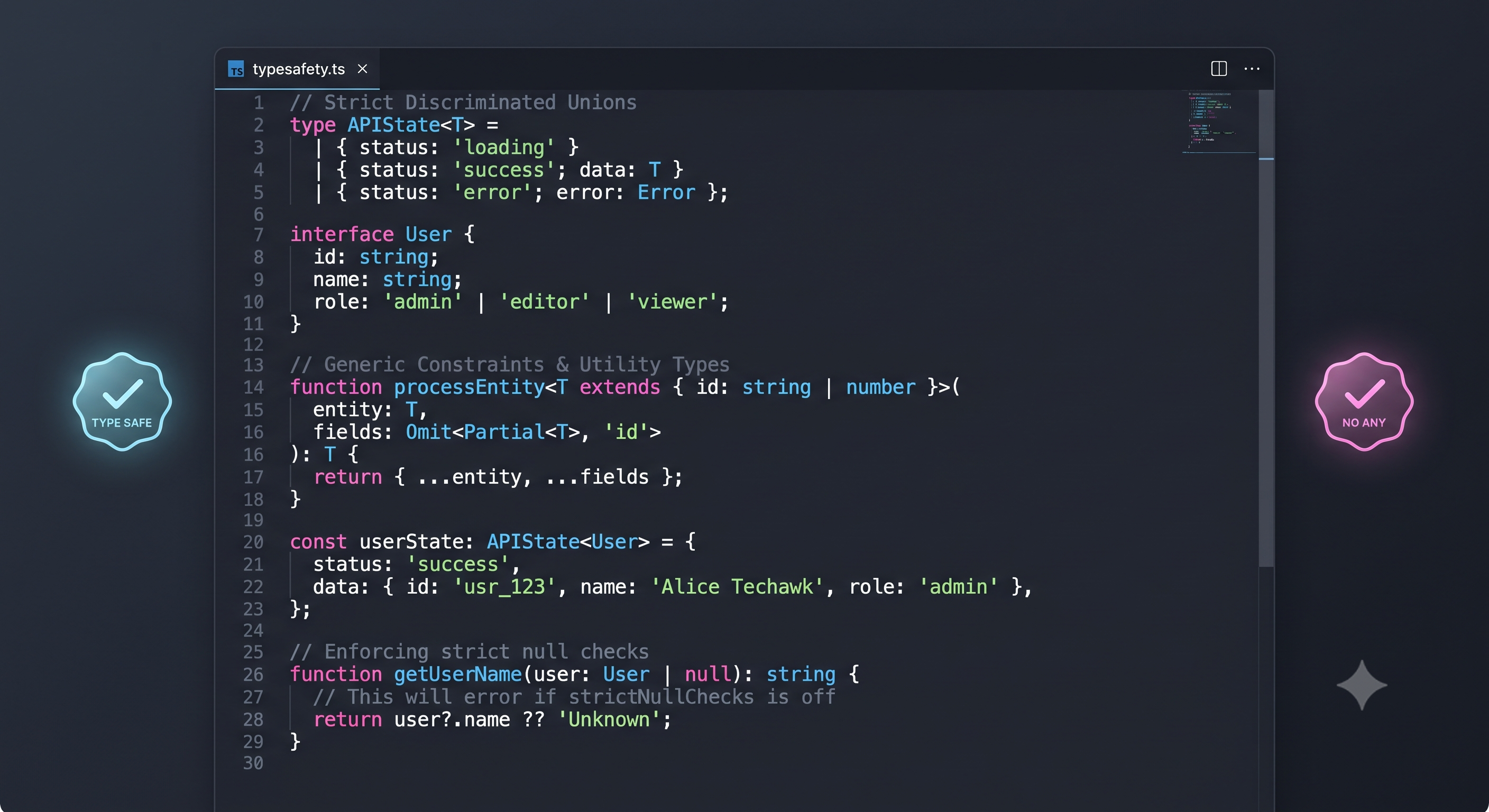
    [ ] Ban Implicit & Explicit any: Enforce strict rules in your tsconfig.json (noImplicitAny: true) and replace lazy any types with unknown combined with type guards.


    [ ] Leverage Discriminated Unions: Model complex state (like async loading, success, and error states) using tagged union types instead of optional properties that allow illegal states.


    [ ] Utilize Utility Types Effectively: Master built-in utilities like Omit, Pick, Record, and ReturnType to derive types dynamically rather than duplicating manual definitions.


    [ ] Constrain Generics Properly: Use the extends keyword on generic type parameters to restrict inputs and maintain predictable inference boundaries.


    [ ] Enable Strict Null Checks: Turn on strictNullChecks to force explicit handling of null and undefined, wiping out entire classes of production TypeError bugs.


    Why It Matters
    TypeScript isn't just about catching typos before compile time—it's about creating living documentation and self-documenting code contracts. Strong typing empowers your team to refactor fearlessly and scale applications without second-guessing system behavior.


    Discussion Question
    What is your preferred strategy for managing deeply nested API response types without turning your code into an unreadable maintenance nightmare? Let’s talk code below! 👇


    CTA (Join Developers & Coding)
    Ready to sharpen your engineering skills and write cleaner code? Join the Developers & Coding community to collaborate with fellow developers, share architectural patterns, and level up your stack.
    The TypeScript Type-Safety Checklist: 5 Patterns to Eliminate any and Bulletproof Your Codebase As professional developer surveys highlight, strict typing is foundational for maintaining massive, fast-evolving codebases. But leveraging TypeScript effectively means moving beyond basic interfaces and embracing advanced type-level programming. Audit and elevate your code quality with this developer checklist: [ ] Ban Implicit & Explicit any: Enforce strict rules in your tsconfig.json (noImplicitAny: true) and replace lazy any types with unknown combined with type guards. [ ] Leverage Discriminated Unions: Model complex state (like async loading, success, and error states) using tagged union types instead of optional properties that allow illegal states. [ ] Utilize Utility Types Effectively: Master built-in utilities like Omit, Pick, Record, and ReturnType to derive types dynamically rather than duplicating manual definitions. [ ] Constrain Generics Properly: Use the extends keyword on generic type parameters to restrict inputs and maintain predictable inference boundaries. [ ] Enable Strict Null Checks: Turn on strictNullChecks to force explicit handling of null and undefined, wiping out entire classes of production TypeError bugs. Why It Matters TypeScript isn't just about catching typos before compile time—it's about creating living documentation and self-documenting code contracts. Strong typing empowers your team to refactor fearlessly and scale applications without second-guessing system behavior. Discussion Question What is your preferred strategy for managing deeply nested API response types without turning your code into an unreadable maintenance nightmare? Let’s talk code below! 👇 CTA (Join Developers & Coding) Ready to sharpen your engineering skills and write cleaner code? Join the Developers & Coding community to collaborate with fellow developers, share architectural patterns, and level up your stack.
    0 Comments 0 Shares 7 Views 0 Reviews
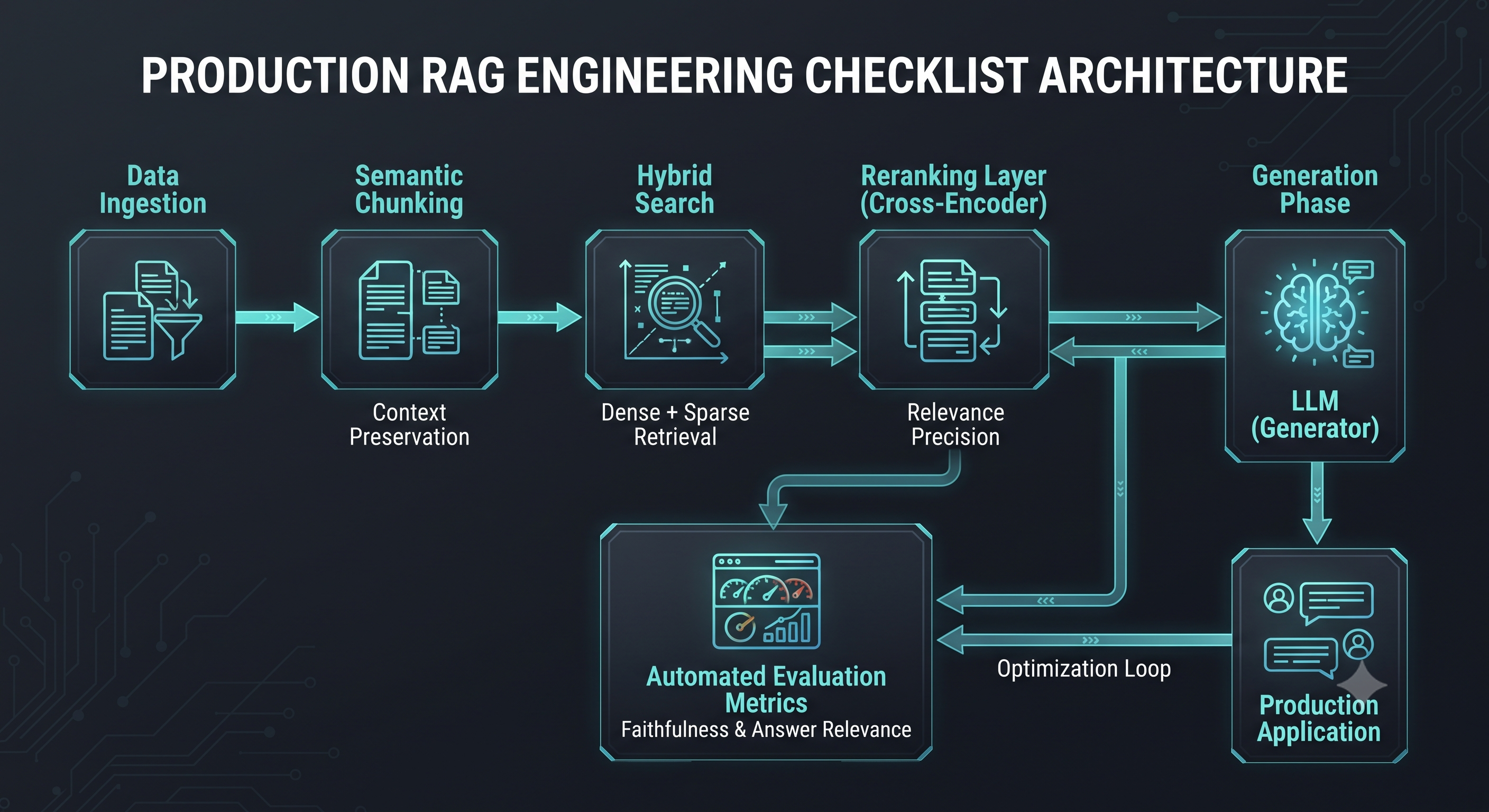
  • The Production RAG Engineering Checklist: 5 Crucial Guardrails for Context Retrieval and Accuracy


    As AI builders scaling production systems quickly discover, naive vector search isn't enough to guarantee deterministic, enterprise-grade accuracy. If your RAG pipeline is spitting out irrelevant answers or missing nuanced user intent, it's time to audit your workflow.


    Optimize and bulletproof your retrieval pipeline with this production engineering checklist:


    [ ] Hybrid Search Integration: Combine dense vector embeddings with sparse keyword search (BM25) to ensure semantic depth doesn't compromise exact keyword and ID matching.


    [ ] Reranking Layers (Cross-Encoders): Implement a reranker (like Cohere Rerank or BGE-Reranker) to evaluate top-k initial retrieval results and pass only the highest-precision chunks to the generator.


    [ ] Semantic Chunking Strategies: Move away from fixed-token splitting; use semantic chunking to keep logical paragraphs, code blocks, and markdown headers intact.


    [ ] Dynamic Context Window Management: Set strict token budget caps and token pruning logic to prevent prompt dilution and control API inference costs.


    [ ] Automated Hallucination Evaluation: Integrate automated evaluation frameworks (like RAGAS or TruLens) into your CI/CD pipeline to continuously measure faithfulness, answer relevance, and context precision.


    Why It Matters
    Users don't care how sleek your vector database is; they care if the AI gives the correct, verifiable answer. Implementing these architectural layers transforms a brittle prototype into a robust production system that scales reliably under heavy real-world traffic.


    Discussion Question
    What is your go-to strategy for tackling latency bottlenecks when adding a cross-encoder reranking step to a high-throughput RAG pipeline? Let’s share notes below! 👇


    CTA (Join AI Builders & Enthusiasts)
    Ready to build better AI systems? Join the AI Builders & Enthusiasts community to connect with fellow developers, share production patterns, and master modern AI engineering.
    The Production RAG Engineering Checklist: 5 Crucial Guardrails for Context Retrieval and Accuracy As AI builders scaling production systems quickly discover, naive vector search isn't enough to guarantee deterministic, enterprise-grade accuracy. If your RAG pipeline is spitting out irrelevant answers or missing nuanced user intent, it's time to audit your workflow. Optimize and bulletproof your retrieval pipeline with this production engineering checklist: [ ] Hybrid Search Integration: Combine dense vector embeddings with sparse keyword search (BM25) to ensure semantic depth doesn't compromise exact keyword and ID matching. [ ] Reranking Layers (Cross-Encoders): Implement a reranker (like Cohere Rerank or BGE-Reranker) to evaluate top-k initial retrieval results and pass only the highest-precision chunks to the generator. [ ] Semantic Chunking Strategies: Move away from fixed-token splitting; use semantic chunking to keep logical paragraphs, code blocks, and markdown headers intact. [ ] Dynamic Context Window Management: Set strict token budget caps and token pruning logic to prevent prompt dilution and control API inference costs. [ ] Automated Hallucination Evaluation: Integrate automated evaluation frameworks (like RAGAS or TruLens) into your CI/CD pipeline to continuously measure faithfulness, answer relevance, and context precision. Why It Matters Users don't care how sleek your vector database is; they care if the AI gives the correct, verifiable answer. Implementing these architectural layers transforms a brittle prototype into a robust production system that scales reliably under heavy real-world traffic. Discussion Question What is your go-to strategy for tackling latency bottlenecks when adding a cross-encoder reranking step to a high-throughput RAG pipeline? Let’s share notes below! 👇 CTA (Join AI Builders & Enthusiasts) Ready to build better AI systems? Join the AI Builders & Enthusiasts community to connect with fellow developers, share production patterns, and master modern AI engineering.
    0 Comments 0 Shares 8 Views 0 Reviews
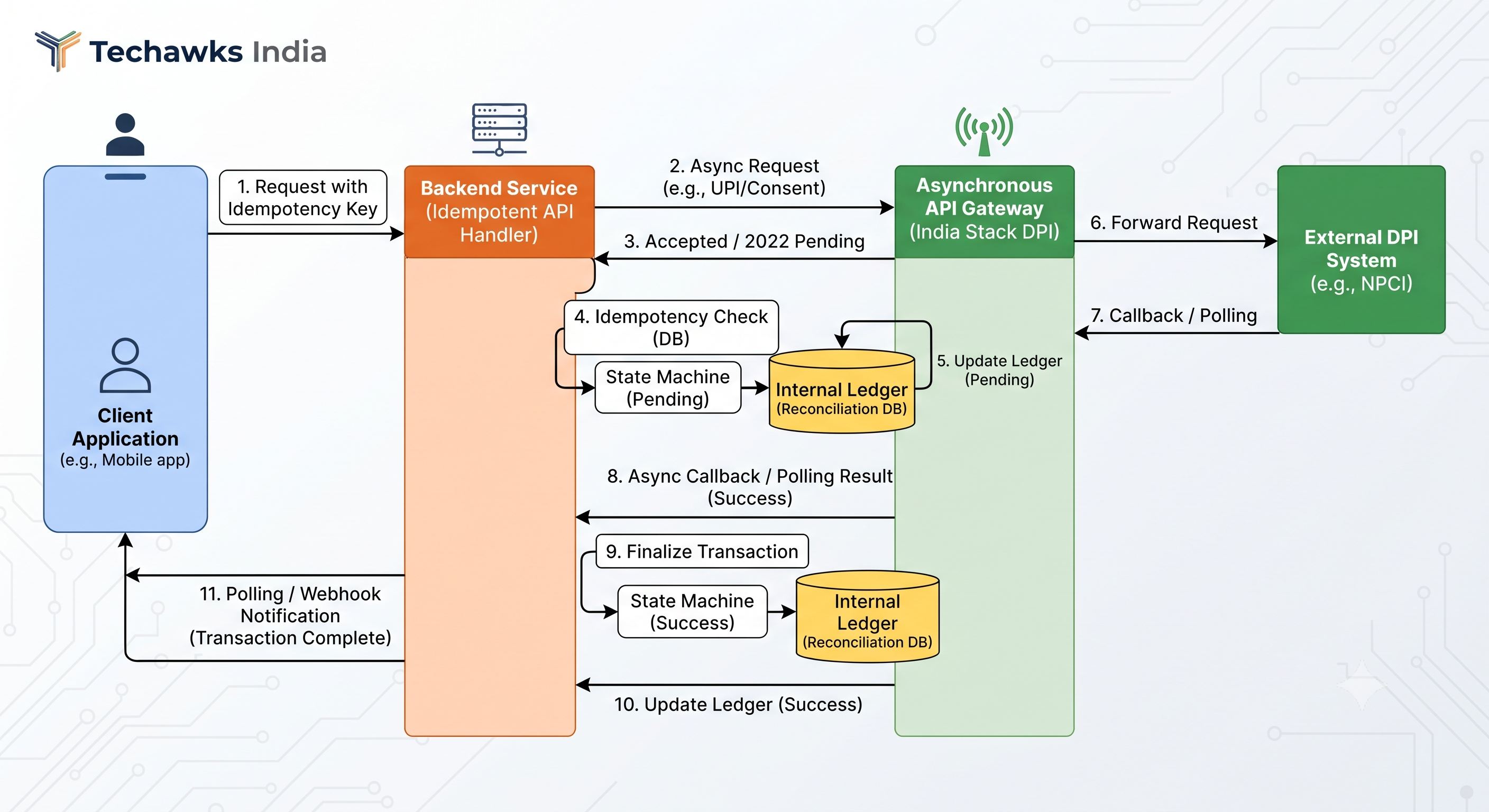
  • Scaling Beyond the Happy Path: Why Building on India Stack DPI Requires Resilient System Architecture


    As developers and architects in India’s fast-moving tech ecosystem, we have unprecedented access to population-scale public rails like Aadhaar verification, UPI payments, and open commerce protocols. But treating these public APIs like standard vendor endpoints is a recipe for production failure.


    Enter Resilient DPI Architecture (Handling Asynchronous Scale):
    When designing apps that plug into India Stack components, your engineering mindset must shift toward fault-tolerant distributed systems:


    Implement Strict Idempotency Keys: Network timeouts happen. Ensure your transaction or request handlers include unique idempotency keys to prevent duplicate debits or multi-submit glitches when retrying failed calls.


    Design for Asynchronous States: Never assume a transaction completes synchronously. Build robust state machines that gracefully handle intermediate limbo states (such as pending or timed-out responses) with clear polling or webhook fallback loops.


    Isolate Internal Ledgers from Rail Dashboards: Never rely on a third-party payment gateway or aggregator dashboard as your source of truth. Maintain your own double-entry internal ledger to reconcile rail events against local states reliably.


    By engineering resilience directly into your core backend logic, you turn public digital infrastructure into a powerful, reliable growth engine for your users.


    Discussion Question: What is the trickiest edge case you’ve encountered when handling timeout states or retries on high-volume UPI or API integrations? Let’s talk code below! 👇


    CTA (Join Techawks India): Ready to build world-class, population-scale systems for the Indian tech landscape? Join our community of developers and engineers at Techawks India to master the architectures that matter.
    Scaling Beyond the Happy Path: Why Building on India Stack DPI Requires Resilient System Architecture As developers and architects in India’s fast-moving tech ecosystem, we have unprecedented access to population-scale public rails like Aadhaar verification, UPI payments, and open commerce protocols. But treating these public APIs like standard vendor endpoints is a recipe for production failure. Enter Resilient DPI Architecture (Handling Asynchronous Scale): When designing apps that plug into India Stack components, your engineering mindset must shift toward fault-tolerant distributed systems: Implement Strict Idempotency Keys: Network timeouts happen. Ensure your transaction or request handlers include unique idempotency keys to prevent duplicate debits or multi-submit glitches when retrying failed calls. Design for Asynchronous States: Never assume a transaction completes synchronously. Build robust state machines that gracefully handle intermediate limbo states (such as pending or timed-out responses) with clear polling or webhook fallback loops. Isolate Internal Ledgers from Rail Dashboards: Never rely on a third-party payment gateway or aggregator dashboard as your source of truth. Maintain your own double-entry internal ledger to reconcile rail events against local states reliably. By engineering resilience directly into your core backend logic, you turn public digital infrastructure into a powerful, reliable growth engine for your users. Discussion Question: What is the trickiest edge case you’ve encountered when handling timeout states or retries on high-volume UPI or API integrations? Let’s talk code below! 👇 CTA (Join Techawks India): Ready to build world-class, population-scale systems for the Indian tech landscape? Join our community of developers and engineers at Techawks India to master the architectures that matter.
    0 Comments 0 Shares 105 Views 0 Reviews
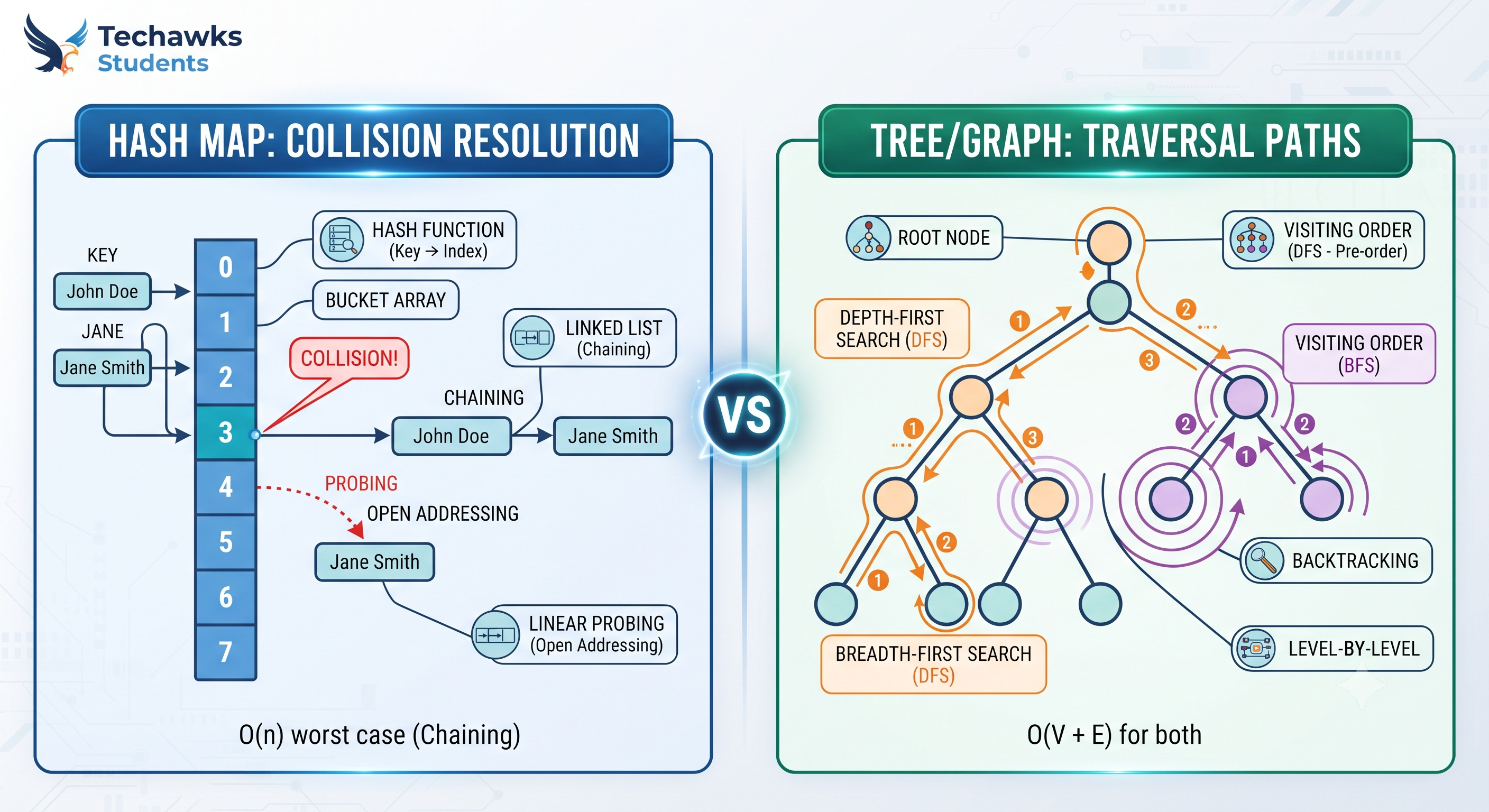
  • Beyond Basic Coding: Why Learning Abstract Data Structures Unlocks Faster Problem Solving


    When you're first learning to code, it’s easy to treat arrays and loops as the answer to every problem. But as your codebases grow and datasets expand, choosing the wrong data structure can turn an O(n) operation into a massive performance bottleneck.


    Enter the Power of Abstract Data Types (ADTs):
    Understanding how structures like Hash Maps, Graphs, and Heaps are structured in memory changes how you approach software engineering:


    Master Hash Function Mechanics: Learn how keys map to memory addresses and how collision resolution (like chaining or open addressing) impacts lookup speeds.


    Visualize Graph Traversals: Understand when to use Breadth-First Search (BFS) versus Depth-First Search (DFS) for pathfinding, dependency resolution, and network mapping.


    Leverage Priority Queues: Use heaps when you need constant access to the largest or smallest elements without sorting an entire array every time new data arrives.


    By shifting your focus from syntax memorization to structural efficiency, you build a mental framework that makes learning new languages and passing technical evaluations much easier.


    Discussion Question: What data structure do you find the most challenging to implement from scratch? Let’s break it down together in the comments! 👇


    CTA (Join Students in Tech): Ready to accelerate your computer science journey and build a rock-solid foundation? Join our community of students and learners at Techawks to master the concepts that matter.
    Beyond Basic Coding: Why Learning Abstract Data Structures Unlocks Faster Problem Solving When you're first learning to code, it’s easy to treat arrays and loops as the answer to every problem. But as your codebases grow and datasets expand, choosing the wrong data structure can turn an O(n) operation into a massive performance bottleneck. Enter the Power of Abstract Data Types (ADTs): Understanding how structures like Hash Maps, Graphs, and Heaps are structured in memory changes how you approach software engineering: Master Hash Function Mechanics: Learn how keys map to memory addresses and how collision resolution (like chaining or open addressing) impacts lookup speeds. Visualize Graph Traversals: Understand when to use Breadth-First Search (BFS) versus Depth-First Search (DFS) for pathfinding, dependency resolution, and network mapping. Leverage Priority Queues: Use heaps when you need constant access to the largest or smallest elements without sorting an entire array every time new data arrives. By shifting your focus from syntax memorization to structural efficiency, you build a mental framework that makes learning new languages and passing technical evaluations much easier. Discussion Question: What data structure do you find the most challenging to implement from scratch? Let’s break it down together in the comments! 👇 CTA (Join Students in Tech): Ready to accelerate your computer science journey and build a rock-solid foundation? Join our community of students and learners at Techawks to master the concepts that matter.
    0 Comments 0 Shares 51 Views 0 Reviews
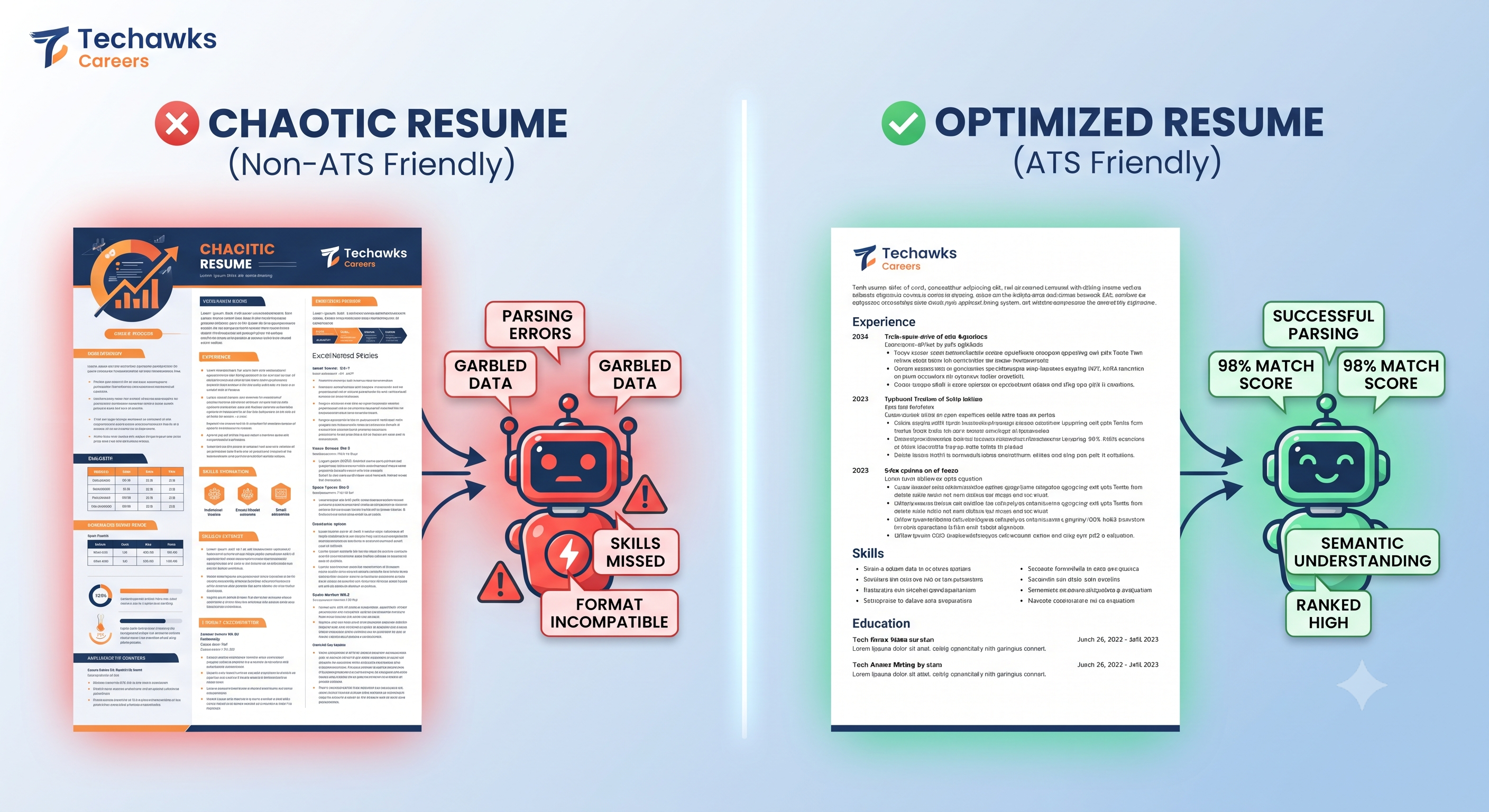
  • Beating the ATS Black Hole: Why AI Resume Parsers Fail and How to Optimize Your Profile


    Job seekers often assume a human reads their resume first. In reality, over 75% of large enterprises use automated ATS and AI embedding models to parse, rank, and filter resumes before a recruiter ever looks at them.


    Enter AI-Driven Resume Parsers (Semantic Vector Matching):
    Modern ATS tools don't just look for keyword matching anymore; they use vector embeddings to judge semantic similarity between your experience and the job description. Here is how you can beat the algorithm:


    Structure for Parsers, Not Just Aesthetics: Avoid multi-column layouts, tables, text boxes, and graphic elements. Linear, clean Markdown or standard single-column PDF formatting ensures structural text extraction without data loss.


    Map Experience to Core Competencies: Instead of hiding skills in dense paragraphs, use clear, standard industry headings (e.g., "Technical Skills", "Professional Experience") followed by bullet points detailing metrics and tools.


    Mirror Relevant Terminology: Incorporate explicit tool names and methodologies from the job description naturally into your impact statements so the vector model scores your semantic proximity higher.


    By understanding the technical pipeline of hiring software, you stop guessing and start engineering a resume that gets flagged for human review.


    Discussion Question: Have you ever experimented with tailoring your resume format specifically for ATS algorithms, or do you prefer keeping it traditional? Let’s share strategies below! 👇


    CTA (Join Tech Jobs & Opportunities): Ready to land your next big career milestone? Join our community of job seekers and professionals at Techawks to master the tools, resume strategies, and insights that matter.
    Beating the ATS Black Hole: Why AI Resume Parsers Fail and How to Optimize Your Profile Job seekers often assume a human reads their resume first. In reality, over 75% of large enterprises use automated ATS and AI embedding models to parse, rank, and filter resumes before a recruiter ever looks at them. Enter AI-Driven Resume Parsers (Semantic Vector Matching): Modern ATS tools don't just look for keyword matching anymore; they use vector embeddings to judge semantic similarity between your experience and the job description. Here is how you can beat the algorithm: Structure for Parsers, Not Just Aesthetics: Avoid multi-column layouts, tables, text boxes, and graphic elements. Linear, clean Markdown or standard single-column PDF formatting ensures structural text extraction without data loss. Map Experience to Core Competencies: Instead of hiding skills in dense paragraphs, use clear, standard industry headings (e.g., "Technical Skills", "Professional Experience") followed by bullet points detailing metrics and tools. Mirror Relevant Terminology: Incorporate explicit tool names and methodologies from the job description naturally into your impact statements so the vector model scores your semantic proximity higher. By understanding the technical pipeline of hiring software, you stop guessing and start engineering a resume that gets flagged for human review. Discussion Question: Have you ever experimented with tailoring your resume format specifically for ATS algorithms, or do you prefer keeping it traditional? Let’s share strategies below! 👇 CTA (Join Tech Jobs & Opportunities): Ready to land your next big career milestone? Join our community of job seekers and professionals at Techawks to master the tools, resume strategies, and insights that matter.
    0 Comments 0 Shares 43 Views 0 Reviews
  • Stop Ignoring Data Residency: The 3-Step Compliance Framework for Canadian Tech Scale-Ups


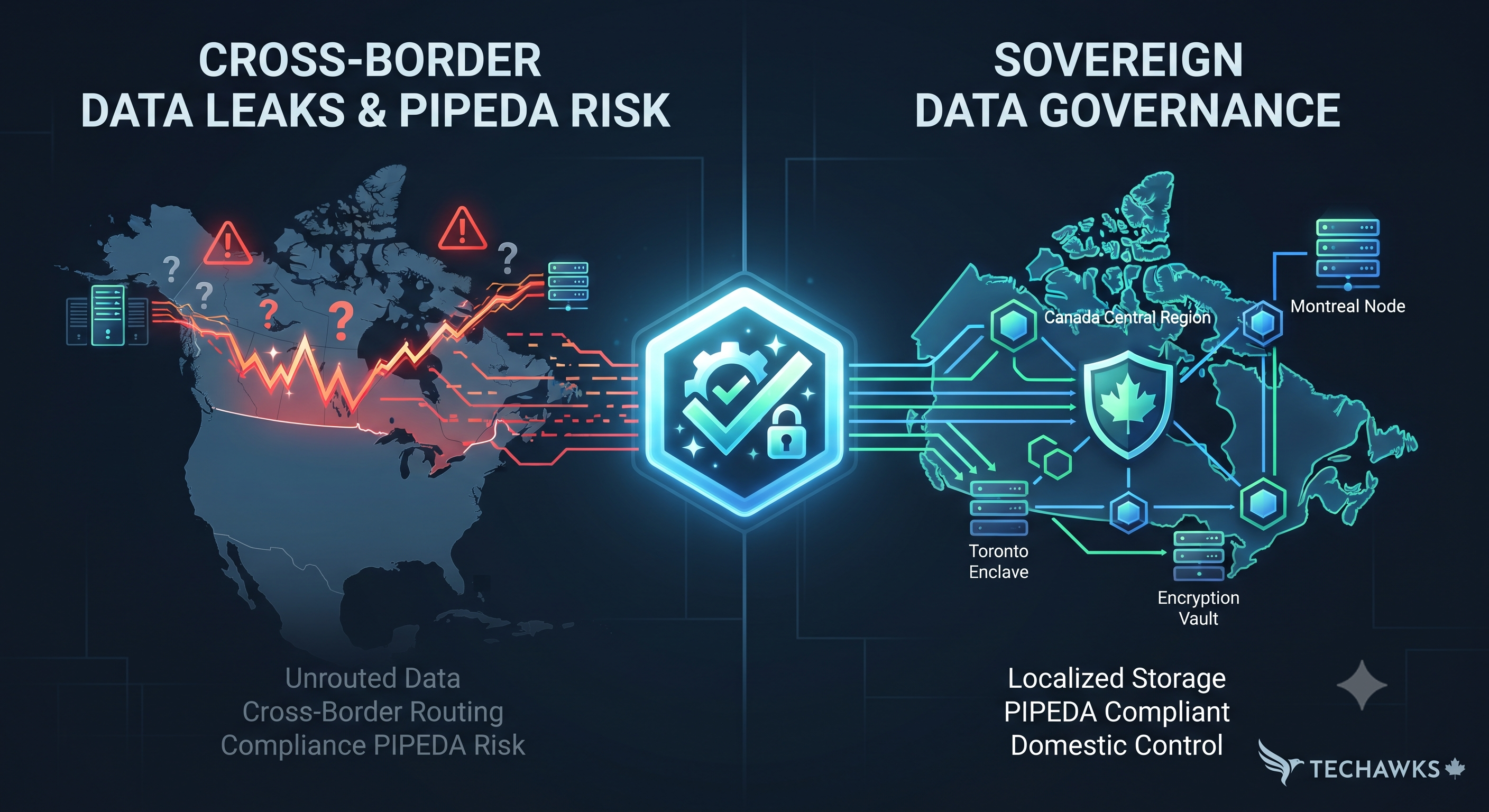
    We have all been there: launching a digital product on a standard global cloud configuration, assuming that data storage locations do not matter as long as the service runs fast. While rapid deployment is essential, treating Canadian privacy legislation and cross-border data routing as an afterthought leaves your organization vulnerable to regulatory penalties and lost enterprise trust.


    To transform data compliance from a barrier into a secure, competitive advantage for Canada's tech ecosystem, put every system through this rigorous 3-step challenge framework:


    Step 1: The Cloud Region & Data Residency Audit
    Default cloud configurations often replicate database backups or route traffic across international borders without explicit developer awareness. Before signing your next client, audit your exact data storage and backup locations. Ask yourself: Is all sensitive user data strictly housed within Canadian cloud regions (such as AWS Canada Central or GCP Montreal/Toronto)? Strip out cross-border replication vectors for protected data.


    Step 2: The PIPEDA & Provincial Privacy Compliance Check
    Complying with the Personal Information Protection and Electronic Documents Act (PIPEDA)—along with stringent provincial equivalents like Quebec's Law 25—requires rigorous consent management and transparent data handling practices. Implement automated data inventory mapping so you can instantly verify how personal information is collected, used, and disclosed within Canadian jurisdictions.


    Step 3: The Cross-Border Transfer & Encryption Pass
    If data must transit outside Canadian borders for specialized third-party processing, ensure it is protected by robust end-to-end encryption with keys managed exclusively within domestic control. Strip out unencrypted third-party analytics trackers that inadvertently leak personal identifiers to foreign servers.


    The Challenge for Today:
    Open your cloud provider's database management console and check the physical region of your primary storage buckets and read replicas. If a single byte of sensitive Canadian user data is sitting outside domestic borders, refactor your infrastructure deployment script immediately.


    Key Takeaways
    Secure Domestic Storage: Never rely on default cloud routing; explicitly pin your primary databases and backups to Canadian cloud regions.


    Master Compliance Frameworks: Align your data governance tightly with PIPEDA and provincial privacy laws to win enterprise and public sector trust.


    Control Cross-Border Transit: Enforce strict end-to-end encryption and eliminate unvetted third-party trackers that leak user data internationally.


    CTA (Join Techawks Canada)
    Want to elevate your engineering standards and connect with innovators across the Canadian tech ecosystem? Join Techawks Canada today to share governance patterns, tackle weekly engineering challenges, and build secure, trusted software together.
    Stop Ignoring Data Residency: The 3-Step Compliance Framework for Canadian Tech Scale-Ups We have all been there: launching a digital product on a standard global cloud configuration, assuming that data storage locations do not matter as long as the service runs fast. While rapid deployment is essential, treating Canadian privacy legislation and cross-border data routing as an afterthought leaves your organization vulnerable to regulatory penalties and lost enterprise trust. To transform data compliance from a barrier into a secure, competitive advantage for Canada's tech ecosystem, put every system through this rigorous 3-step challenge framework: Step 1: The Cloud Region & Data Residency Audit Default cloud configurations often replicate database backups or route traffic across international borders without explicit developer awareness. Before signing your next client, audit your exact data storage and backup locations. Ask yourself: Is all sensitive user data strictly housed within Canadian cloud regions (such as AWS Canada Central or GCP Montreal/Toronto)? Strip out cross-border replication vectors for protected data. Step 2: The PIPEDA & Provincial Privacy Compliance Check Complying with the Personal Information Protection and Electronic Documents Act (PIPEDA)—along with stringent provincial equivalents like Quebec's Law 25—requires rigorous consent management and transparent data handling practices. Implement automated data inventory mapping so you can instantly verify how personal information is collected, used, and disclosed within Canadian jurisdictions. Step 3: The Cross-Border Transfer & Encryption Pass If data must transit outside Canadian borders for specialized third-party processing, ensure it is protected by robust end-to-end encryption with keys managed exclusively within domestic control. Strip out unencrypted third-party analytics trackers that inadvertently leak personal identifiers to foreign servers. The Challenge for Today: Open your cloud provider's database management console and check the physical region of your primary storage buckets and read replicas. If a single byte of sensitive Canadian user data is sitting outside domestic borders, refactor your infrastructure deployment script immediately. Key Takeaways Secure Domestic Storage: Never rely on default cloud routing; explicitly pin your primary databases and backups to Canadian cloud regions. Master Compliance Frameworks: Align your data governance tightly with PIPEDA and provincial privacy laws to win enterprise and public sector trust. Control Cross-Border Transit: Enforce strict end-to-end encryption and eliminate unvetted third-party trackers that leak user data internationally. CTA (Join Techawks Canada) Want to elevate your engineering standards and connect with innovators across the Canadian tech ecosystem? Join Techawks Canada today to share governance patterns, tackle weekly engineering challenges, and build secure, trusted software together.
    0 Comments 0 Shares 321 Views 0 Reviews
  • Stop Building Without Localization Guardrails: The 3-Step Multi-Regional Architecture Framework for UAE Tech Scale-Ups


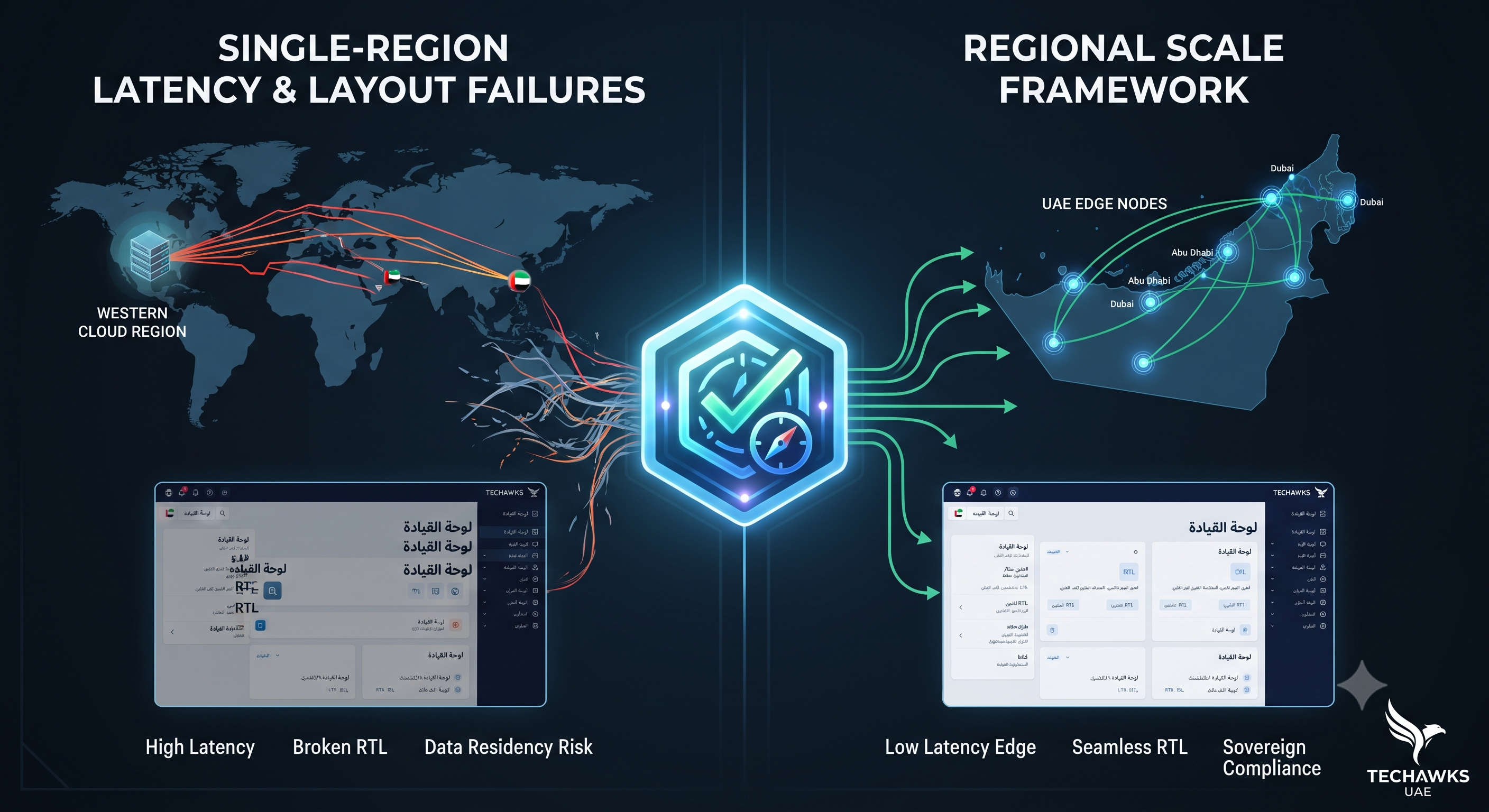
    We have all been there: launching an application globally while assuming a single Western cloud region and left-to-right design will suffice everywhere. While rapid deployment is essential, treating localization and regional data governance as checkboxes leads to poor performance, compliance risks, and high user churn.


    To transform a standard deployment into a robust, high-performance regional operation suited for the UAE's thriving digital economy, put every system through this rigorous 3-step challenge framework:


    Step 1: The Local Edge & Low-Latency Routing Audit
    Distant cloud regions introduce severe network latency for users accessing services from the Middle East. Before pushing any service live, audit your CDN and server placement. Ask yourself: Are our static assets and API endpoints cached at regional edge nodes within the UAE? Leverage local data centers and multi-region routing to ensure lightning-fast response times.


    Step 2: The Bi-Directional UI & Localization Check
    Supporting diverse linguistic communities requires more than simple text translation. Ensure your application architecture fully supports dynamic layout mirroring (LTR and RTL), proper font rendering for Arabic typography, and localized date, currency, and numerical formatting without breaking UI components.


    Step 3: The Data Residency & Sovereign Compliance Pass
    Many regional sectors and enterprise clients require data to remain strictly within domestic borders. Strip out cross-border logging vulnerabilities, implement local data residency storage policies, and ensure your cloud infrastructure complies with regional regulatory data protection standards.


    The Challenge for Today:
    Open your application's deployment topology and frontend codebase. Test your UI layout in an RTL configuration and check your primary database hosting region. If your data is stored thousands of miles away or your UI breaks under localized text, refactor your architecture before regional users experience the lag.


    Key Takeaways
    Optimize for Edge Latency: Deploy services and edge caching nodes close to your regional users to eliminate network lag.


    Master Bi-Directional Design: Build robust UI systems that seamlessly handle RTL layouts, localized typography, and regional formatting.


    Ensure Data Residency: Comply with local regulatory frameworks by keeping sensitive data stored within domestic cloud regions.


    CTA (Join Techawks UAE)
    Want to elevate your technical architecture and connect with innovators across the UAE tech ecosystem? Join Techawks UAE today to share regional scaling patterns, tackle weekly engineering challenges, and build world-class products together.
    Stop Building Without Localization Guardrails: The 3-Step Multi-Regional Architecture Framework for UAE Tech Scale-Ups We have all been there: launching an application globally while assuming a single Western cloud region and left-to-right design will suffice everywhere. While rapid deployment is essential, treating localization and regional data governance as checkboxes leads to poor performance, compliance risks, and high user churn. To transform a standard deployment into a robust, high-performance regional operation suited for the UAE's thriving digital economy, put every system through this rigorous 3-step challenge framework: Step 1: The Local Edge & Low-Latency Routing Audit Distant cloud regions introduce severe network latency for users accessing services from the Middle East. Before pushing any service live, audit your CDN and server placement. Ask yourself: Are our static assets and API endpoints cached at regional edge nodes within the UAE? Leverage local data centers and multi-region routing to ensure lightning-fast response times. Step 2: The Bi-Directional UI & Localization Check Supporting diverse linguistic communities requires more than simple text translation. Ensure your application architecture fully supports dynamic layout mirroring (LTR and RTL), proper font rendering for Arabic typography, and localized date, currency, and numerical formatting without breaking UI components. Step 3: The Data Residency & Sovereign Compliance Pass Many regional sectors and enterprise clients require data to remain strictly within domestic borders. Strip out cross-border logging vulnerabilities, implement local data residency storage policies, and ensure your cloud infrastructure complies with regional regulatory data protection standards. The Challenge for Today: Open your application's deployment topology and frontend codebase. Test your UI layout in an RTL configuration and check your primary database hosting region. If your data is stored thousands of miles away or your UI breaks under localized text, refactor your architecture before regional users experience the lag. Key Takeaways Optimize for Edge Latency: Deploy services and edge caching nodes close to your regional users to eliminate network lag. Master Bi-Directional Design: Build robust UI systems that seamlessly handle RTL layouts, localized typography, and regional formatting. Ensure Data Residency: Comply with local regulatory frameworks by keeping sensitive data stored within domestic cloud regions. CTA (Join Techawks UAE) Want to elevate your technical architecture and connect with innovators across the UAE tech ecosystem? Join Techawks UAE today to share regional scaling patterns, tackle weekly engineering challenges, and build world-class products together.
    0 Comments 0 Shares 162 Views 0 Reviews
  • Stop Ignoring Compliance: The 3-Step Data Governance & Privacy Framework for UK Tech Scale-Ups


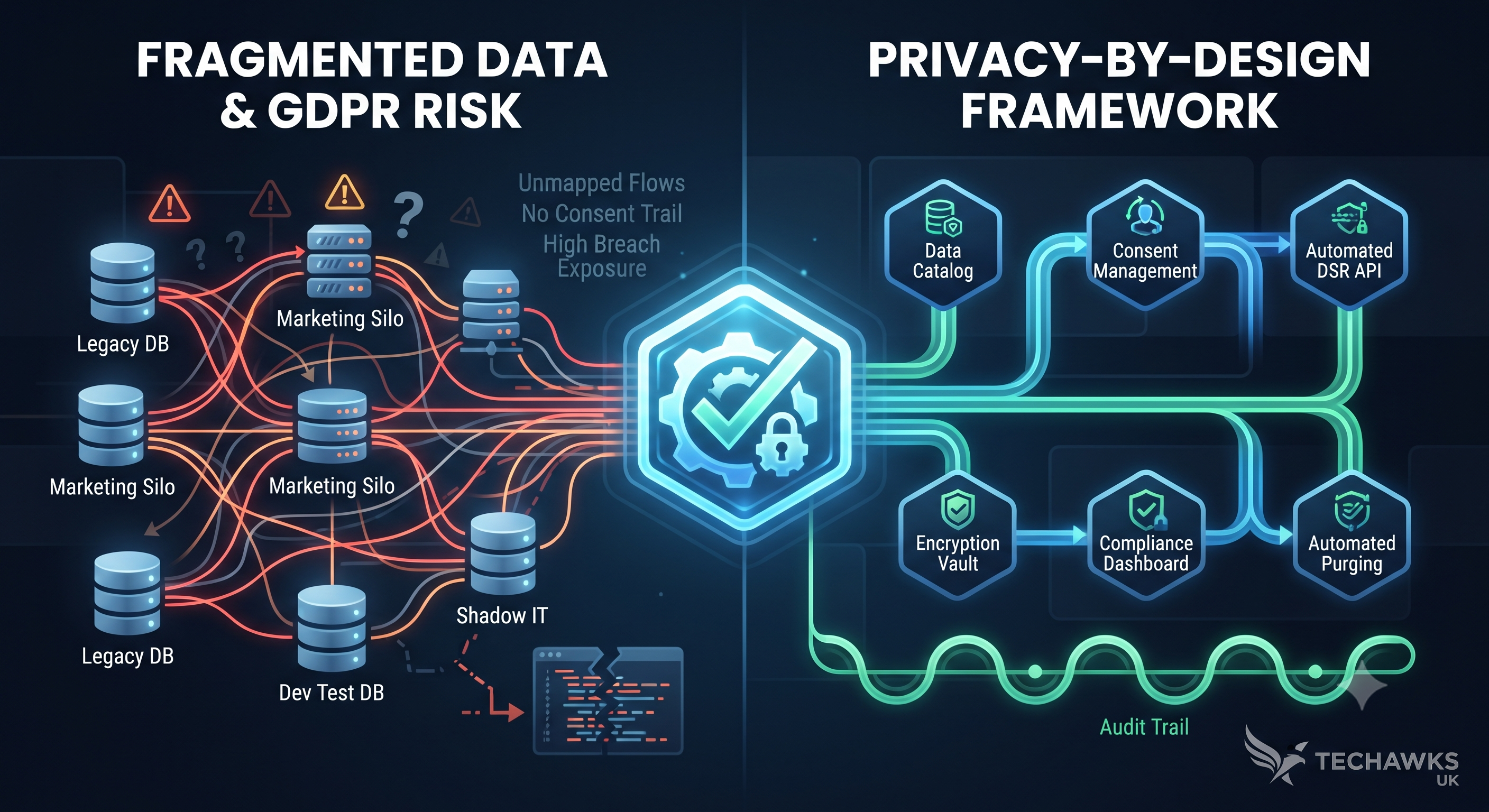
    We have all been there: collecting user data freely during the early growth phase, assuming that sorting out privacy policies and data mapping can wait until later. While moving fast is essential, treating UK GDPR and data governance as a checkbox exercise leaves your organization exposed to severe regulatory penalties and loss of customer trust.


    To transform data privacy from a burden into a secure, competitive advantage, put every system through this rigorous 3-step challenge framework:


    Step 1: The End-to-End Data Flow Mapping Audit
    You cannot protect or delete data if you do not know where it lives. Before pushing new features live, map every data pipeline from ingestion to third-party storage. Ask yourself: Do we have a complete record of every personal identifier entering our systems, and exactly where is it processed? Eliminate shadow databases and unauthorized third-party trackers immediately.


    Step 2: The Automated Data Subject Rights (DSR) Workflow
    Handling Subject Access Requests (SARs) or "right to be forgotten" requests manually via scattered support tickets leads to missed statutory deadlines and compliance failures. Implement automated tools and scripts that can securely query, export, or redact a user's data across all microservices and storage tiers within minutes.


    Step 3: The Privacy-by-Design & Minimization Pass
    Collecting excessive data "just in case" increases your liability footprint during a breach. Strip out non-essential data collection fields, enforce strict data retention limits with automated purging schedules, and ensure encryption at rest and in transit across all environments.


    The Challenge for Today:
    Open your application's primary sign-up flow and database schema. Trace how a user's data is stored and whether your system can completely expunge that data across all tables upon request. If you find manual bottlenecks, refactor your data pipeline before a compliance audit tests it for you.


    Key Takeaways
    Map Your Data: Maintain rigorous end-to-end documentation of all personal data flows to eliminate hidden shadow storage.


    Automate Requests: Build streamlined, automated workflows to handle Subject Access Requests well within regulatory deadlines.


    Practice Minimization: Collect only necessary data points and enforce strict retention schedules with automated purging.


    CTA (Join Techawks UK)
    Want to elevate your engineering standards and compliance practices alongside thousands of tech professionals across the United Kingdom? Join Techawks UK today to share governance patterns, tackle weekly engineering challenges, and build secure, trusted software together.
    Stop Ignoring Compliance: The 3-Step Data Governance & Privacy Framework for UK Tech Scale-Ups We have all been there: collecting user data freely during the early growth phase, assuming that sorting out privacy policies and data mapping can wait until later. While moving fast is essential, treating UK GDPR and data governance as a checkbox exercise leaves your organization exposed to severe regulatory penalties and loss of customer trust. To transform data privacy from a burden into a secure, competitive advantage, put every system through this rigorous 3-step challenge framework: Step 1: The End-to-End Data Flow Mapping Audit You cannot protect or delete data if you do not know where it lives. Before pushing new features live, map every data pipeline from ingestion to third-party storage. Ask yourself: Do we have a complete record of every personal identifier entering our systems, and exactly where is it processed? Eliminate shadow databases and unauthorized third-party trackers immediately. Step 2: The Automated Data Subject Rights (DSR) Workflow Handling Subject Access Requests (SARs) or "right to be forgotten" requests manually via scattered support tickets leads to missed statutory deadlines and compliance failures. Implement automated tools and scripts that can securely query, export, or redact a user's data across all microservices and storage tiers within minutes. Step 3: The Privacy-by-Design & Minimization Pass Collecting excessive data "just in case" increases your liability footprint during a breach. Strip out non-essential data collection fields, enforce strict data retention limits with automated purging schedules, and ensure encryption at rest and in transit across all environments. The Challenge for Today: Open your application's primary sign-up flow and database schema. Trace how a user's data is stored and whether your system can completely expunge that data across all tables upon request. If you find manual bottlenecks, refactor your data pipeline before a compliance audit tests it for you. Key Takeaways Map Your Data: Maintain rigorous end-to-end documentation of all personal data flows to eliminate hidden shadow storage. Automate Requests: Build streamlined, automated workflows to handle Subject Access Requests well within regulatory deadlines. Practice Minimization: Collect only necessary data points and enforce strict retention schedules with automated purging. CTA (Join Techawks UK) Want to elevate your engineering standards and compliance practices alongside thousands of tech professionals across the United Kingdom? Join Techawks UK today to share governance patterns, tackle weekly engineering challenges, and build secure, trusted software together.
    0 Comments 0 Shares 159 Views 0 Reviews
  • Stop Shipping Without Observability: The 3-Step Telemetry Framework for High-Reliability US Tech Systems


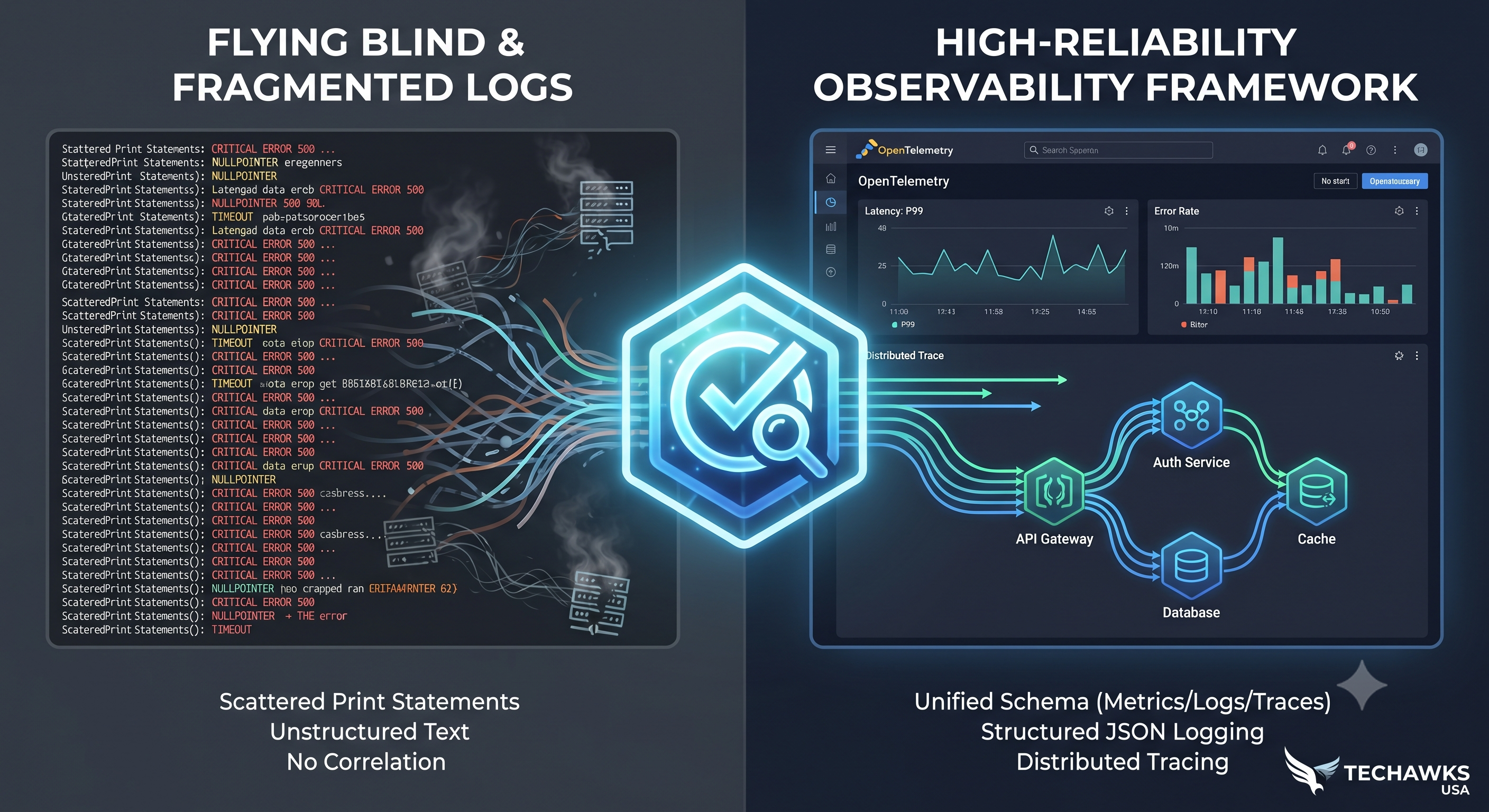
    We have all been there: staring at a generic 500 error screen, rushing to check disparate logs, metrics, and traces across multiple dashboards, and wishing you had better visibility into system state. While rapid feature delivery is essential, treating telemetry and monitoring as an afterthought leads to prolonged downtime and inflated incident response times.


    To transform naive logging practices into a robust, high-reliability operational framework suited for modern US tech engineering standards, put every service through this rigorous 3-step challenge framework:


    Step 1: The Unified OpenTelemetry Audit
    Scattered print statements and custom log formats create noise instead of insight. Before pushing any service live, standardize your instrumentation using OpenTelemetry to collect metrics, logs, and distributed traces under a single unified schema. Ask yourself: Can I trace a single user request seamlessly from the API gateway down to the database layer?


    Step 2: The Structured Logging & Context Propagation Check
    Unstructured text logs make automated querying and root-cause analysis nearly impossible during high-pressure incidents. Strip out plain-text strings, enforce strict JSON structured logging, and ensure unique correlation IDs and request contexts are propagated across every asynchronous worker and microservice boundary.


    Step 3: The Proactive Alerting & Threshold Optimization Pass
    Alert fatigue is real; if your team receives dozens of noisy alerts for trivial CPU spikes, they will eventually ignore the ones that actually matter. Strip out vanity metrics, focus your alerting thresholds strictly on customer-facing symptoms (like latency degradation and error rates rather than raw resource usage), and establish clear escalation runbooks.


    The Challenge for Today:
    Open your core application's recent error logs and trace histories. Pick one critical user transaction path and check if you can track it end-to-end within 60 seconds using your current monitoring tool. If you hit a blind spot, refactor your telemetry before your users experience an unmonitored failure.


    Key Takeaways
    Unify Your Telemetry: Standardize your metrics, logs, and traces using OpenTelemetry to eliminate fragmented monitoring.


    Enforce Structured Logging: Replace plain-text logs with structured JSON and propagate unique correlation IDs across all service boundaries.


    Focus Alerts on Impact: Tune alerts away from noisy resource metrics and focus strictly on customer-facing symptoms and actionable thresholds.


    CTA (Join Techawks USA)
    Want to elevate your system reliability and engineering practices alongside thousands of tech professionals across the United States? Join Techawks USA today to share observability patterns, tackle weekly engineering challenges, and build resilient systems together.
    Stop Shipping Without Observability: The 3-Step Telemetry Framework for High-Reliability US Tech Systems We have all been there: staring at a generic 500 error screen, rushing to check disparate logs, metrics, and traces across multiple dashboards, and wishing you had better visibility into system state. While rapid feature delivery is essential, treating telemetry and monitoring as an afterthought leads to prolonged downtime and inflated incident response times. To transform naive logging practices into a robust, high-reliability operational framework suited for modern US tech engineering standards, put every service through this rigorous 3-step challenge framework: Step 1: The Unified OpenTelemetry Audit Scattered print statements and custom log formats create noise instead of insight. Before pushing any service live, standardize your instrumentation using OpenTelemetry to collect metrics, logs, and distributed traces under a single unified schema. Ask yourself: Can I trace a single user request seamlessly from the API gateway down to the database layer? Step 2: The Structured Logging & Context Propagation Check Unstructured text logs make automated querying and root-cause analysis nearly impossible during high-pressure incidents. Strip out plain-text strings, enforce strict JSON structured logging, and ensure unique correlation IDs and request contexts are propagated across every asynchronous worker and microservice boundary. Step 3: The Proactive Alerting & Threshold Optimization Pass Alert fatigue is real; if your team receives dozens of noisy alerts for trivial CPU spikes, they will eventually ignore the ones that actually matter. Strip out vanity metrics, focus your alerting thresholds strictly on customer-facing symptoms (like latency degradation and error rates rather than raw resource usage), and establish clear escalation runbooks. The Challenge for Today: Open your core application's recent error logs and trace histories. Pick one critical user transaction path and check if you can track it end-to-end within 60 seconds using your current monitoring tool. If you hit a blind spot, refactor your telemetry before your users experience an unmonitored failure. Key Takeaways Unify Your Telemetry: Standardize your metrics, logs, and traces using OpenTelemetry to eliminate fragmented monitoring. Enforce Structured Logging: Replace plain-text logs with structured JSON and propagate unique correlation IDs across all service boundaries. Focus Alerts on Impact: Tune alerts away from noisy resource metrics and focus strictly on customer-facing symptoms and actionable thresholds. CTA (Join Techawks USA) Want to elevate your system reliability and engineering practices alongside thousands of tech professionals across the United States? Join Techawks USA today to share observability patterns, tackle weekly engineering challenges, and build resilient systems together.
    0 Comments 0 Shares 155 Views 0 Reviews
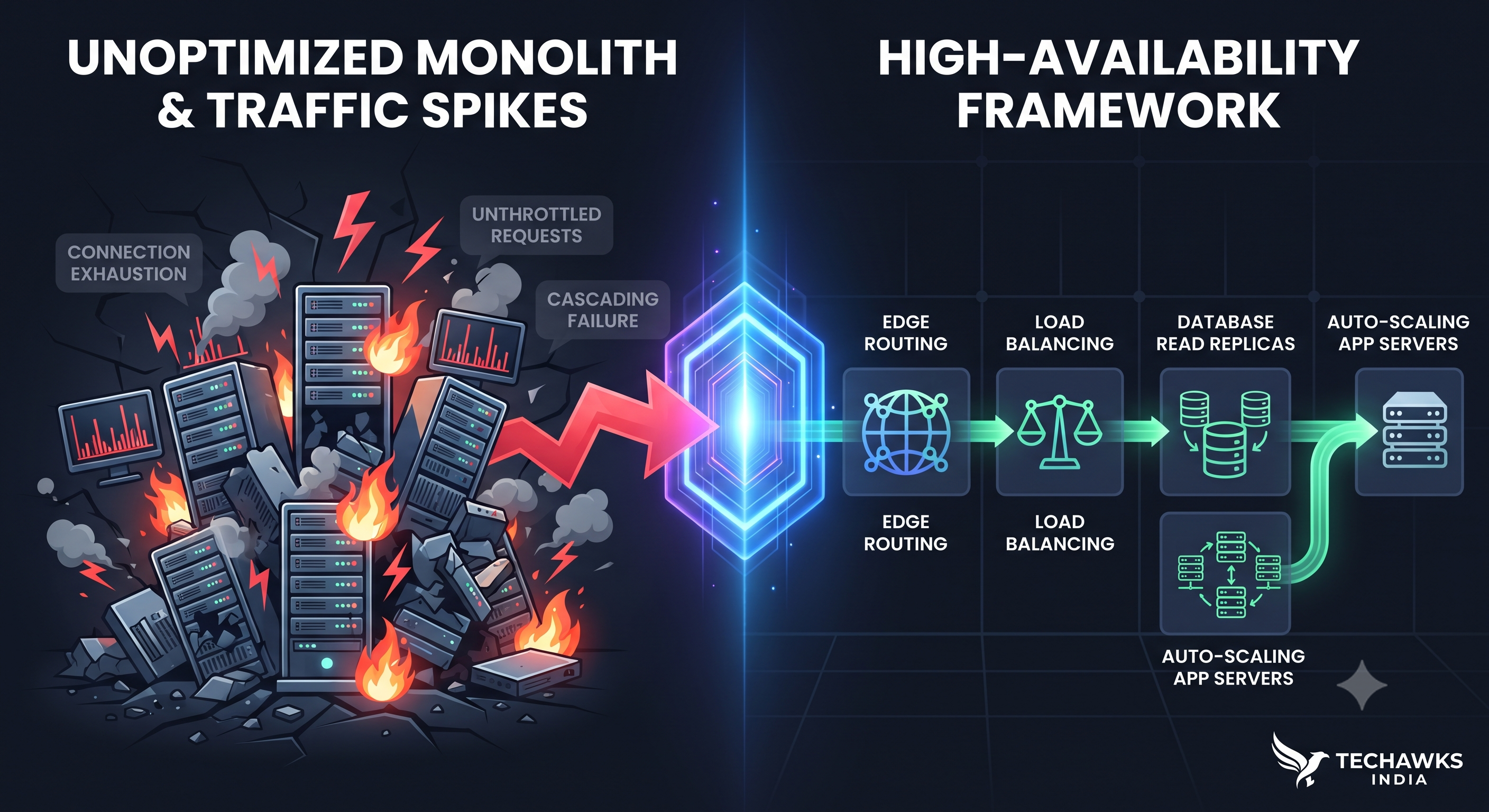
  • Stop Scaling Monoliths Without Guardrails: The 3-Step High-Availability Architecture Framework for India's Next-Gen Tech Ecosystem


    We have all been there: deploying a quick service release, watching it handle routine traffic, and assuming the underlying architecture will naturally handle exponential user growth. While rapid deployment is essential, treating core infrastructure resilience as an afterthought leads to cascading outages and frustrated users.


    To transform naive architectures into robust, high-availability operations suited for India's high-scale digital landscape, put every system through this rigorous 3-step challenge framework:


    Step 1: The Database Connection & Pooling Audit
    Database connection exhaustion is the #1 silent killer during high-traffic events. Before pushing any service live, audit your connection pooling limits and query concurrency boundaries. Ask yourself: How does this service behave when connection requests spike by 10x? Implement aggressive connection pooling, query caching, and read replicas to offload heavy read traffic from your primary database.


    Step 2: The Rate Limiting & Graceful Degradation Strategy
    Unbounded traffic hitting your backend endpoints without protection will inevitably crash your servers. Never let unthrottled requests overwhelm your core business logic. Implement distributed rate limiting at the edge and design graceful degradation paths—such as serving static fallback pages or cached data—when downstream dependencies experience latency.


    Step 3: The Regional Latency & CDN Optimization Pass
    Serving static assets and dynamic content from a single centralized server creates unnecessary latency for users across diverse geographic zones. Strip out inefficient routing, leverage edge content delivery networks (CDNs), and optimize asset compression to ensure lightning-fast load times regardless of network conditions.


    The Challenge for Today:
    Open your system's architecture diagram or most recent deployment config. Audit your database maximum connection limits and edge rate-limiting rules. If you find a single unthrottled endpoint or missing connection pooler, refactor it immediately before your next traffic spike tests it for you.


    Key Takeaways
    Protect Your Database: Never run unpooled database connections; implement strict pooling limits and read replicas to survive traffic surges.


    Enforce Rate Limiting: Shield your core services from unthrottled traffic by implementing distributed rate limits and graceful degradation paths.


    Minimize Latency: Leverage CDNs and edge caching to optimize delivery speeds for users across diverse geographic regions.


    CTA (Join Techawks India)
    Want to elevate your system architecture and engineering practices alongside thousands of developers across the subcontinent? Join Techawks India today to share scaling patterns, tackle weekly engineering challenges, and build resilient software systems together.
    Stop Scaling Monoliths Without Guardrails: The 3-Step High-Availability Architecture Framework for India's Next-Gen Tech Ecosystem We have all been there: deploying a quick service release, watching it handle routine traffic, and assuming the underlying architecture will naturally handle exponential user growth. While rapid deployment is essential, treating core infrastructure resilience as an afterthought leads to cascading outages and frustrated users. To transform naive architectures into robust, high-availability operations suited for India's high-scale digital landscape, put every system through this rigorous 3-step challenge framework: Step 1: The Database Connection & Pooling Audit Database connection exhaustion is the #1 silent killer during high-traffic events. Before pushing any service live, audit your connection pooling limits and query concurrency boundaries. Ask yourself: How does this service behave when connection requests spike by 10x? Implement aggressive connection pooling, query caching, and read replicas to offload heavy read traffic from your primary database. Step 2: The Rate Limiting & Graceful Degradation Strategy Unbounded traffic hitting your backend endpoints without protection will inevitably crash your servers. Never let unthrottled requests overwhelm your core business logic. Implement distributed rate limiting at the edge and design graceful degradation paths—such as serving static fallback pages or cached data—when downstream dependencies experience latency. Step 3: The Regional Latency & CDN Optimization Pass Serving static assets and dynamic content from a single centralized server creates unnecessary latency for users across diverse geographic zones. Strip out inefficient routing, leverage edge content delivery networks (CDNs), and optimize asset compression to ensure lightning-fast load times regardless of network conditions. The Challenge for Today: Open your system's architecture diagram or most recent deployment config. Audit your database maximum connection limits and edge rate-limiting rules. If you find a single unthrottled endpoint or missing connection pooler, refactor it immediately before your next traffic spike tests it for you. Key Takeaways Protect Your Database: Never run unpooled database connections; implement strict pooling limits and read replicas to survive traffic surges. Enforce Rate Limiting: Shield your core services from unthrottled traffic by implementing distributed rate limits and graceful degradation paths. Minimize Latency: Leverage CDNs and edge caching to optimize delivery speeds for users across diverse geographic regions. CTA (Join Techawks India) Want to elevate your system architecture and engineering practices alongside thousands of developers across the subcontinent? Join Techawks India today to share scaling patterns, tackle weekly engineering challenges, and build resilient software systems together.
    0 Comments 0 Shares 125 Views 0 Reviews
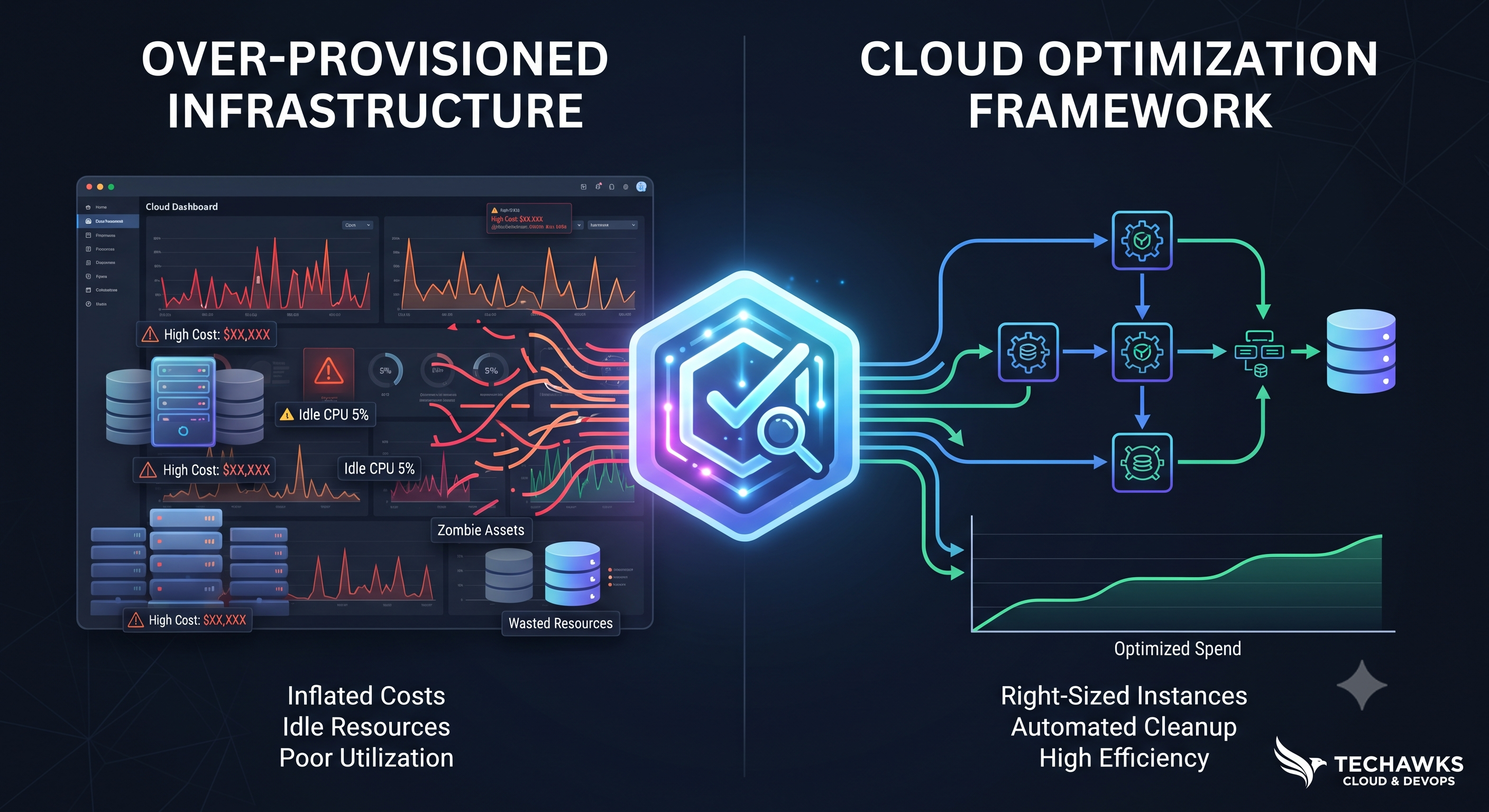
  • Stop Over-Provisioning Infrastructure: The 3-Step Cost & Reliability Optimization Framework for Cloud Engineers


    We have all been there: spinning up larger instance types "just to be safe," leaving staging environments running 24/7, and assuming that cloud scalability means resource management doesn't matter. While speed and uptime are essential, treating cloud budgets as an afterthought leads to bloated infrastructure and wasted capital.


    To transform naive cloud deployments into lean, highly reliable operations, put every architecture through this rigorous 3-step challenge framework:


    Step 1: The Right-Sizing & Utilization Audit
    Cloud providers love when you buy more capacity than you need. Before accepting default instance sizes, analyze your actual CPU and memory utilization metrics over a 30-day window. Ask yourself: Are these workloads ever exceeding 30% utilization outside of peak traffic? Downsize oversized instances and leverage burstable performance tiers where appropriate.


    Step 2: The Idle Resource & Zombie Asset Cleanup
    Orphaned EBS volumes, unattached elastic IPs, lingering snapshot backups, and non-production environments running over the weekend accumulate silent debt. Implement automated tagging policies and schedule automated shutdown scripts for non-production clusters to ensure resources are only active when humans or pipelines are actively using them.


    Step 3: The Data Transfer & Egress Optimization Pass
    Moving data across availability zones or out to the public internet without caching or proper VPC peering can quietly become your highest cloud expense. Strip out inefficient cross-region traffic patterns, configure proper CDN caching layers, and audit your NAT gateway data volumes to keep egress costs under control.


    The Challenge for Today:
    Open your cloud provider's cost management console, look at your top three spending services today, and identify at least one idle asset or oversized instance that can be right-sized or terminated immediately.


    Key Takeaways
    Right-Size Workloads: Never guess capacity; base instance sizing on real historical utilization metrics rather than safe defaults.


    Kill Zombie Assets: Automate the cleanup of unattached volumes, snapshots, and non-production workloads running outside business hours.


    Control Egress Costs: Audit data transfer patterns, leverage CDNs, and optimize VPC routing to eliminate hidden network bills.


    CTA (Join Cloud, DevOps & Open Source)
    Want to elevate your cloud architecture and DevOps practices alongside thousands of global engineers? Join the Cloud, DevOps & Open Source community today to share optimization patterns, tackle weekly infrastructure challenges, and build scalable systems together.
    Stop Over-Provisioning Infrastructure: The 3-Step Cost & Reliability Optimization Framework for Cloud Engineers We have all been there: spinning up larger instance types "just to be safe," leaving staging environments running 24/7, and assuming that cloud scalability means resource management doesn't matter. While speed and uptime are essential, treating cloud budgets as an afterthought leads to bloated infrastructure and wasted capital. To transform naive cloud deployments into lean, highly reliable operations, put every architecture through this rigorous 3-step challenge framework: Step 1: The Right-Sizing & Utilization Audit Cloud providers love when you buy more capacity than you need. Before accepting default instance sizes, analyze your actual CPU and memory utilization metrics over a 30-day window. Ask yourself: Are these workloads ever exceeding 30% utilization outside of peak traffic? Downsize oversized instances and leverage burstable performance tiers where appropriate. Step 2: The Idle Resource & Zombie Asset Cleanup Orphaned EBS volumes, unattached elastic IPs, lingering snapshot backups, and non-production environments running over the weekend accumulate silent debt. Implement automated tagging policies and schedule automated shutdown scripts for non-production clusters to ensure resources are only active when humans or pipelines are actively using them. Step 3: The Data Transfer & Egress Optimization Pass Moving data across availability zones or out to the public internet without caching or proper VPC peering can quietly become your highest cloud expense. Strip out inefficient cross-region traffic patterns, configure proper CDN caching layers, and audit your NAT gateway data volumes to keep egress costs under control. The Challenge for Today: Open your cloud provider's cost management console, look at your top three spending services today, and identify at least one idle asset or oversized instance that can be right-sized or terminated immediately. Key Takeaways Right-Size Workloads: Never guess capacity; base instance sizing on real historical utilization metrics rather than safe defaults. Kill Zombie Assets: Automate the cleanup of unattached volumes, snapshots, and non-production workloads running outside business hours. Control Egress Costs: Audit data transfer patterns, leverage CDNs, and optimize VPC routing to eliminate hidden network bills. CTA (Join Cloud, DevOps & Open Source) Want to elevate your cloud architecture and DevOps practices alongside thousands of global engineers? Join the Cloud, DevOps & Open Source community today to share optimization patterns, tackle weekly infrastructure challenges, and build scalable systems together.
    0 Comments 0 Shares 154 Views 0 Reviews
More Results