• That feeling when you finally understand bonds #investing #bonds #stocks #markets #hedgefunds
    That feeling when you finally understand bonds #investing #bonds #stocks #markets #hedgefunds
    ·96 Views ·2 Plays ·0 Anteprima
  • The pain of today’s shorts in one letter. Michael Burry to close down his hedge fund by year end.

    #hedgefunds #stocks
    The pain of today’s shorts in one letter. Michael Burry to close down his hedge fund by year end. #hedgefunds #stocks
    ·56 Views ·0 Anteprima
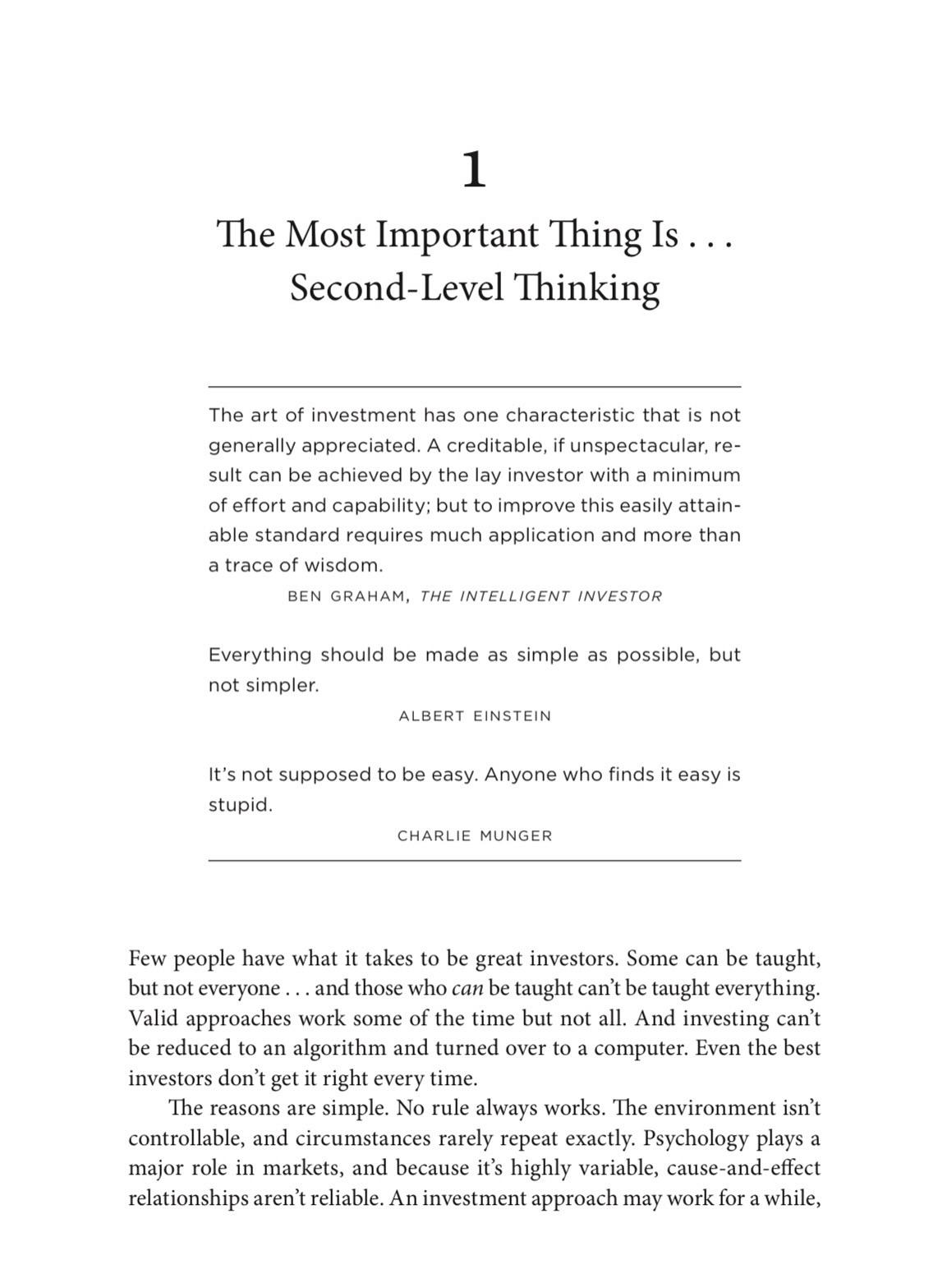
  • Second level thinking separates good investors from great ones. First level thinkers look for obvious signals like “the company is good, let’s buy.” But second level thinkers go deeper, asking what the consensus believes, why it might be wrong, and how reality could play out differently. It is about thinking beyond the surface, weighing probabilities, anticipating market psychology, and positioning yourself where others are not looking.

    Successful investing is not about doing what everyone else is doing, it is about seeing what they do not, and being right when the crowd is wrong. That is why superior results come only from non consensus thinking, and why it is so rare.

    #Investing #StockMarket #Wealth #Finance #FinancialFreedom #Money #Economy #Markets #Trading #ValueInvesting #LongTermInvesting #InvestmentStrategy #InvestorMindset #WallStreet #SmartMoney #HedgeFunds
    Second level thinking separates good investors from great ones. First level thinkers look for obvious signals like “the company is good, let’s buy.” But second level thinkers go deeper, asking what the consensus believes, why it might be wrong, and how reality could play out differently. It is about thinking beyond the surface, weighing probabilities, anticipating market psychology, and positioning yourself where others are not looking. Successful investing is not about doing what everyone else is doing, it is about seeing what they do not, and being right when the crowd is wrong. That is why superior results come only from non consensus thinking, and why it is so rare. #Investing #StockMarket #Wealth #Finance #FinancialFreedom #Money #Economy #Markets #Trading #ValueInvesting #LongTermInvesting #InvestmentStrategy #InvestorMindset #WallStreet #SmartMoney #HedgeFunds
    ·441 Views ·0 Anteprima
  • Institutions, which had been heavy sellers for most of the year, have now flipped to become the biggest buyers, adding +$1.9bn (4-wk avg). At the same time, retail flows have collapsed to just +$0.1bn, with single stocks actually negative (-$0.2bn). Hedge funds are now the biggest sellers, dumping -$0.5bn.

    The balance of power in this market has shifted from retail & hedge funds to institutions.

    #Stocks #HedgeFunds #Institutions #RetailInvestors #Equities #Markets #Investing #Finance #Trading
    Institutions, which had been heavy sellers for most of the year, have now flipped to become the biggest buyers, adding +$1.9bn (4-wk avg). At the same time, retail flows have collapsed to just +$0.1bn, with single stocks actually negative (-$0.2bn). Hedge funds are now the biggest sellers, dumping -$0.5bn. The balance of power in this market has shifted from retail & hedge funds to institutions. #Stocks #HedgeFunds #Institutions #RetailInvestors #Equities #Markets #Investing #Finance #Trading
    ·308 Views ·0 Anteprima
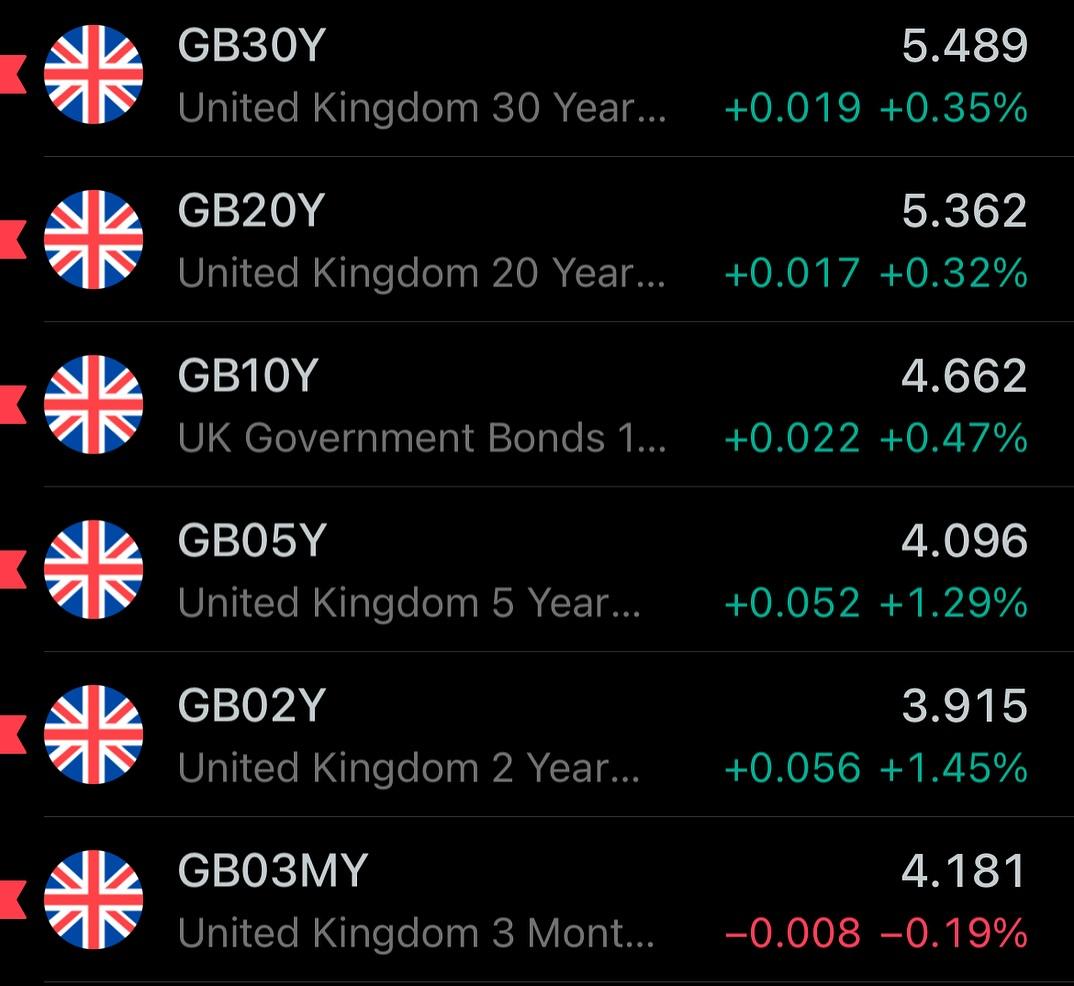
  • It’s incredibly fascinating to watch what’s happening right now in the UK gilt market. I often focus on the US understandably, since it dominates global financial markets but the signals coming from the UK bond market deserve serious attention.

    When people talk about gilts being “undervalued,” what they’re really reacting to is something deeper… the market’s perception of fiscal credibility.

    Here’s what often gets overlooked…

    Bond markets are one of the few real time mechanisms that hold governments accountable. While we usually associate accountability with elections and politics, markets speak a different language… cost.

    When governments borrow too aggressively or look fiscally reckless, lenders (investors) start to lose confidence. That loss of trust shows up fast… in higher yields, weaker demand, and rising refinancing costs. It’s not about partisanship it’s about risk and trust.

    If a government behaves as if it can spend freely or rely on money printing without consequences, the bond market pushes back. And that’s exactly what we’re seeing now.

    It’s not just a technical issue or a pricing anomaly it’s the market demanding responsibility.

    The UK’s current situation is a powerful reminder… the cost of capital matters. Markets aren’t political they’re rational. And when that rationality flags something, it’s worth paying attention.

    I’ll translate… please somebody buy our debt…

    Anyway…

    Probably nothing

    #bonds #uk #gilts #hedgefunds #markets #stocks #stockmarket #bondmarket #macroeconomics
    It’s incredibly fascinating to watch what’s happening right now in the UK gilt market. I often focus on the US understandably, since it dominates global financial markets but the signals coming from the UK bond market deserve serious attention. When people talk about gilts being “undervalued,” what they’re really reacting to is something deeper… the market’s perception of fiscal credibility. Here’s what often gets overlooked… Bond markets are one of the few real time mechanisms that hold governments accountable. While we usually associate accountability with elections and politics, markets speak a different language… cost. When governments borrow too aggressively or look fiscally reckless, lenders (investors) start to lose confidence. That loss of trust shows up fast… in higher yields, weaker demand, and rising refinancing costs. It’s not about partisanship it’s about risk and trust. If a government behaves as if it can spend freely or rely on money printing without consequences, the bond market pushes back. And that’s exactly what we’re seeing now. It’s not just a technical issue or a pricing anomaly it’s the market demanding responsibility. The UK’s current situation is a powerful reminder… the cost of capital matters. Markets aren’t political they’re rational. And when that rationality flags something, it’s worth paying attention. I’ll translate… please somebody buy our debt… Anyway… Probably nothing #bonds #uk #gilts #hedgefunds #markets #stocks #stockmarket #bondmarket #macroeconomics
    ·461 Views ·0 Anteprima
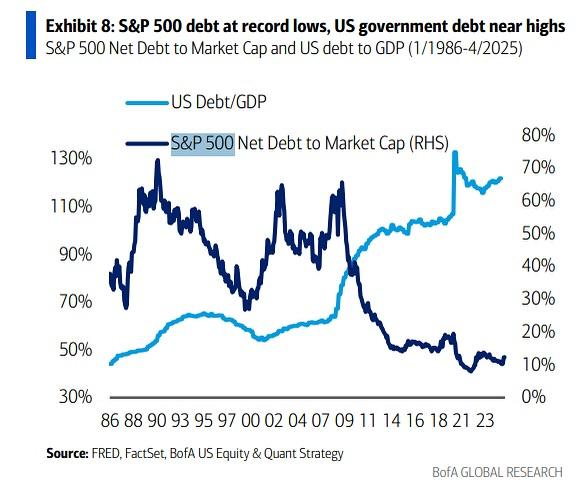
  • This chart illustrates a striking divergence between private and public sector debt. On one hand, S&P 500 companies have significantly deleveraged, with net debt to market cap falling to record lows just above 10% highlighting robust corporate balance sheets, rising equity values, and prudent financial management. On the other, U.S. government debt as a percentage of GDP has surged to around 120%, hovering near all-time highs.

    This contrast underscores a critical macroeconomic shift: while the private sector is staying lean, the public sector is absorbing more fiscal burden. This may reflect the post-COVID fiscal stimulus response, continued deficit spending, and growing entitlement obligations. For investors, this bifurcation could mean increased resilience in corporate earnings, even as sovereign debt concerns persist.

    Watch for potential implications: if interest rates stay elevated or begin to rise again, government refinancing costs could become problematic while corporates, having already deleveraged, might be less exposed. It also strengthens the case for equities over bonds in a debt-laden macro environment.

    #MacroTrends #macroeconomics #hedgefunds #DebtCycle #SP500 #USDebt #CorporateFinance #PublicDebt #EconomicPolicy #InvestmentStrategy #FinancialMarkets #MarketOutlook
    This chart illustrates a striking divergence between private and public sector debt. On one hand, S&P 500 companies have significantly deleveraged, with net debt to market cap falling to record lows just above 10% highlighting robust corporate balance sheets, rising equity values, and prudent financial management. On the other, U.S. government debt as a percentage of GDP has surged to around 120%, hovering near all-time highs. This contrast underscores a critical macroeconomic shift: while the private sector is staying lean, the public sector is absorbing more fiscal burden. This may reflect the post-COVID fiscal stimulus response, continued deficit spending, and growing entitlement obligations. For investors, this bifurcation could mean increased resilience in corporate earnings, even as sovereign debt concerns persist. Watch for potential implications: if interest rates stay elevated or begin to rise again, government refinancing costs could become problematic while corporates, having already deleveraged, might be less exposed. It also strengthens the case for equities over bonds in a debt-laden macro environment. #MacroTrends #macroeconomics #hedgefunds #DebtCycle #SP500 #USDebt #CorporateFinance #PublicDebt #EconomicPolicy #InvestmentStrategy #FinancialMarkets #MarketOutlook
    ·577 Views ·0 Anteprima
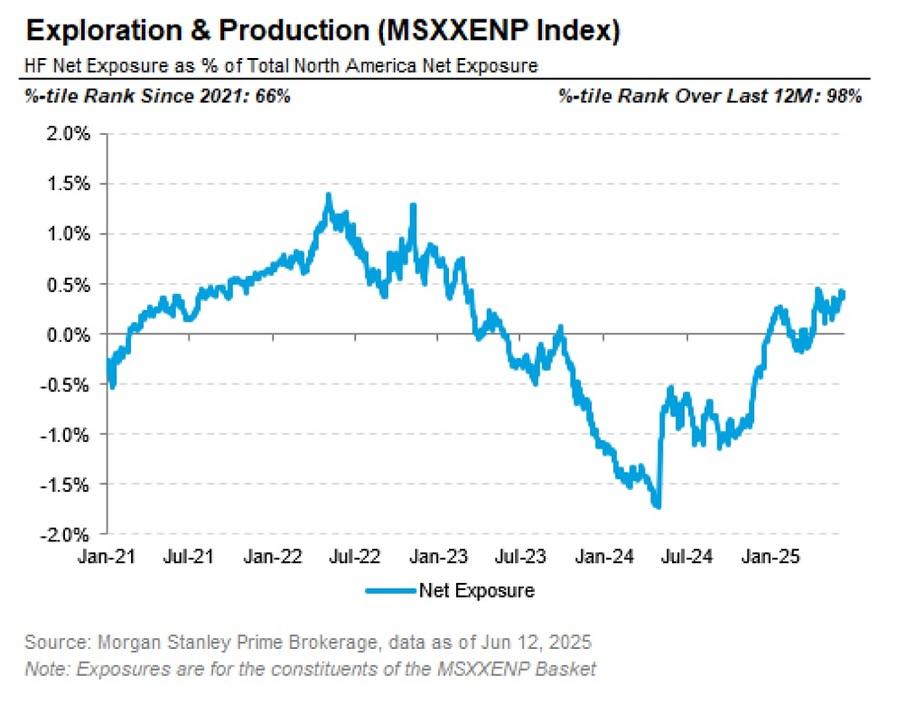
  • Hedge funds have been steadily adding exposure to exploration & production (E&P) stocks, and there could still be room for further gains. As of mid-June, net exposure in the MSXXENP Index is at its highest level in a year (98th percentile over the last 12 months), but it’s still only at the 66th percentile compared to levels since 2021. This reflects a transition from net short to slightly net long not a euphoric chase yet.

    The 10-day return on the E&P basket is roughly +7%, which closely aligns with the +11% move in WTI crude futures over the same period. That’s broadly in line with beta expectations (R² = 47% over the last two years), suggesting the rally hasn’t overshot. Technically, there’s no major divergence yet.

    Also worth noting: energy remains the largest net short exposure in 12-month momentum strategies, around -9%, with the short leg of these trades carrying a -13% weight in energy. In the most recent rebalance, energy saw the biggest increase in short-weighting setting the stage for potential covering if strength persists.

    If oil prices remain supported and the short unwind continues, E&P equities have further room to rally from both a positioning and momentum perspective.

    #EnergyStocks #CrudeOil #OilStocks #WTI #MacroTrading #EarningsSeason #Commodities #Quant #MomentumTrading #InstitutionalInvesting #HedgeFunds #OilExploration #InflationTrades #MSXXENP #CL1 #Markets #oil #hedgefunds
    Hedge funds have been steadily adding exposure to exploration & production (E&P) stocks, and there could still be room for further gains. As of mid-June, net exposure in the MSXXENP Index is at its highest level in a year (98th percentile over the last 12 months), but it’s still only at the 66th percentile compared to levels since 2021. This reflects a transition from net short to slightly net long not a euphoric chase yet. The 10-day return on the E&P basket is roughly +7%, which closely aligns with the +11% move in WTI crude futures over the same period. That’s broadly in line with beta expectations (R² = 47% over the last two years), suggesting the rally hasn’t overshot. Technically, there’s no major divergence yet. Also worth noting: energy remains the largest net short exposure in 12-month momentum strategies, around -9%, with the short leg of these trades carrying a -13% weight in energy. In the most recent rebalance, energy saw the biggest increase in short-weighting setting the stage for potential covering if strength persists. If oil prices remain supported and the short unwind continues, E&P equities have further room to rally from both a positioning and momentum perspective. #EnergyStocks #CrudeOil #OilStocks #WTI #MacroTrading #EarningsSeason #Commodities #Quant #MomentumTrading #InstitutionalInvesting #HedgeFunds #OilExploration #InflationTrades #MSXXENP #CL1 #Markets #oil #hedgefunds
    ·524 Views ·0 Anteprima
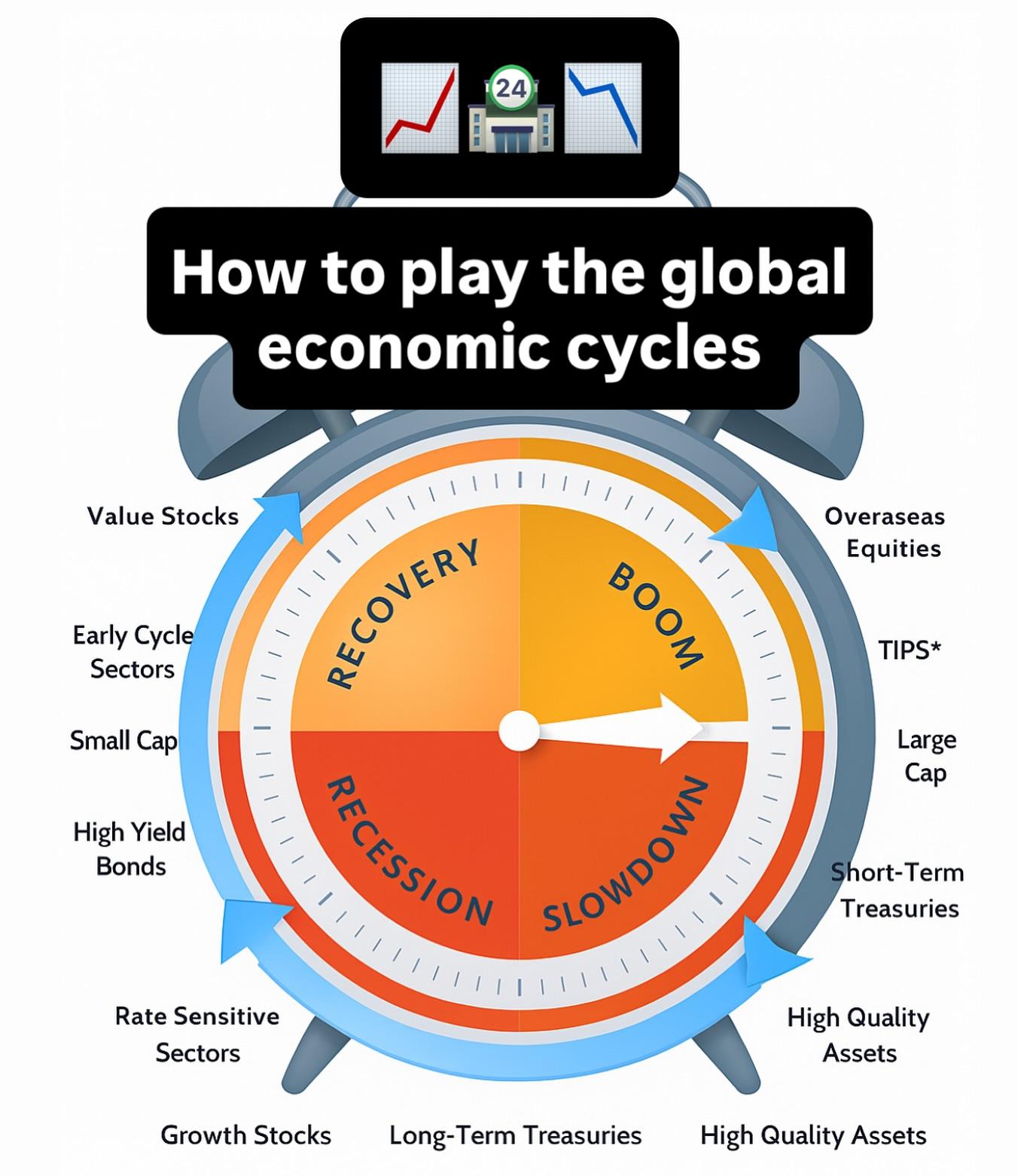
  • a simplified yet strategic view of how investors might align their portfolios with different phases of the global economic cycle. Each stage—recession, recovery, boom, and slowdown—tends to favor certain asset classes based on macro conditions and capital flows.

    During a recession, when growth contracts and uncertainty is high, investors often rotate into long-term treasuries and high-quality assets that offer stability. Growth stocks can also be favored as markets begin to anticipate recovery and future earnings potential.

    As the economy shifts into recovery, risk appetite begins to return. Value stocks, early-cycle sectors, small caps, and high-yield bonds typically outperform as confidence builds and monetary policy remains supportive.

    In the boom phase, economic activity is strong and earnings growth broad-based. Investors tend to favor large caps, TIPS (inflation-protected securities), and overseas equities, which benefit from global demand and reflation.

    As the cycle enters a slowdown, caution returns. Capital tends to rotate back into short-term treasuries and high-quality assets, which are better positioned to weather declining growth or margin pressures.

    The cyclical rotation shown here underscores the value of staying flexible and understanding how macro trends shape relative performance across asset classes.

    #stockmarket #macroeconomics #hedgefunds #nasdaq #qqq #moneymarket #stocktrading #GlobalMarkets #AssetAllocation #InvestmentStrategy #MarketCycles #MacroInsights #EconomicOutlook #PortfolioManagement
    a simplified yet strategic view of how investors might align their portfolios with different phases of the global economic cycle. Each stage—recession, recovery, boom, and slowdown—tends to favor certain asset classes based on macro conditions and capital flows. During a recession, when growth contracts and uncertainty is high, investors often rotate into long-term treasuries and high-quality assets that offer stability. Growth stocks can also be favored as markets begin to anticipate recovery and future earnings potential. As the economy shifts into recovery, risk appetite begins to return. Value stocks, early-cycle sectors, small caps, and high-yield bonds typically outperform as confidence builds and monetary policy remains supportive. In the boom phase, economic activity is strong and earnings growth broad-based. Investors tend to favor large caps, TIPS (inflation-protected securities), and overseas equities, which benefit from global demand and reflation. As the cycle enters a slowdown, caution returns. Capital tends to rotate back into short-term treasuries and high-quality assets, which are better positioned to weather declining growth or margin pressures. The cyclical rotation shown here underscores the value of staying flexible and understanding how macro trends shape relative performance across asset classes. #stockmarket #macroeconomics #hedgefunds #nasdaq #qqq #moneymarket #stocktrading #GlobalMarkets #AssetAllocation #InvestmentStrategy #MarketCycles #MacroInsights #EconomicOutlook #PortfolioManagement
    ·1K Views ·0 Anteprima
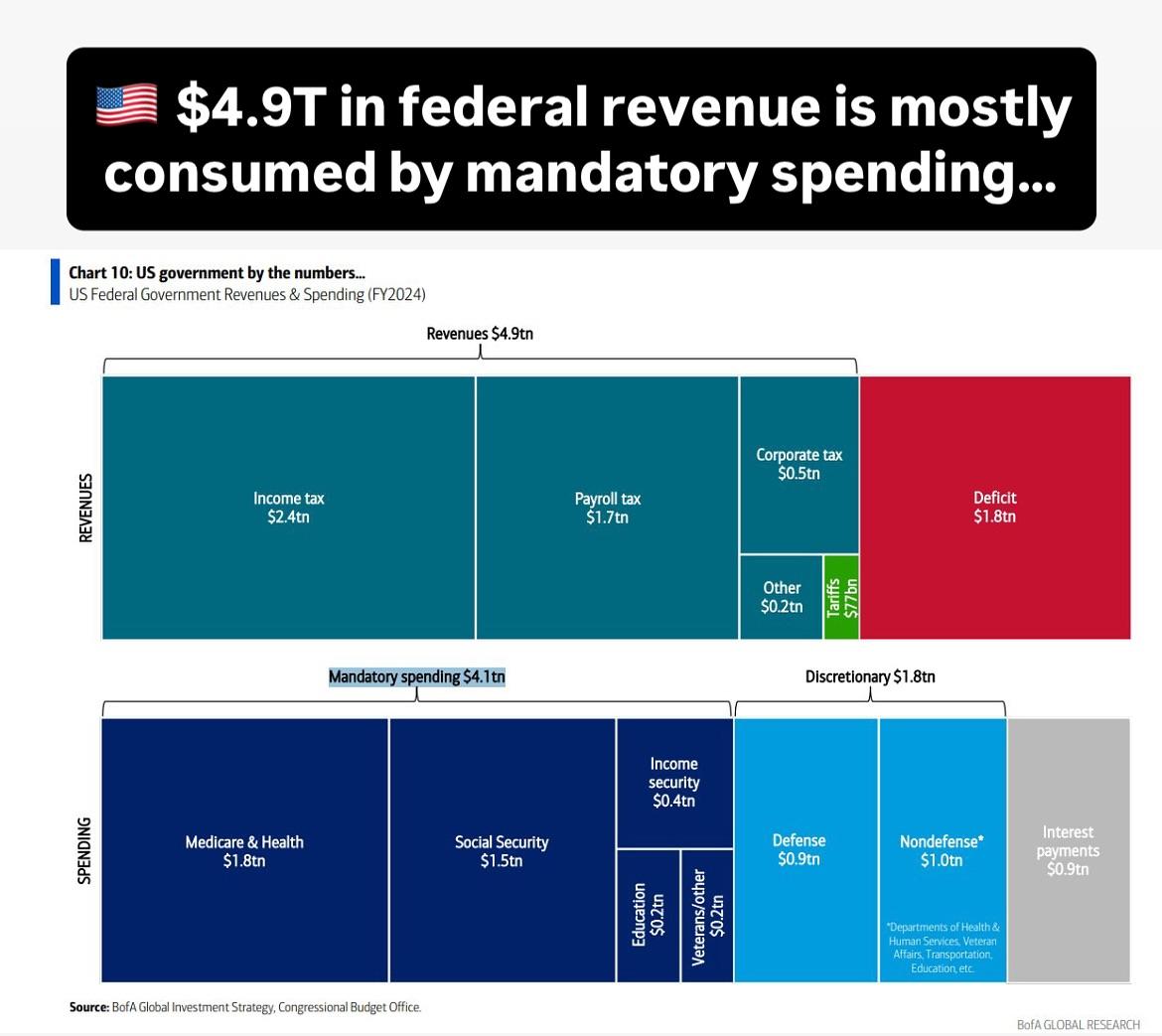
  • The U.S. takes in around $4.9T in revenue, but spends nearly $6.8T driven by $4.1T in mandatory programs like Medicare and Social Security, $1.8T in discretionary items, and almost $0.9T in interest. That leaves a $1.8T+ deficit, with interest costs alone now rivaling defense spending.

    Unless yields fall significantly deficits will stay elevated. Which is why entitlement reform is going to be a difficult topic to discuss in any long term fiscal fix there simply isn’t enough room elsewhere in the budget.

    Probably nothing anyway…

    #stocks #bonds #hedgefunds #stockmarker #USDebt #BudgetMath #Deficit #FiscalReality #EntitlementReform #InterestPayments #MandatorySpending #SocialSecurity #Medicare #MacroFinance #YieldCurve #FederalBudget #DebtCrisis
    The U.S. takes in around $4.9T in revenue, but spends nearly $6.8T driven by $4.1T in mandatory programs like Medicare and Social Security, $1.8T in discretionary items, and almost $0.9T in interest. That leaves a $1.8T+ deficit, with interest costs alone now rivaling defense spending. Unless yields fall significantly deficits will stay elevated. Which is why entitlement reform is going to be a difficult topic to discuss in any long term fiscal fix there simply isn’t enough room elsewhere in the budget. Probably nothing anyway… #stocks #bonds #hedgefunds #stockmarker #USDebt #BudgetMath #Deficit #FiscalReality #EntitlementReform #InterestPayments #MandatorySpending #SocialSecurity #Medicare #MacroFinance #YieldCurve #FederalBudget #DebtCrisis
    ·825 Views ·0 Anteprima
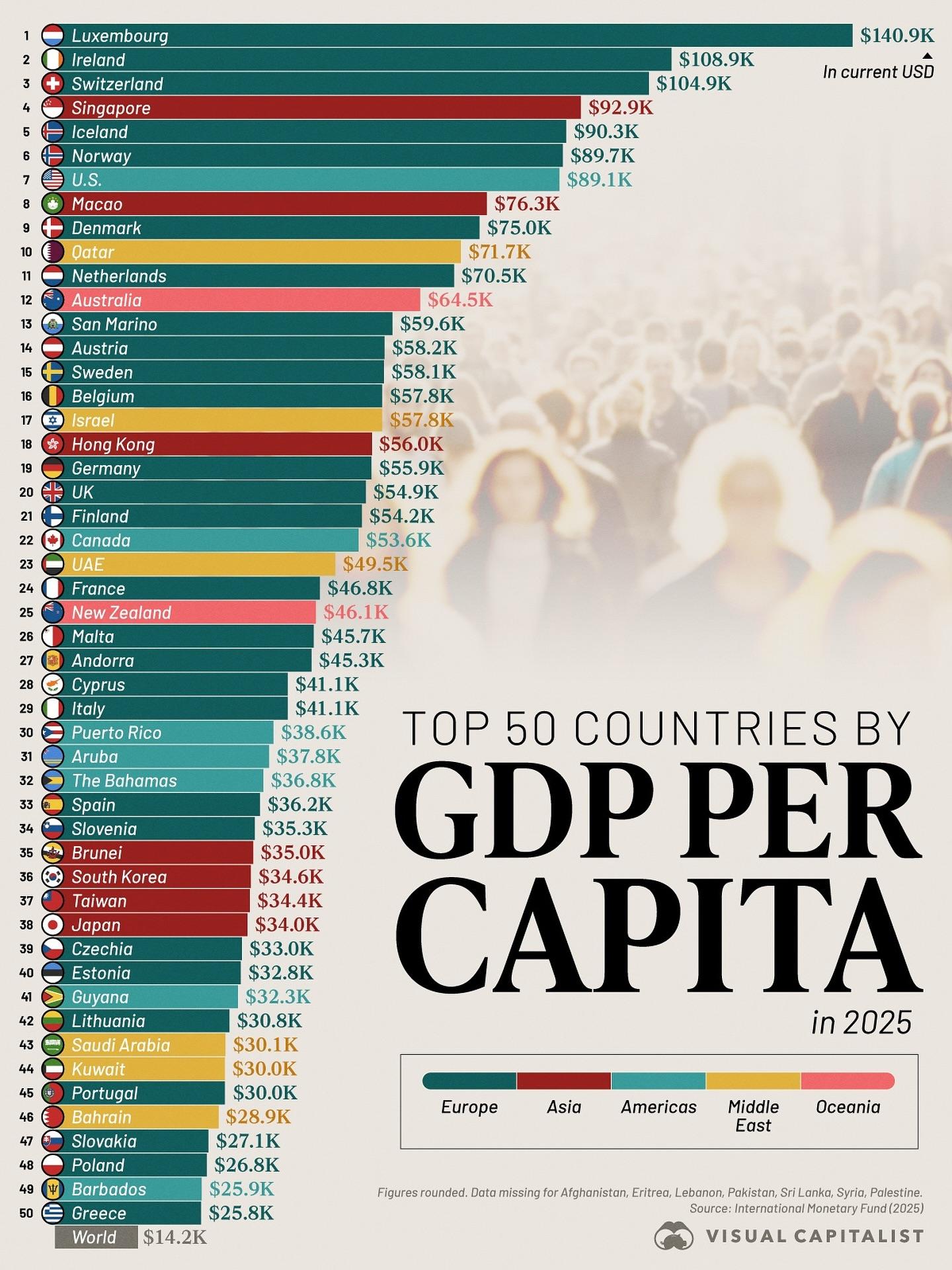
  • The 50 richest countries by GDP per capita in 2025, ranked by the IMF. Luxembourg leads the world at over $140,000 per capita, followed by Ireland and Switzerland.

    Notably, small nations and financial hubs dominate the top of the list, highlighting the impact of low population, strong service sectors, and favourable tax environments. Meanwhile, global GDP per capita still sits far below at $14,200.

    This is a stark reminder of the disparities in economic output and opportunity across the globe.

    #GlobalEconomy #gdp #EconomicGrowth #WealthDistribution #IMFData #InternationalMarkets #GlobalInequality #Macroeconomics #WealthRanking #FinanceInsights #hedgefunds #economic
    The 50 richest countries by GDP per capita in 2025, ranked by the IMF. Luxembourg leads the world at over $140,000 per capita, followed by Ireland and Switzerland. Notably, small nations and financial hubs dominate the top of the list, highlighting the impact of low population, strong service sectors, and favourable tax environments. Meanwhile, global GDP per capita still sits far below at $14,200. This is a stark reminder of the disparities in economic output and opportunity across the globe. #GlobalEconomy #gdp #EconomicGrowth #WealthDistribution #IMFData #InternationalMarkets #GlobalInequality #Macroeconomics #WealthRanking #FinanceInsights #hedgefunds #economic
    ·1K Views ·0 Anteprima
Pagine in Evidenza
Techawks - Powered By Pantrade Blockchain https://techawks.com